The convergence of the climate crisis and rising food imports in Africa is a recipe for catastrophe. Unless actions are taken to build up local food systems and reverse the growing reliance on imports of cereals and other staple foods, there will be multiple and more severe repeats of the 2007-8 food crisis that caused food riots across the continent. African governments and donors have wasted the past decade on failed programmes and policies to support corporate agribusiness while doing little to effectively challenge the corporations that are dumping surplus food commodities, driving up global greenhouse gas emissions and destroying biodiversity. Now, movements for climate justice and African food producers must urgently join forces to eliminate the dependence on food imports and realise food sovereignty across the continent to respond to the climate crisis.
For Africa, the climate crisis is a food crisis
Africa’s food forecast over the next decades is troubling. The continent will need more food to cope with a growing population that the United Nations projects will rise from 1.2 billion to 1.7 billion over the next decade.
[1] But, as this demand for food surges ahead, the increasing effects of climate change will make food production on the continent more difficult. Estimates are that global warming could cause a 10% – 20% reduction in Africa’s overall food production.
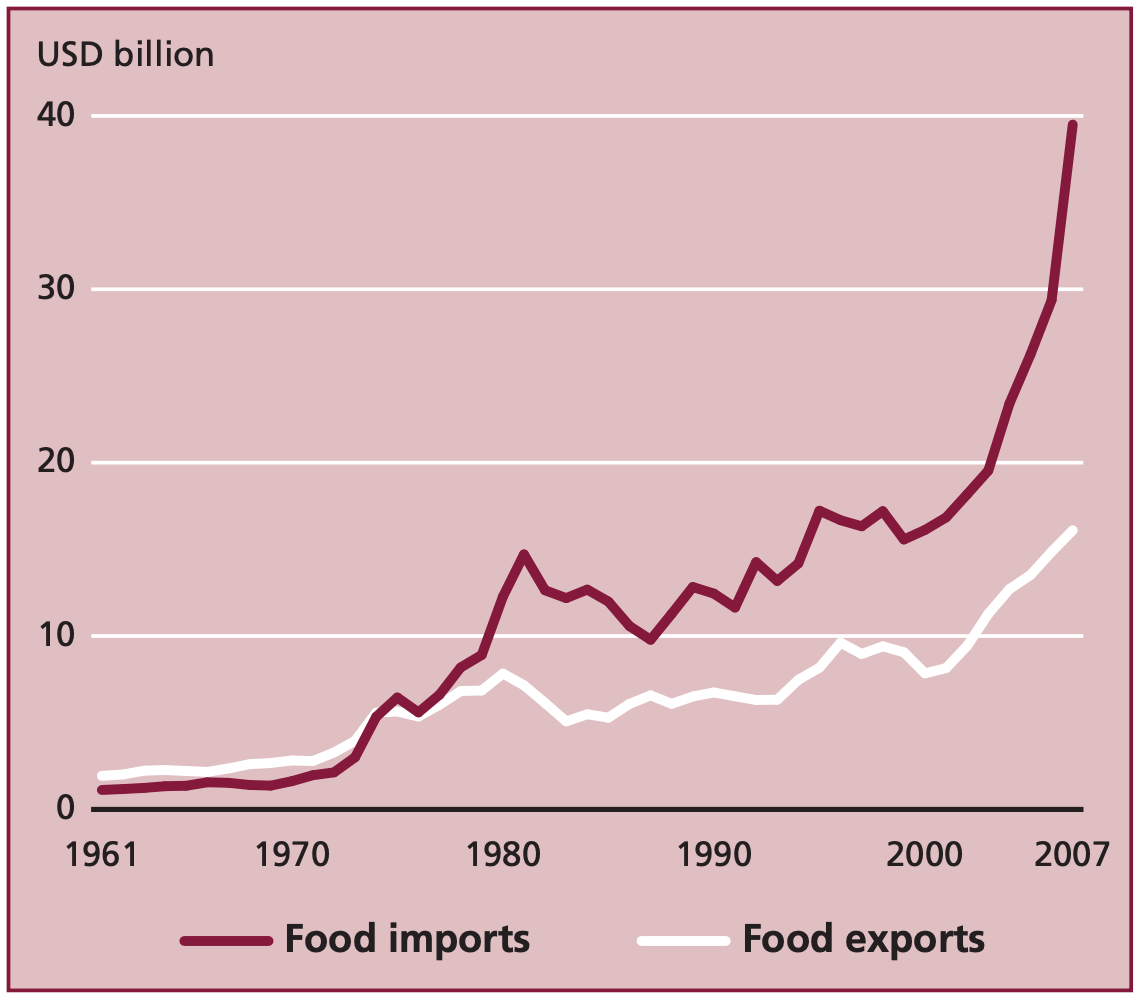
[2]If nothing is done to reverse course, Africa’s food imports will soar. The African Development Bank expects that Africa’s net food imports will triple between now and 2025, reaching over $110 billion.
[3] The United Nations predicts that Africa may only produce just 13% of its food needs by 2050.
[4]African countries are already well aware of how vulnerable this dependence on food imports leaves them. In 2007, a set of weather shocks in Asia set off a cascade of actions that spiked the price of rice on the international market, with ripple effects on other cereals. Africa, which accounts for about a third of global imports of rice and wheat, was hit hard. The rise in prices was too much for millions of Africans to absorb and food riots broke out across the continent, from Ouagadougou to Cairo, Maputo to Abidjan, and Dakar to Nouakchott. In Nairobi, a protest over rising food prices for basic foods, called the “Unga Revolution” (Maize Flour Revolution), began in 2008 and lasted until 2011.
[5]Climate change will make such global food price spikes more frequent, and will push international prices for basic food commodities upwards. Consider maize, one of the world’s most heavily-traded agricultural commodities and an important staple food for much of Africa. Until recently, yields of maize were relatively stable in the main maize-producing areas of the world, and serious climate-induced yield reductions were rare. But with the warming of the planet, the chances of major crop losses are increasing, as are the chances of simultaneous crops losses in the large maize-exporting areas, such as North America and the Southern Cone of Latin America. Researchers with the US Department of Atmospheric Sciences estimate that the probability for simultaneous major production losses in the large maize-exporting countries in any given year is virtually zero under present-day climate conditions but rises to seven per cent with 2 °C of warming and 86 per cent with 4 °C of warming.
[6]If one set of far away, isolated weather shocks was enough to cause food riots across Africa in 2007-8, imagine what this would look like in the coming decades, if the climate crisis deepens and hundreds of millions more Africans are dependent on imports of basic foods. This is an unfolding crisis of epic proportions that needs immediate action.
The future does not have to look like this. There are complementary actions that can be taken inside and outside of Africa to ensure that Africa has the capacity to feed itself in the years to come. Yes, the climate crisis will and is already making food production on the continent more challenging and will increase the frequency and severity of weather shocks such as floods and droughts. But the extent of these impacts can be greatly lessened if fast and deep reductions are made to global greenhouse gas (GHG) emissions in the main polluting countries. Such reductions will require a profound transformation of the global food system- from a model that favours the industrialised production of cheap commodities that are processed and shipped to Africa and other parts of the world, to a model based on agroecological production and local food systems. In this sense, Africa’s farmers, fisher people and pastoralists are a leading example for the rest of the world to follow. They are already using agroecological methods to mitigate and build resilience in the face of climate extremes. And they are more than capable of feeding the entire continent, even in the face of the growing climate crises. What they require is access to sufficient and appropriate lands, water, fish stocks and seeds, paired with policies and programmes that support them and can ensure that food gets to where it is needed. It sounds simple but these basic measures towards food sovereignty are precisely what is not being done.
How will climate change impact African agriculture?
Climate models are still not able to provide a detailed picture of the impacts that climate change will have on African agriculture. The latest science does, however, concur that rising temperatures, erratic weather, changes to rainfall patterns and an increasing frequency and intensity of extreme weather events will negatively impact food production across most of the continent. Scientists also agree that African food production is particularly at risk because of the dominance of rain-fed farming and pastoral livestock systems, which are highly vulnerable to the rainfall variability and heat waves generated by climate change. They predict that climate change will cause shorter growing seasons, reduced soil fertility, new pest and disease pressures, lower crop yields and animal productivity and a reduction in farming and grazing lands over large parts of Africa. They also agree that food production will be more frequently and adversely affected by extreme weather events.
Such impacts are already in evidence with this year’s floods and cyclones in Malawi, Mozambique and Zimbabwe or the drought that began in Somalia and Somaliland in June this year.
[1] As noted by La Via Campesina Southern and Eastern Africa: “While the discussion on climate change at the global level often revolves around predictions on future consequences and the perceived threat of increasing migration, the effects are already very much a present lived experience of Africa’s peasants, rural women, landless peoples and indigenous communities, who feel the impacts of climate change everyday.”
[2]
Food self-sufficiency moves back on the agenda
Africa’s dependence on food imports is a recent phenomenon. In the 1980s, under pressure from the former colonial powers and the multilateral lending agencies, African governments abandoned local agriculture and food systems, opened the door to massive imports and aid shipments of cereals and other basic foods and channelled the remaining state support into exports of a few cash crops (cotton, coffee, cacao, palm oil, rubber, etc.). The result was that, between 1980 and 2007, Africa’s food production did not keep up with its population growth and its food deficit grew at an average of 3.4 percent per year. Over that period, Africa went from having a balance of agricultural exports and imports to a US$22 billion food deficit.
[7]It is important to recognise that the majority of these food imports are for staple foods, particularly cereals like rice, maize, and wheat, and dairy and meat products, meaning that much of Africa is now heavily reliant on food imports (and/or food aid) for its food security.
[8] Moreover, by the turn of the century, over a quarter of Africa’s population was considered chronically hungry.
[9]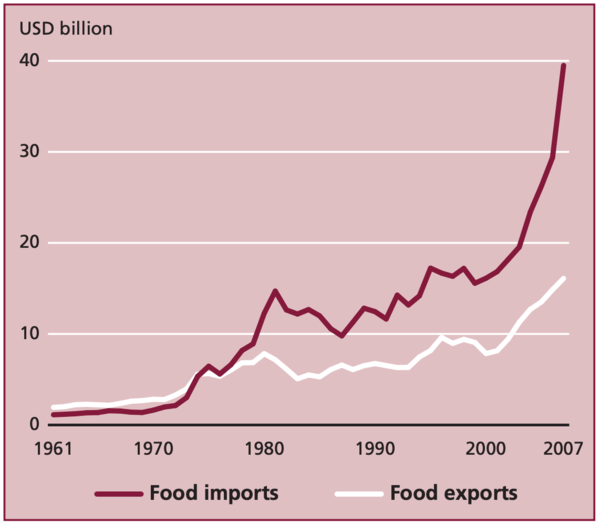
African heads of state came together in 2003 in a first effort to try and come to terms with this intolerable situation. They launched a Comprehensive Africa Agriculture Development Programme (CAADP) and committed to investing 10 per cent of their national budgets in agriculture and rural development.
[10] But these commitments on paper did not translate (and have still not translated) into much concrete action.
[11] Then came the 2007-8 global food crisis. With their populations rioting in the streets over food prices, African governments once again promised urgent measures to ramp up food supplies and domestic production, with some even promising to bring back the long-lost days of food self-sufficiency.
[12]In the aftermath of this food crisis, several major initiatives to boost national food production were launched in Africa, most of them closely coordinated with foreign donors and multilateral agencies. Some of these initiatives are continental, like the G8’s New Alliance for Food Security and Nutrition in Africa or the African Development Bank’s Feed Africa Strategy. Others are regional, like the “Rice Offensive” of the Economic Community of West African States (ECOWAS), or national, like the Grande Offensive agricole pour la nourriture et l’abondance (GOANA) launched by Senegal’s former President Abdoulaye Wade. Certain African governments have also enacted policy measures to curb food imports and support domestic production that were not on the table prior to the crisis, such as food reserves, targeted import duties, quotas, foreign exchange controls and even bans on specific food items.
Table 1. Some measures to restrict food trade enacted by African governments
|
Country/Agency
|
Measure
|
Year
|
|
Nigeria
|
Foreign exchange prohibition on imports of rice
|
2015
|
|
ECOWAS
|
Regional Food Security Reserve
|
2013
|
|
Zambia
|
Ban on imports of certain fruits and vegetables
|
2017
|
|
Egypt
|
Export ban on rice
|
2008, 2017
|
|
Burkina Faso
|
Decree requiring public programmes to procure local foods
|
2017
|
|
Tanzania
|
Suspension of rice imports
|
2018
|
But, despite the impressive names of these various initiatives, most have fallen far short of their ambitions. There have been some gains in production, but imports of cereals and other basic foods continue to grow in many African countries. Part of the problem is that these initiatives have not done enough to protect local production from the dumping of cheap imports. Most measures were either temporary, open to abuse from large traders and smugglers, or simply too weak and backed up with too few resources to make a difference. Moreover, many African governments have signed onto and/or are negotiating trade agreements that make it much harder to implement food import restrictions and protections for local food producers, including the recently-launched African Continental Free Trade Agreement (AfCFTA).
[13]
Climate, food and the African Continental Free Trade Agreement (AfCFTA)
The central and guiding priority of the AfCFTA is to create a single, completely liberalised market for goods and services across Africa.
[1] The text of the agreement, which was formally adopted in March 2018, commits all member countries to a rapid, deep and comprehensive liberalisation process, with only a small window available for countries to exclude sensitive items or to delay their tariff liberalisation.
[2]No special treatment is provided for agricultural products and foods, despite the critical importance of the food and agricultural sector to Africa. No mention is made of climate change either, despite the enormous impacts this will have on Africa over the coming decades. Rather, AfCFTA severely constrains the trade measures and domestic programmes that governments can implement to protect their local food systems and to take action against climate change. On the other hand, the AfCFTA contains a specific article that sanctifies “Special Economic Arrangements/Zones”, in which corporations are freed from tax obligations and other national laws and regulations (land laws, labour laws, etc.).
Further advantages for agribusiness will be on the table in Phase II of the negotiations, when a chapter on intellectual property rights will be negotiated that will cover seeds. The tendency in neoliberal trade agreements is to harmonise “upwards” toward international standards on patents and plant breeders’ rights that criminalise farmers for saving seeds and that do not allow for diversity and alternatives (which, like small farmer support programmes, require aggressive domestic agendas). In the planned second phase of negotiations, therefore, AfCFTA will likely bring forward some form of obligation on governments to implement strict patent and plant breeders’ rights legislation on seeds, along the lines of UPOV.
AfCFTA’s emphasis on liberalisation and corporate privileges undermines and pre-empts domestic policies and programmes that could strengthen the small-scale food producers and informal traders and street food sellers who are currently the main actors in African food systems. It will inevitably concentrate more power within the formal agribusiness and food sector– which is dominated by foreign corporations and a handful of national and multinational African companies. This is already happening under the existing trade frameworks and it will get worse through increased liberalisation under AfCFTA, not better. As is simply stated by Dr Ndongo Samba Sylla of the Rosa Luxembourg Foundation in Senegal: “Agriculture is generally not a sector that should be liberalised.”
[3]
The corporate model falls apart
The other major defect with these post-food crisis initiatives is their focus on big business. Over the past decade, African governments, at the behest of outside donors, have changed laws and regulations, granted tax breaks, handed out lands and money and set up special economic zones with the hope of attracting investment from agribusiness corporations. But, ten years on, it is clear that this strategy has not worked. The private investment that was promised in return for these policies and handouts, whether in contract farming schemes or plant breeding, has either not materialised or failed badly.
[14]Consider the case of rice. Rice is not a traditional staple crop for most of the continent, but urbanisation and cheap imports from Asia and the US have contributed to a galloping rise in consumption across the continent over the past 50 years. Production has failed to keep up with consumption and today Africa imports about half of what it consumes, spending roughly US$3.5 billion a year on rice imports.
With the spike in rice prices in 2007-8, Africa’s political class had little choice but to take action to reduce the import bill. But any efforts that might favour local production over imports had to run up against the interests of the powerful cartel of transnational trading companies and local business elites that control the lucrative rice trade into Africa. So, rather than take on these forces, many African governments chose instead to enlist them in their strategies to reinvigorate national rice production.
Rice cartels undermine local production efforts in Nigeria and Côte d’Ivoire
The Nigerian government imposed an 110% tariff on rice imports in 2013 to encourage domestic production. But it offered trading companies quotas with much lower tariffs if they could show that they were investing in local rice production. The result: investigations by the Nigerian Senate revealed that the largest trading companies either lied about their investments or exceeded allocated quotas, adding up to a loss of over US$160 million to the Nigerian government in 2014, the year the scheme was implemented.
[1] When the government then abolished the trade differentials and implemented foreign exchange controls to further block imports, traders rerouted their shipments to the port of Cotonou, in Benin, and the rice was smuggled into Nigeria over land.
[2]Those traders who are investing into Nigerian rice production have directed much of their investment to their own massive rice plantations. This is the case of the Singapore-based multinational food company Olam, which is building Africa’s largest rice plantation on a 10,000 ha land concession in Nasarawa State.
[3] Olam is one of the companies that violated the Nigerian government’s tariff reduction scheme by greatly exceeding its allocated quota, depriving the state of around US$25 million.
Olam had also pledged to make multi-million dollar investments in Côte d’Ivoire’s rice sector in the wake of the rice price crisis of 2007-8, alongside several other big rice traders.
[4] Olam’s promised investment never materialised, nor did the deals to establish mills, large-scale rice farms and contract growing operations signed between the government and five other multinational cereal trading companies as part of the country’s Cooperation Framework with the G8’s New Alliance.
[5] All of these projects failed, including a high-profile 100,000 ha project with one of the world’s largest grain traders, Louis Dreyfus of France.
[6] Meanwhile, rice imports into Côte d’Ivoire have continued to grow, hitting a record high in 2018 and accounting for over half of the country’s rice supply– and Louis Dreyfus continues to dominate the import market.
[7]
[4]https://www.ifc.org/wps/wcm/connect/afdc84804b5f0477bc28fd08bc54e20b/GAFSP_CountryDiagnostic_COTE+D%E2%80%99IVOIRE_Full.pdf?MOD=AJPERES
[5] GRAIN, “The G8 and land grabs in Africa,” 11 March 2013: https://grain.org/e/4663
These strategies to lower tariffs for companies investing in local rice production has done little to curb imports and has resulted in a shockingly long list of corporate rice farming projects that have gone bust across Africa in recent years. The projects wasted millions of dollars in public funds and deprived African farmers of lands and water to produce food. They undermined, rather than supported, African government pledges to reduce rice deficits.
[15]Mali is the one country in West Africa that has achieved its rice self-sufficiency targets, but this was done despite the actions of big business. All of the corporate rice farm projects announced in Mali after the 2007-8 food crisis failed.
[16] Mali’s path to self-sufficiency was only achieved through the political struggle and hard work of its small-scale rice farmers. They seized on the rice crisis of 2007-8 to put in place a national rice platform led by rice farmers, which then pushed the government into taking measures to restrict imports and support farmers in increasing domestic rice production, mainly by ensuring access for small farmers to lands and water and by getting the government to purchase local rice for its national rice reserves. The rice farmers also teamed up with the small-scale millers, merchants, transporters and other actors involved in local rice markets to educate consumers on the benefits of local rice, and they have fought a constant battle to keep the big trading companies from re-opening the doors to imports.
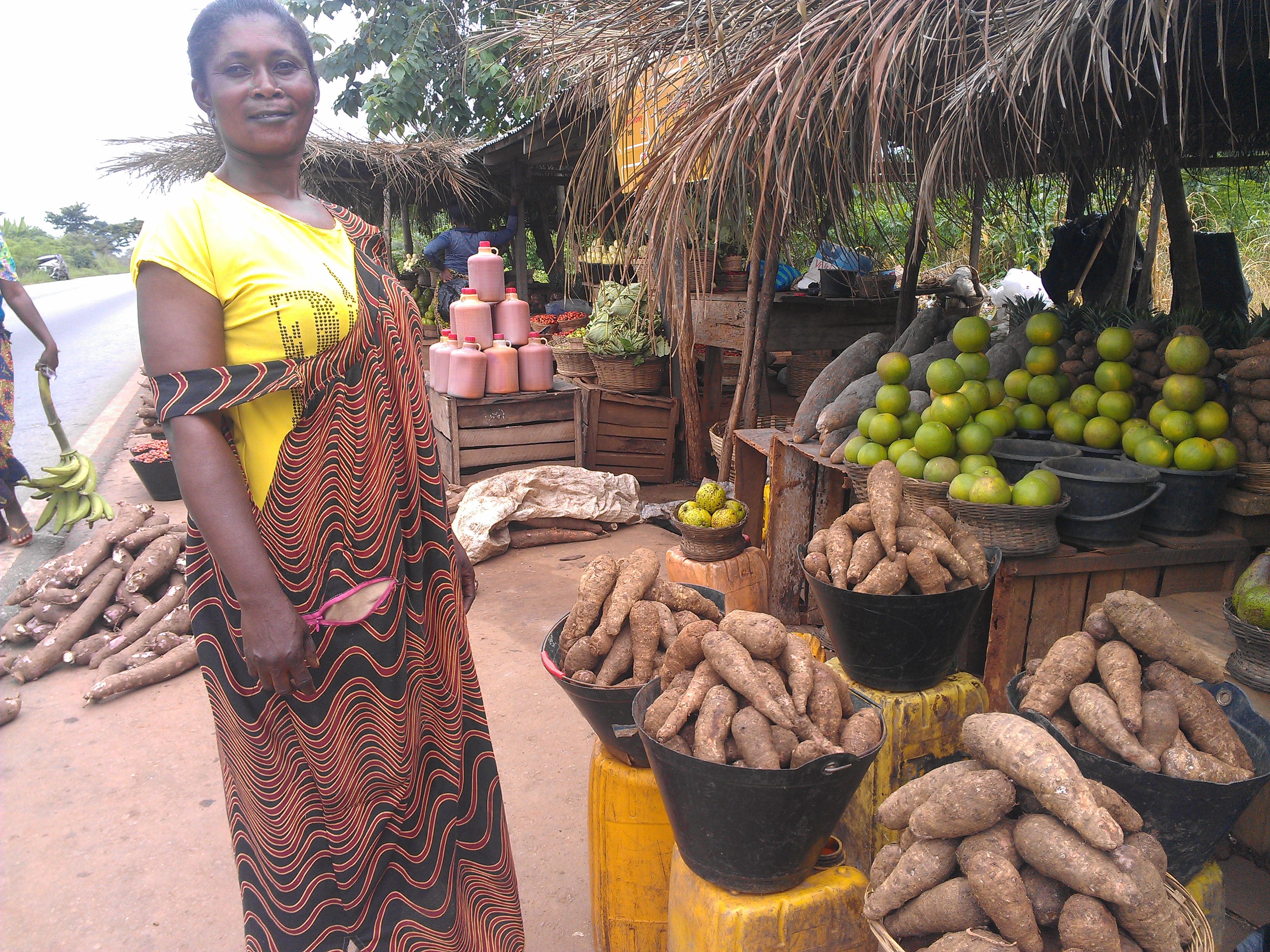
[17]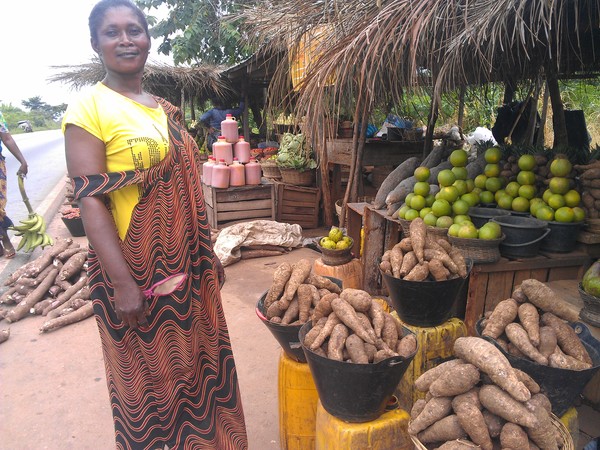 A peasant and street vendor in Kumasi, Ghana. Photo: GRAIN
Egypt is another rice self-sufficient country in Africa, but with a much longer record. At the time of the rice price crisis in 2007-8, Egypt was actually exporting significant volumes. Much of the country’s rice crop is purchased for the national food subsidy program, which provides discounted staple foods to nearly two-thirds of the country’s households. When international food prices spiked in 2007-8, the price of bread shot up because Egypt is one of the world’s top importers of wheat, but the government was able to partially offset this hike in the price of bread by blocking rice exports and keeping its population supplied with affordable local rice, despite efforts by the grain traders to keep their export channels open.
[18]What stands out in Egypt and Mali’s rice self-sufficiency stories is the marginal role of big agribusiness and food companies. The main actors here are smallholder farmers and, in the case of Mali, a vast web of small traders and retailers, or, in the case of Egypt, a state purchase and distribution system. Both governments also regulated trade, and big business was not able to set the agenda on rice policy.
[19] This shows that food self-sufficiency is achieved through government support of local production, not through corporate agribusiness and international trade.
These are simple and low-cost ways that African governments can get behind their food producers and support them in providing high-quality, locally-grown food for their populations, without having to depend on foreign donors. Yet most African governments remain entirely focused on supporting agribusiness corporations. Not only do they provide these companies with tax incentives and corporate-friendly regulations and policies, but they are even giving corporations their country’s most fertile lands and important water sources.
It is incredulous that, in the face of a climate crisis and population boom, African governments have, over the past ten years, given away over 10 million hectares of fertile lands to foreign companies to produce foods for export. These large-scale land grabs were mostly undertaken without consulting the rural communities that live on the lands and have deprived them of the access they need, now and in the future, to land, forests and water sources to feed their communities and supply local markets.
[20]Corporate seeds are no cure for climate change
When it comes to seeds, African governments have similarly spent the past two decades complying with demands from the big seed companies to make their laws and regulations corporate-friendly, under heavy pressure from the World Bank, foreign governments and major donors like the Bill & Melinda Gates Foundation. The justification was always that such changes would drive private investment into plant breeding on the continent and provide farmers with improved varieties. But this investment is not happening. Instead, the number of formal plant breeders is in decline, even in some of Africa’s biggest seed markets, and the vast majority of Africa’s plant breeders are still working in the public sector. Moreover, the private sector is almost exclusively focused on plant breeding for big money-making hybrid crops like maize, and is hardly present when it comes to important traditional food crops that are more resilient to climate change like millet.
[21] Meanwhile, the legal and regulatory changes that governments have implemented for the seed companies have damaged and even criminalised Africa’s dynamic and innovative farmer seed systems, which continue to account for 80% of Africa’s seed supply.
[22]Malawi provides a painful lesson of why programmes to boost local food production with corporate seeds do not work. A little over a decade ago, Malawi launched a national programme to distribute subsidised maize seeds and fertilisers to its farmers. Initially the programme focused on varieties bred by national scientists. But soon, after much pressure from the US government and the World Bank, the program became focused on hybrid maize sold by Monsanto and the Seed Co., a company from Zimbabwe. The first thing that Monsanto did when entering the country was to buy up the national seed company that had developed open-pollinated and hybrid maize varieties adapted to the local agroecosystems. Monsanto dropped the local varieties from circulation and pushed its own, patented varieties instead, even though some of the local varieties were much more productive than their own. Over the years, Monsanto, together with the companies that import and distribute chemical fertilisers, became the main beneficiaries of the government’s seed and fertiliser subsidy programme. With Monsanto in control, the yields of hybrid maize went down, the soils were depleted, and, during the 2015-2016 drought and flooding seasons, the maize crops were almost entirely destroyed. In many places across Malawi, farmers are now moving back to local seed varieties, composting and reintroducing traditional crops that were left behind by the subsidy programmes, such as legumes that build soil fertility and hardy crops like cassava and millet.
[23]A vision for Africa’s food systems in an era of climate crisis
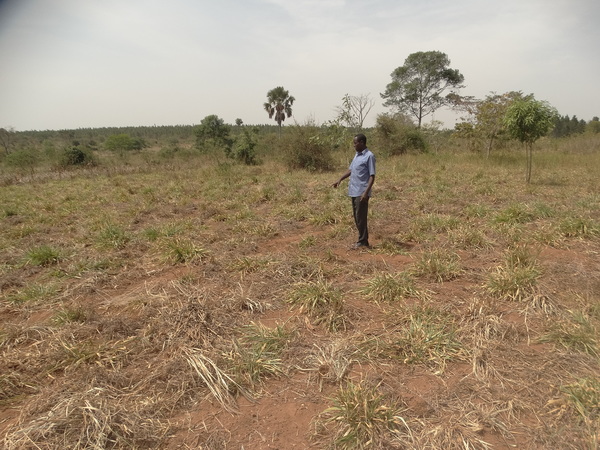 Fodder grass that was scorched by the persistent drought in Nakasongola district, Central Uganda. Photo: Robert Guloba/PELUM Uganda
Any policy or programme that is going to effectively deal with the twin food and climate crises bearing down on Africa has to focus on the main actors in Africa’s food system. Africa’s food producers (small farmers, fisher people and pastoralists) and local markets still supply 80% of the food that is produced and consumed on the continent.
[24] Africa’s food supply relies primarily on the knowledge, seeds, animals, soils and local biodiversity that is maintained by Africa’s small food producers. And Africa’s growing number of urban consumers depend on the small traders and street food vendors to ensure their access to these foods. It is critical to note that the vast majority of these actors in Africa’s food systems are women.
[25]Africa’s food systems, based largely on agroecological practices and short circuits, are the ultimate in green, low emissions and resilient systems, and they supply diets that are among the healthiest on the planet.
[26] Despite a policy environment that is designed to crush them, Africa’s food systems are also the continent’s economic engine, providing more livelihoods, jobs and revenue than any other sector.
[27] Food imports on the other hand are a huge revenue drain on Africa’s scarce foreign reserves (which, it needs to be said, are generated in large part from the sale of fossil fuels).
Africa’s local food systems are what sustains the continent today, and what can sustain it into the future. The climate crisis will increasingly challenge these systems, especially if global greenhouse gas emissions in other parts of the world are not seriously reduced. African food producers will have to continue to adapt their practices and knowledge to cope with a changing and unpredictable climate. Local markets will have to integrate emergency reserves and other measures to ensure people’s access to food and livelihoods during extreme weather events like floods and droughts. These are difficult but not insurmountable issues, and already there are many inspiring initiatives being implemented across the continent to prepare for climate change.
[28]It is important to recognise that the climate crisis requires approaches to adaptation that support Africa’s food systems and are led by Africa’s small-scale food producers, not approaches that rely heavily on chemical inputs and seeds sold by multinational companies, such as those often described as “climate smart” and promoted by programmes like A Green Revolution for Africa (AGRA). (see box: The hoax of climate smart agriculture).
The hoax of climate smart agriculture
Climate Smart Agriculture (CSA) has become one of the new slogans of governments, institutions and corporations when they talk about where farming should be heading in the era of climate crisis. The World Bank, FAO, CGIAR and other institutions all have set up special departments to deal with the issue, and websites to inform the public. These agencies, together with governments, NGOs and the private sector, formed the Global Alliance for CSA in 2015. Centrally involved in the launch of the Alliance was the fertiliser industry, which was trying to hijack the growing enthusiasm for agroecology. Of the Alliance’s 29 non-governmental founding members, there were three fertiliser industry lobby groups, two of the world’s largest fertiliser companies (Yara of Norway and Mosaic of the US), and a handful of organisations working directly with fertiliser companies on climate change programmes.
[1] Initially a full 60% of the private sector members of the Alliance were from the fertiliser industry, and today they are still centrally involved in its management and priority setting.
[2]
But everybody seems to have their own understanding of what CSA entails. The UN and the World Bank present CSA as achieving a “triple-win” of outcomes: increased productivity, enhanced resilience, and reduced emissions from farming. Underlying all this is the notion of ‘sustainable intensification’ that is promoted by fertiliser companies like Yara or pesticide and seed companies like Syngenta and Bayer/Monsanto.
The conceptual and practical vagueness of the concept allows everybody to make their own interpretations and avoid thorny issues such as power imbalances, socio-economic impacts and gender inequities.
Indeed, if one looks at the dominant literature on CSA, most of it is extremely oriented to on-farm production processes only, ignoring the tremendous emissions produced by the wider farm to fork industrial food system. Very revealing in that context are the CSA country profiles that have been developed by the CGIAR and the World Bank giving climate smart scorecards for different countries.[3] They rank Argentina’s huge soybean plantations as super climate smart, applaud farmers in Africa who use improved seeds and controlled chemical fertiliser and give them a high “smartness level”, but fail to analyse indigenous farming practices and the threats they face. The World Bank’s 2016-2020 Climate Action Plan commits to climate smart agriculture investment plans in at least 40 countries “with a focus on hybrid seeds and carbon capture practices, high-efficiency/low-energy-use irrigation programs, livestock productivity, energy solutions for agribusiness, and mainstreaming of risk management.”[4]
Stuck in such discourses and business plans, Climate Smart Agriculture is not going to take us in the direction we need. We need an approach based on agroecology that builds soil carbon and fertility, combined with policies that support small scale farmers and their harvests, local markets and the end of food dumping into Africa.
[4] World Bank Group, Climate change action plan 2016-2020. Washington 2016.
It is also crucial to recognise that adaptation is a secondary issue. It should not get the outsized attention it receives in governmental circles when climate change and Africa’s food systems are on the agenda. The single most important and effective way to protect African food systems from global warming is to cut global greenhouse gas emissions. Given that Africa, as a whole, contributes less than 4% of global emissions this is obviously something that has to happen outside of the continent.
[29] And, because the industrial food system is associated with up to half of all global emissions, and is the leading cause of species collapse, deforestation and habitat destruction worldwide, this reduction has to involve a wholesale transformation of the global food system.
[30]Meaningful climate action in the industrialised countries means an end to the surplus production of the food commodities that are dumped in Africa. Meaningful climate action in Africa means putting an end to the import of these surplus food commodities. The two actions go hand-in-hand; the solution in the North and the South is food sovereignty.
This is the uncomfortable truth that is always left out of high-level governmental discussions and policy processes. In this year’s report by the European Commission’s Task Force Rural Africa, for instance, there is plenty of discussion about how to help African farmers to adapt to climate change but no mention of how the exports and greenhouse gas emissions from Europe’s food system undermine Africa’s food production and its capacity to weather the climate crisis (see box: The case of dairy).
[31] It is politically more expedient to tell small farmers in Africa what to do (“no slash and burn agriculture”, “use ‘climate smart’ GMO seeds”) than it is to deal with the massive emissions produced by the big food and agribusiness corporations back home.
The case of dairy
Twenty dairy companies based in Europe, North America, Asia and New Zealand process 25% of all the milk produced in the world and dominate the global trade in dairy products.
[1] Together these companies are responsible for more annual GHG emissions than Nigeria, Africa’s largest economy.
[2]Many of these companies are based in Europe, which produces more dairy than any country in the world (about 30% of the global total). Over the past decade, instead of reducing dairy production in line with Europe’s commitments to reduce its bloated GHG emissions, European dairy companies have been ramping up production. Since consumption in Europe is stagnating, an increasing share of this production is being sent overseas, in the form of milk powder.
Africa has become a key dumping ground for Europe’s heavily subsidised, surplus milk powder, especially in the form of fat-filled milk powder, which is skim milk powder that is reconstituted with cheap vegetable oils like palm oil. Africa now accounts for over a third of Europe’s exports of fat-filled milk powder, and this low-quality product has inundated Africa’s dairy markets, wreaking havoc on local dairies and dairy farmers.
[3]In line with its climate commitments, Europe has to reduce its consumption and production of dairy products (and find a way to do so that protects its small-scale dairy farmers and processors). It can’t merely export its problem. And, in this way, Africa’s growing consumption of dairy, which is still well below the global per capita average, can be supplied by African dairy farmers and small-scale processors.
African governments are unfortunately mostly singing along with this chorus. Instead of resisting, they are facilitating Africa’s integration into the supply chains of the global food and agribusiness corporations: keeping their borders open to the dumping of surplus food commodities and ultra-processed foods, handing out fertile lands for industrial plantations of oil palms, sugar cane and animal feed crops and criminalising the practices of small vendors and farmers.
[32] There are some hopeful exceptions, such as in Burkina Faso where the government recently put in place a decree requiring public institutions, such as school canteens, to procure only locally-produced foods.
[33] But a much deeper and complete reorientation of public policy by African governments is needed to facilitate and support the necessary transition towards food sovereignty. In the annexed table ‘Good climate – bad climate’ we give some examples of what that could entail.
As it now stands, the actors in Africa’s food systems– the pastoralists and the butchers, the farmers and open-air market vendors, the small-scale fishers and street food hawkers, the farm labourers and women preparing food at home– are going to have to take matters into their own hands. They need to urgently come together, with the support of movements for climate justice, to build and implement a vision for how to respond to the climate crisis and to the interconnected food crisis that Africa faces.
This process is already well underway. Africa’s rural social movements have articulated and come together around a number of demands and principles over recent years that can serve as a basis for a vision for Africa’s food systems in an era of climate crisis. The Nyéléni Peasant Agroecology Manifesto, for instance, which was adopted by numerous national and regional African peasant and fisherfolk organisations in 2017, provides a clear path towards food sovereignty and climate resilience.
[34] The vision is already being put into action by social movements in different parts of Africa, from campaigns to eat-local to struggles against corporate land grabs to fights against the entry of transnational supermarket chains. Such interconnected actions are immediately required to break Africa’s dependence on food imports, advance food sovereignty and, in so doing, effectively deal with the climate crisis.
GRAIN wishes to thank Andrew Adem, Nyoni Ndabezinhle, Mariann Bassey, Mamadou Goïta and David Calleb Otieno for their inputs into this report.
Downloads
Original Source: Grain.org


 A peasant and street vendor in Kumasi, Ghana. Photo: GRAINEgypt is another rice self-sufficient country in Africa, but with a much longer record. At the time of the rice price crisis in 2007-8, Egypt was actually exporting significant volumes. Much of the country’s rice crop is purchased for the national food subsidy program, which provides discounted staple foods to nearly two-thirds of the country’s households. When international food prices spiked in 2007-8, the price of bread shot up because Egypt is one of the world’s top importers of wheat, but the government was able to partially offset this hike in the price of bread by blocking rice exports and keeping its population supplied with affordable local rice, despite efforts by the grain traders to keep their export channels open.[18]
 Fodder grass that was scorched by the persistent drought in Nakasongola district, Central Uganda. Photo: Robert Guloba/PELUM UgandaAny policy or programme that is going to effectively deal with the twin food and climate crises bearing down on Africa has to focus on the main actors in Africa’s food system. Africa’s food producers (small farmers, fisher people and pastoralists) and local markets still supply 80% of the food that is produced and consumed on the continent.[24] Africa’s food supply relies primarily on the knowledge, seeds, animals, soils and local biodiversity that is maintained by Africa’s small food producers. And Africa’s growing number of urban consumers depend on the small traders and street food vendors to ensure their access to these foods. It is critical to note that the vast majority of these actors in Africa’s food systems are women.[25]













 As Uganda awaits the Energy Efficiency and Conservation law, plans to develop a five-year plan are underway.
 REC25 & EXPO Ends with a call on Uganda to balance conservation and livelihood
 Africa’s growth lies with smallholder farmers
 Green Resources’ forestry projects are negatively impacting on local communities – donor
 Banks have given almost $7tn to fossil fuel firms since Paris deal, report reveals
 Opinion: USAID needs an independent accountability office to improve development outcomes
 Communities Under Siege: New Report Reveals World Bank Failures in Safeguard Compliance and Human Rights Oversight in Tanzania
 Oxfam Report 2011: When Indigenous communities named Rwanda nationals by investor to run away from corporate accountability





 MEDIA FOR CHANGE NETWORK2 weeks ago
 MEDIA FOR CHANGE NETWORK1 week ago
 MEDIA FOR CHANGE NETWORK1 week ago
 MEDIA FOR CHANGE NETWORK1 week ago
 FARM NEWS2 weeks ago
 MEDIA FOR CHANGE NETWORK2 days ago

 MEDIA FOR CHANGE NETWORK2 weeks ago