
WITNESS RADIO MILESTONES
Finally UN General Assembly adopts Peasant Rights declaration

Related posts:

 The Glasgow Declaration on Forests is far from “unprecedented”. It’s just another in a long line of meaningless UN declarations
 UN approves a Declaration on protection of rights of peasants
 Global Peasants Movement demand for peasants protection. Enough of FTAs, enough impunity for Corporations!
 Uganda Coffee Bill 2018 finally passed










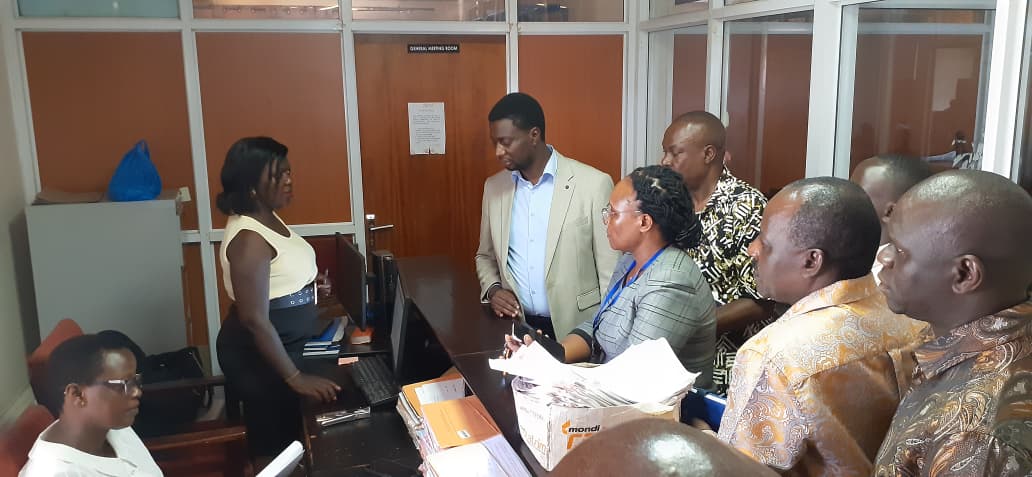
Parliament’s Committee on Lands, Housing and Urban Development has ordered a police investigation after recovering hundreds of land files allegedly hidden in shops and vehicle boots near the Mukono Zonal Land Office (MZO).
The committee, led by chairperson Edison Rugumayo, was inspecting the office as part of an inquiry into allegations of land fraud, delays in processing titles and other irregularities affecting land transactions in Mukono District.
During the inspection, legislators toured various departments and questioned staff about their work, including the handling and storage of land records.
At the office of Senior Staff Surveyor Steven Ndegeya, the committee raised concerns over alleged irregularities involving land titles reportedly created in wetlands and central forest reserves.
The legislators also questioned officials about more than 200 titles reportedly issued in Mabira Forest and demanded a list of people associated with the titles.
The committee was further alarmed after being told that more than 50 land titles had allegedly been created on the government-owned Njeru Stock Farm.
Rugumayo asked Ndegeya to provide the transaction trail, original title documents, geographical maps and details of all individuals holding titles on the land.
Ndegeya asked for more time, saying he needed to consult registrars before preparing an organised report.
He told the committee that there was no certificate of title for Njeru Stock Farm belonging to the Uganda Land Commission in the system.
However, he said the system contained records of individual Mailo landowners whose interests dated back many years, arguing that some people who obtained titles on the land had acquired them legally.
The committee later met MZO officials to establish the causes of the complaints and alleged irregularities.
Three staff members, Dan Kyalo, Hannifah Nantongo and Susan Aceru, were tasked with producing files that were allegedly being taken out of the MZO.
The three denied having moved the files.
However, accompanied by police officers, the committee recovered hundreds of titles allegedly stored in shops across the road from the land office. Other files were reportedly found in vehicle boots.

When questioned about who had instructed them to keep the files outside the office, the officials reportedly told the committee they had been directed by their supervisor, Ndegeya.
The committee also questioned the security team deployed by the Ministry of Lands in Kampala about how the files and titles had been removed from the office.
It emerged that Emma Otim, the security head, had left responsibility for keeping the office keys with a private security guard who routinely opens and closes the office.
The committee questioned why a guard whose primary responsibility was reportedly to man the gate had been entrusted with the office keys.
Principal Assistant Secretary at the MZO, Doreen Tumushabe, said she could not be held responsible for the alleged conduct of individual employees but promised to strengthen supervision.
Tumushabe also cited staff shortages, lack of vehicles and the large number of complaints involving allegedly forged land titles among the challenges affecting the office.
During the oversight visit, the committee also discovered hundreds of allegedly forged land titles at the MZO.
Officials told the committee that no related case had been opened at Mukono Police Station despite the alleged discovery of the forged titles.
The committee also heard complaints from members of the public who said they had waited for years to obtain land titles or have land disputes resolved.
A 75-year-old woman, Maria Nakitende, told the committee that she had waited for decades for authorities to resolve her title-related matter.
Hajji Musa Muliika of Katosi alleged that he was asked to pay Shs14 million after the title he had submitted was reportedly lost while in the hands of MZO officials.
Rugumayo directed police to conduct a thorough investigation into the circumstances surrounding the removal and concealment of the files and establish why they were taken outside the office, particularly ahead of the committee’s visit.
He also ordered the head of the Mukono land office to submit, within one week, a report on land titles in Mabira Forest and wetlands, as well as complaints against staff members.
Masaka legislator Joan Namutaawe criticised the quality of services at the land office and questioned whether Tumushabe was fully in control of operations at the MZO.
Namutaawe warned that the committee would pursue cases involving alleged illegal occupation and development in wetlands.
Source: nilepost.co.ug
Related posts:




MEDIA FOR CHANGE NETWORK
Uganda moves toward a Bamboo Policy to boost environmental conservation and green growth.


Related posts:

 As Uganda awaits the Energy Efficiency and Conservation law, plans to develop a five-year plan are underway.
 REC25 & EXPO Ends with a call on Uganda to balance conservation and livelihood
 Africa’s growth lies with smallholder farmers
 Green Resources’ forestry projects are negatively impacting on local communities – donor
WITNESS RADIO MILESTONES
A Global Report reveals that Development Banks’ Accountability Systems are failing communities.

Related posts:
 Banks have given almost $7tn to fossil fuel firms since Paris deal, report reveals
 Opinion: USAID needs an independent accountability office to improve development outcomes
 Communities Under Siege: New Report Reveals World Bank Failures in Safeguard Compliance and Human Rights Oversight in Tanzania
 Oxfam Report 2011: When Indigenous communities named Rwanda nationals by investor to run away from corporate accountability

Nimule residents raise alarm over alleged land grabbing

New revelations: TotalEnergies is investing in countries facing political and economic risks, raising fresh questions about the company’s investment strategy.

Hunger Soars in AGRA Countries Despite Decades of Green Revolution Push

Smallholder farmers were excluded from the consultative process for the East African Community Seed and Plant Varieties Bill, 2025: CSOs across the EAC call for a time extension and greater inclusion of smallholder farmers in shaping the bill.

Breaking: Sixteen Rooted in Resistance activists arrested and detained as they boldly protested Uganda’s oil ambitions.

Minister Nabakooba wants special land title issuance halted

Thirteen years after the Karuma Hydropower Project broke ground, countless people forced from their homes are still waiting for the compensation and resettlement they were promised.

Civil society organizations across East Africa have revived their campaign against the EAC Seed and Plant Varieties Bill 2025, just as the regional parliament opens the floor to public consultations.

Innovative Finance from Canada projects positive impact on local communities.

Over 5000 Indigenous Communities evicted in Kiryandongo District

Petition To Land Inquiry Commission Over Human Rights In Kiryandongo District

Invisible victims of Uganda Land Grabs
-
 MEDIA FOR CHANGE NETWORK2 weeks ago
Breaking: Sixteen Rooted in Resistance activists arrested and detained as they boldly protested Uganda’s oil ambitions.
-
 MEDIA FOR CHANGE NETWORK2 weeks ago
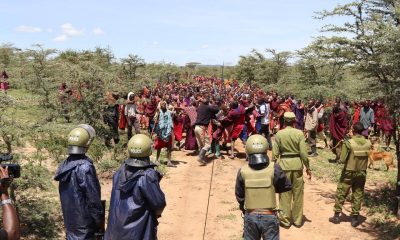
Tanzania’s surge in conservation investments is under the UN spotlight, as allegations of indigenous land rights violations prompt an urgent call for the government to stop the evictions at once.
-

 WITNESS RADIO MILESTONES2 weeks ago
MPs recover hundreds of land files hidden near Mukono land office
-

 MEDIA FOR CHANGE NETWORK2 weeks ago
Ten out of sixteen Rooted in Resistance activists now face charges and have been sent to Luzira Prison after standing up against Uganda’s oil development.
-

 MEDIA FOR CHANGE NETWORK2 weeks ago
Civil society organizations are rallying for a robust grievance mechanism in the EAC Seed and Plant Varieties Bill.
-
 MEDIA FOR CHANGE NETWORK4 days ago
New revelations: TotalEnergies is investing in countries facing political and economic risks, raising fresh questions about the company’s investment strategy.
-

 MEDIA FOR CHANGE NETWORK7 days ago
Six other Anti-EACOP Activists remanded to Luzira over alleged unlawful assembly.
-

 MEDIA FOR CHANGE NETWORK2 weeks ago
Youth, Women, Indigenous People: Yaounde Declaration Pledges 50% Leadership Roles