
WITNESS RADIO MILESTONES
80-year-old man accuses NRM’s Kigongo of land grabbing

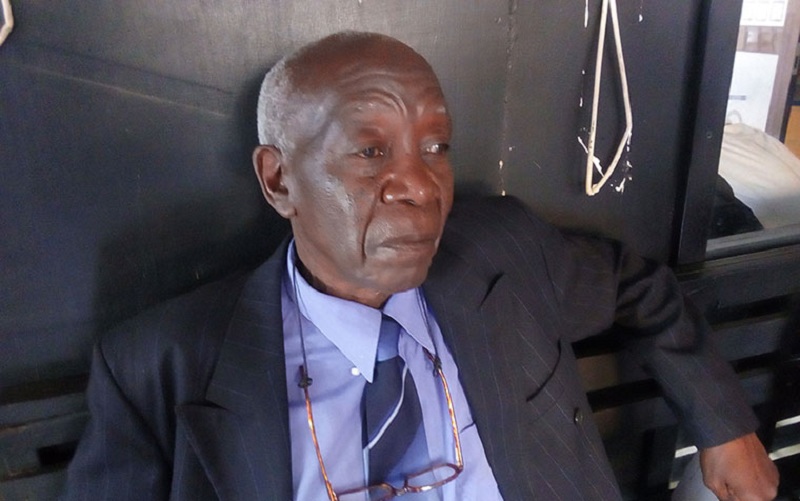
Ruling party, National Resistance Movement (NRM) vice chairman, Al Hajji Moses Kigongo, and other two city businessmen have been dragged into a city land wrangle involving an 80-year-old man.
Wycliffe Kato, 80, a retired civil servant has run to police to report that three ‘tycoons’ including Kigongo are intentionally grabbing his land in Kabalagala.
Kato claims that Kigongo, through fronting associates; Abudu Kizito Abiola and Mansoor Matovu alias Yanga famous for ownership of Namaganda plaza and many other malls in Kampala city, have embarked on a scheme to grab his prime land located in Kabalagala, a city suburb on plots 309, 317, 335 & 368.
When contacted, Kabalagala police station officer in charge of land protection, Aggrey Muwanika, confirmed that indeed Kato filed a case CRB 143/2018, SD REF; 51/23/12/2017 against Kigongo, who, he accused of grabbing land grabbing.
“They purchased a very tiny plot 310 of block 245 (2 decimals) at Kabalagala junction and using this, he encroached on the road reserve of Muyenga – Kabalagala road, encroaching on plots 309, 317, 335 & 368 and have blocked my house by building on its entrance which they build forcefully at night and use guns to threaten anyone who gets involved,” Kato alleged.
In February, Kato wrote to the town clerk of Makindye Division citing an illegal construction on the said land. In the letter, Kato raised an alarm against the duo that he now claims were constructing a shop on the said land.
Accordingly, the owner of the shop insisted that the plot 335 belonged to him despite showing no evidence for it. Kato says that he had complained initially to the LC1 chairman of the area, the DPC Kabalagala police station on January 24, 2018 and KCCA on January 15 but all chickened out after receiving threats from Kigongo’s associates.
At a later stage, the DPC organized for an impartial surveyor to survey the disputed land, only to find out the said surveyor had been paid off to write a biased report in favour of the alleged encroachers, Yanga and Abiola.
The surveyors report indicates that the said land instead belongs to the late Ham Mukasa thus the title deeds obtained by Kato of the same land inconsequential.
“This is not true because, I bought plot 368 from the late Ham Mukasa’s son, the heir, in 1988, His father, who sold me plot 335 in 1986, had died. I had earlier bought plot 309 and 317 from the late Ssemwanga in 1985,” Kato said.
“All land titles of plots 309, 317, 335 and 368 are in my name and available,” Kato states.
To invalidate the report from surveyors, Kato sought help of ministry of Lands, which confirmed he was indeed owner of the said properties on February 12.
“Reference is made to your request for a search. This is to inform you that the following entries appear on the tittles registers as follows; Tittle: Land at Kiuliriza Makindye Division block 245 plot no 335. Reg proprietor: Kiggundu Wycliffe Kato registered on 08/07/1986 at 12:15pm,” a statement from Lands reads in part.
But Kato states that in spite of all this, the group continued constructing at night on his land without being stopped by authorities.
“The police made them so untouchable that Yanga started boasting how no one will be able to touch them as soon as they rent out the shop.”
“He kept flashing his gun and telling us no one can stop him, he threatened our lives,” Kato added.
In a letter to the KCCA director of physical planning dated January 15, Kato expressed concern that the encroachers were playing hide and seek with police and KCCA officials at the expense of him losing his land. Kato said that a police booth situated less than a meter from the construction site did nothing to solve the situation.
“The builders have been playing the police and KCCA, a game of hide and seek while building at night. This is still going on till today. The policemen at the police booth protect the illegal builders instead of protecting us who had even given them a copy of the land title,” the letter reads in part.
According to Kato, he thought the fight was all over until one evening, a car belonging to Kigongo drove into the site, and its occupant who later turned out to be Kigongo jumped out and made a few inspections before entering the car and droving away.
Many times, Yanga and his colleague Abiola had joked about the fact that he cannot fight someone big in government. Kato’s son, David Kato also insists the Kigongo has visited the premises a number of times to do inspections.
“I am so disappointed a full vice chairman can be involved with such characters like Yanga who are known thugs to grab our land with impunity,” David said.

However, Kigongo when contacted disowned the land grabbing claims that he comes from Butambala and cannot involve himself in land matters in Kampala.
“Let me tell you, those people who claim that am involved in that land, should come and I give them land, I do not own that land I come from Butambala-Bulo and I do not have any interest in Kabalagala land. My land is in Bulo where I will be buried and they should stop bothering my secretary,” Kigongo said.
Abiola also said he does not know anything about the contested land in Kabalagala. Yanga on the other hand, said the land is his, and instead advised Mzee Kato to solve his issues with KCCA which, he said is after him for trying to construct in a road reserve.
“That man (Kato) is mad, he should go to court. I am a business man who cannot waste time in such small things; you think I have time to fight with that fellow over just 1 or 2 decimals? That man has a mental issue and you should ignore his claims,” Yanga said.
“Kato is trying to build in the road reserve, and when authorities try to stop him, he comes complaining that it is me. I sought permission from KCCA to put pavers (on plot 310), which I did. However, the pavers were put on plot 335, which belongs to Kato.
He also wants to put mobile money kiosks after his perimeter wall, where people pass and that is between him and KCCA, not me,” Yanga said.
Source: The Observer
Related posts:

 Kayihura suspends 4 police commanders over land grabbing in Mubende
 Land grabbing on the rise during lockdown
 Buganda Prince’s widow accuses lawyer of land grabbing
 Invisible victims of land grabbing: 11 year old boy shot at while in classroom; Prematurely shuttering his dreams…!












Parliament’s Committee on Lands, Housing and Urban Development has ordered a police investigation after recovering hundreds of land files allegedly hidden in shops and vehicle boots near the Mukono Zonal Land Office (MZO).
The committee, led by chairperson Edison Rugumayo, was inspecting the office as part of an inquiry into allegations of land fraud, delays in processing titles and other irregularities affecting land transactions in Mukono District.
During the inspection, legislators toured various departments and questioned staff about their work, including the handling and storage of land records.
At the office of Senior Staff Surveyor Steven Ndegeya, the committee raised concerns over alleged irregularities involving land titles reportedly created in wetlands and central forest reserves.
The legislators also questioned officials about more than 200 titles reportedly issued in Mabira Forest and demanded a list of people associated with the titles.
The committee was further alarmed after being told that more than 50 land titles had allegedly been created on the government-owned Njeru Stock Farm.
Rugumayo asked Ndegeya to provide the transaction trail, original title documents, geographical maps and details of all individuals holding titles on the land.
Ndegeya asked for more time, saying he needed to consult registrars before preparing an organised report.
He told the committee that there was no certificate of title for Njeru Stock Farm belonging to the Uganda Land Commission in the system.
However, he said the system contained records of individual Mailo landowners whose interests dated back many years, arguing that some people who obtained titles on the land had acquired them legally.
The committee later met MZO officials to establish the causes of the complaints and alleged irregularities.
Three staff members, Dan Kyalo, Hannifah Nantongo and Susan Aceru, were tasked with producing files that were allegedly being taken out of the MZO.
The three denied having moved the files.
However, accompanied by police officers, the committee recovered hundreds of titles allegedly stored in shops across the road from the land office. Other files were reportedly found in vehicle boots.

When questioned about who had instructed them to keep the files outside the office, the officials reportedly told the committee they had been directed by their supervisor, Ndegeya.
The committee also questioned the security team deployed by the Ministry of Lands in Kampala about how the files and titles had been removed from the office.
It emerged that Emma Otim, the security head, had left responsibility for keeping the office keys with a private security guard who routinely opens and closes the office.
The committee questioned why a guard whose primary responsibility was reportedly to man the gate had been entrusted with the office keys.
Principal Assistant Secretary at the MZO, Doreen Tumushabe, said she could not be held responsible for the alleged conduct of individual employees but promised to strengthen supervision.
Tumushabe also cited staff shortages, lack of vehicles and the large number of complaints involving allegedly forged land titles among the challenges affecting the office.
During the oversight visit, the committee also discovered hundreds of allegedly forged land titles at the MZO.
Officials told the committee that no related case had been opened at Mukono Police Station despite the alleged discovery of the forged titles.
The committee also heard complaints from members of the public who said they had waited for years to obtain land titles or have land disputes resolved.
A 75-year-old woman, Maria Nakitende, told the committee that she had waited for decades for authorities to resolve her title-related matter.
Hajji Musa Muliika of Katosi alleged that he was asked to pay Shs14 million after the title he had submitted was reportedly lost while in the hands of MZO officials.
Rugumayo directed police to conduct a thorough investigation into the circumstances surrounding the removal and concealment of the files and establish why they were taken outside the office, particularly ahead of the committee’s visit.
He also ordered the head of the Mukono land office to submit, within one week, a report on land titles in Mabira Forest and wetlands, as well as complaints against staff members.
Masaka legislator Joan Namutaawe criticised the quality of services at the land office and questioned whether Tumushabe was fully in control of operations at the MZO.
Namutaawe warned that the committee would pursue cases involving alleged illegal occupation and development in wetlands.
Source: nilepost.co.ug
Related posts:





MEDIA FOR CHANGE NETWORK
Uganda moves toward a Bamboo Policy to boost environmental conservation and green growth.


Related posts:

 As Uganda awaits the Energy Efficiency and Conservation law, plans to develop a five-year plan are underway.
 REC25 & EXPO Ends with a call on Uganda to balance conservation and livelihood
 Africa’s growth lies with smallholder farmers
 Green Resources’ forestry projects are negatively impacting on local communities – donor
WITNESS RADIO MILESTONES
A Global Report reveals that Development Banks’ Accountability Systems are failing communities.

Related posts:

 Banks have given almost $7tn to fossil fuel firms since Paris deal, report reveals
 Opinion: USAID needs an independent accountability office to improve development outcomes
 Communities Under Siege: New Report Reveals World Bank Failures in Safeguard Compliance and Human Rights Oversight in Tanzania
 Oxfam Report 2011: When Indigenous communities named Rwanda nationals by investor to run away from corporate accountability

Environmental and human rights advocates are urging the world to hold global investors accountable for their actions.

Why are secure land rights key to Africa’s climate resilience and the protection of its natural treasures?

Biodiversity Goals: The world has no time to meet its 2030 goals.

Lands Ministry tightens rules for replacing lost titles, gives landowners 30 days to object

Lango ex-combatants count losses after dry spell destroys maize harvest

Five years after Uganda’s National Action Plan on Business and Human Rights, are local communities hosting land-based investment projects seeing change?

The global race for clean energy minerals is leaving communities grappling with conflicts and human rights abuses, a new report reveals.

Tanzanian Government Abducts Maasai Villagers in an Unconscionable Attack on Indigenous Land Defenders

Innovative Finance from Canada projects positive impact on local communities.

Over 5000 Indigenous Communities evicted in Kiryandongo District

Petition To Land Inquiry Commission Over Human Rights In Kiryandongo District

Invisible victims of Uganda Land Grabs
-
 NGO WORK1 week ago
Tanzanian Government Abducts Maasai Villagers in an Unconscionable Attack on Indigenous Land Defenders
-

 MEDIA FOR CHANGE NETWORK6 days ago
World Food Day 2026: Building healthy diets means reimagining how we grow, share, and enjoy our food.
-

 MEDIA FOR CHANGE NETWORK1 week ago
Court remands 10 anti-oil activists as suspect collapses in dock
-

 MEDIA FOR CHANGE NETWORK1 week ago
Defending ancestral land comes at a steep price as Maasai communities in Tanzania face relentless, mounting pressure.
-

 MEDIA FOR CHANGE NETWORK1 week ago
As waves of investment sweep across Uganda, countless women rise to defend their land, safeguard their traditions, and claim their right to be heard.
-

 MEDIA FOR CHANGE NETWORK6 days ago
International Day of Rural Women : Rural women farmers deserve not only equal rights and access to resources, but also the strength and voice to safeguard Mother Nature.
-

 NGO WORK1 week ago
As World Bank Holds Annual Meetings, 84,000 Tanzanians Call for Justice
-

 MEDIA FOR CHANGE NETWORK1 week ago
In Nepal, women seek ownership rights to the lands they tend