Connect with us

MEDIA FOR CHANGE NETWORK

The CSOs’ Appeal to hear the EACOP case on merit is a crucial development, with the ruling now awaited.

Published

on

By Witness Radio team.

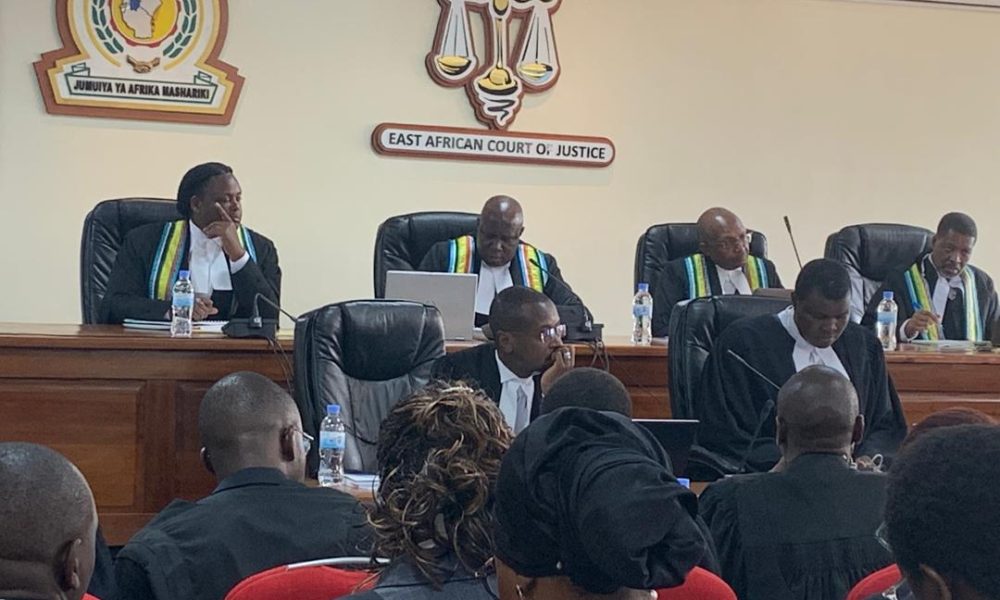
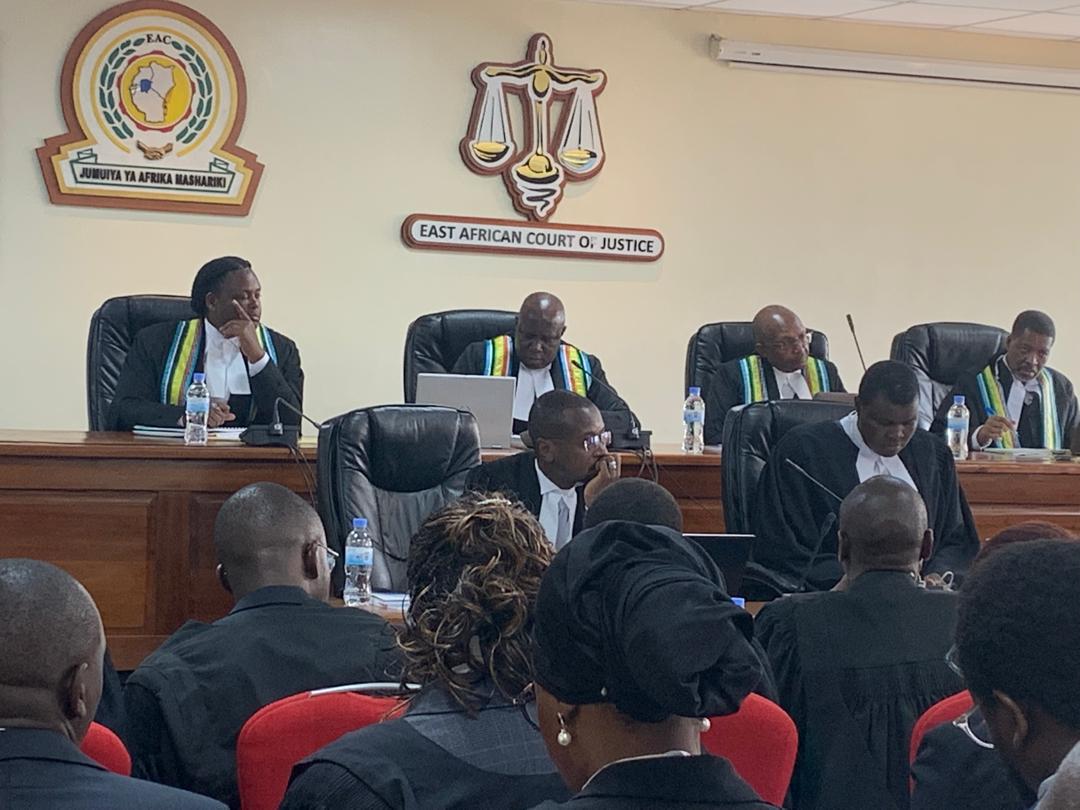
The Appellate Division of the East African Court of Justice (EACJ) has heard an appeal filed by four civil society organizations (CSOs) challenging the dismissal of their case against the East African Crude Oil Pipeline (EACOP).

The appeal, filed by four civil society organizations (CSOs), seeks to reconsider the case on its merits after the First Instance Division of the EACJ dismissed it in November 2023 on procedural grounds.

The case was before Justice Nestor Kayobera, Justice Kathurima M’Inoti, Justice Anita Mugeni, Justice Barishaki Bonny Cheborion, and Justice Omar Othman Makungu.

The East African CSOs, Center for Food and Adequate Living Rights (CEFROHT), Africa Institute for Energy Governance (AFIEGO), Natural Justice (NJ), and Centre for Strategic Litigation (CSL), argued that the lawsuit was dismissed unfairly and that the First Instance Court had improperly evaluated the evidence before making its ruling.

According to CSOs, the EACOP project, if implemented, could lead to significant environmental damage, endangering local livelihoods, water supplies, and biodiversity. This includes potential oil spills, disruption of ecosystems, and contamination of water sources. They further assert that TotalEnergies, China National Offshore Oil Corporation (CNOOC), and the governments of Tanzania and Uganda failed to provide a sufficient risk assessment for the project and to adhere to international human rights norms.

The EACOP project is a significant pipeline initiative spanning over 1,400 kilometers, designed to transport crude oil from Uganda’s Lake Albert region to the Tanzanian port of Tanga. The project is a joint venture of TotalEnergies and China National Offshore Oil Corporation (CNOOC) in partnership with the governments of Uganda and Tanzania.

During the appeal hearing in Kigali, Rwanda, the CSOs’ lawyers, known for their expertise, presented robust arguments against the First Instance Court’s dismissal of the case.

Counsel David Kabanda, one of the CSOs’ lawyers, argued that the First Instance Court had overstepped its role by evaluating evidence when considering the preliminary objection raised by the Tanzanian government, which claimed the case was time-barred. He emphasized that determining a preliminary objection should not require examining evidence.

The CSOs’ legal team also emphasized that the case had been filed promptly under the EAC Treaty, a key legal instrument that allows individuals in East African countries to challenge unlawful acts within two months of their enactment or upon gaining knowledge of such acts.

They also urged that the court should have examined other, non-time-barred portions of the case if a portion of it was dismissed on time-barred grounds.

The CSOs also raised the First Instance Court’s ruling to award costs to the Tanzanian and Ugandan governments and the East African Community Secretary General (EAC). They contended that a decision like this may deter future public interest lawsuits, particularly those involving human rights and the environment, as it could set a precedent of penalizing those who advocate for public welfare.

Lawyer Rugemeleza Nshala cautioned that charging in public interest cases, particularly those involving the environment and human rights, could have a “chilling effect” on those seeking justice. “The case that was filed affects the people, and this is why we have all these people in court today,” he said.

After hearing arguments from both sides, including legal representatives for Uganda, Tanzania, and the EAC Secretary General, the appellate judges reserved their ruling, stating that it would be delivered “on notice.”

Continue Reading

MEDIA FOR CHANGE NETWORK

The Witness Radio and Seed Savers Network Joint Radio program boosts Farmers’ knowledge of seed and food sovereignty.

Published

on

By Witness Radio team

Across Africa, seed laws are increasingly structured to favor commercial seed systems, leaving smallholder farmers with limited control over the seeds they rely on for food production. While governments often justify these laws as necessary for quality control and increased productivity, farmers and civil society organizations argue that they deepen dependency, erode Indigenous knowledge, and undermine food sovereignty.

Smallholder farmers produce the majority of the world’s food. Recognizing practices such as saving, exchanging, and replanting seeds can empower farmers and reinforce their vital role in food security.

In response to this challenge, Witness Radio, in partnership with the Seed Savers Network (SSN) in Kenya, is joining hands to save African indigenous seeds by using media to build power and share knowledge and skills with smallholder farmers across Africa and beyond on seed sovereignty and farmer-led food systems.

Last Thursday, Witness Radio and the Seed Savers Network aired the first episode of the program live, featuring representatives of smallholder farmers and civil society organizations from across the African continent. The discussion, which was live on Witness Radio, focused on sharing Indigenous knowledge and practical approaches to saving and conserving African Indigenous seeds.

“It is a crucial time to speak about food sovereignty because, as Indigenous People, talking about food sovereignty is not just an agricultural issue, according to us. It’s a vital act of decolonization and a sign of cultural survival to us and also self-determination.” Said June Bartuin, the Executive Director for Indigenous Peoples’ for peace and climate justice, Kenya, during the first episode of the program.

Across Africa, several policies and laws restrict farmers’ rights to save, exchange, and sell their own seeds. In East Africa, the recently introduced EAC Seed and Plant Varieties Draft Bill 2025 has sparked protests from smallholder farmers and activists, who argue that some of its provisions threaten farmer-led seed systems and favor multinational seed companies.

In Ghana, the Plant Variety Protection Act of 2020 restricts farmers’ seed management practices, underscoring the urgent need for policy reforms that support farmer-led seed systems.

“We have this Plant Variety Protection Act of 2020, which has made it easier for seed companies and the commercial sector to control the seed system,” said Atim Robert Anaab, who works with Trax Ghana and the Beela Project in Northern Ghana, adding that, “The law requires seeds to be certified according to standards that most small-scale farmers simply cannot meet.”

Such laws have reshaped Africa’s food systems by pushing farmers toward commercial seeds that must be purchased every planting season. These seeds are often sold alongside chemical fertilizers and pesticides, significantly increasing production costs for smallholder farmers.

Priscilla Nakato, Chairperson of the Informal Alliance of Communities Affected by Irresponsible Land-Based Investments in Uganda, noted that these policies have also displaced traditional storage and seed preservation practices.

“In the past, every household had a granary, used not only to store food but also to preserve seeds for the next planting season. Many communities still hold this resilience, and reviving these practices can inspire hope for food sovereignty.”

Beyond economics, restrictive seed laws are accelerating the erosion of Indigenous knowledge and cultural practices. June Bartuin explained that women were traditionally the custodians of seeds, preserving them using low-cost methods such as smoke storage in traditional houses.

“This maize could be stored for two, three, even five years, and when planted, it germinated very well,” she added.

The collaboration between Witness Radio and the Seed Savers Network brings together grassroots organizing and community media to amplify farmers’ voices. The Seed Savers Network, a grassroots organization based in Kenya, works with more than 500,000 farmers and supports 121 community seed banks across the country.

According to Mercy Ambani, Resource Mobilization Officer at Seed Savers Network, the organization focuses on rebuilding farmers’ confidence, knowledge, and rights, making platforms such as Witness Radio ideal for reaching farmers directly.

“Our vision is to protect seed sovereignty, conserve biodiversity, and strengthen farmers’ rights through policy advocacy and practical action,” she said.

Through initiatives such as the Seed School, farmers, researchers, and activists are trained in seed selection, storage, preservation, and community seed bank management.

“In December 2024, Kenyan farmers achieved a landmark court ruling that struck down parts of the Seed and Plant Varieties Act, showing the power of collective action and legal advocacy to protect farmers’ rights.”

“This ruling showed that there is power in numbers,” said Ambani. “When farmers raise their voices together, change is possible.”

Regional knowledge exchange is also growing. Farmers from Uganda and Ghana who attended the Seed Savers Boot Camp have returned to their communities to establish household seed banks, kitchen gardens, and farmer field schools.

“My home has become a farmer’s field school. People are hungry for this knowledge,” said Nakato.

Without reforms that recognize and protect farmer-managed seed systems, farmers risk losing control over their seeds — and with them, control over food, culture, and livelihoods.

“If we lose our seeds, we lose our culture, our food, and our future,” Bartuin emphasized.

Wokulira Geoffrey Ssebaggala, Team Leader at Witness Radio, highlighted the importance of creating space for farmers to share knowledge and experiences.

“We are providing a platform where farmers and experts can exchange knowledge on sustainable farming practices. We believe this radio content will have a real impact on food and seed sovereignty across Africa.” Mr. Ssebaggala added.

The radio series will continue to provide practical knowledge, farmer voices, and policy analysis to support sustainable agriculture across Africa.

Continue Reading

MEDIA FOR CHANGE NETWORK

Close to six years on, Pangero Chiefdom subjects still linger in pain after the government army’s forceful takeover of their ancestral land.

Published

on

By Witness Radio Team

It was a bolt from the blue—an unimaginable shock that arrived without warning. Close to six years on, its consequences have hardened into everyday reality, and justice remains elusive. That shock was felt most acutely in Pangero Chiefdom, where a once-stable community is still grappling with the aftermath of an abrupt and forceful military land takeover, highlighting ongoing land injustice.

The Pangero Chiefdom of the Alur Kingdom is located in Koch Parish, Nebbi Sub-County, Nebbi District, in north-western Uganda, north of Lake Albert and near the Uganda–DR Congo border. For decades, families here depended on the land for farming, food, and cultural continuity, with traditions and livelihoods deeply tied to the soil.

The wounds from the land loss remain raw, and the community continues to demand the return of their land and justice for their suffering.

Over 100 families across Aleikra, Kochi Central, and Panyabongo villages have been directly impacted by the land grab, according to the Traditional Chief.

In Uganda, land is often taken from people with low incomes through a system lacking explicit legal protections, raising questions about the legitimacy and fairness of land seizures, especially when communities are evicted without free, prior, and informed consent.

“When forces such as the Army occupy community land, people are always afraid even to ask why they are settling or why they have settled on their land. It becomes difficult to question men in uniform,” said Mr. Ulama Dison Duke Ukerson, the Traditional Chief of Pangero Chiefdom, in an interview with Witness Radio Uganda.

In March 2020, hell broke loose in the chiefdom as residents woke up to find UPDF soldiers camping on their land. Many initially thought the soldiers were temporarily stopping over on their way elsewhere. However, after some time, it became clear that the force was not moving on but instead settling in the lush environment of Pangero.

When confronted, residents claim the soldiers explained that they were taking refuge, with Zombo District as their ultimate destination.

“They have stayed there for now, close to six years. Initially, they told us they would take refuge for a few days and later move to the Zombo District. Some left, but others remained. We initially thought they were staying for a few weeks. Since then, they have stayed on our land without paying anything,” said Gladys Budongo, an elder in the chiefdom, in an interview with Witness Radio.

Forty-one-year-old Doreen Kawambe, a resident of Aleikra Village, is among those who lost part of their land during the takeover. Doreen said she originally owned seven acres inherited from her father.

“When the UPDF came, they seized three acres of our land. The remaining land is difficult to access. My family was left with only four acres. We can no longer go to the forest for water, and the areas we used to cultivate are now guarded. Food has become a serious problem,” she said.

Before the takeover, Doreen’s land provided enough income to sustain her family. “From one acre, I could earn up to 800,000 shillings (about 224.94 USD) or more in a season. Now, with less land and limited access, survival is tough.” She explained.

Gladys Budongo, a 61-year-old widow, also lost her late husband’s five-acre family land, which is part of a larger ancestral estate that the family has occupied for decades.

Amid community resistance and ongoing efforts to reclaim their land, the Army conducted surveys and valuations in 2023 and 2024. However, elders like Gladys Budongo claim the process was irregular and imposed without community consent, highlighting the need for legal accountability.

“Koch Land Committee also pressured the community to accept the survey exercise. Although it was supposed to represent the local population, it was not democratically elected by consensus, as is traditional in Alur communities, and instead consisted of an imposed elite who pressured us to surrender our land,” she said.

According to elders interviewed by Witness Radio, during an announcement meeting on September 19, 2025, facilitated by officials from the UPDF Land Board, the national surveyor, and the Commander of Koch Army Barracks, community members were compelled to sign documents accepting meager compensation for land seized five years earlier.

“Residents whose land was surveyed were given two choices: either sell their land to the Army by accepting the compensation offered or refuse the UPDF’s offer,” the area chief said, adding that officials barred him from speaking or defending his chiefdom.

“Leaders in the area are rough when we oppose this land grab. Even in meetings, they don’t allow me to speak. On the few occasions I attended and got silenced,” he said.

Mr. Opio Okech, a community land defender, blamed the government and the Army for forcefully occupying people’s land.

“The forced decision to sell land to the government is similar to eviction because people have no say. The problem started when the government entered the land, stayed for a long time without proper notice, and then decided it would not leave and instead offered compensation. It looks, smells, and walks like a forceful eviction,” he said.

Despite promises of compensation, Gladys and others say they have not received any payment.

“They forced people to sign documents, but nobody has been paid yet. Some were threatened with arrest if they protested,” she said.

Koch Resident District Commissioner (RDC) Mr. Abak Robert, representing the Office of the President, denies allegations of land grabbing, stating the land was acquired on a willing buyer, willing seller basis, which raises questions about the transparency and legality of the process.

“I personally participated in monitoring the project-affected persons. People who accepted giving land to the UPDF were properly valued, accepted the figures, and signed willingly,” he said in an interview with Witness Radio.

When asked how this arrangement worked, given that compensation was considered only after the land had already been forcibly taken, he responded that the government would soon pay the affected people.

“Compensation is expected soon, and the community is agreeable to receiving monetary payment,” the RDC added, noting that the land currently occupied by the UPDF in Pangero Chiefdom spans more than 242.811 hectares.” He added.

However, affected residents insist that the survey and valuation process involved intimidation and coercion.

Capt. David Kamya, the 4th Division Public Information Officer based in Gulu District, declined to comment about the UPDF’s improper land acquisition upon being contacted by Witness Radio.

“How sure are you that the UPDF grabbed the land? I was told that if someone wants to talk about such matters, they must be on the ground. Come, and we meet and see this physically,” he said before hanging up.

The consequences of the land seizure extend beyond economics. According to the chiefdom elders, families struggle to sustain livelihoods, children go hungry, and elders feel powerless in the face of military authority.

 “People are afraid to speak out. We are threatened when we ask for justice. It feels like the community has no voice. The loss of ancestral land is also cultural. Trees, rivers, and open spaces that connected generations have been taken over, disrupting a way of life that has lasted centuries,” she added.

Nearly six years after the UPDF’s arrival, the Pangero Kingdom remains a community in limbo.

“We want someone to stand for us to stop them from taking our land or even buying it as they promise. They refuse to hear the elders’ voices and do whatever they want. We want our land back,” said the traditional chief, whose houses now accommodate soldiers.

Continue Reading

MEDIA FOR CHANGE NETWORK

Indigenous communities in Eastern Nepal accuse the World Bank’s Linked Cable Car Project of rights violations.

Published

on

Indigenous communities in Eastern Nepal accuse the World Bank’s Linked Cable Car Project of rights violations.


By Witness Radio Team

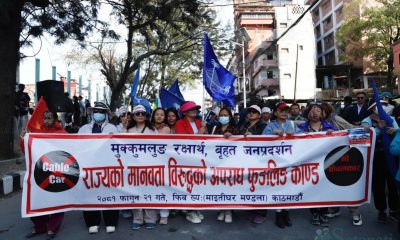
A $22 million cable car project cutting through sacred forests in eastern Nepal has become the centre of a growing dispute. Indigenous communities accuse developers and the World Bank Group of enabling forced development that violates community land rights and exacerbates human rights abuses.

The project, whose construction began in 2022, is developed by Pathibhara Devi Darshan Cable Car Pvt. Ltd., a subsidiary of Nepal’s powerful IME Group, and is being built on Mukkumlung Mountain, also known as Pathibhara, in Taplejung District. While the government has promoted the project as a tourism and accessibility initiative, the Indigenous Yakthung (Limbu) communities say construction has proceeded without their consent and at a high cultural and environmental cost.

According to the project’s Initial Environmental Examination (IEE), the cable car infrastructure would occupy 6.22 hectares (15.36 acres) of community and government forest land.

Community leaders opposing the project say it threatens local livelihoods and social structures, including more than 700 local porters, nearly 30 locally run small businesses, and approximately 1,700 households that depend on pilgrimage-related income. They also warn of irreversible damage to cultural heritage sites.

The cable car intends to transport pilgrims to the Pathibhara Devi temple, one of Nepal’s most revered Hindu shrines, which is currently accessible only via a steep, high-altitude trek. Project developers argue the cable car will boost tourism, generate employment, and allow elderly and disabled devotees easier access.

For the Yakthung people, Mukkumlung is not merely a pilgrimage site but a sacred ancestral land that embodies their spirituality, culture, and identity.

“This mountain is sacred ancestral land. It defines our spirituality, culture, and customary law,” said Advocate Shankar Limbu, vice-chair of the Lawyers’ Association for Human Rights of Nepalese Indigenous Peoples (LAHURNIP). “Clearing forests and altering the mountain’s ecology weakens its spiritual power and violates our collective rights.”

Local leaders say they were never consulted before construction began, highlighting a clear violation of their rights and raising concerns over FPIC breaches.

“The IFC’s own Performance Standards state that Indigenous Peoples have the right to give Free, Prior and Informed Consent to projects on their lands,” said Saru Singak of the Mukkumlung Conservation Joint Struggle Committee. “But no one ever asked us whether we wanted this project. It is destroying forests and sacred landscapes and disrespecting our religion and culture.”

Environmental groups report that construction has already felled over 10,000 trees, including

protected species like Himalayan yew, threatening local biodiversity.

As forest clearing accelerated, opposition from local communities intensified. In January 2025, Nepal Police and Armed Police Force personnel reportedly used force against protesters, leading to the detention of dozens and sustaining severe injuries. Activists allege continued intimidation and retaliation against those opposing the project.

The dispute has drawn international attention, especially as the World Bank Group faces mounting scrutiny over financing harmful investments. Between August 2022 and July 2024, the IFC provided advisory services to the IME Group for four cable car projects in Nepal, including the Pathibhara project.

Indigenous leaders argue that during this period, the IFC failed to ensure compliance with its Environmental and Social Performance Standards, particularly regarding environmental assessments and the respect for communities’ right to Free, Prior, and Informed Consent, raising questions about its oversight and accountability.

In August 2025, Yakthung communities, supported by lawyers and civil society organisations, filed a formal complaint against the World Bank Group, alleging breaches of safeguarding standards that led to human rights abuses and the destruction of cultural heritage. In December 2025, the World Bank Group’s independent watchdog, the Compliance Advisor Ombudsman (CAO), formally registered the complaint and is currently assessing whether to proceed with mediation or a full compliance investigation.

For Indigenous rights advocates, the Pathibhara dispute reflects a broader pattern seen in World Bank–linked projects across Africa, Asia, and Latin America, where development initiatives proceed without meaningful community participation and accountability mechanisms are activated only after harm occurs, yet rarely provide a remedy.

A decade ago, an 11-month investigation by the International Consortium of Investigative Journalists (ICIJ), Evicted and Abandoned, found that an estimated 3.4 million people were physically or economically displaced by World Bank–funded projects, raising long-standing concerns over the institution’s ability to protect vulnerable communities.

IME Group operates across energy, manufacturing, infrastructure, and trade, and owns Global IME Bank, Nepal’s largest commercial bank. The IFC has provided more than $50 million to IME Group over the past decade.

Continue Reading

Resource Center

Legal Framework

READ BY CATEGORY

Facebook

Newsletter

Subscribe to Witness Radio's newsletter


Trending

Subscribe to Witness Radio's newsletter