Connect with us

MEDIA FOR CHANGE NETWORK

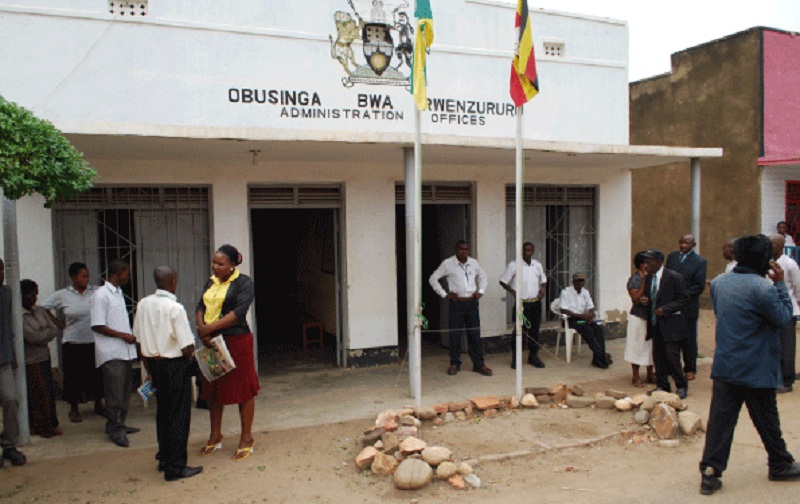
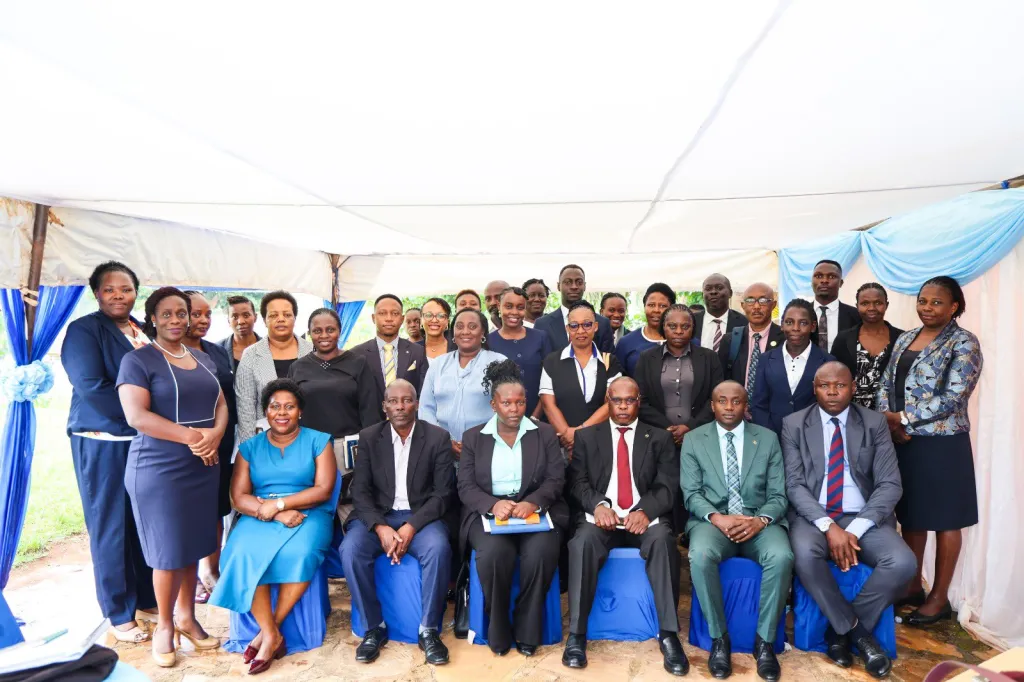
Stop setting Obusinga against government, OBR chief prince Kibanzanga warns.

Published

on

By Bikeke Saimon

The state minister for agriculture who is also the chief prince Obusinga-Bwa-Rwenzururu cultural institution says people against the district split continue using the institution, a selfish mind he condemns.

Hon. Christopher Kibanzanga told URN that the cultural institution has no powers over the continuing demand to the split of the district.

In 2011, under the stewardship of Canon. Rev. Julius Kithaghenda, district council made resolution to have Kasese district split into three districts.
The proposal was challenged by some of the members of parliament from the region citing there was no consensus and community involvement.

Since 2011 to 2016, under the leadership of Lt. Col. Mawa Muhindo, the then district chairperson, council proposed that the split should consider the minorities specifically Basongora and Banyabindi, communities on the lower land to have a separate district, thus making it four districts.

Read More..

Continue Reading
Click to comment

Leave a Reply

Your email address will not be published. Required fields are marked *

MEDIA FOR CHANGE NETWORK

After weeks behind bars, six anti-oil activists have been granted cash bail by the LDC Court.

Published

on

By the Witness Radio team.

After more than two weeks in detention, six young activists challenging Uganda’s oil projects have secured cash bail, facing unlawful assembly charges.

All six belong to the Rooted in Resistance movement. On Thursday, September 17, they appeared before the LDC Magistrate’s Court in Kampala, where the court granted each cash bail of Shs300,000.

The activists granted bail are Isaac Mukiibi, Alphat Mawanda, Nicholas Mugezi, Innocent Opio, John Friday and Ronald Onyango.

Rooted in Resistance, formerly known as Students Against EACOP, has emerged as a steadfast force challenging the spread of fossil fuels in Uganda.

The activists were held in Luzira Maximum Security Prison after being arrested during demonstrations in Kampala against Uganda’s ongoing fossil fuel projects.

The activists were charged with unlawful assembly under the Penal Code Act.

Section 65(1) of the Act defines an unlawful assembly as a gathering of three or more people who intend to commit an offense, behave in a way that creates reasonable fear, or gather without a legitimate reason in circumstances likely to provoke others to breach the peace.

Under Section 66, taking part in an unlawful assembly is a misdemeanor and, upon conviction, carries a maximum sentence of one year in prison.

On August 31, 2026, police arrested the six during Kampala demonstrations, as Rooted in Resistance rallied against Uganda’s oil development.

Determined to be heard, the activists tried to deliver petitions to Parliament and TotalEnergies offices in Kampala, urging closer examination of oil projects and rejecting further fossil fuel investment.

During the demonstrations, police detained a total of 16 activists.

Police arrested ten at Parliament and charged them with public nuisance, while arresting six more at RR Pearl Tower One on Yusuf Lule Road, where TotalEnergies’ offices are located.

The six soon appeared before the LDC Magistrate’s Court, where they were remanded to Luzira Prison.

The activists say their resistance stems from concerns about the environmental and social fallout of oil development, especially its impact on communities, livelihoods, and the natural world.

They are urging a shift toward investing in renewable energy, rather than pouring more resources into fossil fuel infrastructure.

After the court granted bail, Rooted in Resistance celebrated the release of its members but condemned what it sees as ongoing attempts to silence their movement through arrests and charges.

“We will never be intimidated by the continued trumped-up charges and the brutal arrests being subjected to us,” the group said in a statement following the release on its X handle.

The group pledged to keep rallying for an oil-free economy and what it calls true economic freedom.

Continue Reading

MEDIA FOR CHANGE NETWORK

While hunger continues to grip the world, a new report highlights forests and forest foods as a hidden treasure trove of nourishment.

Published

on

By the Witness Radio team.

Between 638 million and 720 million people experienced hunger in 2024, according to the Food and Agriculture Organization of the United Nations (FAO)’s State of Food Security and Nutrition in the World report 2025.

These staggering numbers underscore the relentless challenge of global food insecurity as nations race to transform food systems into models of productivity, nutrition, and resilience.

As nations search for answers to hunger and malnutrition, a new report reveals that forests and the bounty they provide—food, income, and vital ecosystem services—are often left out of the global conversation on food security and resilience.

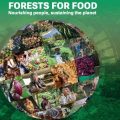
Titled Forests for Food: Nourishing People, Sustaining the Planet, the report produced by the Food and Agriculture Organization of the United Nations (FAO) and its partners examines the different ways forests and trees contribute to food security and nutrition.

The report spotlights forest foods, describing them as some of the most overlooked and least understood elements within our food systems.

The report says more than 50,000 wild species found in forests are used for food and medicine, including at least 10,000 species used directly as food.

This hidden menu features fruits, nuts, tubers, mushrooms, edible insects, and wild meat.

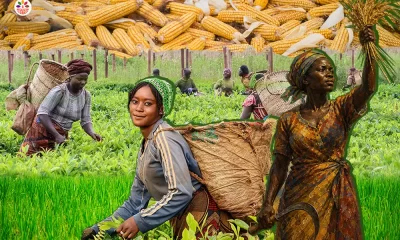
For communities nestled in and around forests, these foods not only supplement traditional farming and fishing but also deliver essential proteins, vitamins, and minerals.

“Forest plants and animals are rich in protein, vitamins, and minerals, all important components of healthy diets.” The report reads in part.

Yet forests offer more than just food. The report notes that forest products and services create jobs and income for millions, empowering families to meet their nutritional needs and sustain their livelihoods.

In some regions, forests account for up to 20 percent of rural incomes, opening doors to healthier, more varied diets—especially for the most vulnerable households.

For families cut off from markets or traditional farming, income from forest products can be a lifeline, helping them buy food and essentials. Forest foods also offer a vital nutritional boost.

The report argues that food security should not be understood simply as producing enough food.

It defines food security as the availability, accessibility, and affordability of sufficient, safe, and nutritious food that meets people’s dietary needs for an active and healthy life.

Securing lasting food security and nutrition goes far beyond simply producing enough food.

Social, economic, and cultural forces shape every step of food production, distribution, and consumption. The vitality of natural systems underpins the strength and resilience of our food supply.

Forests and trees do more than feed and employ us—they also nurture agriculture itself through a host of ecosystem services.

According to the report, these include water regulation, soil fertility and conservation, pollination, biodiversity and temperature regulation.

“Forests contribute to soil fertility in farming systems, support biodiversity and protect watersheds and watercourses, ensuring reliable access to clean water. In arid and semi-arid areas, rangeland trees provide essential browse for livestock, forming a crucial resource for pastoralist communities.” It adds.

Across its 228 pages, the report reimagines forests not just as environmental assets, but as pillars of sustainable, resilient, and nourishing food systems.

FAO Director-General Qu Dongyu says the role of forests and trees in food security has often been underestimated, despite their importance to the sustainability, productivity and resilience of agrifood systems.

Qu calls on countries and partners to strengthen collaboration and invest in better data and evidence on the relationship between forests and food systems.

“By working together and fully integrating forests into national, regional and global strategies, we can build agri-food systems that are more efficient, more inclusive, more resilient and more sustainable. We must do so because conserving and sustainably managing forests is fundamental to nourishing people, sustaining the planet and improving the well-being of present and future generations.” He says.

The former Director-General of the FAO, José Graziano da Silva, emphasized the need to move away from input-intensive approaches to food production and adopt systems that can produce more with fewer resources.

“Shifting from an input-intensive approach to one that allows us to produce more with less [is necessary]. Food for all must be part of the solution to climate change, and agriculture can boost the transition towards resilient, low-carbon societies and economies.” He says.

Ultimately, the report urges that forests and trees be woven purposefully into food security and nutrition strategies at every level—from local to global.

It calls for richer data, deeper collaboration, smarter policies, and sustainable forest management to truly recognize and preserve the vital role forests play in our food systems.

Continue Reading

MEDIA FOR CHANGE NETWORK

In Kasanda District, a grandmother faces eviction as her own grandchildren join forces against her.

Published

on

By the Witness Radio team

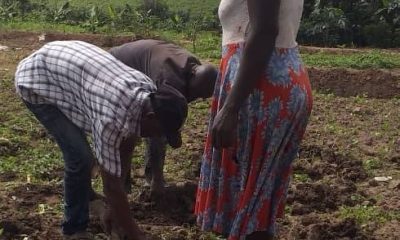
For over sixty years, Mastula Nyirabatusi has cherished her land in Kyakayongo Village, Nalutuntu Sub-county, Kasanda District. Now 80, she sees it as the heart of her life, a place she bought in 1964 and where she has raised her family for generations.

Today, Mastula finds herself locked in a bitter struggle with two of her grandchildren over the very land she calls home.

The ongoing battle has left the older woman frail. Her family says the relentless conflict and looming eviction have taken a toll on her health.

Mastula’s family says her grandchildren, Lovinsa Mukantagala and Ninkuuze Esther, claim that the approximately 10-acre piece of land belongs to their late father, Jamil Kaberuka.

However, Mastula disputes the claim. She says she bought the 10-acre land in Kyakayongo from Nyonyintono Musolobindo in 1964 for 130 shillings and has lived on it ever since.

What began as a family quarrel at local council meetings has spilled into the courts, tearing Mastula’s family apart. One of her sons, Byakatonda Diriisa, has spent over seven months in jail for defending his mother’s land.

But the family’s land dealings go further back. Mastula’s brother, Sulaiman Baragwiza, lived in Mityana-Busundo. According to Mastula’s family, he died leaving behind two sons, Muzindusi Abdallah and Jamil Kaberuka.

According to the family, Mastula later sold land that had belonged to her late brother, Sulaiman Baragwiza, in Mityana and used part of the money to acquire about three acres in Kyamwendwa Village, Kassanda District, for Baragwiza’s two sons.

In 1978, Mastula handed the land agreement to Muzindusi Abdallah, the elder of the two brothers, after he had started a family. Kaberuka, however, remained under Mastula’s care because he was younger at the time.

Florence Nabawanuka, one of Mastula’s daughters, says Kaberuka left his aunt’s home when he grew up and was never heard from again.

“Kaberuka disappeared from the village, and none of us got to know of his whereabouts ever since then,” Nabawanuka says.

In 2015, Kaberuka’s children, Lovinsa and Ninkuuze, appeared and presented an agreement they said showed Mastula had sold her 10 acres to their late father.

The document allegedly indicated the transaction took place in 1998. They first presented it to the Local Council Two committee and later to the Local Council One committee, chaired at the time by Okello Emmanuel.

Local leaders interviewed for this story questioned the document because of inconsistencies in the date and circumstances under which it was allegedly made.

Mr. Oyiire Samuel, the chairperson of Kyakayongo Village, says residents had always known Mastula as the person occupying and using the land.

“We all grew up seeing Mastula as the rightful owner settling on that land. The agreement Kaberuka’s daughters presented is fake because it shows it was written in 1988, yet their father left the village in 1985. Therefore, he could not have been given any land. Mastula also says she has never sold her land,” Oyiire says.

Oyiire wondered how the girls could forcefully take their grandmother’s land when he took care of their father. “This is totally unbelievable and can only be done by an insane person. They should thank the older woman instead of trying to take her land. At eighty, where do they want her to go?” he added.

To end the dispute, the local council advised Mastula to surrender part of her 10-acre land to the two grandchildren. Mastula agreed and gave them about two and a half acres from the 10-acre land.

Although the family says the parties signed an agreement, they told Witness Radio they were surprised when the grandchildren took the matter to court, claiming Mastula was illegally settling on their land.

The Grade One Court in Kiganda eventually ordered the grandchildren to vacate the land and keep away from Mastula. The grandchildren appealed to the High Court in Mubende.

However, the Mubende High Court overturned the Grade One Court judgment, ruling that Mastula should remain on the land during her lifetime, after which the grandchildren could take possession when she dies.

The court’s decision only deepened the rift, as Mastula’s family voiced their strong disagreement with the ruling.

Mastula’s children were dissatisfied with the decision and subsequently appealed to the Court of Appeal, where the matter remains pending.

As the legal battle dragged on, its ripple effects began to touch every corner of Mastula’s family.

According to accounts gathered by Witness Radio, the group, with support from area police, caused the arrest of Mastula’s son, Byakatonda Diriisa. The court accused him of trespassing on his mother’s land and sentenced him to one year in jail.

“He was supporting our mother to resist the eviction. Because he was the obstacle, they decided to lock him in jail to complete their plans,” Nabawanuka added.

According to Diriisa’s wife, Nabirye Amiina, he has spent more than seven months in custody, which has affected both his family and Mastula’s family.

“We are no longer getting all the necessary family needs since my husband was taken to prison, though he is innocent. This also caused four of our children to drop out of school due to lack of fees,” she added.

For Mastula’s family, the land dispute is more than a fight over property. It has shaken the health of an 80-year-old matriarch, cut off the family’s livelihood, and, relatives say, shattered the education of four children.

For Mastula, this legal storm comes at a time when she should be enjoying peace on the land she has tended for decades. Instead, her family says her health has declined steadily as the conflict rages on.

Mastula’s lawyer, Alex Tusiime, says his client has evidence supporting her claim and calls for a fair hearing in court.

“We are going to try our level best to see that Mastula gets justice. There could have been delays in the past by her former lawyers, but we are to do whatever it takes because we have the proof that the land belongs to Mastula,” Tusiime added.

Continue Reading

Resource Center

Legal Framework

READ BY CATEGORY

Facebook

Newsletter

Subscribe to Witness Radio's news and report updates


Trending

Subscribe to Witness Radio's news and report updates