Connect with us

MEDIA FOR CHANGE NETWORK

Seed Sovereignty: Most existing and emerging laws and policies on seeds are endangering seed saving and conservation on the African continent.

Published

on

By the Witness Radio team

In Africa, farmers and civil society organizations are urgently warning about the adverse effects of existing policies on agrobiodiversity. These policies aim to erode centuries-old traditions of seed saving and exchange, effectively undermining seed sovereignty and intensifying dependency on commercial seed companies.

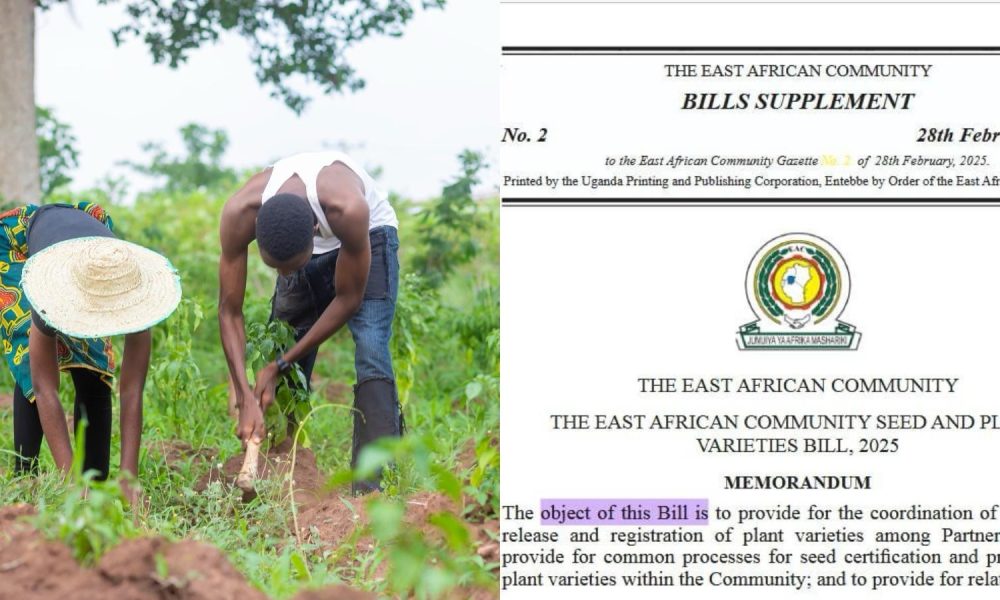
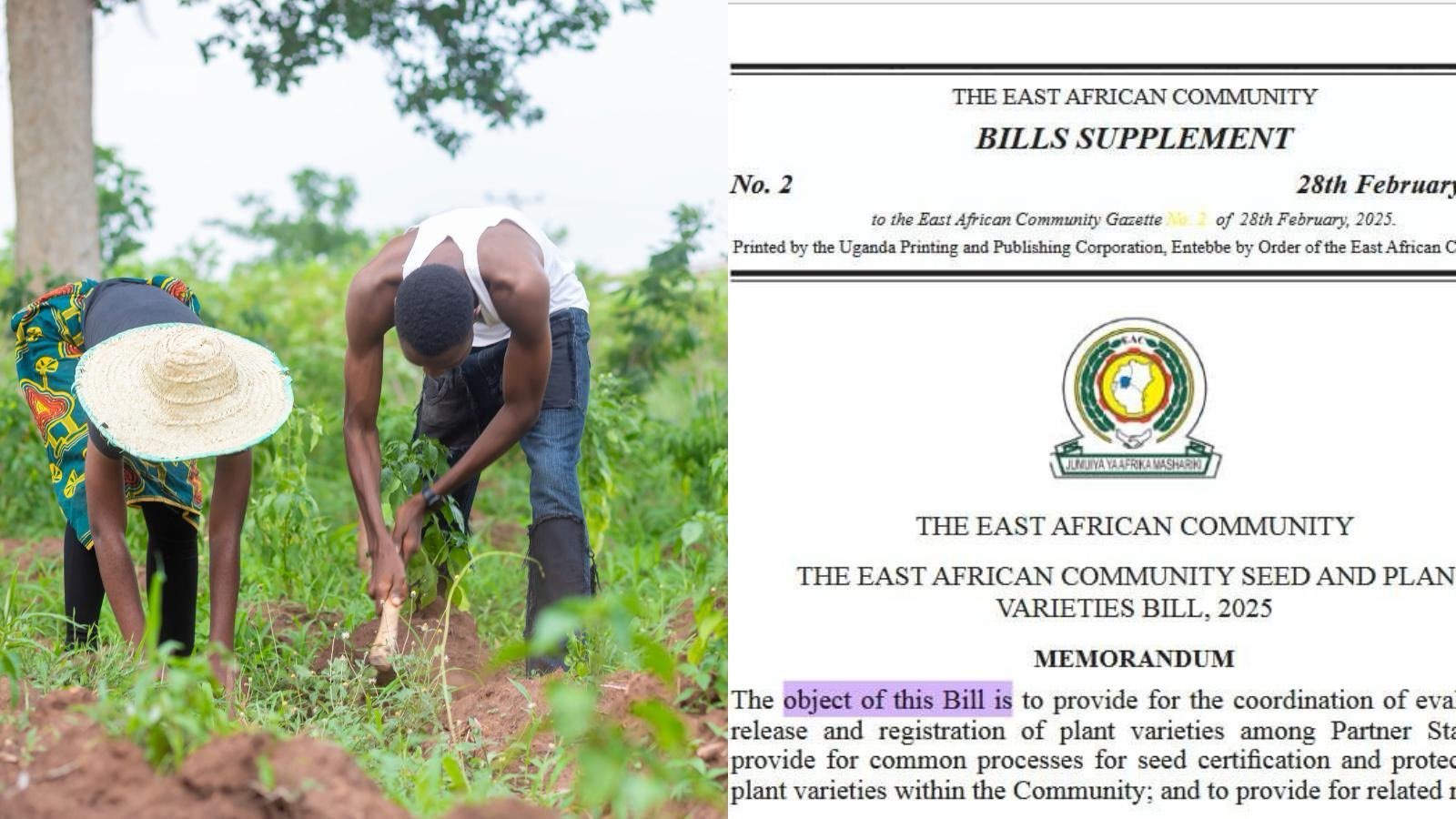
The struggle over seed sovereignty, particularly the rights of smallholder farmers, has become one of the most pressing issues for the continent’s agricultural future. As governments introduce new seed laws, such as the proposed East African Seed and Plant Varieties Act Bill of 2024, the preservation of cultural seeds and the rights of smallholder farmers are at stake.

The Communications and Advocacy Officer at Kenya’s Seed Savers Network, Tabitha Munyeri, notes that this has heightened monoculture, thereby significantly reducing the focus on indigenous plant varieties.

“There’s a lot of loss of agrobiodiversity with people focussing on a few foods, a few crops, leaving out so many other essential crops that have sustained humankind for generations and it is also important because it is coming at a time where we are having a lot of also conversations around different seed laws that are coming up for example within the EAC  we see that there is the seed and plant varieties bill of 2024 and we are looking at it as a huge setback and there is need for us to create awareness around even the policies that exist.”

She further argues that there is a need to raise awareness and sensitise farmers to the existing policies so that they can understand their effects on agrobiodiversity.

“Even for Kenya we have been having punitive seed laws for the longest time but now we are happy that courts of law are reviewing the law, but we still think that there is need to create a lot of advocacy around the seed laws and what they really mean to farmers because some of them do not understand, some of them are not even interested but once they get to know what it means and the impacts that the laws have on them then they are also able to become more vocal and more involved in the process.” She says.

Farmers in Africa have been the custodians of agricultural biodiversity, developing and maintaining numerous varieties of crops that are suited to local soils and climates. However, over the last few decades, the focus on farming has drastically declined to a handful of “high-yield” crops and imported hybrid varieties, leaving out the diverse indigenous seeds that have sustained communities through droughts, pests, and diseases.

Munyeri warns that this decline in agrobiodiversity is accelerating, driven not merely by market pressures, but by restrictive laws that criminalise and discourage traditional seed-saving practices.

In Kenya, where smallholder farmers supply more than 80 percent of the country’s food, seed systems have long depended on the informal exchange of seeds within communities. Small-hold farmers have relied on these systems to share, adapt, and innovate with seeds suited to their local conditions. However, existing laws have tended to favour the formal sector, requiring seed certification, variety registration, and compliance with intellectual property protections that most small-scale farmers cannot afford.

The 2024 Seed and Plant Varieties Act Bill, currently under discussion in several East African countries, has sparked significant controversy. It seeks to modernize agriculture and align national systems with international standards. However, smallholder farmers and critics contend that it allows corporate control over genetic resources, limiting farmers’ autonomy and threatening biodiversity. Under such a framework, only registered seed varieties can be legally traded or exchanged, effectively outlawing the informal seed networks that have sustained rural communities for centuries.

If smallholder farmers lose their rights to exchange and cultivate indigenous varieties, they may also lose control over their food systems. Dependence on improved seeds necessitates purchasing new stock each planting season, eroding self-reliance and increasing vulnerability to market fluctuations.

This awareness gap is what the Seed Savers Network hopes to address. Through training programs and advocacy initiatives, including its recently concluded regional boot camp, the organization equips participants from across Africa with knowledge about seed laws, biodiversity, and policy engagement.

Continue Reading

MEDIA FOR CHANGE NETWORK

East African court dismisses appeal against EACOP project

Published

on

The Appellate Division of the East African Court of Justice (EACJ) has dismissed a high-profile appeal filed by civil society organisations (CSOs) that sought to challenge the human rights, environmental, and climate risks associated with the East African Crude Oil Pipeline (EACOP) project.

In a ruling delivered on Wednesday at the EACJ headquarters in Arusha, Tanzania, the Appellate Division upheld the First Instance Division’s 2023 decision, concluding that the case was filed outside the time limit set under East African Community (EAC) laws, which generally mandate cases be heard within a 60-day window.

The panel of judges, led by EACJ Appellate Division president Nestor Kayobera, alongside vice president Anita Mugeni and Kathurima M’Inot, agreed that the EACJ did not have the jurisdiction to hear the main case.

Original petition

The original suit was filed in November 2020 by four CSOs: Africa Institute for Energy Governance (AFIEGO), Centre for Food and Adequate Living Rights (CEFROHT) from Uganda, Natural Justice (NJ) from Kenya, and the Centre for Strategic Litigation (CSL) from Tanzania.

The CSOs sought a permanent injunction to halt the construction of the pipeline in protected areas in Uganda and Tanzania, compensation for all project-affected persons (PAPs) for losses incurred due to land use restrictions.

The First Instance Division dismissed the case in November 2023, prompting the CSOs to immediately file an appeal in December 2023. This appeal was subsequently heard in Arusha and Kigali, Rwanda, in November 2024 and February 2025, respectively.

EACOP project

Costs overturned 

Crucially, while the Appellate Division upheld the dismissal, it overturned the order issued by the First Instance Division that had awarded costs to the governments of Uganda and Tanzania and the Secretary General of the EAC.

The judges directed that each party must bear its own costs, stating: “Taking into account the public interest involved in the appeal and the appellants’ public-spirited endeavor to ensure compliance with the treaty, we direct that each party shall bear their own costs in this court and in the trial.”

CSOs decry ‘disappointing decision’

The CSOs described the Wednesday ruling as a “disappointing decision,” arguing that the judges failed to consider when affected communities and CSOs actually became aware of the project’s impacts and the existence of the EACOP-related agreements, such as the Inter-Governmental Agreement (IGA) and Host Government Agreement (HGA), which were made public years after they were signed.

Dickens Kamugisha, CEO of AFIEGO, called the decision a “setback for regional justice” and protection of vulnerable communities.

“The decision has left over 331 million East Africans at the mercy of greedy corporations,” he stated, adding, “The ruling is a travesty, but we remain determined to use all available strategies to protect people and nature.”

Elizabeth Kariuki from Natural Justice emphasized the impact on the PAPs, saying, “This ruling is devastating for the very people whose lives have been upended by EACOP – the families that lost their land and livelihoods, and the communities watching their ecosystems disappear. Today, the court has closed its doors to them. But we will not give up. We will continue to fight alongside communities to ensure that their suffering is not ignored.”

MCosmas Yiga, a PAP from Uganda, expressed profound disappointment, saying, “We, the PAPs, have been oppressed, and we don’t expect any gain from the oil industry… Today is a sad day,” citing his refusal of a $2 million compensation offer for 58 mango trees.

The courtroom was packed with CSOs, PAPs, media, and a lawyer representing the Ugandan government, state attorney Ojambo Bichachi, who welcomed the decision. The CSOs noted that the Appellate Court of the EACJ is the final court and plan to consult with EACOP-affected people before announcing their next steps.

Source: The Observer

Continue Reading

MEDIA FOR CHANGE NETWORK

EALA members renew push for unified sub-regional Agroecology Law during Mukono meeting.

Published

on

By Witness Radio Team.

The East African Legislative Assembly (EALA) has renewed its call for a unified regional agroecology policy and law, following a high-level capacity-building meeting held in Nakisunga Village, Mukono District, Uganda.

The gathering brought together more than 50 EALA members, over 100 participants, including civil society organizations (CSOs) representatives, agroecology experts, and officials from Mukono Local government, to discuss the gaps in existing regional frameworks and the urgent need for coherent legislation to support sustainable and climate-resilient farming systems.

The field tour of Nansubuga CEFROHT Agroecology Training Farm showcased successful organic farming practices, illustrating the benefits of agroecology firsthand to lawmakers and stakeholders.

“I’m amazed at how a local female farmer can transform non-fertile land into a productive farm,” said Hon. Fatuma Ndangiza of the EALA delegation from Rwanda. “Agroecology is about access, safe food, resilient and equitable food systems, and environmental friendliness. What we see here is the right path for our small-scale farmers.”

The proposed regional agroecology law aims to protect smallholder farmers like Nansubuga by safeguarding their seeds, reducing reliance on costly chemical inputs, and shielding them from land grabs, thereby directly enhancing their resilience and livelihoods.

Representing EALA Speaker Rt. Hon. Joseph Ntakirutimana, Hon. Gideon Gatpan Thoar, Chair of the EALA Committee on Agriculture, Tourism and Natural Resources, emphasized the urgency to put the Agroecology policy and law in place:

“There is no law protecting agroecology farmers like Nansubuga. Their seeds are not protected, and they face intense competition from corporate-backed industrial systems. This deserves urgent attention.”

He added that lawmakers’ mandate requires them to legislate in the interest of East Africans, most of whom are smallholder farmers, and that firsthand field experience will strengthen the upcoming model law.

“So now, with this experience, we can push for a regional policy that empowers agroecology farmers and fosters resilient agriculture. Supporting them can lead to a brighter future for East African farming,” He added.

Hon. Fatuma Ndangiza revealed that the agroecology bill could be ready within a year, pending adequate funding, offering hope that smallholder farmers will have access to supportive legislation.

“East Africa cannot build resilient food systems without a unified agroecology policy and law. This meeting is a big step toward drafting a model law that reflects the needs of our farmers. At least by the end of our mandate in 2027, we want this bill in place,” she said. “Members of the agriculture committee have already been trained in agroecology, and thanks to CEFROHT and other partners, even more lawmakers now appreciate the importance of this legislation. It will move quickly.”

Experts at the meeting highlighted systemic biases that keep East African farmers impoverished. These include a longstanding emphasis on export-oriented industrial agriculture, corporate-controlled seeds, increasing pesticide and fertilizer use, and land grabs.

Dr. Million Belay, General Coordinator of the Alliance for Food Sovereignty in Africa (AFSA), warned that Africa is being pushed into an unsustainable corner.

“One of the legacies of colonialism is pushing us to export food instead of feeding our people. Chemicals, GMOs, and land grabs are increasing, and global actors now control food production.

A farm like this one shows the direction we should take.”

He went on to say that proper food security and environmental health depend on farmers’ control over their land, seeds, and output-what we call food sovereignty-empowering farmers to shape their future.

As part of the capacity-building process, EALA members visited the CEFROHT Agroecology Learning Center, where they witnessed demonstrations of intercropping and crop diversification, agroforestry systems, animal husbandry, water and pesticide trapping, among others.

Dr. David Kabanda, whose organization, the Center for Food and Adequate Living Rights (CEFROHT), hosted the delegation, noted that farmers are already successfully practicing agroecology, demonstrating the tangible benefits of this approach.

“We are pleased to support lawmakers with evidence and field-level experiences. Agroecology is not theoretical; farmers are already practicing it successfully. It is what we advocate for, the production of good food as well as environmental conservation,” he added.

Looking ahead, EALA announced a series of concrete steps to advance the regional agroecology agenda. The assembly plans to complete the Agroecology Bill process within a year, then conduct public hearings across all eight EAC Partner States to gather stakeholder input. The bill will be fast-tracked for debate and approval in the EALA plenary, with civil society expected to help secure the Heads of State’s assent. Once adopted, the law will become the EAC Agroecology Act, guiding and harmonizing agroecology efforts across the region.

As climate shocks intensify and millions of families depend on smallholder farming, the Mukono meeting marks a turning point in East Africa’s pursuit of sustainable, resilient food systems. The push for a unified agroecology law signals a growing regional recognition that the future of East African agriculture must be farmer-centered, biodiversity-based, and rooted in local knowledge.

Continue Reading

MEDIA FOR CHANGE NETWORK

East African lawmakers and CSO leaders are meeting in Uganda to draw up plans to promote Agroecology as an alternative to climate change mitigation.

Published

on

By Witness Radio team.

Mukono, Uganda — the East African Legislative Assembly (EALA) members and Civil society organizations (CSOs) leaders in Uganda are convening in Nakisunga, Mukono district today, 28th November, to discuss how to promote agroecology at the regional level and inspire a collective commitment to regional resilience.

Agroecology offers a robust, holistic approach to combating climate change by enhancing the resilience of food systems and reducing their environmental impact.

Spearheaded by the Center for Food and Adequate Living Rights (CEFROHT), the event emphasizes integrating agroecology into regional climate resilience strategies, especially as the East African Community (EAC) faces rising food costs, climate shocks, and declining soil health.

During the meeting, EALA members, together with CSOs, will explore how principles like crop diversification, soil regeneration, and community seed saving can directly improve smallholder farmers’ resilience and livelihoods, complemented by a hands-on field visit to the CEFROHT Agroecology Learning Center in Mukono.

The event has also occurred at a time when EALA is reviewing the East African Seed and Plant Varieties Bill, 2025, which is being criticized for undermining the role of smallholder farmers in seed saving, conservation, and the management of seed systems to promote healthy foods.

Players from CSOs include: Participatory Ecological Land Use Management (PELUM Uganda), Eastern and Southern Africa Small-scale Farmers’ Forum (ESAFF), Seed Savers Network Kenya, TABIO Tanzania, the Alliance for Food Sovereignty in Africa (AFSA), Slow Food Uganda, SEATINI, FIAN Uganda, and the Mukono District Local Government, among others.

The meeting will lay the groundwork for East Africa’s first Policy and Model Law on Agroecology, a long-awaited step toward sustainable and equitable agri-food systems that empower regional stakeholders to shape the future.

The event will be broadcast live on Witness Radio.

Continue Reading

Resource Center

Legal Framework

READ BY CATEGORY

Facebook

Newsletter

Subscribe to Witness Radio's newsletter


Trending

Subscribe to Witness Radio's newsletter