MEDIA FOR CHANGE NETWORK
RDCs, Local Leaders Accused of Grabbing 70-Acre Ancestral Land
Published
5 months agoon

RDCs, local leaders on spot over land grabbing, family appeals
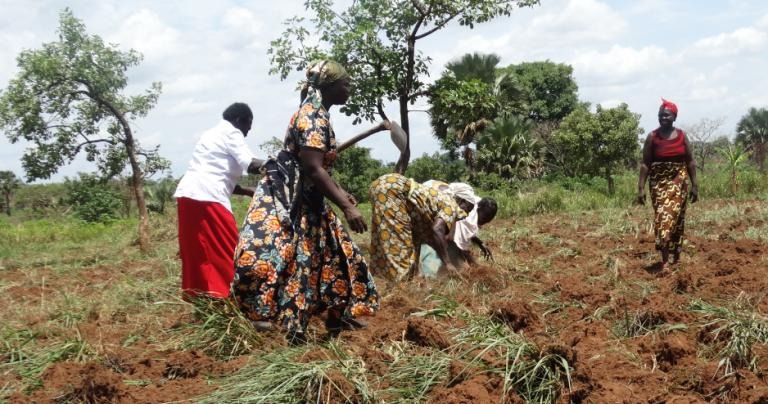
Two Resident District Commissioners (RDCs) are on spot for allegedly depriving family members of their right to a 70.2 acre land in Kihanda Sub County, Kanungu District.
The RDCs, Hajj Shafik Sekandi and Amanyire Ambrose Mwesigye are accused of orchestrating and colluding with a section of family members and dealers to forcefully take over a mineral rich land.
It is alleged that the land in question at Ibarya Cell (Village) was previously owned by Mzee Blasio Bamuturaki and his wife Joy Evelyn Kyabasasaki who lived on it from the 1950s till their deaths in 1994 and 2004.
Family members say that upon the death of Kyabasasaki, Hajji Sekandi then RDC hatched a plan and colluded with a family member, Ms Anna Kyahamutima to force out other family members from the land.
It is alleged that before his transfer from Kanungu District, RDC Sekandi linked the land grab deal to high profile officials in government among them in State House and the Ministry of Water and Environment.
Hajj Sekandi, who has since been transferred to Kisoro District, was replaced by Mr Mwesigye, who is now leading the struggle to dispossess the family of their interest in their estate.
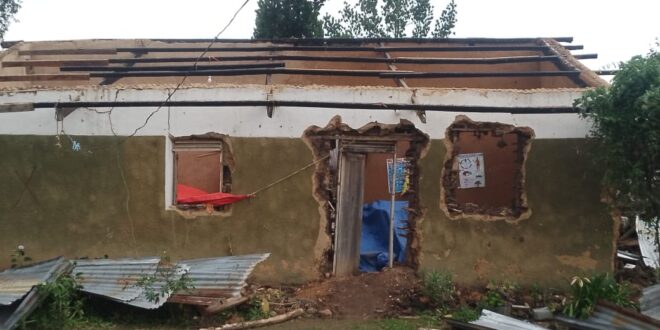
Ambrose Mwesige jointly with his deputy Rugajju, Giso, Barigye is accused of organizing the ongoing destruction of the family property to include a house and the plantation.
Christine Joy Tusiime, a family member revealed that the cartel was big to include LCI chairperson Ms Jessica Tindimwebwa, LCIII chairperson for Kihanda Sub County Mr Davis Asiimwe, LCII chairperson Lemegio Tumwesigye, Ambrose Barigye (Kanungu Giso) as well as deputy RDC Gad Rugajju.
“The dispute that forced me to flee my mother land, Uganda started in 2004 after the death of our mother, my sister (Anna) took possession of the family property and took control. The RDC then did a report and it is from then that they started targeting destroying the plantations on the land and bringing many people to cultivate on the land to defeat the interest of the rightful beneficiary,” says a tearfully speaking Tusiime.
In 2023, Tusiime fled the country and she is currently living in the United Kingdom for the safety of her life.
While recounting the mysterious deaths of her brothers and sisters on the land, Tusiime, 56, also revealed that grabbers used her sister on the frontline to torture her and the relatives. She alleges that RDC Mwesige with his deputy Rugajju and RDC Sekandi vainly colluded to arrest her from Mbarara Administrator General’s office while using police and military.
She has now appealed to President Museveni to intervene and cause investigation into RDC Mwesigye and others with the grabbers who are using a motor vehicle with ICRP, a project funded by the World Bank.
“I believe the World Bank cannot fund such a project marred with irregularities and violations,” says Tusiime accusing the Police in Kanungu of declining to register a case of malicious damage to property that was reported by her aide.
She added: “As I speak, RDC Mwesigye and his deputy Rugajju are making business on our land through charcoal burning, destroying the house and sadly when I contacted the police for help, they just kept quiet. I am humbly appealing to the President to intervene in this matter to rescue me from these notorious criminals pretending to work for the government.”
Tusiime alleges that in December 2023, RDC Mwesigye and policeman Zaviour Nishaba and Constable Daniel Byensi led a group of people that stole livestock and poultry on top of arresting and imprisoning her workers.
Accusing her sister of destroying the graveyards of their siblings, Tusiime states that the cartel advised her Kyahamutima to open up multiple frivolous criminal cases against her to frustrate her effort to acquire letters of administration on the land.
According to Tusiime, the criminal gang also fronted Rachael Tushabe, a police lady who is daughter to her sister to torment her with the numerous fake case files which prompted her February 2023 petition to security agencies but without any help.
She further revealed that the land in dispute was put on caveat she lodged in 2021 after her sister declined to attend meetings with the authorities.
“I suffered under the hands of the RDC, deputy RDC Rugajju and the Police because they organized arrests and tortured me so that I could lose interest but this is our ancestral land and all I appeal for is justice in all this,” says Tusiime adding that whatever is being done on their land must follow the law.
In May 2023, Tusiime petitioned the Office of the Director of Public Prosecutions (ODPP) complaining against the fake accusations brought against her to defeat her interest in the ancestral land.
In February 2023, she also petitioned the Commandant of Flying Squad Unit seeking for intervention, track and trace a one Lt Simon from UPDF and policeman Walter Okello among others and bring them to book for attempted kidnap as well as life threatening acts to her life.
According to Tusiime, none of her complaints was ever responded too apart from receiving letters from State House land matters accusing her of intermeddling.
In a telephone contact, RDC Mwesigye laughed off advising this publication to go to the ground to do verification of the claims.
“But I think she (Tusiime) is a very dishonest person because she came to my office in 2023 alleging that her sister, Kyahamutima was chasing her from land. I went there and I found when they had a conflict on their late father’s land and they did not have a title for it. It was with their brother,” he said.
While denying involvement in the dispute, Mwesigye said that he held meetings on ground in their presence and I advised them to go to the administrator general’s office
According to Mwesigye, the land conflict aside, there is a government irrigation project where peoples’ land was valued under the Ministry of Water to construct a dam on their land.
He said there are a number of families affected and they were consulted in 2022 and their land was valued in 2023 and valuation reports were shared with them in 2023 including that woman and they consented and their family was paid Shs1 billion which was shared between Christine and her sister on account.
“Now the houses that have been demolished are those which are supposed to be removed for the project to begin and that woman was paid duly,” he added.
Mwesigye revealed: “They were paid on December 19, 2024 and they were supposed to leave immediately. We said since the project still has some time to start, let them still be enjoying their gardens and crops but some months back, we went where the project is supposed to begin this month, now the ministry people went and told everybody whose property had been paid for to leave and all other people left voluntarily.”
According to Mwesigye, Christine’s sister have a house there but she (Christine) does not and they also have an old ancestral house and also graveyards which were all affected but they were all paid for and now the two sisters are not there but they left a daughter called Allen who kept in the house, we went there and told her to leave because the project is supposed to begin.”
Mwesigye said that they held community meetings with all the affected families and told them to vacate because it is now the property of the government of Uganda.
“Being a government land because everything is documented, the ministry of water people went and requested for security and demolished their house to take over and begin work genuinely. Money was paid to all those people’s accounts and valuation reports were shared and all documents are available with correspondences,” said Mwesigye adding that he can stand to defend it.
When contacted, Rugajju denied any involvement saying he did not handle anything related to land in Kihanda.
“For me, my issue is mainly Kihihi and borderline and my concentration and task is on security matters to do with national parks, then border. That is where I am involved. I am very certain that it is mistaken identity,” he said.
Source: pressug.com
Related posts:

Mityana tenants told to pay Shs12m per acre of land
Mubende district police are aiding land grabbing and committing crimes against locals they are obliged to protect.

Police in Mityana district arrests 10 land rights defenders, local council leaders
Sugar companies accused of grabbing forest reserves land
You may like
MEDIA FOR CHANGE NETWORK
StopEACOP Campaign challenges TotalEnergies assessment of Uganda land acquisition programme
Published
1 day agoon
March 13, 2026
An elderly PAP in front of the Resettlement house in Buliisa (Inset: the house that was affected by the Tilenga project). Image credit: PAU
Civil society organisations under the StopEACOP Campaign have criticised an assessment commissioned by TotalEnergies on its land acquisition programme for the Tilenga oil project in Uganda, describing the report as lacking independence and credibility.
The Tilenga development will supply crude to the East African Crude Oil Pipeline which is designed to transport oil from western Uganda to international markets. The project has been widely contested by environmental groups and community advocates.
TotalEnergies commissioned Canadian consultancy Land and People Planning Ltd to conduct the assessment in the districts of Buliisa, Hoima and Kikuube. The report concluded that the company had addressed the core elements of the land acquisition programme and demonstrated commitment to transparency and continuous improvement.
However, the StopEACOP Campaign argues that the independence of the study is questionable. The coalition noted that TotalEnergies stated that an original assessor withdrew due to health reasons and that the Canadian firm was appointed as a replacement, without publicly explaining how key stakeholders were involved in the selection process.
Campaign coordinator Zaki Mamdoo said the report appeared to be designed to improve the company’s public image rather than provide a rigorous independent review. He added that the company’s suggestion that the Tilenga land process was ready for closure was difficult to reconcile with ongoing court cases filed by project affected people disputing compensation.
Activists also argue that the assessment does not address allegations of coercion, intimidation and pressure faced by communities asked to release land for the Tilenga project. Civil society groups have cited documented cases including the eviction of 42 families in Buliisa district following a court order issued before compensation payments were completed.
Diana Nabiruma of the Africa Institute for Energy Governance said communities have reported being warned that refusal to accept compensation offers could lead to court cases where they have little chance of success. She added that organisations supporting affected residents often observe bias and limited willingness by courts to address land disputes linked to oil developments.
In February 2026, the institute published research examining compliance with livelihood restoration commitments linked to the East African Crude Oil Pipeline. The report identified significant gaps in implementation and warned that many affected households risk failing to return to their pre displacement socio economic conditions if corrective action is not taken.
Campaigners also questioned the timing of the TotalEnergies assessment as the company faces an ongoing case in a civil court in Paris. The court recently ordered the company to release documents that had previously been withheld, including market studies on compensation rates prepared by subcontractors, minutes from a human rights steering committee and a report examining flooding linked to the Tilenga project.
According to Camille Grandperrin, legal officer at the Friends of the Earth France, analysis of the disclosed documents suggests multiple areas where the project may not comply with international standards, including the IFC Performance Standard 5.
The StopEACOP Campaign also highlighted discrepancies in the number of people included in the assessment. The action plan referenced 4954 project affected people, while civil society estimates suggest that more than 100000 people could be impacted across both the Tilenga project and the wider pipeline development.
Critics argue that evaluating Tilenga in isolation from the broader pipeline infrastructure creates a misleading picture of the scale of social impacts. They also note that the report does not address flooding allegedly linked to the construction of the Tilenga Central Processing Facility.
Campaign groups say the testimonies of affected communities, including claims of restricted land use prior to compensation and pressure faced by activists and land defenders, raise serious concerns that require independent scrutiny. They argue that a broader and fully independent review of Uganda’s oil sector impacts is needed to provide credible information to investors, lenders and insurers.
Author: Bryan Groenendaal
Source: greenbuildingafrica.co.za
Related posts:

StopEACOP Coalition warns TotalEnergies and CNOOC investors of escalating ‘financial and reputational’ Risks
Uganda: StopEACOP Campaign Condemns Standard Bank’s Decision to Fund EACOP
StopEACOP Movement calls for an end to harmful oil projects and demands a just transition.
#StopEACOP campaign calls on Standard Bank to come clean about its funding of the East African Crude Oil Pipeline
MEDIA FOR CHANGE NETWORK
More than 1.1 billion people worldwide face a risk of land eviction – Global report
Published
2 days agoon
March 12, 2026
By Witness Radio team.
A global report released by the Food and Agriculture Organisation of the United Nations (FAO) in collaboration with other organizations has reported that more than 1.1 billion people worldwide— about 23 percent of the global adult population—live under the constant fear of losing their land or homes within the next five years, threatening their livelihoods, food security, and resilience to climate change.
“Too many people still live with the fear of losing their land and homes, with women and young people remaining among the most excluded—a reality that undermines food security, climate action, and biodiversity protection, and shows why secure land rights are foundational to achieving all three,” says Marcy Vigoda, Director of the International Land Coalition.
The report, titled “Status of Land Tenure and Governance” (SLTG), was authored by the Food and Agriculture Organization of the United Nations, the International Land Coalition (ILC), and the French Agricultural Research Organization CIRAD. The report states that, despite progress over the past two decades, only 35 percent of the world’s land has formally documented ownership, tenure, or use rights.
The report notes that commercial interests constitute a major driver of land insecurity. In addition to large-scale land acquisitions, corporate investments, and financialized shareholding, the report identifies factors such as weak land governance, inadequate recognition of customary tenure systems, and increasing demands for agricultural commodities as contributing to intensified land concentration. These dynamics, particularly evident in the aftermath of the 2008–2009 food and financial crises, have accelerated the transfer of land from smallholders and local communities, exacerbating vulnerabilities among populations lacking secure tenure.
Lands once considered marginal investment opportunities are now highly sought after for industrial farming, conservation, carbon storage, and other climate-related projects. In some cases, climate mitigation projects such as renewable energy, carbon offset schemes, and biofuel plantations are also increasing pressure on these lands, especially where tenure rights are not legally recognized.
The new report is the first comprehensive global stock take designed to track how land is owned, used, and governed. It complements decades of guidance on implementing the Voluntary Guidelines on the Responsible Governance of Tenure of Land, Fisheries, and Forests (VGGT). It responds to the growing demand to integrate land rights with climate action, gender equality, biodiversity protection, and more.
While international and national policies on land tenure have expanded, the report highlights that implementation remains slow and uneven. Although global frameworks have been widely adopted, the uptake and application of responsible land governance principles remain limited.
Worldwide, governments legally own more than 64 percent of land, including areas under customary systems that often lack formal documentation. A little over a quarter of land is privately owned, while about 10 percent of global land has an unknown tenure status.
The findings also reveal that the top 10 percent of the largest landholders operate about 89 percent of all agricultural land, showing the high concentration of land ownership globally. Secure land tenure enables people to invest in land, improve productivity, protect ecosystems, and strengthen food security.
“Land insecurity is one of the most damaging forms of inequality, paid for in lower productivity, weaker resilience, and poorer nutrition. Secure land tenure enables sustainable investment and is the difference between short-term survival and long-term food security,” FAO Chief Economist Maximo Torero Cullen reveals.
The report highlights persistent gender inequality in land ownership. Globally, women are significantly less likely than men to own or hold secure land rights. In 2024, across 108 countries, 48 percent of men reported owning homes individually or jointly, compared to 40 percent of women. “While rural residents are more likely than urban residents to report ownership, women remain consistently disadvantaged in both settings,” the report notes.
In agriculture, the gender gap is even more pronounced. In 43 out of 49 countries with available data, men in agricultural households are more likely to own or control land. In nearly half of these countries, the gap exceeds 20 percentage points. Evidence from several countries also shows that the gap is particularly large in sole land ownership, while joint ownership arrangements often improve women’s access to land.
Despite growing global attention to land governance, data on land tenure remains limited and politically sensitive. Methodological challenges, capacity limitations, and political sensitivities often reduce the availability and transparency of land tenure data.
According to Sélim Louafi, Deputy Director for Research and Strategy at CIRAD, stronger data systems are essential for better policy decisions. “When we generate evidence with and for all stakeholders, we create the foundation for stronger, more transparent, and more equitable public policies, both nationally and internationally.”
Experts say stronger policies and political commitment are needed to secure land rights for all. The report concludes: “Progress on land tenure and governance requires a stronger, more comprehensive, and better-coordinated approach to change, both within the land sector and in conjunction with global efforts on economic recovery, climate action, biodiversity conservation, and open societies.”
Related posts:

63 million people food insecure in Horn of Africa: report
Women environmental rights defenders in Africa are at the most significant risk of threats and attacks – ALLIED New report
Tension as over 3000 people face unlawful eviction in Lwengo district.
Road to COP30: Climate justice is achievable if young people have secure land tenure as a mitigation measure against migration.
MEDIA FOR CHANGE NETWORK
DR Congo crisis: Washington’s brokered peace agreement is rendered useless as fighting, forced land displacement, and mineral exploitation persist…
Published
3 days agoon
March 11, 2026
By the Witness Radio team.
After the signing of the Washington Accords, a peace and prosperity deal between the Democratic Republic of the Congo and Rwanda brokered by the United States, many Congolese hoped the agreement would finally bring stability to the country’s long-troubled eastern region.
Instead, persistent violence has continued, raising questions among civil society groups and citizens about whether the agreements can truly deliver peace.
According to the US State Department, the Washington Accords were intended to reaffirm both countries’ commitment to implementing the peace agreement signed in Washington, D.C., on June 27, 2025. The deal was also intended to advance a vision of regional cooperation through a Regional Economic Integration Framework (REIF), which aims to promote peace, security, and economic growth in the Great Lakes region.
Fighting continues in eastern Congo, involving the March 23 Movement (M23) and Congolese government forces (FARDC), with Rwanda and the DRC government each accusing the other of supporting violations of existing agreements.
Authorities in the Democratic Republic of Congo (DRC) have long accused Rwanda of backing the March 23 Movement (M23) rebel group, allegations that Rwanda initially denied for decades. However, according to a January 24 article by The Rwandan, an online news platform based in Rwanda, a high-ranking Rwandan official later acknowledged security coordination with M23/AFC rebels.
Now, Congolese civil society organizations reveal that the Washington Accords are failing to address issues of justice or Rwanda’s responsibility in the war of aggression, invasion, and occupation of eastern DRC.
The Mobilization to Safeguard Congolese Sovereignty and Autonomy (MOSSAC), an ad hoc coalition of 81 Congolese civil society groups, formed to voice concerns about the occupation and to demand a lasting peace grounded in security, accountability, sovereignty, and justice in the DRC revealed in an interview with Witness Radio that these accords are taking Congolese back to the days of King Leopold, where a colonial resource grab is imposed, and might makes right.
“These agreements, pushed on the DRC by the Trump administration during the ongoing violent incursion, represent the results of a negotiation at gunpoint. It’s all about how they’re going to take the minerals and have all these business deals. There’s nothing in there that gives any detail on what they’re going to do to create peace.” MOSSAC International outreach coordinator, Dr. Deborah S. Rogers, told Witness Radio.
The Washington Accords consist of three separate agreements. The first is a peace agreement signed by both Congo and Rwanda, calling for a ceasefire and improved relations. The second establishes the Regional Economic Integration Framework, which promotes joint economic cooperation and allows for collaboration in exploiting regional resources. The third agreement, the Strategic Partnership Agreement, was signed by the Congolese government and the United States to strengthen cooperation on economic development and resource security.
But critics argue that, taken together, these agreements resemble what some observers have described as a “peace for minerals” arrangement, as both the United States and Rwanda see the DRC as a key hub for strategic minerals.
“Each of these three agreements has its own challenges. When viewed together, however, they are often framed as part of what is called the “Peace for Minerals” agreement. They are only targeting DRC’s resources, including land and minerals,” Dr. Deborah added.
Conflict in eastern Congo has persisted for decades and is deeply intertwined with regional politics and competition for natural resources.
The conflict dates back to the aftermath of the 1994 genocide in Rwanda, when nearly two million Hutu refugees fled into eastern Congo. Some extremist groups formed armed militias there, leading to escalating tensions with Tutsi groups and drawing neighboring countries into the conflict.
The resulting violence sparked the First Congo War (1996–1997) and subsequent conflicts that have devastated the region. Since 1996, the wars in eastern Congo are estimated to have contributed to the deaths of roughly six million people and the displacement of people.
Civil society groups say the violence has destroyed infrastructure, displaced millions, and caused widespread human rights abuses, including rape, targeting them to drive them off resource-rich land.
Eastern Congo is rich in natural resources, including gold, copper, diamonds, and coltan, minerals essential for global industries ranging from electronics to renewable energy.
Observers say the region’s mineral wealth has long fueled both local and international interests.
“We view this as a reward for Rwanda for having invaded and occupied these lands and seized the mine sites. They are being granted through an agreement what they initially took by force, effectively legalizing and normalizing the ongoing plundering of DRC’s minerals and their transfer to Rwanda. Rwanda seeks land because it is a small country with a growing population, and in the territories, it controls, it uses terror to drive people out,” she added.
Shockingly, civil society officials say that lands belonging to displaced Congolese are being taken over by Rwandan settlers. Families returning to their homes after temporary lulls in the violence often find their land and houses already occupied.
“Meanwhile, the people from Rwanda are coming in and settling on those farms and in those homes. So, when people come back, they discover that their lands and their homes have been taken over.” Dr. Deborah further revealed
These deals have drawn a lot of criticism from both international and National organizations, including civil societies. The Oakland Institute described the deals as ‘the latest US maneuver to control Congolese critical minerals” in its report, shafted: The Scramble for Critical Minerals in the DRC, published last year.
“US involvement in Congolese affairs has always been unequivocally tied to the goal of securing access to critical minerals. “The ‘peace’ deal comes after decades of US training, advising, and sponsoring foreign armies and rebel movements, and at a time when Rwanda and its proxy M23 have expanded territorial control in eastern DRC. This is a win-lose deal that serves US mining interests and rewards Rwanda for decades of pillaging Congolese resources,” Mr. Frédéric Mousseau, report co-author and Policy Director at the Oakland Institute, revealed.
MOSSAC also observes that the agreements do not address issues of justice or the culpability of Rwanda in the war of aggression, invasion, and occupation of eastern DRC, but instead reward Rwanda by presenting it a pathway to normalize and make legal its pillaging of Congolese land and resources.
“How can this be a proper agreement when people are being killed during the negotiation process? There’s no justice, no accountability for decades of invasion and resource theft. Lasting peace cannot happen without justice first.” Another Mossac representative told Witness Radio.
Despite the promises of peace and economic integration, violence continues in eastern Congo.
Civil society groups say M23 forces have expanded their territorial control in several provinces, including North Kivu, South Kivu, Ituri, and Maniema. They argue that ongoing attacks undermine the credibility of the agreements. “Every day since the accords were signed, there have been violations,” Dr. Deborah maintained
Efforts by Witness Radio to obtain a comment from the Congolese government were unsuccessful. Officials from the Ministry responsible for internal affairs did not respond to our calls/emails.
Related posts:

Discover How Foreign Interests and Resource Extraction Continue to Drive Congo’s Crisis
Profit off Peace? Meet the Corporations Poised to Benefit from the DRC Peace Deal
US-DRC Strategic Partnership Agreement Faces Constitutional Challenge in Court
Stop violating the EITI principles and Make the Shareholders Agreement, Tariffs, and Transportation agreement for the EACOP project public.
StopEACOP Campaign challenges TotalEnergies assessment of Uganda land acquisition programme
More than 1.1 billion people worldwide face a risk of land eviction – Global report
Peace in DRC Requires More than Symbolic US Sanctions on Rwanda
DR Congo crisis: Washington’s brokered peace agreement is rendered useless as fighting, forced land displacement, and mineral exploitation persist…
USA, Israel, and Iran War effects: Why the world cannot afford to delay the renewable energy transition?
Small-scale fishers and coastal communities are pushing to testify before a human rights commission investigating the causes of food inequality in South Africa.
Statement by Witness Radio- Legal Aid Clinic on International Women’s Day 2026; Scaling Up Investment to Accelerate Access to Justice for Women and Girls Defending Land and Environmental Rights
The Kenyan government insists on maintaining provisions of the Seed Act that the court nullified: farmers and legal experts question the motive.
Innovative Finance from Canada projects positive impact on local communities.

Over 5000 Indigenous Communities evicted in Kiryandongo District

Petition To Land Inquiry Commission Over Human Rights In Kiryandongo District

Invisible victims of Uganda Land Grabs
Resource Center
- Land And Environment Rights In Uganda Experiences From Karamoja And Mid Western Sub Regions
- REPARATORY AND CLIMATE JUSTICE MUST BE AT THE CORE OF COP30, SAY GLOBAL LEADERS AND MOVEMENTS
- LAND GRABS AT GUNPOINT REPORT IN KIRYANDONGO DISTRICT
- THOSE OIL LIARS! THEY DESTROYED MY BUSINESS!
- RESEARCH BRIEF -TOURISM POTENTIAL OF GREATER MASAKA -MARCH 2025
- The Mouila Declaration of the Informal Alliance against the Expansion of Industrial Monocultures
- FORCED LAND EVICTIONS IN UGANDA TRENDS RIGHTS OF DEFENDERS IMPACT AND CALL FOR ACTION
- 12 KEY DEMANDS FROM CSOS TO WORLD LEADERS AT THE OPENING OF COP16 IN SAUDI ARABIA
Legal Framework
READ BY CATEGORY
Newsletter
Trending
-
MEDIA FOR CHANGE NETWORK1 week agoUSA, Israel, and Iran War effects: Why the world cannot afford to delay the renewable energy transition?
-
STATEMENTS7 days agoStatement by Witness Radio- Legal Aid Clinic on International Women’s Day 2026; Scaling Up Investment to Accelerate Access to Justice for Women and Girls Defending Land and Environmental Rights
-
MEDIA FOR CHANGE NETWORK1 week agoCOVID-19 unending effects: Demand for land to host refugees in Uganda caused forced land displacement and pushed the refugee-hosting community into Internally Displaced Camps (IDPs).
-
MEDIA FOR CHANGE NETWORK3 days agoDR Congo crisis: Washington’s brokered peace agreement is rendered useless as fighting, forced land displacement, and mineral exploitation persist…
-
MEDIA FOR CHANGE NETWORK2 weeks agoStopEACOP raises alarm over €1.5bn back door funding for TotalEnergies
-
MEDIA FOR CHANGE NETWORK2 days agoMore than 1.1 billion people worldwide face a risk of land eviction – Global report
-
MEDIA FOR CHANGE NETWORK6 days agoMadi community accuses UPDF of fueling Zoka land conflict with Acholi settlers
-
NGO WORK2 days agoPeace in DRC Requires More than Symbolic US Sanctions on Rwanda