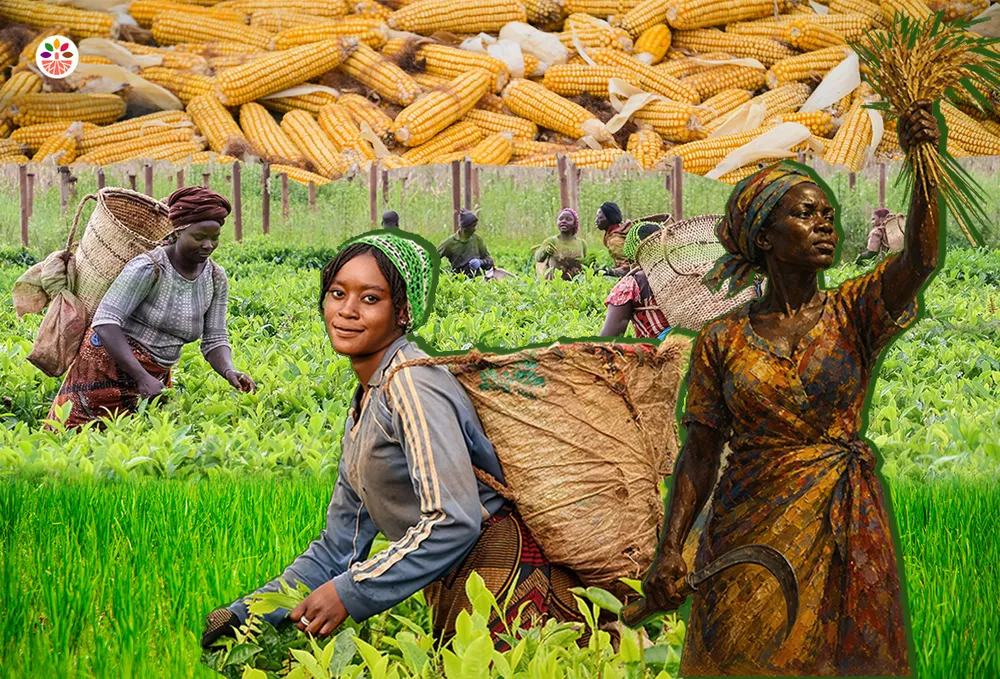
Smallholder farmers across Africa feed hundreds of millions of people; they produce most of the continent’s food, yet they are often the first to go hungry. For decades, governments, international agencies, and corporate capital have sold them various “solutions”: improved seeds, chemical fertilisers, pesticide packages, promising that adoption of these technologies would raise yields and end poverty.
More than half a century later, Africa’s soils are not more fertile; farmers’ debts are deeper. Seed is monopolised, fertiliser is priced in dollars, and agrotoxics soak into the land, bodies of farmers and consumers of agricultural produce. Against this backdrop, an ancient practice that is at the heart of agriculture and this conversation is “Agroecology”. It is not a new technology, but the integration of generational peasant and indigenous knowledge with ecological science. This article asks: can Agroecology strengthen the resilience of African smallholder farmers? Can it help them stand firmer in the face of soil degradation, climate crisis, and market coercion?
The Systemic Crisis Facing African Smallholder Farmers
The crisis African smallholder farmers face is not a set of isolated technical problems; it is systemic [1].
Export-oriented monocultures, such as cotton in West Africa and cocoa in Ghana and Côte d’Ivoire, continuously extract nutrients from the soil, shipping them abroad as crops whose nutrients are rarely returned to the fields from which they were taken. Marx described this process as a disruption of the “metabolic interaction between man and the earth”, whereby capitalist production interferes with the return of nutrients to the soil and undermines its long-term fertility [2]. The term “metabolic rift” was later developed by sociologist John Bellamy Foster to conceptualise this ecological contradiction within Marx’s broader analysis of capitalism and nature [3]. Imported mineral fertiliser, priced in dollars, is then presented as the remedy for a depletion that the export economy itself has helped create [4]. This dependence on external inputs extends beyond fertiliser to seeds and agrochemicals, further embedding farmers in commercially controlled production systems. Transnational seed and agrichemical corporations use patents, proprietary varieties and hybrid technologies to strengthen control over seed systems, increasingly shifting farmers from saving and exchanging seed to purchasing commercial varieties. Fertiliser, pesticides and commercial seed are also increasingly brought together through integrated input packages, requiring farmers to purchase multiple external inputs with cash each season and potentially increasing their exposure to debt. For example, Bayer’s FoodWings initiative in Côte d’Ivoire offers smallholder farmers an “all-in-one” production package built around DEKALB hybrid maize seed, herbicides and insecticides, while franchisee partners procure additional fertiliser and provide financing [5]. Such arrangements demonstrate how seed, crop protection chemicals, fertiliser and credit can become interconnected within a single production system, deepening farmers’ dependence on purchased inputs and external suppliers. These economic and ecological pressures are further compounded by climate change. Africa contributes relatively little to global greenhouse gas emissions. In 2023, the 55 countries of the African Union accounted for approximately 6% of global greenhouse gas emissions, with average per-capita emissions of about 2.2 tonnes of CO₂ equivalent, compared with a global average of 6.6 tonnes [6]. Yet the continent remains highly vulnerable to the impacts of climate change, including rising temperatures, changing rainfall patterns and increasing risks to agriculture and food security [7]. For smallholder farmers, irregular rainfall, prolonged droughts and rising temperatures are not distant projections but increasingly immediate realities that affect agricultural production, yields and livelihoods. Taken together, soil depletion, dependence on purchased agricultural inputs and climate instability reinforce one another, deepening the structural vulnerability of African smallholder farmers and constraining their ability to exercise control over the resources and means of production.
Agroecology: Peasant Knowledge, Ecological Science and Autonomy
Before discussing resilience, it is important to clarify what Agroecology entails and how it differs from approaches that seek to make industrial agriculture more environmentally efficient. Approaches such as regenerative agriculture and climate-smart agriculture can incorporate practices such as reduced tillage, precision fertilisation and improved resource-use efficiency while remaining embedded in production systems that depend heavily on purchased seed, fertilisers and chemical inputs [8]. Agroecology, by contrast, places greater emphasis on the ecological relationships within the farming system and on the knowledge and autonomy of those who produce [9].
Agroecology is grounded in principles of diversity, synergy, recycling and efficiency. Diversity means maintaining polycultures and integrating different crops, livestock, trees and other elements rather than organising production around monocultures. Synergy refers to the relationships between these components, whereby they complement and reinforce one another. Recycling means keeping nutrients and organic matter within the production system through practices such as composting and the use of locally produced bioinputs, thereby reducing dependence on external inputs. Efficiency places emphasis on ecological and biological processes that sustain production while reducing reliance on chemically intensive interventions. Compost, bioinputs, native and locally adapted seed, and agroforestry are therefore not isolated “green technologies”. They form part of an integrated logic of production built around ecological relationships, local knowledge and the productive capacities of the farming community.
This is also why Agroecology cannot be understood simply as a technical package. It has important political and economic dimensions because it raises questions about control over the productive resources on which farming depends: who owns the land, who controls seed, who produces fertiliser, and who determines the technologies available to farmers? When a farmer cooperative produces its own biofertiliser, saves and exchanges its own seed, and produces its own compost, it strengthens its control over essential elements of production and reduces dependence on external input suppliers. In this sense, agroecology can contribute not only to ecological resilience but also to greater peasant autonomy and food sovereignty.
The Four Dimensions of Resilience
Agroecology strengthens smallholder resilience across four dimensions.
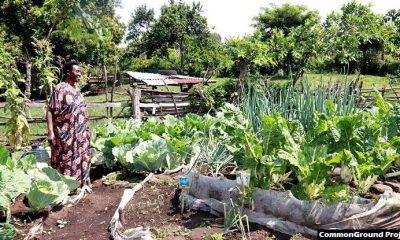
- Ecological resilience: Agroecology strengthens ecological resilience by using compost and organic matter management to raise soil organic matter within a single cropping cycle, making it one of the soil fractions that peasants can rebuild relatively quickly. Diverse planting reduces pest and disease risks, while agroforestry systems improve water retention and microclimate regulation. In Tanzania, MVIWATA (Mtandao wa Vikundi vya Wakulima Tanzania, the National Network of Small Scale Farmers’ Groups) runs soil biology training, teaching farmers to “read” their soil with their own eyes and hands, without a laboratory or outside expert.
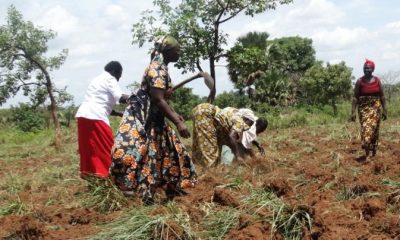
- Economic resilience: Agroecology strengthens economic resilience by enabling cooperatives to produce biofertilisers and compost collectively, reducing dependence on external inputs. This can mean lower cash expenditure, less exposure to debt, and reduced vulnerability to currency fluctuations. The popular biofactory, owned not by an entrepreneur but by a settlement, a union, or a cooperative, produces fertility that cannot be patented. Its by-product is the collective capacity of the peasants who operate it.
- Social resilience: Agroecology builds social resilience by strengthening farmer-to-farmer knowledge exchange, community seed banks, and cooperative organisation, which together form part of the social fabric of rural resilience. The MST (Movimento dos Trabalhadores Rurais Sem Terra, the Landless Workers’ Movement in Brazil) and its itinerant schools, alongside MVIWATA’s training programmes in Tanzania, demonstrate how the horizontal circulation of agroecological knowledge can simultaneously strengthen collective organisation and action.
- Political resilience: Agroecology advances political resilience by strengthening farmers’ control over seed, fertility and soil, thereby increasing their bargaining power. Food sovereignty, understood as the right of peoples to define and control their own food systems, is therefore not simply a slogan but a political dimension of agroecological practice.
Evidence and Cases from Across Africa
Agroecology is not a new practice introduced to African farmers. Long before the term Agroecology entered contemporary scientific discourse, indigenous and rural communities across Africa, Asia and Latin America had developed and practised diverse systems based on principles that are today associated with Agroecology. Across the African continent, farmers have long relied on practices such as crop diversification, intercropping, agroforestry, soil and water conservation, nutrient recycling and the use of locally available resources, adapting these practices to the distinct ecological and social conditions of the continent.
In West Africa, agroecology is being tested against some of the continent’s most degraded soils and most deeply entrenched export crop economies. Decades of cotton, cocoa and groundnut monocropping have mined soils of their organic matter, leaving smallholders dependent on imported fertiliser priced in dollars.
Yet the same landscape is generating some of the most creative responses. In Ghana, the West Africa Agroecology Foundation (WAAF) has worked extensively with cocoa farmers in the Ahafo, Bono and Western North regions, supporting transitions away from chemical-dependent monoculture towards diversified, shade-managed cocoa systems. These systems rebuild soil fertility through composting, mulching and intercropping with food crops.
In the country’s north, where Sahelian conditions meet the savannah, farmer groups have established community compost sites and biofactory initiatives using local materials, including crop residues, animal manure and household waste. These initiatives rebuild soil organic matter without purchased inputs, demonstrating that mined land can be restored through collective labour.
Elsewhere in West Africa, similar principles are being applied to the restoration of degraded landscapes. In Niger, Farmer Managed Natural Regeneration (FMNR) has restored millions of hectares of degraded Sahelian land by regenerating indigenous trees from seemingly dead stumps at almost no cost.
In Burkina Faso, the zai pits and half-moon water-harvesting techniques of the central plateau have enabled Sahelian peasant farmers to produce food on land that had been written off as lost.
Meanwhile, in Senegal and Mali, peasant platforms, namely the Conseil National de Concertation et de Cooperation des Ruraux (CNCR), the National Council for Rural Consultation and Cooperation, and the Coordination Nationale des Organisations Paysannes (CNOP), the National Coordination of Peasant Organisations, connect agroecological practice with food-sovereignty policy advocacy. They demonstrate that technical practice and political mobilisation can advance together.
Across these West African experiences, the transition does not depend primarily on capital-intensive technology. Rather, it depends on organisation, collective labour and the recovery and development of local knowledge systems that colonial and post-colonial export economies sought to marginalise.
Building on these experiences, East Africa offers some of the continent’s structured examples of how agroecological knowledge can be organised through farmer networks. In Tanzania, Mtandao wa Vikundi vya Wakulima Tanzania (MVIWATA) has integrated soil biology, bioinput production and seed saving into its farmer training programmes. Remineraliser work, which involves applying rock dust to rebuild soil minerals, has also been field-tested in Tanzanian contexts, adapting elements of Ana Primavesi’s tropical soil science to African savannah conditions. In Kenya, push-pull intercropping demonstrates how diversified planting can simultaneously contribute to pest management, soil fertility and crop production while reducing reliance on chemical inputs. These experiences extend the West African lesson: when agroecological knowledge is generated, adapted and shared through farmer networks rather than delivered solely through hierarchical extension systems, it can strengthen not only ecological capacity but also collective agency.
This relationship between ecological transformation and political organisation becomes even more explicit in Southern Africa. In Zimbabwe, the Zimbabwe Smallholder Organic Farmers’ Forum (ZIMSOFF) has promoted agroecological conversion in the context of land reform, demonstrating how changes in land ownership and control can create greater space for changes in farming practice. The Zimbabwean experience therefore reinforces a broader principle emerging across the continent: control over land is an important foundation for agroecological transformation. Where farmers have greater control over the land and productive resources on which their livelihoods depend, ecological resilience can be pursued alongside economic and political autonomy. Resilience without sovereignty is therefore incomplete.
The same relationship between ecological pressure, local knowledge and collective adaptation is evident in North Africa, although under markedly different climatic conditions. North Africa faces severe ecological pressures, particularly water scarcity, recurrent drought and increasing aridity [8]. Morocco, for example, has experienced drought approximately every three years since the beginning of the twentieth century, placing sustained pressure on agricultural production and rural livelihoods [9].
Yet these pressures have not erased the region’s long history of agroecological adaptation. Across the Maghreb, communities have maintained knowledge systems for managing scarce water and cultivating difficult landscapes.
Likewise, in Morocco’s argan forests, the Union des Cooperatives des Femmes de l’Arganeraie (UCFA), the Union of Cooperatives of Women of the Argan Forest, comprising 22 cooperatives, demonstrates how community-managed agroforestry can support both ecological conservation and rural livelihoods.
These practices show that agroecological knowledge in North Africa is not an imported response to climate change but part of a much longer history of collective adaptation to environmental constraints.
At the same time, however, the survival of this knowledge is increasingly challenged by the political and economic organisation of natural resources. Egypt’s Nile Delta faces serious salinisation pressures, while the Great Green Wall initiative has struggled to meet its restoration ambitions. Across the region, centralised water control, export-oriented agriculture and policy neglect can weaken the institutions through which communities have historically managed land, water and ecological resources. North Africa therefore reinforces the broader continental pattern: the knowledge and practices necessary for ecological resilience already exist in many rural communities, but their continued development depends on whether farmers and communities retain meaningful control over the resources, institutions and productive systems on which that knowledge depends.
From Resilience to Sovereignty
Resilience is necessary, but resilience alone is insufficient. A farmer who can absorb shocks but cannot decide what to plant, what to save, or at what price to sell remains systemically constrained. True resilience must extend into sovereignty, specifically food sovereignty. This means not only producing food but having the right to decide how to produce, for whom, and on what terms. The technical practice of Agroecology and the political demand for food sovereignty are two sides of the same coin.
Challenges
This article does not present agroecology as a panacea. The constraints facing African smallholders are real: land fragmentation, water scarcity, labour shortages, state policies still biased towards industrial agriculture, and continuous corporate lobbying. The transition from chemical inputs to agroecological management requires time, and yields may dip during the conversion period. Not every region has an existing community organisation to support collective action.
These limitations are not reasons to abandon the path, but they demand honest engagement rather than slogans.
Conclusion
Can agroecology strengthen the resilience of African smallholder farmers? The evidence says: yes. But this “yes” is not automatic. It depends on whether farmers can organise collectively to reclaim seed, fertility, and soil; whether policy shifts from subsidising chemical inputs to supporting cooperative biofactories, compost sites, and farmer schools; and whether grassroots movements can weld technical practice to political demand.
For farmer organisations: build community seed banks, produce bioinputs collectively, and run farmer to farmer knowledge exchanges. For policymakers: stop using public money to subsidise imported fertiliser and commercial seed, and invest instead in cooperative biofactories, compost stations, and peasant schools. For everyone who cares about Africa’s future: support food sovereignty, not merely “food security”.
Land, seed, soil, and food belong to those who work them. This is not an ideal; it is a reality being built.
References:
[1] Jayne, T. S., Mather, D., & Mghenyi, E. (2010). Principal challenges confronting smallholder agriculture in sub-Saharan Africa. World development, 38(10), 1384-1398. https://www.sciencedirect.com/science/article/abs/pii/S0305750X10001014
[2] Marx, K. (1976). Capital: A critique of political economy (Vol. 1, B. Fowkes, Trans.). Penguin Books. Karl Marx, Capital, Volume I — Marxists Internet Archive
[3] Foster, J. B. (1999). Marx’s theory of metabolic rift: Classical foundations for environmental sociology. American Journal of Sociology, 105(2), 366–405. https://doi.org/10.1086/210315.
[4] Grote, U., Craswell, E., & Vlek, P. (2005). Nutrient flows in international trade: Ecology and policy issues. Environmental Science & Policy, 8(5), 439-451. https://doi.org/10.1016/j.envsci.2005.05.001
[5] Bayer AG. (2023). FoodWings franchise model enrolls over 200 acres. Bayer Côte d’Ivoire.
[6] United Nations Environment Programme. (2024). Emissions gap report 2024: No more hot air … please! With a massive gap between rhetoric and reality, countries draft new climate pledges. United Nations Environment Programme.
[7 Intergovernmental Panel on Climate Change. (2022). Africa. In Climate change 2022: Impacts, adaptation and vulnerability. Cambridge University Press.
[8] Dabalen, A., Goyal, A., & Song, R. (2024). Regenerative agriculture in practice. World Bank.
[9] Ceddia, M. G., Boillat, S., & Jacobi, J. (2024). Transforming food systems through agroecology: enhancing farmers’ autonomy for a safe and just transition. The Lancet Planetary Health, 8(11), e958-e965. https://doi.org/10.1016/S2542-5196(24)00234-1Get rights and content
[10] Food and Agriculture Organization of the United Nations. (2018). Drought characteristics and management in North Africa and the Near East. FAO.
[11] Food and Agriculture Organization of the United Nations. (2006). Morocco: National report on the state of the world’s plant genetic resources for food and agriculture. FAO
Source: roots-iapc.org