
WITNESS RADIO MILESTONES
Land grabbers evict 360,000 Ugandans in 2024

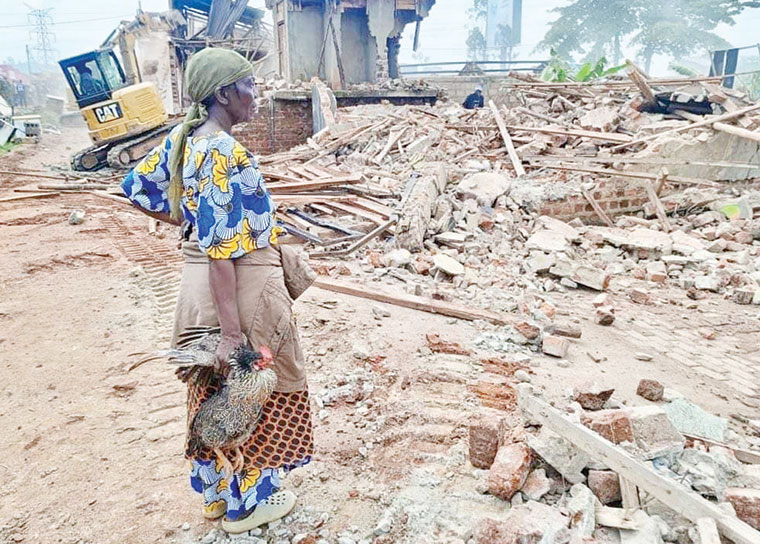
A staggering 363,021 Ugandans were displaced due to forced land evictions between January and June 2024, according to a new report by Witness Radio Uganda.
The report documented 90 cases of land evictions during this period, with nearly four incidents occurring weekly, affecting over 15,126 people and threatening 5,060 hectares of land nationwide.
The Central region was the epicenter, recording 52 eviction cases, followed by 24 in the Western region, eight in the Northern region, and six in the Eastern region. Alarmingly, the report estimated that 2,160 Ugandans face eviction daily, with 723 hectares of land at risk of being grabbed every day.
VIOLENCE AND HUMAN RIGHTS VIOLATIONS
Despite government promises and directives from President Museveni to halt evictions, land grabbers have routinely ignored these orders, often resorting to violence. Armed security forces, private militias, and police were reported to have carried out the majority of the evictions.
Of the reported cases, 37 were enforced by armed gangs on behalf of evictors, 25 involved Uganda Police, five were carried out with the participation of UPDF soldiers, and four were linked to private security companies.
“The egregious levels of impunity exhibited by land grabbers have left communities defenseless, creating an environment where their human rights are trampled without consequence,” said Jeff Wokulira Ssebaggala, country director of Witness Radio Uganda.
He called for accountability and justice, warning that the unchecked power of influential individuals and entities leaves marginalized communities vulnerable and without recourse.
DRIVERS OF EVICTIONS: INDUSTRIALIZATION AND LAND-BASED INVESTMENTS
The report identified the government’s push for industrialization and land-based investments as the primary drivers of forced evictions. Land is increasingly targeted for oil and gas extraction, mining, agribusiness and tree plantations for carbon offsets. While some of this land is already under development, other parcels remain vacant but are guarded by military personnel and private security firms.
Ssebaggala emphasized that industrialization must balance economic development with the protection of smallholder farmers’ rights to land and food security.

TRAGIC STORIES
The report highlighted harrowing cases that underscore the human toll of forced evictions. In Nakasongola, smallholder farmer Dan Ssebyala was ambushed and killed by armed men following a confrontation over disputed land. The district has become a hotspot for violent evictions involving absentee landlords and powerful investors.
Ismael Bwowe, a disabled father of 20, recounted how his land was confiscated after he demanded fair compensation. He faced intimidation, arrests and false charges from state authorities, including being accused of robbing an influential individual. Bwowe claimed that Total Energies offered legal support and representation on the condition that he accept their compensation terms.
“I refused,” he said, adding that the pressure to relinquish his land remains intense. The report underscores the urgent need for reforms to address forced evictions, ensure accountability, and protect the rights of vulnerable communities. Without meaningful intervention, Uganda risks deepening inequality and undermining the livelihoods of smallholder farmers who are essential to the country’s food security.
FAMILY JAILED AMID LAND DISPUTE
The plight of Richard Ssebagala, his wife Prossy Namande, and their relative Anania Ngabirano, residents of Kabubu-Kabongo village in Nansana Municipality, Wakiso district, highlights the human toll of Uganda’s ongoing land disputes. The family spent nine months in prison following their arrest on January 10, 2024, under controversial circumstances.
ARREST AND ALLEGATIONS
The arrests occurred at 1am, during a raid by officers from Luweero police station. Police reportedly banged on the doors and forcefully detained the family, accusing them of aggravated robbery. However, the family believes the arrest was a tactic linked to a land dispute with Benon Ntambi, a man who allegedly grabbed their land.
Before the arrests, Ntambi had reportedly destroyed crops, including tomatoes, potatoes, and bananas, on the contested land. While the family was incarcerated, a new building was constructed on their land, which is now occupied, raising further questions about the motivations behind their detention.
CALLS FOR JUSTICE
The case has drawn attention from Witness Radio Uganda, which has urged the government to take immediate action to address land grabbing and illegal evictions. The organization emphasized the need to strengthen land laws and protect vulnerable communities from abuses.
It also called for greater accountability in institutions such as the Uganda Police Force, the army and land registries, which are often accused of corruption and favoritism toward the wealthy.
“The government must prioritize justice for victims of illegal evictions and address systemic corruption that leaves the poor defenseless against land grabbers,” Witness Radio Uganda stated.
BROADER CONTEXT
This case underscores the broader issue of land conflicts in Uganda, where vulnerable families are often caught in disputes with powerful individuals or entities. Advocacy groups warn that the failure to address these issues not only erodes public trust but also perpetuates inequality and injustice.
As the government faces mounting pressure to act, the story of Ssebagala and his family serves as a stark reminder of the urgent need for reforms to protect land rights and ensure justice for those impacted by land disputes.
Source: The Observer
Related posts:
 Local land grabbers evict villagers at night; foreign investors cultivate the same lands the next day
 Uganda: Land-grab victim communities will join counterparts in commemorating the 2024 International Day of Struggle Against Industrial Plantations.
 Mubende Land Grab: Witnessradio.org presents another petition to Land Inquiry Commission, Wants All Titles being used to evict Natives to be Investigated
 A Nullity? Ugandans Query Constitutional Land Amendment Bill

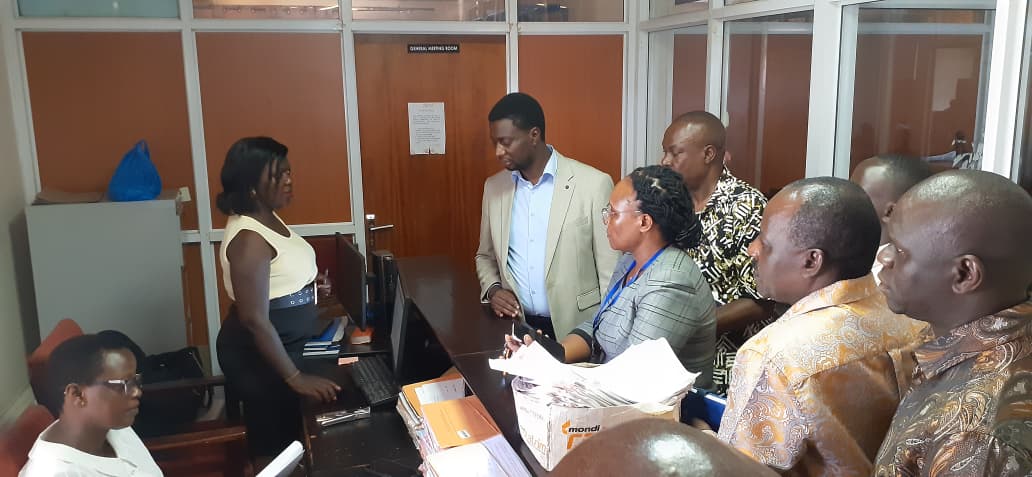
Parliament’s Committee on Lands, Housing and Urban Development has ordered a police investigation after recovering hundreds of land files allegedly hidden in shops and vehicle boots near the Mukono Zonal Land Office (MZO).
The committee, led by chairperson Edison Rugumayo, was inspecting the office as part of an inquiry into allegations of land fraud, delays in processing titles and other irregularities affecting land transactions in Mukono District.
During the inspection, legislators toured various departments and questioned staff about their work, including the handling and storage of land records.
At the office of Senior Staff Surveyor Steven Ndegeya, the committee raised concerns over alleged irregularities involving land titles reportedly created in wetlands and central forest reserves.
The legislators also questioned officials about more than 200 titles reportedly issued in Mabira Forest and demanded a list of people associated with the titles.
The committee was further alarmed after being told that more than 50 land titles had allegedly been created on the government-owned Njeru Stock Farm.
Rugumayo asked Ndegeya to provide the transaction trail, original title documents, geographical maps and details of all individuals holding titles on the land.
Ndegeya asked for more time, saying he needed to consult registrars before preparing an organised report.
He told the committee that there was no certificate of title for Njeru Stock Farm belonging to the Uganda Land Commission in the system.
However, he said the system contained records of individual Mailo landowners whose interests dated back many years, arguing that some people who obtained titles on the land had acquired them legally.
The committee later met MZO officials to establish the causes of the complaints and alleged irregularities.
Three staff members, Dan Kyalo, Hannifah Nantongo and Susan Aceru, were tasked with producing files that were allegedly being taken out of the MZO.
The three denied having moved the files.
However, accompanied by police officers, the committee recovered hundreds of titles allegedly stored in shops across the road from the land office. Other files were reportedly found in vehicle boots.

When questioned about who had instructed them to keep the files outside the office, the officials reportedly told the committee they had been directed by their supervisor, Ndegeya.
The committee also questioned the security team deployed by the Ministry of Lands in Kampala about how the files and titles had been removed from the office.
It emerged that Emma Otim, the security head, had left responsibility for keeping the office keys with a private security guard who routinely opens and closes the office.
The committee questioned why a guard whose primary responsibility was reportedly to man the gate had been entrusted with the office keys.
Principal Assistant Secretary at the MZO, Doreen Tumushabe, said she could not be held responsible for the alleged conduct of individual employees but promised to strengthen supervision.
Tumushabe also cited staff shortages, lack of vehicles and the large number of complaints involving allegedly forged land titles among the challenges affecting the office.
During the oversight visit, the committee also discovered hundreds of allegedly forged land titles at the MZO.
Officials told the committee that no related case had been opened at Mukono Police Station despite the alleged discovery of the forged titles.
The committee also heard complaints from members of the public who said they had waited for years to obtain land titles or have land disputes resolved.
A 75-year-old woman, Maria Nakitende, told the committee that she had waited for decades for authorities to resolve her title-related matter.
Hajji Musa Muliika of Katosi alleged that he was asked to pay Shs14 million after the title he had submitted was reportedly lost while in the hands of MZO officials.
Rugumayo directed police to conduct a thorough investigation into the circumstances surrounding the removal and concealment of the files and establish why they were taken outside the office, particularly ahead of the committee’s visit.
He also ordered the head of the Mukono land office to submit, within one week, a report on land titles in Mabira Forest and wetlands, as well as complaints against staff members.
Masaka legislator Joan Namutaawe criticised the quality of services at the land office and questioned whether Tumushabe was fully in control of operations at the MZO.
Namutaawe warned that the committee would pursue cases involving alleged illegal occupation and development in wetlands.
Source: nilepost.co.ug
Related posts:




MEDIA FOR CHANGE NETWORK
Uganda moves toward a Bamboo Policy to boost environmental conservation and green growth.

Related posts:

 As Uganda awaits the Energy Efficiency and Conservation law, plans to develop a five-year plan are underway.
 REC25 & EXPO Ends with a call on Uganda to balance conservation and livelihood
 Africa’s growth lies with smallholder farmers
 Green Resources’ forestry projects are negatively impacting on local communities – donor
WITNESS RADIO MILESTONES
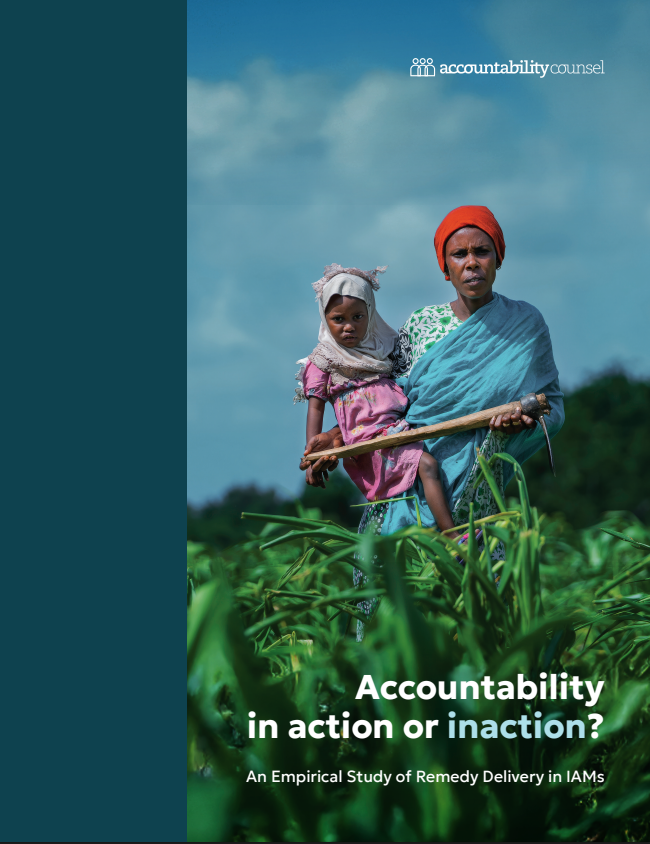
A Global Report reveals that Development Banks’ Accountability Systems are failing communities.
Related posts:

 Banks have given almost $7tn to fossil fuel firms since Paris deal, report reveals
 Opinion: USAID needs an independent accountability office to improve development outcomes
 Communities Under Siege: New Report Reveals World Bank Failures in Safeguard Compliance and Human Rights Oversight in Tanzania
 Oxfam Report 2011: When Indigenous communities named Rwanda nationals by investor to run away from corporate accountability

Uganda Leads Africa in Certified Organic Farmland Ahead of First Organic, Nature Expo

World Food Day 2026: Building healthy diets means reimagining how we grow, share, and enjoy our food.

International Day of Rural Women : Rural women farmers deserve not only equal rights and access to resources, but also the strength and voice to safeguard Mother Nature.

ODPP Staff Equipped With New Skills on Land Crimes, Witness Protection and Victims Rights

Lango ex-combatants count losses after dry spell destroys maize harvest

Five years after Uganda’s National Action Plan on Business and Human Rights, are local communities hosting land-based investment projects seeing change?

Alert: Land degradation is emerging as a pressing threat to global security.

The global race for clean energy minerals is leaving communities grappling with conflicts and human rights abuses, a new report reveals.

Innovative Finance from Canada projects positive impact on local communities.

Over 5000 Indigenous Communities evicted in Kiryandongo District

Petition To Land Inquiry Commission Over Human Rights In Kiryandongo District

Invisible victims of Uganda Land Grabs
-

 NGO WORK7 days ago
Tanzanian Government Abducts Maasai Villagers in an Unconscionable Attack on Indigenous Land Defenders
-

 MEDIA FOR CHANGE NETWORK2 weeks ago
Sweeping investments are fueling widespread land grabbing and deepening rights violations across Uganda – Report.
-

 MEDIA FOR CHANGE NETWORK2 weeks ago
Across Africa, the push for a greener future is putting new pressure on local communities, as recent ILC case studies highlight.
-

 MEDIA FOR CHANGE NETWORK7 days ago
Court remands 10 anti-oil activists as suspect collapses in dock
-

 MEDIA FOR CHANGE NETWORK2 weeks ago
Who will shape the future of East Africa’s seeds? Youth and civil society are sounding the alarm over a proposed regional law.
-
 MEDIA FOR CHANGE NETWORK3 days ago
World Food Day 2026: Building healthy diets means reimagining how we grow, share, and enjoy our food.
-

 FARM NEWS2 weeks ago
Can Agroecology Improve the Resilience of African Smallholder Farmers?
-

 MEDIA FOR CHANGE NETWORK6 days ago
As waves of investment sweep across Uganda, countless women rise to defend their land, safeguard their traditions, and claim their right to be heard.