








Connect with us

FARM NEWS

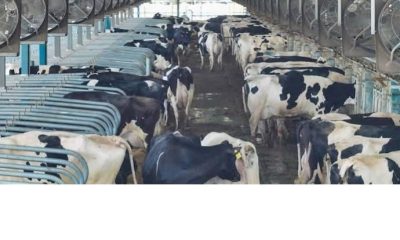
Agriculture topped January loan portfolio

Published

on

Agriculture might be finally catching financiers’ eye, with money disbursed to farmers topping all other sectors in January, according to official figures released from the ministry of Finance and Economic Development.

Agriculture received 28% (Shs 283bn) of all loans disbursed in January up from Shs 113bn in December 2018. Trade came closely second with Shs 183bn in loans in January. Personal and household loans segment received Shs 139bn. This is one of the rarest reporting, where the sector regarded riskiest by most funders, is topping other sectors in receiving money.

Access to finance has been one of the biggest challenges to farmers. Does this mean banks are finally confident about lending money to farmers and the sector in general?

Experts are skeptical. Dr Swaibu Mbowa, a senior research fellow at the Makerere University-based Economic Policy Research Center (EPRC), described the figures as “a one-off”

A Bank of Uganda February 2019 Monetary Policy Report (MPR) shows that agriculture still received the most expensive money than any other sector, an indicator that funders still look at the sector with skepticism.

The Finance report, assessing the economy’s performance in February does not indicate exactly where the money went in the agriculture sector. It is likely that much of the money went to the value addition segment of the sector and not to the actual farmer, according to one analyst.

Dr Mbowa said there have been efforts to encourage banks to lend to agriculture and also government push to increase production in the sector is getting noticed by funders.

“If you look at institutions like aBi Trust, they have tried to de-risk farmers to enable banks to lend to them more,” he said.

aBi Trust, founded by the governments of Denmark and Uganda to support agribusiness funding, encourages banks to offer loans to agricultural enterprises – small-scale farming and to micro agribusinesses – by offering to pay part of the money risk in case there is a default.

It avails money to partnering financial institutions, which in turn they lend to farmers. In its 2018 report, aBi Trust says through partner banks in 2017, some 38,671 new agribusiness loans were disbursed against the annual target of 20,000 such loans. Forty-five per cent of these loans were made to agribusinesses owned and operated by women.

But still, aBi Trust noted: “The uptake of agricultural credit remained relatively low. This was due to a cautious stance towards agricultural lending by most [banks].”

In February, Dr Louis Kasekende, the Bank of Uganda deputy governor told reporters that it was true loans to agriculture were increasing, adding that the Agriculture Credit Facility (ACF), administered at the central bank, was partly responsible.

Commercial banks and government pull funds together through the ACF, which enables the former to lend to agriculture-related enterprises at a 12% interest rate.

Even with these initiatives, the set-up of the sector shows there is still a long way to go for financiers to trust farmers with their money. Kasekende argued recently that the fact that agriculture in Uganda is dominated by smallholder farmers, of whom two-thirds are engaged in subsistence agriculture, it remains risky and a turnoff to many would-be funders.

“Smallholder farmers face a raft of constraints to modernizing their farming, of which lack of financing is not necessarily the most important. Most smallholders produce a very little surplus, beyond their own needs for consumption, which can be marketed,” Kasekende said in a recent address.

He added that vulnerability of agriculture to the weather, pests and other hazards, means that surpluses cannot be produced with any degree of reliability. About three-quarters of the population is engaged in agriculture and it accounts for 24.9% of GDP and 46% of the country’s export earnings.

Original Source- The Observer

Continue Reading
Click to comment

Leave a Reply

Your email address will not be published. Required fields are marked *

FARM NEWS

Drought leaves Bulambuli families struggling for food

Published

on

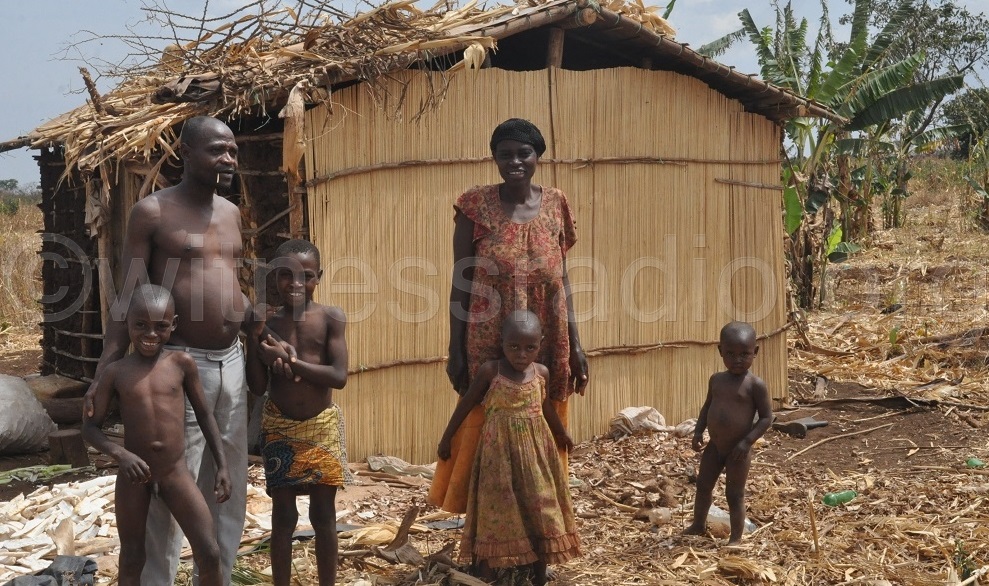
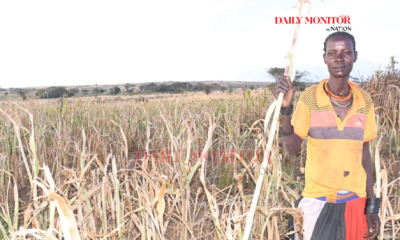
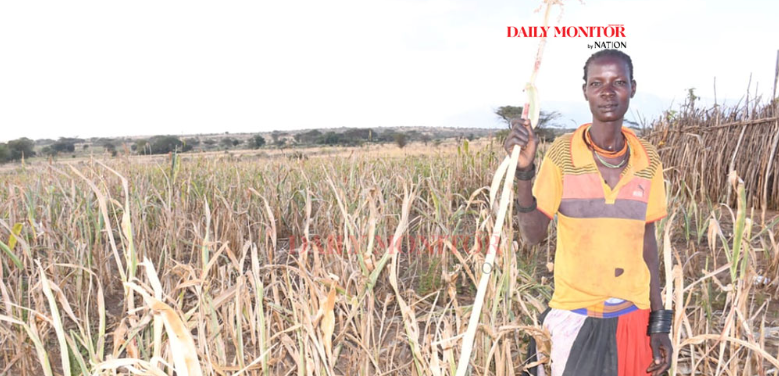
Once-green gardens in Bulambuli District, Bugisu Sub-region, have turned into scenes of despair as prolonged dry spells destroy crops, leaving thousands of farming households struggling to find food.
In the district’s lower-lying sub-counties, including Bwikhonge, Bunambutye, Bumufuni and Nabongo, farmers said they have suffered two consecutive seasons of poor harvests after rains failed to sustain their crops.
Households that previously harvested between 15 and 20 bags of maize and five to 10 bags of beans from an acre are now counting losses. Some have harvested as little as half a bag of maize per acre, while others have managed only about 10 kilogrammes of beans.
Other crops affected include sunflower, soya beans, cassava, bananas and rice, which are important sources of food and income for rural households.
The poor harvests have triggered food shortages, pushed up prices and left families struggling to meet basic needs, with women, children and elderly people bearing the greatest burden.
Mr Ronald Wakoko, the LCII chairperson of Buwabwala Parish in Buyaka Village, Bwikhonge Sub-county, said several families can no longer afford decent meals because they have little produce to sell or consume.
“Families are hardly getting what to eat because they have not harvested in two seasons and the prices of foodstuffs are high. For instance, a kilogramme of beans now costs Shs6,000, while a kilogramme of maize flour goes for Shs3,000,” he told Daily Monitor on Saturday.
He said the food shortage has also strained family relationships, with some men abandoning their households after failing to provide for their families.
“The situation has increased theft and domestic violence. The government should intervene,” he said.
Ms Harriet Wasike, a 72-year-old resident,  said the situation has become  difficult. Standing in her garden in Bunamono Village, Bwikhonge Sub-county, Ms Wasike said she harvested only three kilogrammes of beans and 50 kilogrammes of maize from her one-acre garden during the first season.
“We used to eat at least two times a day, but now we struggle and, if we are lucky, we survive on one meal a day. Other days we only live on porridge. We cannot continue like this,” she said.
Ms Janet Nandutu, another resident, warned that prolonged food shortages could affect children’s health, growth and performance in school.
“Poor access to food threatens the health and growth of our children and their ability to concentrate in schools,” she added.
In Nabongo Trading Centre,  residents are also concerned about the nutritional consequences of the failed harvests.
Mr Robert Wanyoro said some households are struggling to provide balanced meals, raising fears of increasing malnutrition among children.
The ruling National Resistance Movement party’s Chairperson for Bulambuli District, Mr Paul Kimamati, said the drought affected more than 10 sub-counties, particularly those in the lower parts of the district.
He explained that the first planting season, which begins around January, received inadequate rainfall, leaving farmers with extremely poor yields.
“Right from the first season, it drizzled. People planted, but the harvests were extremely poor. A peasant farmer would harvest one bag of maize and 10 kilogrammes of beans from an acre, which has been producing about 15 to 20 bags of maize and five or more bags of beans,” he said.
Mr Kimamati said several farmers, hoping the second season would bring better rains, planted again using the little seed they had saved from previous harvests.
However, the rains remained inadequate, resulting in another failed season and leaving households with little food or seed for the next planting period.
He called on government to assess the extent of the losses and provide assistance to the most affected families.
“I am appealing to government to send a team to evaluate the losses these people have encountered and the challenges they are going through, as is being done in other areas where people affected by landslides are being rescued,” he said.
Mr Kimamati said women, children and elderly people were particularly vulnerable, adding that some men had abandoned their families after failing to provide for them. “When women are affected, it means the younger children are also affected because the women cannot afford meals for their children,” he said.
Mr Alex Wataka, an agricultural officer in Bulambuli District, said assessments by the district indicated that crop failure was estimated at about 90 percent in the affected communities. He attributed the poor harvests partly to declining soil fertility and inadequate use of fertilisers, saying these factors have compounded the effects of unreliable rainfall.
“We are asking government to come up with a permanent solution of setting up an irrigation scheme with smaller water pumps so that people can use irrigation to grow their crops,” he said.
Bulambuli District Production Officer Alfred Tsekeli acknowledged the food security challenges, saying the district was advising farmers to adopt improved farming methods to minimise losses arising from increasingly unpredictable weather conditions.

BACKGROUND
Two consecutive seasons of poor rainfall have disrupted farming, the main source of livelihood for several households in Bulambuli District. Farmers who previously harvested 15 to 20 bags of maize per acre are now getting as little as half a bag, depriving families of both food and income.

The poor harvests have weakened purchasing power in local trading centres, while rising food prices, with a kilogramme of beans costing Shs6,000 and maize flour Shs3,000, have further strained household budgets.

Source: monitor.co.ug

Continue Reading

FARM NEWS

Uganda Leads Africa in Certified Organic Farmland Ahead of First Organic, Nature Expo

Published

on

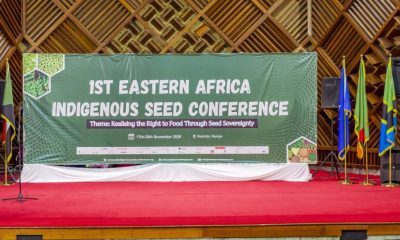
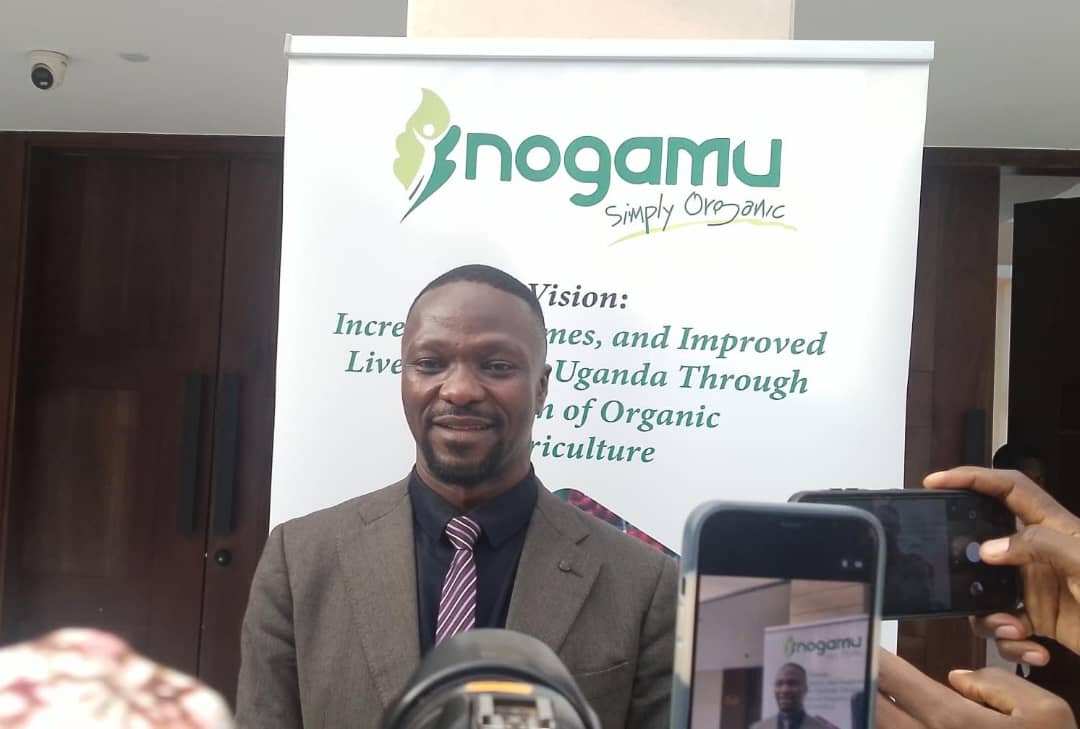
Uganda has emerged as Africa’s leading country in organic agriculture, recording the continent’s largest area of certified organic farmland as it prepares to host Africa’s first Organic and Nature Expo (ONE).

The latest Uganda Organic Agriculture Sector Statistics 2021–2025 show that the country had an estimated 744,288 certified organic farmers cultivating approximately 930,360 hectares of certified organic farmland by 2025.

The statistics were released on Friday during the launch of the first Organic and Nature Expo, which will take place alongside the fifth National Organic Week from November 4 to 7, 2026, at Hotel Africana in Kampala.

According to the report, Uganda’s organic agriculture sector has recorded sustained growth, with the number of certified organic farmers increasing from 211,584 in 2018 to 744,288 in 2025, representing an average annual growth rate of 19.7 per cent.

Organic exports have also increased significantly, rising from an estimated $123.3 million in 2018 to $225.7 million in 2025. Ugandan organic products are exported to markets in the European Union, the United States, Japan and the wider region.

Chariton Namuwoza, Chief Executive Officer of the National Organic Agricultural Movement of Uganda (NOGAMU), said the figures demonstrate the growing importance of organic agriculture to Uganda’s economy and international trade.

“These numbers confirm what the sector has long known: organic agriculture is one of Uganda’s strongest positions in global trade, and a genuine national asset,” Namuwoza said.

The statistics further show that the number of certified organic operators increased from 65 in 2018 to 439 in 2025, representing a 575 per cent increase over the seven-year period.

NOGAMU and its partners also mapped 493 active organic sector actors across 58 districts. These include producers and farmer groups, exporters, processors, cooperatives and agricultural input dealers.

Uganda’s organic product catalogue now lists 95 distinct products and 403 variants across 11 categories. The report also identifies opportunities for further growth in value addition, particularly in high-volume crops such as coffee.

Namuwoza said the sector’s expansion presents opportunities to link organic production with enterprise development, trade, investment and sustainable environmental practices.

The statistics are also expected to provide an evidence base for policymakers as Uganda advances the development of its National Organic Agriculture Bill.

The upcoming ONE Expo is being organised by NOGAMU in collaboration with the Ministry of Agriculture, Animal Industry and Fisheries (MAAIF), the African Organic Network (AfrONet) and other partners.

The four-day event is expected to bring together more than 2,000 participants, including producers, processors, exporters, buyers, investors, financiers, development partners and policymakers from across Africa.

The programme will feature a conference on organic and regenerative agriculture, business-to-business meetings, a regenerative coffee day, exhibitions and organised tours to farms, value-addition centres, and processor and cooperative enterprises.

According to the organisers, the expo will showcase Uganda’s organic agriculture sector while creating opportunities for producers and businesses to access markets, financing, technology and strategic partnerships.

The event will be held under the theme “Competitive Partnerships: Organic and Regenerative Innovations: Africa’s Edge.”

Source: nilepost.co.ug

Continue Reading

FARM NEWS

Teso farmers revamp grapefruit growing

Published

on

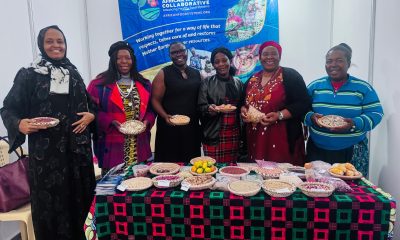
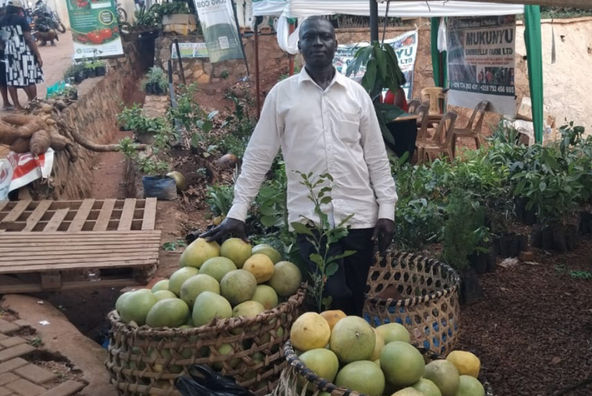
A grape fruit farmer from Kaplabweng District showcasing his grape fruits at the recently concluded Trade Show at UMA show grounds in Kampala. Photo | Lominda Afedraru

Continue Reading

Resource Center

Legal Framework

READ BY CATEGORY

Facebook

Newsletter

Subscribe to Witness Radio's news and report updates


Trending

Subscribe to Witness Radio's news and report updates