Connect with us

MEDIA FOR CHANGE NETWORK

Activists storm TotalEnergies’ office ahead of G20 Summit, demand end to fossil fuel expansion in Africa

Published

on

By Witness Radio team.

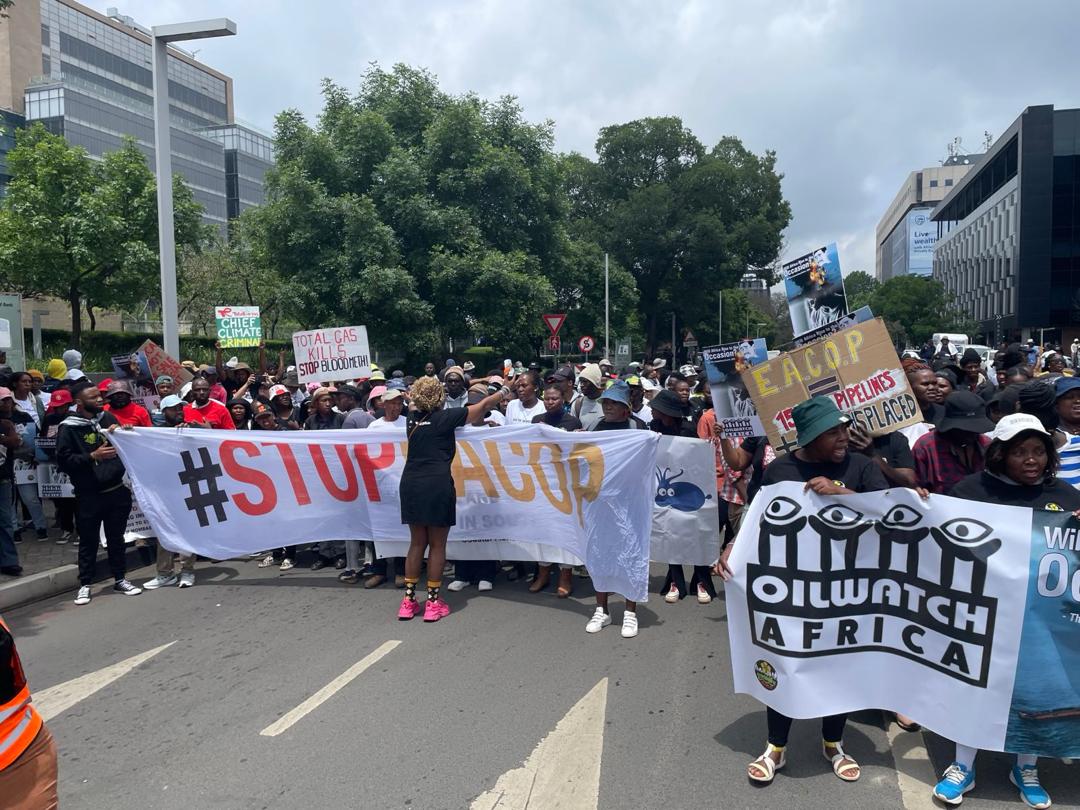
South Africa – As South Africa prepares to host the G20 Leaders’ Summit on the 22nd and 23rd, another gathering has already made its voice heard. Activists, including climate activist groups and affected communities, stormed the Johannesburg offices of TotalEnergies on Thursday to express their disappointment over the company’s continued investments in fossil fuels, which they say have resulted in gross human rights violations.

The action, they said, is part of a broader fight to “End a Century of Exploitation, Greenwashing, and Fossil Fuel Expansion in Africa.”

A coalition of 29 organizations marched to the company’s offices in Johannesburg, delivering a petition alongside banners reading “Africa Is Not for Sale,” “Stop EACOP,” and “100,000 Displaced.” They called on the France-based corporation to halt all new oil and gas exploration and development in Africa, including the East African Crude Oil Pipeline (EACOP), the Mozambique gas project, and offshore drilling in South Africa.

They also demanded that TotalEnergies acknowledge and compensate communities whose land, livelihoods, and ecosystems have been harmed by its operations.

The demonstration was organised by Fossil Ad Ban, StopEACOP, Green Connection, Earthlife Africa, Power Shift Africa, and others. It coincides with the G20 Leaders’ Summit, which begins in Johannesburg on Saturday, the 22nd of November, 2025.

“We are marching shortly before the G20 Summit to draw world leaders’ attention to our calls,” said Lazola Kati, the campaign coordinator for Fossil Ad Ban.

The G20, composed of 20 countries, the European Union (EU), and the African Union (AU), addresses global economic issues, including climate change mitigation, international financial stability, and sustainable development. This year marks the first G20 Summit to be held on African soil, under the theme “solidarity, equality and sustainability.”

Activists say the Summit offers a critical moment to expose injustices committed by Global North countries and corporations that claim to promote development in the Global South, while instead profiting from these projects that leave affected communities in misery.

Their central message targets TotalEnergies. Activists accuse the company, now marking 101 years of existence, of causing environmental destruction, land dispossession, and human rights violations across the continent.

“From the Niger Delta to Cabo Delgado, from EACOP’s route through Uganda and Tanzania to the expanding offshore oil blocks along South Africa’s coast, TotalEnergies has built profit on the suffering of people and the degradation of ecosystems,” reads part of the coalition’s letter addressed to TotalEnergies South Africa.

They argue that while the company brands itself as a “green” and “responsible” energy leader, it continues to pour billions of dollars into new oil and gas projects, while spending millions on advertising and sponsorships to present itself as climate-friendly, an act they describe as corporate greenwashing that obstructs real climate action.

Patrick Edema of StopEACOP noted that the pipeline will pass through 178 villages in Uganda and 231 in Tanzania, causing massive physical and economic displacement. “Our message is clear: TotalEnergies’ century of harm ends now. We will not allow you to mortgage our future for your fossil fuel profits. We will #StopEACOP,” he said.

An estimated 100,000 people in Uganda and Tanzania have already lost, or will lose, land used for farming or livestock due to the project.

In Mozambique, TotalEnergies’ fossil gas project in Cabo Delgado has also caused widespread displacement. The company and its partners are constructing a gas processing plant on a 7,000-hectare site allocated by the government, a move that required the relocation of 557 households, many of whom say promised compensation and replacement land never materialised.

“Africa does not need another century of fossil fuel colonialism,” the coalition stated in its letter. “We need a future powered by justice, renewable energy, and community-led solutions.” They called on TotalEnergies to align with the demands expected to be raised at the G20 and COP30 conferences: to end fossil fuel subsidies and to stop all new oil and gas development.

Lisa Makaula, advocacy officer at The Green Connection, emphasized the urgency for communities to speak out. “The world is at a tipping point, and as developing nations, we cannot afford to invest in fossil fuel projects that will worsen the impacts of climate change. Fisher livelihoods are already being destroyed in West Africa due to oil and gas exploration. We need committed leaders who will ensure that oceans are protected and that communities are not left behind as we transition to a low-carbon economy, with equity and fairness at the forefront.”

In their letter, the coalition further demands that TotalEnergies commit to a just and equitable transition that prioritizes renewable energy, distributive justice, and African ownership of the energy transition.

Continue Reading

MEDIA FOR CHANGE NETWORK

Land tenure security as an electoral issue: Museveni warns Kayunga land grabbers, reaffirms protection of sitting tenants.

Published

on

By Witness Radio Team

As Uganda heads to the polls on January 15, President Yoweri Museveni warned land grabbers in Kayunga District against illegally evicting tenants, stressing that such actions are unlawful and will be met with resistance by his government.

The President made the remarks during a campaign rally at the Busaana Town Council grounds, following years of persistent land disputes in the district, primarily linked to conflicts between landlords and tenants, which have affected many families and communities.

For those who have been following land-related developments in Kayunga, this was not the first time Museveni has addressed or intervened in land matters in Kayunga. In 2013, Museveni visited Kayunga District twice within one month in an attempt to find a permanent solution to land wrangles in the area. Many other visits have followed, but the problem continues to escalate, worrying residents.

For more than a decade, Kayunga district in Central Uganda has been a hotspot for illegal land evictions. More than 50,000 people have suffered from land evictions that have resulted in violence and loss of lives.

These are orchestrated by purported landlords, bigshots, government entities, and investors who seek to acquire, or already acquire, land occupied by tenants and landlords, forcing people off their land. These disputes have often escalated into violence, leaving families displaced and livelihoods disrupted.

Among these cases are: the famous Karangwa land wrangle, which caused suffering of over 2000 people in Kinamawanga and Kayonza villages, National Forestry Authority evictions of more than 8,000 tenants from Bajjo Central Forest Reserve in Galilaaya Sub-county, Kayunga District, a long-standing land dispute between residents of Bukerere village in Kayonza Sub-County and an Indian investor, Mr Chary Neekamika, among others. As a result, many families have been forcibly removed from their land, disrupting livelihoods and fueling prolonged conflicts.

Despite repeated interventions by government ministries and officials, the evictions have continued, leaving affected communities in a cycle of uncertainty and suffering.

During a visit to one of the contested areas in 2024, the State Minister for Lands, Dr. Sam Mayanja, sharply criticized the NFA, one of those that have been mentioned in Kayunga evictions, describing it as “a number one enemy of the government and President Museveni” for allegedly destroying rural livelihoods through violent evictions and converting forest land into sugar plantations under the guise of environmental protection. His remarks followed the eviction of thousands of residents in Galilaaya who claimed to have occupied the land for many years.

Land disputes remain a significant challenge across Uganda, driven by complex land tenure systems, powerful land grabbers, weak enforcement of land laws, corruption within land administration offices, and widespread ignorance of land rights.

To address these escalating concerns, Museveni, while addressing supporters during his campaign for a seventh term at the Busaana Town Council grounds in Kayunga district, reiterated that evicting sitting tenants or Kibanja holders is illegal and protected by law, including specific legal protections that tenants can invoke to defend their rights.

“You have no right to evict sitting tenants or a Kibanja holder from their land,” Museveni said, warning against individuals who mislead the public into believing that forced evictions are lawful.

Museveni tasked the leaders of the ruling National Resistance Movement (NRM) with sensitizing communities on land laws and helping resolve disputes peacefully, aiming to build

trust and confidence in lawful land management.

This, he said, “could empower them to protect their land and resolve disputes peacefully, noting that land grabbing continues largely because many citizens are unaware of the protections provided under the law.

The President also warned residents against buying land that is already occupied by tenants, describing such transactions as deceptive and a significant source of conflict. “Selling land with tenants without resolving tenancy issues is like selling hot air,” he said.

Museveni further revealed that the government has compensated some landlords to protect tenants and reduce conflicts, and will continue efforts to ensure the security of lawful occupants through lawful land transactions as an alternative to stop evictions.

Continue Reading

MEDIA FOR CHANGE NETWORK

COP30 : a further step towards a Just Transition in Africa

Published

on

Climate change has emerged as one of the predominant challenges for Africa, through its cascading environmental, social and economic effects.

Africa is still a continent where over 600 million people do not have access to electricity1, 230 million people do not have access to safe drinking water2, and more than 300 million people continue to suffer from hunger3, while its population is expected to double to 2.5 billion people by 20504.

It accounts for only 3.6% of global greenhouse gas emissions5, while the continent is home to 18.8% of the world’s population6.

Yet there is a real risk that it will endure some of the worst impacts of climate change.

In the assessment and projections made by the African Adaptation Initiative in the Africa State of Adaptation Report (2023)7, the conclusions are stark: the macroeconomic costs associated with the various adverse effects of climate change are significantly higher in Africa than in other regions of the world. African economies are highly sensitive not only to climate-related disasters, but also to annual variations in climate variables. The economic and livelihood impacts of climate change in Africa are therefore profound and are already leading to a slowdown in economic growth. And while the extent of this impact varies across the continent, seven of the ten countries identified as most vulnerable to the effects of climate change are in Africa8.

However, at the same time, Africa has enormous natural resources that could sustainably support its economic and social development, while positioning it as a key global player in the fight against climate change, thanks in particular to its wealth of minerals and biodiversity.

It is therefore in these three areas (adaptation, development and climate action) that it must be able to mobilise its resources and attract public and private funding. Needs are high: Africa’s climate finance needs are now measured in the trillions9.

On each of these points, COP30, held in Belém (Brazil) from 10 to 21 November 2025, made several advances.

1. Ensuring a Just Transition

In line with the Sustainable Development Goals (SDGs), Just Transition refers to the need to implement the sustainability transition in a socially just way that guarantees proper engagement with and support for affected and vulnerable people and communities. A declination of climate justice, it also acknowledges that without actively including and supporting affected groups within the transition, the disruptive changes brought about by climate action risk resulting in political opposition, contestation and even climate backsliding.

The imperative of a Just Transition was recognised already in the 2015 Paris agreement, but the work on Just Transition within the UNFCCC regime has gained more momentum in the past few years, with the Just Transition Work Programme10 established at COP28 in Dubai in 2023.

The Addis Ababa Declaration on Climate Change and Call to Action11 adopted on 10 September 2025 during the Second African Climate Summit also emphasized the importance of achieving Just Transition pathways in the implementation of all pillars of climate action under the Paris Agreement.

1.1 The Just Transition Mechanism

COP30 went a step further, through what is praised as one of its most concrete and successful achievements: the decision to develop a Just Transition Mechanism12. Popularly known as the Belém Action Mechanism or BAM, its purpose is ‘to enhance international cooperation, technical assistance, capacity-building and knowledge-sharing, and enable equitable, inclusive just transitions’.

Importantly, the decision acknowledges the need to support the Just Transition in a manner that does not exacerbate the debt burden of countries.

This decision also provided important clarity on what the international community views as a just transition. It recognizes the ‘importance of just transition pathways that respect, promote and fulfil all human rights and labour rights, the right to a clean, healthy and sustainable environment, the right to health, the rights of Indigenous Peoples, people of African descent, local communities, migrants, children, persons with disabilities and people in vulnerable situations, and the right to development, as well as gender equality, empowerment of women and intergenerational equity’.

The Just Transition Mechanism aims to be operational by COP31 next year. In the meantime, the concrete design of the mechanism will take place.

1.2 Africa’s Special Needs and Circumstances

COP30 also formally opened a long-awaited two-year process on recognising Africa’s Special Needs and Circumstances (SNC), including a mandated conference under COP31 in 2026 and a report to COP32 in 2027 in Addis Ababa, Ethiopia.

This is a first step in response to Africa’s long-standing demand for this formal recognition, which would acknowledge its unique vulnerabilities, including low historical emissions, disproportionate climate impacts and limited adaptive capacity, and could help it attract greater climate finance and technological support in the future.

1.3 Integrated Forum on Climate Change and Trade (IFCCT)

In parallel to the UN process, Brazil launched the Integrated Forum on Climate Change and Trade (IFCCT) to better address the potentially significant consequences of trade-related environmental instruments on development and the risk of economic exclusion of developing countries, particularly the least developed countries, without recognition of historical responsibility or differences in capacity.

This initiative follows the introduction, by the European Union in particular, of trade-related climate and environmental instruments such as the Carbon Border Adjustment Mechanism (CBAM)13 and the Deforestation Regulation (EUDR)14. These measures aim to better internalise the environmental impacts of products and encourage improvements in environmental production conditions in Europe’s trading partner countries, aligning them with the constraints imposed on its own manufacturers.

Nevertheless, the EU CBAM has met with considerable resistance, both within Europe and from many countries in the Global South and the United States, which argue that it is a unilateral trade measure and question its compatibility with its international obligations under the World Trade Organisation (WTO).

This is a major challenge for South Africa due to its dependence on coal, but also for all African countries seeking to industrialise and strengthen their capacity to process, refine and manufacture components, such as batteries, rather than exporting raw materials, and may need to rely temporarily on fossil fuels.

2. Financing Africa’s Green Growth

Africa’s natural resources are first and foremost an opportunity for its population, but also for the world, in the context of the global fight against climate change and the preservation of biodiversity. COP30 saw the first breakthrough in grid financing and a major innovation in forest conservation financing.

2.1 The Climate Finance Principles to Unlock Grid Financings

Developed by the Green Grids Initiative (GGI) and advanced by COP 30 under the ‘Plan to Accelerate the Expansion and Resilience of Power Grids’, the Climate Finance Principles15 aim to address the barriers faced in emerging markets for accessing climate finance to support the development of power grids, as the diversity of generation sources that are connected to them make their environmental impact more complex to assess than for individual generation projects.

Co-developed with investors and industry representatives, these Principles establish a common approach to assessing grids’ eligibility for climate and green finance, combining system-level and project-level criteria (climate contribution, consistency, measurability and attribution).

2.2 The Tropical Forest Forever Facility (TFFF)

Recognised as one of the key achievements of COP30, the Tropical Forest Forever Facility (TFFF)16 is a proposed, large-scale, blended-finance mechanism that provides ‘payment-for-performance’ incentives to tropical forest countries for keeping annual deforestation below 0.5%, verified through agreed geospatial satellite monitoring standards. It would operate alongside the Tropical Forest Investment Facility (TFIF), a companion investment fund intended to generate returns that finance TFFF’s annual payments.

The TFIF seeks to raise up to USD 125 billion through public and private investments, hosted at the World Bank. So far, 53 countries, including 34 tropical forest countries, have endorsed the Facility. The fund has yet to reach Brazil’s $25 billion for government investments, which are intended to secure investor confidence and unlock an extra $100 billion in private financing.

If the facility reaches this $125 billion target, it would be the world’s largest blended finance mechanism of its kind.

“Sponsor” countries (and potentially philanthropic foundations) would provide 40 year, first-loss (junior) capital at rates comparable to long-dated U.S. Treasuries, creating a risk buffer to mobilise an additional ~USD 100 billion in private, corporate, and philanthropic capital.

The combined capital would be invested primarily in emerging-market sovereign and corporate fixed income (excluding fossil fuels and environmentally harmful sectors). After servicing investor returns, net profits would flow to the TFFF to fund country payments.

If fully capitalized, expected returns could generate USD 3–4 billion per year, enabling payments of roughly USD 4 per hectare of conserved forest.

At least 20% of all payments are designated to Indigenous Peoples and local communities.

3. Financing Adaptation

Adaptation is a largely underfunded area of climate action worldwide, despite growing and now urgent needs. This issue is particularly acute for developing countries. The latest United Nations Adaptation Gap Report17 shows that developing countries’ needs are 12-14 times higher than current financial flows, while wealthy nations continue to favour mitigation funding.

One of the obstacles to increasing adaptation funding is that it is easier to increase mitigation funding than adaptation funding. Mitigation activities, such as energy efficiency and the development of clean energy production, are concentrated in the wealthier developing countries and often generate a financial return, allowing them to be financed with less concessional public funds and by mobilising private funds. In contrast, investments in adaptation often bring significant economic, social and environmental benefits, but few direct financial returns, such as investments in wetland restoration for flood protection or climate-smart agriculture. Adaptation investment needs are also often concentrated in the poorest countries, which require more concessional public finance.

COP30 nevertheless showed progress in this area.

Parties adopted the 59 Belém Adaptation Indicators. Voluntary and non-prescriptive, these indicators will enable progress to be tracked under the Global Goal on Adaptation, representing a significant step forward for transparency and accountability.

They concomitantly launched the ‘Belém–Addis vision on adaptation’, a two-year policy alignment process to develop guidance for operationalising those indicators.

Parties also formalised the Baku Adaptation Roadmap, a 2026-2028 work programme for operationalising adaptation goals, including support for vulnerable nations to develop national adaptation plans.

Above all, the ‘Belém Package’ confirms a commitment to triple adaptation finance from US$40bn to $120bn annually by 2035. While this is not yet a binding commitment and leaves timing and delivery modalities largely to future finance processes, it is seen as a major political signal.

Negotiations will need to continue on issues such as reforming the international debt architecture or the Bretton Woods institutions in order to support climate finance and action.

Conclusion

While international mobilisation is important, regional mobilisation is essential and will further bolster Africa’s influence at future meetings.

As significant as COP30 was, another major event in 2025 was the second African Climate Summit in September 2025, at which African leaders and financial institutions demonstrated their ability to mobilise.

They committed to mobilising $50 billion annually in catalytic finance through the Africa Climate Innovation Compact and African Climate Facility, with the aim of scaling up locally led climate innovations, while the African Development Bank announced the operationalization of the African Climate Change Fund, which will provide financial support for climate adaptation and mitigation projects across the continent.

At the same time, the Africa Finance Corporation, AfDB, Afreximbank, and Africa50 signed a framework for cooperation to realise the $100 billion Africa Green Industrialization Initiative (launched by the African Union in 2023), which aims to revolutionize industrial growth and renewable energy on the continent.

Taking over from COP30, 2026 will be the implementation year for Africa.


  1. https://www.iea.org/reports/financing-electricity-access-in-africa.
  2. https://www.afdb.org/en/news-and-events/world-water-day-2023-accelerating-change-solving-africas-water-and-sanitation-crises-59935#:~:text=Climate%20change%20is%20causing%20water,the%20available%20supply%20by%202025.
  3. https://www.who.int/news/item/28-07-2025-global-hunger-declines-but-rises-in-africa-and-western-asia-un-report.
  4. https://esgclarity.com/why-is-esg-different-in-africa/.
  5. https://www.iea.org/regions/africa/emissions.
  6. https://www.worldometers.info/world-population/africa-population/.
  7. https://www.ipcc.ch/report/sixth-assessment-report-cycle/.
  8. https://gain.nd.edu/our-work/country-index/.
  9. https://www.climatepolicyinitiative.org/publication/climate-finance-needs-of-african-countries/.
  10. https://unfccc.int/topics/just-transition/united-arab-emirates-just-transition-work-programme.
  11. https://au.int/en/pressreleases/20251118/african-leaders-addis-ababa-declaration-climate-change-and-call-action.
  12. https://unfccc.int/sites/default/files/resource/cma7_5_UAE%20JTWP_auv.pdf.
  13. Regulation (EU) 2023/956 of the European Parliament and of the Council of 10 May 2023 establishing a carbon border adjustment mechanism.
  14. Regulation (EU) 2023/1115 of the European Parliament and of the Council of 31 May 2023 on the making available on the Union market and the export from the Union of certain commodities and products associated with deforestation.
  15. https://greengridsinitiative.net/wp-content/uploads/2025/11/Climate-Finance-Principles-to-Unlock-Grids-Financing.pdf.
  16. https://www.wri.org/insights/financing-nature-conservation-tropical-forest-forever-facility and https://tfff.earth/.
  17. https://www.unep.org/resources/adaptation-gap-report-2025.

Source: ashurst.com

Continue Reading

MEDIA FOR CHANGE NETWORK

Four hundred fifty victim families of the Oil Palm project in Buvuma are to receive compensation by this Friday – Witness Radio

Published

on

By Witness Radio team.

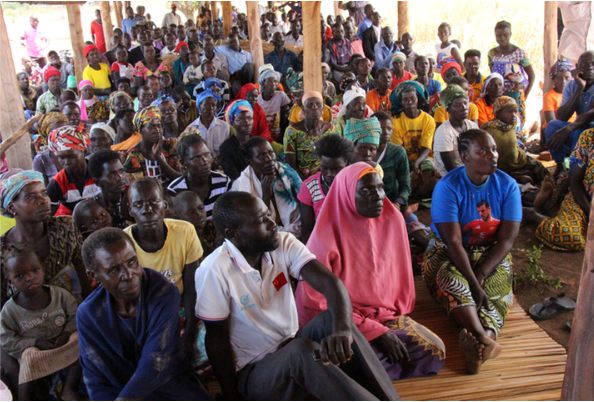
Entebbe, Uganda-President Yoweri Museveni has directed the Ministry of Agriculture, Animal Industry and Fisheries (MAAIF) to compensate the oil palm Project immediately Affected Persons (PAPs) in Buvuma District, following a physical meeting with residents who had camped in Entebbe for nearly two weeks protesting delayed and selective compensation. The 450 victim families are part of over 1400 families that have lost their land to the oil palm project in Buvuma district.

The affected residents, numbering approximately 450, had sought the President’s intervention after being repeatedly excluded from the ongoing compensation process under the National Oil Palm Project (NOPP), despite earlier presidential directives on their compensation.

During the meetings on Friday and Saturday, community representatives told the President about prolonged delays, lack of transparency, and exclusion from compensation lists.

“We told the President about the back-and-forth his ministries have been sending us through, the lack of participation, and how we have been wrongly portrayed as people who do not own land when we do. Because he knows us, we reminded him of the directive he issued when he visited our area, which his ministries later claimed they were not aware of,” Witness Radio source highlighted.

President Museveni reportedly expressed surprise over the continued delays.

“I thought they had paid you. Why is it taking so long?” the President was quoted as saying during the meeting.

The President immediately directed MAAIF to work closely with the Office of the President to ensure that compensation is processed and paid without further delay.

According to the source, who attended the meeting, the President personally followed up on the matter.

“I have been directly talking to the President, and he told me that he is sending representatives from his office. He said he advised them to work with MAAIF to make sure we are compensated, and he wanted this to be done soon,” the source added.

While more than 200 residents had camped in Entebbe, the President advised them to select 20 representatives to ensure their voices are heard and that they feel included in the process.

“The President advised us to reduce to 20 people to represent the whole community since we knew what everyone wanted,” it added.

Following the President’s order, a joint meeting between representatives of the affected residents, MAAIF, and officials from the President’s Office was held yesterday in Entebbe.

It was resolved that compensation should be completed before Friday.

During the meeting and after reviewing relevant supporting documents, residents revealed that it was agreed that the government would compensate their group of approximately 450 affected persons with 16 billion Uganda shillings, which is intended to cover land loss, destroyed crops, and displacement caused by the oil palm project, clarifying how the funds will address their specific losses.

This directive comes close to two weeks after residents from Nairambi, Busamizi, Buvuma Town Council, and Buwooya Sub-counties camped in Entebbe, accusing government ministries of ignoring an earlier presidential order issued during the President’s June 18, 2025, visit to Buvuma District.

During that visit, the President had directed that all affected households be compensated and that 28 billion shillings be allocated, with 14 billion to be released immediately. However, six months later, many residents remained uncompensated, prompting renewed protests.

The compensation dispute dates back to 2018, when more than 100 residents sued the government and Bidco in Mukono High Court over forced evictions, delayed compensation, and lack of disclosure. The case was later transferred to Lugazi High Court.

During his June visit, the President advised the complainants to pursue an out-of-court settlement, promising faster compensation. This pledge, residents say, had not been honored until the latest intervention.

Even after the Ministry of Agriculture announced earlier this month that it would compensate oil palm-affected residents in Buvuma and Sango Bay, the group said it had not been consulted, prompting them to demand a meeting with the president.

As of publication, the affected residents say they are awaiting implementation of the President’s directive, hoping that the latest orders will finally bring an end to years of uncertainty and hardship.

“By Friday, we hope everything will have been processed because we submitted all the necessary supporting documents, and a team from the Office of the President is supervising the process,” it added.

According to a press statement from the Ministry, more than 11 villages are expected to benefit from the compensation exercise, indicating that many affected people are yet to be compensated. The statement revealed:

Based on the Government Valuers’ report, full payments have been made to 301 PAPs in five villages, and the Ministry plans to pay 1,405 PAPs across 11 villages.

When asked about the other communities that are not part of the initial 450 beneficiaries who ran to the president, the Ministry of Agriculture spokesperson, Ms. Connie Acayo, stated that the Ministry would follow due process, including clear criteria and verification steps, to ensure that all affected persons are identified and fairly compensated.

“Those people told us they do not want to hear about compensation procedures, valuation, or other processes associated with compensation; they only want the money. That is, maybe, why they went to the President. However, our Ministry is transparent, and we must follow established procedures when implementing such activities,” Connie told Witness Radio.

Continue Reading

Resource Center

Legal Framework

READ BY CATEGORY

Facebook

Newsletter

Subscribe to Witness Radio's newsletter


Trending

Subscribe to Witness Radio's newsletter