Connect with us

MEDIA FOR CHANGE NETWORK

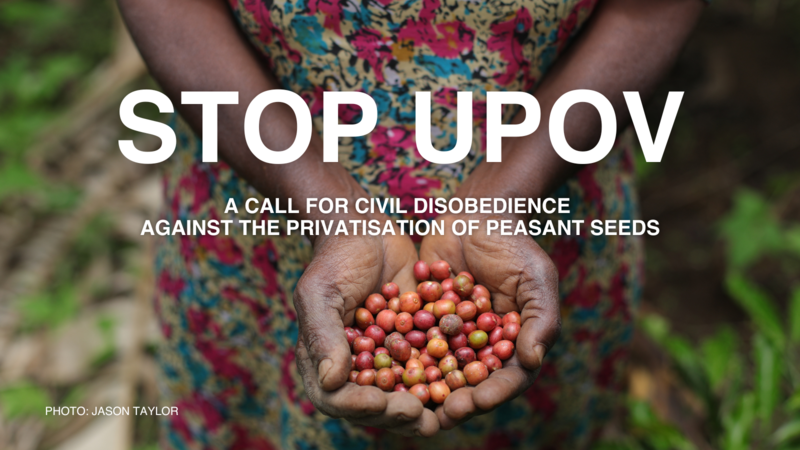
A call for civil disobedience against the privatisation of peasant seeds

Published

on

For thousands of years, communities have nurtured and taken care of the crops and seeds that sustain us. Seeds are part of human history, work and knowledge systems, and our relationship with them is a never-ending conversation of care. This mutual nurturing has given rise to specific ways of cultivating, sharing, feeding and healing that are linked to community norms, responsibilities, obligations and rights.

People’s freedom to work with seeds hinges on the responsibility of communities who defend and maintain them, who care for them and enjoy the goods they provide. And this freedom is under threat.

Today there is a strong assault on people’s seeds. It comes from the drive to regulate, standardise and privatise seeds to expand markets for corporations. This is done through plant breeders’ rights and patent laws, as well as seed certification schemes, variety registers and marketing laws. Whatever the form, it is about legalising abuse, dispossession and devastation.

Today’s attack on seeds aims to put an end to peasant and Indigenous agriculture, an end to independent food production. Where peasant food sovereignty prevails, it is difficult to turn us into cheap and dependent labour, people without territory and without history. We face a coordinated political and technocratic crusade to impose uniform and rigid laws and regulations in favour of agroindustry. There is a determined effort to discredit people’s historical practices and ancestral indigenous peasant knowledge in order to make us dependent on corporations. Communities who have resisted have faced criminalisation, repression, and even imprisonment

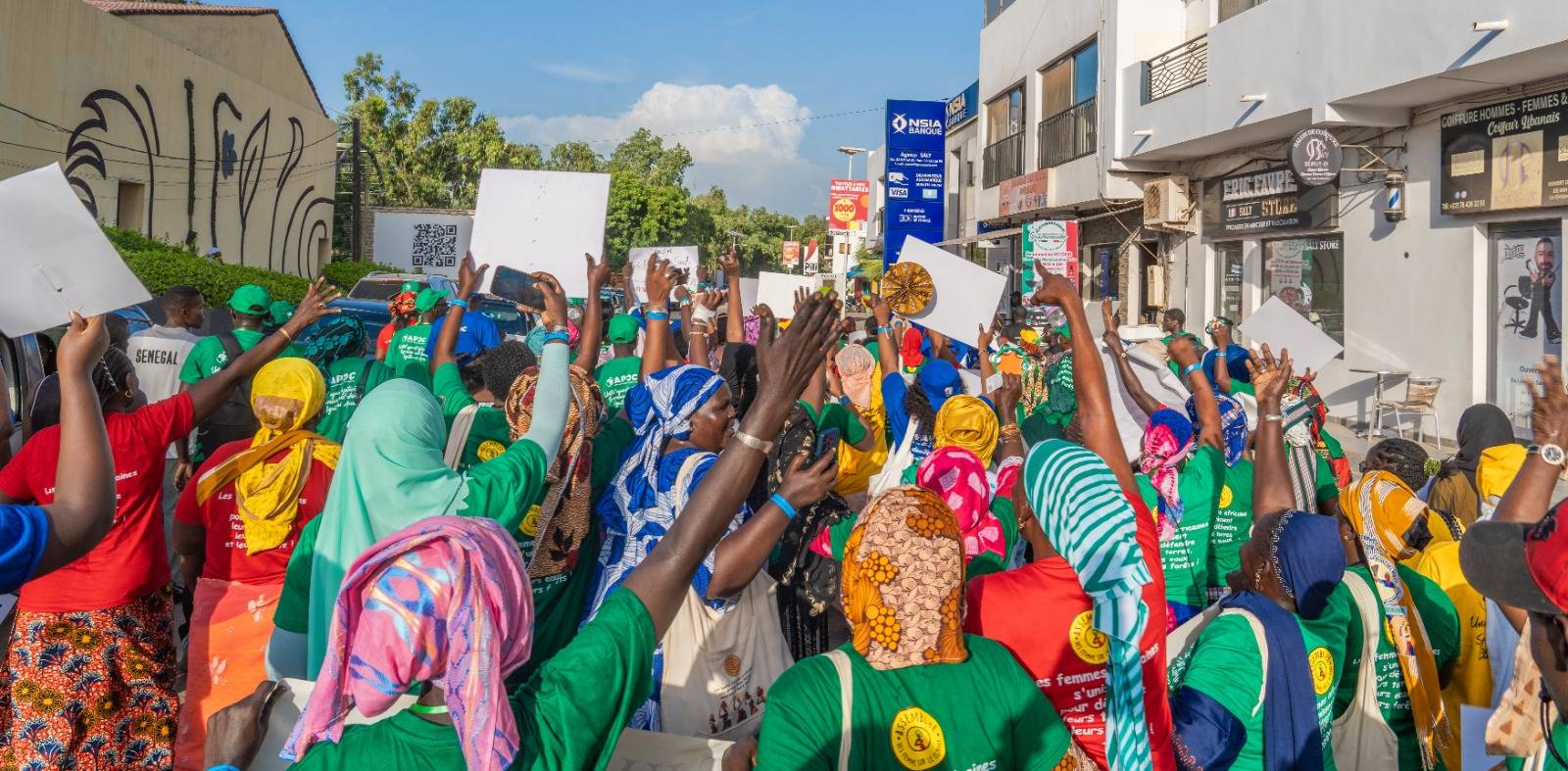
Whether in Africa, Asia, Europe or the Americas, communities are fighting this pressure and we are united and mobilised to actively support them.

In Benin, social movements have stopped the national parliament from discussing a law proposal to join UPOV, the Union for the Protection of New Plant Varieties. UPOV sets global standards for seed privatisation in favour of transnationals like Monsanto/Bayer, Syngenta and Corteva.

– In Guatemala, Indigenous peoples are in the streets demanding that their government’s proposed bill to adopt UPOV standards be scrapped as well. They call it “the Monsanto Law” and its rejection is part of an ongoing nationwide strike.

– In El Salvador, Guatemala and Honduras, groups are working together to prevent the adoption of a new ruling that would open the doors to genetically modified seeds in all three countries at once.

– In Thailand, civil society organisations are fighting hard against free trade agreements that impose UPOV instead of protecting the rights of farmers and other rural communities to maintain and use their local seeds.

-In Indonesia, farmers and civil society organisations continue to reject UPOV, which is being imposed through free trade negotiations and under pressure from countries like Japan. https://www.youtube.com/watch?v=J4pD_yZG1lc

-In the Philippines, farmers, scientists, concerned citizens and civil society organizations filed an environmental case to the Supreme Court to stop the commercial propagation of the genetically modified golden rice that is patented by Syngenta and other agrochemical corporations. Moreover, Filipino farmers are spearheading the fight for the recognition and strengthening of farmers’ rights to seeds and farmers’ seed system by forwarding seed commoning as an alternative to the UPOV-like laws in the country.

– Internationally, peasant and other social movements are also trying to get the UN Declaration on the Rights of Peasants and Other People Working in Rural Areas (UNDROP) translated into enforceable national laws.

We are determined to resist the dispossession of seeds from the hands of the people. We vigorously oppose registration, certification, patenting and marketing schemes, treaties, conventions, national and international laws and legal frameworks such as UPOV and other seed laws that promote the dispossession of the common goods and knowledge of our peoples.

We, as peoples in resistance, guardians of the seeds, will continue keeping, sharing and reproducing our seeds so our presence will germinate from our roots.

Signatories (Only organisation name displayed):

ABSDD/Slow Food

Burkina Faso

Acción Comunal

Colombia

ACDIC

Cameroun

AFSA

Africa region

agrarinfo.ch

Switzerland

AgriMovement

Lebanon

AIFFRS

India

AKban Mague

Colombia

Alexander von Humboldt Foundation

USA

A lo Verde Escuela de Huertos Agroecologicos

Ecuador

Alliance pour le Développement Durable et pour l’Environnement

Côte d’Ivoire

Alliance for Sustainable and Holistic Agriculture

India

Amigos unidos con amor hojas de agricultura

Colombia

Anti-mining struggle committee

India.

ANAGAVEC

Ecuador

APBREBES

Global/Switzerland

Aravali Bachao

India

ARBA (Asociación para la recuperación del bosque autóctono)

Spain

Aseas

Colombia

Asoproorgànicos

Colombia

Association des Jeunes Agriculteurs de la Casamance

Senegal

Asociación de mujeres unidas por el desarrollo juanchopuquio encañada

Peru

Asociación Ecoaldea Aldeafeliz

Colombia

Asociacion Agroecologia y Fe

Bolivia

Asociación PROBIVIR

Colombia

Association pour la Défense de l’environnement et des Consommateurs (ADEC)

Sénégal

Asociación Shuar Sharup de cuidado y protección de semillas.

Ecuador

Association Sénégalaise des Producteurs de Semences Paysannes

Senegal

Association Tunisienne de Permaculture

Tunisie

Atukpamba y Red de Guardianes de Semillas de Ecuador

Ecuador

Audace Institut Afrique

Côte d’Ivoire

Bangladesh Agricultural Farm Labour Federation (BAFLF)

Bangladesh

Badabon Sangho

Bangladesh

Bendito Prashadam

Colombia

BioThai

Thailand

Biodiversity and Biosafety Association of Kenya

Kenya

Biodiversity Information Box

Japan

Biowatch South Africa

South Africa

Bhartiya Kisan Union (BKU)

India

Building Futures

USA

Cabildo Indígena de la cuenca del Río Guabas

Colombia

Cámara Verde de la Amazorinoquía

Colombia

Campesinos construyendo futuro

Colombia

Caritas Diocese of Malakal (CDoM)

South Sudan

Casa de semillas El Origen

Colombia

CCPA

Sénégal

CEIP

Colombia

CENDA

Bolivia

CERAI

Spain

Chile Mejor sin TLC

Chile

Chilis on Wheels

United States

C.netzero

DRC

City Mouse Garden

United States

COAG

Spain

Coati

Colombia

Cocapeutas Cooperatica Mujeres Medicina

Peru

Colectiva de mujeres Muralistas

Colombia

Colectivo Agroecológico Del Ecuador

Ecuador

Colectivo Cultura Saravita

Colombia

Colectivo por la Autonomía / Saberes Locales

México

Colombia Humana

Colombia

Colectivo Minga de soberanía alimentaria deChia

Colombia

Colectivo Semilla Negra

México

Colectivo Xiegua

Colombia

Comité de Derechos Humanos de la Sierra Norte de Veracruz

México

Comité Ouest Africain des semences Paysannes

West Africa

Commission of Charity and Social Actions – Caritas Dalat

Viet Nam

Comunidad Moneda Luna

Colombia

Comunidad Rural de la Buitrera

Colombia

comunidad kishuar Amazanga

Ecuador

Cooperativa Huacal

México

Coordinadora Ambiental Popular de Santa Rosa de Cabal

Colombia

COPAGEN

West Africa

CORDES MAELA RENAF

Colombia

Corpalabra

Colombia

CORPONIMA

Colombia

Corporación Aluna

Colombia

Corporación Creare Social

Colombia

Corporación Compromiso

Colombia

Corporacion Frutos de Utopía

Colombia

Corporación Síntesis

Colombia

Corredor biológico Montes del aguacate costa Rica

Costa Rica

CREATE

INDIA

CSRD

India

CSFdeepinnerMusic

Netherlands

Cuatro Rumbos Para Ti

México

CULTIVISA

Colombia

Cultivo Lo Nuestro

Colombia

Custodios de Semillas Ancestrales

Colombia

Darbar Sahitya Sansada

India

DESMI, A.C.

México

Ecofeminisarte

Colombia

Ecosinergia

Colombia

EdibleBristol

UK

El Jilote, SPG

México

Enda Pronat

Senegal

ESAL

Colombia

Escuela de Líderesas del Ecuador, y mujeres por el cambio, y defensa por la salud de los pueblos

Ecuador

Evobiota Consultancy Corporation

Philippines

Extinction Rebellion València

España

FAEB / Federation Agroecologique du Benin

BENIN

FIAN Indonesia

Indonesia

Finca Carrizales

Colombia

Frente de lucha Ambiental Delia Villalba

Uruguay

Friends of the Earth Nigeria

Nigeria

Fundacion Ambiental

Colombia

Fundacion Avá

Argentina

Fundación Julia Márquez

Colombia

Fundacion Biosistemas Integrados

Uruguay

Fundación la COSMOPOLITANA

Colombia

Fundacion Luna Arte

Colombia

Fundación Runakawsai

Ecuador

Gealac

Peru

Gender Justice

Zambia

Glesi

Netherlands

Good Food Community

Philippines

GRAIN

International

Grassroots klimaatboerderij

Belgium

Grassroots Trust

Zambia

Groupe d’action Écologique pour le développement intégral

RDC

Grow Local Colorado

United States

Grupo Allpa

Ecuador

Grupo Raquira Silvestre SAS

Colombia

Grupo Semillas

Colombia

HEKS Swiss Church Cooperation

Switzerland

Humaine

Belgique

Huerta comunitaria y Jardín Polinizador Con Ojos de Amor

Colombia

Huerta Marsella

Bogota

Huertas Swa Cho

Colombia

Huerto Agroecológico Atemajac

México

Incredible Edible Lambeth

United Kingdom

Indigenous Women and Girls Initiative

Kenya

Instituto Agroecológico Latinoamericano México

México

Instituto Humanitas

Perú

ISRA

Sénégal

JAL Diviso

Colombia

Joint Action for Water

India

Junta de agua vereda laureles

Colombia

JVE Côte d’Ivoire

Côte d’Ivoire

Kikandwa Environmental Association

Uganda

Laboratorio de Tierras

Ecuador

La Via Campesina East and Southern Africa

Zimbabwe

La Tucaneta

Colombia

Lapapaya

Colombia

La Cité Idéale

Burkina Faso

La Cuica Cósmica

Ecuador

La Savia

Colombia

Les amis de la Terre

Togo

Lideresa social

Colombia

Kansas interfaith Action

USA

Karnataka State Farmers Association (KRRS)

India

Malaysian Food Sovereignty Forum (FKMM)

Malaysia

MASIPAG

Philippines

Mesa Departamental de Diálogo y Concertación Agraría, Étnica y Popular de Nariño

Methods Lab

United States

MINGAnet

Colombia

Mink’a Comunicación

Argentina

Mirachik

Ecuador

Mouvement d’Action Paysanne

Belgium

Mouvement des jeunes pour l’agriculture,l’agroécologique,et Agro pastorale (M.J.A.A.P)

R.D.Congo

Movement for Land and Agricultural Reform (MONLAR)

Sri Lanka

Movimiento Agroecológico de América Latina y el Caribe-MAELA

Colombia

Movimiento Campesino de Papaye

Haïti

Movimiento pacto histórico

Colombia

Movimiento Rural Cristiano

España

Mujeres que reverdecen

Colombia

Munsenga cooperative

Zambia

National Alliance for Agroecology The Gambia

Gambia

NeverEndingFood.org

Malawi

Ntaamba Hiinta Development Trust

Zambia

Ofraneh

Honduras

ojoVoz

Mexico

OK Seed Project

Japan

ONG YVEO

Côte d’Ivoire

Organisation des Ruraux pour une Agriculture Durable

Benin

Organización campesinos construyendo futuro (OCCF)

Colombia

Panitar Pally Unnyan Samiti

India

Paralegal Alliance Network

Zambia

Perkumpulan INISIATIF

Indonesia

Perkumpulan Kediri Bersama Rakyat (KIBAR)

Indonesia

Plataforma del País Valencià per un tren públic, social i sostenible que vertebre el territori i refrede el planeta

Spain

Primavera Zur

Colombia

Promotores ambientales del eje cafetero

Colombia

Proyecto agroecologico familiar y educativo ambiental sueño verde

Colombia

PTR Associates

USA

Punarchith

India

RADD

Cameroun

Radio Bénin

Bénin

RECHERCHE SANS FRONTIÈRES RSF

RD Congo

Red de Agricultores Urbanos Bogotá

Colombia

Red de consumo Responsable y consciente

Colombia

Red Colombiana de Agricultura Biológica de Antioquía

Colombia

Red de Custodia de Semillas Criollas y Nativas (CESTA)

Colombia

Red de foresteia análoga

Ecuador

Red de huertos agroecológicos de Cali

Colombia

Red de huertos urbanos

Colombia

Red de Resersvas / Resnatur

Colombia

Red de semillas criollas y nativas

Uruguay

Red de semillas libres de Colombia

Colombia

Red Distrital de Agricultores

Colombia

Red en defensa del Maiz

México

Red Kunagua

Colombia

Redmac

Colombia

REDMUNORCA

Colombia

Red de Pueblos Hermanos

Colombia

Red de jóvenes por la Agrobiodiversidad

Perú

Red Yuma

Colombia

Regional Schools and Colleges Permaculture

Kenya

Reservorio de Semillas Techotiva

Colombia

RESNATUR – Red de reservas

Colombia

Reseau JINUKUN

Benin

Resource Institute of Social Education

India

Salt Films

India

Sanwad

India

Save Earth Save Life Movement

India

Save Our Rice Campaign

India

Secretaria de educación de Bogotá

Colombia

Seed In A Box

Lebanon

Semillas de Nuestra Tierra

México

Semilla Nativa Colombia

Colombia

Semillas de Identidad – SWISSAID

Colombia

Serikat Buruh Migran Indonesia Kalbar

Indonesia

SERVIHUERTA

Colombia

Siyada network

Arab région

Société civile environnementale et agro-rurale du Congo

RDC

Sociedad libre y Neocampesina

Colombia

Soil if Cultures

New Zealand

South India Coordination Committee of Farmers Movements

India

SSN

England

Ssfafrica.com

Zambia and Africa

Sukrutham

India

Synergie Nationale des Paysans et Riverains du Cameroun

Cameroun

Tanzania Alliance for Biodiversity

Tanzania

Tamizhaga Vivasayigal Sangam

India

The Ecocene Project

India

The Failing Farmer

Tunisia

The Hummingbird Foundation

Kenya

The Sixth Element School

India

The Utopian Seed Project

USA

Tierra Fertil

Colombia

Tinto to go

Colombia

Tlalixpan, sobre la faz de la tierra

México

Unillanos

Colombia

Unión de Organizaciones de la Sierra Juárez Oaxaca

México

Union Démocratique de l’Agriculture

Maroc

Unión de Organizaciones de la Sierra Juárez Oaxaca

México

Unión nacional de organizaciones regionales campesinas

autónomas (UNORCA)

Mexico

Union Régionale des Associations Paysannes de DIOURBEL URAPD

Senegal

Uruguay Soberano

Uruguay

Waia Reserva Sagrada

Colombia

We Are the Solution

Senegal

West africa sea turtles conservation network

Côte d’Ivoire

WFDFFM

Indonesia

Wild Webcap

Australia

Women’s Alliance MN

United States

WMW/ATPA

Tunisie

xermoladas

Spain

Youth talk

RDC

Yuva Kaushal Vikas Mandal

India

Zambian Alliance for Agroecology and Biodiversity

Zambia

Source: GRAIN

Continue Reading

MEDIA FOR CHANGE NETWORK

Climate Change and Conflict : The Agony of Kasese Farmers.

Published

on

As climate change impacts various parts of the globe, Kasese District in South-Western Uganda serves as a stark example of environmental vulnerability. Global warming has accelerated the melting of glaciers in the Rwenzori Mountains. Satellite data from scientific monitoring groups reveals a striking 30% reduction in ice surface area between 2020 and 2024.

For the farming communities of Munkunyu Sub-county, this environmental challenge has created a complex crisis. The altered landscape has heightened resource competition between local Bakonzo crop farmers and Basongora cattle keepers from neighbouring Nyakatonzi Sub-county, as both communities navigate severe strains put on nature and land.

Why the land crisis is growing

Before diving deeper into the unfolding situation on the ground, it is critical to understand the primary triggers forcing these communities into confrontation:

The Glacial Melt: A 30% loss of Rwenzori ice cover in just four years is drastically altering local river volumes and weather predictability.

The Climate Double-Whammy: Farmers and pastoralists are trapped in a punishing cycle of back-to-back disasters, first catastrophic flash floods, immediately followed by extreme dry spells that leave no grass for livestock or food for households.

How floods and hungry cattle sparked a quiet war

Just eight months ago, Munkunyu’s farming families faced severe flash floods that wiped out their entire agricultural investments. In the wake of these disasters, herdsmen seeking surviving pastures moved their cattle directly into the cultivation zones. Farmers report that on 30 May 2026, livestock grazed across 217 hectares of food crops. This created immense economic and psychological strain for hundreds of households already struggling with food insecurity and school fee obligations.

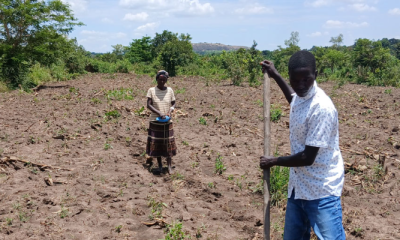
Wide acres of local farmland left bare and ruined after hungry cows moved into cultivation zones to eat growing food crops. (Photo Credit: KYL)

Matsiko Loyce, a local councillor and farmer, outlines the collective weight of losing both crops and land resources:

“In October last year, we lost our crops to floods. As we began to recover with hopes of feeding our families, livestock grazed on our remaining income. It is a deeply distressing situation.”

Local herds of cattle walk through agricultural fields, destroying the remaining green crops. (Photo Credit: KYL)

The escalating pressure soon led to physical friction. When local youths attempted to block cattle from entering the remaining fields, a violent altercation broke out. Matsiko emphasises the critical need for peaceful intervention:

“Two young men trying to protect the crops were injured during the confrontation. The matter has been formally reported to the police to ensure a peaceful, lawful resolution.”

The broken 15 million shilling compensation deal

Following local mediation efforts, the pastoralists initially agreed to a compensation package of 15 million Ugandan Shillings (approx. $4,110 USD) for the 150 hectares of ruined crops.

However, the agreement faced a major setback when the June 12 deadline arrived. The pastoralists shifted their position, offering to pay only 5 million shillings (approx. $1,370 USD) with no clear assurance of whether or when the remaining 10 million shilling balance (approx. $2,740 USD) would be paid. The farmers reportedly refused this reduced offer, demanding the full fulfillment of the original 15 million shilling agreement. According to human rights defenders monitoring the situation, this delay has severely fractured community trust.

A history of lost grazing land

This resource competition is deeply linked to historical migration patterns. The Basongora are an ancient pastoralist community whose traditional lifestyle was disrupted between 1925 and 1954. During this time, colonial administrations gazetted over 90% of their ancestral grazing lands to establish Queen Elizabeth National Park.

Displaced and hit by a devastating rinderpest epidemic in 1931, many Basongora crossed into the Democratic Republic of Congo (DRC) before returning to Kasese in subsequent decades. Concurrently, the Bakonzo have long cultivated food and cash crops in lowlands like Nyakatonzi and Munkunyu. While these groups have maintained a delicate coexistence for decades, accelerating climate change has disrupted that balance, renewing historical anxieties over land access.

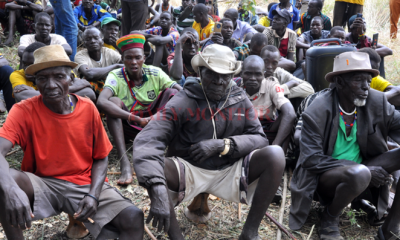
Bakonzo and Basongora elders convene near the boundary of Queen Elizabeth National Park to initiate a collaborative resource-sharing framework aimed at preventing future land disputes. (Photo Credit: KYL)

Choosing to survive together over fighting

Kato Ronald, the Executive Director of Kasese Youth Link and a human rights defender, appeals for structured mediation over conflict:

“Both the livestock and the human populations require sustenance. There is an urgent need to resolve this climate-induced conflict through a framework that ensures human security.”

Local leaders call for dialogue

As the conflict drags on, local leaders are calling for restorative justice rather than increased criminalisation to prevent further escalation. Mr. Ndyoka Isaac Kabunzu, the LCIII Chairperson for Munkunyu Sub-county, noted that recent arrests

have only heightened anxieties.

“These developments have increased community tension. Any individuals held without sufficient evidence should be released. Sustainable peace requires structural intervention over criminalisation.”

Kabunzu strongly advocated for a transparent judicial review, urging district leaders, security agencies, cultural institutions, and all stakeholders to immediately convene a dialogue aimed at addressing the root causes.

While the air in Munkunyu remains tense as communities await a resolution to the compensation agreement, the path forward relies on restoring mutual trust, establishing green compensation frameworks, and choosing joint survival over resource division.

Source: Peace Journalism Foundation East Africa

Continue Reading

MEDIA FOR CHANGE NETWORK

Rights experts call for an inclusive transition as the East Africa region attracts renewable energy investments.

Published

on

By the Witness Radio team.

NAIROBI, Kenya: As governments across East and the Horn of Africa accelerate efforts to transition from fossil fuels to renewable energy, experts have warned that the shift could deepen inequality and further trigger human rights violations if affected communities are excluded from decision-making processes.

The warning came at the 5th East and Horn of Africa Business and Human Rights Conference in Nairobi, organized by Danchurch Aid and its partners. Climate justice advocates, business leaders, and human rights experts met to discuss how the increasing investments could better align with human rights standards and responsible business conduct.

Just transition was among the key issues discussed during the two-day conference held last week, with experts emphasizing the need for inclusive approaches as East Africa attracts growing investments in renewable energy.

While there is a need and an urgency to address climate change, experts argue that the global race toward clean energy is already producing unintended consequences elsewhere, offering important lessons for Africa.

“The transition to renewable energy is inevitable, whereas justice isn’t,” Mr. Andrew Byaruhanga, the Executive Director of Resource Rights Africa, said during a panel discussion on just transition pathways.

Byaruhanga said governments and investors risk prioritizing energy targets and financial returns over the rights and welfare of communities whose land and livelihoods are affected by transition-related projects.

“The finance sector must be mobilized, not just for returns, but also for impact. Public and private sectors must align their efforts, share risks, and invest in long-term partnerships. The success of this transition, therefore, depends on empowering those most affected. Governments have a role to play in making sure that the financing architecture takes cognizance of these realities,” he added.

His remarks reflected growing concerns that renewable energy projects, despite their climate benefits, can reproduce the same patterns of exclusion and dispossession that have historically accompanied large-scale development projects.

Across the world, communities are increasingly raising concerns about land acquisition, displacement, inadequate compensation, and restrictions on civic space linked to renewable energy infrastructure and critical mineral extraction.

A recent report by the Coalition for Human Rights in Development, Financing the Transition, Silencing Defenders, documented cases across Asia where communities and environmental defenders faced intimidation, arrests, displacement, and violence while opposing energy transition projects.

Among the cases highlighted was the Jalaur River Multipurpose Project in the Philippines, where Indigenous Tumandok communities reportedly faced inadequate consultations and displacement threats linked to the construction of a hydropower dam. In India’s Assam state, local communities opposed a major solar project over concerns that it would displace more than 20,000 Indigenous residents and threaten traditional livelihoods.

Although the cases occurred outside Africa, experts in Nairobi said similar risks are emerging across the continent as governments pursue investments in renewable energy, carbon markets, and climate-related infrastructure.

Florence Shako, Executive Director of the Center for Education Policy and Climate Justice, said the transition must not come at the expense of vulnerable communities.

“We can talk about decarbonization and the fact that it’s important to transition, but we must really think about what inclusivity means for the youth, for persons with disabilities, and for people in the Global South,” she said.

Shako noted that many affected communities lack access to information, legal representation, and affordable mechanisms for seeking justice when their rights are violated. She also warned that transition projects often fail to provide alternatives for people who lose land, jobs, or sources of income.

“We need to think about replacement livelihoods and access to remedies. Otherwise, communities will continue bearing the costs while others reap the benefits.” She added.

The conference also highlighted concerns about youth exclusion from transition discussions.

According to Eric Baeni, Coordinator of the Pan African Youth Alliance on Business and Human Rights (PAYA-BHR), unemployment remains one of the biggest barriers preventing young people from engaging with climate and transition agendas.

“We are the workforce of the continent, but we are unemployed. Unemployment is the key challenge that prevents many young people from understanding and participating in the just transition.” He said.

He called for deliberate efforts to involve young people in policy discussions and ensure they benefit from employment opportunities created by emerging green industries.

The concerns raised in Nairobi come at a time when African governments are under increasing pressure to pursue low-carbon development pathways while tackling poverty, unemployment, and climate vulnerability. African countries emit only a small fraction of global greenhouse gas emissions, but are among the most vulnerable to climate-related disasters such as droughts, floods, and food insecurity.

Experts further argued that this reality requires transition strategies that prioritize local development needs rather than simply replicating models designed elsewhere.

As the conference concluded, experts called for stronger protections for human rights defenders, meaningful community participation, accessible grievance mechanisms, and investment frameworks that place affected communities at the center of decision-making.

They also urged governments to strengthen safeguards around land rights, free, prior, and informed consent, and benefit-sharing arrangements before approving major transition-related projects.

Continue Reading

MEDIA FOR CHANGE NETWORK

Emotions run high as Uganda Land Commission mediates S

Published

on

The Uganda Land Commission (ULC) has intensified efforts to resolve a series of longstanding land disputes in Soroti city, with cultural institutions, private sector organisations and residents seeking intervention over contested properties.

During a stakeholder engagement in Soroti city, the proceedings took an emotional turn when Iteso Cultural Union founder, Pumprus Imodot, broke down while addressing commissioners over a disputed piece of cultural land in Kichinjaji ward.

Imodot told the commission that despite submitting ownership documents to several government offices, he has not received a satisfactory response. He expressed concern that construction activities are continuing on the disputed land while the matter remains unresolved.

The meeting was attended by ULC commissioners Tom Kasenge and Christine Amongin Aporu, Soroti city leaders, and representatives from the aviation sector, who explained how they believe the land was legally allocated.

The commission later moved to the Yellow Flats area in Soroti city’s Western division to mediate another dispute involving 10 families and a claimant, Samuel Oyata, over ownership of Plot 25.

Commissioner Kasenge said attempts to reach an immediate settlement between the parties were unsuccessful, adding that further engagement would be required before a resolution could be reached.

Residents led by Allan Opolot and 81-year-old Stephen Enokikin rejected Oyata’s claim, insisting that their families possess legitimate ownership documents dating back several decades.

However, Oyata maintained that the plot was legally allocated to him through the district land board with the recommendation of the former Soroti Municipal Council.

Speaking on behalf of the affected families, Stephen Enokikin said they remain confident in their ownership documents and believe the truth will prevail.

Meanwhile, the commission also mediated a separate dispute involving property occupied by the Teso Private Sector Development Centre in Soroti city.

The contested property has attracted competing claims from the Teso Private Sector Development Centre and two individuals, Francis Omoding and George William Okwaput, who were granted a lease extension offer by the Uganda Land Commission.

During a stakeholders’ meeting attended by Soroti city mayor Francis Esudu, Soroti District Land Board chairperson Jorem Opian Obicho, opinion leaders and commission officials, Teso Private Sector chief executive officer Soyce Malinga challenged the lease offer, alleging that Omoding had a conflict of interest because he processed ownership documents while serving as treasurer of the institution’s Board of Governors.

Kasenge explained that the matter remains before the commission following applications by Omoding and Okwaput for lease extension on the property.

The discussions prompted strong reactions from stakeholders. Benson Ekue, director of Public Affairs Centre Uganda, urged the commission to revoke the lease offer granted to Omoding and Okwaput.

Ninety-five-year-old elder Mzee Amuriat appealed to the commission to reconsider its decision, arguing that the property has historically served various community and business organisations, including Teso African Traders, Uganda National Chamber of Commerce and later the Teso Private Sector Development Centre.

Following extensive deliberations, a majority of stakeholders voted in favour of recommending that the commission cancel the lease offer granted to Omoding and Okwaput and instead consider the application submitted by the Teso Private Sector Development Centre.

Commissioner Christine Amongin Aporu acknowledged concerns raised during the meeting and explained that the commission had identified procedural issues surrounding the lease allocation process that require further review.

Despite the recommendations, Okwaput rejected the resolutions reached during the engagement, insisting that all legal procedures were followed in obtaining the lease offer. He warned that any attempts to reverse the decision could result in court action and potential compensation claims exceeding Shs8 billion.

Aporu reaffirmed the commission’s commitment to peaceful dispute resolution, noting that the Uganda Land Commission will continue engaging all affected parties to find lasting solutions to the land conflicts affecting Soroti city.

The engagements underscore the growing challenge of land ownership disputes in Soroti city, where competing claims involving cultural institutions, private entities and residents continue to fuel tensions over valuable urban land.

Original Source:newvision.co.ug  Via : europesays.com

Continue Reading

Resource Center

Legal Framework

READ BY CATEGORY

Facebook

Newsletter

Subscribe to Witness Radio's news and report updates


Trending

Subscribe to Witness Radio's news and report updates