




Connect with us

FARM NEWS

Lack of Agronomists worries grape farmers in Mbarara

Published

on

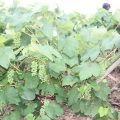
Grape farmers in Mbarara are concerned that they are earning less from the crop due to the absence of an agronomist to offer expertise on the processes for growing and harvesting the crop.

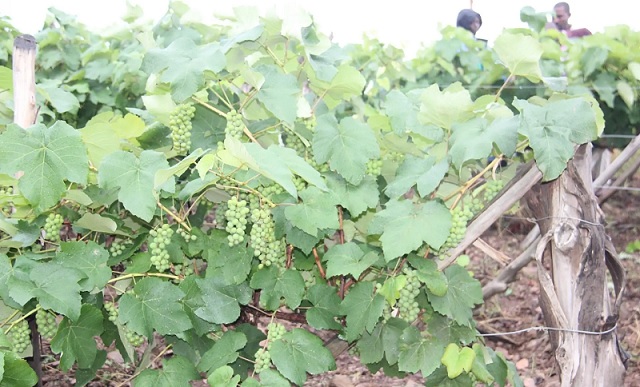
There are more than 200 grape farmers in Ibaare, Nyamatojo and Nyakayojo, all in the South Division of Mbarara City, where more than three hills are fully covered with the crop. They are mainly planting Muscat and Karmen, which thrive well in semi-arid areas.

But the farmers said that they are growing the crop without clear information on the ideal varieties of grapes grown in Uganda, and knowledge of soil management, site preparation, planting, pruning, pest and disease control, fertilizer application as well as harvesting.

By nature of their work, agronomists work with farmers to help them grow the best possible crops, based on their extensive knowledge of chemistry, biology, economics, earth science, ecology, and genetics. They usually conduct experiments to develop the best methods for increasing the quality and production of crops and develop methods for protecting crops from weeds, pests, and harsh climates.

Alex Asiimwe, the Chairperson of Mbarara Grape Farmers Cooperative Limited said that without a specialist in the region, many of them are left to gamble with the crop. Often, he says, they struggle to manage the spread of pests in grape plantations.

James Mugabi, a grape farmer said he once lost more than 25 tons of grapes to fungus, which he didn’t know and failed to get the best drug. He narrates that once the crop has been attacked by either a pest or disease, the entire plantation is destroyed.

Allan Namanya, a grapes farmer from Katojo said the absence of an agronomist is costing them a lot since grapes are considered the most lucrative crop at the moment. He says that a kilogram of grapes costs between 2,500 and 3,000 Shillings and a bottle of wine costs 20,000, yet it can even cost much higher than this if they are advised on the right farming practices.

Mbarara city Agricultural Officer, Vincent Mugabi, said that the department also has a shortage of personnel knowledgeable about the relatively new crop for the area. He wants the government to consider taking them for training to acquire knowledge.

Grapes are harvested twice a year, in April/May and November/December seasons. They were introduced in Mbarara at Nyamitanga hill the Catholic seat by missionaries in the 1960s.

Original Source: URA via The Independent

Continue Reading

FARM NEWS

Drought leaves Bulambuli families struggling for food

Published

on

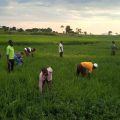
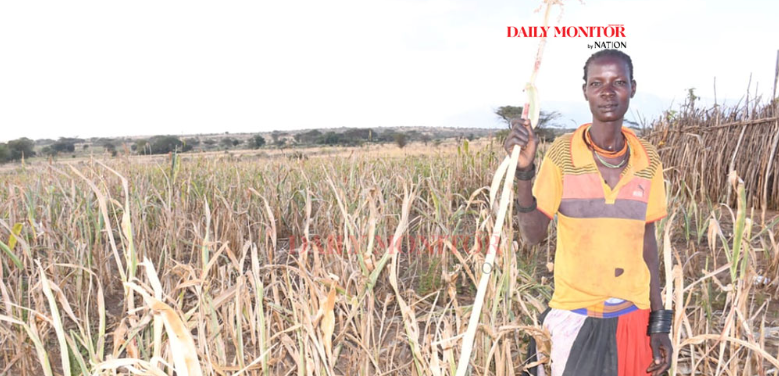
Once-green gardens in Bulambuli District, Bugisu Sub-region, have turned into scenes of despair as prolonged dry spells destroy crops, leaving thousands of farming households struggling to find food.
In the district’s lower-lying sub-counties, including Bwikhonge, Bunambutye, Bumufuni and Nabongo, farmers said they have suffered two consecutive seasons of poor harvests after rains failed to sustain their crops.
Households that previously harvested between 15 and 20 bags of maize and five to 10 bags of beans from an acre are now counting losses. Some have harvested as little as half a bag of maize per acre, while others have managed only about 10 kilogrammes of beans.
Other crops affected include sunflower, soya beans, cassava, bananas and rice, which are important sources of food and income for rural households.
The poor harvests have triggered food shortages, pushed up prices and left families struggling to meet basic needs, with women, children and elderly people bearing the greatest burden.
Mr Ronald Wakoko, the LCII chairperson of Buwabwala Parish in Buyaka Village, Bwikhonge Sub-county, said several families can no longer afford decent meals because they have little produce to sell or consume.
“Families are hardly getting what to eat because they have not harvested in two seasons and the prices of foodstuffs are high. For instance, a kilogramme of beans now costs Shs6,000, while a kilogramme of maize flour goes for Shs3,000,” he told Daily Monitor on Saturday.
He said the food shortage has also strained family relationships, with some men abandoning their households after failing to provide for their families.
“The situation has increased theft and domestic violence. The government should intervene,” he said.
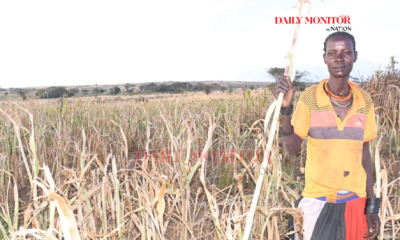
Ms Harriet Wasike, a 72-year-old resident,  said the situation has become  difficult. Standing in her garden in Bunamono Village, Bwikhonge Sub-county, Ms Wasike said she harvested only three kilogrammes of beans and 50 kilogrammes of maize from her one-acre garden during the first season.
“We used to eat at least two times a day, but now we struggle and, if we are lucky, we survive on one meal a day. Other days we only live on porridge. We cannot continue like this,” she said.
Ms Janet Nandutu, another resident, warned that prolonged food shortages could affect children’s health, growth and performance in school.
“Poor access to food threatens the health and growth of our children and their ability to concentrate in schools,” she added.
In Nabongo Trading Centre,  residents are also concerned about the nutritional consequences of the failed harvests.
Mr Robert Wanyoro said some households are struggling to provide balanced meals, raising fears of increasing malnutrition among children.
The ruling National Resistance Movement party’s Chairperson for Bulambuli District, Mr Paul Kimamati, said the drought affected more than 10 sub-counties, particularly those in the lower parts of the district.
He explained that the first planting season, which begins around January, received inadequate rainfall, leaving farmers with extremely poor yields.
“Right from the first season, it drizzled. People planted, but the harvests were extremely poor. A peasant farmer would harvest one bag of maize and 10 kilogrammes of beans from an acre, which has been producing about 15 to 20 bags of maize and five or more bags of beans,” he said.
Mr Kimamati said several farmers, hoping the second season would bring better rains, planted again using the little seed they had saved from previous harvests.
However, the rains remained inadequate, resulting in another failed season and leaving households with little food or seed for the next planting period.
He called on government to assess the extent of the losses and provide assistance to the most affected families.
“I am appealing to government to send a team to evaluate the losses these people have encountered and the challenges they are going through, as is being done in other areas where people affected by landslides are being rescued,” he said.
Mr Kimamati said women, children and elderly people were particularly vulnerable, adding that some men had abandoned their families after failing to provide for them. “When women are affected, it means the younger children are also affected because the women cannot afford meals for their children,” he said.
Mr Alex Wataka, an agricultural officer in Bulambuli District, said assessments by the district indicated that crop failure was estimated at about 90 percent in the affected communities. He attributed the poor harvests partly to declining soil fertility and inadequate use of fertilisers, saying these factors have compounded the effects of unreliable rainfall.
“We are asking government to come up with a permanent solution of setting up an irrigation scheme with smaller water pumps so that people can use irrigation to grow their crops,” he said.
Bulambuli District Production Officer Alfred Tsekeli acknowledged the food security challenges, saying the district was advising farmers to adopt improved farming methods to minimise losses arising from increasingly unpredictable weather conditions.

BACKGROUND
Two consecutive seasons of poor rainfall have disrupted farming, the main source of livelihood for several households in Bulambuli District. Farmers who previously harvested 15 to 20 bags of maize per acre are now getting as little as half a bag, depriving families of both food and income.

The poor harvests have weakened purchasing power in local trading centres, while rising food prices, with a kilogramme of beans costing Shs6,000 and maize flour Shs3,000, have further strained household budgets.

Source: monitor.co.ug

Continue Reading

FARM NEWS

Uganda Leads Africa in Certified Organic Farmland Ahead of First Organic, Nature Expo

Published

on

Uganda has emerged as Africa’s leading country in organic agriculture, recording the continent’s largest area of certified organic farmland as it prepares to host Africa’s first Organic and Nature Expo (ONE).

The latest Uganda Organic Agriculture Sector Statistics 2021–2025 show that the country had an estimated 744,288 certified organic farmers cultivating approximately 930,360 hectares of certified organic farmland by 2025.

The statistics were released on Friday during the launch of the first Organic and Nature Expo, which will take place alongside the fifth National Organic Week from November 4 to 7, 2026, at Hotel Africana in Kampala.

According to the report, Uganda’s organic agriculture sector has recorded sustained growth, with the number of certified organic farmers increasing from 211,584 in 2018 to 744,288 in 2025, representing an average annual growth rate of 19.7 per cent.

Organic exports have also increased significantly, rising from an estimated $123.3 million in 2018 to $225.7 million in 2025. Ugandan organic products are exported to markets in the European Union, the United States, Japan and the wider region.

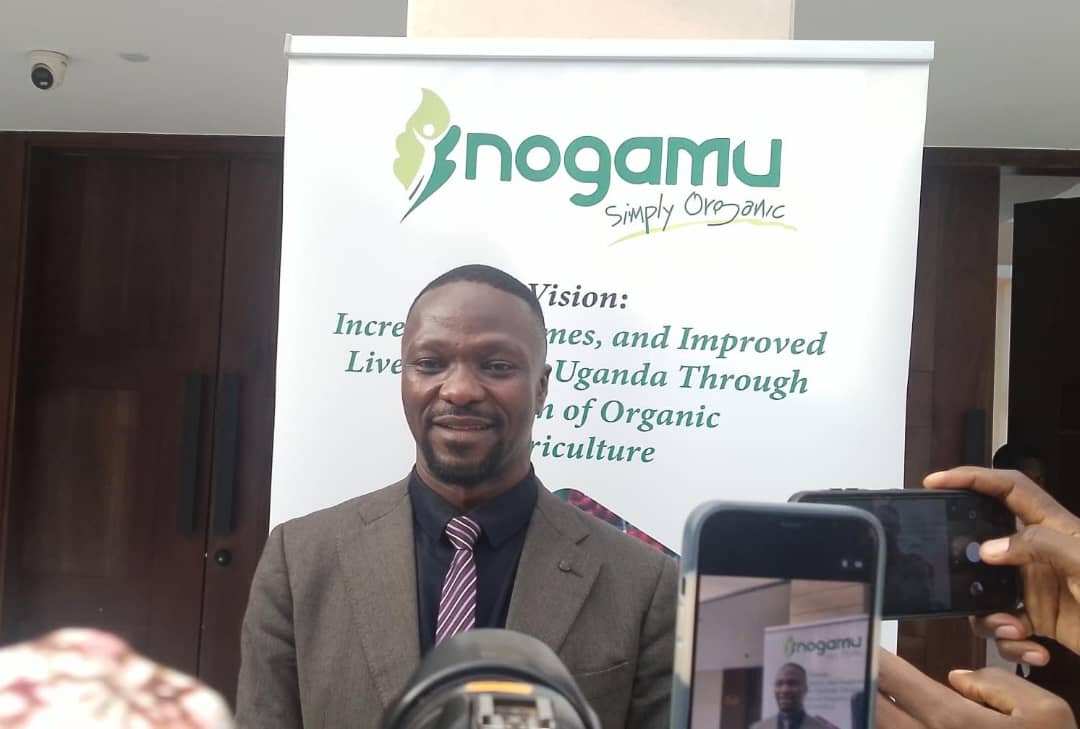
Chariton Namuwoza, Chief Executive Officer of the National Organic Agricultural Movement of Uganda (NOGAMU), said the figures demonstrate the growing importance of organic agriculture to Uganda’s economy and international trade.

“These numbers confirm what the sector has long known: organic agriculture is one of Uganda’s strongest positions in global trade, and a genuine national asset,” Namuwoza said.

The statistics further show that the number of certified organic operators increased from 65 in 2018 to 439 in 2025, representing a 575 per cent increase over the seven-year period.

NOGAMU and its partners also mapped 493 active organic sector actors across 58 districts. These include producers and farmer groups, exporters, processors, cooperatives and agricultural input dealers.

Uganda’s organic product catalogue now lists 95 distinct products and 403 variants across 11 categories. The report also identifies opportunities for further growth in value addition, particularly in high-volume crops such as coffee.

Namuwoza said the sector’s expansion presents opportunities to link organic production with enterprise development, trade, investment and sustainable environmental practices.

The statistics are also expected to provide an evidence base for policymakers as Uganda advances the development of its National Organic Agriculture Bill.

The upcoming ONE Expo is being organised by NOGAMU in collaboration with the Ministry of Agriculture, Animal Industry and Fisheries (MAAIF), the African Organic Network (AfrONet) and other partners.

The four-day event is expected to bring together more than 2,000 participants, including producers, processors, exporters, buyers, investors, financiers, development partners and policymakers from across Africa.

The programme will feature a conference on organic and regenerative agriculture, business-to-business meetings, a regenerative coffee day, exhibitions and organised tours to farms, value-addition centres, and processor and cooperative enterprises.

According to the organisers, the expo will showcase Uganda’s organic agriculture sector while creating opportunities for producers and businesses to access markets, financing, technology and strategic partnerships.

The event will be held under the theme “Competitive Partnerships: Organic and Regenerative Innovations: Africa’s Edge.”

Source: nilepost.co.ug

Continue Reading

FARM NEWS

Teso farmers revamp grapefruit growing

Published

on

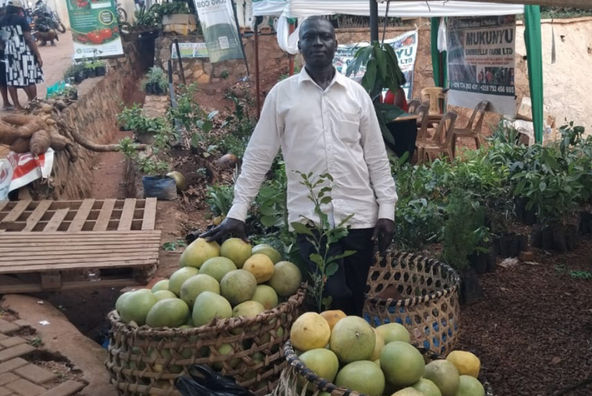
A grape fruit farmer from Kaplabweng District showcasing his grape fruits at the recently concluded Trade Show at UMA show grounds in Kampala. Photo | Lominda Afedraru

Continue Reading

Resource Center

Legal Framework

READ BY CATEGORY

Facebook

Newsletter

Subscribe to Witness Radio's news and report updates


Trending

Subscribe to Witness Radio's news and report updates