Connect with us

MEDIA FOR CHANGE NETWORK

Women environmental rights defenders in Africa are at the most significant risk of threats and attacks – ALLIED New report

Published

on

By Witness Radio Team

As land and environmental rights defenders face ongoing threats for protecting community land and territories affected by development projects, a new trend shows attacks increasingly targeting women defenders.

According to the latest research report by Natural Justice, based on data from the ALLIED Coalition, women land and environmental defenders accounted for 6% of all documented cases between 2022 and 2025.

In its recent report titled ‘The Situation of Women Environmental & Human Rights Defenders Across Africa,’ released in December 2025, a total of 261 attacks targeting land and environmental rights defenders across all countries since 2022 were recorded, highlighting the urgent need for policy change to protect women defenders better better better and sustain their vital roles.

“Across Africa, women environmental and human rights defenders (WEHRDs) are standing at the frontlines of the fight for land, water, and climate justice, and they are paying a steep price for their courage. From Kenya to the DRC, Uganda to South Africa, women activists confront not only repression but also deeply rooted patriarchal norms,” the report reads, aiming to inspire resilience and collective action.

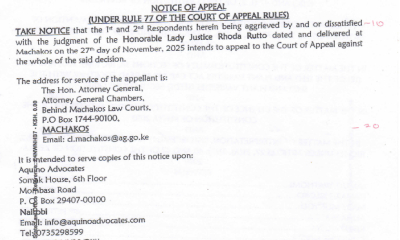
Mary Mwangi, a land and environmental rights defender in Kenya, has been arrested more than eight times since 2020 for defending her community along Kenya’s coast against pollution, caused mainly by industries operating along the Mombasa highway in Nairobi.

“I’ve been facing numerous trumped-up charges since 2020 by the state on behalf of a private oil recycling company. The company is located right in the middle of a residential area where around 2,000 people live,” the woman defender reveals.

According to her testimony, the company began operations in 2019 without following due process and in violation of Kenya’s Environmental Management and Coordination Act. The company’s activities, including the delivery of used oil, its pre-treatment, and its refining into specific products, have had severe negative environmental impacts on residents.

“I was one of the residents who raised environmental concerns with company management, but no action was taken. The plant was operating against the will of the people, as there was no public participation in its development. Toxic gases were produced, endangering both human and livestock health and lives. The plant releases sulphuric acid, which is highly corrosive and has caused severe skin burns within the community,” she adds.

According to Mwangi, instead of addressing the concerns raised, the company’s response has been brutal, extending to her family and several community members through harassment, intimidation, arrests, and trumped-up charges.

“The company management conspired with local police in a series of harassment and intimidation campaigns that resulted in arrests and fabricated charges targeting residents, particularly families championing community rights. I was among the first to be targeted because I mobilised the community. There are currently four cases in court involving me, my family, my husband and children, and a few community members supporting this struggle.”

Beyond the legal harassment, Mwangi says her movements have been restricted, and she continues to face threats to her life.

“I cannot move freely because my movements are being monitored by company management. The biggest threat I face now is fear for my life and that of my family. There are compelling individuals within government who have openly shown they will stop at nothing,” she says.

Such conditions, once more commonly faced by male defenders, are increasingly affecting women as well. Mary is not alone; many other female defenders are falling prey to powerful multinational corporations and governments intent on grabbing community land for harmful projects.

Women defenders face disproportionate risks, including gender-based violence, criminalisation, intimidation, and exclusion from decision-making processes. Despite their critical contributions, their experiences of WEHRDs are often overlooked, their voices sidelined, and their struggles underreported.

“They endure smear campaigns, sexual violence, online abuse, and many other abuses for daring to challenge power. Many are targeted precisely because they are women, with their gender weaponized to silence their voices and discredit their leadership,” the report adds, emphasizing the threats women defenders face and the need for protective measures.

According to ALLIED Coalition data, of the 261 attacks reported, 18 targeted women, compared to 88 against men, with 70 cases categorized as unknown or unspecified, emphasizing the urgent need for protective measures for women defenders and a clearer understanding of the scale of the crisis.

Uganda—often referred to as the Pearl of Africa—has emerged as a hazardous zone. The report shows that 94 cases were reported from Uganda, followed by the Democratic Republic of Congo and Tanzania, each accounting for around 15% of attacks, with 35 and 34 cases, respectively.

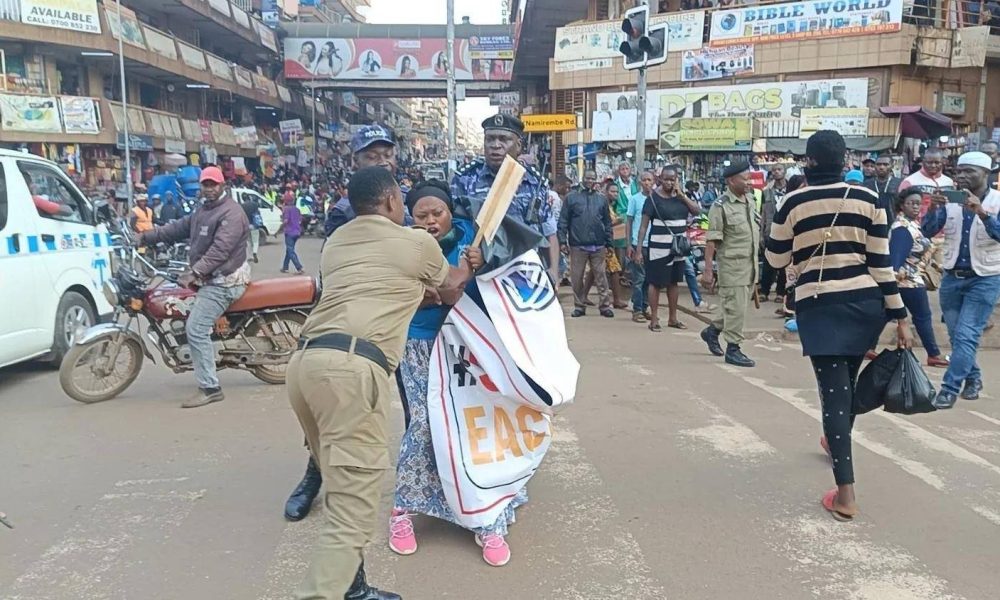
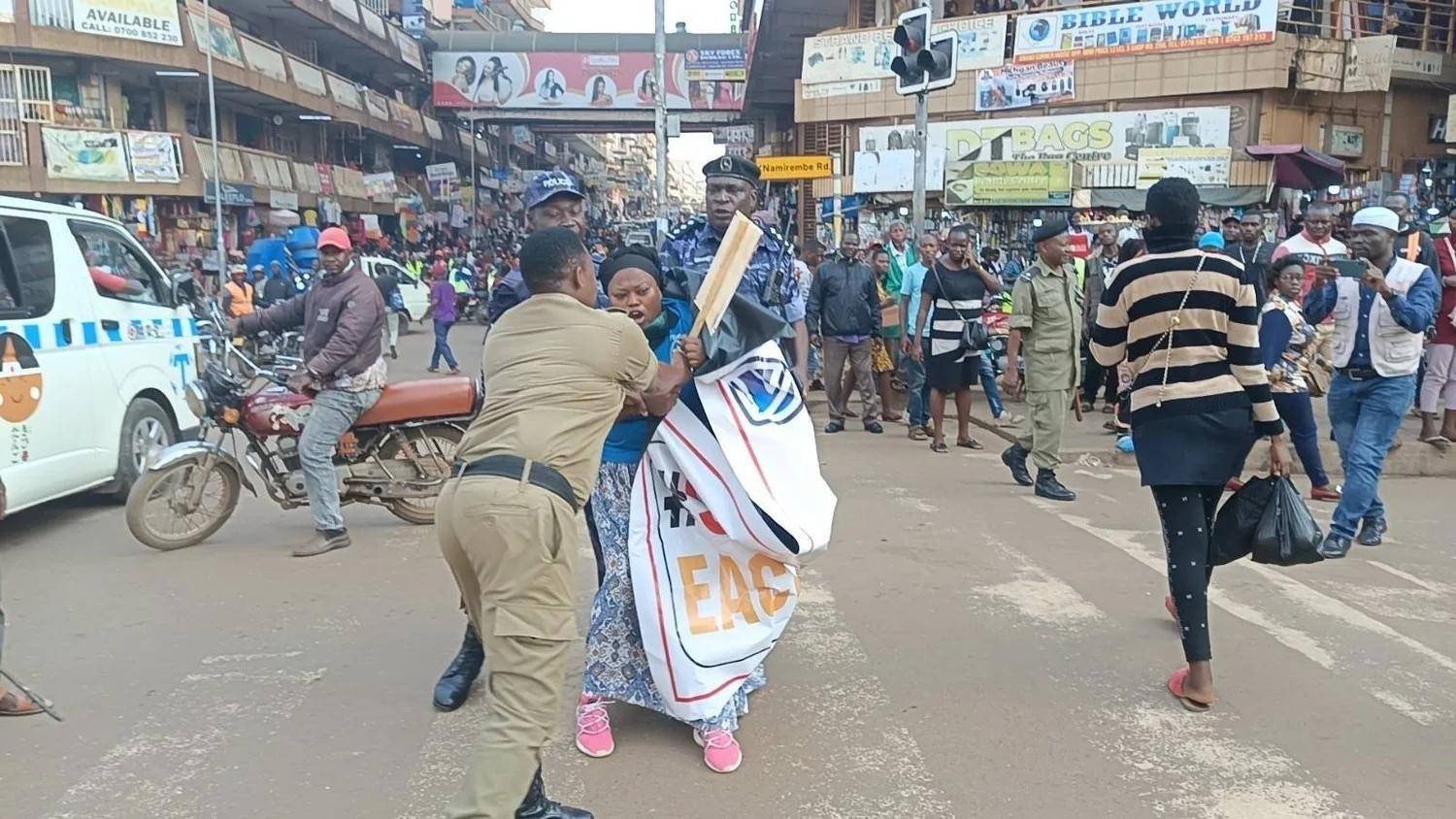
“Environmental activists have been particularly targeted by the Ugandan government, with the most high-profile cases involving protests against the East African Crude Oil Pipeline (EACOP).

Physical attacks and threats against environmental human rights defenders have escalated, with no indication they will subside. These acts are perpetrated by both government officials and representatives of oil companies,” the report notes.

The most frequent category of attacks recorded was “threats or other harassment” (33 cases or 18%), indicating sustained intimidation short of overt violence. Arbitrary arrest or detention accounted for 16 cases (9%), physical attacks for 15 cases (8%), and death threats for 13 cases (7%), underscoring the persistence of criminalisation and direct violence. A smaller number of entries (9 cases or 5%) involved non-violation-related support such as solidarity or medical aid, suggesting limited preventive or recovery-oriented interventions.

A third of the cases were linked to the fossil fuel industry (oil and gas), with mining and energy accounting for 25 and 23 attacks, respectively.

Across Africa, land continues to be targeted by corporate interests from the West, often branding themselves as developers or job creators. African governments, in turn, allocate vast tracts of land to these companies, much of it traditionally used by Indigenous or local communities.

For years, the continent has been shaped by the misleading narrative that Africa possesses vast, vacant, or underutilised land awaiting transformation into industrial farms or profitable carbon markets.

However, a 2025 report by the Alliance for Food Sovereignty in Africa (AFSA), Land Availability and Land-Use Changes in Africa, dismissed this narrative. Drawing on satellite data, field research, and interviews with farmers across the continent, the study revealed that Africa’s landscapes are far from empty.

“Much of the land labelled as ‘underutilised’ is, in fact, used for grazing, shifting cultivation, gathering wild foods, spiritual practices, or forms part of ecologically significant systems such as forests, wetlands, or savannahs,” the report stated.

In conclusion, the Natural Justice report calls on African states to recognise and protect WEHRDs by adopting national laws and policies that explicitly acknowledge their role and the state’s duty to protect them. This includes meaningful consultation with civil society and alignment with the UN Declaration on Human Rights Defenders and the African Commission on Human and Peoples’ Rights.

It further calls on African governments to tackle the drivers of harm against WEHRDs by protecting land and environmental rights, ending criminalisation and harassment, and preventing and addressing gender-based threats and violence. Ensuring the recognition and protection of women defenders and their communities remains critical.

Despite the stress and fatigue caused by her work, Mary Mwangi remains committed to the struggle.

“I will continue the work and try new strategies. We are considering organising and implementing projects around environmental rights as a tool for environmental justice. If communities are well sensitised and understand their rights, they may support the struggle. That would also help reduce the risks faced by my family,” she concludes.

Continue Reading

MEDIA FOR CHANGE NETWORK

Uganda moves toward a Bamboo Policy to boost environmental conservation and green growth.

Published

on

By Witness Radio team.


Uganda’s move to develop a national bamboo policy aims to boost environmental conservation and create green jobs, addressing the country’s urgent unemployment issues among the working class.


Bamboo is a critical tool in fighting climate change due to its rapid growth, high carbon sequestration capacity, and ability to produce 35% more oxygen than equivalent trees. As a fast-growing, renewable resource, it restores degraded land, provides sustainable materials that replace emission-intensive products like concrete, and offers a resilient, low-carbon bioenergy source. 


Bamboo’s potential is outlined in the existing National Bamboo Strategy. Still, stakeholders stress that a formal policy involving entrepreneurs, farmers, and processors is essential to remove regulatory uncertainty and foster sector growth.


“The strategy is a good document, but it was developed largely through desk research. It did not fully involve entrepreneurs, farmers, and processors who are already working in the bamboo industry,” said Sjaak de Blois, chairman of Bamboo Uganda, encouraging stakeholders to see their role as vital.


The bamboo policy is currently at an early consultative stage, with no draft yet submitted to the cabinet or parliament. Recent consultations brought together representatives from eight government ministries, private-sector bamboo actors, and development partners to begin aligning the strategy with practical regulatory needs.


“What we have now is the starting point,” De Blois mentioned. “The next step is to take the strategy and make it more practical, more market-driven, and more Ugandan. The next step is to move from having a plan to adopting a policy.


Bamboo currently falls under several regulatory frameworks, with no single authority overseeing the sector. The policy push is being driven in part by Bamboo Uganda, a membership-based organization bringing together bamboo farmers and processors, among others. The organization aims to play a coordinating role similar to that historically played by the Uganda Coffee Development Authority in the coffee sector.


“If you want to make a sector meaningful for a country, you need coordination. Coffee became what it is because of an institution that aligned farmers, traders, exporters, and regulators. Bamboo needs the same kind of coordination.” He said.


The policy process is supported by the Belgian development agency, which is funding consultations and facilitating dialogue between the government and the private sector.

Industry players say the absence of clear regulations has constrained investment despite growing demand.

“At the moment, bamboo is everywhere and nowhere at the same time. As a farmer, you talk to forestry, as a charcoal producer, you talk to energy, as a builder, you talk to works. There is no single framework that enables the industry to function.” De Blois added.


Supporters of the policy argue that bamboo could play a significant role in environmental conservation. Bamboo grows rapidly, regenerates after harvesting, and can be harvested annually for decades, reducing pressure on natural forests.


According to Global Forest Watch (GFW), Uganda lost 1.2 million hectares of tree cover between 2001 and 2024, representing a 15% decline from the 2000 baseline. Bamboo has been identified as a key species for restoration.


“One acre of bamboo that is harvested sustainably can prevent the destruction of hundreds of acres of natural forest,” De Blois said. “If we get this right, bamboo can help reverse deforestation rather than contribute to it.”


Ms. Susan Kaikara, from the Ministry of Water and Environment, emphasized bamboo’s potential to drive Uganda’s green-growth agenda.


“Establishing a coherent national policy framework will strengthen coordination, inspire investment, and unlock bamboo’s full potential as a pillar of Uganda’s green economy,” she said.


Uganda’s charcoal market alone is estimated to be worth hundreds of millions of dollars annually, much of it supplied through unsustainable wood harvesting. Industry actors say certified bamboo charcoal plantations could offer a cleaner alternative.


“If they allow us to certify bamboo charcoal plantations, then we can get a trade license to compete or to work together with the existing market. We will reverse deforestation. We would enter an industry of about 500,000 hectares, creating smart, green jobs. We can digitalize them to make them attractive through bamboo agroforestry. So again, those things need a policy.” He adds.


Bamboo is also viewed as a climate-friendly crop due to its high capacity for carbon sequestration. Its rapid growth enables it to absorb large amounts of carbon dioxide, while its extensive root system improves soil structure and increases long-term carbon storage.


“When you look at carbon sequestration, bamboo offers several advantages. Residues from harvested bamboo can be converted into biochar, locking carbon into the soil for long periods. When you also see the sequestration per acre compared to many other trees, it is five or six times higher. So, we sequester a lot,” De Blois said


Stakeholders say that if the policy process progresses as planned, bamboo could emerge as one of Uganda’s key green growth sectors within the next decade.


“Policy making takes time. But what is important is that we have started the conversation with all the right ministries in the room. From here, it is about taking steady, practical steps.” He concluded.

Continue Reading

MEDIA FOR CHANGE NETWORK

Will Uganda’s next government break the land-grabbing cycle?

Published

on

By Witness Radio team

Uganda has experienced persistent land evictions for decades. However, some actors are increasingly deliberating on how to ensure people have land tenure security. As the country heads into another general election on Thursday, the 15th of this month, land has once again emerged as one of the most emotionally charged and politically sensitive issues during the campaigns.

From the Kiryandongo land grabs involving multinational companies to the Amuru land wrangles, and from Bunyoro’s oil-rich fields to increasing evictions in the Buganda (Central) sub-region of Uganda, stories of land grabbing and displacement continue to dominate public debate and news headlines, especially during presidential campaigns. Every election season brings renewed promises from political actors to end land injustice.

According to the 2024 Police Annual Report, 397 land-related criminal cases were recorded, up from 271 in 2023, underscoring the urgent need for systemic solutions to address this escalating crisis.

Land grabbing in Uganda often leaves communities landless and powerless, which should evoke empathy and motivate the citizenry to seek justice and systemic change.

Mr. Ulama Dison Duke Ukerson will take decades to forget how his land, which he invested all his savings in, was forcibly seized by the Uganda Peoples’ Defense Forces (UPDF), a national army.

“The UPDF has taken over my land. They occupied it and are now using my six buildings. I had constructed them for my piggery and poultry farming project on my five acres of land,” he revealed in an interview with Witness Radio.

The chief is among hundreds of people in the Koch community living in distress after the alleged grabbing of clan land by the Uganda Army in March 2020, which seized approximately 100 acres of land used by the community for over 150 years without consultation or compensation, illustrating the widespread injustice faced by vulnerable communities.

“People are suffering, and no one has compensated us. We just woke up one day to see the army forcefully taking our land. I first heard about the soldiers’ presence from the chairman. By then, they had already broken into my manager’s house,” he added.

Although he is the traditional chief of the Pangero Clan, this did not stop those in power from grabbing his land. The land taken covers three villages: Aleikra, Kochi Central, and Panyabongo in Koch Parish, Nebbi District, belonging to the Pangero clan. Despite the years passing by, the Pangero Chiefdom remains in uncertainty and hardship.

Across Uganda, many communities face evictions, and presidential candidates’ acknowledgment of this nationwide concern can inspire Ugandans to use this opportunity to push for concrete actions and hold leaders accountable for real change.

Manifestos full of promises.

Major political parties contesting for power acknowledge the gravity of the land crisis and have placed solving the problem prominently in their manifestos. Other aspirants have promised not only to stop land grabbing but also to reinstate displaced people on their land.

The Forum for Democratic Change (FDC) promises legal reforms, including a review of the Constitution and the Land Act, simplified registration of customary land, stricter controls on notable land titles, faster resolution of land cases in courts, enforcement of women’s land rights, and harmonization of land and environmental laws.

The National Unity Platform (NUP) frames land grabbing as a human rights and governance crisis driven by elite capture, foreign investment, and intimidation. Its manifesto proposes restoring land to rightful owners, establishing a National Customary Land Registry, subsidizing Certificates of Customary Ownership, protecting Mailo land tenants, preventing politically connected land grabs, and introducing blockchain-based land registration.

Under the current regime, land evictions continue to escalate. Many alleged land grabbers are power-connected. Other persistent challenges in the land sector include double titling, disregard for laws, court orders, and directives, and multiple offices issuing conflicting instructions that they lack the capacity or will to enforce. One of the most uncomfortable truths in Uganda’s land crisis is the involvement of security agencies in evictions. Police, private security companies, and military personnel are frequently deployed during land disputes, often siding with investors or landlords against vulnerable communities.

Although the Minister of Lands, Judith Nabakooba, has issued several directives barring security agencies other than the police from enforcing land evictions, these orders are not implemented.

Despite the challenge posed by this problem, the ruling National Resistance Movement (NRM) has also proposed measures in its manifesto, building on existing programs. These include mass land titling, expansion of the Land Fund, issuance of Certificates of Customary Ownership and occupancy certificates, investigations into multiple titling, action against illegal evictions, use of technology, and faster land transactions.

Will the next Government break the cycle?

Despite well-articulated promises, many believe that systemic enforcement failures-such as corruption, impunity, and lack of political will-are the main drivers of ongoing land grabbing, underscoring the need for accountability to motivate action.

Uganda does not lack land laws or policies; what it needs is more vigorous enforcement and protection for the vulnerable, which should motivate the audience to demand action and accountability.

“If you observe the proposals by NRM, which is in power, NUP, which is not in power, and FDC or any other political aspirant, they are all largely structural and administrative. They all point to behavioral change. NRM continues to promise solutions to problems; it already has the authority to solve,” Land rights expert, Mr. Jimmy Ochom told Witness Radio.

Mr. Ochom, who has worked in the land sector for over 10 years, argues that existing laws are sufficient if properly implemented.

“If we followed what the Constitution, the Land Act, and the National Land Policy provide, we would not be facing this crisis. The problem is implementation. That is the truth. That’s why I get frustrated when new land laws are proposed. We already have adequate legal frameworks,” he said.

According to Ochom, the missing link is accountability, particularly for those in power.

“Land grabbing in Uganda rarely involves ordinary citizens. It often includes politically connected individuals, senior security officers, influential business interests, and complicit land officials. It involves a lot of forces and money, which a poor person cannot afford,” he added.

Emerging technology.

Both NUP and NRM propose using blockchain and digital systems to secure land records. While these tools can enhance transparency, land rights advocates should remain cautious about over-reliance on technology alone, as political will and enforcement are crucial for real change, warns Ochom.

“Digitizing land records doesn’t fix corruption by itself. If the underlying titles are fraudulent and political and legal systems are weak, technology may make injustice faster, more credible, and harder to challenge.”

Breaking the land-grabbing cycle requires accountability across all sectors, not just better land laws, political promises, or election-time excitement. If land continues to be politicized and accountability avoided, the situation will remain unchanged; leaders will enjoy the benefits of office while citizens who voted for them continue to suffer evictions and dispossession.

“I am wondering where my people are going to live. Why should a sane government do this to its subjects?” the traditional clan chief questioned.

Continue Reading

MEDIA FOR CHANGE NETWORK

COP30 : a further step towards a Just Transition in Africa

Published

on

Climate change has emerged as one of the predominant challenges for Africa, through its cascading environmental, social and economic effects.

Africa is still a continent where over 600 million people do not have access to electricity1, 230 million people do not have access to safe drinking water2, and more than 300 million people continue to suffer from hunger3, while its population is expected to double to 2.5 billion people by 20504.

It accounts for only 3.6% of global greenhouse gas emissions5, while the continent is home to 18.8% of the world’s population6.

Yet there is a real risk that it will endure some of the worst impacts of climate change.

In the assessment and projections made by the African Adaptation Initiative in the Africa State of Adaptation Report (2023)7, the conclusions are stark: the macroeconomic costs associated with the various adverse effects of climate change are significantly higher in Africa than in other regions of the world. African economies are highly sensitive not only to climate-related disasters, but also to annual variations in climate variables. The economic and livelihood impacts of climate change in Africa are therefore profound and are already leading to a slowdown in economic growth. And while the extent of this impact varies across the continent, seven of the ten countries identified as most vulnerable to the effects of climate change are in Africa8.

However, at the same time, Africa has enormous natural resources that could sustainably support its economic and social development, while positioning it as a key global player in the fight against climate change, thanks in particular to its wealth of minerals and biodiversity.

It is therefore in these three areas (adaptation, development and climate action) that it must be able to mobilise its resources and attract public and private funding. Needs are high: Africa’s climate finance needs are now measured in the trillions9.

On each of these points, COP30, held in Belém (Brazil) from 10 to 21 November 2025, made several advances.

1. Ensuring a Just Transition

In line with the Sustainable Development Goals (SDGs), Just Transition refers to the need to implement the sustainability transition in a socially just way that guarantees proper engagement with and support for affected and vulnerable people and communities. A declination of climate justice, it also acknowledges that without actively including and supporting affected groups within the transition, the disruptive changes brought about by climate action risk resulting in political opposition, contestation and even climate backsliding.

The imperative of a Just Transition was recognised already in the 2015 Paris agreement, but the work on Just Transition within the UNFCCC regime has gained more momentum in the past few years, with the Just Transition Work Programme10 established at COP28 in Dubai in 2023.

The Addis Ababa Declaration on Climate Change and Call to Action11 adopted on 10 September 2025 during the Second African Climate Summit also emphasized the importance of achieving Just Transition pathways in the implementation of all pillars of climate action under the Paris Agreement.

1.1 The Just Transition Mechanism

COP30 went a step further, through what is praised as one of its most concrete and successful achievements: the decision to develop a Just Transition Mechanism12. Popularly known as the Belém Action Mechanism or BAM, its purpose is ‘to enhance international cooperation, technical assistance, capacity-building and knowledge-sharing, and enable equitable, inclusive just transitions’.

Importantly, the decision acknowledges the need to support the Just Transition in a manner that does not exacerbate the debt burden of countries.

This decision also provided important clarity on what the international community views as a just transition. It recognizes the ‘importance of just transition pathways that respect, promote and fulfil all human rights and labour rights, the right to a clean, healthy and sustainable environment, the right to health, the rights of Indigenous Peoples, people of African descent, local communities, migrants, children, persons with disabilities and people in vulnerable situations, and the right to development, as well as gender equality, empowerment of women and intergenerational equity’.

The Just Transition Mechanism aims to be operational by COP31 next year. In the meantime, the concrete design of the mechanism will take place.

1.2 Africa’s Special Needs and Circumstances

COP30 also formally opened a long-awaited two-year process on recognising Africa’s Special Needs and Circumstances (SNC), including a mandated conference under COP31 in 2026 and a report to COP32 in 2027 in Addis Ababa, Ethiopia.

This is a first step in response to Africa’s long-standing demand for this formal recognition, which would acknowledge its unique vulnerabilities, including low historical emissions, disproportionate climate impacts and limited adaptive capacity, and could help it attract greater climate finance and technological support in the future.

1.3 Integrated Forum on Climate Change and Trade (IFCCT)

In parallel to the UN process, Brazil launched the Integrated Forum on Climate Change and Trade (IFCCT) to better address the potentially significant consequences of trade-related environmental instruments on development and the risk of economic exclusion of developing countries, particularly the least developed countries, without recognition of historical responsibility or differences in capacity.

This initiative follows the introduction, by the European Union in particular, of trade-related climate and environmental instruments such as the Carbon Border Adjustment Mechanism (CBAM)13 and the Deforestation Regulation (EUDR)14. These measures aim to better internalise the environmental impacts of products and encourage improvements in environmental production conditions in Europe’s trading partner countries, aligning them with the constraints imposed on its own manufacturers.

Nevertheless, the EU CBAM has met with considerable resistance, both within Europe and from many countries in the Global South and the United States, which argue that it is a unilateral trade measure and question its compatibility with its international obligations under the World Trade Organisation (WTO).

This is a major challenge for South Africa due to its dependence on coal, but also for all African countries seeking to industrialise and strengthen their capacity to process, refine and manufacture components, such as batteries, rather than exporting raw materials, and may need to rely temporarily on fossil fuels.

2. Financing Africa’s Green Growth

Africa’s natural resources are first and foremost an opportunity for its population, but also for the world, in the context of the global fight against climate change and the preservation of biodiversity. COP30 saw the first breakthrough in grid financing and a major innovation in forest conservation financing.

2.1 The Climate Finance Principles to Unlock Grid Financings

Developed by the Green Grids Initiative (GGI) and advanced by COP 30 under the ‘Plan to Accelerate the Expansion and Resilience of Power Grids’, the Climate Finance Principles15 aim to address the barriers faced in emerging markets for accessing climate finance to support the development of power grids, as the diversity of generation sources that are connected to them make their environmental impact more complex to assess than for individual generation projects.

Co-developed with investors and industry representatives, these Principles establish a common approach to assessing grids’ eligibility for climate and green finance, combining system-level and project-level criteria (climate contribution, consistency, measurability and attribution).

2.2 The Tropical Forest Forever Facility (TFFF)

Recognised as one of the key achievements of COP30, the Tropical Forest Forever Facility (TFFF)16 is a proposed, large-scale, blended-finance mechanism that provides ‘payment-for-performance’ incentives to tropical forest countries for keeping annual deforestation below 0.5%, verified through agreed geospatial satellite monitoring standards. It would operate alongside the Tropical Forest Investment Facility (TFIF), a companion investment fund intended to generate returns that finance TFFF’s annual payments.

The TFIF seeks to raise up to USD 125 billion through public and private investments, hosted at the World Bank. So far, 53 countries, including 34 tropical forest countries, have endorsed the Facility. The fund has yet to reach Brazil’s $25 billion for government investments, which are intended to secure investor confidence and unlock an extra $100 billion in private financing.

If the facility reaches this $125 billion target, it would be the world’s largest blended finance mechanism of its kind.

“Sponsor” countries (and potentially philanthropic foundations) would provide 40 year, first-loss (junior) capital at rates comparable to long-dated U.S. Treasuries, creating a risk buffer to mobilise an additional ~USD 100 billion in private, corporate, and philanthropic capital.

The combined capital would be invested primarily in emerging-market sovereign and corporate fixed income (excluding fossil fuels and environmentally harmful sectors). After servicing investor returns, net profits would flow to the TFFF to fund country payments.

If fully capitalized, expected returns could generate USD 3–4 billion per year, enabling payments of roughly USD 4 per hectare of conserved forest.

At least 20% of all payments are designated to Indigenous Peoples and local communities.

3. Financing Adaptation

Adaptation is a largely underfunded area of climate action worldwide, despite growing and now urgent needs. This issue is particularly acute for developing countries. The latest United Nations Adaptation Gap Report17 shows that developing countries’ needs are 12-14 times higher than current financial flows, while wealthy nations continue to favour mitigation funding.

One of the obstacles to increasing adaptation funding is that it is easier to increase mitigation funding than adaptation funding. Mitigation activities, such as energy efficiency and the development of clean energy production, are concentrated in the wealthier developing countries and often generate a financial return, allowing them to be financed with less concessional public funds and by mobilising private funds. In contrast, investments in adaptation often bring significant economic, social and environmental benefits, but few direct financial returns, such as investments in wetland restoration for flood protection or climate-smart agriculture. Adaptation investment needs are also often concentrated in the poorest countries, which require more concessional public finance.

COP30 nevertheless showed progress in this area.

Parties adopted the 59 Belém Adaptation Indicators. Voluntary and non-prescriptive, these indicators will enable progress to be tracked under the Global Goal on Adaptation, representing a significant step forward for transparency and accountability.

They concomitantly launched the ‘Belém–Addis vision on adaptation’, a two-year policy alignment process to develop guidance for operationalising those indicators.

Parties also formalised the Baku Adaptation Roadmap, a 2026-2028 work programme for operationalising adaptation goals, including support for vulnerable nations to develop national adaptation plans.

Above all, the ‘Belém Package’ confirms a commitment to triple adaptation finance from US$40bn to $120bn annually by 2035. While this is not yet a binding commitment and leaves timing and delivery modalities largely to future finance processes, it is seen as a major political signal.

Negotiations will need to continue on issues such as reforming the international debt architecture or the Bretton Woods institutions in order to support climate finance and action.

Conclusion

While international mobilisation is important, regional mobilisation is essential and will further bolster Africa’s influence at future meetings.

As significant as COP30 was, another major event in 2025 was the second African Climate Summit in September 2025, at which African leaders and financial institutions demonstrated their ability to mobilise.

They committed to mobilising $50 billion annually in catalytic finance through the Africa Climate Innovation Compact and African Climate Facility, with the aim of scaling up locally led climate innovations, while the African Development Bank announced the operationalization of the African Climate Change Fund, which will provide financial support for climate adaptation and mitigation projects across the continent.

At the same time, the Africa Finance Corporation, AfDB, Afreximbank, and Africa50 signed a framework for cooperation to realise the $100 billion Africa Green Industrialization Initiative (launched by the African Union in 2023), which aims to revolutionize industrial growth and renewable energy on the continent.

Taking over from COP30, 2026 will be the implementation year for Africa.


  1. https://www.iea.org/reports/financing-electricity-access-in-africa.
  2. https://www.afdb.org/en/news-and-events/world-water-day-2023-accelerating-change-solving-africas-water-and-sanitation-crises-59935#:~:text=Climate%20change%20is%20causing%20water,the%20available%20supply%20by%202025.
  3. https://www.who.int/news/item/28-07-2025-global-hunger-declines-but-rises-in-africa-and-western-asia-un-report.
  4. https://esgclarity.com/why-is-esg-different-in-africa/.
  5. https://www.iea.org/regions/africa/emissions.
  6. https://www.worldometers.info/world-population/africa-population/.
  7. https://www.ipcc.ch/report/sixth-assessment-report-cycle/.
  8. https://gain.nd.edu/our-work/country-index/.
  9. https://www.climatepolicyinitiative.org/publication/climate-finance-needs-of-african-countries/.
  10. https://unfccc.int/topics/just-transition/united-arab-emirates-just-transition-work-programme.
  11. https://au.int/en/pressreleases/20251118/african-leaders-addis-ababa-declaration-climate-change-and-call-action.
  12. https://unfccc.int/sites/default/files/resource/cma7_5_UAE%20JTWP_auv.pdf.
  13. Regulation (EU) 2023/956 of the European Parliament and of the Council of 10 May 2023 establishing a carbon border adjustment mechanism.
  14. Regulation (EU) 2023/1115 of the European Parliament and of the Council of 31 May 2023 on the making available on the Union market and the export from the Union of certain commodities and products associated with deforestation.
  15. https://greengridsinitiative.net/wp-content/uploads/2025/11/Climate-Finance-Principles-to-Unlock-Grids-Financing.pdf.
  16. https://www.wri.org/insights/financing-nature-conservation-tropical-forest-forever-facility and https://tfff.earth/.
  17. https://www.unep.org/resources/adaptation-gap-report-2025.

Source: ashurst.com

Continue Reading

Resource Center

Legal Framework

READ BY CATEGORY

Facebook

Newsletter

Subscribe to Witness Radio's newsletter


Trending

Subscribe to Witness Radio's newsletter