Connect with us

MEDIA FOR CHANGE NETWORK

“Vacant Land” Narrative Fuels Dispossession and Ecological Crisis in Africa – New report.

Published

on

By Witness Radio team.

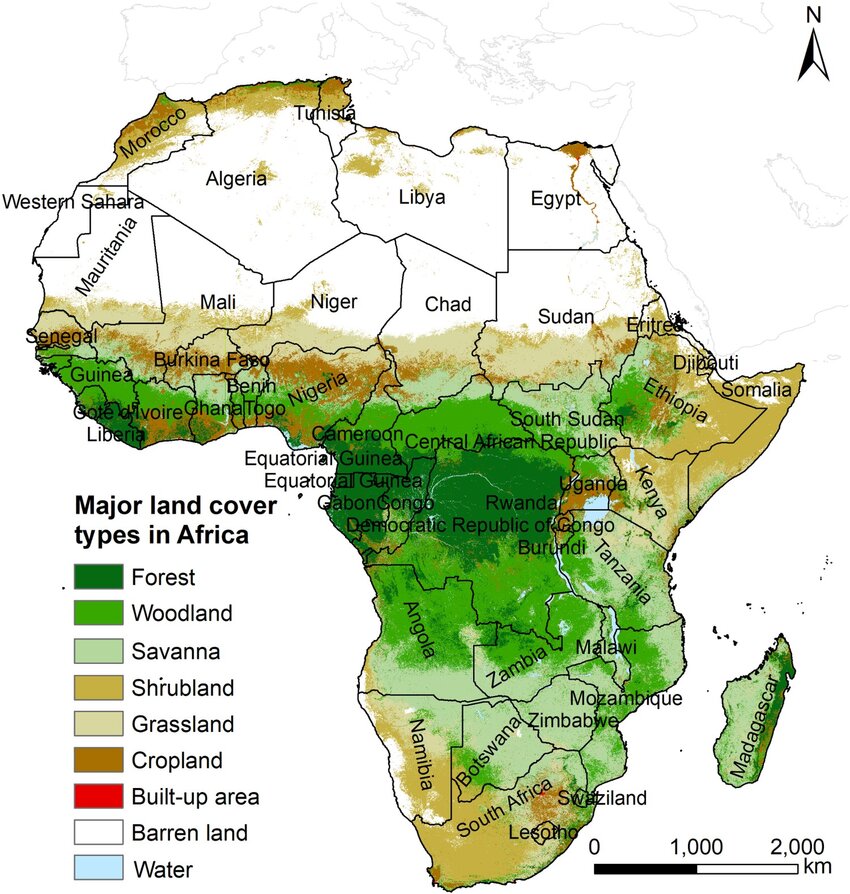
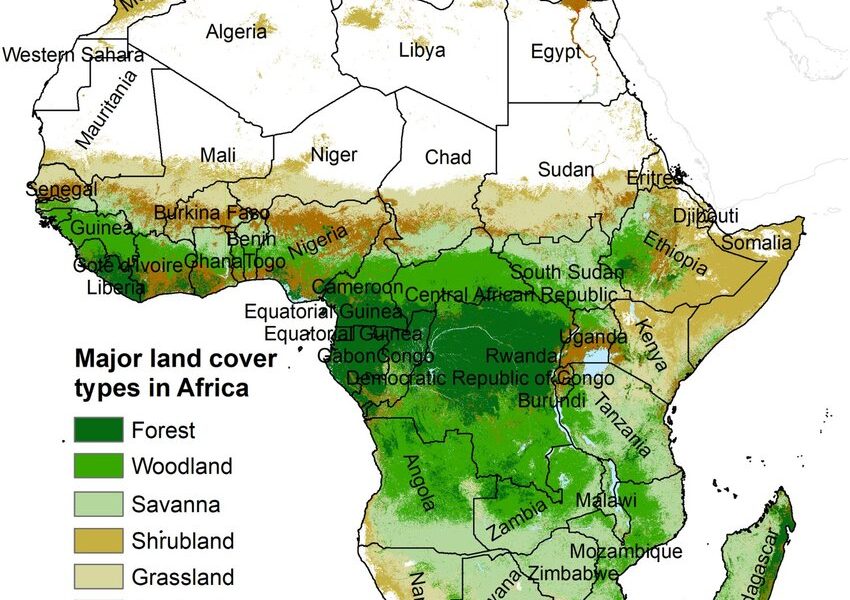
Over the years, the African continent has been damaged by the notion that it has vast and vacant land that is unused or underutilised, waiting to be transformed into industrial farms or profitable carbon markets. This myth, typical of the colonial era ideologies, has justified land grabs, mass displacements, and environmental destruction in the name of development and modernisation.

A new report by the Alliance for Food Sovereignty in Africa (AFSA) titled “Land Availability and Land-Use Changes in Africa (2025)” dismisses this narrative as misleading. Drawing on satellite data, field research, and interviews with farmers across Africa, including Zambia, Mozambique, South Africa, and Zimbabwe, the study reveals that far from being empty, Africa’s landscapes are multifunctional systems that sustain millions of lives.

“Much of the land labelled as “underutilised” is, in fact, used for grazing, shifting cultivation, gathering wild foods, spiritual practices, or is part of ecologically significant systems such as forests, wetlands, or savannahs. These uses are often invisible in formal land registries or economic metrics but are essential for local livelihoods and biodiversity. Moreover, the land often carries layered customary claims and is far from being available for simple expropriation,” says the report.

“Africa has seen three waves of dispossession, and we are in the midst of the third. The first was the alienation of land through conquest and annexation in the colonial period. In some parts of the continent, there have been reversals as part of national liberation struggles and the early independence era. But state developmentalism through the post-colonial period also brought about a second wave of state-driven land dispossession.” This historical context is crucial to understanding the current state of land rights and development in Africa. Said Ruth Hall, a professor at the Institute for Poverty, Land and Agrarian Studies (PLAS), at the University of the Western Cape in Cape Town, South Africa, during the official launch of the report.

The report further underestimates the assumption that smallholder farmers are unproductive and should be replaced with mechanised large-scale farming, leading to a loss of food sovereignty.

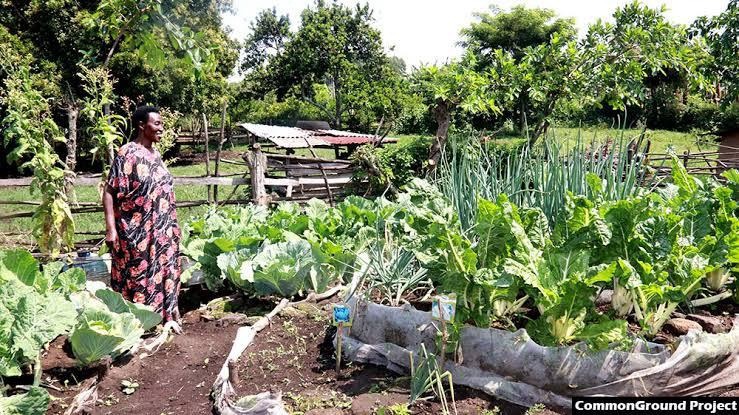
“The claim that small-scale farmers are incapable of feeding Africa is not supported by evidence. Africa has an estimated 33 million smallholder farmers, who manage 80% of the continent’s farmland and produce up to 80% of its food. Rather than being inefficient, small-scale agro-ecological farming offers numerous advantages: it is more labour-intensive, resilient to shocks, adaptable to local environments, and embedded in cultural and social life. Dismissing this sector in favour of large-scale, mechanised monocultures undermines food sovereignty, biodiversity, and rural employment.” Reads the Report.

The idea that industrial agriculture will lift millions out of poverty has not materialised. Instead, large-scale agribusiness projects have often concentrated land and wealth in the hands of elites and foreign investors. Job creation has been minimal, as modern farms rely heavily on machinery rather than human labour. Moreover, export-oriented agriculture prioritises global markets over local food security, leaving communities vulnerable to price fluctuations and shortages.

“The promise that agro-industrial expansion will create millions of decent jobs is historically and economically questionable. Agro-industrial models tend to displace labour through mechanisation and concentrate benefits in the hands of large companies. Most industrial agriculture jobs are seasonal, poorly paid, and insecure. In contrast, smallholder farming remains the primary source of employment across Africa, particularly for young people and women. The idea that technology-intensive farming will be a panacea for unemployment ignores the structural realities of African economies and the failures of previous industrialisation efforts.”

Additionally, the assumption that increasing yields and expanding markets will automatically improve food access overlooks the structural causes of food insecurity. People’s ability, particularly that of the poor and marginalised, to access nutritious food depends on land rights, income distribution, gender equity, and the functioning of political systems. In many countries, high agricultural productivity coexists with hunger and malnutrition because food systems are oriented towards export and profit rather than equitable distribution and local nourishment. It highlights the urgent need for equitable food distribution, making the audience more empathetic and aware of the issue.

Furthermore, technological fixes such as improved seeds, synthetic fertilizers, and irrigation are being promoted as solutions to Africa’s food insecurity, but evidence suggests otherwise. The Alliance for a Green Revolution in Africa (AGRA) spent over a decade pushing such technologies with little success; hunger actually increased in its target countries.

These high-input models overlook local ecological realities and structural inequalities, while increasing dependence on costly external inputs. As a result, smallholders often fall into debt and lose control over their own seeds and farming systems. It underscores the importance of understanding and respecting local ecological realities, making the audience feel more connected and responsible.

Africa is already experiencing an increased and accelerating squeeze on land due to competing demands including rapid population growth and urbanisation, Expansion of mining operations, especially for critical minerals like cobalt, lithium, and rare-earth elements, which are central to the global green transition, The proliferation of carbon-offset projects, often requiring vast tracts of land for afforestation or reforestation schemes that displace existing land users, Rising global demand for timber, which is increasing deforestation and land competition as well as Agricultural expansion for commodity crops, including large-scale plantations of palm oil, sugarcane, tobacco, and rubber.

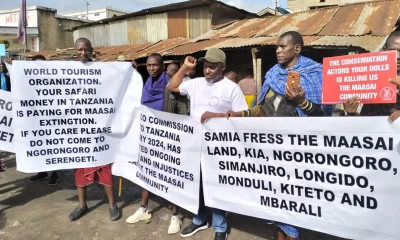
“In East Africa, we see mass evictions, like the Maasai of Burunguru, forced from their ancestral territories in the name of conservation and tourism. In Central Africa, forests are cleared for mining of transitional minerals, destroying ecosystems and livelihoods. Women, a backbone of Africa’s food production, remain the most affected, and least consulted in decisions over land and resources and things that affect them.” Said Mariam Bassi Olsen from Friends of the Earth Nigeria, and a representative of the Alliance for Food Sovereignty in Africa.

The report urges a shift away from Africa’s high-tech, market-driven, land-intensive development model toward a just, sustainable, and locally grounded vision by promoting agroecology for food sovereignty, ecological renewal, and rural livelihoods, while reducing the need for land expansion through improved productivity, equitable food distribution, and reduced waste.

Additionally, a call is made for responsible urban planning, sustainable timber management, and reduced mineral demand through circular economies, as well as the legal recognition of customary land rights, especially for women and Indigenous peoples, and adherence to the principle of Free, Prior, and Informed Consent (FPIC) for all land investments.

Continue Reading

MEDIA FOR CHANGE NETWORK

UPDF General on the spot over fresh evictions in Hoima

Published

on

A section of evicted residents of Kapapi, Hoima District, are now staying in a tobacco drying house after being evicted from their alleged land for the second time. Photo | Joseph Kasuba

Over 1,000 residents in Kapapi Sub-County, Hoima District, are facing a second forced eviction from their ancestral land in three years, sparking widespread tension and anger among the community.

The latest evictions have been linked to a senior Uganda Peoples’ Defence Forces (UPDF) officer, Brigadier General Peter Nabasa, whom residents accuse of masterminding the displacement, allegedly in defiance of earlier government directives issued by the state minister for Lands, Dr. Sam Mayanja.

In October 2025, Minister Mayanja ordered that over 1,000 families who had been evicted from contested land in Kapapi Sub-County be resettled back onto their bibanja.

He also directed security commanders in the area to withdraw armed personnel and allow the affected communities to return. However, residents claim the situation has worsened, with renewed evictions pushing thousands into uncertainty once again.

The affected families, estimated to be over 1,000 and comprising over 4,000 people, include both cultivators and pastoralists. They were evicted from their homes in several villages, including Waaki North, Kapapi Central, Waaki South, Runga, Kiryatete, and Kiganja, all located in Kapapi and Kiganja sub-counties, Hoima District.

Residents insist the land has been their home for decades, passed down through generations, and accuse powerful individuals of using land titles and security enforcement to displace them.

“We were returned to our land in October last year on the orders of President Museveni and Minister Mayanja, but shortly after the elections, we were evicted again,” said Deusi Mugume, a resident of Runga.

“The Brigadier General came with armed security personnel and ordered us to vacate the land immediately. They even fired bullets in the air to disperse us, disrespecting the orders of both the Minister and the President.”

The residents were evicted from two titled pieces of land said to belong to businessmen and private individuals based in Hoima and Kampala. One of the contested titles measures approximately 2,545 acres (1,030 hectares) and is reportedly owned by seven individuals, including Ndahura William Gafayo, Aston Muhwezi, Alex Kyamanywa, Nathan Kiiza Byarugonjo, Bahuzya, Monica Rwashadika, and Wilber Kiiza. This land reportedly covers parts of Kapapi and Kiganja sub-counties.

Another title, measuring about three square miles, is said to belong to the family of the late Tito Byangire of Kigorobya, Hoima District. This land reportedly covers four villages, including Waaki South, Waaki North, Runga, Kapapi Central, and Kiryatete.

Brig Gen Nabasa claims he legally leased 700 acres of land from the Byangire family for 10 years starting in 2023.

“The residents were allowed to live there temporarily because elections were approaching, but they were supposed to leave immediately after the polls,” he said.

The residents, who are now living in temporary structures in Rwenyana, say their food and cash crops were destroyed after cattle were introduced onto the land following their eviction.

“We are going through many difficulties. We have no food, we are sleeping in makeshift shelters, children are not going to school, and we don’t know if we shall ever return to our land,” said Madinah Nyanjura and Nyarabiraho Cheya, both residents of Kapapi.

The Hoima Deputy Resident District Commissioner, Christopher Aine, blamed land brokers for misleading residents and bringing more people onto the contested land.

Minister Mayanja had previously directed the arrest of Brig Gen Peter Nabasa, Capt Rogers Karamagi, former Hoima Deputy Resident District Commissioner Michael Muramira Kyakashari, and William Ndahura Gafayo for allegedly illegally evicting residents from their bibanja land.

Mr Joshua Byangire, one of the administrators of the late Byangire estate, said the family has faced continued disruption and appealed to the government to buy off the land title.

“We have been disturbed on our family land. I request the government to buy off our land title. I don’t understand why soldiers have been deployed there, yet we are civilians and cannot access our property,” he said.

Original Source: monitor.co.ug

Continue Reading

MEDIA FOR CHANGE NETWORK

Small-scale fishers and coastal communities are pushing to testify before a human rights commission investigating the causes of food inequality in South Africa.

Published

on

Fisher women play a vital role in sustaining household food security, yet remain under‑recognised, excluded from permits, and denied equal income opportunities in the fishing sector.Photo Credit: The Green Connection.

By Witness Radio team.

South Africa produces enough food to feed its population, yet millions go to bed hungry every night.

According to Statistics South Africa’s General Household Survey 2024, released in 2025, about 14 million people experienced hunger, representing 22.2% of households reporting inadequate or severely inadequate access to food. The Northern Cape (34.3%), Eastern Cape (31.3%), and Mpumalanga (30.4%) recorded the highest levels of food insecurity.

One in four children in South Africa is stunted due to chronic malnutrition. In the Eastern Cape alone, 70 children under the age of five reportedly died from malnutrition-related complications between January and July 2025.

In response to the growing problem, the South African Human Rights Commission, a national institution established to support constitutional democracy, declared last year that it would hold a National Public Inquiry into the Constitutional Right to Food. This inquiry will examine how communities, corporations, laws, and policies shape food systems and seek to address the structural causes of hunger.

As a result, the investigation will try to describe a future in which food is once again understood as sustenance, dignity, and justice.

Thousands of small-scale fishers along South Africa’s 3,000 km coastline depend on marine resources for their livelihoods, highlighting their vital role in the nation’s food security and cultural fabric.

Many fishing families struggle to make ends meet, even though they harvest food from the ocean. The livelihoods and food security of about 28,000 small-scale fishermen are directly reliant on marine resources. Yet, existing policies-such as restrictive permits and limited market access-exclude them from full participation, perpetuating food insecurity.

For these communities, food systems are not abstract policy concepts. They shape daily survival, dignity, livelihoods, and cultural identity.

“As part of our submission, we emphasize that concrete policy changes-such as recognizing customary fishing rights and improving market access-will directly enhance the livelihoods and food security of small-scale fishers and coastal communities, making the case for urgent reform.” Says Buthelezi

The Green Connection, a registered non-profit organisation, works with coastal communities to promote environmental justice, human rights, and accountable governance.

In the submission, the Green Connection states that the inquiry is timely as it will examine the structural and economic dynamics that perpetuate hunger. “It will assess the concentration of power in the food value chain, affordability and access, land and tenure security, policy coordination, and the realization of the constitutional right to food. This includes its links to dignity, health, water, culture, and a healthy environment.” The submission reads.

The Green Connection further argues that the Commission’s examination of governance, participation, and accountability must include scrutiny of marine and ocean policy.

“Poor implementation of the Small-Scale Fisheries Policy, limited market access, inadequate infrastructure, and weak consultation processes continue to undermine the sector. Women – who make up less than 30% of participants – remain under-recognised. At the same time, young people leave coastal communities due to declining economic prospects,” says Khetha Buthelezi, Economics Officer at The Green Connection, adding that, “Food and the systems we put in place to produce it cannot be separated from human dignity, livelihoods, and cultural rights. These issues are not abstract policy debates. For small-scale fishing communities, food from the ocean is not merely a commodity – it is a foundation of identity, survival, and social cohesion.”

The organisation also raises concerns about the potential impacts of offshore oil and gas expansion under Operation Phakisa. It further adds that Seismic surveys, drilling, and increased shipping activity can threaten fish stocks and restrict access to traditional fishing grounds, thereby directly affecting food security and livelihoods.

“For small-scale fishers, these are not abstract environmental issues. It is about income stability, cultural survival, and the constitutional rights to food, livelihoods, and participation in decision-making, and protecting these rights and resources for future generations,” says Buthelezi

Several fishing communities consulted shared testimonies describing worsening conditions.

“While small‑scale fishers support around 28000 people in South Africa, many of us can no longer catch or sell enough fish to feed our own families. Walter Steenkamp says on behalf of Aukotowa Small‑Scale Fishers Co‑operative in Port Nolloth, Northern Cape.

Steenkamp adds that Decisions are often made without consulting them, which reflects an intended exclusion from decision-making. “We hope this inquiry will result in the recognition of our customary rights, the return of our fishing grounds, and for the government to listen to those of us who live from the sea, so that we can feed our families with dignity.”

According to Kristie Links from the Sal-Diaz Small-Scale Fisher Co-operative in Saldanha Bay, Western Cape, farmers are forced to use larger boats that they cannot afford. “We have no money for the bigger boats they want us to use, and the areas we are given have little or no fish.

Industrial boats continue to overfish, especially at night, while our communities struggle to put food on the table. This situation is destroying our livelihoods, our food security, and our right to be recognised as small-scale fishers,” Kristie adds.

The organisation argues that poor implementation of the Small-Scale Fisheries Policy, weak consultation processes, and inadequate infrastructure continue to undermine the sector.

“Our message to the SAHRC is clear. If South Africa is serious about tackling hunger and inequality, it must ensure food systems governance is transparent, inclusive, and accountable. Coastal communities are not asking for charity – they are demanding justice.” Buthelezi concludes

The deadline for written submissions has been extended to 27 February 2026, with public hearings scheduled for March during Human Rights Month.

Continue Reading

MEDIA FOR CHANGE NETWORK

The Kenyan government insists on maintaining provisions of the Seed Act that the court nullified: farmers and legal experts question the motive.

Published

on

By Witness Radio team.

Mr. Francis Njiri, a small-scale farmer from Makongo and a member of the Seed Savers Network Kenya, questions the spirit behind the Kenyan government and the Kenya Plant Health Inspectorate Service (KEPHIS) in appealing against the recent High Court ruling on seed rights, including saving and exchange.

The landmark judgment delivered in November 2025 declared key sections of the Seed and Plant Varieties Act unconstitutional, directly affirming farmers’ rights to save, share, and exchange seeds outside formal systems, which many smallholder farmers like Mr. Njiri see as a victory for traditional practices and their livelihoods.

15 smallholder farmers from the Seed Savers Network filed a constitutional petition in 2022, claiming that Kenya’s Seeds and Plant Varieties Act (SPVA) and the Seeds and Plant Varieties (Seeds) Regulations, 2016, have restrictive provisions that violate fundamental rights protected by Kenya’s Constitution, which the Kenya’s High Court in Machakos ruled in their favor.

According to court documents seen by Witness Radio, the Kenyan government and KEPHIS have appealedagainst the court ruling, claiming that the High Court judge misinterpreted key legal provisions, underscoring the ongoing legal battle over seed rights.

“Take notice that The Kenya Plant Health Inspectorate Service and The Attorney General, the above-named Appellants, appeal to the Court of Appeal against the whole of the above-mentioned decision,” documents seen by Witness Radio reveal.

“The Learned Judge erred in law and in fact by misinterpreting and conflating Sections 8(1) and 8A of the Seeds and Plant Varieties Act with Article 11(3)(b) of the Constitution, and by wrongly concluding that those provisions limit or undermine Section 27A, while in fact Sections 8(1), 8A and 27A operate harmoniously to give full effect to Article 11(3)(b) of the Constitution.

The Learned Judge erred in law and in fact by holding that Sections 8(1) and 10(4)(c), (d), (e), (f) and (g) of the Seeds and Plant Varieties Act, together with Regulations 6, 16 and 19 of the Seed and Plant Varieties (Seed) Regulations are unconstitutional based on discrimination under Article 27(2) of the Constitution, when no distinction had been demonstrated…” further reveals.

The government’s decision to appeal has alarmed farming communities and civil society, raising fears that their interests are being overlooked.

“I don’t think the government is working in the interests of farmers. We suspect these actions serve multinational corporations’ interests because farmers were not consulted in the first place.” Mr. Njiri says.

Mr. Njiri, who has practiced agroecological farming for years, is one of the petitioners in the case. Alongside other farmers from across the country, he challenged the constitutionality of provisions that restricted the use of farm-saved seeds. He argues that such laws disproportionately favored commercial seed companies while undermining indigenous seed systems that have sustained communities for generations.

According to him, the lack of consultation with smallholder farmers, who constitute the majority of Kenya’s agricultural producers, raises serious questions about whose interests are being prioritized.

For generations, farmers have saved, exchanged, and improved seeds-these practices are part of our heritage and vital for our survival. Decisions about seeds should involve those who depend on them most.

In the case that had been determined in favor of the local farmers, Advocate Wambugu Wanjohi says the Government of Kenya and KEPHIS were challenging mostly seed sovereignty, the right to save, share, and replant seeds, and the right to participate in seed policies.

“Now, the Seed and Plant Varieties Amendment Act aligned Kenya with UPOV of 1991, and seed exchange outside the normal certification process became illegal. And the consequence was that the government pushed indigenous seed systems underground.” He mentioned.

Wanjohi describes the High Court ruling as a constitutional milestone.

“This case was not simply about regulatory compliance. The Court approached it as a human rights matter. It examined whether criminalizing seed sharing unjustifiably limited constitutional rights such as the right to food, the protection of culture, equality, and fair administrative action,” he said.

“We argued on a constitutional basis. The farmers sought to have these sections declared unconstitutional because the Act and regulations unjustifiably limited the right to food and eroded cultural rights and equality.”

According to Wanjohi, the Court found that the impugned provisions disproportionately burdened smallholder farmers while privileging commercial seed interests.

“The Constitution does not permit legislation that effectively punishes the survival practices of small-scale farmers. The judgment reaffirmed that seed governance must align with constitutional protections,” he added.

Dr. David Kabanda, Director of the Center for Food and Adequate Living Rights in Uganda, views the ruling as significant beyond Kenya’s borders.

“Seed is not merely a commercial commodity; it is the foundation of food systems and community resilience. When laws shift control of seed away from farmers without meaningful participation, they raise fundamental legal and human rights questions,” Kabanda says.

He adds that the case introduces a constitutional perspective that could influence similar debates across East Africa, particularly in countries aligning seed laws with international intellectual property standards.

“Seed determines protection of our land, because in an ordinary African city, if you don’t have seed, then you cannot plant. Seed and food give land relevance in many communities. So, if someone takes our seed from you, especially in the current region where some countries, like Kenya, want to create what they call seed merchants and impose exorbitant fees on you to operate the seed trade or business, it is alienating people from the livelihood they should have. Because if any state or multinational takes away the seed, the propagating material, whether for food or agriculture, it is touching the nerve of your existence.” Kabanda added.

As the appeal process unfolds, farmers like Mr. Njiri say they remain committed to defending what they consider fundamental rights: the right to seed, the right to food, and the right to participate in decisions that directly affect their livelihoods.

“We will continue to stand firm. Seeds are our life. Without them, there is no farming, and without farming, there is no food. We will fight and fight and fight until we win. And we believe we shall win the entire battle. Because we wouldn’t let that freedom, which God gives, be taken away from us because someone wants to protect their interests or farmers’ interests,” he concluded.

With the government and KEPHIS appealing the High Court’s landmark decision, it is now more important than ever for judges, lawyers, and civil society across Africa to actively support farmers in defending their constitutional seed rights. “Strategic litigation has set a precedent on the continent, showing that courts can and must uphold food sovereignty and protect the rights of smallholder farmers.” Advocate Wanjohi added.

Continue Reading

Resource Center

Legal Framework

READ BY CATEGORY

Facebook

Newsletter

Subscribe to Witness Radio's newsletter


Trending

Subscribe to Witness Radio's newsletter