Connect with us

MEDIA FOR CHANGE NETWORK

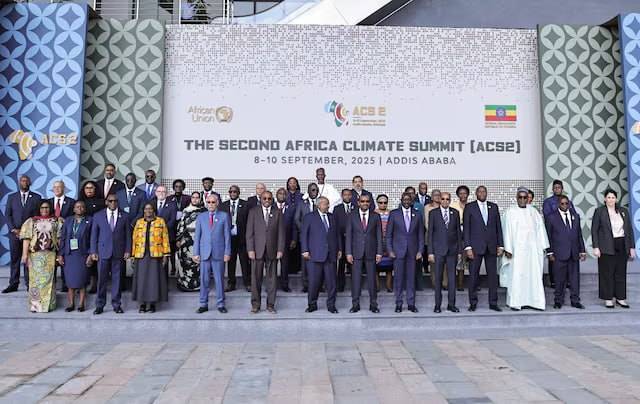
Africa adopts the Africa Climate Innovation Compact (ACIC) Declaration to drive the continent towards innovative climate solutions.

Published

on

By Witness Radio team.

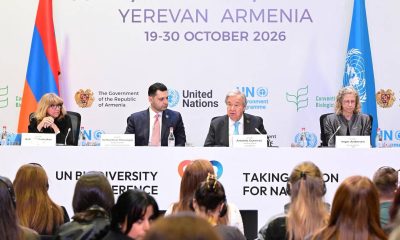
Addis Ababa, Ethiopia – Africa has ushered in a new era of climate leadership with the adoption of the historic African Leaders’ Addis Ababa Declaration on Climate Change and Call to Action at the conclusion of the Second African Climate Summit (ACS2) on Wednesday, 10th. This landmark agreement not only redefines Africa’s role in the global climate debate but also showcases the continent’s unity, determination, and potential to drive innovation, justice, and sustainable solutions.

Over 25,000 people attended the three-day Summit that ran from 8th to 10th of September, and was organized by the Federal Democratic Republic of Ethiopia in partnership with the African Union. Those in attendance included heads of state, ministers, representatives from civil society, the private sector, indigenous leaders, young people, and scholars. The Summit concluded with ambitious pledges aimed at positioning Africa at the forefront of the global climate economy, under the theme “Accelerating Global Climate Solutions: Financing for Africa’s Resilient and Green Development.”

During the Declaration, the Africa Climate Innovation Compact (ACIC) was launched, headed by Ethiopian Prime Minister Abiy Ahmed. The ACIC, a key component of the Addis Ababa Declaration, is a collaborative platform that aims to foster the development and implementation of innovative climate solutions across Africa. By 2030, the Compact hopes to deliver 1,000 African-led climate solutions in vital areas like energy, agriculture, water, transportation, and resilience, while also raising $50 billion a year in catalytic finance. Leaders underlined that money for adaptation needs to be viewed as a legal duty of the developed world, not as charity, and should be provided in grants rather than loans that might make Africa’s debt problem worse.

The Addis Ababa Declaration also underscores the importance of scaling up existing African initiatives, including the African Union Great Green Wall, the African Forest Landscape Restoration Initiative, and Ethiopia’s Green Legacy. These initiatives, rooted in Africa’s indigenous solutions, demonstrate that the continent already possesses the tools to transform vulnerability into resilience, a fact that should fill us all with pride and optimism.

Partners and financial institutions united behind Africa’s agenda. In an effort to channel green bonds and creative instruments tailored to Africa’s realities, the African Development Bank announced the operationalization of the African Climate Change Fund. This fund will provide financial support for climate adaptation and mitigation projects across the continent. At the same time, the Africa Finance Corporation, AfDB, Afreximbank, and Africa50 signed a framework for cooperation to realise the $100 billion Africa Green Industrialization Initiative, which aims to revolutionize industrial growth and renewable energy on the continent. These partnerships and financial commitments are crucial in supporting Africa’s transition to a green economy.

Furthermore, the Addis Ababa Declaration received significant backing from donor nations. Italy reaffirmed its $4.2 billion Italian Climate Fund, with 70% earmarked for Africa, while Denmark committed $79 million for agricultural transformation. These substantial financial commitments should reassure the continent that the international community has confidence in Africa’s climate initiatives.

Other aspects in the Declaration emphasized the continent’s goal of bridging the resilience and energy gaps. Within the next ten years, the Mission 300 Agenda seeks to give 900 million Africans access to clean cooking solutions and 300 million to modern energy. To climate-proof Africa’s cities, infrastructure, and food systems, the second phase of the Africa Adaptation Acceleration Program (AAAP 2.0) was announced, with a target of $50 billion by 2030. To ensure that Africa’s cobalt, lithium, and rare earth resources support local industrialization, job creation, and economic transformation, in addition to contributing to global clean energy supply chains, leaders have also advanced a Green Minerals Strategy.

The moral position of the Addis Ababa Declaration is equally essential. Leaders emphasized how Africa bears a disproportionate amount of the consequences of climate change despite contributing the least to global emissions. They contended that this gives the continent a special moral right to demand justice internationally. Ahead of COP30 in Belém, Brazil, the Declaration embodies a unified African voice by prioritizing innovation, nature-based solutions, and equitable financing.

Delegates described the Addis Ababa gathering as a demonstration of Africa’s ability to convene, lead, and deliver solutions that resonate beyond its borders. Over 240 side events, 43 exhibitions, and 23 national pavilions showcased Africa’s technological innovations, policy frameworks, and community-driven solutions, reinforcing the idea that the continent is ready to lead.

The government of Ethiopia and the African Union Commission have pledged to shepherd the implementation of the Addis Ababa Declaration, ensuring that the commitments made at ACS2 translate into tangible results for communities across the continent.

Continue Reading

MEDIA FOR CHANGE NETWORK

African faith leaders are raising their voices for reparations as AGRA’s 20-year legacy faces intense scrutiny.

Published

on

By the Witness Radio team.

Africa grapples with some of the world’s most severe food security challenges. Today, 309 million people go hungry—outnumbering even Asia’s 292 million. The continent pours between US$70 billion and US$100 billion annually into food imports.

Despite decades of effort by governments, development partners, and countless organizations to improve agriculture and uplift smallholder farmers, these challenges remain. A flagship initiative, the Alliance for a Green Revolution in Africa (AGRA), launched in 2006 with backing from the Bill & Melinda Gates Foundation and the Rockefeller Foundation, now marks two decades of striving to transform African agriculture.

In a statement marking its 20th anniversary this year, the organization described the milestone as an opportunity to reflect on two decades of working with governments, farmers, research institutions, the private sector and development partners to strengthen Africa’s food systems.

Yet African faith leaders argue the initiative has fallen short of its promise to reduce hunger and improve food security. They are now demanding that the Gates Foundation be held accountable for the consequences of the agricultural model it has championed.

On Thursday, October 29, 2026, faith leaders from more than 20 African countries held an online press conference after delivering an open letter to the Gates Foundation on October 28.

The letter, titled African Faith Leaders Demand Reparations from the Gates Foundation and signed by 625 faith leaders with backing from 360 organizations and partners, urges the Foundation to provide reparations and shift its funding toward smallholder farmers, indigenous seeds, healthy soils, and agroecological farming systems.

The leaders contend that AGRA’s Green Revolution approach has failed to tackle hunger and, worse, has eroded food sovereignty and weakened communities’ control over their own food systems.

They add that AGRA has received more than US$1.5 billion since its establishment, with approximately two-thirds of the funding coming from the Gates Foundation.

“The Green Revolution promised to halve hunger. Instead, 55 million more people in AGRA’s focus countries are going hungry today than when it began,” said Ms. Francesca de Gasparis, Executive Director of the Southern African Faith Communities’ Environment Institute (SAFCEI).

“When a strategy fails this badly, for this long, continuing to fund it perpetuates harm. We are calling on the Gates Foundation to take the independent research seriously and change its approach,” Ms. de Gasparis added.

The leaders’ concerns are informed by research from Tufts University and the Alliance for Food Sovereignty in Africa (AFSA), which found that the number of undernourished people in AGRA’s 13 focus countries increased by 58% between 2004–2006 and 2022–2024.

AGRA has pushed back against these findings, challenging both the research and its methodology. This debate has reignited doubts about whether two decades of investment have truly improved livelihoods and food security for Africa’s smallholder farmers.

In the online discussions that followed the letter’s launch, faith leaders urged the Gates Foundation, AGRA, African governments, and development partners to place the sovereignty and well-being of African people at the heart of all agricultural investments.

“African people must be the architects of their own agricultural future. The church does not oppose science but demands science that saves lives,” said Rev. Dr. Tolbert Thomas Jallah, a faith leader from Liberia.

Rev. Dr. Jallah said science must serve humanity, innovation must serve the public good, and technology should strengthen communities’ ability to feed themselves.

The faith leaders said they had previously raised similar concerns with the Gates Foundation. In 2021, they wrote to the Foundation asking it to stop funding Green Revolution programs. SAFCEI said it later met with Foundation representatives, but those engagements did not result in a meaningful response to their concerns.

The press conference brought together representatives from Liberia, Kenya, Botswana, Namibia, Malawi, Zimbabwe and South Africa, while the letter’s signatories came from more than 20 countries across West, East and Southern Africa.

The faith leaders also voiced concerns about how corporate-driven agriculture affects women, who are the backbone of food production and household food security throughout Africa.

Ms. Josephina Ngishoono, representing the Namibia Council of Churches, emphasized that women shoulder much of the burden when agricultural systems put commercial interests ahead of the needs of farming communities.

She pointed out that while women are major contributors to food production, they still face unequal access to land, resources, agricultural knowledge, and decision-making power.

“Corporate-led agriculture that prioritizes patented seeds, chemical inputs, as well as monoculture, risks undermining the women’s traditional knowledge systems, the agroecological practices that have been passed down from generations,” Ms. Ngishoono said.

She warned that when women lose control over seeds and farming decisions, their financial independence and their power to choose what and how to grow food for their families are put at risk.

She called for women to be recognized as agricultural leaders in their own right, not just as passive beneficiaries of development programs.

She further urged the Gates Foundation to champion community seed banks, indigenous seeds, community-managed seed systems, composting, soil restoration, and research led by local communities in agroecology.

“There is a need to protect farmers’ rights and their seed sovereignty and to prioritize public health, environmental health, and long-term food security,” she said.

Ms. Gorata Ramokgothwane of the Botswana Council of Churches highlighted how climate change relentlessly undermines food sovereignty and food security throughout sub-Saharan Africa.

She voiced alarm over the push for farming systems that rely heavily on chemical inputs, cautioning that these methods could damage fragile ecosystems and erode traditional farming practices.

Speaking for women faith leaders, Ms. Ramokgothwane called for a powerful regional movement to advance community-led agroecology throughout Southern Africa.

“As councils of churches in the region, we must identify and intensify our efforts in resource mobilization towards grassroots solidarity in advancing indigenous or traditional preservation,” she said.

She pointed to communities in Botswana that use leadwood ash to preserve seeds for beans, millet, and sorghum, showcasing these traditions as vital knowledge that can fortify local food systems.

“Some communities have resorted to seed banks dedicated to preserving native staples, such as millet, sorghum, beans, and some traditional vegetables,” she added.

Ms. Ramokgothwane said these methods could empower communities to break free from costly agricultural inputs, safeguard indigenous foods, and sustain ecological balance.

She also cautioned that women smallholder farmers are especially at risk when input prices soar or harvests fall short of covering costs. She added that restrictive seed laws can further limit farmers’ ability to save and share traditional seeds.

“As women of faith and leaders in our communities, we know that the Gates Foundation has the moral obligation to independently analyze the needs of smallholder farmers and support the seed-saving practices in irrigation for smallholder farmers,” she said.

Muslim faith leaders in Africa were also represented at the discussions by Dr Sheik Hassan Kenyamari, Chairman of Muslim Provinces in Africa.

Dr Kenyamari voiced unease about the direction, priorities, and lasting consequences of agricultural innovations backed by the Gates Foundation, especially through its partnership with AGRA.

He insisted that Africa’s agricultural transformation must put farmers, communities, ecological integrity, and the right to food above narrow productivity goals and commercial interests.

AGRA, however, rejects claims that its agricultural model has failed, arguing that its progress over the past 20 years should be assessed against the broader challenges facing African food systems.

In its August 2026 Impact, Learning and Foresight Report, the organization says agricultural output across Africa has roughly doubled in real terms since 2005, while cereal yields have increased by about 40%.

It also points to the growth of local seed companies, agricultural input distribution networks and community extension services as evidence of progress.

Continue Reading

MEDIA FOR CHANGE NETWORK

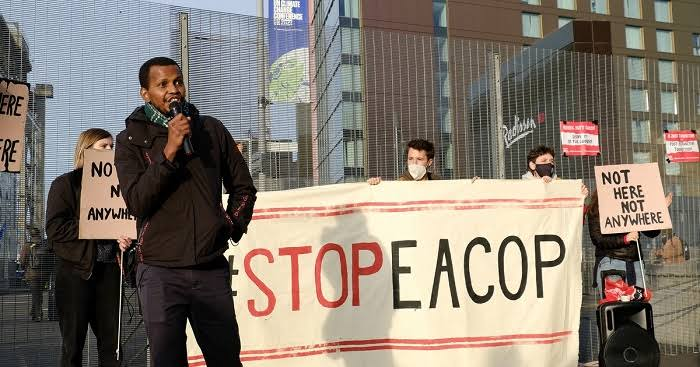
149 CSOs and groups demand answers from banks over $3.7bn in EACOP financing
Published

on

StopEACOP demands accountability after undisclosed bank loans revealed

…149 civil society organisations demand full disclosure from regional lenders tied to the $3.7B in EACOP financing, as Uganda pushes for commercial production by June 2027.

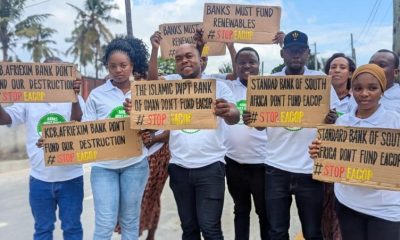
THE StopEACOP coalition today sent an open letter to eight African and Middle East financial institutions, urging them to fully disclose their involvement in the East African Crude Oil Pipeline (EACOP).

The letter, signed by 149 organisations including groups from EACOP affected communities, follows new analysis that revealed previously undisclosed lending to the EACOP project.

Reclaim Finance identified roughly US$3.7 billion in project lending between 2025 and 2026, with Afreximbank, KCB Group and KCB Bank Uganda, the Islamic Development Bank Group and the Islamic Corporation for the Development of the Private Sector, NMB Bank Tanzania, Qatar National Bank, Standard Bank Group and Stanbic Bank Uganda, and Uganda Development Bank linked to deals.

At African Energy Week (October 12–16), Uganda National Oil Company officials said they now aimed for commercial oil production by June 2027, a further delay after previous first-oil target dates were set for 2025, then June 2026 and July 2026. Tanzania’s state petroleum company separately stated crude should reach Tanga by February 2027, with the first tanker loading in March.

After more than 40 banks and 30 insurers refused to back EACOP or adopted policies against it, African and Gulf lenders largely covered the remaining debt. Only a first portion, from Afreximbank, Standard Bank, Stanbic Bank Uganda, KCB Bank Uganda, and ICD, was ever publicly confirmed by EACOP Ltd, and without amounts. The terms and exposure of the larger group, including NMB Bank, Qatar National Bank, and Uganda Development Bank, remain undisclosed.

What the coalition wants:

The letter demands each institution:

  • Disclose the full scope, structure, and terms of its support to EACOP, including exposure through bonds, guarantees, or réhaadvisory roles.
  • Commit to no further funding for EACOP expansion or related oil development in the Albertine Graben or elsewhere.
  • Fund remedy for harm to affected communities, through an independent, community-led mechanism providing compensation, livelihood restoration, and environmental cleanup, paid by EACOP Ltd and its backers proportional to their role.

Why does it matter now?

“First oil does not mark an end to the harm caused by EACOP. It escalates and entrenches it,” said Zaki Mamdoo, StopEACOP Campaign Coordinator. “The institutions who have poured billions into EACOP must now answer publicly for what they have financed and must take responsibility for repairing the destruction brought by their investment decisions.”

For people whose land and livelihoods have been affected by the pipeline, the consequences of these financing decisions are already part of daily life.

“When they took our land, we lost more than the land itself. We lost the means to support our families. Compensation was supposed to help us rebuild our lives, but for some of us, that has not happened. Now we hear about the banks financing this pipeline, and we want to know: do they understand what has happened to the people whose land made this project possible?”, said Rachael Tugume, EACOP-Project Affected Person.

“Dozens of banks and insurers have rightly refused to support TotalEnergies’ EACOP project due its massive impacts on climate, local biodiversity, communities’ livelihoods and human rights. The 8 banks that have accepted to finance the project will be held accountable by civil society organisations for these impacts. They must get ready to contribute to reparative justice for communities and commit to exclude any new financing to oil and gas expansion in Uganda and the rest of the world.” said Antoine Bouhey, Defund TotalEnergies’ campaign coordinator at Reclaim Finance.

The coalition warns that the risks it has documented – including land acquisition and compensation failures, lost livelihoods, militarization, and environmental damage along the route and at the Chongoleani terminal in Tanga – won’t end when oil flows. They will get worse.

In the letter, the financial institutions are asked to clarify their position by 16 November. The coalition will publish all responses and non-responses after the deadline.

Notes to editors

  • The open letter, signatory list link
  • Spokespeople are available in Uganda, Tanzania and from our internal experts.

###

For media inquiries, contact:

Abiud Onyach

Communications & Digital Lead

StopEACOP Campaign

info@stopeacop.net | +254700593687

About the StopEACOP Campaign

The StopEACOP Coalition is an alliance of local groups, communities, and African and global organizations. The #StopEACOP Coalition has been calling for a halt to the proposed pipeline and associated oil fields at Tilenga and Kingfisher. The StopEACOP campaign is gaining momentum, building pressure on the remaining supporters and financiers of the East African Crude Oil Pipeline. To date, 43 banks and 30 (re)insurers have already ruled out support for EACOP.

Source: realnewsmagazine.net

Continue Reading

MEDIA FOR CHANGE NETWORK

Government Seeks Shs8 tn for Land Acquisition Under NDP IV

Published

on

Government says rising land prices and compensation disputes are delaying public infrastructure projects, with a proposed national policy seeking to harmonise valuation, improve resettlement and protect communities affected by land acquisition.

The Draft National Land Acquisition, Resettlement and Rehabilitation Policy 2026 is in its final stages before submission to Cabinet, marking a step towards reforming how government acquires land, compensates owners and resettles communities affected by public infrastructure projects.

The proposed policy seeks to establish a harmonised framework for land acquisition while strengthening safeguards for project-affected people, improving compensation processes and restoring livelihoods for displaced communities.

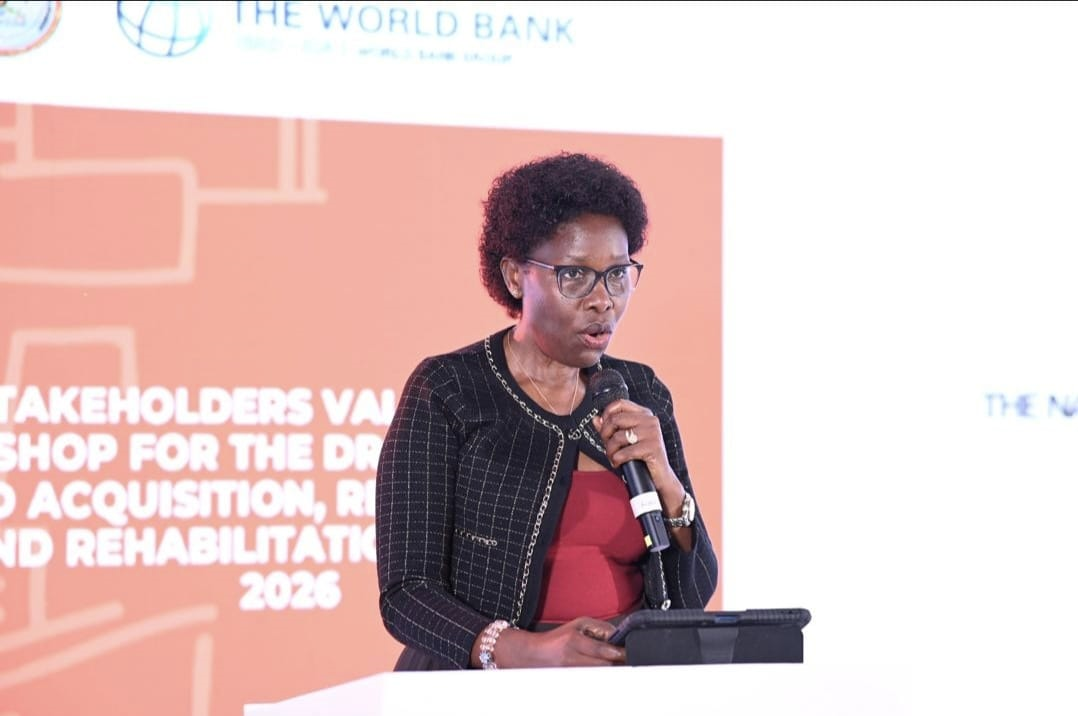
Speaking at a stakeholders’ validation workshop at Hotel Africana in Kampala, Henry Harrison Irumba, the Assistant Commissioner for Policy Analysis at the Ministry of Lands, Housing and Urban Development, said the existing legal framework was outdated and fragmented, with the principal Land Acquisition Act dating back to 1965.

“The existing system has resulted in inconsistencies in land valuation, compensation and community consultations, often contributing to delays in implementing public infrastructure projects,” he said.

Irumba said the proposed policy shifts the focus beyond monetary compensation by introducing measures for resettlement, livelihood restoration and stronger protection for affected communities.

It proposes harmonised valuation standards across government institutions, greater public participation, stronger safeguards for vulnerable groups and more effective mechanisms for resolving compensation disputes.

The draft also provides for consultations involving not only household heads but other affected family members, particularly women, to ensure their interests are considered during compensation and resettlement.

In addition, it proposes safeguards for voluntary land donations and negotiated land transfers, particularly in communities where land is offered for public projects without formal documentation.

According to Irumba, the policy review began in 2017 with a regulatory impact assessment to identify weaknesses in the existing framework.

Consultants were engaged in 2019 with support from the World Bank, followed by nationwide consultations and further reviews to align the policy with emerging land acquisition challenges and national development priorities.

Meanwhile, the Minister of Lands, Housing and Urban Development, Judith Nabakooba, said government requires an estimated Shs8 trillion to acquire land for infrastructure projects under the Fourth National Development Plan (NDP IV).

She warned that rising land prices and compensation disputes had become major obstacles to infrastructure delivery, with government reviews indicating that nearly 90 per cent of public projects are delayed by land acquisition challenges.

“This indeed is unsustainable because in some instances, the cost of acquiring land has exceeded the cost of constructing the projects themselves,” she said.

Nabakooba called for innovative approaches to land acquisition and valuation, including consideration of a betterment levy — a one-time charge on property owners whose land values increase because of public infrastructure investments.

She said the final policy should provide a transparent and practical framework that enables government to acquire land for national development while protecting the rights, livelihoods and dignity of affected communities.

The World Bank welcomed progress on the policy, describing it as a significant milestone in efforts to improve Uganda’s land acquisition system.

Fadzai Mukonoweshuro, the World Bank’s Senior Operations Officer, said an effective and predictable land acquisition framework was essential to Uganda’s infrastructure and economic development ambitions.

“Successful implementation of the policy will require adequate financing, strong institutional capacity and clear accountability mechanisms to ensure land acquisition is carried out in a timely, transparent and equitable manner,” she said.

Mukonoweshuro reaffirmed the World Bank’s commitment to supporting Uganda in strengthening its environmental and social risk management systems as the country advances major infrastructure projects.

Source: nilepost.co.ug

Continue Reading

Resource Center

Legal Framework

READ BY CATEGORY

Facebook

Newsletter

Subscribe to Witness Radio's news and report updates


Trending

Subscribe to Witness Radio's news and report updates