Connect with us

MEDIA FOR CHANGE NETWORK

Indigenous communities in Eastern Nepal accuse the World Bank’s Linked Cable Car Project of rights violations.

Published

on

Indigenous communities in Eastern Nepal accuse the World Bank’s Linked Cable Car Project of rights violations.


By Witness Radio Team

A $22 million cable car project cutting through sacred forests in eastern Nepal has become the centre of a growing dispute. Indigenous communities accuse developers and the World Bank Group of enabling forced development that violates community land rights and exacerbates human rights abuses.

The project, whose construction began in 2022, is developed by Pathibhara Devi Darshan Cable Car Pvt. Ltd., a subsidiary of Nepal’s powerful IME Group, and is being built on Mukkumlung Mountain, also known as Pathibhara, in Taplejung District. While the government has promoted the project as a tourism and accessibility initiative, the Indigenous Yakthung (Limbu) communities say construction has proceeded without their consent and at a high cultural and environmental cost.

According to the project’s Initial Environmental Examination (IEE), the cable car infrastructure would occupy 6.22 hectares (15.36 acres) of community and government forest land.

Community leaders opposing the project say it threatens local livelihoods and social structures, including more than 700 local porters, nearly 30 locally run small businesses, and approximately 1,700 households that depend on pilgrimage-related income. They also warn of irreversible damage to cultural heritage sites.

The cable car intends to transport pilgrims to the Pathibhara Devi temple, one of Nepal’s most revered Hindu shrines, which is currently accessible only via a steep, high-altitude trek. Project developers argue the cable car will boost tourism, generate employment, and allow elderly and disabled devotees easier access.

For the Yakthung people, Mukkumlung is not merely a pilgrimage site but a sacred ancestral land that embodies their spirituality, culture, and identity.

“This mountain is sacred ancestral land. It defines our spirituality, culture, and customary law,” said Advocate Shankar Limbu, vice-chair of the Lawyers’ Association for Human Rights of Nepalese Indigenous Peoples (LAHURNIP). “Clearing forests and altering the mountain’s ecology weakens its spiritual power and violates our collective rights.”

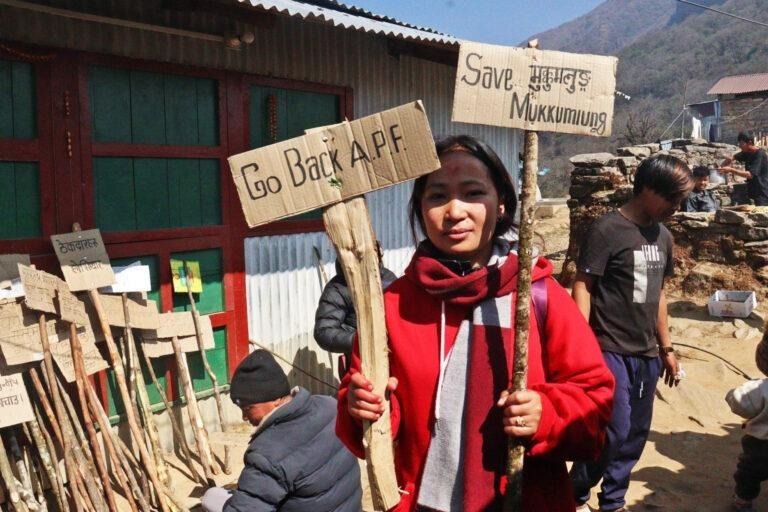
Local leaders say they were never consulted before construction began, highlighting a clear violation of their rights and raising concerns over FPIC breaches.

“The IFC’s own Performance Standards state that Indigenous Peoples have the right to give Free, Prior and Informed Consent to projects on their lands,” said Saru Singak of the Mukkumlung Conservation Joint Struggle Committee. “But no one ever asked us whether we wanted this project. It is destroying forests and sacred landscapes and disrespecting our religion and culture.”

Environmental groups report that construction has already felled over 10,000 trees, including

protected species like Himalayan yew, threatening local biodiversity.

As forest clearing accelerated, opposition from local communities intensified. In January 2025, Nepal Police and Armed Police Force personnel reportedly used force against protesters, leading to the detention of dozens and sustaining severe injuries. Activists allege continued intimidation and retaliation against those opposing the project.

The dispute has drawn international attention, especially as the World Bank Group faces mounting scrutiny over financing harmful investments. Between August 2022 and July 2024, the IFC provided advisory services to the IME Group for four cable car projects in Nepal, including the Pathibhara project.

Indigenous leaders argue that during this period, the IFC failed to ensure compliance with its Environmental and Social Performance Standards, particularly regarding environmental assessments and the respect for communities’ right to Free, Prior, and Informed Consent, raising questions about its oversight and accountability.

In August 2025, Yakthung communities, supported by lawyers and civil society organisations, filed a formal complaint against the World Bank Group, alleging breaches of safeguarding standards that led to human rights abuses and the destruction of cultural heritage. In December 2025, the World Bank Group’s independent watchdog, the Compliance Advisor Ombudsman (CAO), formally registered the complaint and is currently assessing whether to proceed with mediation or a full compliance investigation.

For Indigenous rights advocates, the Pathibhara dispute reflects a broader pattern seen in World Bank–linked projects across Africa, Asia, and Latin America, where development initiatives proceed without meaningful community participation and accountability mechanisms are activated only after harm occurs, yet rarely provide a remedy.

A decade ago, an 11-month investigation by the International Consortium of Investigative Journalists (ICIJ), Evicted and Abandoned, found that an estimated 3.4 million people were physically or economically displaced by World Bank–funded projects, raising long-standing concerns over the institution’s ability to protect vulnerable communities.

IME Group operates across energy, manufacturing, infrastructure, and trade, and owns Global IME Bank, Nepal’s largest commercial bank. The IFC has provided more than $50 million to IME Group over the past decade.

Continue Reading

MEDIA FOR CHANGE NETWORK

Civil society organizations across East Africa have revived their campaign against the EAC Seed and Plant Varieties Bill 2025, just as the regional parliament opens the floor to public consultations.
Published

on

By the Witness Radio team

Civil society organizations across East Africa have increased their opposition to the proposed East African Community (EAC) Seeds and Plant Varieties Bill, 2025, warning that some provisions threaten to erode farmer-managed seed systems and give commercial seed interests greater power.

Earlier this week, the organizations met online to plan their advocacy ahead of the public hearings on August 27 and 28.

The EAC Seeds and Plant Varieties Bill, 2025, was introduced before the East African Legislative Assembly (EALA) in June 2025. The legislation seeks to establish a harmonized regional framework for seed certification, registration, evaluation, and plant variety protection across EAC partner states.

Civil society groups and smallholder farmer advocates warn that the Bill could restrict the use, exchange, and sharing of farmer-managed seeds while tightening intellectual property rules in favor of commercial plant breeders.

During the webinar, champions of agroecology, food sovereignty, and farmers’ rights discussed how to shape the legislative process and present alternative proposals at the upcoming hearings.

Doreen Akware from the Center for Food and Adequate Living Rights (CEFROHT) told participants that the public hearings are scheduled for August 27 and 28, with stakeholders expected to present their views on the proposed legislation.

Akware said the relevant committee will compile the hearings’ views into a report before the Bill moves to the next stages of consideration.

The EAC Seed and Plant Varieties Bill, 2025 has passed several legislative stages, including publication and introduction in the East African Legislative Assembly. It is now before the relevant EALA committee and will go to public hearings before the Assembly considers it further.

If enacted, the legislation would establish a regional framework governing the evaluation, release, registration and certification of plant varieties and seeds across EAC partner states.

Participants noted the proposed legislation arrives as governments across the region urge farmers to adopt more sustainable, locally rooted agricultural practices.

Dr David Kabanda, Executive Director of CEFROHT, said communities in Uganda are already experiencing what he described as “seed poverty”, where farmers increasingly depend on commercial seed suppliers instead of saving and reusing seed from previous harvests.

Kabanda acknowledged some government programs distributing improved seeds are well-meaning but cautioned that growing reliance on commercial seed risks undermining the tradition of seed-saving.

“If we are coming up at the East African level to promote the intellectual property of seed breeders and also only highlighting or certifying seeds which they only understand in the context of a framework of only plant breeders without farmers’ rights and community seed systems on board, then we are destined to a very precarious time ahead of us,” Kabanda warned.

He insisted that true sustainability in agriculture and food systems is impossible if communities are excluded from decisions about the seeds and resources they rely on.

Kabanda also voiced worries about how the proposed regional law could impact national sovereignty, farmers’ rights, and the future of community-managed food systems.

Simon Degelo, senior adviser on seed systems at SWISSAID, raised concerns about provisions that could criminalize or restrict the sale and exchange of farmer-managed seeds lacking formal certification.

Degelo argued that requiring farmers to certify seeds before exchange or sale could put farmer-managed seed systems at a disadvantage against commercial seed companies.

He also questioned the Bill’s vague approach to plant variety protection and intellectual property rights, noting key provisions are postponed for future decisions instead of being detailed now.

“At least the essential provisions should be part of the law. We don’t even know what would be coming in the plant variety protection because the provisions are not in the law,” he said.

Degelo also warned the new regional framework might clash with existing national laws in EAC countries, especially where seed legislation is already involved in legal or constitutional disputes.

Over 60 participants from East Africa and beyond joined the webinar, pooling ideas and strategies to make their voices heard at the upcoming public hearings.

The organizations are rallying farmers’ groups, civil society, researchers, and other stakeholders to participate in the hearings and engage with EALA members.

Their main concern is to ensure that any regional seed law upholds farmers’ rights, safeguards community seed systems, and does not tip the scales in favor of commercial seed companies and plant breeders.

The organizations plan to use the public hearings to challenge restrictive provisions and demand greater recognition for farmer-managed seed systems.

This debate unfolds as East African nations work to harmonize agricultural policies and boost regional trade. Civil society groups insist that harmonization must not sacrifice farmers’ centuries-old ability to save, share, and nurture locally adapted seeds.

The proposed legislation now faces a pivotal test in the weeks ahead, as stakeholders ready their submissions to EALA and press for a seed governance framework that strikes a fair balance between commercial interests, farmers’ rights, biodiversity, and food sovereignty.

Continue Reading

MEDIA FOR CHANGE NETWORK

Civil society groups at UNCCD COP17 are calling for urgent action on land rights, drought, and vital funding.
Published

on

By the Witness Radio team.

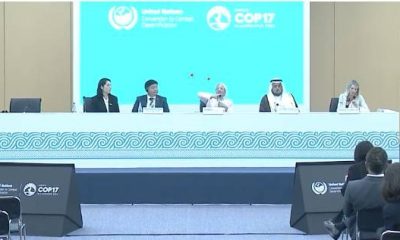
ULAANBAATAR, Mongolia: At the 17th session of the United Nations Convention to Combat Desertification (UNCCD COP17), civil society organizations urged governments to turn promises into real action, tackling land degradation, drought, and the mounting dangers confronting land-dependent communities.

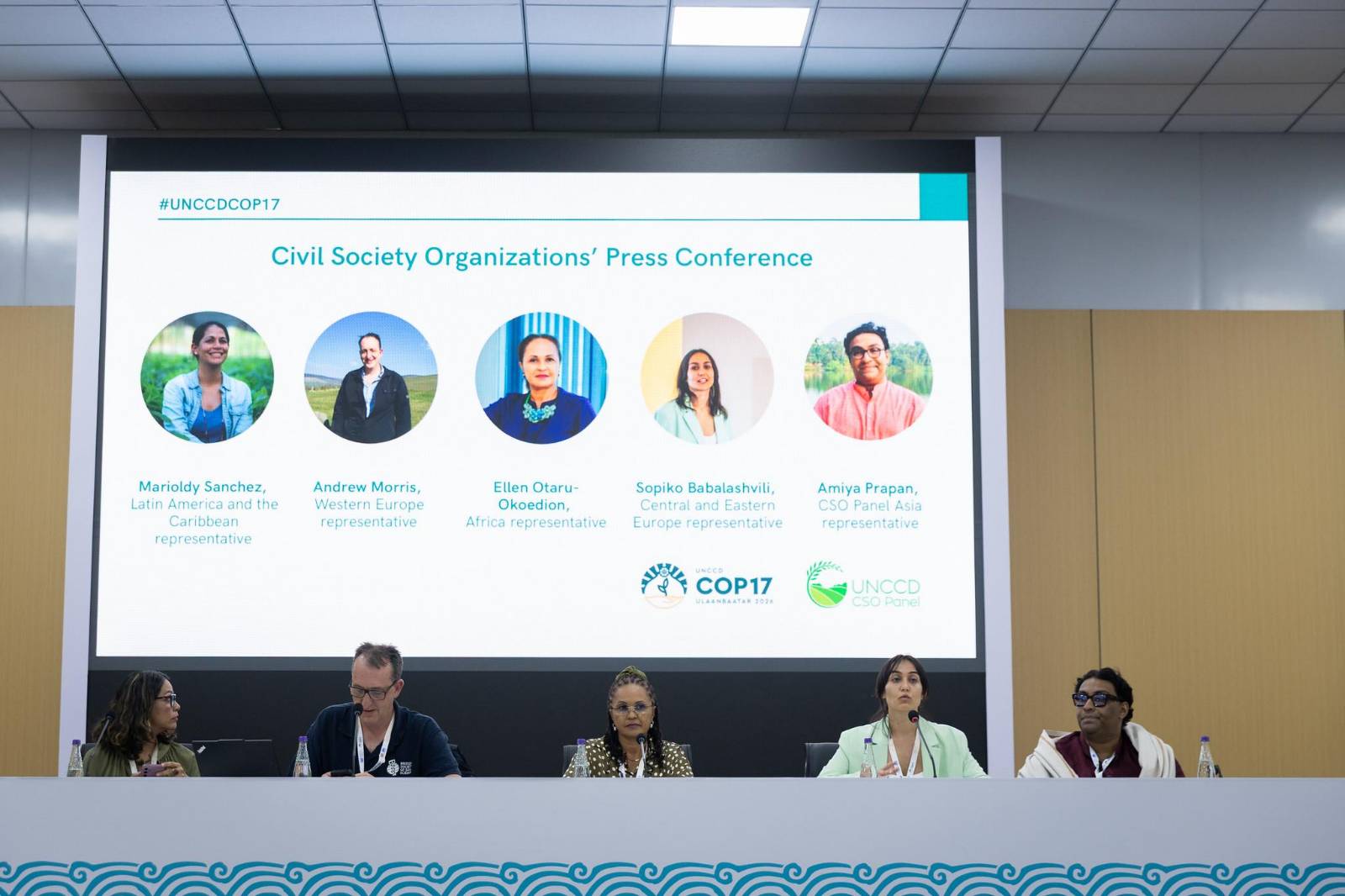
At a press conference in Ulaanbaatar on Monday, August 17, civil society representatives from every corner of the globe—Africa, Asia, Latin America and the Caribbean, Western Europe, and Central and Eastern Europe—shared their priorities and plans for the two-week Summit.

Throughout COP17, these organizations plan to actively engage with government negotiators, national focal points, and other stakeholders, bringing forward evidence and community voices to ensure their priorities shape the conference’s outcomes.

They will also champion meaningful participation for civil society, Indigenous peoples, pastoralists, women, youth, and local communities in every stage of negotiations, implementation, monitoring, and follow-up.

The Civil Society Organization (CSO) Panel, which leads civil society engagement in the UNCCD process, shared that its members have spent nearly a year collecting perspectives from all five regions and crafting 19 key messages and recommendations for COP17.

Andy Morris, the Western European representative on the CSO Panel, said their main expectation is for COP17 to become an “action COP” that moves commitments into implementation.

“Our main expectation is that COP17 moves commitments to implementation,” Morris said, adding that this action COP requires accessible and adequate finance reaching communities and local actors who can implement solutions on the ground.

The CSOs are also determined to strengthen knowledge-sharing between governments, scientists, practitioners, Indigenous peoples, local communities, and pastoralists.

Morris emphasized that Indigenous, traditional, and local knowledge deserves equal recognition with scientific knowledge. He also called for greater support for civil society and local actors to generate evidence and monitor land degradation and restoration.

“We have a wealth of knowledge at our fingertips, and we need to bridge the gap between indigenous people’s knowledge and science,” he said.

Civil society organizations have made secure and fair access to land and land tenure a top priority, especially for women, Indigenous peoples, and local communities.

They are urging robust multi-stakeholder land governance, integrated land-use planning, and sustainable water management to help territories withstand drought.

They are pressing governments to shift from reactive drought responses to proactive, locally led strategies that boost land restoration and soil health.

The CSO Panel also prioritizes bolder action on land degradation neutrality and tighter coordination across land, climate, biodiversity, water, and food security agendas.

Sopiko Babalashvili, representing Central and Eastern Europe on the CSO Panel, said civil society wants COP17 commitments to translate into action at the community level.

“It’s important to increase accessible and secure finance for locally led and community-led solutions and translate commitments into action on the ground,” Babalashvili said.

African civil society representative Ellen Otaru-Okoedion highlighted that civil society organizations have been tackling desertification, land degradation, and drought at the grassroots long before these issues reach international negotiations.

“CSOs play an integral role in addressing desertification, land degradation, and drought within communities long before these challenges reach international negotiations.” She added that civil society organizations are more than observers at COP17; they are knowledge holders, partners in sharing and implementing solutions, and key contributors to locally rooted progress. The organizations urge governments to keep COP17 inclusive and ensure civil society has a real voice in negotiations, implementation, monitoring, and follow-up.

“We are also implementation partners and contributors to locally grounded solutions,” Ellen further revealed, adding that they will continue to engage with negotiators, party officials, national focal points and different caucuses while working with civil society networks and partners across regions and other environmental conventions.

Civil society representatives also voiced concerns about the shrinking financial space for organizations working on the frontlines in communities.

They warned that relying too heavily on external project funding can undermine civil society’s independence and called for new approaches to help organizations build more sustainable funding streams.

The panel pointed to capacity building, networking, and organizational development as key ways to empower CSOs to mobilize resources and keep supporting communities.

The organizations are also pushing for closer coordination among the three major Rio Conventions on desertification, climate change, and biodiversity.

They argue that land degradation, drought, water insecurity, climate change, biodiversity loss, and food security are deeply interconnected challenges that demand coordinated solutions, not isolated efforts.

As negotiations unfold over the next two weeks, civil society groups are determined to make sure the voices of communities affected by land degradation and drought shape the decisions made at COP17.

They believe the true measure of the conference’s success will not be what is agreed on paper, but whether those commitments reach communities through funding, action, monitoring, and greater participation by those who rely on the land for their livelihoods.

Continue Reading

MEDIA FOR CHANGE NETWORK

South Africa’s top court blocks Shell oil exploration off country’s Wild Coast
Published

on

In a landmark judgment on Aug. 14, South Africa’s Constitutional Court set aside exploration rights held by oil giant Shell and Impact Africa, a South African oil and gas company. The ruling prevents the companies from exploring for fossil fuels off South Africa’s Wild Coast.

The case was brought by Wild Coast communities and environmental organizations after Shell announced plans in 2021 to conduct a 3D seismic survey off the country’s Eastern Cape province coastline. They argued that authorities had failed to meaningfully consult affected communities or consider harms to their spiritual and cultural rights and livelihoods. Authorities also failed to consider the potential harm to marine life and climate change, the plaintiffs argued.

In the judgement, Justice Jody Kollapen wrote the majority opinion and said consulting communities isn’t just a procedural requirement, but “a process which affirms human dignity by affording a seat at the table to those whose lives are impacted by decisions.”

Acknowledging the “cornerstone role that dispossession played in the apartheid regime,” the court noted that South Africa’s natural resources are highly contested and that the case is embedded in “well-documented struggles by coastal communities to protect their land, marine resources and ways of life in the face of extractive activities.”

The judges also considered last year’s International Court of Justice Advisory Opinion on countries’ obligations in the context of climate change: “Decisions must be taken within a framework of heightened diligence, informed by scientific knowledge, international commitments and the foreseeable impacts of emissions on present and future generations,” Kollapen wrote.

The question of oil exploration rights in the area began in 2014, when the Department of Mineral Resources and Energy granted Impact Africa Limited the right to undertake a seismic survey to look for oil and gas reserves on the Wild Coast. Impact Africa Limited is a subsidiary of Impact Oil & Gas Limited, which in 2021 transferred a 50% stake of its exploration rights in the area to Shell.

The case has appeared before several South African courts over the past decade before reaching the Constitutional Court, the highest in the country.

Carmen Mannarino from the South African nonprofit Masifundise Development Trust, which works with communities in the area, told Mongabay that the court’s decision is a victory for fishing communities. “The court recognized that exploring for resources in light of potential future financial benefits does not compare to the constitutionally recognized rights of fishing communities,” Mannarino said.

“This is the apex court and the first time that it has dealt with issues relating to the community and environmental rights in relation to oil and gas exploitation,” Melissa Groenink, an attorney with one of the applicants, civil society organization Natural Justice, told Mongabay, adding that the ruling might influence similar cases currently in process.

Shell did not respond to Mongabay’s request for comment by the time of publication.

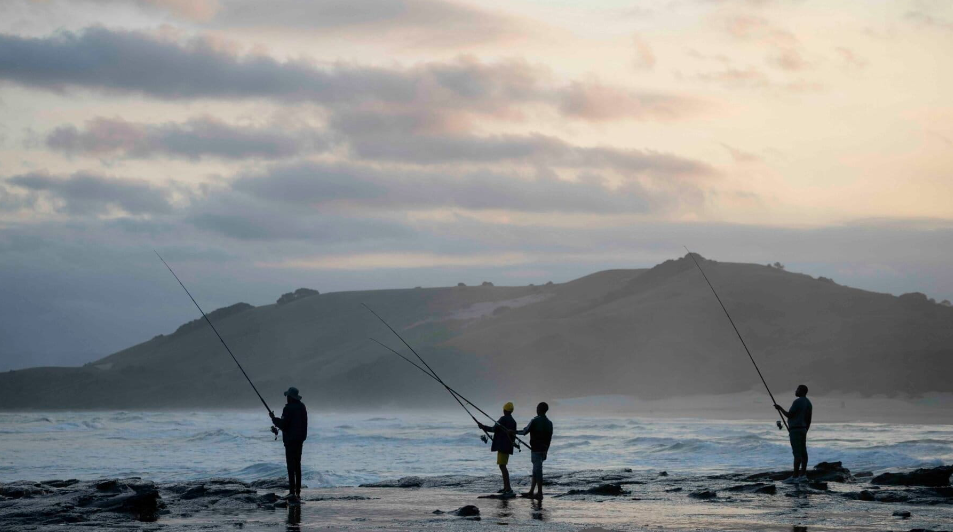
Banner image: Fisherpeople in Port St. Johns, Eastern Cape. Image courtesy of Aletta Harrison CC BY 4.0.

Source: news.mongabay.com

Continue Reading

Resource Center

Legal Framework

READ BY CATEGORY

Facebook

Newsletter

Subscribe to Witness Radio's news and report updates


Trending

Subscribe to Witness Radio's news and report updates