Connect with us

MEDIA FOR CHANGE NETWORK

COP16 in Riyadh: World Leaders Commit $12.15B to Combat Land Degradation and Drought

Published

on

The 16th Conference of the Parties (COP16) to the United Nations Convention to Combat Desertification (UNCCD) has concluded in Riyadh, marking the largest and most inclusive conference in the organization’s history.

With over 20,000 participants, including global leaders, scientists, private sector representatives, and civil society groups, the conference laid out bold strategies to address land degradation, drought, and desertification.

The highlight of the conference was the announcement of the Riyadh Global Drought Resilience Partnership, which secured $12.15 billion in pledges to support drought-affected regions in 80 vulnerable countries, including Uganda.

This funding aims to strengthen food security, promote sustainable land management, and protect ecosystems from the growing impacts of climate change.

For Uganda, where over 40% of the population relies on agriculture, this commitment offers hope for combating the devastating effects of prolonged droughts in the cattle corridor and other semi-arid regions.

In a move to enhance global preparedness for droughts, COP16 launched an AI-powered Drought Observatory, a groundbreaking tool designed to provide real-time data and predictive analysis.

Uganda, with its ongoing challenges in monitoring and responding to climate impacts, stands to benefit immensely from this technology, which will enable the government to anticipate and respond effectively to severe drought conditions.

This could mitigate the recurring food insecurity and water scarcity issues faced by communities in Karamoja and other drought-prone areas.

H.E. Abdulrahman Abdulmohsen AlFadley, COP16 President, in his closing remarks, stated:

“This session marks a turning point in raising awareness and strengthening efforts to restore land and build resilience. The Riyadh Declaration sends a clear message: the time for decisive action is now.”

For Uganda, this turning point is critical as the country battles desertification in key ecosystems like the cattle corridor and Lake Kyoga basin, which threaten biodiversity, agriculture, and livelihoods.

With only 6% of land restoration funding currently coming from private sources, COP16 introduced the Business for Land initiative to increase private sector engagement in land restoration.

Over 400 companies participated in discussions on sustainable finance, environmental, social, and governance (ESG) practices, and strategies to mobilize private investment for land restoration projects.

Uganda, which has already seen successful private-sector participation in conservation projects such as carbon trading and reforestation in areas like Mabira Forest, could tap into this global momentum to attract more investments for land restoration initiatives.

To promote inclusivity, COP16 placed women and youth at the forefront of the fight against land degradation. Key outcomes included:

The launch of youth-led initiatives to drive grassroots climate action.

Adoption of gender-responsive policies to ensure equitable participation in land restoration efforts.

For Uganda, these measures are especially relevant.

The country has a youthful population and strong women-led grassroots organizations that are already leading efforts to promote climate resilience through tree planting and sustainable farming practices.

The resolutions adopted at COP16 provide a framework for scaling up these local efforts while ensuring inclusivity and equitable representation.

Scientific data presented at COP16 painted a dire picture of the planet’s land resources:

77.6% of Earth’s land is drier today than it was 30 years ago.

40.6% of the planet is now classified as drylands, threatening ecosystems, food security, and livelihoods.

For Uganda, this data underscores the urgent need for action.

With parts of the country already facing desertification and reduced rainfall patterns, the findings highlight the importance of restoring degraded lands like Nakasongola and tackling deforestation in critical areas such as Mount Elgon.

As COP16 wraps up, attention now shifts to COP17, which will take place in Mongolia.

Delegates will continue discussions on establishing a global drought regime, building on the momentum and progress achieved in Riyadh.

For Uganda, the outcomes of COP16 represent a pivotal moment.

The historic commitments, technological innovations, and inclusive policies offer the country an opportunity to address its growing environmental challenges.

If implemented effectively, these resolutions could help Uganda restore its degraded lands, safeguard livelihoods, and build resilience against future climate shocks, positioning the country as a leader in sustainable land management in Africa.

Source: nilepost.co.ug

Continue Reading

MEDIA FOR CHANGE NETWORK

Six other Anti-EACOP Activists remanded to Luzira over alleged unlawful assembly.
Published

on

By the Witness Radio team

The Law Development Centre (LDC) Magistrate’s Court has charged and remanded six youth activists attached to the Rooted in Resistance movement to Luzira Prison over alleged unlawful assembly.

The six are Mukiibi Isaac, Mawanda Arafat, Mugerwa Nicholas, Opio Innocent, Friday John and Onyango Ronald.

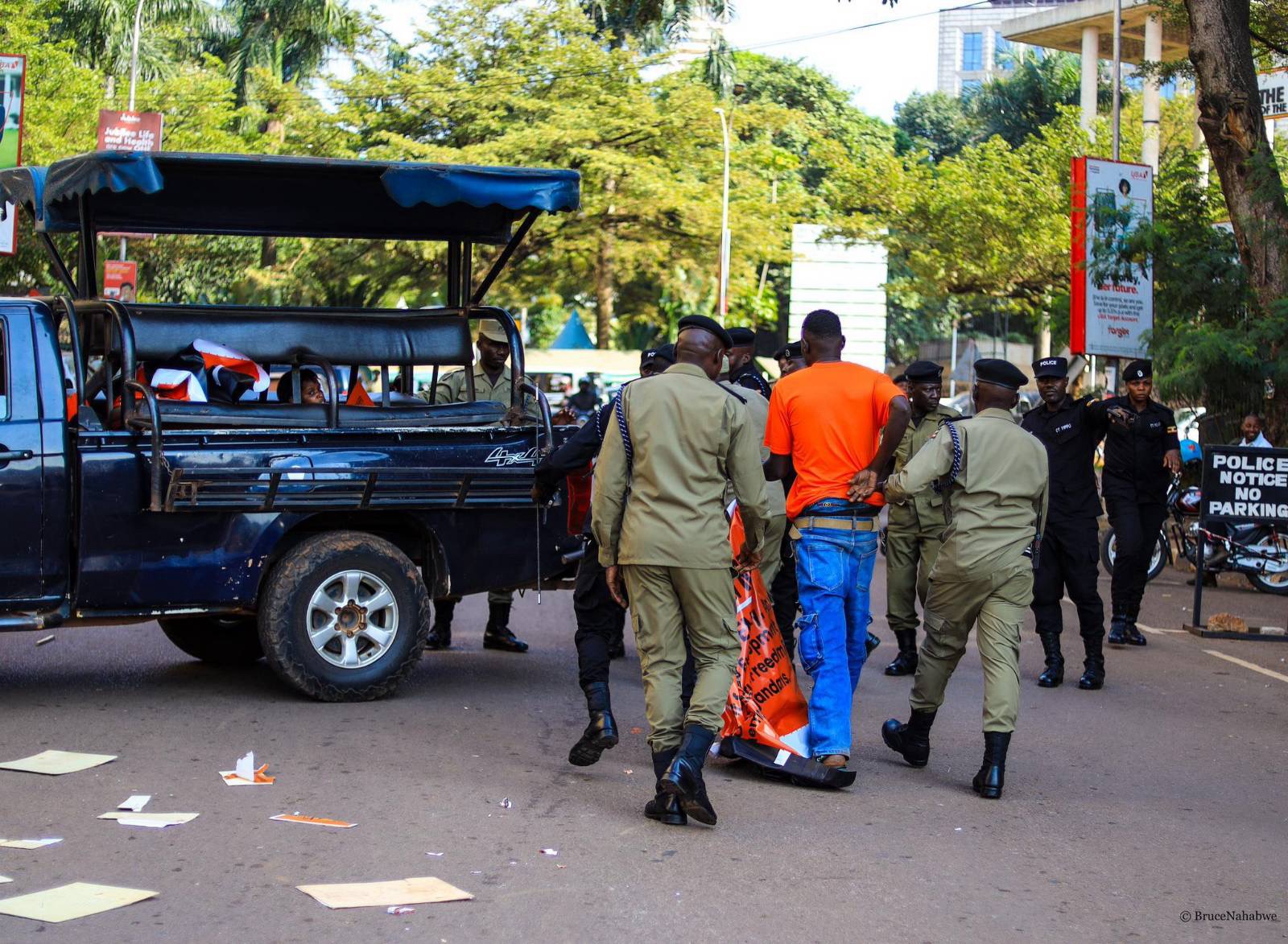
They are among 16 activists arrested on Monday, September 1, 2026, as they attempted to deliver petitions to Parliament and the offices of TotalEnergies in Kampala, calling for greater scrutiny of Uganda’s oil developments and opposing further investment in fossil fuels.

The activists were protesting against projects including the East African Crude Oil Pipeline (EACOP) and the Tilenga oil project, arguing that continued investment in fossil fuels threatens communities, the environment and Uganda’s climate commitments.

Their lawyer, Kakuru Tumusiime, said that the six had been detained for more than 48 hours before being brought before a magistrate.

He argued that the continued detention amounted to a violation of their constitutional rights and called on the government to listen to the concerns being raised by young people rather than responding to protests with arrests.

“Our Constitution is clear that if a person has been arrested, he should be presented before court within 48 hours after his detention or else he should be granted a police bond,” Kakuru said.

He further accused the authorities of violating the activists’ human rights and said the defense team had already taken steps to challenge the alleged violations.

“We had filed an application for mandatory bail that had not been fixed. I think when they heard about the application, they rushed to bring them before court,” Kakuru said.

The six were subsequently remanded to Luzira Prison until September 17, 2026.

According to Section 62 of the Penal Code, any person who takes part in an unlawful assembly commits a misdemeanor and is liable, on conviction, to imprisonment for a term of one year.

The activists say their opposition is rooted in concerns about the environmental and social consequences of Uganda’s decision to develop its oil resources.

At the center of their campaign is EACOP, the planned 1,443-kilometre heated crude oil pipeline that will transport crude from Uganda’s oil fields in Hoima to the port of Tanga in Tanzania.

The pipeline is expected to transport crude produced from Uganda’s upstream oil projects, including the Tilenga project operated by TotalEnergies and the Kingfisher project.

The activists argue that Uganda should be investing more heavily in renewable energy rather than expanding fossil fuel production at a time when countries around the world are under pressure to reduce greenhouse gas emissions.

Their position is that economic development should not come at the expense of people’s land, livelihoods and the environment.

Their demonstrations and petitions have called for Uganda to reconsider continued investment in fossil fuel infrastructure and instead accelerate the transition towards renewable sources of energy.

Rooted in Resistance was formerly known as Students Against EACOP and has become one of the youth-led groups consistently challenging Uganda’s fossil fuel development.

The group says young people have a stake in decisions being made today because they will live with the environmental and economic consequences of those decisions for decades to come.

During Monday’s demonstration, the activists wore orange T-shirts bearing the words “Rooted in Resistance” and carried banners and placards with messages including “No to Oil,” “Oil is temporary, nature is permanent” and “Uganda deserves an oil-free future.”

The demonstration ended with arrests as the activists attempted to deliver their petitions.

On Tuesday, September 1, ten of the activists were charged before Buganda Road Court with public nuisance and remanded to Luzira Prison.

The latest court proceedings involving the six activists have added another chapter to the increasingly tense debate over Uganda’s oil industry, which has led to the criminalization of more than 100 activists.

Continue Reading

MEDIA FOR CHANGE NETWORK

Wakiso LCs warned against using official stamps to facilitate land grabbing

Published

on

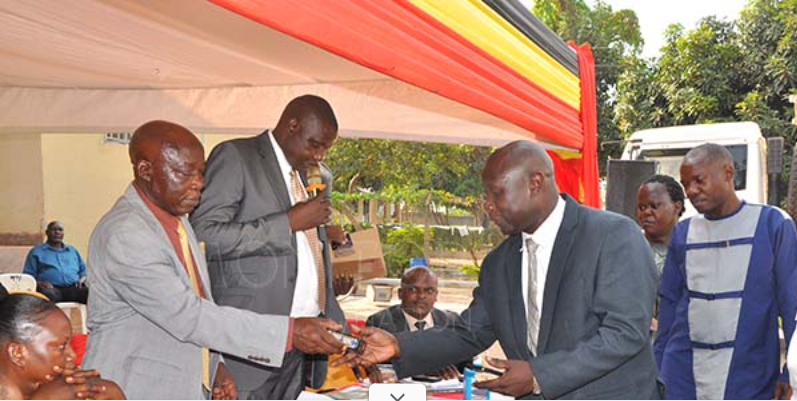
Wakiso Town Council Mayor, Mr Fredson Mukalazi Kasiwukira (L), hands over an official stamp to an LC 1 chairperson.  PHOTO/NOELINE NABUKENYA

Newly sworn-in village chairpersons in Wakiso District have been warned against colluding with land grabbers and wealthy individuals to facilitate illegal land transactions, with authorities threatening to arrest those who misuse official stamps.

The village leaders have also been told to stop looking at an official stamp as a source of income and instead find legitimate employment to support themselves.

Wakiso Deputy Resident District Commissioner, Ms Angel Namulimbe, said her office continues to receive numerous complaints related to fraud and land grabbing, many of which allegedly involve village leaders.

“Our office is always full of cases of fraud and land grabbing, and many of these cases involve LC leaders,” she said.

She warned that village leaders found colluding with land grabbers would be arrested.

The RDC made the remarks on Thursday while presiding over the swearing-in and commissioning of village chairpersons and the handing over of official stamps to them in Wakiso Town Council.

Eight of the 13 village chairpersons in the town council and one of the six LC II leaders in the area were sworn in and issued with official stamps.

Ms Namulimbe said she would take firm action against any leader found using the stamp improperly.

Wakiso Town Council Chairperson, Mr Fredson Mukalazi Kasiwukira, accused some village leaders of working with wealthy individuals to frustrate residents and facilitate questionable land transactions.

He warned the leaders against allowing their offices to be used by people seeking to deprive residents of their land.

“Security has been alerted. In case you are reported misusing the stamp, we shall recall it,” he warned.

He also urged village chairpersons to be their eyes on the ground to ensure locals participate actively in all the ongoing government programmes.

“Parish Development Model has been extended up to the village level with LC 1s responsible for identifying prospective beneficiaries,” he said.

Mr Atanansio Musambwa, the Wakiso District vice chairperson and district representative for the area, urged the sworn-in leaders to put the interests of residents first and avoid engaging in practices that could undermine public trust.

He also asked them to pay greater attention to children and other vulnerable residents in their villages.

Wakiso Town Council Clerk, Mr Jimmy Mabanja, while handing over the stamps and other tools of authority to the leaders, reminded them that the items are official tools meant to support the enforcement of laws and proper administration.

He warned the leaders against using the stamps for personal gain or authorising transactions that do not meet the required legal procedures.

The village chairpersons pledged to exercise greater caution in the use of the stamps and other official materials entrusted to them.

Led by Mr Twaibu Kafuuma, the chairperson for Kaasangombe Cell, chairpersons also raised their concerns to the town council authorities, including enhancing their pay from Shs10,000 to Shs1m a month.

They also asked for identity cards, noting that they find it hard to identify themselves in case of community events.

“For example, during the National Cleaning Day, some chairpersons are beaten up by security officers because they cannot identify themselves,” Mr Kafuuma said.

Source: monitor.co.ug

Continue Reading

MEDIA FOR CHANGE NETWORK

Ten out of sixteen Rooted in Resistance activists now face charges and have been sent to Luzira Prison after standing up against Uganda’s oil development.

Published

on

By the Witness Radio Team

Ten young members of the Rooted in Resistance Movement have been charged by a Buganda Road Court magistrate and sent to Luzira Prison after their arrest during a protest challenging Uganda’s oil projects.

On Monday morning, August 31, 2026, the activists joined more than 16 members of their youth-led movement in a bold attempt to deliver petitions to Parliament and TotalEnergies’ offices in Kampala, voicing strong opposition to Uganda’s ongoing investment in fossil fuel projects such as the East African Crude Oil Pipeline (EACOP).

After a night in police custody, ten of the activists were brought before the Buganda Road Chief Magistrate’s Court on Tuesday, September 1.

They were charged with being a nuisance on a public road, contrary to Section 67(1)(c) of the Roads Act, Cap. 346.

The accused, Rahmah Namuddu, Dorothy Asio, Sharifah Nantongo, Sharon Shaluwatino, Nyamadri Lucky, Daniel Mugabe, Shakirah Kasoga, Isaac Akampurira, Ivan Ochola and Enock Opolot pleaded not guilty to the charges read to them.

The activists were represented by lawyers Counsel Peter Odur and Counsel Doreen Namara. The court subsequently remanded them to Luzira Prison until September 18, 2026.

The remaining six activists arrested during the protest were still being held at Wandegeya Police Station by Tuesday. They are Mukiibi Isaac, Mawanda Arafat, Mugerwa Nicholas, Opio Innocent, Friday John and Onyango Ronald.

The arrests followed a vivid demonstration in which activists, clad in orange T-shirts emblazoned with “Rooted in Resistance,” marched with banners and placards denouncing Uganda’s oil ambitions.

Among the messages displayed were “No to Oil,” “Oil is temporary, nature is permanent,” and “Uganda deserves an oil-free future.”

Rooted in Resistance, formerly known as Students Against EACOP, has become a persistent voice opposing fossil fuel expansion in Uganda, particularly targeting EACOP and the Tilenga oil project.

In a statement shared on social media, the movement emphasized its commitment to non-violence as Uganda nears oil production. The activists insisted that economic progress must not silence those who dare to question it.

The group demanded the immediate release of their fellow activists and condemned the government’s use of excessive force against peaceful demonstrators.

“We demand their unconditional release and call upon the government to refrain from further using lethal force against peaceful protesters amidst a societal climate and economic collapse in Uganda,” Rooted in Resistance said in a post on its X account.

These arrests are just the latest in a series for Rooted in Resistance, whose members have faced detention during earlier protests against Uganda’s oil ventures.

On August 10, 2026, four members of the movement were also arrested and charged with being a public nuisance, the group said.

In its latest petition, Rooted in Resistance urged Parliament to rethink what it sees as Uganda’s heavy reliance on petroleum for development.

“Rooted in Resistance calls upon Parliament to exercise its constitutional responsibility to protect the national interest and reconsider Uganda’s petroleum-dependent development model,” the statement reads.

The activists argue that their petition is based on citizens’ constitutional rights to participate in governance, express themselves and assemble peacefully, including the rights provided for under Article 38 of the Constitution.

They are urging Parliament to stop expanding oil infrastructure and to launch an open, transparent review of Uganda’s petroleum policies and agreements.

The movement also demands greater government investment in areas like agriculture, manufacturing, renewable energy, tourism, technology, education, innovation and homegrown enterprises.

The activists warn that tying Uganda’s future to petroleum extraction could trap the country in fossil fuel dependence and put communities and ecosystems at risk.

They have urged TotalEnergies to channel its investment and expertise into sectors that promise lasting benefits for Ugandans.

“We urge TotalEnergies to redirect meaningful investment and expertise towards renewable energy, sustainable agriculture, agro-processing, local manufacturing, tourism conservation, technology, skills development and youth enterprise which support livelihoods,” the group said.

This latest protest unfolds as Uganda edges nearer to commercial oil production, with major projects like TotalEnergies’ Tilenga and CNOOC’s Kingfisher set to shape the nation’s oil future.

EACOP, a 1,443-kilometer heated crude oil pipeline, is being developed to transport crude oil from Uganda’s oil fields in the Albertine region to the port of Tanga on Tanzania’s Indian Ocean coast.

The pipeline is expected to transport crude produced from Uganda’s upstream oil projects, including the Tilenga project operated by TotalEnergies.

Though the government and oil companies tout these projects as vital for Uganda’s economy, environmental and human rights activists warn of serious risks to communities, biodiversity and the environment.

Rooted in Resistance is now urging both Parliament and TotalEnergies to rethink Uganda’s current path toward petroleum expansion.

“Rooted in Resistance therefore calls upon Parliament and TotalEnergies to listen, engage and reconsider the current direction of petroleum expansion. Our demand is clear: an oil-free economy, economic freedom, environmental protection and development that leaves Uganda stronger, not more dependent, for generations to come,” the movement said in its petition.

Continue Reading

Resource Center

Legal Framework

READ BY CATEGORY

Facebook

Newsletter

Subscribe to Witness Radio's news and report updates


Trending

Subscribe to Witness Radio's news and report updates