Connect with us

MEDIA FOR CHANGE NETWORK

‘Her land, her rights’ a remedy for climate crisis

Published

on

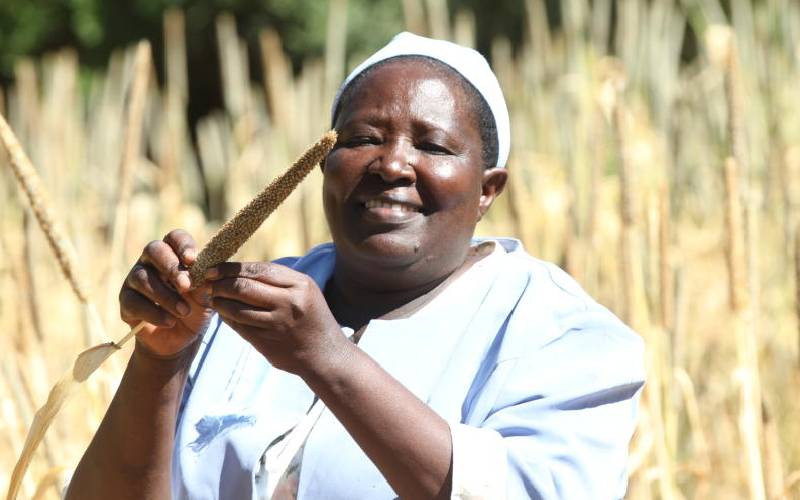
Mary Mutisya at her sorghum farm in Muthetheni Ward, Machakos County during a tour by Global Centre on Adaptation amid efforts in combating the challenges of climate change using digital technology in farming on January 29, 2023. 

A recent experience sharing conference featuring East African Crude Oil Pipeline (EACOP) Project Affected Persons (PAPs) brought to Nairobi some of the most outspoken victims.

One experience shared was of a family offered money in exchange for their four acres of land, to pave the way for EACOP, the controversial heated crude oil pipeline expected to run 1,443km from Uganda to Tanga Port.

The family rejected cash compensation and chose relocation, in which case land equivalent to what they had would be bought and a new house constructed.

Things however changed drastically. The man secretly accepted cash from government. He consulted no one. Nobody even knew how much he got, and whether it was the land’s worth. He built a tiny house at the new smaller location before poverty knocked.

Women in these cases were not part of decisions on how the very land they tilled and occupied would be used. When poverty began to identify everyone in the family by name and starvation was imminent, those same women were expected to provide solutions. Some went into debts.

Land use determines food security, water and air quality. Exclusion of women in matters of land minimises locally-led climate action, which is crucial in taming drought such as the one witnessed in the Horn of Africa in 2022.

The audacity with which a father sells family land, squanders the money returns home, demanding food and money to even shave his beards is beyond entitlement.

At a cousin’s burial in Homa Bay last year, I encountered sand harvesting inside homes. None of those women I spoke to seemed to wield any power to say no to mining and selling of sand, even if they wanted. Still, despite contributing labour, the men decided what, if any, to share with them. Many were afraid of their husbands.

Traditional, deep rooted stereotyping among men is partly to blame for such acts. A recent study by Global Boyhood Initiative, dubbed “The State of UK Boys” stresses the need for boys to be trained early to ignore gender stereotypes and be open about their feelings to embrace healthy masculinity. “From sexual harassment and gender-based violence, to the gender pay gap and relationship breakdown, the attitudes and behaviour of boys and men are hugely influential,” one of the report’s authors says.

Consciously overcoming the stereotypes and willingly investing in women’s equal access to land and other assets is an investment in their future and humanity’s wellbeing likely to come through land restoration and drought resilience efforts. Without sounding like men are clueless on more rewarding uses of land, it is good to remember women are disproportionately affected by effects of climate change such as drought and flooding. They should therefore be actively involved in seeking solutions to the current climate crisis.

A former boss, Woka Nyagwoka, once shared that it is safer to have your wife in charge of property because if you die first, your children are safe. If she does, then the man repossesses the property.

Property experts may disagree, but nothing magical will happen if we do not try. Let more women access land not only through the market, but also through marriage and inheritance. According to Centre for Global Development, only 30 per cent of women in Sub-Saharan Africa own land, and with limitations. As the world celebrates the “Day Against Desertification and Drought”, let’s test, taste and see how a woman can use “Her land, her rights” to tackle the climate crisis.

This also calls for more women’s seats at decision making tables, guided by less restrictive policies and anti-chauvinism.

Source: standardmedia.co.ke

Continue Reading

MEDIA FOR CHANGE NETWORK

Lands ministry rejects call to save over 300 Masaka residents facing eviction

Published

on

Over 300 families now face displacement, with the landlords’ legal team, Solis Advocates, having served eviction notices in 2021. (Credit: Dismus Buregyeya)

Lands state minister Joseph Mayanja and Minister Judith Nabakoba ruled out further administrative intervention, citing a 2019 court ruling that declared the residents had encroached on land owned by Masaka Jaggery Mills Ltd.

MASAKA – The lands ministry has dismissed a plea by over 300 residents of Kasanje village in Masaka district to halt their eviction from a 400-acre plot, despite a direct appeal to President Yoweri Museveni.

Lands state minister Joseph Mayanja and Minister Judith Nabakoba ruled out further administrative intervention, citing a 2019 court ruling that declared the residents had encroached on land owned by Masaka Jaggery Mills Ltd.The conflict stems from a 2019 ruling by Masaka chief magistrate Deo Ssejjemba, which sided with landlords Joseph Matovu and Methodius Kasujja in their eviction bid against the locals.

The court’s decision, upheld after residents withdrew an appeal in 2021, set the stage for the current standoff.

Despite this, the affected families, many of whom lost homes, crops, and plantations, petitioned the President in 2021, prompting former Vice-President Edward Ssekandi and the State House legal teams to intervene.

However, Mayanja emphasised that all avenues for mediation had been exhausted.

“The matter has been conclusively resolved through legal and administrative processes. No further interventions are justified,” he stated in a letter dated October 28, 2025, rejecting a last-minute plea for a site visit.

Unresolved

Nabakoba confirmed that 105 families received compensation between shillings 300,000 and 12 million from the landlords in 2021 after signing agreements.

However, a ministry report revealed 215 families remain uncompensated, pending verification of their claims.

“We closed the mediation process when the majority accepted the settlement,” Nabakoba said. However, locals like Vincent Mugerwa, leader of the Kasanje Bibanja Owners Association, denounced the payouts as “peanuts,” citing offers as low as shillings 800,000 per acre.

The dispute has drawn high-level attention, including from legislator Joanita Namutawe, who petitioned Parliament, and Prime Minister Robina Nabanja, who met with security officials in Masaka last week. Despite these efforts, the lands ministry insists the case is closed.

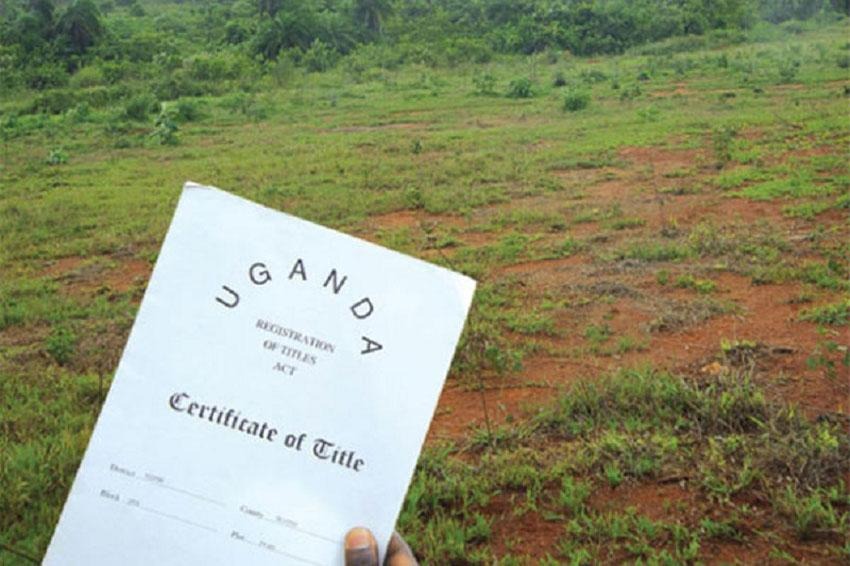
Residents, however, contest the land’s ownership history, alleging irregularities in transfers from the original owners, the Masaka Jaggery Mills, to current landlords. Title documents show the land was registered under Freehold Volume 59 Folio 11, transferred to Joseph Bukenya in 2021, before passing to Methodius Kasujja.

Facing eviction

Over 300 families now face displacement, with the landlords’ legal team, Solis Advocates, having served eviction notices in 2021.

The Prime Minister’s office received a fresh petition on October 31, detailing the residents’ grievances, including destroyed property and inadequate compensation.

Original Source: New Vision

Continue Reading

MEDIA FOR CHANGE NETWORK

Report reveals ongoing Human Rights Abuses and environmental destruction by the Chinese oil company CNOOC

Published

on

By Witness Radio team.

Three years into the Kingfisher oil and gas extraction project, the situation in Kikuube District is dire. Despite repeated warnings and criticism from human rights and environmental organizations, the impact on the local population remains intolerable.

In 2024, the Environment Governance Institute Uganda (EGI) and Climate Rights International (CRI) independently published reports on the Kingfisher oil production project. A year later, in September 2025, these two influential organizations united their efforts to produce a follow-up report, which revealed even more alarming results.

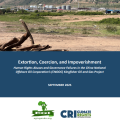
The report titled “Extortion, Coercion, and Impoverishment. Human Rights Abuses and Governance Failures in the China National Offshore Oil Corporation’s (CNOOC) Kingfisher Oil and Gas Project” paints a grim picture. It shows that the hardships and abuses faced by residents of the China National Offshore Oil Corporation (CNOOC) Uganda Ltd. are not isolated incidents, but an ongoing series of violations.

Alongside the larger Tilenga project and the East African Crude Oil Pipeline (EACOP), the Kingfisher project is a crucial component of the extensive fossil fuel extraction operation in Uganda, which has been ongoing since 2017. The most important players involved are the French company TotalEnergies, the Tanzania Petroleum Development Corporation (TPDC), the Uganda National Oil Company (UNOC), and the Chinese energy giant CNOOC. While a subsidiary of TotalEnergies is implementing the Tilenga project, CNOOC serves as the executing partner for the Kingfisher project.

Last year’s reports demonstrated the immense environmental damage caused by the Kingfisher project. The Climate Accountability Institute predicted that the entire Ugandan oil production project would increase the country’s emissions. All of the projects will contribute significantly to global warming and, like all new fossil fuel extraction projects, are incompatible with the Paris Agreement’s 1.5 °C warming target.

In Kikuube district, oil drilling activities along the Lake Albert shoreline have allegedly resulted in the demolition of vegetation, increased sediment runoff, and chemical leaks over the last year, leading to the loss of breeding grounds for the local fish population, which is the basis of the livelihood for most local communities. Moreover, visible water pollution is an increasing threat to public health, as the lake is the only available water source for many residents.

Most households in villages bordering the project lack the funds to afford clean water or even medication, as they are experiencing a severe loss of income. Access to the area surrounding the project, including Nsonga, Nsuzu A, Nsuzu B, Kiina, and other nearby villages, is tightly controlled by security forces, like the Counter-Terrorism Police, the regular Traffic Police, and joint UPDF and Saracen Private Security company patrols. These enforce unannounced daily curfews by threatening and beating villagers encountered out of their homes after 6 or 7 pm, which results in a decrease in earnings for street vendors, whose main trading hours are often in the evening.

Fishing and fish trading – the primary sources of employment in the area – are also suffering greatly from the situation controlled by the company. Every two weeks, fishermen are required to pay 200,000 UGX in fishing fees. Fish traders – most of whom are women or youth – also must pay fees for their goods when passing through security checkpoints, which they often cannot afford. None of these fees levied by the security forces are receipted or even explained.

In addition to the physical restrictions, there is the ongoing loss of land. The company continues to take over communal land in the communities, forcibly evicting former residents without compensation.

Violent attacks for non-compliance with the new rules and fees are not uncommon and violate international human rights laws. In addition, there has been a disturbing increase in sexual and gender-based exploitation and abuse towards particularly vulnerable women. Many lose their sources of income due to the changed conditions and are forced into prostitution. The result is an increase in teenage pregnancies and school dropouts.

While the entire oil production project has been repeatedly criticized for human rights violations and illegal evictions, CNOOC’s actions are particularly egregious. Unlike other comparable projects, the company has never published a Resettlement Action Plan (RAP) setting out compensation requirements and plans for restoring livelihoods. However, this is a necessary measure according to Ugandan and international standards. Although CNOOC has officially committed to developing an accessible grievance mechanism for community members, the residents interviewed for the report are not aware of any such mechanism.

Although arbitrary violence and sexual assaults against women have decreased since a new commanding officer of the local Uganda Peoples’ Defense Forces (UPDF) was appointed, restrictive military control over the area and its inhabitants remains oppressive. Even under the new commander, Mubingwa Moses, residents continue to be restricted in their traditional way of life and work by opaque rules. The systematically imposed fees further exacerbate the situation of those affected and can only be described as exploitation.

The report by EGI and CRI makes a fundamental demand: “Uganda’s oil development is perpetuating climate, environmental, and human rights harms in violation of both national and international law and should be discontinued”. Furthermore, it explains in detail what is specifically needed to change the situation for those affected. The demands include conducting an independent and transparent investigation into the documented human rights violations, environmental degradation, and socio-economic impacts.

An independent body should examine all activities and suspend them until the situation is resolved. The primary demand is to ensure reparations and corporate accountability. CNOOC is expected to adopt a strict zero-tolerance policy regarding human rights violations, violence, and corruption, and to provide accessible and effective grievance procedures and compensation for those affected. In this regard, an appeal is made in particular to state and international institutions to monitor and enforce the promises made by the company.

Continue Reading

MEDIA FOR CHANGE NETWORK

Seed Boot Camp: A struggle to conserve local and indigenous seeds from extinction.

Published

on

By Witness Radio team

Seed sovereignty, a concept that advocates for farmers’ rights to save, use, exchange, and sell their own seeds, is at the heart of the Seed Savers Network’s (SSN) mission.

Based in Kenya, SSN is holding an intensive learning and peer-to-peer knowledge-sharing exercise among farmers across Africa. The goal is to develop strategies for conserving and restoring traditional seeds, thereby ensuring food and seed sovereignty.

SSN is also targeting academia, policymakers, and researchers to champion and promote the conservation of local and indigenous seeds.

According to SSN, this is the third boot camp in a row, a testament to the growing unity among farmers from different parts of Africa who come together to learn from one another about how traditional knowledge is used to conserve traditional seeds. The camp has attracted farmers from over 30 African countries, highlighting the power of collective action in the fight for seed conservation and the global importance of their participation.

This year’s boot camp has been enriched by the participation of farmers from the Informal Alliance, who lost their land to land-based investments in Uganda. Their presence not only underscores the power of collective action but also highlights the remarkable resilience and determination of these farmers in the face of adversity, inspiring others to join the effort to conserve local seeds.

The boot camp idea stems from a research study conducted by the Seed Savers Network in some counties in Kenya, which found that over 50 seed varieties were at risk of extinction.

Tabby Munyiri, the Communication and Advocacy Officer at SSN, stated that the mission is to ensure other stakeholders are on board to join farmers in conserving agro-biodiversity by strengthening community food systems, thereby improving seed access and enhancing food sovereignty.

“SSN is working with over 120,000 farmers across Kenya, and they have already built community seed banks, which makes us the largest community seed banks in Africa,” Said Tabby.

She added that seed banks are repositories where communities conserve local and indigenous seeds. She revealed that the world is currently witnessing a significant loss of agrobiodiversity, with many crop and animal species on the verge of extinction due to factors such as climate change, industrial agriculture, and urbanization.

The boot camp will run for two weeks.


Continue Reading

Resource Center

Legal Framework

READ BY CATEGORY

Facebook

Newsletter

Subscribe to Witness Radio's newsletter


Trending

Subscribe to Witness Radio's newsletter