Connect with us

FARM NEWS

Corporations make a killing milking Africa

Published

on

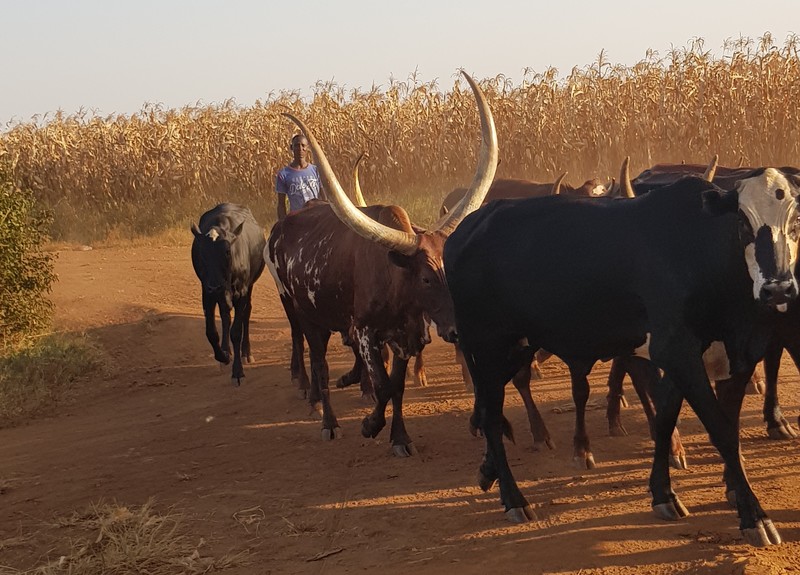
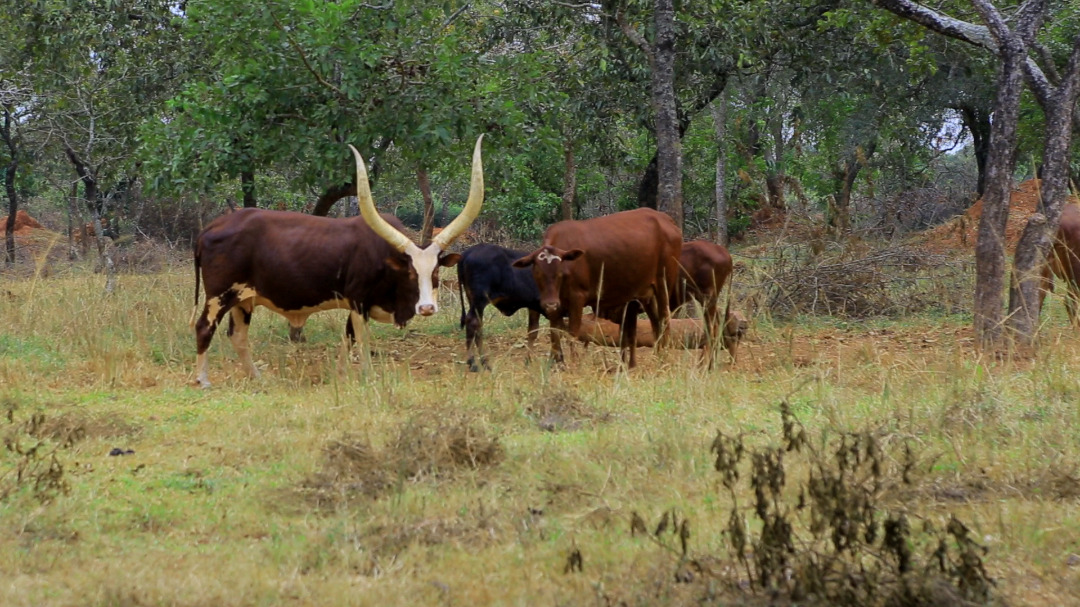
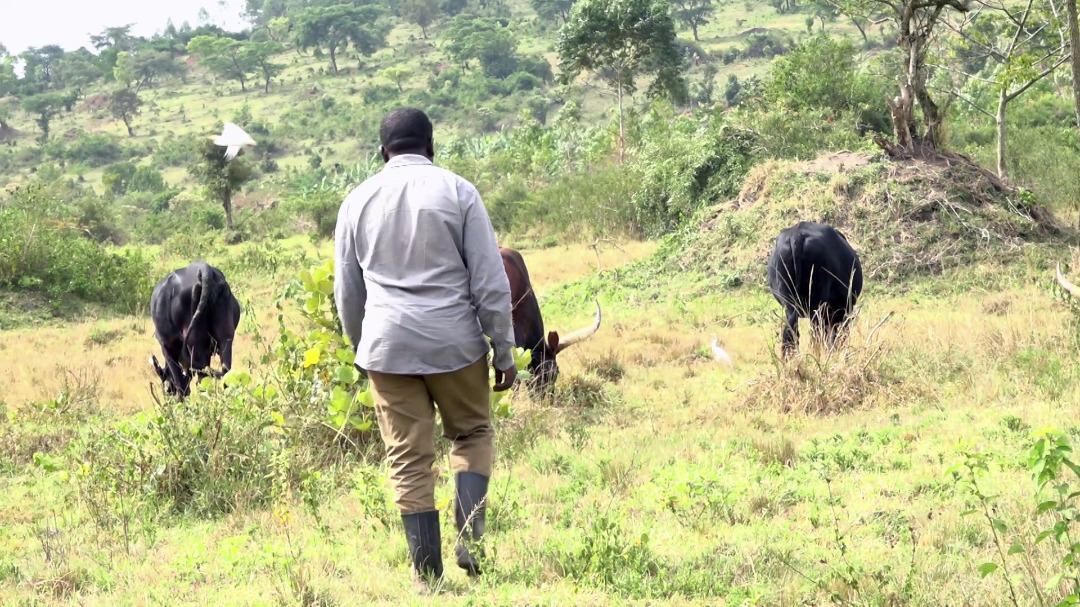
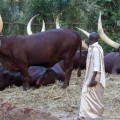
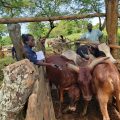
A Ugandan cattle herder with indigenous Ankole Long-horned cattle searches for pasture, in an area where local lands were grabbed by a foreign company for a plantation.

In 2009, the Nigerian government gave some white farmers from Zimbabwe loans and 1,000 hectares (ha) of land each to set up dairy farms in Shonga, an important centre of agriculture about 400 km from the capitol Lagos. Hopes were that their “ultra-modern” farms, stocked with Jersey cows brought in from South Africa, would make a dent in the country’s massive dairy import bill.[1]
“I saw an opportunity here … and I can tell you now there is no doubt I am here for the long term,” said David Higgins, a South African hired to manage the operation’s milk plant, which became a supplier of fresh milk to FrieslandCampina, the Dutch dairy corporation that has dominated the Nigerian market for decades.
However, less than ten years later, the project had all but collapsed. Most of the Zimbabwean farmers had left, and those remaining were “drawing their exit plan”, as one Nigerian researcher put it.[2]
It turns out imported Jersey cows and white “modern” farmers were not the solution to Nigeria’s dairy import woes. The problem, as every cattle herder in Nigeria knows, is the competition with the cheap imported powdered milk that companies like FrieslandCampina dump into the country. The Zimbabwean farmers and their modern methods were equally powerless against it.
Nigeria imports about 98% of the dairy products consumed in the country and spends an average of USD 1.3 billion a year on these imports. It is also the world’s biggest importer of fat-filled milk powder from Europe– a cheap milk lookalike that is made with a mix of milk powders and palm oil that has nearly quadrupled in exports from Europe over the past decade.[3] FrieslandCampina, which brings in huge quantities of subsidised powdered milk from its dairy plants in Europe, controls about 75% of the Nigerian dairy market, with just five companies controlling 99% of it.
Yet Nigeria has one of the largest cattle herds in the world and has a long tradition of local dairy production. By all accounts, things should be similar to Kenya, where herders and small farmers with local breeds of cows supply about 90% of the milk consumed in the country through networks of small-scale traders. The difference is that Kenya has long protected its local dairies with tariffs on imports, while Nigeria opened its market in the 1980s under structural adjustment programmes, and the government has made no real efforts to reign in the import flows ever since.

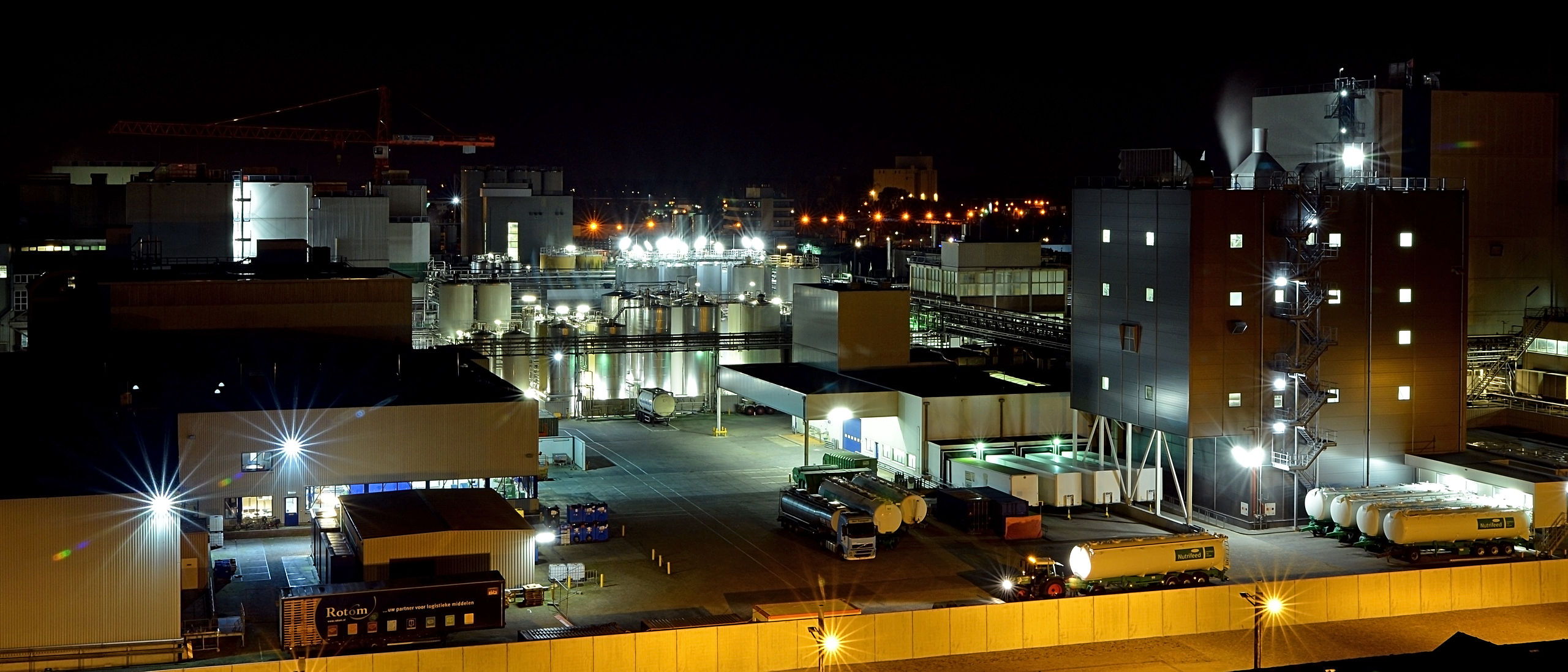
FrieslandCampina, headquartered in the Netherlands, is in 38 countries and distributes to 100 countries. In every country, they operate as a different company with different brands. It has operated as Bonnet Rouge in West Africa; in Nigeria as Peak and Three Crowns and as WamCo. In Ethiopia, they are the largest investors in the dairy sector operating as Holland Dairy. Together with Syngenta and other agro-chemical companies, Friesland Campina, hopes to be the leader by 2024 in the marketing of Eubiotics – a USD 4 billion industry. Photo : FrieslandCampina DMV plant in The Netherlands, 2014. Wikimedia Commons; User J187B
FrieslandCampina likes to blame the “poor structure of local dairy supply chains” for the situation, and whenever the political scene gets too hot, it rolls out promises to invest in “developing” the dairy sector. It built its first large-scale dairy farm in Nigeria in Vom in the Plateau State, back in 1984, but sold the operation, called Integrated Dairies, to a Nigerian politician a decade later.[4] More recently, with funding from the Dutch government, the company launched a Dairy Development Programme with the Government of Nigeria, in which it pledged to source 10% of its milk from local sources through “backward integration”. Yet, over the initial five years of the project, from 2011-2016, Nigeria’s milk powder imports remained unchanged, and FrieslandCampina was only sourcing 3% of its milk locally.[5]
In 2016, with oil prices tanking and its foreign currency reserves badly depleted, the Nigerian government sought to put milk on a list of imported items with forex restrictions to encourage local production. But after several meetings with FrieslandCampina, in which the company assured the government that it would build up local supplies, the government-backed down.
Three years later, with dairy imports as high as ever, the government finally put milk on the list, accusing companies of treating the “national aspiration [to increase the local milk supply] with imperial contempt”.[6] The companies pushed back hard, however, and the government relented yet again, giving FrieslandCampina and five other corporations an exemption on the import restrictions in February 2020, saying that these companies were committed to “backwards integration”.
This latest round of public-private partnership is closely tied to a controversial ban on open grazing that 17 state governors from across southern Nigeria agreed to in May 2021, and which has been called “satanic” by herder leaders.[7] To this end, FrieslandCampina has been given 10,000 ha and Coca-Cola 4,000 ha within the Bobi Grazing Reserve in Niger State to build dairy farms and settle Fulani herders for contract production. Similarly, the Danish multinational dairy company Arla has a partnership with Kaduna State to build its own dairy farm and to settle 1,000 nomadic herders on farmlands provided by the government. The Dutch and Danish governments are helping to fund these projects and provide the participating herders with “improved” crossbred cattle and training on European-style dairy farming, as is the Bill and Melinda Gates Foundation through a programme called Advancing Local Dairy Development in Nigeria.
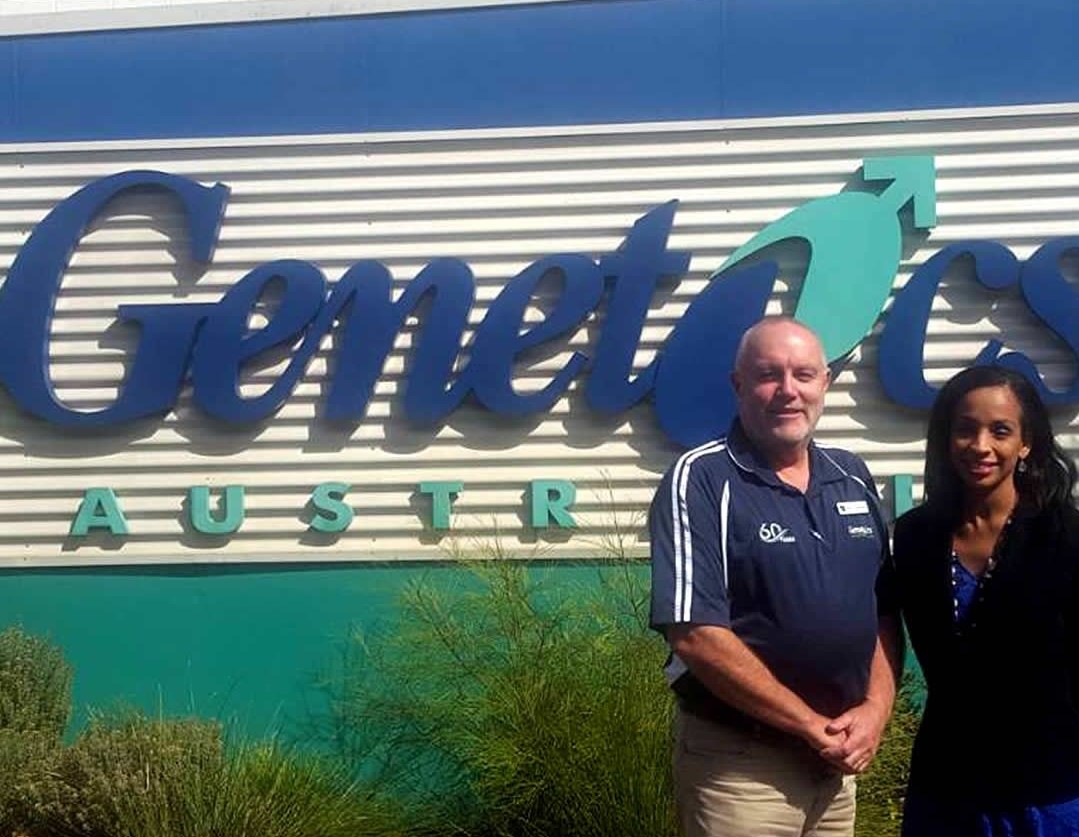
Ndidi Nwuneli (right), Sahel Consulting managing partner, visiting Genetics Australia in 2018. 
The Gates-funded programme is a collaboration with six dairy companies in Nigeria, coordinated by Sahel Consulting (formerly Sahel Capital). One of the companies, L&Z Integrated Farms Limited, is owned by a Mauritius-based private equity fund managed by Sahel Consulting that has investment from the German, Dutch and UK development banks, as well as Nigeria’s sovereign wealth fund.[8] Arla is another one of the companies involved, and the rest are Nigerian dairy companies mostly owned by local politicians or their family members.[9]
Sahel says it is taking a “private sector-led and market-based approach to solve the problems inherent in the dairy sector”, but it completely sidesteps the biggest problem: imports of cheap, subsidised powdered milk. The project’s attempt to shift herders to expensive, European-style dairy farming is thus doomed to fail, just as the Zimbabwean farmers did at Shonga and all past efforts to “modernise” Nigeria’s dairy sector have. This is, after all, the main reason why herders from Nigeria and the surrounding countries, who have had no problem meeting Nigeria’s galloping consumption of beef over the past decades, have been shut out of the dairy market.[10]
A milk mafia
Similar scenarios are mushrooming across Africa. It is no wonder. The continent’s fast-growing urban populations represent a pot of gold for dairy corporations. FrieslandCampina made a whopping USD 48 million in profit from its Nigeria operations in 2019.[11] Now it wants to double its revenues in Africa by expanding in other countries such as Côte d’Ivoire, where the company’s recently acquired dairy plant relies entirely on imports. When asked about this lack of local sourcing, FrieslandCampina’s West Africa director, Roger Adou, said the company was in the process of building an “ecosystem” of local dairy farmers trained in Dutch farming methods. “You cannot blame multinational corporations for the poor organisation of local supply chains,” he said.[12]
Another big player in Africa is the French dairy giant Danone, which joined forces with the Dubai-based private equity company Abraaj Group to take over the Ghana dairy company Fan Milk. After Abraaj went bust, Danone took over the whole company in 2019, using it as a base to expand its reach across West Africa, including in Nigeria, where it has a “backward integration” project with Ogun State.
All of the local dairy projects that these foreign corporations are pursuing should be properly understood as fronts, designed to distract from the massive amounts of money they siphon out of Africa from their sales of cheap, excess powdered milk. The system is built on heavily subsidised overproduction in Europe, North America and Australia/New Zealand. That excess gets dumped into Africa, mainly in the form of fat-filled milk powder, where it is processed and sold to urban consumers at prices that undercut the supply of wholesome local milk. In 2019 Africa imported 2.1 million tonnes of dairy products worth some USD5.3 billion, up from 1.46 million tonnes in 2009, worth USD3.6 billion).[13] [14]
The cream on top
In Africa, dairy is often political, with direct interests extending to the highest levels of government. No more so in Kenya, where the family of the President, Uhuru Kenyatta, owns Brookside Dairy, the largest dairy processor in East Africa. Brookside has attracted several foreign partners, including Abraaj Group of Dubai, which held a 10% stake via a fund partly owned by the Bill and Melinda Gates Foundation before its collapse in 2018, and the French dairy giant Danone, which currently holds a 40% stake.
Brookside is expanding beyond its borders through the acquisition of other politically-connected dairy companies in neighbouring countries. In 2016, Brookside took over Inyange, Rwanda’s top food processing company connected to President Paul Kagame’s party.[15] And, the year before it bought the former Ugandan Dairy Corporation, which had been privatised through a scandalous corrupt bidding process and acquired by a family close to President Yoweri Museveni, who himself is rumoured to be one of Brookside’s leading suppliers of milk through his large-scale ranches.[16]
Donors insist that Africa’s reliance on imports can be resolved by “modernising” their farms and supply chains. The Gates Foundation supports multiple initiatives in Africa to boost per farm milk production by replacing local breeds with high-yielding breeds and introducing commercial animal feeds and pharmaceuticals, such as the East Africa Dairy Development Project in Kenya, Rwanda, and Uganda.[17] So too do the governments of the Netherlands, France and Denmark– home base to the largest companies exporting dairy to Africa.[18] (Box: Africa’s rich livestock diversity) Meanwhile, the Economic Community of West African States has launched a five-year “dairy offensive” based on the same model, as its member states move ahead with trade deals with Europe that will reduce tariffs on milk powder from a feeble 5% to zero![19]
Private equity funds are also piling into Africa, with much of their funds supplied by development banks and foundations convinced that there’s money to be made in this modernisation drive. Yet, of the multiple investments private equity firms have made in local African dairy production, few are succeeding (Table: Private equity funds and dairy in Africa). Dubai-based Midcom, for example, tried to buy into the dairy business in Uganda in 2013, with backing from the World Bank’s International Finance Corporation and the Rise Fund, a US-based private equity fund managed by TPG. It’s subsidiary, Pearl Dairies, claimed it would not only become a major player on the national market, but that it would build an export business to neighbouring African countries. But a trade spat with Kenya, where the local dairy industry is controlled by the family of the president, sent the company into a tailspin (Box: The cream on top). In March 2021, Pearl Dairies announced it was shuttering its Ugandan dairy plant and shifting to organic honey production for export to Europe.[20]
Development banks, donors and governments are wasting money and resources trying to industrialise local dairy production in Africa when there is huge untapped potential in traditional systems, which are being held back by imports. Herders in Burkina Faso, for example, once supplied the entire nation with fresh milk. But imports of cheap fat-filled milk from Europe have all but destroyed their production over the past decade. “I’ve tried selling my milk, but most of the time it goes to waste and ends up being poured away,” says Hamidou Bandé, president of Burkina Faso’s National Herders’ Union. He keeps 300 cows but now only sells their meat because he cannot find a market for their milk. “It hurts. The milk we throw away could have been for the calves or our children.”[21]
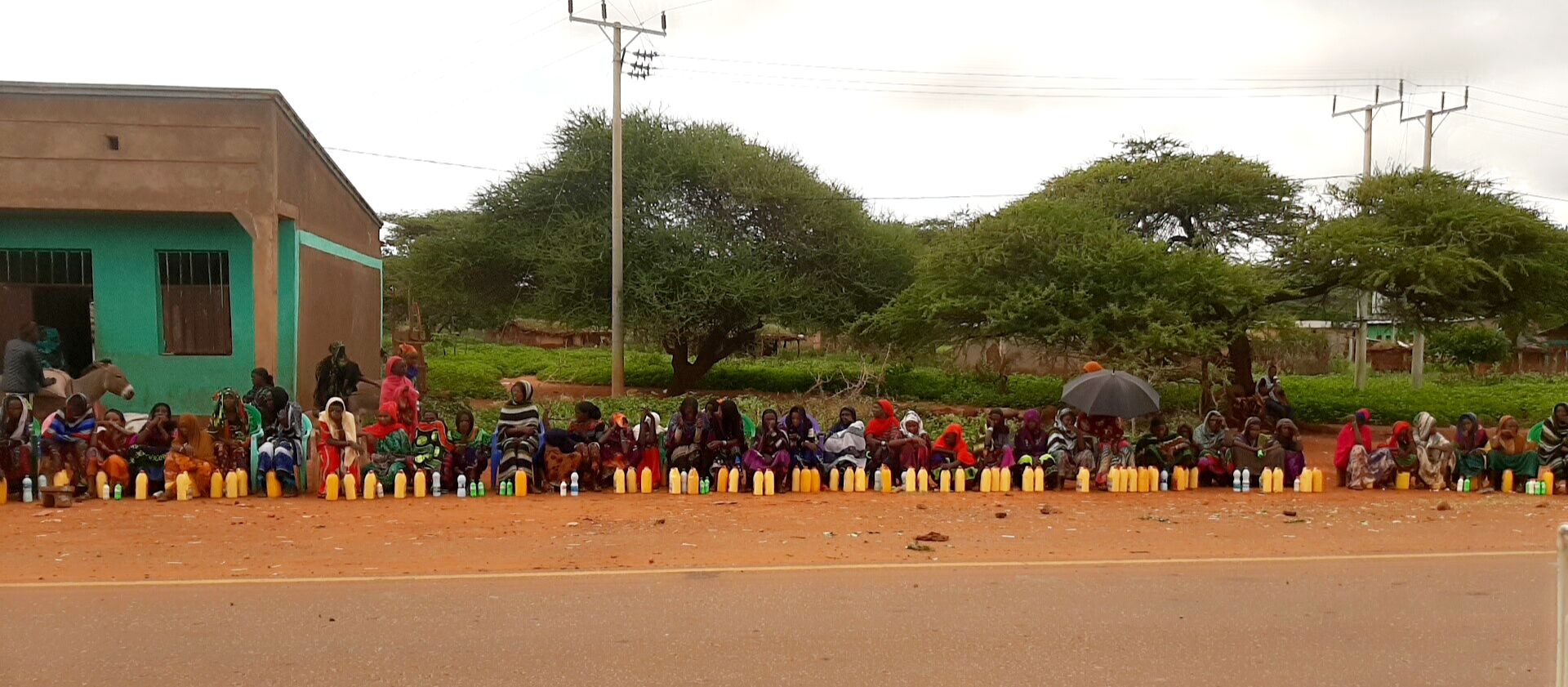
Selling milk by the roadside in Borana, Kenya. 
Contrast this situation with that of Uganda, where a 60% tariff protects small dairy farmers on dairy imports.[22] Today smallholder dairies, composed of small-scale cattle farmers and herders and small-scale dairy vendors and processors, supply 80% of the milk consumed in Uganda. With regional tariffs keeping milk powder imports out of East Africa, small dairy farmers in Uganda have been able to effectively supply a surge in demand over the past two decades, and they have done so with indigenous cattle breeds and traditional farming practices.[23] The country’s few dairy companies have, on several occasions, tried to use their political connections to get laws passed to undermine this so-called “informal sector”, but farmers and small vendors have allied to stop them. Nationwide protests of farmers and vendors forced the government to back away from a ban on raw milk sales in both 2007 and 2014.[24]
Africa’s rich livestock diversity
Of the 222 million cattle that provide Africans with dairy and meat, most are owned by smallholder farmers and pastoralists.[25] This cattle population is highly diverse. There are at least 150 indigenous cattle breeds that have been identified on the African continent, and many more remain uncategorised.[26]
Cattle herding in different countries is carried out by specific tribes, such as the Banyankole in Uganda, Masaai in Kenya and Tanzania, and the Fulani throughout the Sahel and West Africa. They each have their own local breeds, like the famous Ankole long-horned cattle found in and around Uganda or the humped Zebu cattle that are kept by Fulani herders, of which there are many of different varieties adapted to the local geographies where they are grazed.[27]
Many of these groups are nomadic herders who move for long distances and periods of time, looking for feed and water for their animals. As such, their cattle breeds are adapted to the local conditions like the high temperatures, drought, the long distances between sources of grass and water and the various endemic diseases, as well as to the needs and cultures of those who depend on them.[28]

Ankole Long-horned cattle, indigenous to the Ankole region in Uganda. 

In recent years, farmers and even pastoralists have been pushed to adopt “high-yielding” breeds of cows, often crosses between the cows used on industrial dairy farms in Europe and local breeds. These new breeds are offered to women, particularly widows and single mothers in the rural areas of the countries where organisations like Send A Cow and Heifer International operate. By their nature, these foreign breeds are costly and come with onerous instructions for care, health and reproduction, for which the farmers have to take on debt to purchase costly veterinary products, shelters and artificial insemination.

Although cattle dominate Africa’s dairy sector, sheep, camels and goats are also important to dairy production, especially in certain areas of the continent. Exact figures are hard to come by, it is estimated that Africa is home to 27% of global sheep and 32% of global goat populations, and about 20% of global cattle.[29]
Many herders and farmers in Africa prefer small ruminants because they tend to involve lower costs and to be easier to manage than cattle. This is especially true for goats, known as the “poor person’s cow”, which have long been raised on the continent.[30] [31]
Dairy as a central part of the struggle for food sovereignty
There is no justification for the billions of dollars that exit Africa every year to pay for dairy imports. Dairy can and should be produced locally. As can be seen in Uganda, and neighbouring Kenya, there is one simple, effective measure that can be immediately taken: a stop on imports of powdered milk.
There are several options that African governments can take immediately to put the brakes on imports of powdered milk if there is political will. But many African governments are going in the opposite direction, in negotiations with Europe for the Economic Partnership Agreements or even in Africa’s own Continental Free Trade Agreement (AfCFTA), which undercut the possibilities their countries have to protect local dairy production. The governments of the big surplus milk-producing countries in Europe, North America and Australia/New Zealand are also maintaining their relentless pressure on Africa to absorb more dairy from their corporations, even as these policies leave their own dairy farmers in crisis.

Ankole Long-horned cattle, indigenous to the Ankole region in Uganda. 

When dairy imports are curtailed, smallholder dairies in Africa will step into the void and meet the local demand, as they have wherever such measures are put in place. They can do so without adopting Europe’s industrial dairy farming practices and breeds of livestock. In fact, Africa’s local livestock systems and breeds of animals are highly efficient in securing milk and livelihoods for local communities and much more adapted to the context of climate change than the industrial models.

Donors and governments have to stop pushing industrial dairy, and development banks need to stop financing companies that compete directly with smallholder dairies. What is needed are regulations, policies and programmes that support smallholder dairies, making it easier for them to supply urban markets with fresh milk. Simple measures like the provision of small cooling tanks or efficient pasteurisation burners can make a huge difference. So too can municipal regulations that provide small vendors and traders accessible and safe spaces to bring their dairy products from the countryside to urban consumers. And foreign governments and donors should start by turning their attention back home, where the industrial, corporate-controlled dairy systems are not only killing Africa’s dairies but are causing numerous environmental and social problems at the source. Actions need to be taken to greatly reduce dairy production in these countries while ensuring livelihoods for their dairy farmers.
There are several inspiring initiatives already underway in Senegal, Burkina Faso and other African countries encouraging the consumption of local milk. These need to be ramped up and multiplied, while keeping dairy corporations like FrieslandCampina and supermarkets like Auchan, who are falsely advertising themselves as “local”, out of the picture. It is time that Africa’s diverse smallholder dairies, composed of millions of herders, farmers, vendors, and processors, utilising traditional breeds of cattle, goats and sheep, and making all kinds of yoghurts, cheeses and other healthy dairy products, are finally celebrated and supported.
Private equity in Africa’s dairy sector
Company
Countries
Private equity/corporations involved
Notes
Société Africaine des Produits Laitiers et Dérivés (SAPLED)
Côte d’Ivoire
Duet Private Equity
In 2015, the UK-based private equity group Duet acquired SAPLED from the Sifaoui Group. In 2019, workers at the company’s factory in Abidjan went on strike over two months of unpaid wages. Thirteen months later, in February 2021, they were back on strike, this time over four months of unpaid wages. The General Director blamed the company’s debts for the unpaid wages.
MB Plc
Ethiopia
Cerberus Capital Management
In 2016, Singapore-based SGI Frontier Capital, which was backed by the UK’s CDC Group, acquired a 45% stake in MB Plc, makers of the Family Milk brand in Ethiopia. In 2018, CSGI Frontier Capital was acquired by Cerberus Capital Management of the US.
Fan Milk
Ghana, Nigeria, Côte d’Ivoire, Togo, and Burkina Faso
Danone, Abraaj Group
In 2013, the private equity fund Abraaj Group and Danone acquired Ghana-based Fan Milk, “the leading manufacturer and distributor of frozen dairy products and juices in West Africa”. In 2019, Danone acquired Abraaj’s stake, giving it 100% control of the company. In February 2021, Fan Milk announced an agreement with Nigeria’s Ogun State to build a large-scale dairy farm.
Countryside Dairy
Kenya
DobEquity, Acumen (FMO, Proparco, etc)
In 2016, the Dutch private equity firm DobEquity purchased a stake in newly established dairy processor Countryside Dairy. In 2021, it received further investment from the Acumen Resilient Agriculture Fund, a fund managed by New York-based private equity firm Acumen and backed by the Dutch development bank FMO and the French development bank Proparco, along with the Soros Economic Development Fund.
Brookside Dairy
Kenya, Rwanda, Uganda
Danone, Abraaj Group
Kenya-based Brookside is the largest dairy processor in East Africa, buying milk daily from 200,000 farmers and operating in 12 countries. It was founded and remains majority owned by the family of the Kenya’s president, Uhuru Kenyatta. Brookside’s expansion has been aided by foreign investment, first from Abraaj Group of Dubai, which held a 10% stake via a fund partly owned by the Bill and Melinda Gates Foundation before its collapse in 2018, and then the French dairy giant Danone, which now holds a 40% stake.
L&Z
Nigeria
Sahel Capital
In 2015, the Fund for Agricultural Finance in Nigeria acquired a 25% stake in the Nigerian dairy processor L&Z Integrated Farms. The Kano State dairy company was founded by Muhammadu Damakka. The Fund for Agricultural Finance in Nigeria is managed by Nigerian private equity firm Sahel Capital and is backed by Nigeria’s sovereign wealth fund and the development banks of Germany (DEG), the Netherlands (FMO) and the UK (CDC). In June 2021, Sahel disclosed that it was in the midst of an exit from the company.
Sosaco Nigeria
Nigeria
GBfoods Africa Holdco (jointly owned by GB Foods of Spain and Helios)
Sosaco was a subsidiary of the Honk Kong trading company Watanmal, whose main products are tomato paste imported from China and sold under the Gino brand and Jago processed milk. In 2017, GB Foods of Spain and the private equity fund Helios Investors III acquired Watanmal’s African operations, alongside a USD15.5 million investment from the World Bank’s IFC.
Ndoto Farms
Tanzania
AgDevCo
In 2013, Ndoto Farms, a dairy farm in Iringa with a herd of around 350 cattle, received a USD 90,000 investment from the AgDevCo, a UK private equity fund that mainly invests on behalf of the UK’s DFID.
Tanga Fresh
Tanzania
DobEquity
Tanga Fresh operates Tanzania’s largest dairy processing plant in the Tanga region, where the government and foreign donors have been promoting the development of dairy farming. The company received an initial investment from the Dutch private equity firm DOB Equity in 2007 and a further, undisclosed investment in 2020.
Pearl Dairies
Uganda
MIDCOM, TPG Capital
MIDCOM is a Dubai-based company run by Indian businessman Anand Kapoor, with backing from established Indian-Ugandan businessman Bhasker Kotecha, who is the owner of Midland. Pearl received an investment from the World Bank’s IFC of USD 8 million in 2013 towards the construction of the powdered milk plant in Mbarara District. TPG’s Rise Fund now owns 34% of the company, with Kapoor and Kotecha retaining 33% each. While TPG claimed it would help take Pearl international, targeting Algeria, Ethiopia, Malawi and South Sudan, in March 2021, Pearl Dairies shuttered its milk processing plant in Mbarara and announced it was shifting to honey production for export to Europe.
Lakeside Dairies
Uganda, Kenya
Dodla Dairies, TPG Capital
Lakeside is a subsidiary of the Indian dairy company Dodla Dairy, which entered Uganda through a purchase of Hillside Dairy and Agriculture Ltd in 2014-5. Dodla also has a milk trading company in Kenya called Dodla Dairy Kenya. Dodla is 25% owned by TPG’s Rise Fund, and 5% by the World Bank’s IFC.
Dendairy
Zimbabwe
Dendairy is 27% owned by the Norwegian private equity company Spear Capital, which lists Norfund and the Government of the Netherlands among its investors. It was granted lands by the government in the Chiredzi area, where about 12,500 people of the Chilonga Community live and are set to be evicted. The communities have been fighting to stop the eviction.
[1] Daily Trust, “Inside The Ultra-Modern Kwara Shonga Farms,” October 2010: https://dailytrust.com/inside-the-ultra-modern-kwara-shonga-farms; https://www.farmlandgrab.org/post/view/9126
[2] See Adekunle E. Ayandele, Dairy Scientist. Christian Albrechts University, Kiel, “Dairy farming in Nigeria: Past, present and future,” July 2020: https://www.researchgate.net/publication/
[4] The farm and the company are owned by Air Vice Marshall Ishaya Shekari, the former military governor of Kano State.
[5] PricewaterhouseCoopers, “Transforming Nigeria’s Agricultural Value Chain,” 2017: https://www.pwc.com/ng/en/assets/pdf/transforming-nigeria-s-agric-value-chain.pdf
[6] “Furore over proposed CBN’s forex restriction for dairy importation,” Daily Trust, August 2019: https://dailytrust.com/amp/furore-over-proposed-cbns-forex-restriction-for-dairy-importation; Oladeinde Olawoyin, “CBN restricts forex on milk importation to FrieslandCampina, 5 others,” Premium Times, February 2020: https://www.premiumtimesng.com/news/top-news/376870-cbn-restricts-forex-on-milk-importation-to-frieslandcampina-5-others.html
[7] “Le pâturage libre interdit dans une dizaine d’États du sud du Nigeria,” RFI, September 2021: https://www.rfi.fr/fr/afrique/20210923-le-p%C3%A2turage-libre-interdit-dans-une-dizaine-d-%C3%A9tats-du-sud-du-nigeria; “Anti-Open Grazing Law Is Satanic, Empty; Herders Won’t Obey It – Miyetti Allah Dares Southern Governors,” Sahara Reporters, September 2021: http://saharareporters.com/2021/09/07/anti-open-grazing-law-satanic-empty-herders-won%E2%80%99t-obey-it-%E2%80%93-miyetti-allah-dares-southern
[8] “AfDB makes USD 9 million equity investment in Fund for Agricultural Finance in Nigeria,” AfDB, August 2016: https://www.afdb.org/fr/news-and-events/afdb-makes-usd-9-million-equity-investment-in-fund-for-agricultural-finance-in-nigeria-15998
[9] The companies are Arla, Integrated Dairies Limited (owned by Air Vice Marshall Ishaya Shekari, the former military governor of Kano State), L&Z Integrated Farms Limited (owned by Sahel Capital’s private equity fund), Saj Foods Limited (owned by the brother of Kaduna State politician Aminu_Abdullahi_Shagali), Sebore Farms Limited (connected to the former governor of Adamawa State, Murtala Nyako) and Majestic Farms (whose CEO is the journalist and businessman Al Humphrey Onyanabo).
[10] “Fulani herders seek to tap into Nigeria’s booming meat market,” AFP, June 2019: https://sg.news.yahoo.com/fulani-herders-seek-tap-nigerias-190029495.html
[11] “Hausse des résultats du laitier FrieslandCampina WAMCO au Nigeria,” Commodafrica, June 2020: http://www.commodafrica.com/30-06-2020-hausse-des-resultats-du-laitier-frieslandcampina-wamco-au-nigeria
[12] “Roger Adou, FrieslandCampina West Africa, ‘nous sommes en partenariat avec le gouvernement ivoirien pour former un écosystème de fermiers laitiers’,” Commodafrica, September 2021: https://www.commodafrica.com/23-09-2021-roger-adou-frieslandcampina-west-africa-nous-sommes-en-partenariat-avec-le-gouvernement
[13] “African Dairy Market Report 2021 – A €4.8 Billion Market,” Research and Markets, May 2021: https://www.globenewswire.com/en/news-release/2021/05/17/2230691/28124/en/African-Dairy-Market-Report-2021-A-4-8-Billion-Market.html
[15] GRAIN, “Barbarians at the barn: private equity sinks its teeth into agriculture,” 29 September 2020: https://grain.org/e/6533
[16] “Brookside buys Sameer’s Uganda dairy operations,” The Star, May 2015: https://www.the-star.co.ke/counties/2015-05-01-brookside-buys-sameers-uganda-dairy-operations/; Thomas Mwebaze and Anne Mette Kjaer, “Growth and Performance of the Ugandan Dairy Sector: Elites, Conflict, and Bargaining,” International Journal of Agriculture Innovations and Research, 2013: https://pure.au.dk/portal/files/71178513/mwebaze_and_kjaer_article.pdf
[17] Adela Suliman, ‘“Super’ crops and cows – Bill Gates, UK inject cash into farm science,” Reuters, January 2018: https://www.reuters.com/article/britain-aid-agriculture-idAFL8N1PL2T3; Mark Astley, “Bill Gates charity to fund East African dairy project expansion,” Dairy Reporter, January 2014: https://www.dairyreporter.com/Article/2014/01/17/Bill-Gates-charity-to-fund-East-African-dairy-project-expansion
[18] Netherlands East Africa Dairy Partnership: https://www.nlfoodpartnership.com/impact_coalitions/neadap/; “Nariindu 2 : Promouvoir le lait local au Sahel,” AFD: https://www.afd.fr/fr/carte-des-projets/nariindu-2-promouvoir-le-lait-local-au-sahel; Arla, “Arla scales up its commitment to develop a sustainable dairy sector in Nigeria,” September 2019: https://www.arla.com/company/news-and-press/2019/pressrelease/arla-scales-up-its-commitment-to-develop-a-sustainable-dairy-sector-in-nigeria-2918204/
[19] Cécile Broutin, Laurent Levard, Marie-Christine Goudiaby, 2018, “Quelles politiques commerciales pour la promotion de la filière « lait local »,” Gret, January 2018: https://www.gret.org/wp-content/uploads/rapport-synthese-etude-lait-afouest-VF2.pdf
[20] “Mbarara-based Pearl Dairy Farm lays off 1500 workers”, Independent, March 2021: https://www.independent.co.ug/mbarara-based-pearl-dairy-farm-lays-off-1500-workers/; “Dairy Farmers in Mbarara Turn to Beekeeping over Ban on Milk Imports,” News Day, March 2021: https://newsday.co.ug/2021/03/24/dairy-farmers-in-mbarara-turn-to-beekeeping-over-ban-on-milk-imports/
[21] Simon Marks and Emmett Livingstone, “The EU milk lookalike that is devastating West Africa’s dairy sector,” Politico, August 2020: https://www.politico.eu/interactive/the-eu-milk-lookalike-that-is-devastating-west-africas-dairy-sector/
[22] A 60% tariff on dairy products is imposed as an East African Community Single Customs Territory Common External Tariff.
[23] Indigenous cattle make up 90% of the national herd. Anne Mette Kjær, Fred Muhumuza and Tom Mwebaze, “Coalition-driven initiatives in the Ugandan dairy sector: Elites, conflict, and bargaining,” DIIS Working Paper, February 2012: files.ethz.ch/isn/140699/WP2012-02_Mette%20Kjaer-EPP-Dairy_web.pdf
[24] “Dealers strike over govt ban on sale of raw milk”, Monitor, April 2014: https://www.monitor.co.ug/uganda/news/national/dealers-strike-over-govt-ban-on-sale-of-raw-milk-1570354
[25] Margaret Ngigi, “The Case of Smallholder Dairying in Eastern Africa,” February 2005: International Food Policy Research Institute. https://core.ac.uk/download/pdf/6288909.pdf
[26] Asian-Australas J Anim Sci, “African Indigenous Cattle: Unique Genetic Resources in a Rapidly Changing World,” July 2015: https://www.ncbi.nlm.nih.gov/pmc/articles/PMC4478499/
[27] Jean Boutrais, “The Fulani and Cattle Breeds: Crossbreeding and Heritage Strategies,” Africa: Journal of the International African Institute 77, no. 1 (2007): 18–36. http://www.jstor.org/stable/40026696.
[28] Okeyo Mwai, Olivier Hanotte, Young-Jun Kwon, and Seoae Cho, “African Indigenous Cattle: Unique Genetic Resources in a Rapidly Changing World,” Asian-Australas J Anim Sci, July 2015: https://www.ncbi.nlm.nih.gov/pmc/articles/PMC4478499/
[29] Ella Houzer and Ian Scoones, “Are Livestock Always Bad for the Planet? Rethinking the Protein Transition and Climate Change Debate,” PASTRES, 2021: https://pastres.files.wordpress.com/2021/10/climate-livestock-full-report-en-web.pdf
[31] Alexander Kahi and Chrilukovian Wasike, “Dairy goat production in sub-Saharan Africa: current status, constraints and prospects for research and development,” Asian-Australasian Journal of Animal Sciences, 2019: https://pubmed.ncbi.nlm.nih.gov/31357267/

Original Source: grain.org

Continue Reading

FARM NEWS

Teso farmers revamp grapefruit growing

Published

on

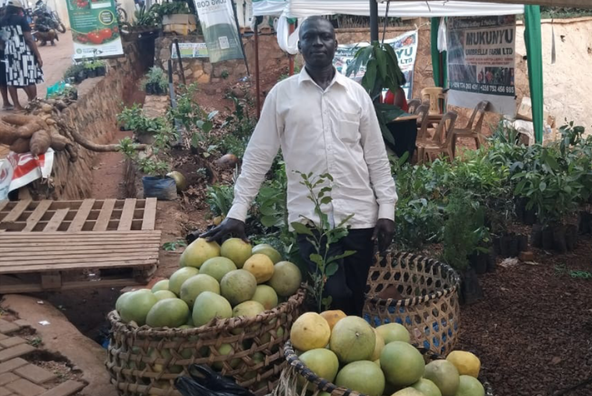
A grape fruit farmer from Kaplabweng District showcasing his grape fruits at the recently concluded Trade Show at UMA show grounds in Kampala. Photo | Lominda Afedraru

Continue Reading

FARM NEWS

Can Agroecology Improve the Resilience of African Smallholder Farmers?

Published

on

Smallholder farmers across Africa feed hundreds of millions of people; they produce most of the continent’s food, yet they are often the first to go hungry. For decades, governments, international agencies, and corporate capital have sold them various “solutions”: improved seeds, chemical fertilisers, pesticide packages, promising that adoption of these technologies would raise yields and end poverty.

More than half a century later, Africa’s soils are not more fertile; farmers’ debts are deeper. Seed is monopolised, fertiliser is priced in dollars, and agrotoxics soak into the land, bodies of farmers and consumers of agricultural produce. Against this backdrop, an ancient practice that is at the heart of agriculture and this conversation is “Agroecology”. It is not a new technology, but the integration of generational peasant and indigenous knowledge with ecological science. This article asks: can Agroecology strengthen the resilience of African smallholder farmers? Can it help them stand firmer in the face of soil degradation, climate crisis, and market coercion?

The Systemic Crisis Facing African Smallholder Farmers

The crisis African smallholder farmers  face is not a set of isolated technical problems; it is systemic [1].

Export-oriented monocultures, such as cotton in West Africa and cocoa in Ghana and Côte d’Ivoire, continuously extract nutrients from the soil, shipping them abroad as crops whose nutrients are rarely returned to the fields from which they were taken. Marx described this process as a disruption of the “metabolic interaction between man and the earth”, whereby capitalist production interferes with the return of nutrients to the soil and undermines its long-term fertility [2]. The term “metabolic rift” was later developed by sociologist John Bellamy Foster to conceptualise this ecological contradiction within Marx’s broader analysis of capitalism and nature [3]. Imported mineral fertiliser, priced in dollars, is then presented as the remedy for a depletion that the export economy itself has helped create [4]. This dependence on external inputs extends beyond fertiliser to seeds and agrochemicals, further embedding farmers in commercially controlled production systems. Transnational seed and agrichemical corporations use patents, proprietary varieties and hybrid technologies to strengthen control over seed systems, increasingly shifting farmers from saving and exchanging seed to purchasing commercial varieties. Fertiliser, pesticides and commercial seed are also increasingly brought together through integrated input packages, requiring farmers to purchase multiple external inputs with cash each season and potentially increasing their exposure to debt. For example, Bayer’s FoodWings initiative in Côte d’Ivoire offers smallholder farmers an “all-in-one” production package built around DEKALB hybrid maize seed, herbicides and insecticides, while franchisee partners procure additional fertiliser and provide financing [5]. Such arrangements demonstrate how seed, crop protection chemicals, fertiliser and credit can become interconnected within a single production system, deepening farmers’ dependence on purchased inputs and external suppliers. These economic and ecological pressures are further compounded by climate change. Africa contributes relatively little to global greenhouse gas emissions. In 2023, the 55 countries of the African Union accounted for approximately 6% of global greenhouse gas emissions, with average per-capita emissions of about 2.2 tonnes of CO₂ equivalent, compared with a global average of 6.6 tonnes [6]. Yet the continent remains highly vulnerable to the impacts of climate change, including rising temperatures, changing rainfall patterns and increasing risks to agriculture and food security [7]. For smallholder farmers, irregular rainfall, prolonged droughts and rising temperatures are not distant projections but increasingly immediate realities that affect agricultural production, yields and livelihoods. Taken together, soil depletion, dependence on purchased agricultural inputs and climate instability reinforce one another, deepening the structural vulnerability of African smallholder farmers and constraining their ability to exercise control over the resources and means of production.

Agroecology: Peasant Knowledge, Ecological Science and Autonomy

Before discussing resilience, it is important to clarify what Agroecology entails and how it differs from approaches that seek to make industrial agriculture more environmentally efficient. Approaches such as regenerative agriculture and climate-smart agriculture can incorporate practices such as reduced tillage, precision fertilisation and improved resource-use efficiency while remaining embedded in production systems that depend heavily on purchased seed, fertilisers and chemical inputs [8]. Agroecology, by contrast, places greater emphasis on the ecological relationships within the farming system and on the knowledge and autonomy of those who produce [9].

Agroecology is grounded in principles of diversity, synergy, recycling and efficiency. Diversity means maintaining polycultures and integrating different crops, livestock, trees and other elements rather than organising production around monocultures. Synergy refers to the relationships between these components, whereby they complement and reinforce one another. Recycling means keeping nutrients and organic matter within the production system through practices such as composting and the use of locally produced bioinputs, thereby reducing dependence on external inputs. Efficiency places emphasis on ecological and biological processes that sustain production while reducing reliance on chemically intensive interventions. Compost, bioinputs, native and locally adapted seed, and agroforestry are therefore not isolated “green technologies”. They form part of an integrated logic of production built around ecological relationships, local knowledge and the productive capacities of the farming community.

This is also why Agroecology cannot be understood simply as a technical package. It has important political and economic dimensions because it raises questions about control over the productive resources on which farming depends: who owns the land, who controls seed, who produces fertiliser, and who determines the technologies available to farmers? When a farmer cooperative produces its own biofertiliser, saves and exchanges its own seed, and produces its own compost, it strengthens its control over essential elements of production and reduces dependence on external input suppliers. In this sense, agroecology can contribute not only to ecological resilience but also to greater peasant autonomy and food sovereignty.

The Four Dimensions of Resilience

Agroecology strengthens smallholder resilience across four dimensions.

  1. Ecological resilience: Agroecology strengthens ecological resilience by using compost and organic matter management to raise soil organic matter within a single cropping cycle, making it one of the soil fractions that peasants can rebuild relatively quickly. Diverse planting reduces pest and disease risks, while agroforestry systems improve water retention and microclimate regulation. In Tanzania, MVIWATA (Mtandao wa Vikundi vya Wakulima Tanzania, the National Network of Small Scale Farmers’ Groups) runs soil biology training, teaching farmers to “read” their soil with their own eyes and hands, without a laboratory or outside expert.
  2. Economic resilience: Agroecology strengthens economic resilience by enabling cooperatives to produce biofertilisers and compost collectively, reducing dependence on external inputs. This can mean lower cash expenditure, less exposure to debt, and reduced vulnerability to currency fluctuations. The popular biofactory, owned not by an entrepreneur but by a settlement, a union, or a cooperative, produces fertility that cannot be patented. Its by-product is the collective capacity of the peasants who operate it.
  3. Social resilience: Agroecology builds social resilience by strengthening farmer-to-farmer knowledge exchange, community seed banks, and cooperative organisation, which together form part of the social fabric of rural resilience. The MST (Movimento dos Trabalhadores Rurais Sem Terra, the Landless Workers’ Movement in Brazil) and its itinerant schools, alongside MVIWATA’s training programmes in Tanzania, demonstrate how the horizontal circulation of agroecological knowledge can simultaneously strengthen collective organisation and action.
  4. Political resilience: Agroecology advances political resilience by strengthening farmers’ control over seed, fertility and soil, thereby increasing their bargaining power. Food sovereignty, understood as the right of peoples to define and control their own food systems, is therefore not simply a slogan but a political dimension of agroecological practice.

Evidence and Cases from Across Africa

Agroecology is not  a new practice introduced to African farmers. Long before the term Agroecology entered contemporary scientific discourse, indigenous and rural communities across Africa, Asia and Latin America had developed and practised diverse systems based on principles that are today associated with Agroecology. Across the African continent, farmers have long relied on practices such as crop diversification, intercropping, agroforestry, soil and water conservation, nutrient recycling and the use of locally available resources, adapting these practices to the distinct ecological and social conditions of the continent.

In West Africa, agroecology is being tested against some of the continent’s most degraded soils and most deeply entrenched export crop economies. Decades of cotton, cocoa and groundnut monocropping have mined soils of their organic matter, leaving smallholders dependent on imported fertiliser priced in dollars.

Yet the same landscape is generating some of the most creative responses. In Ghana, the West Africa Agroecology Foundation (WAAF) has worked extensively with cocoa farmers in the Ahafo, Bono and Western North regions, supporting transitions away from chemical-dependent monoculture towards diversified, shade-managed cocoa systems. These systems rebuild soil fertility through composting, mulching and intercropping with food crops.

In the country’s north, where Sahelian conditions meet the savannah, farmer groups have established community compost sites and biofactory initiatives using local materials, including crop residues, animal manure and household waste. These initiatives rebuild soil organic matter without purchased inputs, demonstrating that mined land can be restored through collective labour.

Elsewhere in West Africa, similar principles are being applied to the restoration of degraded landscapes. In Niger, Farmer Managed Natural Regeneration (FMNR) has restored millions of hectares of degraded Sahelian land by regenerating indigenous trees from seemingly dead stumps at almost no cost.

In Burkina Faso, the zai pits and half-moon water-harvesting techniques of the central plateau have enabled Sahelian peasant farmers to produce food on land that had been written off as lost.

Meanwhile, in Senegal and Mali, peasant platforms, namely the Conseil National de Concertation et de Cooperation des Ruraux (CNCR), the National Council for Rural Consultation and Cooperation, and the Coordination Nationale des Organisations Paysannes (CNOP), the National Coordination of Peasant Organisations, connect agroecological practice with food-sovereignty policy advocacy. They demonstrate that technical practice and political mobilisation can advance together.

Across these West African experiences, the transition does not depend primarily on capital-intensive technology. Rather, it depends on organisation, collective labour and the recovery and development of local knowledge systems that colonial and post-colonial export economies sought to marginalise.

Building on these experiences, East Africa offers some of the continent’s structured examples of how agroecological knowledge can be organised through farmer networks. In Tanzania, Mtandao wa Vikundi vya Wakulima Tanzania (MVIWATA) has integrated soil biology, bioinput production and seed saving into its farmer training programmes. Remineraliser work, which involves applying rock dust to rebuild soil minerals, has also been field-tested in Tanzanian contexts, adapting elements of Ana Primavesi’s tropical soil science to African savannah conditions. In Kenya, push-pull intercropping demonstrates how diversified planting can simultaneously contribute to pest management, soil fertility and crop production while reducing reliance on chemical inputs. These experiences extend the West African lesson: when agroecological knowledge is generated, adapted and shared through farmer networks rather than delivered solely through hierarchical extension systems, it can strengthen not only ecological capacity but also collective agency.

This relationship between ecological transformation and political organisation becomes even more explicit in Southern Africa. In Zimbabwe, the Zimbabwe Smallholder Organic Farmers’ Forum (ZIMSOFF) has promoted agroecological conversion in the context of land reform, demonstrating how changes in land ownership and control can create greater space for changes in farming practice. The Zimbabwean experience therefore reinforces a broader principle emerging across the continent: control over land is an important foundation for agroecological transformation. Where farmers have greater control over the land and productive resources on which their livelihoods depend, ecological resilience can be pursued alongside economic and political autonomy. Resilience without sovereignty is therefore incomplete.

The same relationship between ecological pressure, local knowledge and collective adaptation is evident in North Africa, although under markedly different climatic conditions. North Africa faces severe ecological pressures, particularly water scarcity, recurrent drought and increasing aridity [8]. Morocco, for example, has experienced drought approximately every three years since the beginning of the twentieth century, placing sustained pressure on agricultural production and rural livelihoods [9].

Yet these pressures have not erased the region’s long history of agroecological adaptation. Across the Maghreb, communities have maintained knowledge systems for managing scarce water and cultivating difficult landscapes.

Likewise, in Morocco’s argan forests, the Union des Cooperatives des Femmes de l’Arganeraie (UCFA), the Union of Cooperatives of Women of the Argan Forest, comprising 22 cooperatives, demonstrates how community-managed agroforestry can support both ecological conservation and rural livelihoods.

These practices show that agroecological knowledge in North Africa is not an imported response to climate change but part of a much longer history of collective adaptation to environmental constraints.

At the same time, however, the survival of this knowledge is increasingly challenged by the political and economic organisation of natural resources. Egypt’s Nile Delta faces serious salinisation pressures, while the Great Green Wall initiative has struggled to meet its restoration ambitions. Across the region, centralised water control, export-oriented agriculture and policy neglect can weaken the institutions through which communities have historically managed land, water and ecological resources. North Africa therefore reinforces the broader continental pattern: the knowledge and practices necessary for ecological resilience already exist in many rural communities, but their continued development depends on whether farmers and communities retain meaningful control over the resources, institutions and productive systems on which that knowledge depends.

From Resilience to Sovereignty

Resilience is necessary, but resilience alone is insufficient. A farmer who can absorb shocks but cannot decide what to plant, what to save, or at what price to sell remains systemically constrained. True resilience must extend into sovereignty, specifically food sovereignty. This means not only producing food but having the right to decide how to produce, for whom, and on what terms. The technical practice of Agroecology and the political demand for food sovereignty are two sides of the same coin.

Challenges

This article does not present agroecology as a panacea. The constraints facing African smallholders are real: land fragmentation, water scarcity, labour shortages, state policies still biased towards industrial agriculture, and continuous corporate lobbying. The transition from chemical inputs to agroecological management requires time, and yields may dip during the conversion period. Not every region has an existing community organisation to support collective action.

These limitations are not reasons to abandon the path, but they demand honest engagement rather than slogans.

Conclusion

Can agroecology strengthen the resilience of African smallholder farmers? The evidence says: yes. But this “yes” is not automatic. It depends on whether farmers can organise collectively to reclaim seed, fertility, and soil; whether policy shifts from subsidising chemical inputs to supporting cooperative biofactories, compost sites, and farmer schools; and whether grassroots movements can weld technical practice to political demand.

For farmer organisations: build community seed banks, produce bioinputs collectively, and run farmer to farmer knowledge exchanges. For policymakers: stop using public money to subsidise imported fertiliser and commercial seed, and invest instead in cooperative biofactories, compost stations, and peasant schools. For everyone who cares about Africa’s future: support food sovereignty, not merely “food security”.

Land, seed, soil, and food belong to those who work them. This is not an ideal; it is a reality being built.

References:

[1] Jayne, T. S., Mather, D., & Mghenyi, E. (2010). Principal challenges confronting smallholder agriculture in sub-Saharan Africa. World development, 38(10), 1384-1398. https://www.sciencedirect.com/science/article/abs/pii/S0305750X10001014

[2] Marx, K. (1976). Capital: A critique of political economy (Vol. 1, B. Fowkes, Trans.). Penguin Books. Karl Marx, Capital, Volume I — Marxists Internet Archive

[3] Foster, J. B. (1999). Marx’s theory of metabolic rift: Classical foundations for environmental sociology. American Journal of Sociology, 105(2), 366–405. https://doi.org/10.1086/210315.

[4] Grote, U., Craswell, E., & Vlek, P. (2005). Nutrient flows in international trade: Ecology and policy issues. Environmental Science & Policy, 8(5), 439-451. https://doi.org/10.1016/j.envsci.2005.05.001

[5] Bayer AG. (2023). FoodWings franchise model enrolls over 200 acres. Bayer Côte d’Ivoire.

[6] United Nations Environment Programme. (2024). Emissions gap report 2024: No more hot air … please! With a massive gap between rhetoric and reality, countries draft new climate pledges. United Nations Environment Programme.

[7  Intergovernmental Panel on Climate Change. (2022). Africa. In Climate change 2022: Impacts, adaptation and vulnerability. Cambridge University Press.

[8] Dabalen, A., Goyal, A., & Song, R. (2024). Regenerative agriculture in practice. World Bank.

[9] Ceddia, M. G., Boillat, S., & Jacobi, J. (2024). Transforming food systems through agroecology: enhancing farmers’ autonomy for a safe and just transition. The Lancet Planetary Health, 8(11), e958-e965. https://doi.org/10.1016/S2542-5196(24)00234-1Get rights and content

[10] Food and Agriculture Organization of the United Nations. (2018). Drought characteristics and management in North Africa and the Near East. FAO.

[11] Food and Agriculture Organization of the United Nations. (2006). Morocco: National report on the state of the world’s plant genetic resources for food and agriculture. FAO

Source: roots-iapc.org

Continue Reading

FARM NEWS

Govt pushes natural regeneration to restore 8.4 million hectares

Published

on

The government through the Ministry of Water and Environment is promoting natural regeneration as a low-cost way of restoring degraded land, with an assessment identifying about 8.4 million hectares with restoration potential.

Uganda has lost nearly half its forest since 1990, even as the world records a slowdown in deforestation, according to the Global Forest Resource Assessment 2025 (FRA 2025) released by the Food and Agriculture Organization. The data indicate Uganda’s forest area declined from 4.55 million hectares in 1990 to 2.37 million in 2025, representing 48 percent over 35 years.

The approach, known as Farmer Managed Natural Regeneration (FMNR), involves farmers protecting and managing naturally growing trees and shrubs, including those sprouting from existing stumps and root systems, instead of relying entirely on planting new seedlings.

Assistant Commissioner for Forestry Monitoring at the Ministry, Mr Bob Kazungu, said the improvement in forest cover should not create complacency because restoration is still falling behind the rate of loss.

“We are not happy with the current situation. Restoration efforts in the sense that we are not gaining as much as we are losing,” Mr Kazungu said.

He was speaking in Kampala on Wednesday during the opening of the two-day Annual National FMNR Conference held under the theme: “Scaling up Community-led Landscape Restoration using FMNR.”

He said the approach could reduce cost at a time of high demand for seedlings.

“Not all restoration interventions require procurement of seed, seedlings and vegetative planting materials. We could also use existing materials, the roots that require farmers to excite a little to be able to re-sprout,” he said.

FMNR allows communities to identify, protect and manage trees that naturally emerge on degraded farmland and grazing areas. It is recognised in Uganda’s forestry standards as a technically simple and inexpensive restoration method.

Despite recent gains, Uganda’s forest cover remains well below the 24 percent recorded in 1990. Cover has increased from about 10 percent in 2015 to 12.7 percent in 2024, but officials warn loss still outpaces restoration.

Mr Kazungu attributed continued loss to expansion of agriculture, demand for firewood and charcoal, illegal logging, population growth, settlement and weaknesses in governance.

He said the recent increase has been driven largely by monoculture plantations, particularly eucalyptus and pine.

While such plantations have raised overall tree cover, Mr Kazungu said the government wants better balance between exotic and indigenous species.

“We have to create a balance between our indigenous tree species and our exotics that we also promote,” he said.

The Restoration Opportunities Assessment Methodology (ROAM) assessment identified about 8.4 million hectares of land with restoration potential.

FMNR Network Uganda chairperson Ms Gusta Kiyingi said the movement has grown considerably since the first national FMNR conference was convened by World Vision Uganda in 2014.

She described FMNR as low-cost, with potential benefits including improved soil fertility, biodiversity, food security and climate resilience. However, she acknowledged challenges including limited resources, coordination difficulties, competing land uses, climate variability and gaps in data.

World Vision Uganda’s Programme Development and Impact Director, Mr Richard Ramsey, said the organisation is working towards restoring 2.3 million hectares in Uganda, including a direct target of 570,000 hectares.

He said natural regeneration had shown potential globally and should be expanded as Uganda works towards 2030 ecosystem restoration targets.

“This is not a new practice. This is the simplest practice on the earth in many ways. And yet these things happen out in communities quietly. But I think what we need to do now is accelerate that progress,” Mr Ramsey said.

He said taking the approach from individual projects to national scale would be important to ensure restoration continues after projects end.

Source: monitor.co.ug

Continue Reading

Resource Center

Legal Framework

READ BY CATEGORY

Facebook

Newsletter

Subscribe to Witness Radio's news and report updates


Trending

Subscribe to Witness Radio's news and report updates