
NGO WORK
Residents protest giveaway of part of Mbale stadium


Related posts:














Related posts:
 The Great “Green” Heist: When Artificial Intelligence and Arms Dealers Seize the Minerals of the South
 Human rights defenders & business in 2022: People challenging corporate power to protect our planet.
 U.S. Peace Efforts in the DRC: Protecting Communities or Minerals?
 Peruvian communities have launched a global petition to halt a mining project they say threatens the water supply of over 10 million people.
NGO WORK
The Great “Green” Heist: When Artificial Intelligence and Arms Dealers Seize the Minerals of the South

By Franck Zongwe Lukama, Congolese journalist and researcher, leads the independent media KilaloPress in DRC.
We were sold a simple equation: to save the planet, we must dig. Dig faster, deeper, extracting from the earth the cobalt, lithium, or copper needed for solar panels and electric vehicles. Yet, this climate rescue rhetoric conceals a staggering statistical deception. Today, 70% of global demand for critical minerals does absolutely nothing to support the energy transition. These resources end up in aerospace, communication technologies, and, above all, weaponry. Sectors that, ironically, exacerbate the global ecological crisis. The green revolution has become the perfect smokescreen, the moral veneer for a very different kind of war.
Far from the promises of sustainable development touted by the World Bank, the current scramble is driven by a strict logic of geopolitical power. A damning report from the California-based Oakland Institute exposes this global scheme. The report reveals an unprecedented and formidable convergence of interests between the American military-industrial complex and the giants of Silicon Valley. With the Pentagon openly pivoting toward a combat strategy focused on artificial intelligence (AI), securing supply chains is no longer a matter of ecology, but a question of survival in the face of Chinese influence. The United States is not seeking to reduce carbon emissions; it is seeking to guarantee its technological and military supremacy.

The real winners of this frantic race wear suits far removed from environmental activism. Trillions of dollars are flowing into new alliances that intertwine AI-driven mining companies, like KoBold Metals—backed by billionaires such as Bill Gates—and companies specializing in cutting-edge defense technologies, like Palantir and Anduril, not to mention the networks of influence close to the Trump family. For these players, the discourse of climate emergency acts as a powerful public relations tool. It justifies massive and accelerated extraction that would otherwise provoke international outrage.
Local communities and Indigenous populations find themselves on the frontlines, forced to resist an extraction machine that has the audacity to justify their suffering by claiming it is necessary to save the world.
And the price of this hypocrisy is being paid in full throughout the Global South. In the Rubaya hills, in the Kolwezi copper belt, as in the Indigenous territories of Latin America and Asia, the promise of “prosperity” translates into a terrifyingly familiar tragedy. Land grabbing, forced displacement, devastating groundwater pollution: the plundering of ecosystems and human lives is accelerating. Local communities and Indigenous populations find themselves on the frontlines, forced to resist an extraction machine that has the audacity to justify their suffering by claiming it is necessary to save the world. Today, opposing the destruction of one’s village by a multinational mining company risks being accused of hindering the fight against climate change. The rhetorical trap is devastatingly effective.

The long-term consequences of this diversion are alarming. The exponential surge in demand generated by future AI data centers, mass surveillance, and global rearmament will mathematically deplete available reserves. Every ton of copper, nickel, or cobalt consumed by combat drones or algorithmic data processing servers is a ton diverted from the production of renewable energy infrastructure. We are not equipping the energy transition; we are cannibalizing it to militarize our future.
We are not equipping the energy transition; we are cannibalizing it to militarize our future.
If no strict regulations are put in place to curb this rampant mining frenzy, hundreds of new mines will spring up in the coming years, causing irreversible damage on an unprecedented scale. The question facing citizens today, from Kinshasa to Washington, is no longer whether we will have enough minerals to save our atmosphere. It is why we are willing to sacrifice millions of lives and destroy our lands to fuel next-generation algorithms and weapons. In ten years, when the Global South is nothing more than a vast crater serving a militarized hyper-technology, it will be too late to realize that the planet was never the priority.
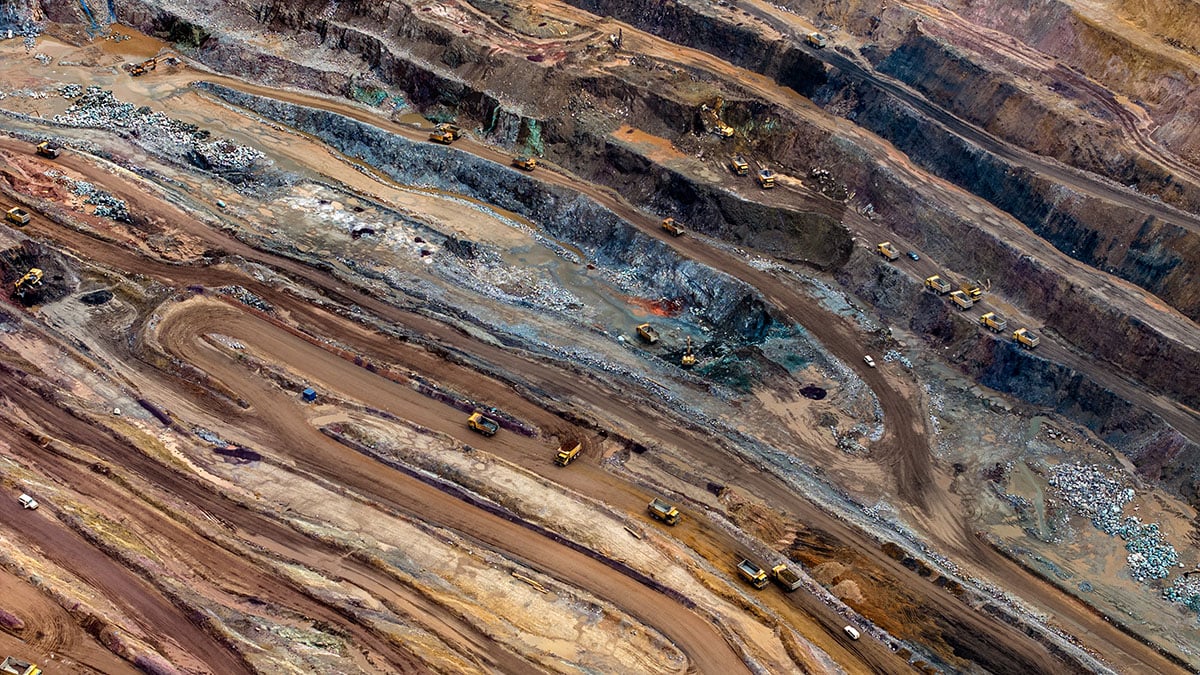
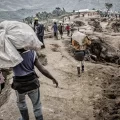
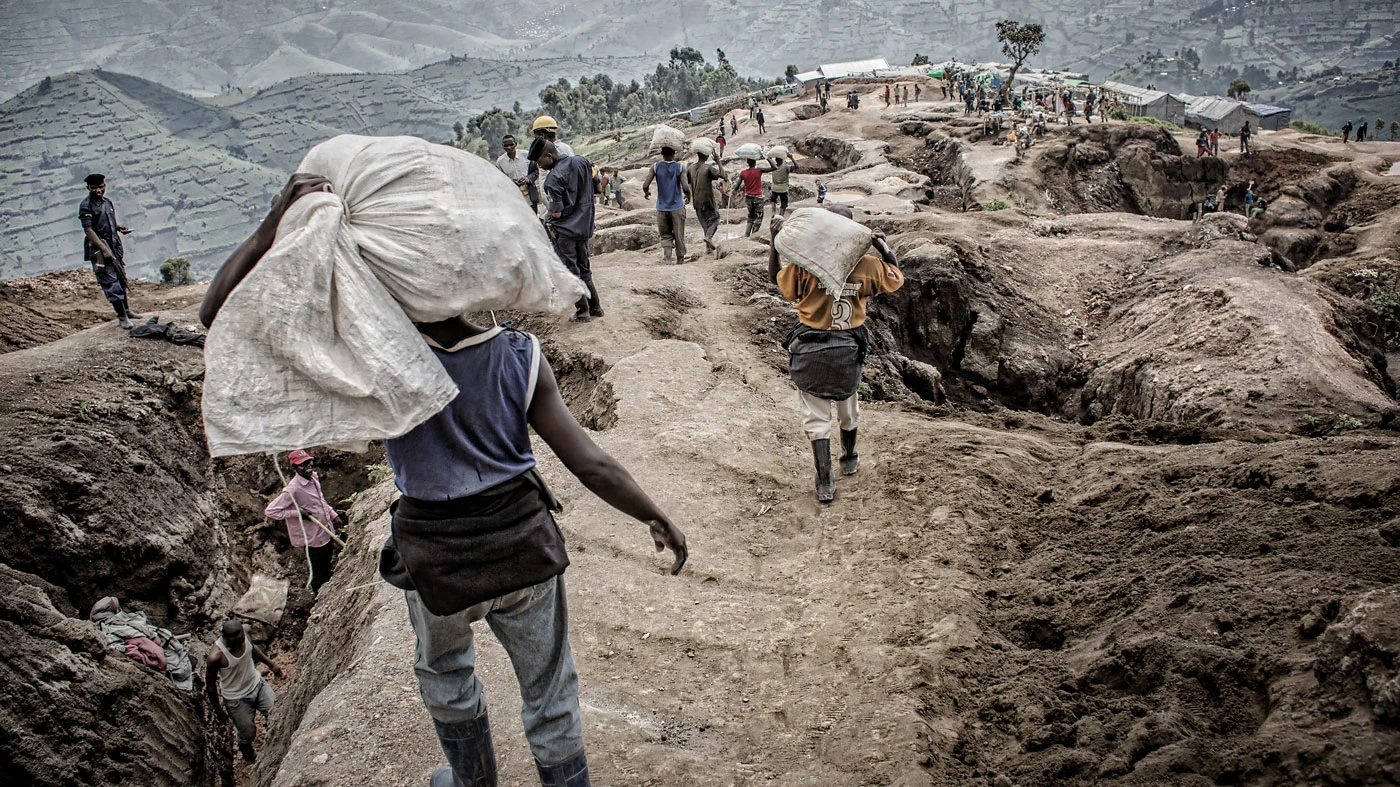
Photos: Artisanal Coltan – manganese – cobalt mining in Mudere mine under control of Nyatura militia, town of Rubaya, North Kivu region (Democratic Republic of Congo, Africa). Erberto Zani – stock.adobe.com
Source: oaklandinstitute.org/
Related posts:
 Experts warn that without Africa’s control over resources and climate financing, the continent faces the risk of entering a new era of “green colonialism”.
 30 civil society organizations have written to the World Bank Group demanding to publicly disclose the Africa Energy Approach paper.
 Africa Climate Summit 2023 Set to Surrender the Continent to Green Colonialism
 The mothers and daughters of the global south cannot celebrate the World Bank’s 80-year legacy of harm.

Related posts:

 The 4th African Forum on Business and Human Rights: The African continent is lagging, with only a few member states having adopted the National Action Plan (NAP) on Business and Human Rights.
 La Via Campesina calls on States to exit the WTO and to create a new framework based on food sovereignty
 World Bank Halts New Lending to Uganda Over Anti-LGBTQ Law
 La Via Campesina Call to Action for the 27th UN Climate COP

Ten out of sixteen Rooted in Resistance activists now face charges and have been sent to Luzira Prison after standing up against Uganda’s oil development.

Civil society organizations are rallying for a robust grievance mechanism in the EAC Seed and Plant Varieties Bill.

Breaking: Sixteen Rooted in Resistance activists arrested and detained as they boldly protested Uganda’s oil ambitions.

Tanzania’s surge in conservation investments is under the UN spotlight, as allegations of indigenous land rights violations prompt an urgent call for the government to stop the evictions at once.

Minister Nabakooba wants special land title issuance halted
Breaking: Sixteen Rooted in Resistance activists arrested and detained as they boldly protested Uganda’s oil ambitions.

Rising demand for cow dung pushes prices up

Thirteen years after the Karuma Hydropower Project broke ground, countless people forced from their homes are still waiting for the compensation and resettlement they were promised.

Innovative Finance from Canada projects positive impact on local communities.

Over 5000 Indigenous Communities evicted in Kiryandongo District

Petition To Land Inquiry Commission Over Human Rights In Kiryandongo District

Invisible victims of Uganda Land Grabs
-
 MEDIA FOR CHANGE NETWORK3 days ago
Breaking: Sixteen Rooted in Resistance activists arrested and detained as they boldly protested Uganda’s oil ambitions.
-
 MEDIA FOR CHANGE NETWORK1 week ago
Thirteen years after the Karuma Hydropower Project broke ground, countless people forced from their homes are still waiting for the compensation and resettlement they were promised.
-
 MEDIA FOR CHANGE NETWORK2 weeks ago
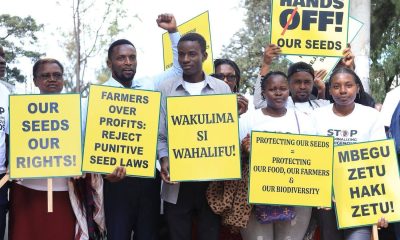
Civil society organizations across East Africa have revived their campaign against the EAC Seed and Plant Varieties Bill 2025, just as the regional parliament opens the floor to public consultations.
-

 MEDIA FOR CHANGE NETWORK6 days ago
East African Community member states launched public hearings this week for the Seed and Plant Variety Bill 2025, marking a significant step in shaping the region’s agricultural future.
-
 MEDIA FOR CHANGE NETWORK1 week ago
AGRA at 20: New report reignites debate over Africa’s farm model
-
 MEDIA FOR CHANGE NETWORK3 days ago
Tanzania’s surge in conservation investments is under the UN spotlight, as allegations of indigenous land rights violations prompt an urgent call for the government to stop the evictions at once.
-

 MEDIA FOR CHANGE NETWORK2 weeks ago
Smallholder farmers and civil society organizations have launched a dynamic media campaign for the inaugural Eastern Africa Indigenous Seed Conference, inviting more smallholder farmers to join the agroecology movement.
-
 WITNESS RADIO MILESTONES6 days ago
MPs recover hundreds of land files hidden near Mukono land office