Connect with us

MEDIA FOR CHANGE NETWORK

24 years of waiting for justice: Kaweeri Coffee evictees’ case is finally coming back in court.

Published

on

By Witness Radio team.

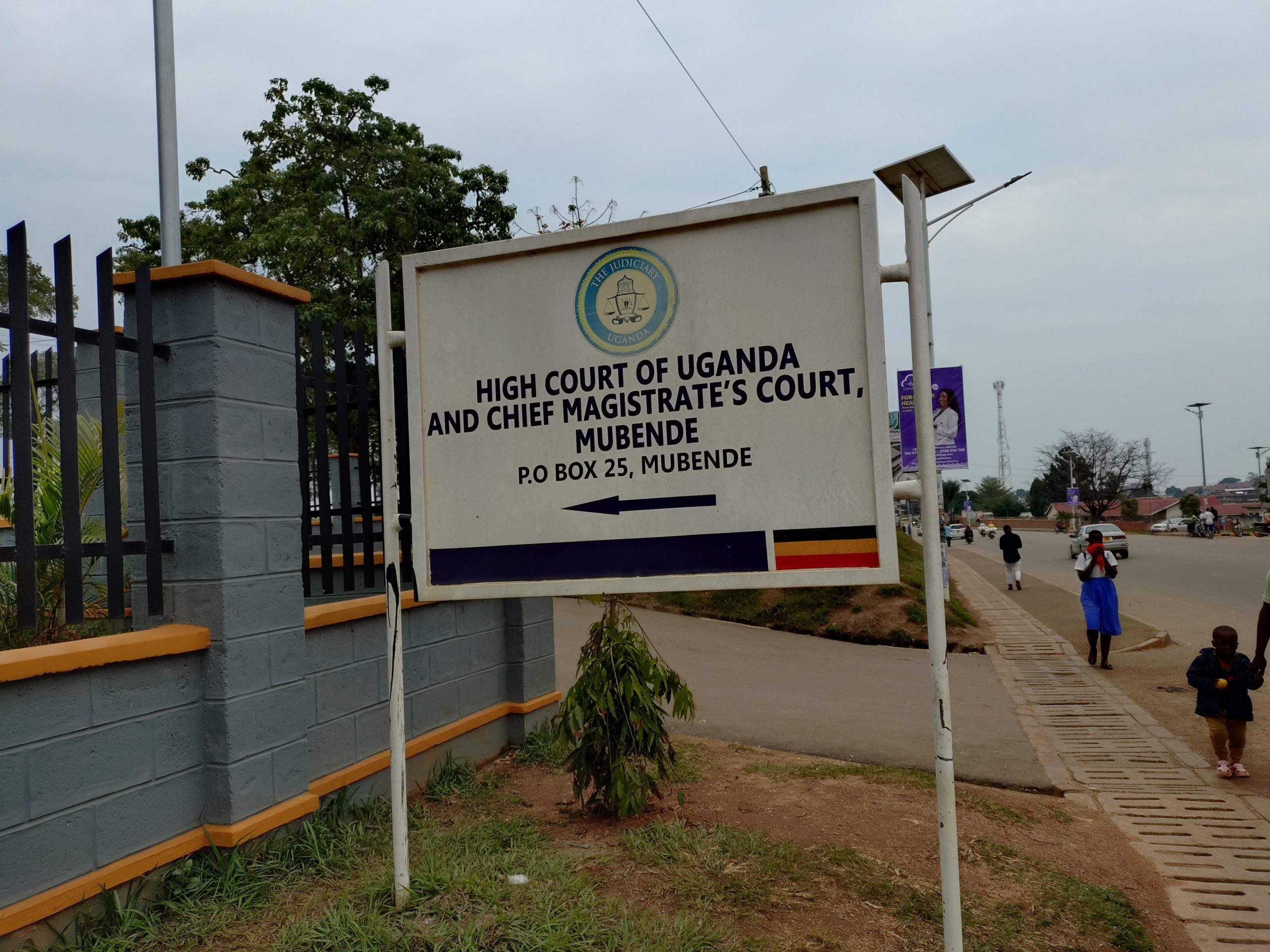
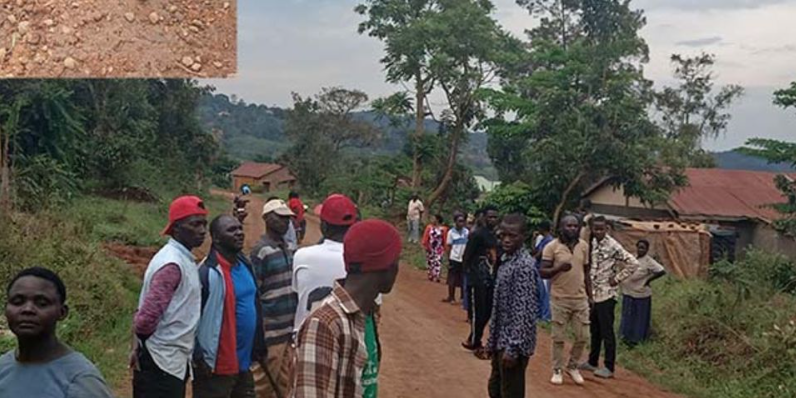
Mubende, Uganda – Later this month, between August 25 and 28, 2025, the High court in Mubende district will once again hear the case of communities evicted in 2001 to make way for a Coffee Plantation in Mubende district. Neumann Kaffee Gruppe (NKG), a German investor, owns the plantation.

For the hundreds of these families, who have endured 24 years of poverty, displacement, and endless battles in courts of law, the hearing is another hope of getting justice.

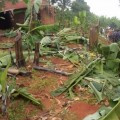
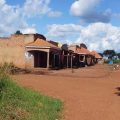
In August 2001, armed forces swept through four villages, Kitemba, Luwunga, Kijunga, and Kiryamakobe in Madudu sub-county in Mubende district. Homes got torched, people got assaulted, crops slashed, and families forced out of their homes at gunpoint. Over 2,000 people were forcefully displaced by the army and police in what is being described by many as profiting from misery.

After the eviction, the Uganda Investment Authority (UIA) leased the land to Kaweeri Coffee Plantation Ltd., a subsidiary of a German multinational Neumann Kaffee Gruppe (NKG), one of the world’s largest coffee traders. The plantation was promoted by the Ugandan government as a model of foreign investment, but left behind a humanitarian crisis.

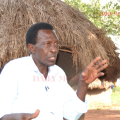
“We were forcefully evicted from our land and treated as if we were strangers on our land. Until now, some of us have never recovered. The army came and warned us to vacate within three days, and they kept on telling us that the investor does not want any person on our land.” Mr. Ssenkambwe Godfrey, one of the evictees, recounted.

In 2002, the displaced families filed a case against the Ugandan government and Kaweeri Coffee Plantation, seeking compensation for property destruction, lost livelihoods, unlawful eviction, and restitution to their land.

In 2013, the High court ruled in favor of the communities, declaring the eviction unlawful and

awarding compensation to the tune of 37 billion Ugandan shillings.

But the government and Kaweeri investor appealed, dragging the case back into uncertainty.

“In this appeal, the government complained about the competence of the judge who had handled the case, something that could not be blamed on us,” explained Mr. Kayiira, who leads a group of the affected families. “The case kept moving from the Kampala Central Circuit, to the Land Division, and now to the High court in Mubende. Here, Justice Henry Kaweesa initially ordered mediation at the start of the hearing.”

Ever since, the Kaweeri case has long drawn both national and international attention. German civil society groups, including FoodFirst Information and Action Network (FIAN), and other human rights organizations have consistently highlighted the injustice, pressing both the Ugandan government and NKG to provide redress.

NKG has since distanced herself from taking part in the Kaweeri evictions. When contacted by Witness Radio for an interview regarding these allegations, the company declined to comment. NKG stated in an email that they “do not wish to comment further on this matter.”

This pressure prompted the Ugandan government in 2019 to propose an out-of-court settlement as a way to resolve the injustices. But not everyone agreed. Out of 401 families, 258 accepted the settlement, while 143 rejected it, citing a lack of transparency and their demand for restitution of land. Mr. Kayiira continues to lead those who refused mediation.

“For us who opted for a full trial, we are 143 heads of families, and now the case is referred to the Mubende High court. This case is scheduled for a hearing next week. The court gave us four days from 25th to 28th August.” He added.

The eviction pushed families into lives of chronic poverty. Many became squatters, others casual laborers on plantations or in nearby communities, while some sought refuge with relatives.

“We lost everything we had, plantations, land, houses, all because of the investor,” says Nakayinga Rose Mary, now in her old age. “I should be enjoying my old age, but instead I am still fighting for what was ours. My prayer is for the court to return what rightfully belonged to us finally.” The elderly lady told Witness Radio.

As the hearing begins next week, the 143 families insist this is their last hope for justice and call for a fair hearing.

Continue Reading

MEDIA FOR CHANGE NETWORK

NEMA says it is restoring wetlands, but poor urban families say it is using the exercise to grab their land for new infrastructure projects – now they demand compensation and resettlement.

Published

on

By Witness Radio Team.

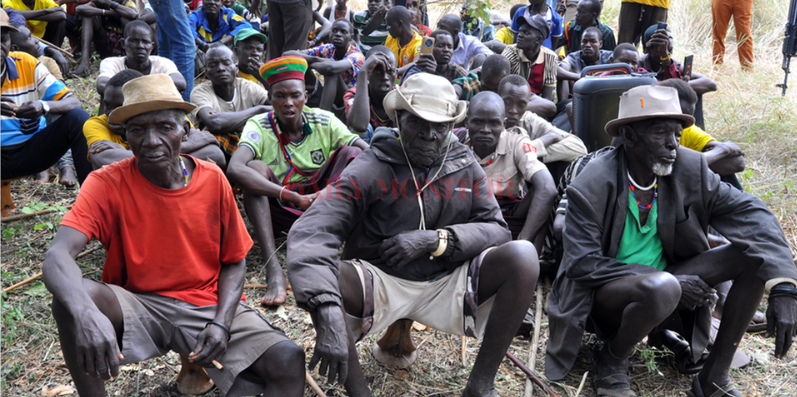
Hundreds of residents of Kawaala Zone II in Kampala accuse the National Environment Management Authority (NEMA) of double standards and of targeting their land for upcoming mega projects. They say they have lawfully occupied it since the 1940s.

NEMA has already evicted dozens of urban poor families, but the operation was halted after engagement with the Kampala Capital City Authority (KCCA) until a district environmental community is established.

NEMA is using the 1995 NEMA Act to carry out what it calls a “wetland restoration exercise,” but victim families call it an institutional failure to verify who lawfully occupies the land, conduct a feasibility study, and establish the cause of flooding before designating the area as wetlands.

The urban poor families, many of whom possess legally recognized land ownership documents, argue that earlier government projects such as the Uganda National Road Authority’s Northern By-Pass Road in 2004, the National Water and Sewerage Corporation’s sewage plant in 2010, and the Second Kampala Institutional and Infrastructural Development Project (KIIDP2) in 2020 compensated them, with the matter ending in World Bank-led mediation in 2024.

NEMA, which participated in the KIIIDP2 mediation as an expert agency and agreed that Kawaala is not part of the designated wetlands in Kampala, is now carrying out an eviction against the Kawaala families without due process, including sensitization, consultation, or resettlement.

“We have lived on this land for decades. We did not find a wetland here; the flooding has been caused by infrastructure projects, and we found ourselves in floods, but this is not a wetland,” Mrs. Namala Christine, who occupied the said land in 1968, told Witness Radio.

According to the residents, NEMA neither verified their ownership records nor afforded them an opportunity to be heard before issuing eviction notices.

“We only received notices ordering us to vacate. We don’t even know where the wetland is found because NEMA has never indicated that to us and sensitized us about what a wetland is,” said Abbas Ssegujja.

Kasozi says the infrastructure projects that compensated residents also changed the area’s natural landscape. He explained that the construction of the Northern Bypass, the Lubigi Sewerage Treatment Plant, commissioned in 2010, and drainage works under the first Kampala Institutional and Infrastructure Development Project (KIIDP I) altered water flows and gradually turned formerly dry land into waterlogged areas by diverting drainage water.

The second phase of the Kampala Institutional and Infrastructure Development Project (KIIDP II), financed by the World Bank, further affected residents as water flooded their homesteads.

In 2020, the Kampala Capital City Authority (KCCA), supported by government agencies including the Uganda Police Force, the Uganda People’s Defense Forces (UPDF), and NEMA, moved to evict residents to facilitate the expansion of the Lubigi Drainage Channel. The operation was carried out without prior consultation or compensation, while KCCA alleged that the affected residents had illegally settled in a protected wetland.

Following advocacy by Witness Radio and Accountability Counsel through the World Bank’s accountability mechanism, residents were eventually compensated for losses from that project.

“Every project that took our land compensated us. But the environmental impacts they left behind have been devastating. What was once dry land has gradually become waterlogged, making life increasingly difficult,” Kasozi said.

Asked about the recent Kawaala evictions, NEMA Public Relations Officer William Lubuulwa said the Authority is carrying out environmental restoration under the National Environment Act, Cap. 181.

“It may be true that some people in Kawaala have land records or title deeds. NEMA is not saying they do not own land. What concerns us is how that land is used. Wetlands are not supposed to accommodate residential developments. Our role is to guide and sensitize these people on how to use this land. We therefore required them to vacate,” Lubuulwa told Witness Radio through WhatsApp.

However, when asked whether NEMA had previously guided the community on lawful land use or undertaken public sensitization before issuing eviction notices, he did not respond.

Regarding residents’ demands for compensation, Lubuulwa said the law does not allow compensating individuals responsible for degrading wetlands, and the residents are asking the Authority to reconsider its position.

“The Act does not work that way. A person who destroys a wetland may face a fine of up to Shs600 million or up to 12 years’ imprisonment. Government cannot compensate people for degrading wetlands,” he said.

The residents dispute NEMA’s characterization of them as wetland encroachers, saying many settled on the land decades before Uganda enacted the National Environment Statute in 1995, and when their land was not flooding.

The Buganda Land Board (BLB), which administers the land on behalf of the Buganda Kingdom, has acknowledged NEMA’s mandate to regulate environmentally sensitive areas while urging authorities to respect landowners’ rights.

It should be remembered that the evictees are bibanja holders on Buganda Kingdom mailo land in Uganda. According to documents our team has seen, they have paid busuulu, or ground rent, which they say legitimizes their land ownership.

Uganda has four tenure systems: Mailo, Freehold, customary, and leasehold. Mailo is categorized into two: private Mailo and official Mailo. In Kawaala Zone II, residents have been settling on official Mailo owned by the Buganda Kingdom.

Under Ugandan law, a Kibanja holder is a tenant who uses land without an official, registered title. Under the 1995 Constitution of Uganda and the Land Act (Cap 236), Kibanja holders are legally recognized as lawful or bona fide occupants. This gives them security of tenure and protects them from arbitrary or illegal evictions.

In a 2024 statement, the Kingdom’s Minister for Information and spokesperson, Israel Kazibwe Kitooke, cited Section 44 of the Land Act, noting that although NEMA regulates land use in wetlands and forest reserves, enforcement should follow proper procedures that protect people’s property rightThe Kingdom further urged NEMA to ensure that affected residents are not deprived of their property without due process and proper consideration, and to act accordingly.gly.

Speaking to Witness Radio, BLB Land Relations Officer Fred Kibuuka explained that paying busuulu, or ground rent, to the Buganda Land Board does not determine how land may be used.

“BLB does not regulate land use. NEMA has the responsibility to ensure environmental protection while also respecting landowners’ rights,” he said.

It should also be noted that both the Buganda Land Board and bibanja holders in Kawaala Zone II received compensation during the World Bank-funded Lubigi drainage project, KIIDP II. According to Kibuuka, this happened because each held legally recognized interests in the land, which appears inconsistent with NEMA’s current position that compensation should not be paid in wetland cases.

Victim families alleged that NEMA is targeting their land for a mega project and that their eviction is not about wetland encroachment. They said officials had earlier leaked information that several projects were being considered for their land before NEMA demolished their homes.

NEMA’s nationwide wetland restoration campaign intensified in 2024 as the government stepped up efforts to reclaim degraded wetlands. Restoration operations have since been carried out in some parts of the country before some of the Kawaala families were evicted and left homeless.

Continue Reading

MEDIA FOR CHANGE NETWORK

“No Land, No Life” – Women at the East Africa Convergence Refuse to Move out Quietly

Published

on

They came from forests, coastlines, grazing territories, and farmlands. In total, 45 women from Kenya, Uganda, Tanzania and communities across DRC, South Africa, and Zimbabwe gathered in Limuru, Kenya, for the East Africa Land and Climate Justice Convergence. Through plenaries and group discussions, storytelling, drawings and celebrations, they shared stories of trauma, injustice and despair. But they also told stories of resilience, movement building and leadership in the fight against land dispossession and big extractive projects. Each discussion reinforced that protecting the commons through collective stewardship is a powerful alternative to the current development model that encloses, destroys and dispossesses people and the environment.

(Day One Women’s Land and Climate Convergence 2026 graphic documentation. Image: WoMin)

A central theme throughout the convergence was the role of indigenous knowledge systems in the protection and care of communal land. The women participants shared various examples of governance practices that enable balance between human and non-human life, resolving conflicts, and sustained territories across generations.

Identifying the patterns across struggles

The women were very clear about the struggles they faced and could name the forces behind them. Across all the countries represented, women identified the same patterns: government gazette communal land and other resources, corporations move in, laws are poorly enforced, and Indigenous voices are pushed out. In this process, women suffer the most. They suffer twice — they lose land, and they carry the burden of survival when food, water, and dignity disappear.

Participants pointed to problems within their communal governance, which often grants women little to no control of the communal resources even though women are the primary users and the most consistent stewards of these resources. Alongside privatisation, male dominating structures in the governing systems of the commons continue to undermine women’s rights, agency and leadership.

Despite enclosure and violence, communities keep holding each other. In Namakwaland, South Africa, women organise protests against mining related dispossession. In Loliondo, Tanzania, a union of 50 women is taking land cases to the African Court in Arusha. In Kenya, the Ogiek fought 17 years through domestic courts until the African Court ordered reparations in 2022. In each of these iconic struggles, and many others across the continent, women are at the centre of the evidence, the advocacy, and the resistance.

(Day Two Women’s Land and Climate Convergence 2026 graphic documentation. Image: WoMin)

“Protecting land means protecting life”

The convergence was not an end. It was a vessel to bring women together to deepen analysis and understanding of the struggles of the commons as well as to identify collective action. And the women planned – they spoke of the need for cross-country radical solidarity, mental health support programs for the women in the frontline of the resistance, political and leadership development trainings, and support for strategic litigation as tools to enhance the struggle.

While the convergence is over, the struggle is not. As one participant said: “Maybe the biggest thing we found here is each other. We are not just fighting for land. We are fighting for a way of living where no one is left behind.”

Because as women from Turkana reminded us: “No land, no life. Protecting land means protecting life.”

(Day Three Women’s Land and Climate Convergence 2026 graphic documentation. Image: WoMin)

The graphic documentation shown throughout this article was developed in collaboration with Kenyan artist, MariaStella Kamuti. Each piece offers visual representation of the daily critical conversations and knowledge-sharing that took place throughout the convergence. They also serve as important popular education tools as we cultivate and expland the Land Commons and Care thematic area of work in East Africa and across the continent.

Source: Womin.africa

Continue Reading

MEDIA FOR CHANGE NETWORK

Climate Change and Conflict : The Agony of Kasese Farmers.

Published

on

As climate change impacts various parts of the globe, Kasese District in South-Western Uganda serves as a stark example of environmental vulnerability. Global warming has accelerated the melting of glaciers in the Rwenzori Mountains. Satellite data from scientific monitoring groups reveals a striking 30% reduction in ice surface area between 2020 and 2024.

For the farming communities of Munkunyu Sub-county, this environmental challenge has created a complex crisis. The altered landscape has heightened resource competition between local Bakonzo crop farmers and Basongora cattle keepers from neighbouring Nyakatonzi Sub-county, as both communities navigate severe strains put on nature and land.

Why the land crisis is growing

Before diving deeper into the unfolding situation on the ground, it is critical to understand the primary triggers forcing these communities into confrontation:

The Glacial Melt: A 30% loss of Rwenzori ice cover in just four years is drastically altering local river volumes and weather predictability.

The Climate Double-Whammy: Farmers and pastoralists are trapped in a punishing cycle of back-to-back disasters, first catastrophic flash floods, immediately followed by extreme dry spells that leave no grass for livestock or food for households.

How floods and hungry cattle sparked a quiet war

Just eight months ago, Munkunyu’s farming families faced severe flash floods that wiped out their entire agricultural investments. In the wake of these disasters, herdsmen seeking surviving pastures moved their cattle directly into the cultivation zones. Farmers report that on 30 May 2026, livestock grazed across 217 hectares of food crops. This created immense economic and psychological strain for hundreds of households already struggling with food insecurity and school fee obligations.

Wide acres of local farmland left bare and ruined after hungry cows moved into cultivation zones to eat growing food crops. (Photo Credit: KYL)

Matsiko Loyce, a local councillor and farmer, outlines the collective weight of losing both crops and land resources:

“In October last year, we lost our crops to floods. As we began to recover with hopes of feeding our families, livestock grazed on our remaining income. It is a deeply distressing situation.”

Local herds of cattle walk through agricultural fields, destroying the remaining green crops. (Photo Credit: KYL)

The escalating pressure soon led to physical friction. When local youths attempted to block cattle from entering the remaining fields, a violent altercation broke out. Matsiko emphasises the critical need for peaceful intervention:

“Two young men trying to protect the crops were injured during the confrontation. The matter has been formally reported to the police to ensure a peaceful, lawful resolution.”

The broken 15 million shilling compensation deal

Following local mediation efforts, the pastoralists initially agreed to a compensation package of 15 million Ugandan Shillings (approx. $4,110 USD) for the 150 hectares of ruined crops.

However, the agreement faced a major setback when the June 12 deadline arrived. The pastoralists shifted their position, offering to pay only 5 million shillings (approx. $1,370 USD) with no clear assurance of whether or when the remaining 10 million shilling balance (approx. $2,740 USD) would be paid. The farmers reportedly refused this reduced offer, demanding the full fulfillment of the original 15 million shilling agreement. According to human rights defenders monitoring the situation, this delay has severely fractured community trust.

A history of lost grazing land

This resource competition is deeply linked to historical migration patterns. The Basongora are an ancient pastoralist community whose traditional lifestyle was disrupted between 1925 and 1954. During this time, colonial administrations gazetted over 90% of their ancestral grazing lands to establish Queen Elizabeth National Park.

Displaced and hit by a devastating rinderpest epidemic in 1931, many Basongora crossed into the Democratic Republic of Congo (DRC) before returning to Kasese in subsequent decades. Concurrently, the Bakonzo have long cultivated food and cash crops in lowlands like Nyakatonzi and Munkunyu. While these groups have maintained a delicate coexistence for decades, accelerating climate change has disrupted that balance, renewing historical anxieties over land access.

Bakonzo and Basongora elders convene near the boundary of Queen Elizabeth National Park to initiate a collaborative resource-sharing framework aimed at preventing future land disputes. (Photo Credit: KYL)

Choosing to survive together over fighting

Kato Ronald, the Executive Director of Kasese Youth Link and a human rights defender, appeals for structured mediation over conflict:

“Both the livestock and the human populations require sustenance. There is an urgent need to resolve this climate-induced conflict through a framework that ensures human security.”

Local leaders call for dialogue

As the conflict drags on, local leaders are calling for restorative justice rather than increased criminalisation to prevent further escalation. Mr. Ndyoka Isaac Kabunzu, the LCIII Chairperson for Munkunyu Sub-county, noted that recent arrests

have only heightened anxieties.

“These developments have increased community tension. Any individuals held without sufficient evidence should be released. Sustainable peace requires structural intervention over criminalisation.”

Kabunzu strongly advocated for a transparent judicial review, urging district leaders, security agencies, cultural institutions, and all stakeholders to immediately convene a dialogue aimed at addressing the root causes.

While the air in Munkunyu remains tense as communities await a resolution to the compensation agreement, the path forward relies on restoring mutual trust, establishing green compensation frameworks, and choosing joint survival over resource division.

Source: Peace Journalism Foundation East Africa

Continue Reading

Resource Center

Legal Framework

READ BY CATEGORY

Facebook

Newsletter

Subscribe to Witness Radio's news and report updates


Trending

Subscribe to Witness Radio's news and report updates