
NGO WORK
5 things to watch at the World Economic Forum on Africa


Related posts:

 China-Africa: “Huge” ag cooperation potential
 Africa’s growth lies with smallholder farmers
 AU warns cost of COVID-19 pandemic could be long-lasting in Africa
 30 civil society organizations have written to the World Bank Group demanding to publicly disclose the Africa Energy Approach paper.

Oakland, CA – As the World Bank convenes its Annual Meetings in Thailand this week, the accountability of the institution is entirely omitted from the agenda. Yet, its lack of accountability to the millions of people displaced or harmed by its programs around the world has never been more appalling.
The Bank claims that recent 2026 reforms would strengthen its accountability mechanism, but the facts show a total disregard for the devastation it has caused. In Tanzania, it has failed to act on damning findings from its own Inspection Panel – whose investigation detailed systemic violations of its own Operating Procedures and a “critical failure” in project planning and supervision, leaving local villagers to continue bearing the brunt of harsh, unmitigated serious harms.
Between 2017-2024, the World Bank poured over US$100 million into REGROW, doubling the size of Ruaha National Park in Southern Tanzania and funding the paramilitary park rangers (TANAPA) implicated in egregious human rights abuses – including killings and forced disappearances. Following an independent investigation, the project was officially cancelled.
“The park expansion effectively criminalized over 84,000 people on their own land, stripping them of their livelihoods by barring essential farming and grazing. The Bank’s REGROW initiative turned poor villagers into targets for park rangers. Despite clear evidence that the devastation it unleashed continues today, the Bank has completely failed to provide redress, compensate or support the communities whose lives it upended,” said Anuradha Mittal, Executive Director of the Oakland Institute, who represented villagers in their complaint to the Inspection panel.

In April 2025, ignoring community demands for reparations and the return of land, the Board approved a largely insufficient and inadequate Management Action Plan (MAP). On September 4, 2026, the Bank officially “closed” the REGROW case after deeming all actions in the MAP had been completed.
“The World Bank has destroyed our lives. Since the project started, rangers have killed or disappeared 18 of us. We are banned from farming our lands and grazing our livestock. Thousands of our cattle were confiscated. We are still waiting for justice and reparations for our losses. How can the World Bank walk away after being found responsible for this catastrophe?” said a local villager who filed the initial complaint.
Today, despite the Bank’s assertions that livelihoods could resume, many farmers remain barred from their fields, and pastoralists face continuous threats and fines for grazing cattle. The international spotlight that the Institute put on the dire situation has brought a halt to fatal shootings by TANAPA rangers since May 2025 – a grim baseline for “progress” from a paramilitary force that has terrorized communities since the Bank bolstered their capacity. The families of those murdered by TANAPA, including 27-year-old Hamprey Mhaki and 20-year-old Kulwa Igembe, continue to be denied justice.
“The Inspection Panel presented undeniable evidence of the Bank’s wrongdoings, yet the Bank’s Board and senior management refused to take responsibility. Affected communities took monumental personal and collective risks to expose these abuses, offering the Bank every opportunity to correct course. Instead, management turned its back on the very people it harmed – leaving a permanent stain on the institution’s credibility. The Oakland Institute will continue to stand with communities in their fight for justice,” concluded Mittal.
The World Bank’s expanding accountability crisis is further deepened by its decision to join the Trump-established Board of Peace (BoP) for Gaza, proactively enabling impunity for crimes against humanity and genocide. By joining the BoP, the Bank directly violates its own mandate and policies, international humanitarian law and decades of UN General Assembly Resolutions. Furthermore, the move defies provisional orders and advisory opinions from the International Court of Justice (ICJ) and rulings from the International Criminal Court (ICC).
Source: oaklandinstitute.org
Related posts:
 World Bank Fails to Remedy Harms it Caused in Tanzania, Despite a Scathing Investigation by its Inspection Panel
 Communities Under Siege: New Report Reveals World Bank Failures in Safeguard Compliance and Human Rights Oversight in Tanzania
 The World Bank Must Be Held Accountable for Harm Inflicted on Tanzanian Communities by Tourism Project
 Campaign Victory: World Bank Suspends Funding for REGROW, a Conservation Project Responsible for Evictions & Human Rights Abuses in Tanzania
NGO WORK
Tanzanian Government Abducts Maasai Villagers in an Unconscionable Attack on Indigenous Land Defenders

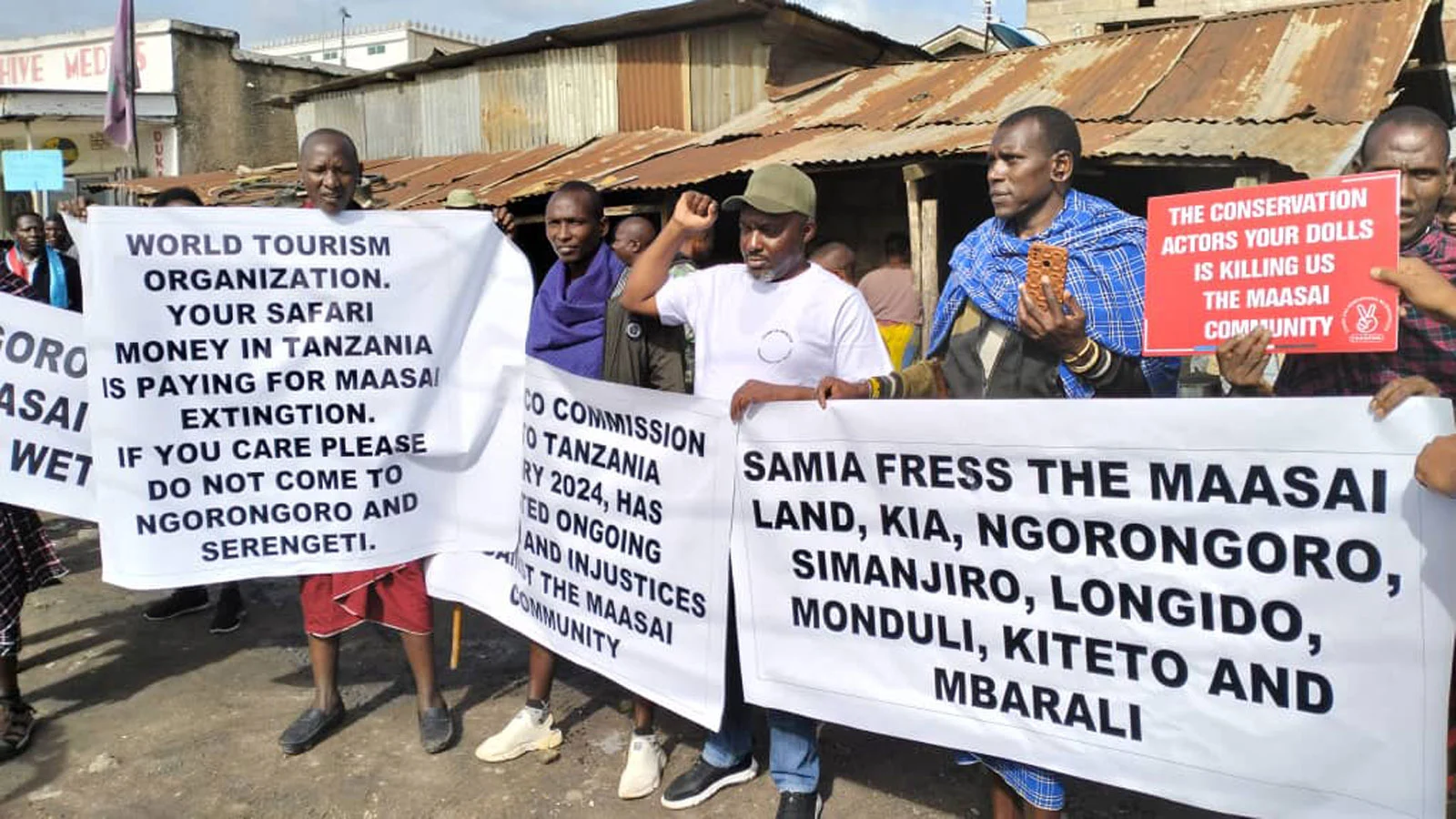
- Human rights conditions in northern Tanzania have deteriorated sharply since August, as the Tanzanian government carries out a coordinated campaign of violence and arrests against the Indigenous Maasai.
- In Ngorongoro, five Maasai were arrested last week; Over 30 community members have been arrested over the last two months; In neighboring Loliondo, thousands of livestock have been confiscated.
- The government is pressuring Maasai to leave the area to reach its goal of expanding the number of safari tourists and trophy hunters to eight million by 2030.
- The last arbitrary arrests unfolded in Arusha as Tanzania hosted the 153rd Assembly of the Inter-Parliamentary Union, centered on the theme of “enhancing good governance and empowering communities through inclusivity, trust and opportunities for all.”
Oakland, CA – On the night of October 6, the Tanzanian government forcefully abducted five Maasai men, Nangei Meitaya, Salangat Makko, Ezekiel Kishau, Dickson and Thadeus Clamian, holding them under arbitrary detention at the Arusha Central Police Station. While the individuals were released the following night, these targeted arrests are a dangerous escalation in the government’s systemic oppression of the Indigenous Maasai people.
Since August, human rights conditions in northern Tanzania have worsened sharply as the state carries out a wave of coordinated violence and arrests against the Maasai. In the Ngorongoro Division, authorities have detained more than 30 community members, while confiscations of livestock have intensified in neighboring Loliondo. Local advocates state these actions are part of a systemic campaign to suppress peaceful dissent and dismantle civil society, through economic restrictions, intimidation, and unlawful incarceration of Maasai pastoralists.
“Far from being an isolated incident, this is a calculated campaign of intimidation. Driven by its goal to attract eight million safari tourists by 2030, the Tanzanian government is escalating pressure to evict the Maasai from their ancestral lands. As a result, community leaders have been driven into hiding once again, describing a rapidly deteriorating situation across the region,” said Anuradha Mittal, Executive Director of the Oakland Institute.
While detained, the victims were deprived access to their families or legal counsel. Four of those arrested are employees of the Pastoral Women’s Council (PWC), a local NGO dedicated to the “sustainable empowerment of Indigenous pastoralist women and girls in northern Tanzania.” Furthermore, authorities searched the homes of other staff members without due process.
“The abduction and subsequent detention of our community members is one of the many incidents of lawless targeting of the Maasai people in Ngorongoro – a deliberate campaign to instill fear and censorship, designed to make state dispossession and displacement easy. When a regime normalizes abductions and uses public hospitals as hunting grounds, it reveals a complete breakdown of common sense and basic humanity,” said Joseph Moses Oleshangay, a prominent Maasai human rights lawyer and activist from the Ngorongoro District in Tanzania.

The arbitrary arrests unfolded in Arusha as Tanzania hosted the 153rd Assembly of the Inter-Parliamentary Union, centered on the theme of “enhancing good governance and empowering communities through inclusivity, trust and opportunities for all.” This international gathering of parliamentarians from around the world comes a year after the rigged October 2025 national elections, during which the security forces violently suppressed pro-democracy demonstrations and killed thousands of civilians. Meanwhile, in March 2026, President Hassan accepted recommendations from sham land commissions advocating for the widespread eviction of Maasai communities from their ancestral lands in the Ngorongoro Conservation Area (NCA) and Loliondo.
The government plans to drastically reduce Maasai presence in the NCA to expand safari tourism and trophy hunting. To pressure residents to leave, the government has stopped basic medical, education, and water services while restricting access to grazing land for pastoralists. Massive mobilizations by the Maasai against this forced resettlement have exposed the government’s lie that people are leaving willingly.
“As international visitors plan safari tours to Tanzania, they must recognize that tourism revenues are inadvertently financing the government’s violent attack on Maasai communities whose ancestral lands are being stolen in plain sight,” concluded Mittal.
Source: oaklandinstitute.org
Related posts:
 Tanzanian Government Continues Violent Repression of the Maasai in Loliondo Despite Worldwide Condemnation
 Justice Denied: East African Court of Justice Grants Tanzanian Government Impunity to Trample Human Rights of the Maasai
 Tanzanian Government’s Sustained Campaign Against the Maasai in Loliondo and the Ngorongoro Conservation Area
 Call to Sever Ties with Tanzanian Government Over Latest Human Rights Abuses Against the Maasai

Related posts:
 The Great “Green” Heist: When Artificial Intelligence and Arms Dealers Seize the Minerals of the South
 Human rights defenders & business in 2022: People challenging corporate power to protect our planet.
 U.S. Peace Efforts in the DRC: Protecting Communities or Minerals?
 Peruvian communities have launched a global petition to halt a mining project they say threatens the water supply of over 10 million people.

World Food Day 2026: Building healthy diets means reimagining how we grow, share, and enjoy our food.

International Day of Rural Women : Rural women farmers deserve not only equal rights and access to resources, but also the strength and voice to safeguard Mother Nature.

ODPP Staff Equipped With New Skills on Land Crimes, Witness Protection and Victims Rights

As World Bank Holds Annual Meetings, 84,000 Tanzanians Call for Justice

While hunger continues to grip the world, a new report highlights forests and forest foods as a hidden treasure trove of nourishment.

Five years after Uganda’s National Action Plan on Business and Human Rights, are local communities hosting land-based investment projects seeing change?

Lango ex-combatants count losses after dry spell destroys maize harvest

Alert: Land degradation is emerging as a pressing threat to global security.

Innovative Finance from Canada projects positive impact on local communities.

Over 5000 Indigenous Communities evicted in Kiryandongo District

Petition To Land Inquiry Commission Over Human Rights In Kiryandongo District

Invisible victims of Uganda Land Grabs
-

 MEDIA FOR CHANGE NETWORK2 weeks ago
Sweeping investments are fueling widespread land grabbing and deepening rights violations across Uganda – Report.
-
 MEDIA FOR CHANGE NETWORK2 weeks ago
Across Africa, the push for a greener future is putting new pressure on local communities, as recent ILC case studies highlight.
-

 MEDIA FOR CHANGE NETWORK4 days ago
Court remands 10 anti-oil activists as suspect collapses in dock
-
 MEDIA FOR CHANGE NETWORK2 weeks ago
Who will shape the future of East Africa’s seeds? Youth and civil society are sounding the alarm over a proposed regional law.
-
 NGO WORK4 days ago
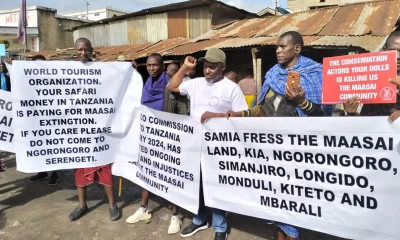
Tanzanian Government Abducts Maasai Villagers in an Unconscionable Attack on Indigenous Land Defenders
-
 FARM NEWS2 weeks ago
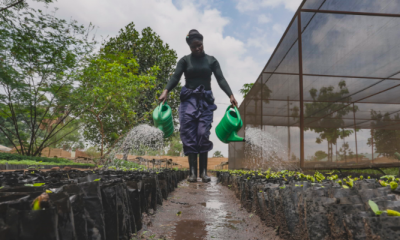
Govt pushes natural regeneration to restore 8.4 million hectares
-

 FARM NEWS2 weeks ago
Can Agroecology Improve the Resilience of African Smallholder Farmers?
-

 MEDIA FOR CHANGE NETWORK2 weeks ago
Death Of Witnesses Cited Among Causes Of Land Case Backlog