Connect with us

MEDIA FOR CHANGE NETWORK

Sexual violence as a tool to grab land: a local woman accuses industrial agriculture investor Agilis Partners Limited of sexual violence.

Published

on

By Witness Radio team.

When the industrial agriculture investor Agilis Partners Limited targeted the communities’ land for its investments in the Kiryandongo district in 2017, the poor residents never knew that the company had employed several tactics to force them (indigenous & local communities) off their land. One of them was sexual violence.

Sexual violence means that someone forces or manipulates someone else into unwanted sexual activity without their consent. At the same time, defilement of a child is any sexual intercourse with a child under the age of 18 years old.
In this article, we bring back a story published about a woman alleging sexual violence against Agilis Partners Limited.

In 2021, in an article published by Witness Radio, women were facing significant backlash in defending their land rights. In the article, a local woman allegedly said she was raped by Agilis Partners Limited’s workers. The matter was reported to area police but refused to open a case file.

Agilis Partners Limited is owned by American brothers Philipp Prinz and Benjamin Prinz. It owns Agilis Ranch 20 and 21 Limited, Asilis Farms Limited, and Joseph Initiative Limited, a beneficiary of the UK’s Department for International Development (DFID) financial support and Common Fund for Commodities (CFC) based in the Netherlands.

The Company has also received funding from Vested World, USAID under the Feed the Future Uganda program. It is currently a beneficiary of a USD 1 million loan from the World Bank’s private lending arm, the International Finance Corporation (IFC).

On the fateful day of 18th August 2020, when Opondo Cathy (real names withheld) was returning home from a nearby trading center Bweyale. She got attacked and sexually abused by a private security guard whom she claimed belonged to Agilis Partners. The incident happened close to her home.

According to Opondo, the rapist attacked her from behind and tried to strangle her neck and grabbed her mouth, and hit her to the ground. “I struggled with him, but he overpowered me, put me down and raped me. I yelled louder for my rescue, but the neighbors were far away and took some time to reach the scene. As soon as the rapist had them coming, he ran away,” she revealed.

“The louder yelling brought those nearby to come to my rescue, but they did not even bother to ask me what had happened because I already looked victimized. They decided to look for the rapist, who was hard to trace. Whereas I could not walk well after the horrific incident, we went to the company offices where I always used to see him, but unfortunately, he was not there,” she further revealed.

After two days, Opondo says she managed to get to the area police to report the incident. In her words, the officer on duty (a policeman) asked her if she had evidence. When she asked for a police medical form to be examined, she was referred to a nearby Health Centre Three (III) with a small chit of a paper indicating that she was assaulted instead of being a victim of rape. On meeting the medical officer, she handed over the chit and was examined on grounds of assault, not rape.

“I could hardly walk because of severe pain in my genital organs, which even a blind person could see, but because the police work with the multinational company to evict us, they said I was only assaulted not raped,” the mother of four added.

According to Opondo, she had already received several threats and warnings from the agents of her evictors (Agilis Partners Limited). “They used to tell me, if I don’t leave the land, I should not regret what will happen to me,” she mentioned during one of the interviews with Witness Radio Uganda.

Since 2017, the company has illegally evicted over 2500 residents who were lawfully occupying and cultivating more than 2000 hectares without any due diligence or a court order, no fair compensation, and it did not provide an alternative settlement to the poor families.

Witness Radio and its partners call on the World Bank and the governments of the United States of America and the Netherlands, as key financial backers of Agilis, to support an independent investigation into the human rights abuses committed by the company.

To peace and justice advocates, click on this link and ask the World Bank and other financial backers to act swiftly to end these abuses, support the affected communities in the struggle for land rights, and hold Agilis Partners Limited accountable for all human rights abuses.

Continue Reading

MEDIA FOR CHANGE NETWORK

EALA members renew push for unified sub-regional Agroecology Law during Mukono meeting.

Published

on

By Witness Radio Team.

The East African Legislative Assembly (EALA) has renewed its call for a unified regional agroecology policy and law, following a high-level capacity-building meeting held in Nakisunga Village, Mukono District, Uganda.

The gathering brought together more than 50 EALA members, over 100 participants, including civil society organizations (CSOs) representatives, agroecology experts, and officials from Mukono Local government, to discuss the gaps in existing regional frameworks and the urgent need for coherent legislation to support sustainable and climate-resilient farming systems.

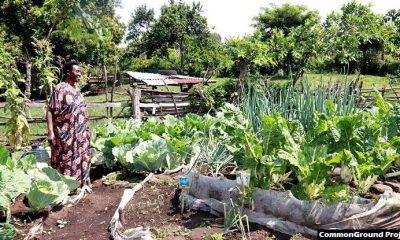
The field tour of Nansubuga CEFROHT Agroecology Training Farm showcased successful organic farming practices, illustrating the benefits of agroecology firsthand to lawmakers and stakeholders.

“I’m amazed at how a local female farmer can transform non-fertile land into a productive farm,” said Hon. Fatuma Ndangiza of the EALA delegation from Rwanda. “Agroecology is about access, safe food, resilient and equitable food systems, and environmental friendliness. What we see here is the right path for our small-scale farmers.”

The proposed regional agroecology law aims to protect smallholder farmers like Nansubuga by safeguarding their seeds, reducing reliance on costly chemical inputs, and shielding them from land grabs, thereby directly enhancing their resilience and livelihoods.

Representing EALA Speaker Rt. Hon. Joseph Ntakirutimana, Hon. Gideon Gatpan Thoar, Chair of the EALA Committee on Agriculture, Tourism and Natural Resources, emphasized the urgency to put the Agroecology policy and law in place:

“There is no law protecting agroecology farmers like Nansubuga. Their seeds are not protected, and they face intense competition from corporate-backed industrial systems. This deserves urgent attention.”

He added that lawmakers’ mandate requires them to legislate in the interest of East Africans, most of whom are smallholder farmers, and that firsthand field experience will strengthen the upcoming model law.

“So now, with this experience, we can push for a regional policy that empowers agroecology farmers and fosters resilient agriculture. Supporting them can lead to a brighter future for East African farming,” He added.

Hon. Fatuma Ndangiza revealed that the agroecology bill could be ready within a year, pending adequate funding, offering hope that smallholder farmers will have access to supportive legislation.

“East Africa cannot build resilient food systems without a unified agroecology policy and law. This meeting is a big step toward drafting a model law that reflects the needs of our farmers. At least by the end of our mandate in 2027, we want this bill in place,” she said. “Members of the agriculture committee have already been trained in agroecology, and thanks to CEFROHT and other partners, even more lawmakers now appreciate the importance of this legislation. It will move quickly.”

Experts at the meeting highlighted systemic biases that keep East African farmers impoverished. These include a longstanding emphasis on export-oriented industrial agriculture, corporate-controlled seeds, increasing pesticide and fertilizer use, and land grabs.

Dr. Million Belay, General Coordinator of the Alliance for Food Sovereignty in Africa (AFSA), warned that Africa is being pushed into an unsustainable corner.

“One of the legacies of colonialism is pushing us to export food instead of feeding our people. Chemicals, GMOs, and land grabs are increasing, and global actors now control food production.

A farm like this one shows the direction we should take.”

He went on to say that proper food security and environmental health depend on farmers’ control over their land, seeds, and output-what we call food sovereignty-empowering farmers to shape their future.

As part of the capacity-building process, EALA members visited the CEFROHT Agroecology Learning Center, where they witnessed demonstrations of intercropping and crop diversification, agroforestry systems, animal husbandry, water and pesticide trapping, among others.

Dr. David Kabanda, whose organization, the Center for Food and Adequate Living Rights (CEFROHT), hosted the delegation, noted that farmers are already successfully practicing agroecology, demonstrating the tangible benefits of this approach.

“We are pleased to support lawmakers with evidence and field-level experiences. Agroecology is not theoretical; farmers are already practicing it successfully. It is what we advocate for, the production of good food as well as environmental conservation,” he added.

Looking ahead, EALA announced a series of concrete steps to advance the regional agroecology agenda. The assembly plans to complete the Agroecology Bill process within a year, then conduct public hearings across all eight EAC Partner States to gather stakeholder input. The bill will be fast-tracked for debate and approval in the EALA plenary, with civil society expected to help secure the Heads of State’s assent. Once adopted, the law will become the EAC Agroecology Act, guiding and harmonizing agroecology efforts across the region.

As climate shocks intensify and millions of families depend on smallholder farming, the Mukono meeting marks a turning point in East Africa’s pursuit of sustainable, resilient food systems. The push for a unified agroecology law signals a growing regional recognition that the future of East African agriculture must be farmer-centered, biodiversity-based, and rooted in local knowledge.

Continue Reading

MEDIA FOR CHANGE NETWORK

East African lawmakers and CSO leaders are meeting in Uganda to draw up plans to promote Agroecology as an alternative to climate change mitigation.

Published

on

By Witness Radio team.

Mukono, Uganda — the East African Legislative Assembly (EALA) members and Civil society organizations (CSOs) leaders in Uganda are convening in Nakisunga, Mukono district today, 28th November, to discuss how to promote agroecology at the regional level and inspire a collective commitment to regional resilience.

Agroecology offers a robust, holistic approach to combating climate change by enhancing the resilience of food systems and reducing their environmental impact.

Spearheaded by the Center for Food and Adequate Living Rights (CEFROHT), the event emphasizes integrating agroecology into regional climate resilience strategies, especially as the East African Community (EAC) faces rising food costs, climate shocks, and declining soil health.

During the meeting, EALA members, together with CSOs, will explore how principles like crop diversification, soil regeneration, and community seed saving can directly improve smallholder farmers’ resilience and livelihoods, complemented by a hands-on field visit to the CEFROHT Agroecology Learning Center in Mukono.

The event has also occurred at a time when EALA is reviewing the East African Seed and Plant Varieties Bill, 2025, which is being criticized for undermining the role of smallholder farmers in seed saving, conservation, and the management of seed systems to promote healthy foods.

Players from CSOs include: Participatory Ecological Land Use Management (PELUM Uganda), Eastern and Southern Africa Small-scale Farmers’ Forum (ESAFF), Seed Savers Network Kenya, TABIO Tanzania, the Alliance for Food Sovereignty in Africa (AFSA), Slow Food Uganda, SEATINI, FIAN Uganda, and the Mukono District Local Government, among others.

The meeting will lay the groundwork for East Africa’s first Policy and Model Law on Agroecology, a long-awaited step toward sustainable and equitable agri-food systems that empower regional stakeholders to shape the future.

The event will be broadcast live on Witness Radio.

Continue Reading

MEDIA FOR CHANGE NETWORK

Kenyan farmers secure right to share local seeds in court ruling

Published

on

A small-scale farmer works at his maize farm where he plants indigenous seeds at Kyeleni village of Machakos, Kenya December 13, 2022. REUTERS/Monicah Mwangi Purchase Licensing Rights

NAIROBI, Nov 27 (Reuters) – Small-scale farmers in Kenya sang and celebrated on Thursday after a court ruling secured their right to carry on the traditional practice of sharing local seeds.

Kenya’s High Court said that part of a law banning the practice was unconstitutional, a ruling that farmer Samuel Kioko called a “great victory”.

The Reuters Daily Briefing newsletter provides all the news you need to start your day. Sign up here.

“It will be a relief for us farmers because we will be planting seeds that are familiar to us. We know where they come from, they are drought resistant and they have been in our lineage all along for many years,” he said in Kenya’s capital Nairobi after watching the court give the verdict online.

Under the 2012 “Seed and Plant Varieties Act”, anyone who saved uncertified seeds from their crops, then sold or shared them, could face fines or jail. The state-run Kenya Plant Health Inspectorate Service argues on its website the legislation was meant to guarantee seed quality and maximise yields.

A group of smallholder farmers from across Kenya petitioned the High Court in 2022 asking it to declare that the parts of the law imposing those penalties were unconstitutional.

A lawyer representing the farmers said the court in Machakos town, about 60 km (40 miles) southeast of the capital, had ruled the law did not treat farmers and commercial seed producers equally.

Parts of the law “granted extensive proprietary rights to plant breeders and there was no corresponding right that was given to the farmers. So, it favoured big commercial and corporate interests over the rights of farmers,” Wambugu Wanjohi from the Law Society of Kenya said.

Campaign group Greenpeace called the ruling a victory for “food sovereignty”.

The verdict, it said, affirmed that “the ancient right of farmers to save and share seeds supersedes commercial interests, reshaping the legal balance of power between communities and agribusiness worldwide.”

Karoly Bus is the inventor behind the waste-based concrete.

Source: reuters.com

Continue Reading

Resource Center

Legal Framework

READ BY CATEGORY

Facebook

Newsletter

Subscribe to Witness Radio's newsletter


Trending

Subscribe to Witness Radio's newsletter