
MEDIA FOR CHANGE NETWORK
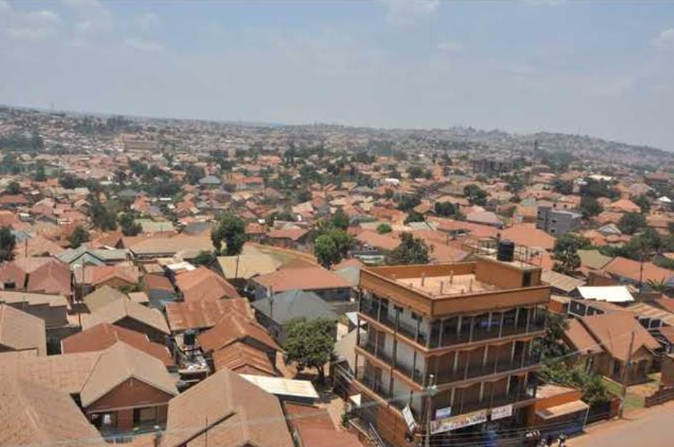
One killed, another injured as residents resist arrest over disputed Wakiso land

Related posts:
 Wakiso LCs warned against using official stamps to facilitate land grabbing
 Government orders arrest of notorious land grabber in Mubende district.
 Kikuube residents say Museveni misled on Kyangwali land.
 More than 500 Masindi residents live in fear as a tycoon targets their land.
Continue Reading
Related posts:
 One killed, another injured as residents resist arrest over disputed Wakiso land
 394,000 Land Titles Affected By Closure Of Ministry Of Lands Offices In Wakiso
 NEMA hindering environment restoration in Wakiso – leaders
 About 41 million people food insecure in E. Africa amid COVID-19 pandemic: UN
Related posts:

 Minister orders for reinstatement of a local community back onto its land.
 Kiryandongo farmer accuses minister of grabbing 100-acre land
 RDCs, Local Leaders Accused of Grabbing 70-Acre Ancestral Land
 Minister Nabakooba wants special land title issuance halted
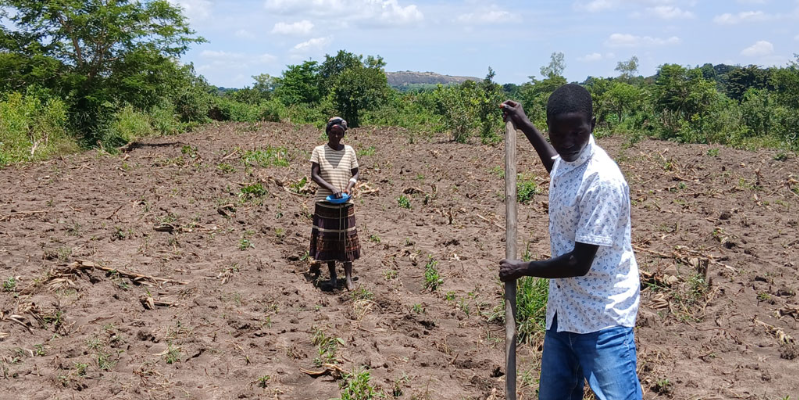
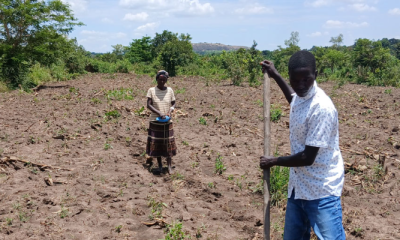
Krispus Adula and his aunt, Betty Akello, plant maize in their garden in Teyao Village, Ogur Sub-county, Lira District, on September 15, 2026. PHOTO/BILL OKETCH.
On a sunny Tuesday afternoon, Crispus Adula dug into the soil with a hand hoe in Teyao Village, Alwala Parish, Ogur Sub-county in Lira District. Behind him, his aunt, Betty Akello, followed slowly, planting maize seeds in a garden the family had spent months fighting to reclaim.
The land is part of 12 gardens that once belonged to Adula’s late father, Sylvesto Obile, and was formally restored to Adula and his two sisters, Jacklyn Anam and Immaculate Auma, on September 15, 2026.
Mr Obile died in 2019, leaving his children still young. Their mother, Silvia Amony, left the family home shortly afterwards and died in 2022.
Following their father’s burial, members of the Abwor Bako Omorikidi Clan met and agreed to place the children in the custody of their cousin, Oyugi. He was also entrusted with the family’s property, including the 12 gardens, four cattle, chickens and household belongings.
“After being handed over to our cousin, I dropped out of school in Primary Three because he was not taking good care of us,” Adula told Monitor.
He said that after turning 17 in 2025, he asked clan members to allow him and his siblings to return to their former homestead and begin living independently.
“So, when I reached 17 years of age in 2025, I demanded that clan members allow my siblings and me to go back to our former homestead, where our father died and left us, to start living on our own,” he said.
The siblings left Oyugi’s home in January 2025, prompting clan leaders to convene a meeting to formally return the family’s property.
By then, however, the cattle and chickens had disappeared, while Oyugi had reportedly hired out most of the 12 gardens to tenants and collected payments from them.
“It was only the gardens remaining,” Adula said. “But out of the 12 pieces, our cousin had hired out most of them, and he had taken money from those people.”
Clan members ordered Oyugi to return the land, and he agreed, except for two gardens which he claimed he had sold to raise money for the children’s school fees.
The dispute escalated when the siblings went to reclaim the two gardens.
“Our cousin came with his wife and found us digging the land, and they threatened to kill one of my sisters with a panga (machete) he was holding,” Adula recalled.
“We overpowered them, took the panga, and ran to the clan leader, and eventually to the LC1 chairman of Teyao Village, who referred us to the police,” he added.
According to Prossy Akello, an attorney with Redeem International, Oyugi and his wife later returned and began digging the same garden despite the children having reported the matter to police.
Police at Ogur Central Police Station charged the couple with criminal trespass and threatening violence before referring the case to Redeem International.
The organisation, a nonprofit that works with local law enforcement to combat violence and exploitation against widows and orphans in developing countries, supported the investigation and prosecution through its Lira City Field Office.
“We supported the police to conclude the investigation they had initiated, and then we supported the complainants to follow up the case — ensuring they were always present in court, and that their witnesses were always transported to attend,” Ms Akello said.
Redeem International also helped Adula return to school.
“We usually don’t pay school fees or give scholarships,” Ms Akello said, “but in this case our social worker did a needs assessment, and we looked out for other partners within Lira. We were able to secure a scholarship for Crispus, and right now he’s studying at one of the technical schools in Lira.”
Police completed their investigation, and Oyugi and his wife were summoned, recorded statements and were later arraigned before Lira Magistrate’s Court.
“The accused pleaded not guilty, and we had to go for a full trial,” Ms Akello said. “Judgment was delivered in June.”
Because both sides claimed ownership of the two disputed gardens, Magistrate Jonathan William Wamimbi ruled that either party could pursue a civil claim in court to determine ownership.
In the meantime, the magistrate ordered that the children, who were already in possession of the land, continue using it.
“That is why the children are still using the land,” Ms Akello said. “We’ve come back [today, September 15, 2026] to officially inform the public that these children will remain in possession until any other person moves to court by way of a civil suit to claim ownership.”
Bosco Adwale, clan chief of Abwor Bako Omorikidi, called for reconciliation between the relatives.
“Now that the matter has been resolved, we’re asking the children to forgive their cousin brother and his wife, for peace to prevail,” he said.
Bosco Otim, LC2 chairman of Alwala Parish and a member of the Area Land Committee, said the dispute also exposed a wider challenge of undocumented land ownership in the area.
“In the entire Teyao Village, there is only one person who has processed a land title,” he said.
John Kalisto Apita, a clan leader, said the dispute had been complicated but called on residents to learn from the case.
“This was a very complicated case, but I thank God it has been put to rest. I ask members of the community to pick a lesson from this land dispute,” he said.

Lira Assistant Resident District Commissioner Richard Okello [centre] hands over a package donated by Redeem International to Krispus Adula after he was officially restored to his land in Ogur Sub-county on September 15, 2026. PHOTO/COURTESY.
Michael Odongo, LC3 chairman of Ogur Sub-county, urged families to follow the law when distributing property left behind by deceased relatives.
Oyugi, for his part, said he no longer holds a grudge against his cousins and attributed his actions to being misled by “the devil”.
Jane Acola of Redeem International’s Lira Field Office said the case reflected a wider challenge facing widows and orphans in northern Uganda, where many households depend on land for their livelihoods.
“The majority of our people in northern Uganda derive their livelihood mainly from agriculture, but for production to take place there must be land. When there is a land conflict, you cannot do anything,” she said.
Source: monitor.co.ug
Related posts:
 Family seeks to reclaim 49 acres from Lyantonde district
 Lira farmers shun community stores
 Because of his 30 acres of land, a father was kidnapped and forced to abandon his two children alongside the road unattended to.
 How land grabs are causing food insecurity: A case of a community land rights defender in Mubende district forced to buy food for a family of 13 people for the last five years.

MEDIA FOR CHANGE NETWORK3 hours ago
How land divisions are fueling Wakiso’s slums

MEDIA FOR CHANGE NETWORK3 hours ago
One killed, another injured as residents resist arrest over disputed Wakiso land

MEDIA FOR CHANGE NETWORK3 days ago
Nabakooba orders probe into 1,500-acre land dispute

MEDIA FOR CHANGE NETWORK3 days ago
Lira siblings reclaim father’s land after bitter family dispute

MEDIA FOR CHANGE NETWORK3 weeks ago
Breaking: Sixteen Rooted in Resistance activists arrested and detained as they boldly protested Uganda’s oil ambitions.

MEDIA FOR CHANGE NETWORK4 weeks ago
Civil society organizations across East Africa have revived their campaign against the EAC Seed and Plant Varieties Bill 2025, just as the regional parliament opens the floor to public consultations.

MEDIA FOR CHANGE NETWORK4 weeks ago
Thirteen years after the Karuma Hydropower Project broke ground, countless people forced from their homes are still waiting for the compensation and resettlement they were promised.

MEDIA FOR CHANGE NETWORK3 weeks ago
Tanzania’s surge in conservation investments is under the UN spotlight, as allegations of indigenous land rights violations prompt an urgent call for the government to stop the evictions at once.

Witness Radio Documentaries4 years ago
Innovative Finance from Canada projects positive impact on local communities.

Witness Radio Documentaries8 years ago
Over 5000 Indigenous Communities evicted in Kiryandongo District

Witness Radio Documentaries8 years ago
Petition To Land Inquiry Commission Over Human Rights In Kiryandongo District

Witness Radio Documentaries8 years ago
Invisible victims of Uganda Land Grabs
-

 MEDIA FOR CHANGE NETWORK2 weeks ago
New revelations: TotalEnergies is investing in countries facing political and economic risks, raising fresh questions about the company’s investment strategy.
-

 MEDIA FOR CHANGE NETWORK2 weeks ago
Smallholder farmers were excluded from the consultative process for the East African Community Seed and Plant Varieties Bill, 2025: CSOs across the EAC call for a time extension and greater inclusion of smallholder farmers in shaping the bill.
-

 MEDIA FOR CHANGE NETWORK2 weeks ago
Hunger Soars in AGRA Countries Despite Decades of Green Revolution Push
-

 MEDIA FOR CHANGE NETWORK2 weeks ago
Nimule residents raise alarm over alleged land grabbing
-
 MEDIA FOR CHANGE NETWORK7 days ago
In Kasanda District, a grandmother faces eviction as her own grandchildren join forces against her.
-
 MEDIA FOR CHANGE NETWORK4 days ago
While hunger continues to grip the world, a new report highlights forests and forest foods as a hidden treasure trove of nourishment.
-
 MEDIA FOR CHANGE NETWORK4 days ago
After weeks behind bars, six anti-oil activists have been granted cash bail by the LDC Court.
-
 MEDIA FOR CHANGE NETWORK3 days ago
Lira siblings reclaim father’s land after bitter family dispute