Connect with us

MEDIA FOR CHANGE NETWORK

Inside Eastern DRC War: The untold story of grabbing land for local and indigenous communities.

Published

on

By Witness Radio Team

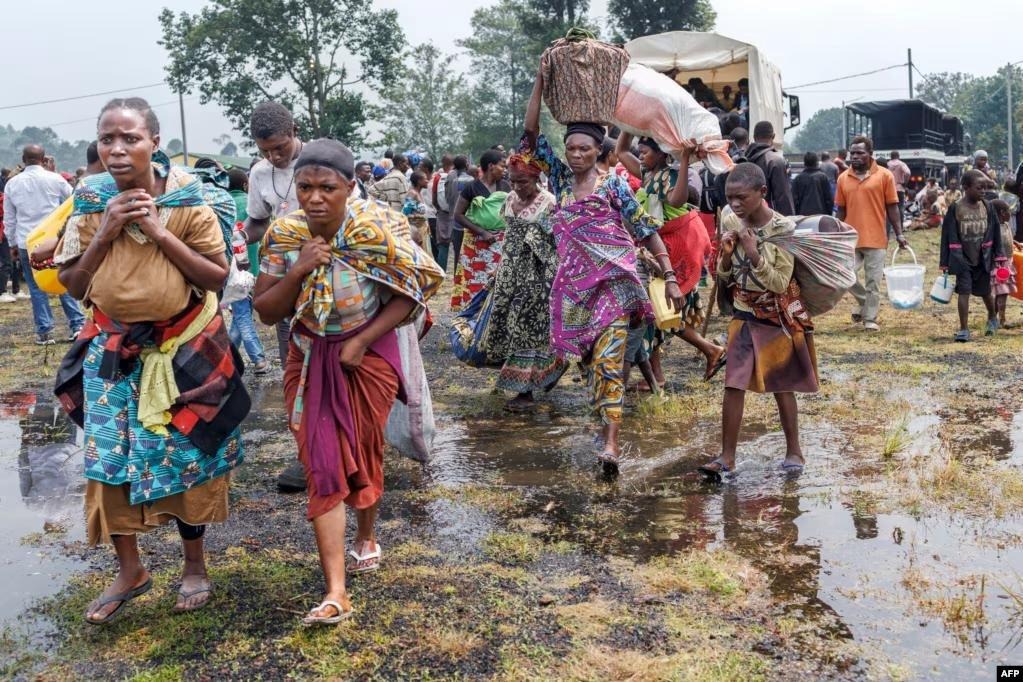
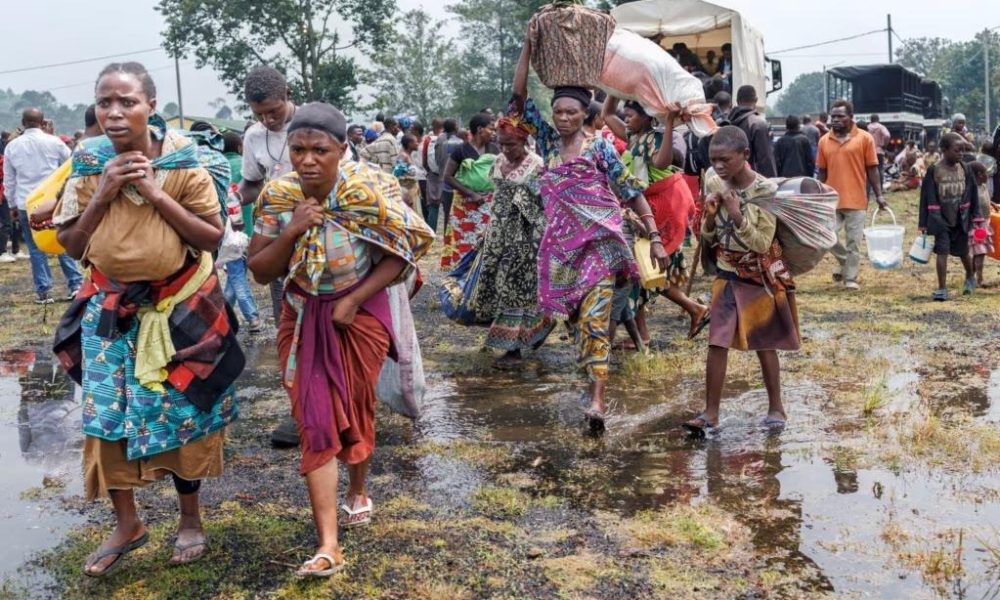
For millions in eastern DRC, the war is not an event; it is a daily reality that people have lived in for the past three decades.

After being dispossessed from his land, Moise (not the real name) fled to a displacement center he believed to be safer for temporary settlement.

“I was severely affected by the conflict, as it turned my entire life upside down. In our area, clashes, armed attacks, and insecurity have become frequent. We would hear gunshots and screams, and sometimes people would flee from their homes to seek refuge, as these incidents often took place at night or early in the morning. That is what happened to my family,” Moise told a Witness Radio journalist.

Moise, once reliant on his farmland for his livelihood, illustrates how land dispossession devastates small-scale farmers across the continent, highlighting the broader human toll.

“I owned land that I used primarily for agriculture. This land enabled me to feed my family and sell a portion of the harvest to cover other needs. We grew food crops there, such as cassava, beans, maize, sweet potatoes, and bananas.” He added.

Before the escalation of conflict, Moise says, life—though difficult—had some degree of stability.

“We were able to work, farm, sell our produce, and organize our family lives with a sense of hope. During the conflict, everything changed: insecurity took hold, displacement became massive, economic activity plummeted, and the population now lives in fear.” The now-displaced victim revealed

To survive, Moise relies on aid and lives in difficult conditions, highlighting ongoing hardship and the urgent need for justice.

Like Moise’s story, these are the daily struggles, confrontations, fears, and threats faced by the majority of citizens in the Eastern region of DRC, a part of a conflict-affected country where war has persisted for decades. The cost of this prolonged violence has been immense, claiming countless lives and driving widespread dispossession.

Affecting the provinces of North Kivu and South Kivu, victims have endured decades of armed conflict, fueled by weak state control, regional tensions, and competition over mineral-rich land. Since its resurgence in 2021, M23 has seized large areas of territory, often in strategic and resource-rich zones.

The March 23 Movement (M23) is a rebel group operating in eastern DRC. According to observers, fighting has been concentrated in mineral-rich areas, many of which are now under M23 control. In an effort to protect its sovereignty, the Congolese Army, the Armed Forces of the Democratic Republic of the Congo, has repeatedly defended its territory but has often been overpowered by rebel forces.

Over 7 million people are internally displaced in DRC, with hundreds of thousands losing their land amid escalating clashes.

Sources reveal that the seized land is intended to resettle landless Rwandans and to provide farmland for settlers.

The coalition “Mobilization for the Safeguarding of Congolese Sovereignty and Autonomy (MOSSAC) International outreach coordinator, Dr. Deborah S Rogers, in an interview with Witness Radio, explained that Rwanda has extended its control over lands that formerly belonged to DRC citizens, many of whom have been killed by armed groups, further continuing dispossession.

“Rwanda seeks land because it is a small country with a growing population in need of more space. In the areas under their control, terror tactics are used to force people out, and when victims return to their land, they often find it occupied by Rwandans,” Dr. Deborah revealed.

On the ground, Dr Deborah alleges that the land is grabbed for economic purposes, claiming that armed groups have developed sophisticated systems of economic control.

“Land is grabbed either for agriculture or resource exploitation. Armed actors also profit from natural resource extraction, including minerals, timber, charcoal production, and bushmeat. But in the big cities like Goma and Bukavu, the M23/AFC authorities impose taxes on goods, businesses, and transport.” She added.

Victims say harsh conditions in displacement camps often force them to return to their land once violence subsides, but what they find is deeply distressing: “their land occupied, sometimes by people they describe as non-Congolese”.

“When the situation became unbearable, where we had taken refuge due to lack of food, shelter, and the means to start over, I decided to return home. But when I got there, I found other people already settled on my land, working in the fields and living in my house. They made it clear that I could no longer reclaim it,” Moise told Witness Radio.

But how do these alleged non-Congolese settlers take over the land? Another conflict victim describes what appears to be an organized pattern—one in which forced displacement creates the opportunity for land seizure, often under armed protection.

“They move in when we are forced out and occupy our land without consent. In many cases, they are backed by armed men,” the victim told Witness Radio, adding that the situation has not only affected family heads but also their families.

“My family is currently living in precarious conditions. We have lost a large part of our means of subsistence. We are facing food insecurity, as well as difficulties in securing housing, accessing healthcare, and sending the children to school,” the victim further added.

To restore peace in the war-torn Congo, several initiatives have been introduced. Among the most recent is a deal coordinated by United States President Donald Trump, aimed at bringing peace efforts in the DRC. However, the peace agreements, which are still in their early stages, have already attracted criticism.

The recent acquisition of the Chemaf cobalt mine in the Congo by the U.S.-based firm Virtus Minerals is being seen as one of the first fruits of the deals, reinforcing what war watchdogs have long argued: that peace deals are only transactions that are primarily targeting Congo’s mineral wealth and land, rather than contributing to peace, especially as the conflict remains ongoing.

Oakland Institute’s Policy Director, Frederic Mousseau, recently told our journalist in an interview that the recent deals primarily benefit the United States and Rwanda, arguing that they are not aimed at ending the conflict but at formalizing access to Congo’s mineral wealth.

“The peace agreement gives access to the US and Rwanda to Congo’s mineral resources. Rather than securing lasting peace for the suffering Congolese people, it’s all about business and money.” Frederic told Witness Radio.

But beyond peace, which has not yet been achieved, Frederic says, the Congolese government should ensure minerals benefit all, and that land is returned to its rightful owners. “Lasting peace isn’t enough; the country’s wealth must ultimately serve its people. The government needs to ensure that any deals it makes benefit the broader economy and ordinary citizens, not just a small elite in the capital or provincial centers,” he added.

Victims continue to pray that peace prevails so they can once again live normal lives.

“My prayer for the future is for true and lasting peace to return to eastern DRC. I hope that the guns will fall silent, that displaced persons may return home, that everyone may reclaim their land and their dignity, and that justice may be served for the victims.” Moise concluded.

Continue Reading

MEDIA FOR CHANGE NETWORK

In Kasanda District, a grandmother faces eviction as her own grandchildren join forces against her.

Published

on

By the Witness Radio team

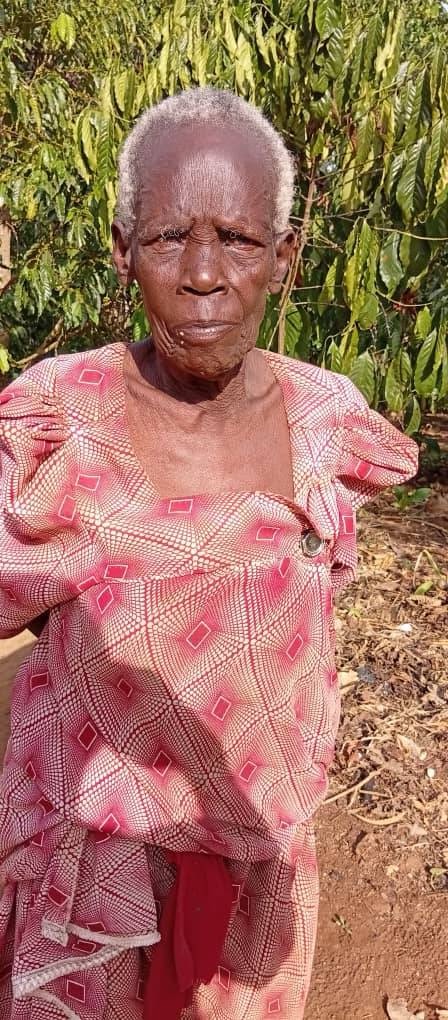
For over sixty years, Mastula Nyirabatusi has cherished her land in Kyakayongo Village, Nalutuntu Sub-county, Kasanda District. Now 80, she sees it as the heart of her life, a place she bought in 1964 and where she has raised her family for generations.

Today, Mastula finds herself locked in a bitter struggle with two of her grandchildren over the very land she calls home.

The ongoing battle has left the older woman frail. Her family says the relentless conflict and looming eviction have taken a toll on her health.

Mastula’s family says her grandchildren, Lovinsa Mukantagala and Ninkuuze Esther, claim that the approximately 10-acre piece of land belongs to their late father, Jamil Kaberuka.

However, Mastula disputes the claim. She says she bought the 10-acre land in Kyakayongo from Nyonyintono Musolobindo in 1964 for 130 shillings and has lived on it ever since.

What began as a family quarrel at local council meetings has spilled into the courts, tearing Mastula’s family apart. One of her sons, Byakatonda Diriisa, has spent over seven months in jail for defending his mother’s land.

But the family’s land dealings go further back. Mastula’s brother, Sulaiman Baragwiza, lived in Mityana-Busundo. According to Mastula’s family, he died leaving behind two sons, Muzindusi Abdallah and Jamil Kaberuka.

According to the family, Mastula later sold land that had belonged to her late brother, Sulaiman Baragwiza, in Mityana and used part of the money to acquire about three acres in Kyamwendwa Village, Kassanda District, for Baragwiza’s two sons.

In 1978, Mastula handed the land agreement to Muzindusi Abdallah, the elder of the two brothers, after he had started a family. Kaberuka, however, remained under Mastula’s care because he was younger at the time.

Florence Nabawanuka, one of Mastula’s daughters, says Kaberuka left his aunt’s home when he grew up and was never heard from again.

“Kaberuka disappeared from the village, and none of us got to know of his whereabouts ever since then,” Nabawanuka says.

In 2015, Kaberuka’s children, Lovinsa and Ninkuuze, appeared and presented an agreement they said showed Mastula had sold her 10 acres to their late father.

The document allegedly indicated the transaction took place in 1998. They first presented it to the Local Council Two committee and later to the Local Council One committee, chaired at the time by Okello Emmanuel.

Local leaders interviewed for this story questioned the document because of inconsistencies in the date and circumstances under which it was allegedly made.

Mr. Oyiire Samuel, the chairperson of Kyakayongo Village, says residents had always known Mastula as the person occupying and using the land.

“We all grew up seeing Mastula as the rightful owner settling on that land. The agreement Kaberuka’s daughters presented is fake because it shows it was written in 1988, yet their father left the village in 1985. Therefore, he could not have been given any land. Mastula also says she has never sold her land,” Oyiire says.

Oyiire wondered how the girls could forcefully take their grandmother’s land when he took care of their father. “This is totally unbelievable and can only be done by an insane person. They should thank the older woman instead of trying to take her land. At eighty, where do they want her to go?” he added.

To end the dispute, the local council advised Mastula to surrender part of her 10-acre land to the two grandchildren. Mastula agreed and gave them about two and a half acres from the 10-acre land.

Although the family says the parties signed an agreement, they told Witness Radio they were surprised when the grandchildren took the matter to court, claiming Mastula was illegally settling on their land.

The Grade One Court in Kiganda eventually ordered the grandchildren to vacate the land and keep away from Mastula. The grandchildren appealed to the High Court in Mubende.

However, the Mubende High Court overturned the Grade One Court judgment, ruling that Mastula should remain on the land during her lifetime, after which the grandchildren could take possession when she dies.

The court’s decision only deepened the rift, as Mastula’s family voiced their strong disagreement with the ruling.

Mastula’s children were dissatisfied with the decision and subsequently appealed to the Court of Appeal, where the matter remains pending.

As the legal battle dragged on, its ripple effects began to touch every corner of Mastula’s family.

According to accounts gathered by Witness Radio, the group, with support from area police, caused the arrest of Mastula’s son, Byakatonda Diriisa. The court accused him of trespassing on his mother’s land and sentenced him to one year in jail.

“He was supporting our mother to resist the eviction. Because he was the obstacle, they decided to lock him in jail to complete their plans,” Nabawanuka added.

According to Diriisa’s wife, Nabirye Amiina, he has spent more than seven months in custody, which has affected both his family and Mastula’s family.

“We are no longer getting all the necessary family needs since my husband was taken to prison, though he is innocent. This also caused four of our children to drop out of school due to lack of fees,” she added.

For Mastula’s family, the land dispute is more than a fight over property. It has shaken the health of an 80-year-old matriarch, cut off the family’s livelihood, and, relatives say, shattered the education of four children.

For Mastula, this legal storm comes at a time when she should be enjoying peace on the land she has tended for decades. Instead, her family says her health has declined steadily as the conflict rages on.

Mastula’s lawyer, Alex Tusiime, says his client has evidence supporting her claim and calls for a fair hearing in court.

“We are going to try our level best to see that Mastula gets justice. There could have been delays in the past by her former lawyers, but we are to do whatever it takes because we have the proof that the land belongs to Mastula,” Tusiime added.

Continue Reading

MEDIA FOR CHANGE NETWORK

Nimule residents raise alarm over alleged land grabbing

Published

on

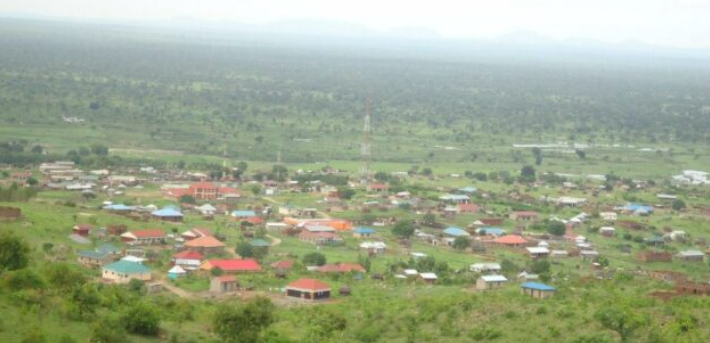
Residents of the border town of Nimule in South Sudan’s Eastern Equatoria state have raised concerns over alleged land grabbing, accusing some members of the South Sudan People’s Defence Forces (SSPDF) of occupying ancestral land and forcing local residents from their property.

The concerns were raised on Tuesday during a monthly forum on women’s rights to land and property organised by the Women’s Foundation for Humanity.

Andua Florence, a Nimule resident, told Radio Tamazuj that some army personnel had allegedly occupied her family’s land. She said her case was before the High Court in Nimule but that she was still waiting for a ruling.

“My case started from the B-court, then went to the county court, and finally the county court directed me to transfer it to the High Court,” Florence said. “When my case was transferred to the High Court, I had to get a lawyer.”

Florence said she had spent about 6 million South Sudanese pounds pursuing the case and was waiting for the court to deliver its ruling.

“This is my grandfather’s place, and we are the landowners of this place,” she said. “We are currently the seventh generation on that piece of land.”

Florence alleged that the people occupying the land are soldiers who claimed to have settled there in the 1990s.

She said the land was occupied while she was in Uganda as a refugee and that she had struggled to reclaim it since returning.

Florence said several land disputes in Nimule had reached the High Court, with some cases remaining there for nearly a year without a ruling. She said the lengthy legal process had imposed a financial burden on families pursuing their claims.

Grace Juan, a female chief in Nimule, echoed the concerns, saying many residents are being forced from their land.

Dorothy Drabuga, founder and executive director of the Women’s Foundation for Humanity, said land grabbing and inheritance rights were among the issues discussed during the monthly forum.

“We had a meeting with a women’s group. It is a monthly forum where we look at the challenges affecting women in Nimule, especially land rights and the right of inheritance,” Drabuga said.

Drabuga said some land disputes had moved through several levels of the court system and were now before the High Court, where the parties had hired lawyers.

“These cases have been going on for almost a year,” she said, adding that some people summoned to court had failed to appear.

Drabuga said some of the disputes involved ancestral land where generations of families had lived and buried relatives.

“This is ancestral land where the parents and grandparents have been buried, but somebody from another state is claiming that this land belongs to him or to them,” she said.

Drabuga said she is aware of at least five such cases before the High Court.

“There are many. So far, the ones I am aware of are five,” she said.

She said the failure of some parties to attend court had contributed to delays, but expressed hope that they would appear at upcoming hearings.

South Sudan has struggled with land disputes and competing claims over property, particularly in urban and border areas, where population movements and displacement have complicated land ownership.

Continue Reading

MEDIA FOR CHANGE NETWORK

New revelations: TotalEnergies is investing in countries facing political and economic risks, raising fresh questions about the company’s investment strategy.

Published

on

By the Witness Radio Team

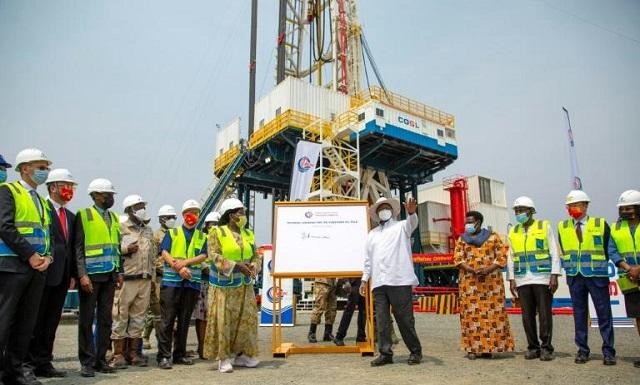
Oil may not yet flow from Uganda’s wells, but for people near the oil fields in midwestern Uganda and along the pipeline corridor, the oil saga has been shaping their lives for years.

They have felt its impact through land they claim is no longer theirs, homes uprooted, roads and infrastructure cutting through fields they once cultivated, and lingering uncertainty after the announcement that their land was needed for a project promising to reshape Uganda’s future.

Uganda stands on the brink of a moment waited for nearly twenty years. The nation is set to produce its first commercial oil this September, and the government touts’ oil as a gateway to new revenue, jobs, infrastructure, and a path toward middle-income status.

Yet as Uganda readies itself for its first barrels, new findings about the French oil giant at the industry’s heart raise a broader question: beyond profits, what is at stake?

These revelations also shed light on TotalEnergies’ broader investment strategy and its growing presence in countries marked by deep political, economic, and human-rights challenges.

TotalEnergies is the operator of the Tilenga oil project in western Uganda and a major shareholder in the East African Crude Oil Pipeline (EACOP), which is intended to transport crude from Uganda’s oil fields to the Tanzanian coast.

A 2026 analysis by German environmental organization Urgewald, based on its Global Oil & Gas Exit List (GOGEL), found that more than half of TotalEnergies’ planned short-term oil and gas development is located in countries classified as autocracies or hybrid regimes.

Of the 7,829 million barrels of oil equivalent identified by Urgewald as part of the company’s planned short-term development, 4,178 million barrels are in those countries. More than 3,700 million barrels are also in countries classified as having high or extreme political and economic risks.

Uganda is among the countries listed in the analysis. Together, Uganda and Mozambique account for about 40 percent of TotalEnergies’ planned short-term upstream expansion. When Iraq is included, the three countries account for more than half of the company’s planned expansion.

The findings do not suggest that Uganda, Mozambique and Iraq share the same political systems or social circumstances. Instead, the three countries stand out in Urgewald’s analysis because of the scale of TotalEnergies’ planned upstream expansion there.

In Uganda, the company is involved in the Tilenga oil project and EACOP. In Mozambique, TotalEnergies is involved in the Mozambique LNG project, while Iraq is another major destination for the company’s planned upstream expansion.

Taken together, these findings position Uganda’s inaugural oil production as a key piece in TotalEnergies’ sweeping global ambitions.

For communities touched by Uganda’s oil ventures, the promise of economic transformation has often arrived as land disputes, compensation battles, and resettlement struggles—realities woven into the fabric of these projects.

The EACOP pipeline carves its way through ten Ugandan districts, demanding land for its path and the infrastructure that follows.

While officials insist that land acquisition and compensation have been handled justly, many in affected communities voice grievances over what they see as insufficient payment for their land, homes, crops, and possessions.

Among them is Bwowe Ismail, a resident of Bethlehem village in Kyotera District. Bwowe told Witness Radio that his land was taken for the project after he demanded compensation he believed matched the value of his land and property.

He says that instead of receiving the compensation he sought, authorities intimidated him and later arrested him.

“Instead of compensating me fairly as I wanted, state authorities intimidated [me], enabled my arrest and accused [me] of sabotaging a government initiative,” Bwowe said.

Bwowe says that on one occasion he was arrested and accused of stealing money from a wealthy man in his village, an allegation he denies.

“They arrested me [and said] that I stole money from someone. I am a respected man in the society and could not do this. They just did it to shame me,” he said.

According to Bwowe, TotalEnergies offered to support his legal representation if he agreed to sit with the company and accept the compensation, but he refused.

He says that after he continued to reject the compensation and resisted what he described as intimidation, the government sued him and others who refused compensation. It asked the court to allow the money to be deposited into court accounts. The court ruled for the government.

Bwowe’s ordeal mirrors a broader struggle over land acquisition and compensation faced by communities in Uganda’s oil regions. More broadly, his story reveals how these conflicts can spiral far beyond the loss of land itself.

In its report, Our Trust is Broken: Loss of Land and Livelihoods for Oil Development in Uganda, Human Rights Watch reported that EACOP and other oil developments have affected more than 100,000 people in Uganda and Tanzania. The report also raised concerns about compensation, resettlement, and the effects of oil development on communities and biodiversity.

For many affected communities, seeking justice remains an uphill battle. Their worries about Uganda’s oil projects extend well beyond land.

Environmental activists and organizations challenging Uganda’s oil expansion have found themselves facing arrests and criminal charges.

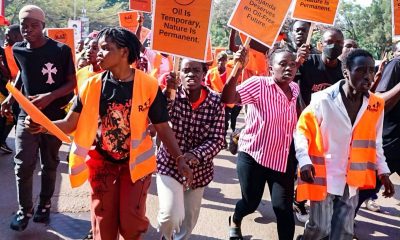
In August, 20 youth activists associated with Rooted in Resistance were arrested while delivering petitions to TotalEnergies and Parliament calling for an end to fossil-fuel expansion.

These arrests are part of a growing pattern of detentions and prosecutions targeting activists who oppose EACOP and other oil projects.

Brighton Aryampa, team lead at Youth for Green Communities, an organization that provides legal representation to environmental activists, says the treatment of protesters raises questions about Uganda’s civic space.

“The government is deliberately using legal action against Stop EACOP activists to suppress dissent, free speech, the right to peaceful protest, and public participation. This taints Uganda as a country that undermines democratic principles of free expression and open discourse, as hundreds of Stop EACOP activists have been arrested and charged,” Aryampa said. Concerns about civic space arise as Uganda faces mounting criticism for its record on political freedoms, free expression, treatment of human-rights defenders, and access to justice.

The country ranks 125th out of 142 countries in the World Justice Project’s Rule of Law Index. Freedom House classifies Uganda as “Not Free”, while CIVICUS gives the country a “Repressed” civic-space rating of 28 out of 100.

All these conditions shape the complex landscape in which Uganda’s oil projects are taking root.

Urgewald describes TotalEnergies as one of the world’s most aggressive oil and gas expanders.

Its 2026 analysis found that TotalEnergies has the largest short-term expansion plans among its major oil and gas peers in authoritarian states and countries classified as high-risk for business.

Sonja Meister, an energy campaigner at Urgewald and author of the analysis, says the company is taking significant risks through its expansion strategy.

“TotalEnergies is taking a huge risk with its fossil fuel expansion and disregarding the repercussions for communities on the ground. This game of roulette has serious consequences for civil society, ecosystems, and the climate alike,” Meister said in an email exchange with Witness Radio.

For Uganda, the significance of the findings lies not just in the amount of oil expected to be produced but in where the country’s projects sit within TotalEnergies’ wider portfolio and what that suggests about the company’s approach. This matter because Uganda is one of several countries where the company pursues major upstream investments despite political, economic, and governance risks identified by organizations such as Urgewald.

Uganda is one of several countries where the company is pursuing major upstream investments despite political, economic, and governance risks identified by organizations such as Urgewald.

This does not mean TotalEnergies’ investments will have identical impacts everywhere or that Uganda’s oil sector will mirror outcomes seen in other countries. Still, it raises pressing questions about how the company weighs political and economic risks, safeguards communities, and responds to human-rights issues as they emerge.

It also sparks important questions about how the company evaluates political and economic risks, shields communities during major developments, and handles human-rights concerns as they surface.

TotalEnergies’ expansion also depends on access to financial markets and investors. According to Urgewald’s analysis, bonds have become an increasingly important source of financing for TotalEnergies compared with loans.

Among the company’s major investors are French financial institutions including Crédit Agricole and Amundi. Deutsche Bank, primarily through DWS, is also a major investor, while German DZ Bank, primarily through Union Investment, is another significant investor.

Urgewald notes that these investors have yet to pledge to stop buying new TotalEnergies bonds, urging financial institutions to rethink their ties to the company and its fossil-fuel ambitions. This financing dilemma is pivotal because TotalEnergies’ expansion hinges on continued access to capital and investors.

Meister says continued expansion depends heavily on access to finance. “TotalEnergies relies on the financial industry’s continuous support. Without new bonds, it would be much harder for the group to finance its destructive expansion projects such as ‘Mozambique LNG’ or ‘EACOP’,” she said.

She said banks and investors financing the company should reconsider their role.

“The banks and investors involved must recognize their responsibility and not sink further funds into these risky endeavors,” Meister said.

The government has hailed Uganda’s first oil production as a landmark economic achievement.

For communities living in the shadow of oil developments, however, the road to first oil has already meant land seizures, compensation wrangles, forced relocations, and at times, direct clashes with authorities and oil firms.

Meanwhile, Urgewald’s research situates Uganda within a sweeping trend of TotalEnergies’ global fossil-fuel expansion, especially in countries flagged for serious political, economic, or governance risks.

Witness Radio sought a response from TotalEnergies Uganda to the concerns raised in this story, including issues relating to land acquisition, compensation, treatment of protesters and the company’s wider expansion strategy. We contacted the company’s Corporate Affairs Manager, Anita Kayongo, by email and telephone but had not received a response by the time of publication.

Continue Reading

Resource Center

Legal Framework

READ BY CATEGORY

Facebook

Newsletter

Subscribe to Witness Radio's news and report updates


Trending

Subscribe to Witness Radio's news and report updates