Connect with us

MEDIA FOR CHANGE NETWORK

Rising fertilizer dependence sparks debate over Africa’s agricultural future; experts call for urgent critical review process.

Published

on

By Witness Radio Team.

In March this year, the United Nations World Food Program (WFP) warned that the number of people facing acute hunger globally could rise sharply if escalating conflict in the Middle East continues to destabilize the global economy, projecting that nearly 45 million additional people could slide into acute food insecurity.

Since 28 February 2026, the United States and Israel have been engaged in a war with Iran and its regional allies. The conflict began when the US and Israel launched airstrikes on Iran, targeting military and government sites and assassinating several Iranian officials, including Supreme Leader Ali Khamenei. Iran responded with missile and drone strikes on Israel, US bases, and US-allied Arab countries in West Asia, and the temporary closure of the Strait of Hormuz, disrupting global trade.

As global tensions continue, experts have revealed that they are disrupting fertilizer supply chains and driving up prices, an issue likely to threaten food security and make policymakers feel responsible for safeguarding Africa’s future.

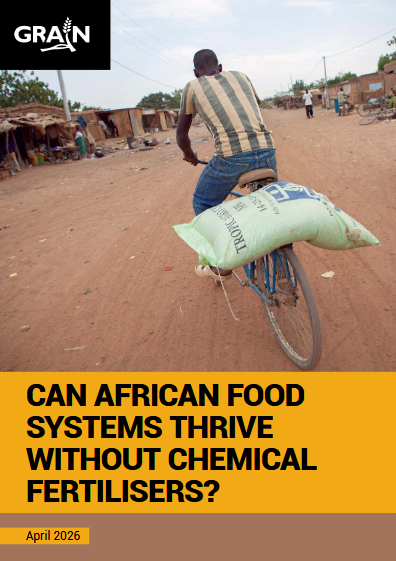
A recent report by GRAIN, an international Non-Governmental Organization (NGO), argues that Africa’s increasing reliance on imported chemical fertilizers is exposing farmers and food systems to economic, political, and environmental risks.

Titled “Can African Food Systems Thrive Without Chemical Fertilizers?”, the report links recent fertilizer price spikes to conflicts such as the Russia-Ukraine war and the recent escalation involving Iran, Israel, and the United States. According to the report, these crises have disrupted the movement of fertilizers and raw materials, such as natural gas and sulfur, pushing prices beyond the reach of many African farmers.

According to the report, the African fertilizer market is currently worth around US$10–15 billion and is projected to grow to US$20 billion over the next four years. It adds that the largest fertilizer manufacturers — including Yara of Norway, OCP of Morocco, PhosAgro of Russia, Nutrien of Canada, and Mosaic of the United States — are seeking to expand their presence in this fast-growing, highly profitable market.

GRAIN researcher Ange David Baimey told the Witness Radio team that growing concerns about the ongoing impact of global conflicts on African agriculture drove the investigation.

“As you can see, the recent crisis involving Iran, the USA, and the Middle East created a lot of uncertainty concerning how fertilizers can continue reaching African countries. Before this, we also had the Ukraine crisis and COVID-19. If you look at the last six years, these crises have seriously affected agriculture in Africa.” Ange, who participated in the research, told Witness Radio.

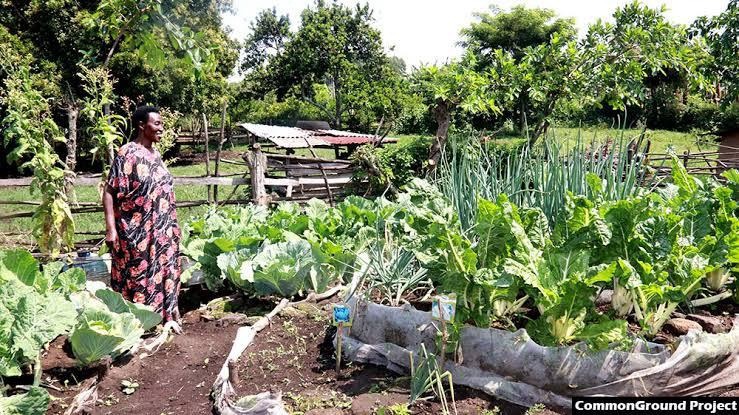
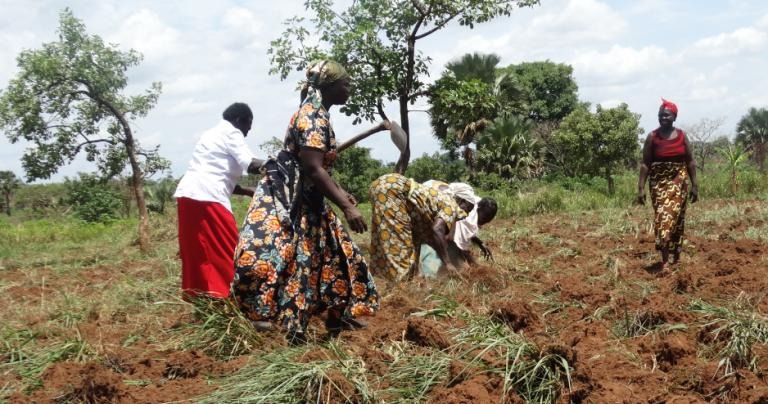
For decades, many African governments, donors, and agribusinesses have promoted chemical fertilizers as essential for increasing food production. However, the report highlights that relying on organic and sustainable practices-such as indigenous knowledge, crop diversity, and soil fertility methods-can be safer and more resilient. Showcasing successful case studies can help policymakers see practical alternatives to dependency.

“The only solution to the best agricultural practices is not chemical fertilizers. Farmers have tested and agreed that organic fertilizers are the answer. Ange further mentioned.

According to the report, the push for chemical fertilizers accelerated during the Green Revolution period, driven largely by multinational agribusiness interests seeking profits from agricultural inputs.

“The Green Revolution is not the beginning of agriculture in Africa. Our systems existed before chemical fertilizers. What we see now is a system where companies are making profits while creating dependency.” He said.

The report notes that many African countries import significant quantities of fertilizers from Gulf countries, including Saudi Arabia, Qatar, and Oman. Countries including Sudan, Tanzania, Kenya, and Mozambique remain highly dependent on these imports, making them vulnerable to supply disruptions and rising global prices.

Although African governments spend billions of dollars on fertilizer subsidy programs, many small-scale farmers still struggle to afford the products. In some countries, fertilizer prices are significantly higher than global averages due to import dependency, market concentration, and the dominance of multinational corporations in the supply chain.

“In our research, we also discovered that African farmers often pay more for the same fertilizers than farmers in Europe or the United States. The market is controlled by powerful companies whose goal is profit.” Ange explained.

The report identifies major corporations such as Yara International, OCP Group, and Dangote Group as key players shaping Africa’s fertilizer markets.

“These companies have huge influence and power in African agriculture. Governments must examine even discussions around continental trade agreements carefully because the same multinational companies may continue dominating the market.” Ange observed.

Beyond economic concerns, the report also highlights environmental and health impacts associated with chemical fertilizers, including soil degradation, water pollution, and increased pesticide use. The report advises African countries to adopt organic approaches to improve their yields, human and soil health, and to avoid environmental shocks.

“A change of course off the chemical fertilizer treadmill and towards agroecology is even more urgent in the face of the climate crisis. Climate scientists are calling today for a 42% global reduction in fertilizer use by 2050, to keep the planet livable.” The report noted.

Experts urge African leaders to use these global shocks as an opportunity to rethink Africa’s agricultural direction. “If you are dependent upon another person for your food, what happens when that person cuts off access? That is the situation Africa is in. The COVID crisis, the Ukraine war, and now the Gulf crisis all prove that reliance on imported fertilizers is dangerous. Africa can feed itself. The question is whether governments are willing to assist with that transition.” He concluded.

Continue Reading

MEDIA FOR CHANGE NETWORK

Ten out of sixteen Rooted in Resistance activists now face charges and have been sent to Luzira Prison after standing up against Uganda’s oil development.

Published

on

By the Witness Radio Team

Ten young members of the Rooted in Resistance Movement have been charged by a Buganda Road Court magistrate and sent to Luzira Prison after their arrest during a protest challenging Uganda’s oil projects.

On Monday morning, August 31, 2026, the activists joined more than 16 members of their youth-led movement in a bold attempt to deliver petitions to Parliament and TotalEnergies’ offices in Kampala, voicing strong opposition to Uganda’s ongoing investment in fossil fuel projects such as the East African Crude Oil Pipeline (EACOP).

After a night in police custody, ten of the activists were brought before the Buganda Road Chief Magistrate’s Court on Tuesday, September 1.

They were charged with being a nuisance on a public road, contrary to Section 67(1)(c) of the Roads Act, Cap. 346.

The accused, Rahmah Namuddu, Dorothy Asio, Sharifah Nantongo, Sharon Shaluwatino, Nyamadri Lucky, Daniel Mugabe, Shakirah Kasoga, Isaac Akampurira, Ivan Ochola and Enock Opolot pleaded not guilty to the charges read to them.

The activists were represented by lawyers Counsel Peter Odur and Counsel Doreen Namara. The court subsequently remanded them to Luzira Prison until September 18, 2026.

The remaining six activists arrested during the protest were still being held at Wandegeya Police Station by Tuesday. They are Mukiibi Isaac, Mawanda Arafat, Mugerwa Nicholas, Opio Innocent, Friday John and Onyango Ronald.

The arrests followed a vivid demonstration in which activists, clad in orange T-shirts emblazoned with “Rooted in Resistance,” marched with banners and placards denouncing Uganda’s oil ambitions.

Among the messages displayed were “No to Oil,” “Oil is temporary, nature is permanent,” and “Uganda deserves an oil-free future.”

Rooted in Resistance, formerly known as Students Against EACOP, has become a persistent voice opposing fossil fuel expansion in Uganda, particularly targeting EACOP and the Tilenga oil project.

In a statement shared on social media, the movement emphasized its commitment to non-violence as Uganda nears oil production. The activists insisted that economic progress must not silence those who dare to question it.

The group demanded the immediate release of their fellow activists and condemned the government’s use of excessive force against peaceful demonstrators.

“We demand their unconditional release and call upon the government to refrain from further using lethal force against peaceful protesters amidst a societal climate and economic collapse in Uganda,” Rooted in Resistance said in a post on its X account.

These arrests are just the latest in a series for Rooted in Resistance, whose members have faced detention during earlier protests against Uganda’s oil ventures.

On August 10, 2026, four members of the movement were also arrested and charged with being a public nuisance, the group said.

In its latest petition, Rooted in Resistance urged Parliament to rethink what it sees as Uganda’s heavy reliance on petroleum for development.

“Rooted in Resistance calls upon Parliament to exercise its constitutional responsibility to protect the national interest and reconsider Uganda’s petroleum-dependent development model,” the statement reads.

The activists argue that their petition is based on citizens’ constitutional rights to participate in governance, express themselves and assemble peacefully, including the rights provided for under Article 38 of the Constitution.

They are urging Parliament to stop expanding oil infrastructure and to launch an open, transparent review of Uganda’s petroleum policies and agreements.

The movement also demands greater government investment in areas like agriculture, manufacturing, renewable energy, tourism, technology, education, innovation and homegrown enterprises.

The activists warn that tying Uganda’s future to petroleum extraction could trap the country in fossil fuel dependence and put communities and ecosystems at risk.

They have urged TotalEnergies to channel its investment and expertise into sectors that promise lasting benefits for Ugandans.

“We urge TotalEnergies to redirect meaningful investment and expertise towards renewable energy, sustainable agriculture, agro-processing, local manufacturing, tourism conservation, technology, skills development and youth enterprise which support livelihoods,” the group said.

This latest protest unfolds as Uganda edges nearer to commercial oil production, with major projects like TotalEnergies’ Tilenga and CNOOC’s Kingfisher set to shape the nation’s oil future.

EACOP, a 1,443-kilometer heated crude oil pipeline, is being developed to transport crude oil from Uganda’s oil fields in the Albertine region to the port of Tanga on Tanzania’s Indian Ocean coast.

The pipeline is expected to transport crude produced from Uganda’s upstream oil projects, including the Tilenga project operated by TotalEnergies.

Though the government and oil companies tout these projects as vital for Uganda’s economy, environmental and human rights activists warn of serious risks to communities, biodiversity and the environment.

Rooted in Resistance is now urging both Parliament and TotalEnergies to rethink Uganda’s current path toward petroleum expansion.

“Rooted in Resistance therefore calls upon Parliament and TotalEnergies to listen, engage and reconsider the current direction of petroleum expansion. Our demand is clear: an oil-free economy, economic freedom, environmental protection and development that leaves Uganda stronger, not more dependent, for generations to come,” the movement said in its petition.

Continue Reading

MEDIA FOR CHANGE NETWORK

Civil society organizations are rallying for a robust grievance mechanism in the EAC Seed and Plant Varieties Bill.

Published

on

By the Witness Radio team

In Uganda, civil society organizations are urging lawmakers to revise the proposed East African Community Seed and Plant Varieties Bill, 2025, with a special focus on ensuring farmers have a clear path to seek justice and redress.

The organizations point out that although the proposed law prioritizes seed certification, regulation, and breeders’ rights, it leaves farmers without a clear way to seek justice when certified or commercial seeds fail and lead to losses.

This concern came to the forefront during public hearings in Uganda, where the East African Legislative Assembly (EALA) gathered input from civil society organizations and other stakeholders before the Bill’s second reading.

Mr. Lubega Jonathan, a policy analyst at SEATINI Uganda, said farmers should not only be expected to comply with requirements under the proposed law but should also have clear avenues to challenge decisions and seek redress when they suffer losses.

He said the Bill should provide mechanisms for resolving disputes involving farmers, seed companies and breeders, particularly where farmers suffer losses after purchasing seed through the formal seed system.

“At least in such scenarios, there should be a mechanism for farmers to seek justice when the seeds provided by a breeder fail to germinate,” Lubega said.

He emphasized that the issue goes beyond seed certification; it is about what happens when seeds do not perform as promised. Farmers risk losing money, missing crucial planting seasons, or facing poor harvests. Yet, the Bill remains vague on who is accountable and where farmers can turn for compensation or support.

CSOs are demanding clear guidelines on how farmers’ complaints will be addressed, which bodies will resolve disputes, whether appeals are possible, and what remedies will be available to those who incur losses.

Beyond grievance and redress, the organizations warn that the Bill’s heavy focus on certification could put up barriers for farmer-managed seed systems, especially if the process becomes expensive or bogged down in bureaucracy.

Lubega cautioned that drawn-out certification processes and hidden costs could stifle local seed systems’ ability to operate across borders, threatening the EAC’s goal of eliminating non-tariff trade barriers.

“If we do not house the farmer market seed systems or varieties, there will be a barrier to trade, especially without clarity on certification costs and procedures. The lengthy bureaucratic processes will create a non-tariff barrier, which the community is ideally working to push against. Therefore, we could consider and reduce, or if we do not reduce, we factor in the farmer-managed seed systems,” he said.

The CSOs are urging the regional framework to honor both commercial and farmer-managed seed systems, highlighting that smallholder farmers have always been at the heart of selecting, saving, exchanging, and developing seeds in their communities.

Hakim Baliraine, National Chairman of the Eastern and Southern Africa Smallholder Farmers Forum (ESAFF-Uganda), said farmers should be recognized as important actors in seed development rather than being treated primarily as consumers of commercial seed.

“We want the law to define farm-managed seed systems, land races, community seed banks and farmers’ rights because this bill ties breeders to commercial seed production, forgetting that we, the small-scale farmers, have been the original breeders,” Baliraine said.

He further called for smallholder farmers to have a stronger voice in decisions about seed registration and regulation.

“Seed is tied to very many things, especially in Uganda. Seed is about our culture and inheritance, and therefore we shouldn’t look at it only for profit because, for us, seed is life and it’s part of us. That’s why we need to be at the decision-making table to see who is registering on this seed so we also give our input,” he said.

The organizations stress that acknowledging these systems is vital, as farmers still save, exchange, and share seeds. Community seed banks and indigenous varieties, in turn, are pillars of food security and biodiversity.

Agnes Kirabo, Executive Director of the Food Rights Alliance, said the debate should also address the broader challenges farmers face in accessing quality seed, including counterfeiting and the sale of grain as seed.

“The truth is that in our farming and agri-food systems in Africa and Uganda, farmers and consumers are constrained in accessing quality seeds because there is a lot of counterfeiting and trading in grain as seed. This impacts the productivity and investments of farmers, and this is a problem that is being addressed in the background of this instrument,” Kirabo said.

As a result, CSOs are urging that the final law strike a balance between regulating the seed sector and giving greater weight to farmers’ rights, with accessible ways for them to resolve disputes.

They are calling for the Bill to spell out exactly how complaints involving seed producers, breeders, and traders will be handled, who will have the authority to resolve them, and what options farmers have when they experience losses.

They also insist that farmers deserve a meaningful seat at the table in decisions on seed registration and regulation, instead of being sidelined by rules made solely for the commercial sector.

The EAC Seed and Plant Varieties Bill, 2025 seeks to establish a harmonized regional framework for the regulation, testing, certification and marketing of seeds, while providing for the protection of plant breeders’ rights across the East African Community.

Public hearings where stakeholders submitted their views and recommendations on the Bill have now been concluded across the EAC partner states.

The submissions are expected to inform the East African Legislative Assembly’s report before the Bill proceeds to its second reading.

Continue Reading

MEDIA FOR CHANGE NETWORK

Breaking: Sixteen Rooted in Resistance activists arrested and detained as they boldly protested Uganda’s oil ambitions.

Published

on

By the Witness Radio team

In Kampala, police detained 16 young environmental activists from the Rooted in Resistance Movement as they attempted to deliver petitions to Parliament and TotalEnergies, challenging Uganda’s ongoing push for oil production and infrastructure.

The arrests unfolded on Monday morning, August 31, 2026, as the activists split into two determined groups: ten were apprehended near Parliament, while six others were arrested near the TotalEnergies offices in Kampala.

Six activists now sit in Wandegeya Police Station, while the remaining ten are held at Central Police Station (CPS) Kampala, according to group leader Maktum Kajubi.

With these latest arrests, nearly 20 Rooted in Resistance activists have been detained in under a month, the group reports.

On August 10, authorities arrested four other members of the group and charged them with being a public nuisance.

The young protesters carried bright orange banners and placards, their messages ringing out: “No to Oil,” “Oil is temporary, nature is permanent,” and “Uganda deserves an oil-free future.”

Those arrested include Mukiibi Isaac, Mawanda Arafat, Mugerwa Nicholas, Opio Innocent, Friday John and Onyango Ronald, among others.

Rooted in Resistance, once called Students Against EACOP, is a Ugandan youth-led movement fiercely opposing fossil fuel projects like the East African Crude Oil Pipeline—their vision: a sustainable, oil-free, people-first economy.

These latest arrests come as activists ramp up their campaign, challenging Uganda’s deepening reliance on petroleum extraction.

In a press statement seen by Witness Radio, the group called on Parliament to reconsider what it described as Uganda’s petroleum-dependent development model.

“Rooted in Resistance calls upon Parliament to exercise its constitutional responsibility to protect the national interest and reconsider Uganda’s petroleum-dependent development model,” the statement reads.

The activists emphasized that their petition rests on citizens’ constitutional rights to participate in governance, express themselves, and assemble peacefully, as outlined in Article 38.

They urge Parliament to freeze any further oil infrastructure expansion and transparently review Uganda’s petroleum policies and agreements.

The group also calls for national investment to be channeled into agriculture, manufacturing, renewable energy, tourism, technology, education, innovation, and homegrown enterprises.

Activists insist Uganda’s economic future should break free from petroleum, pointing to other sectors that promise broader and longer-lasting opportunities for all citizens.

They urge TotalEnergies to rethink its role in oil projects and instead invest its resources and expertise in sectors that could deliver lasting benefits for Ugandans.

“We urge TotalEnergies to redirect meaningful investment and expertise towards renewable energy, sustainable agriculture, agro-processing, local manufacturing, tourism conservation, technology, skills development and youth enterprise which support livelihoods,” the group said.

The activists are pressing Parliament to put long-term national interests and intergenerational justice at the heart of Uganda’s economic planning.

“The future of Uganda must not be determined by what lies beneath our soil when the country’s greatest resource is the people who live upon it,” the statement says.

EACOP is a 1,443-kilometer heated crude oil pipeline being developed to transport crude oil from Uganda’s oil fields in the Albertine region to the port of Tanga on Tanzania’s Indian Ocean coast.

The pipeline will transport crude produced from Uganda’s upstream oil projects, including TotalEnergies’ Tilenga project in the Lake Albert region.

To the activists, the pipeline is far more than just infrastructure. They warn that ongoing oil investment could trap Uganda in fossil fuel dependency and expose communities and ecosystems to grave environmental and social dangers.

Now, the movement is urging both Parliament and TotalEnergies to rethink Uganda’s current path.

“Rooted in Resistance therefore calls upon Parliament and TotalEnergies to listen, engage and reconsider the current direction of petroleum expansion. Our demand is clear: an oil-free economy, economic freedom, environmental protection and development that leaves Uganda stronger, not more dependent, for generations to come,” the movement adds in their petition.

Continue Reading

Resource Center

Legal Framework

READ BY CATEGORY

Facebook

Newsletter

Subscribe to Witness Radio's news and report updates


Trending

Subscribe to Witness Radio's news and report updates