
NGO WORK
Republic of Congo: expansion of tree plantations linked to the carbon market – the underside of an opaque business and greenwashing

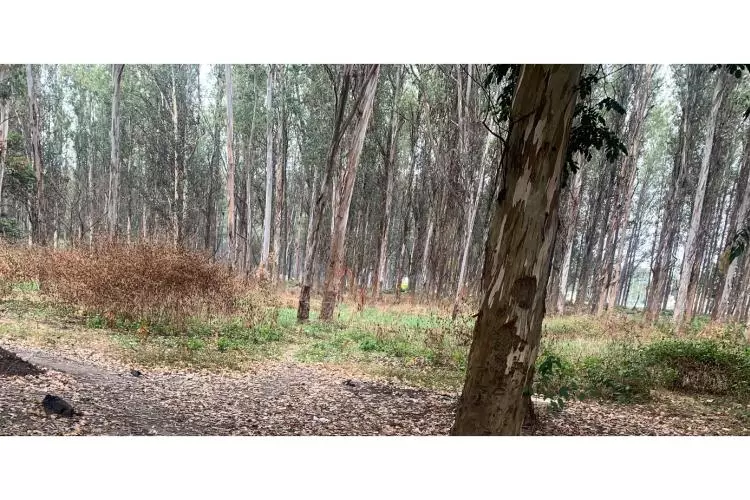
In Congo-Brazzaville, tree planting projects intended for carbon markets have proliferated over the past four years. This concerns large-scale developments of monocultures initiated by oil companies under the seductive term of carbon neutrality and promises of job creation for communities. In reality, they are neither a solution to the climate crisis nor a benefit for the communities of Congo.
Oil and gas industries represent the main source of global emissions. (1) Instead of reducing their emissions, they take advantage of human concern about climate change to promote misleading plans for the expansion of tree planting as a solution to offsetting their emissions. (2) In a vicious circle, very opaque plantation projects are developing, generating new sources of income for plantation companies and providing multinationals a justification to continue to pollute. Twenty years earlier, organizations were already sounding the alarm over greenwashing claims that the expansion of plantations could offset carbon emissions. (3) The devastating effects of these projects, however, do not appear in the advertising messages.
In the Republic of Congo, reforestation projects began in 1936, after colonial destruction. (4) A National Reforestation Service was created and a national afforestation and reforestation program put in place to install one million hectares of plantations. (5) In 2013, the country launched its first carbon project as part of the REDD+ process, the financing of which has not yet been resolved. (6) The expansion of carbon projects initiated by private entities begins in 2019, after several reforms including the revision of the Forest Code, the adoption of a REDD+ strategy and the establishment of a Carbon Task Force. (7)
In the space of four years, between 2019 and 2023, seven long-term lease contracts were concluded between the government and the extractive industries for a total of approximately 570,000 hectares- an area larger than the country of Luxembourg (see the map
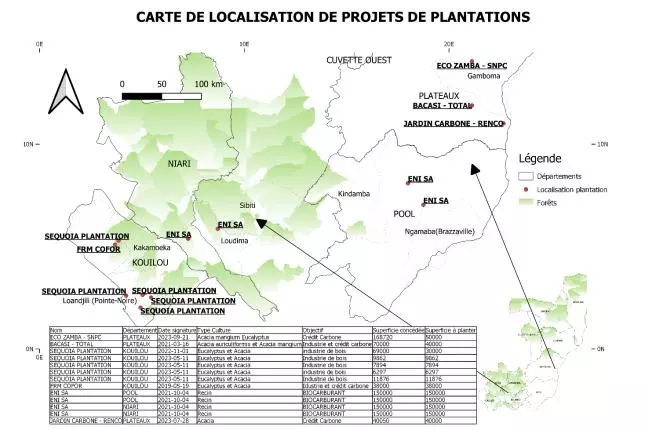
Among the signatories of these lease contracts are European multinationals operating in the country and the consultancy firm Forest Management Resource (FRM). FRM is the pioneer of carbon plantation projects in Congo and is now associated with the majority of multinationals, with its omnipresence carrying the scent of mixing roles and conflicts of interest.
Let’s come first to the contracts, these are lease contracts for land the state inherited from the colonial era, this time leased out for the development of carbon compensation projects, thus encouraging the continuity of carbon pollution. This lease contract system presents a colonial reconquest of agricultural land obtained through colonial heritage (9), in a very opaque and non-consensual approach. The architecture of this approach is generally characterized by the absence of a framework to make the lease contracts public, thus reinforcing opacity of information that ought to be public. Specifically, we note the absence of community consultation before the start of certain projects. (10) This has been strongly criticized in several carbon projects developed around the world.
Concerning the area granted, these plantation projects are developing in a logic of land grabbing in which the government facilitates the lease of land it claims to be the “public domain of the State”, under the law n°9-2004 of March 26 2004. But this claim of the State remains contested, especially since articles 2, 5 and 23 of the Constitution of October 25, 2015 advocate that national sovereignty is vested in the people. Another thing to note is that the ratio between the area granted in the leases and that targeted for plantations does not match. In fact, the total area to be planted adds up to 380,000 hectares out of the 570,000 hectares granted in leases. This raises the question about the use of those portions of land which these projects do not mention.
In addition to opaque information and land grabbing, we also note the use of misleading and seductive terms such as carbon neutrality and the promise of job creation for communities. According to various studies, monoculture tree plantations actually have a low sequestration potential compared to that of forests; monocultures also consume large quantities of water and negatively affect natural ecosystems. (11) In essence, to set up the plantations, all or part of the existing vegetation is destroyed in order to compensate for oil emissions.
Now, it is important to understand the impact of the expansion of these projects on forest-dependent communities and what is behind these projects.
FRM COFOR: communities question an opaque carbon market
In 2019, Forêt Ressources Management, created a subsidiary called Congo Forest Plantation (COFOR), a company under Congolese law. The same year, it signed a long-term lease contract with the government of Congo to develop the reforestation at Madingou-Kayes. The company is currently developing four projects with its investors. Interviewed by the Makanisi blog, the owner of the company stated that the projects will establish acacia-cassava and eucalyptus plantations, develop a sawmilling and plywood sector with an attractive promise of creating thousands jobs for communities. (12) Another objective of the project is to contribute to climate change mitigation through plantations. (13)
But the reality looks very different. Madingou-Kayes communities interviewed state that “we do not have access to either the lease contract or the project document. We are even surprised to hear that there are carbon projects here. All we know is not to enter this forest…”. Apart from the lack of information, the consent of the communities was evidently not obtained before the start of the project.
BACASI: greenwashing, violence against communities, a useless project for the country
The BaCaSi project is a partnership of several entities, among others: French oil company Total Energies and the company Forêt Ressources Management, via its Congolese subsidiary Forest Neutral Congo and the Republic of Congo. The project aims to develop a 40,000-hectare monoculture plantation within a project area of 55,000 hectares (14), while paradoxically, the area conceded as lease in 2022 is 70,089 hectares. This raises questions about other unstated objectives of the project.
In addition, the project is said to involve ‘a partnership based on advanced local agriculture and forestry, serving integrated development and climate action, with co-benefits such as jobs as well as social projects in the areas of nutrition, health and education.’ (14)
However, research by local and international organizations has revealed that this is a very controversial project. In particular, farmers and indigenous populations were ordered to leave their land, an indication of the project’s grabbing policy, some land-owning communities also received low compensation from the authorities (some at a rate of one dollar per hectare) and lost their livelihoods, which reinforces their food insecurity and poverty. (15) The revelations about the Bakasi project do not stop there. “Because this is not only be about carbon credits, the plantation in reality will only offset 2 percent of the carbon emissions of the oil company Total Energies, so behind this operation, is a question of money and not a question of corporate philanthropy” remarks a human rights defender who concludes that this project is not useful for the Republic of Congo.
Sequoia plantation: wood processing and opaque credit ambition
After multiple attempts to develop a destructive plantation project which has been held in check by communities and civil society in Gabon (16, see also article in this bulletin), the company Séquoia Plantations found refuge in the Republic of Congo, thanks to significant support granted by the authorities, declared one of the company’s managers. (17) Sequoia, founded by the multinational OLAM, is now part of the Equitane group, based in Dubai. Two lease contracts have been concluded for two projects currently under development: a 36,000-hectare replanting project was granted in May 2023 and the 69,000-hectare project obtained a lease in 2022, representing a total investment of 96.5 million Euros. (18)
Although according to the project document (19), the project focus is on the establishment of new tree plantations, plantation wood is already being harvested and processed at the site, thus raising questions about adding new to old plantations. Indeed, comments by the company manager point to objectives beyond those acknowledged in the project documents. During an interview (19), the manager suggested that his company will carry out large-scale plantations, with a view to fighting climate change and while reducing their carbon footprint. On the other hand, a resident of Mandingou-Kaye denounces the lack of accessibility to the lease contract and a consultation process tailored to local authorities. It is important to ultimately establish the existence of an unacknowledged carbon agenda and that the projects were developed with only partial information available.
ECO ZAMBA : excessive opportunism and unpredictable impacts
EcoZamba is a project of the National Oil Company of Congo, taking place in the savannah zone of the Congo Plateau. A 30-year lease contract was concluded in 2024 with the government. The contract grants the company the use of 168,720 hectares of land. Afforestation and agroforestry projects said to cover 50,000 hectares aim, among other things, at the sale of carbon credits. (20)
Some NGOs are skeptical about the impacts of this project on communities and the environment. According to them, “reforestation is not the priority oil companies. Their calling is to produce and market oil. They are launching into a sector that is not theirs. It’s out of simple opportunism. Environmentally, we are losing our savannah ecosystem with impacts on animals, birds and insects that can only thrive in savannah areas.” The cost of financing the project has not been revealed, and neither has the lease contract been made public. (21)
RENCO : the Mbé carbon garden project
The government of the Republic of Congo and the company RENCO GREEN SARLU, a subsidiary of the Italian multinational RENCO SPA, signed a partnership agreement on July 28, 2023 as part of the Carbone-Mbé Garden initiative. The project aims to establish acacia plantations on 40,050 hectares and market the carbon of the planted trees. Project plans include the proposal to establish 1,200 hectares of agroforestry plantations for the benefit of communities, following an “Acacia-Manioc” agroforestry model, with the plan to set up one hundred and fifty (150) hectares per year and rotations of eight years. (22)
The existing law grants exclusivity of the carbon credits generated in the plantations established on the lease lands that are part of the State forest domain to the private company that holds the lease. Thus, ultimately, the project does not provide for any benefit sharing plan from the carbon sold with the communities.
Additional carbon projects have been awarded in the Republic of Congo, in the forestry and conservation industry sectors. Among others, the forest industry of Ouesso (23); the logging companies Congolaise Industrielle de Bois and Yuan Dong Forestry Company, and the conservation NGO Widlife Conservation Society have been awarded permits for carbon projects. (24) Also, African Park Network, manager of the Odzala-Kokoua National Park, has expressed its intention to diversify its field of activity into carbon credits. (25)
Ultimately, the interest of oil extraction companies remains to continue to extract fossil fuels, as well as to do business in the carbon market, which provides a double benefit for them. (26) To do this, they develop deceptive projects, seduce communities and use very opaque approaches. Meanwhile, the roots of the problem remain intact, including: climate change caused by the use of fossil fuels and communities lacking access and protection of their customary lands. So, no matter how large it is, no tree plantation will ever be able to absorb the carbon emitted by oil activities and will never solve the problems of communities dependent on land and forests.
Bernadin Yassine NGOUMBA, defender of human rights and the environment, and the WRM
(1) Rapport Agence internationale de l’énergie (AIE 2023) : 33 pour cent pour le pétrole et 23 pour cent pour le gaz naturel. https://www.iea.org/reports/world-energy-outlook-2023
(2) WRM. Expansion des plantations d’arbres pour les marchés du carbone. Décembre 2023.
(3) Déclaration du Groupe de Durban. 2004.
(4) Jean, B. et Delwaulle, – J.C. Les Reboisements en République Populaire du Congo. La Chronique Internationale. 1981, Vol. XIII, 2.
(5) Service National de Reboisement (http://snrcongo.free.fr/ ) créé en 1986 et Programme National d’Afforestation et de Reboisement (PRONAR) créé en 201. https://tinyurl.com/4cx47zuc
(6) RP Sangha Likouala, document de projet. https://tinyurl.com/4h9js8y3
(7) Code forestier revisé : Loi 33 du 08 juillet 2020 portant code forestier, art. Titre 10 sur les crédits carbone, art. 177 et suivant (https://www.sgg.cg/codes/congo-code-2020-forestier.pdf) ; strategie REDD : Stratégie REDD+, 2018; task force carbone : Communiqué de la session inaugurale de la mise en place de la Task-Force Carbone, février 2024.
(8) Pigeaud, Fanny. Dans le bassin du Congo, la Françafrique fait feu de tout bois. Pulitzer Center, 2024.
(9) Raison, Jean-Pierre. La colonisation des terres neuves intertropicales. Persée. 1968, 5-112.
(10) REDD Monitor, Les dirigeants autochtones n’ont pas été consultés sur l’accord REDD de 180 millions de
dollars conclu par la coalition LEAF dans l’État du Pará. https://reddmonitor.substack.com/p/indigenous-leaders-were-not-consulted
(11) Total au Congo, une opération de Greenwashing destructice. Comité catholique contre la faim et pour le développement – terre solidaire. 2022.
(12) Le Congo mise sur l’agroforesterie et les puits de carbone en savane. Malu-Malu, Muriel Devey. s.l. : Makanisi, 2021.
(13) Paul Bertaux et al. Les plantations forestières en Afrique Centrale. 2020.
(14) Le projet BaCaSi : un partenariat pionnier pour le développement durable en République du Congo. Total Energie. 2022. Voir aussi : Loi n°7-2022 du 26 janvier 2022 portant approbation de la convention de partenariat entre le gouvernement et les sociétés Total Nature Based, Congo Forest Company et Forest Neutral Congo.
(15) Des paysans expulsés pour des crédits carbone au Congo. Tiassou, Kossivi. 2023.
(16) Haut-Ogoou” : Sequoia plantations face au rejet des population malgré l’opportuinité d’emploi. Libreville : s.n., 19 septembre 2023, Ethique media Gabon.
(17) Singh, Satinder. Une déléguation de la société Sequoia chez Rosalie Matondo. Page facebook du MEF. Brazzaville, 19 Janvier 2024.
(18) SEQUOIA Plantation. Note d’information: La situation de l’eucalyptus en République du Congo. 2024. p. 4-5.
(19) Barot, Shailesh. Exploitation forestière: la société Sequoia plantation obtient une concession de 35 961 hectares. Brazzaville, 13 mai 2023.
(20) Signature d’un bail emphytéotique entre le gouvernement congolais et la SNPC. Agence d’information environnementale. s.l., 2024.¸ Projet Eco Zamba : la SNPC s’engage dans la plantation d’acacias pour compenser son impact environnemental au Congo. Fatshimetrie. s.l., 2023.
(21) Congo-B: la compagnie pétrolière nationale lance un projet de reforestation. RFI, 2023.
(22) Projet JACA-Mbé : RENCO Green Sarlu compte séquestrer 30 millions de tonnes équivalent carbone à l’horizon 2025. Agence d’information’environnementale. AIE. Voir aussi : Loi 33 du 08 juillet 2020 portant code forestier, art. Titre 10 sur les crédits carbone, art. 177 et suivant.
(23) Congo : Un accord pour commercialiser les réductions des émissions générées dans les Aac de Ngombé. Fédération Atlantique des Agences de Presse Africaine (FAAPA). s.l., 2024. Voir aussi : Projet Interholco AG
(24) Projet OLAM CIB; Projet SEFYD; Projet HIFOR de WCS, gestionnaire du Parc Nuabalé Ndoki;
(25) https://www.aci.cg/congo-economie-forestiere-necessite-de-diversifier-les-activites-du-parc-national-dodzala-kokoua-pour-promouvoir-lecotourisme/?amp=1
(26) La région de la Sangha en République du Congo. WRM. 2022.
Original Source: World Rainforest Movement (WRM)
Related posts:

 12 Replies to 12 Lies about Industrial Tree Plantations: New edition of a WRM briefing paper
 MONOCULTURE TREE PLANTATIONS – Uganda – Promotion of plantation agriculture – a disgrace to human kind and environment
 The African Development Bank and the Tree Plantations Industry
 Witness Radio – Uganda, Community members from Mozambique and other organizations around the world say NO to more industrial tree plantations

Oakland, CA – As the World Bank convenes its Annual Meetings in Thailand this week, the accountability of the institution is entirely omitted from the agenda. Yet, its lack of accountability to the millions of people displaced or harmed by its programs around the world has never been more appalling.
The Bank claims that recent 2026 reforms would strengthen its accountability mechanism, but the facts show a total disregard for the devastation it has caused. In Tanzania, it has failed to act on damning findings from its own Inspection Panel – whose investigation detailed systemic violations of its own Operating Procedures and a “critical failure” in project planning and supervision, leaving local villagers to continue bearing the brunt of harsh, unmitigated serious harms.
Between 2017-2024, the World Bank poured over US$100 million into REGROW, doubling the size of Ruaha National Park in Southern Tanzania and funding the paramilitary park rangers (TANAPA) implicated in egregious human rights abuses – including killings and forced disappearances. Following an independent investigation, the project was officially cancelled.
“The park expansion effectively criminalized over 84,000 people on their own land, stripping them of their livelihoods by barring essential farming and grazing. The Bank’s REGROW initiative turned poor villagers into targets for park rangers. Despite clear evidence that the devastation it unleashed continues today, the Bank has completely failed to provide redress, compensate or support the communities whose lives it upended,” said Anuradha Mittal, Executive Director of the Oakland Institute, who represented villagers in their complaint to the Inspection panel.

In April 2025, ignoring community demands for reparations and the return of land, the Board approved a largely insufficient and inadequate Management Action Plan (MAP). On September 4, 2026, the Bank officially “closed” the REGROW case after deeming all actions in the MAP had been completed.
“The World Bank has destroyed our lives. Since the project started, rangers have killed or disappeared 18 of us. We are banned from farming our lands and grazing our livestock. Thousands of our cattle were confiscated. We are still waiting for justice and reparations for our losses. How can the World Bank walk away after being found responsible for this catastrophe?” said a local villager who filed the initial complaint.
Today, despite the Bank’s assertions that livelihoods could resume, many farmers remain barred from their fields, and pastoralists face continuous threats and fines for grazing cattle. The international spotlight that the Institute put on the dire situation has brought a halt to fatal shootings by TANAPA rangers since May 2025 – a grim baseline for “progress” from a paramilitary force that has terrorized communities since the Bank bolstered their capacity. The families of those murdered by TANAPA, including 27-year-old Hamprey Mhaki and 20-year-old Kulwa Igembe, continue to be denied justice.
“The Inspection Panel presented undeniable evidence of the Bank’s wrongdoings, yet the Bank’s Board and senior management refused to take responsibility. Affected communities took monumental personal and collective risks to expose these abuses, offering the Bank every opportunity to correct course. Instead, management turned its back on the very people it harmed – leaving a permanent stain on the institution’s credibility. The Oakland Institute will continue to stand with communities in their fight for justice,” concluded Mittal.
The World Bank’s expanding accountability crisis is further deepened by its decision to join the Trump-established Board of Peace (BoP) for Gaza, proactively enabling impunity for crimes against humanity and genocide. By joining the BoP, the Bank directly violates its own mandate and policies, international humanitarian law and decades of UN General Assembly Resolutions. Furthermore, the move defies provisional orders and advisory opinions from the International Court of Justice (ICJ) and rulings from the International Criminal Court (ICC).
Source: oaklandinstitute.org
Related posts:
 World Bank Fails to Remedy Harms it Caused in Tanzania, Despite a Scathing Investigation by its Inspection Panel
 Communities Under Siege: New Report Reveals World Bank Failures in Safeguard Compliance and Human Rights Oversight in Tanzania
 The World Bank Must Be Held Accountable for Harm Inflicted on Tanzanian Communities by Tourism Project
 Campaign Victory: World Bank Suspends Funding for REGROW, a Conservation Project Responsible for Evictions & Human Rights Abuses in Tanzania
NGO WORK
Tanzanian Government Abducts Maasai Villagers in an Unconscionable Attack on Indigenous Land Defenders
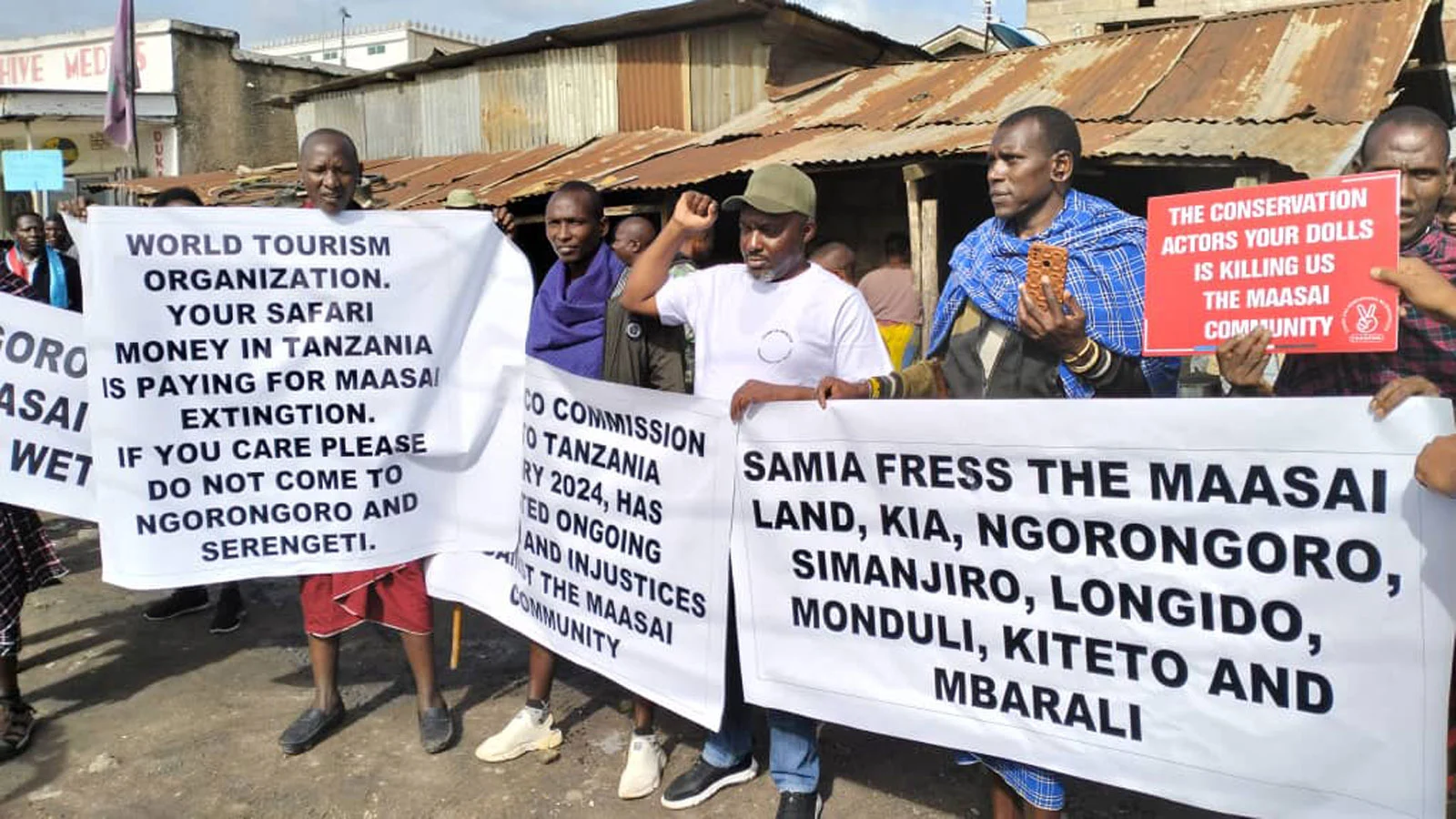
- Human rights conditions in northern Tanzania have deteriorated sharply since August, as the Tanzanian government carries out a coordinated campaign of violence and arrests against the Indigenous Maasai.
- In Ngorongoro, five Maasai were arrested last week; Over 30 community members have been arrested over the last two months; In neighboring Loliondo, thousands of livestock have been confiscated.
- The government is pressuring Maasai to leave the area to reach its goal of expanding the number of safari tourists and trophy hunters to eight million by 2030.
- The last arbitrary arrests unfolded in Arusha as Tanzania hosted the 153rd Assembly of the Inter-Parliamentary Union, centered on the theme of “enhancing good governance and empowering communities through inclusivity, trust and opportunities for all.”
Oakland, CA – On the night of October 6, the Tanzanian government forcefully abducted five Maasai men, Nangei Meitaya, Salangat Makko, Ezekiel Kishau, Dickson and Thadeus Clamian, holding them under arbitrary detention at the Arusha Central Police Station. While the individuals were released the following night, these targeted arrests are a dangerous escalation in the government’s systemic oppression of the Indigenous Maasai people.
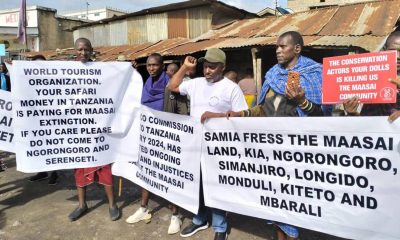
Since August, human rights conditions in northern Tanzania have worsened sharply as the state carries out a wave of coordinated violence and arrests against the Maasai. In the Ngorongoro Division, authorities have detained more than 30 community members, while confiscations of livestock have intensified in neighboring Loliondo. Local advocates state these actions are part of a systemic campaign to suppress peaceful dissent and dismantle civil society, through economic restrictions, intimidation, and unlawful incarceration of Maasai pastoralists.
“Far from being an isolated incident, this is a calculated campaign of intimidation. Driven by its goal to attract eight million safari tourists by 2030, the Tanzanian government is escalating pressure to evict the Maasai from their ancestral lands. As a result, community leaders have been driven into hiding once again, describing a rapidly deteriorating situation across the region,” said Anuradha Mittal, Executive Director of the Oakland Institute.
While detained, the victims were deprived access to their families or legal counsel. Four of those arrested are employees of the Pastoral Women’s Council (PWC), a local NGO dedicated to the “sustainable empowerment of Indigenous pastoralist women and girls in northern Tanzania.” Furthermore, authorities searched the homes of other staff members without due process.
“The abduction and subsequent detention of our community members is one of the many incidents of lawless targeting of the Maasai people in Ngorongoro – a deliberate campaign to instill fear and censorship, designed to make state dispossession and displacement easy. When a regime normalizes abductions and uses public hospitals as hunting grounds, it reveals a complete breakdown of common sense and basic humanity,” said Joseph Moses Oleshangay, a prominent Maasai human rights lawyer and activist from the Ngorongoro District in Tanzania.

The arbitrary arrests unfolded in Arusha as Tanzania hosted the 153rd Assembly of the Inter-Parliamentary Union, centered on the theme of “enhancing good governance and empowering communities through inclusivity, trust and opportunities for all.” This international gathering of parliamentarians from around the world comes a year after the rigged October 2025 national elections, during which the security forces violently suppressed pro-democracy demonstrations and killed thousands of civilians. Meanwhile, in March 2026, President Hassan accepted recommendations from sham land commissions advocating for the widespread eviction of Maasai communities from their ancestral lands in the Ngorongoro Conservation Area (NCA) and Loliondo.
The government plans to drastically reduce Maasai presence in the NCA to expand safari tourism and trophy hunting. To pressure residents to leave, the government has stopped basic medical, education, and water services while restricting access to grazing land for pastoralists. Massive mobilizations by the Maasai against this forced resettlement have exposed the government’s lie that people are leaving willingly.
“As international visitors plan safari tours to Tanzania, they must recognize that tourism revenues are inadvertently financing the government’s violent attack on Maasai communities whose ancestral lands are being stolen in plain sight,” concluded Mittal.
Source: oaklandinstitute.org
Related posts:
 Tanzanian Government Continues Violent Repression of the Maasai in Loliondo Despite Worldwide Condemnation
 Justice Denied: East African Court of Justice Grants Tanzanian Government Impunity to Trample Human Rights of the Maasai
 Tanzanian Government’s Sustained Campaign Against the Maasai in Loliondo and the Ngorongoro Conservation Area
 Call to Sever Ties with Tanzanian Government Over Latest Human Rights Abuses Against the Maasai
Related posts:
 The Great “Green” Heist: When Artificial Intelligence and Arms Dealers Seize the Minerals of the South
 Human rights defenders & business in 2022: People challenging corporate power to protect our planet.
 U.S. Peace Efforts in the DRC: Protecting Communities or Minerals?
 Peruvian communities have launched a global petition to halt a mining project they say threatens the water supply of over 10 million people.

Uganda Leads Africa in Certified Organic Farmland Ahead of First Organic, Nature Expo

World Food Day 2026: Building healthy diets means reimagining how we grow, share, and enjoy our food.

International Day of Rural Women : Rural women farmers deserve not only equal rights and access to resources, but also the strength and voice to safeguard Mother Nature.

ODPP Staff Equipped With New Skills on Land Crimes, Witness Protection and Victims Rights

Lango ex-combatants count losses after dry spell destroys maize harvest

Five years after Uganda’s National Action Plan on Business and Human Rights, are local communities hosting land-based investment projects seeing change?

Alert: Land degradation is emerging as a pressing threat to global security.

The global race for clean energy minerals is leaving communities grappling with conflicts and human rights abuses, a new report reveals.

Innovative Finance from Canada projects positive impact on local communities.

Over 5000 Indigenous Communities evicted in Kiryandongo District

Petition To Land Inquiry Commission Over Human Rights In Kiryandongo District

Invisible victims of Uganda Land Grabs
-
 NGO WORK1 week ago
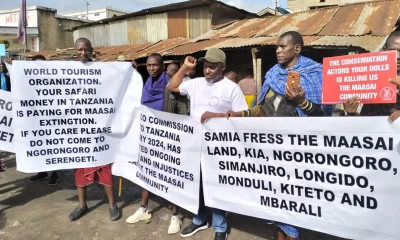
Tanzanian Government Abducts Maasai Villagers in an Unconscionable Attack on Indigenous Land Defenders
-
 MEDIA FOR CHANGE NETWORK4 days ago
World Food Day 2026: Building healthy diets means reimagining how we grow, share, and enjoy our food.
-

 MEDIA FOR CHANGE NETWORK1 week ago
Court remands 10 anti-oil activists as suspect collapses in dock
-
 FARM NEWS2 weeks ago
Can Agroecology Improve the Resilience of African Smallholder Farmers?
-

 MEDIA FOR CHANGE NETWORK6 days ago
As waves of investment sweep across Uganda, countless women rise to defend their land, safeguard their traditions, and claim their right to be heard.
-

 NGO WORK5 days ago
As World Bank Holds Annual Meetings, 84,000 Tanzanians Call for Justice
-
 MEDIA FOR CHANGE NETWORK6 days ago
Defending ancestral land comes at a steep price as Maasai communities in Tanzania face relentless, mounting pressure.
-
 MEDIA FOR CHANGE NETWORK4 days ago
International Day of Rural Women : Rural women farmers deserve not only equal rights and access to resources, but also the strength and voice to safeguard Mother Nature.