Connect with us

MEDIA FOR CHANGE NETWORK

Experts warn that without Africa’s control over resources and climate financing, the continent faces the risk of entering a new era of “green colonialism”.

Published

on

By Witness Radio Team

As the global push for clean energy accelerates, African governments are under mounting pressure to move away from fossil fuels and embrace renewable energy. But economists, political leaders, and climate justice advocates are warning that Africa’s transition could reproduce the same unequal economic structures established during colonialism unless the continent gains greater control over its resources, industries, and financing systems, inspiring a sense of agency and possibility.

Although Africa contributes less than 4 percent of global greenhouse gas emissions, it is among the regions most vulnerable to climate change. The continent continues to suffer disproportionately from a crisis largely caused by industrialized nations, including prolonged droughts and devastating floods, which greatly affect its people.

Governments across Africa are increasingly adopting renewable energy policies promoted as pathways toward sustainable development. Despite being promoted, a growing number of experts argue that the transition risks becoming another extractive project in which African resources fuel foreign industries while local communities remain impoverished.

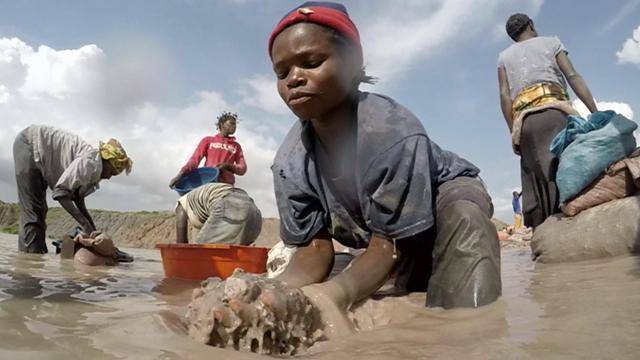
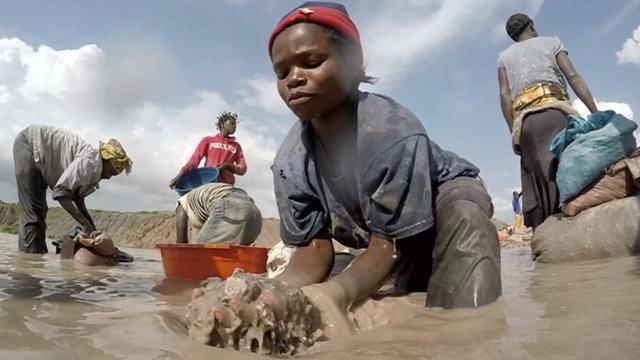
The global transition to clean energy has sharply increased demand for minerals such as cobalt, lithium, graphite, manganese, and copper, which are abundant across Africa and critical for batteries, electric vehicles, and renewable energy technologies.

At the same time, the continent possesses vast renewable energy potential. According to the International Renewable Energy Agency (IRENA), Africa could generate significantly more renewable energy than it currently consumes.

In an interview with Witness Radio, Tunisian economist and President of the Global Institute for Sustainable Prosperity, Fadhel Kaboub, said Africa’s role in the global transition should go beyond merely supplying raw materials to industrialized countries.

“We cannot decarbonize a system that hasn’t been structurally economically decolonized yet. Africa has the potential to become an energy powerhouse globally, an industrial powerhouse, and as a result, an economic and geopolitical powerhouse.” Kaboub reveals.

Kaboub argued that the current global economic system continues to place African countries at the bottom of supply chains, echoing colonial patterns. This pattern is vital for economists and global citizens to understand.

“Africa was assigned the role of supplying cheap raw materials while importing finished products and technologies. The danger is that the green transition is reinforcing the same model instead of transforming it,” he added.

Across the continent, activists and researchers are increasingly raising concerns about what they describe as “green colonialism,” where climate and environmental projects dispossess communities while benefiting foreign governments and corporations.

In several African countries, including Uganda, large-scale carbon offset projects have been linked to land conflicts and forced displacement. Critics say some carbon markets allow polluting corporations in the Global North to continue emitting greenhouse gases while using African land and forests to offset their emissions.

Environmental advocates warn that unless African governments ensure local ownership and value addition in mining linked to renewable energy, the continent risks repeating the history of raw material extraction, which is key for informed policy decisions.

Africa’s green transition discussions also focused on climate financing as a key point of debate. African leaders have repeatedly criticized rich countries for not sufficiently financing adaptation and renewable energy projects, despite their historic role in spewing the bulk of the World’s carbon emissions.

At the COP29 climate Summit in November 2024 in Azerbaijan, His Excellency Bola Ahmed Tinubu, the president of the Federal Republic of Nigeria, warned that many African countries are trapped between debt repayment obligations and climate adaptation needs.

“Africa did little to cause the climate crisis, yet the debt climate trap has saddled many of its nations with a tragic choice: Eschew repayments to fund adaptation to climate shocks and risk default- a financial purgatory where development indicators plummet; or honor obligations and compromise on resilience, thus entrenching vulnerability to development-shuttering climate events,” he added.

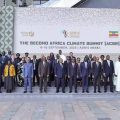
Speaking during the Africa Climate Summit 2025, former Ethiopian Prime Minister Hailemariam Desalegn said debt restructuring must become part of global climate discussions.

“Unless we confront the debt crisis head-on, efforts to finance Africa’s climate ambitions will continue to fall short,” Desalegn said.

Kaboub believes the financing crisis reflects a broader historical injustice. “The industrialized world has consumed most of the global carbon budget that creates a climate debt owed to Africa and the Global South.” He revealed.

Some African economists and climate justice groups are calling for climate reparations, not more loans that deepen dependency, to address historical injustices and support equitable development.

“The future of Africa’s green transition depends on who controls it. If Africa controls its resources, industries, and development path, the transition could become a tool for liberation. If not, it risks becoming another phase of exploitation under a green banner.” Kaboub concluded.

Continue Reading

MEDIA FOR CHANGE NETWORK

Ten out of sixteen Rooted in Resistance activists now face charges and have been sent to Luzira Prison after standing up against Uganda’s oil development.

Published

on

By the Witness Radio Team

Ten young members of the Rooted in Resistance Movement have been charged by a Buganda Road Court magistrate and sent to Luzira Prison after their arrest during a protest challenging Uganda’s oil projects.

On Monday morning, August 31, 2026, the activists joined more than 16 members of their youth-led movement in a bold attempt to deliver petitions to Parliament and TotalEnergies’ offices in Kampala, voicing strong opposition to Uganda’s ongoing investment in fossil fuel projects such as the East African Crude Oil Pipeline (EACOP).

After a night in police custody, ten of the activists were brought before the Buganda Road Chief Magistrate’s Court on Tuesday, September 1.

They were charged with being a nuisance on a public road, contrary to Section 67(1)(c) of the Roads Act, Cap. 346.

The accused, Rahmah Namuddu, Dorothy Asio, Sharifah Nantongo, Sharon Shaluwatino, Nyamadri Lucky, Daniel Mugabe, Shakirah Kasoga, Isaac Akampurira, Ivan Ochola and Enock Opolot pleaded not guilty to the charges read to them.

The activists were represented by lawyers Counsel Peter Odur and Counsel Doreen Namara. The court subsequently remanded them to Luzira Prison until September 18, 2026.

The remaining six activists arrested during the protest were still being held at Wandegeya Police Station by Tuesday. They are Mukiibi Isaac, Mawanda Arafat, Mugerwa Nicholas, Opio Innocent, Friday John and Onyango Ronald.

The arrests followed a vivid demonstration in which activists, clad in orange T-shirts emblazoned with “Rooted in Resistance,” marched with banners and placards denouncing Uganda’s oil ambitions.

Among the messages displayed were “No to Oil,” “Oil is temporary, nature is permanent,” and “Uganda deserves an oil-free future.”

Rooted in Resistance, formerly known as Students Against EACOP, has become a persistent voice opposing fossil fuel expansion in Uganda, particularly targeting EACOP and the Tilenga oil project.

In a statement shared on social media, the movement emphasized its commitment to non-violence as Uganda nears oil production. The activists insisted that economic progress must not silence those who dare to question it.

The group demanded the immediate release of their fellow activists and condemned the government’s use of excessive force against peaceful demonstrators.

“We demand their unconditional release and call upon the government to refrain from further using lethal force against peaceful protesters amidst a societal climate and economic collapse in Uganda,” Rooted in Resistance said in a post on its X account.

These arrests are just the latest in a series for Rooted in Resistance, whose members have faced detention during earlier protests against Uganda’s oil ventures.

On August 10, 2026, four members of the movement were also arrested and charged with being a public nuisance, the group said.

In its latest petition, Rooted in Resistance urged Parliament to rethink what it sees as Uganda’s heavy reliance on petroleum for development.

“Rooted in Resistance calls upon Parliament to exercise its constitutional responsibility to protect the national interest and reconsider Uganda’s petroleum-dependent development model,” the statement reads.

The activists argue that their petition is based on citizens’ constitutional rights to participate in governance, express themselves and assemble peacefully, including the rights provided for under Article 38 of the Constitution.

They are urging Parliament to stop expanding oil infrastructure and to launch an open, transparent review of Uganda’s petroleum policies and agreements.

The movement also demands greater government investment in areas like agriculture, manufacturing, renewable energy, tourism, technology, education, innovation and homegrown enterprises.

The activists warn that tying Uganda’s future to petroleum extraction could trap the country in fossil fuel dependence and put communities and ecosystems at risk.

They have urged TotalEnergies to channel its investment and expertise into sectors that promise lasting benefits for Ugandans.

“We urge TotalEnergies to redirect meaningful investment and expertise towards renewable energy, sustainable agriculture, agro-processing, local manufacturing, tourism conservation, technology, skills development and youth enterprise which support livelihoods,” the group said.

This latest protest unfolds as Uganda edges nearer to commercial oil production, with major projects like TotalEnergies’ Tilenga and CNOOC’s Kingfisher set to shape the nation’s oil future.

EACOP, a 1,443-kilometer heated crude oil pipeline, is being developed to transport crude oil from Uganda’s oil fields in the Albertine region to the port of Tanga on Tanzania’s Indian Ocean coast.

The pipeline is expected to transport crude produced from Uganda’s upstream oil projects, including the Tilenga project operated by TotalEnergies.

Though the government and oil companies tout these projects as vital for Uganda’s economy, environmental and human rights activists warn of serious risks to communities, biodiversity and the environment.

Rooted in Resistance is now urging both Parliament and TotalEnergies to rethink Uganda’s current path toward petroleum expansion.

“Rooted in Resistance therefore calls upon Parliament and TotalEnergies to listen, engage and reconsider the current direction of petroleum expansion. Our demand is clear: an oil-free economy, economic freedom, environmental protection and development that leaves Uganda stronger, not more dependent, for generations to come,” the movement said in its petition.

Continue Reading

MEDIA FOR CHANGE NETWORK

Civil society organizations are rallying for a robust grievance mechanism in the EAC Seed and Plant Varieties Bill.

Published

on

By the Witness Radio team

In Uganda, civil society organizations are urging lawmakers to revise the proposed East African Community Seed and Plant Varieties Bill, 2025, with a special focus on ensuring farmers have a clear path to seek justice and redress.

The organizations point out that although the proposed law prioritizes seed certification, regulation, and breeders’ rights, it leaves farmers without a clear way to seek justice when certified or commercial seeds fail and lead to losses.

This concern came to the forefront during public hearings in Uganda, where the East African Legislative Assembly (EALA) gathered input from civil society organizations and other stakeholders before the Bill’s second reading.

Mr. Lubega Jonathan, a policy analyst at SEATINI Uganda, said farmers should not only be expected to comply with requirements under the proposed law but should also have clear avenues to challenge decisions and seek redress when they suffer losses.

He said the Bill should provide mechanisms for resolving disputes involving farmers, seed companies and breeders, particularly where farmers suffer losses after purchasing seed through the formal seed system.

“At least in such scenarios, there should be a mechanism for farmers to seek justice when the seeds provided by a breeder fail to germinate,” Lubega said.

He emphasized that the issue goes beyond seed certification; it is about what happens when seeds do not perform as promised. Farmers risk losing money, missing crucial planting seasons, or facing poor harvests. Yet, the Bill remains vague on who is accountable and where farmers can turn for compensation or support.

CSOs are demanding clear guidelines on how farmers’ complaints will be addressed, which bodies will resolve disputes, whether appeals are possible, and what remedies will be available to those who incur losses.

Beyond grievance and redress, the organizations warn that the Bill’s heavy focus on certification could put up barriers for farmer-managed seed systems, especially if the process becomes expensive or bogged down in bureaucracy.

Lubega cautioned that drawn-out certification processes and hidden costs could stifle local seed systems’ ability to operate across borders, threatening the EAC’s goal of eliminating non-tariff trade barriers.

“If we do not house the farmer market seed systems or varieties, there will be a barrier to trade, especially without clarity on certification costs and procedures. The lengthy bureaucratic processes will create a non-tariff barrier, which the community is ideally working to push against. Therefore, we could consider and reduce, or if we do not reduce, we factor in the farmer-managed seed systems,” he said.

The CSOs are urging the regional framework to honor both commercial and farmer-managed seed systems, highlighting that smallholder farmers have always been at the heart of selecting, saving, exchanging, and developing seeds in their communities.

Hakim Baliraine, National Chairman of the Eastern and Southern Africa Smallholder Farmers Forum (ESAFF-Uganda), said farmers should be recognized as important actors in seed development rather than being treated primarily as consumers of commercial seed.

“We want the law to define farm-managed seed systems, land races, community seed banks and farmers’ rights because this bill ties breeders to commercial seed production, forgetting that we, the small-scale farmers, have been the original breeders,” Baliraine said.

He further called for smallholder farmers to have a stronger voice in decisions about seed registration and regulation.

“Seed is tied to very many things, especially in Uganda. Seed is about our culture and inheritance, and therefore we shouldn’t look at it only for profit because, for us, seed is life and it’s part of us. That’s why we need to be at the decision-making table to see who is registering on this seed so we also give our input,” he said.

The organizations stress that acknowledging these systems is vital, as farmers still save, exchange, and share seeds. Community seed banks and indigenous varieties, in turn, are pillars of food security and biodiversity.

Agnes Kirabo, Executive Director of the Food Rights Alliance, said the debate should also address the broader challenges farmers face in accessing quality seed, including counterfeiting and the sale of grain as seed.

“The truth is that in our farming and agri-food systems in Africa and Uganda, farmers and consumers are constrained in accessing quality seeds because there is a lot of counterfeiting and trading in grain as seed. This impacts the productivity and investments of farmers, and this is a problem that is being addressed in the background of this instrument,” Kirabo said.

As a result, CSOs are urging that the final law strike a balance between regulating the seed sector and giving greater weight to farmers’ rights, with accessible ways for them to resolve disputes.

They are calling for the Bill to spell out exactly how complaints involving seed producers, breeders, and traders will be handled, who will have the authority to resolve them, and what options farmers have when they experience losses.

They also insist that farmers deserve a meaningful seat at the table in decisions on seed registration and regulation, instead of being sidelined by rules made solely for the commercial sector.

The EAC Seed and Plant Varieties Bill, 2025 seeks to establish a harmonized regional framework for the regulation, testing, certification and marketing of seeds, while providing for the protection of plant breeders’ rights across the East African Community.

Public hearings where stakeholders submitted their views and recommendations on the Bill have now been concluded across the EAC partner states.

The submissions are expected to inform the East African Legislative Assembly’s report before the Bill proceeds to its second reading.

Continue Reading

MEDIA FOR CHANGE NETWORK

Breaking: Sixteen Rooted in Resistance activists arrested and detained as they boldly protested Uganda’s oil ambitions.

Published

on

By the Witness Radio team

In Kampala, police detained 16 young environmental activists from the Rooted in Resistance Movement as they attempted to deliver petitions to Parliament and TotalEnergies, challenging Uganda’s ongoing push for oil production and infrastructure.

The arrests unfolded on Monday morning, August 31, 2026, as the activists split into two determined groups: ten were apprehended near Parliament, while six others were arrested near the TotalEnergies offices in Kampala.

Six activists now sit in Wandegeya Police Station, while the remaining ten are held at Central Police Station (CPS) Kampala, according to group leader Maktum Kajubi.

With these latest arrests, nearly 20 Rooted in Resistance activists have been detained in under a month, the group reports.

On August 10, authorities arrested four other members of the group and charged them with being a public nuisance.

The young protesters carried bright orange banners and placards, their messages ringing out: “No to Oil,” “Oil is temporary, nature is permanent,” and “Uganda deserves an oil-free future.”

Those arrested include Mukiibi Isaac, Mawanda Arafat, Mugerwa Nicholas, Opio Innocent, Friday John and Onyango Ronald, among others.

Rooted in Resistance, once called Students Against EACOP, is a Ugandan youth-led movement fiercely opposing fossil fuel projects like the East African Crude Oil Pipeline—their vision: a sustainable, oil-free, people-first economy.

These latest arrests come as activists ramp up their campaign, challenging Uganda’s deepening reliance on petroleum extraction.

In a press statement seen by Witness Radio, the group called on Parliament to reconsider what it described as Uganda’s petroleum-dependent development model.

“Rooted in Resistance calls upon Parliament to exercise its constitutional responsibility to protect the national interest and reconsider Uganda’s petroleum-dependent development model,” the statement reads.

The activists emphasized that their petition rests on citizens’ constitutional rights to participate in governance, express themselves, and assemble peacefully, as outlined in Article 38.

They urge Parliament to freeze any further oil infrastructure expansion and transparently review Uganda’s petroleum policies and agreements.

The group also calls for national investment to be channeled into agriculture, manufacturing, renewable energy, tourism, technology, education, innovation, and homegrown enterprises.

Activists insist Uganda’s economic future should break free from petroleum, pointing to other sectors that promise broader and longer-lasting opportunities for all citizens.

They urge TotalEnergies to rethink its role in oil projects and instead invest its resources and expertise in sectors that could deliver lasting benefits for Ugandans.

“We urge TotalEnergies to redirect meaningful investment and expertise towards renewable energy, sustainable agriculture, agro-processing, local manufacturing, tourism conservation, technology, skills development and youth enterprise which support livelihoods,” the group said.

The activists are pressing Parliament to put long-term national interests and intergenerational justice at the heart of Uganda’s economic planning.

“The future of Uganda must not be determined by what lies beneath our soil when the country’s greatest resource is the people who live upon it,” the statement says.

EACOP is a 1,443-kilometer heated crude oil pipeline being developed to transport crude oil from Uganda’s oil fields in the Albertine region to the port of Tanga on Tanzania’s Indian Ocean coast.

The pipeline will transport crude produced from Uganda’s upstream oil projects, including TotalEnergies’ Tilenga project in the Lake Albert region.

To the activists, the pipeline is far more than just infrastructure. They warn that ongoing oil investment could trap Uganda in fossil fuel dependency and expose communities and ecosystems to grave environmental and social dangers.

Now, the movement is urging both Parliament and TotalEnergies to rethink Uganda’s current path.

“Rooted in Resistance therefore calls upon Parliament and TotalEnergies to listen, engage and reconsider the current direction of petroleum expansion. Our demand is clear: an oil-free economy, economic freedom, environmental protection and development that leaves Uganda stronger, not more dependent, for generations to come,” the movement adds in their petition.

Continue Reading

Resource Center

Legal Framework

READ BY CATEGORY

Facebook

Newsletter

Subscribe to Witness Radio's news and report updates


Trending

Subscribe to Witness Radio's news and report updates