Connect with us

MEDIA FOR CHANGE NETWORK

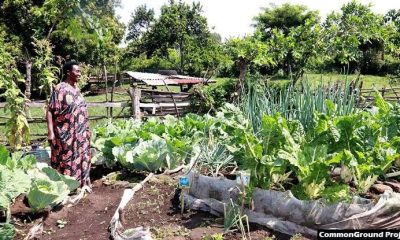
Agroecological farming: EAC Bill moves to Parliament to establish a regional legal framework to protect and promote sustainable farming and food systems.

Published

on

Hon. Gideon Gatpan Thoar, Chairperson of the EALA Committee on Agriculture and Natural Resources, presenting during a plenary sitting of the Assembly.

By the Witness Radio team.

The East African Legislative Assembly has taken a critical procedural step toward introducing the EAC Agroecology Bill, 2026, as the Chairperson of the Committee on Agriculture and Natural Resources was formally granted leave from the House to draft and table the proposed law.

The move marks the Bill’s official entry into the legislative process, which could significantly impact regional farmers, policymakers, and civil society by reshaping food systems and governance across East Africa.

The Bill aims to empower smallholder farmers and promote inclusivity by embedding agroecology into law across the East African Community, fostering hope for a more sustainable future for these farmers.

In an interview with Witness Radio, the Chairperson of the Committee on Agriculture and Natural Resources in the East African Legislative Assembly (EALA), Hon. Gideon Gatpan Thoar, described the Bill as a long-overdue effort to give legal backing to a system already practiced by millions of farmers across the region.

“The purpose of this bill is to establish a regional legal framework to mainstream agroecological farming,” the Chairperson said, emphasizing that the law seeks to move agroecology from policy discussions into enforceable regional commitments.

The proposed law draws from the 13 FAO principles, integrating indigenous knowledge, cultural practices, and scientific innovation to strengthen its regional relevance.

“We want to promote practices that are consistent with our people, that are known to our cultures and traditions, and integrate them with science. There must be co-creation and inclusivity, especially for smallholder farmers,” he explained.

This framing positions agroecology not just as a farming method, but as a knowledge system shaped by communities themselves, challenging dominant agricultural models often driven by external actors.

The Bill emerges amid the ongoing expansion of industrial agriculture supported by global corporations and financiers, which may resist the shift towards agroecology. Understanding how the Bill will navigate or counteract this resistance is crucial for stakeholders concerned about regional agricultural transformation.

Despite this well-developed narrative, smallholder farmers remain the highest food producers. Yet the Chairperson acknowledged this imbalance of power, noting that agroecology faces stiff competition.

“There is a big fight from conventional agriculture. Big corporations are sponsoring data; they have a lot of money, and they have subsidized it,” he said.

Rather than banning industrial agriculture, whose adverse impacts on both smallholder farmers and the environment are evident, the Bill introduces a different strategy, one centered on protection and choice. It seeks to create legal and economic space for agroecological farmers, many of whom have historically been marginalized.

“We are not forcing a transition. We are creating a situation where there is choice and support for those who have been left behind, mainly women, youth, and smallholder farmers,” He clarified. This approach aims to foster hope and confidence that the new law will support sustainable options for all farmers.

The proposed law will also avoid the usage of highly hazardous pesticides and synthetic fertilizers, instead relying on ecological processes.

“We are very keen on highly hazardous agrochemicals… agroecological farmers will not be using them,” the Chairperson stated, emphasizing that support systems will drive the transition, fostering optimism for farmers’ sustainable options.

Uganda recently ordered the phase-out and restrictions on several commonly used agricultural chemicals, citing risks to human health, the environment, and the country’s ability to compete in the export market. The Ministry of Agriculture, Animal Industry, and Fisheries (MAAIF) said the decision was made after its Agricultural Chemicals Review Committee reviewed the chemicals and their “safety, trade, and national interest concerns.”

The Ministry said in the letter, “The actions and decisions made by the government are based on concerns for safety, trade, and the national interest.” Alpha-cypermethrin, atrazine, butachlor, dimethoate, and propanil are some of the chemicals that will be phased out. Importation will be banned right away, and the chemicals will be completely removed by the end of 2026.

While several East African countries already have agroecology strategies, such as Uganda’s NAS and Kenya’s strategy, these lack enforcement mechanisms. The regional Bill aims to establish binding compliance measures that will guide and harmonize national laws, ensuring effective implementation across the region.

“The regional law will be an anchor, reflecting in national systems to foster trust and regional unity,” the Chairperson explained, encouraging confidence in the legislative process.

The legislative process is ongoing, with the Bill expected to undergo drafting, committee review, and public consultations before a final vote, likely within several months.

Continue Reading

MEDIA FOR CHANGE NETWORK

Lands Ministry tightens rules for replacing lost titles, gives landowners 30 days to object

Published

on

KAMPALA — The Ministry of Lands, Housing and Urban Development has introduced stricter procedures for replacing lost, destroyed or damaged land titles, requiring public notices, physical inspections and stronger verification to curb fraud and protect legitimate landowners.

Under new guidelines presented by Lands Minister Judith Nabakooba on Tuesday, applications for Special Certificates of Title will be subjected to a mandatory notice period of at least 30 days, during which people claiming an interest in the land can raise objections before a replacement title is issued.

The measures seek to close loopholes that have enabled fraudulent land transactions, impersonation, double sales and disputes over ownership by strengthening checks before the government issues replacement documents.

The guidelines require the ministry to publish notices in the Uganda Gazette for at least 30 days, display them on the relevant land and at sub-county and Local Council I notice boards, and publish monthly lists of applications in a newspaper of wide circulation.

The ministry will also publish details of the affected land parcels and applicants on its website for the same period, allowing potential claimants and other interested parties to scrutinise applications.

Any person alleging fraud, competing ownership claims, double sale, impersonation, unlawful retention or another material irregularity will be allowed to lodge a formal objection with the Registrar of Titles within the applicable notice period.

Where an objection is received, the registrar must summon the parties for a hearing and make a ruling, giving those who may be affected an opportunity to be heard before a decision is made.

The guidelines are anchored in the Registration of Titles Act and other applicable laws, including the Constitution and the Land Act. They provide for the issuance of Special Certificates where duplicate certificates have been lost, destroyed or become so damaged that they are unusable, as well as cases where a court orders their issuance.

Beyond paperwork and public notices, the ministry will require physical inspections and, where necessary, boundary-opening exercises to establish the status of land before approving applications.

The exercises must be conducted by a government surveyor together with a registrar of titles or land officer, in the presence of the Local Council I committee, which must have a quorum of five members.

Inspection reports will document the proceedings, people present, developments on the land, occupancy and current use. The requirement is intended to provide additional evidence about the property and help identify competing claims that may not be apparent from the documents submitted.

Applicants seeking replacement titles for lost documents must submit a statutory declaration, proof of payment of the required fees, a national identity document, passport-size photographs, a police form reporting the loss, an LC I committee report and an inspection or boundary-opening report.

They must also provide evidence of publication through a Gazette notice and newspaper advertisement, alongside a local notice.

For titles that have been obliterated, applicants must surrender the damaged duplicate certificate and provide supporting documents, including a statutory declaration, identification and inspection reports.

The guidelines also introduce specific requirements for administrators and executors seeking Special Certificates of Title on behalf of deceased persons’ estates.

In addition to the general application documents, they must provide an inventory, letters of probate or administration, and a copy of the petition for probate or letters of administration.

The additional requirements are intended to establish that applicants have the legal authority to act for the deceased person’s estate before a replacement title is issued.

For court-directed applications, the person seeking implementation of the order must submit a formal letter and a certified copy of the court order. The Registrar of Titles must independently verify the order with the court that issued it before proceeding.

Under the new framework, a replacement title cannot be approved merely because an applicant reports that the original document is missing.

The registrar must establish that the original certificate was genuine, the applicant has been properly identified and is legally authorised to apply, and the loss, destruction or damage has been sufficiently demonstrated.

The registrar must also confirm that the transaction is genuine, relevant dealings and encumbrances have been identified, recognised pending transactions have been completed, and no unresolved legal matter prevents issuance.

The proposed Special Certificate must accurately reflect the particulars contained in the Register Book, which serves as the official record of registered land interests.

Every decision to approve, defer, reject or suspend an application must be documented with reasons. The ministry will also require material steps in the process to be recorded and stored in both physical and electronic formats to improve accountability and traceability.

Once issued, the Special Certificate must contain the relevant register particulars, endorsements and the reason for its issuance. The Register Book must also be updated with the issuance date, application number, reference to the previous certificate and relevant Gazette notice or court order, where applicable.

The guidelines are intended to strengthen the integrity of Uganda’s land registration system while providing an avenue for people with legitimate interests to challenge questionable applications before replacement titles are issued.

They also reinforce the principle that land registration procedures must be conducted in accordance with the law and with due regard to the rights of lawful and bona fide occupants protected under Article 237 of the Constitution.

Source: pmldaily.com

Continue Reading

MEDIA FOR CHANGE NETWORK

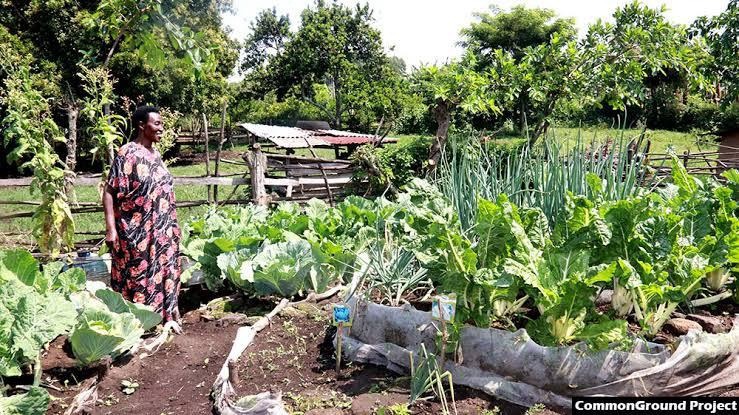
World Food Day 2026: Building healthy diets means reimagining how we grow, share, and enjoy our food.
Published

on

By the Witness Radio team.

In 2024, hunger affected an estimated 673 million people worldwide, the 2025 State of Food Security and Nutrition in the World report reveals, underscoring the urgent need to ensure everyone can access enough nutritious food.

Africa bears a heavy share of this crisis. Hunger affects about 307 million people, more than one in five on the continent. If nothing changes, experts warn that by 2030, as many as 512 million people could face chronic undernourishment, with nearly 60 percent living in Africa.

These numbers make it clear: we must transform our food systems now. It is not just about growing more food; it’s about ensuring everyone can enjoy diets that are diverse, safe, nourishing, and rooted in culture.

On World Food Day 2026, celebrated under the banner “Innovate Today, Nourish Tomorrow,” leaders urged the world to invest boldly in healthy eating, indigenous food traditions and agricultural breakthroughs that truly serve people’s needs.

Italy’s Minister for Agriculture, Food Sovereignty and Forestry, Francesco Lollobrigida, called for greater attention to healthy, balanced and sustainable diets, linking food consumption to human health, cultural heritage and environmental protection.

“To nourish tomorrow, it isn’t enough to invest in innovation and research and in waste reduction. We must also promote dietary habits that are healthy, balanced and sustainable, capitalizing on the deep link between food, health, culture and territory,” Lollobrigida said.

He highlighted Italy’s food culture as a living example of how what we eat can weave together nutrition, environmental care, and the fabric of social life.

“Food isn’t just nutrition; it’s a way of spending time together defending and protecting our environment and our health,” he said.

The minister also urged everyone to unite to tackle food waste, a challenge that stretches from farm fields to family tables. He stressed that governments, businesses, researchers and consumers must join forces through smart policies, new technologies and better food education to end waste.

While Italy’s minister focused on eating habits, King Letsie III of Lesotho, David Mohato Bereng Seeiso, called on African nations to embrace their indigenous foods, crops and traditional wisdom to boost nutrition.

The King noted Africa’s rich tapestry of traditional foods, livestock and aquatic resources, many perfectly suited to local environments and packed with nutrition. Yet he observed researchers, markets and public campaigns too often overlook these treasures.

“Countries must be assisted to promote indigenous traditional and underutilized foods as part of healthier diets, biodiversity conservation, climate adaptation and local economic development,” he said.

He added that building value chains around locally adapted foods could open doors for smallholder farmers, women and young entrepreneurs, all while helping communities safeguard their food heritage.

“While restoring pride in Africa’s food heritage, innovation does not mean abandoning tradition; it means combining the best of modern science with the knowledge and experience of our communities. Nourishing tomorrow should also begin with investing in children today,” King Letsie III added.

His words highlight the need to help farmers preserve locally adapted crops and seeds while harnessing science to boost harvests and nutrition.

FAO Director-General Qu Dongyu said scientific innovation should be judged by its contribution to people’s lives rather than by technological advances alone.

“Innovation is not only about the technology, but it’s also about people. It is about enabling people to turn knowledge into opportunity, science into solutions and hope into action,” he said.

He cited satellite monitoring, early-warning systems, improved irrigation, and digital technologies as tools that can help farmers protect harvests, manage resources, and access markets and financial services.

Today, science provides farmers with tools previous generations could hardly have imagined. Satellites monitor crops from space, helping detect threats before harvests are lost. Early warning systems give farming families time to prepare for droughts, floods and other risks. Smarter irrigation lets farmers produce more food while using less water. Digital technologies connect rural communities to markets, financial services, and networks once out of reach, especially for smallholder farmers. These innovations can strengthen food security, stabilize incomes and create better opportunities for future generations.

Yet innovation alone is not enough. Its true value lies in reaching those who need it most and ensuring successful solutions can be shared and scaled up. The most effective innovations are those developed with farmers and rural communities, considering their needs, knowledge and local conditions, he said.

King Letsie III said transforming food systems requires political leadership, stronger institutions, and adequate nutrition financing.

“Our parOur parliamentarians approve budgets, enact laws, oversee government action and represent citizens’ priorities. I therefore welcome FAO’s engagement with the Pan-African Parliament and national and sub-regional parliamentary alliances on food security and nutrition. Through parliamentary capacity development, FAO is helping legislators create stronger enabling environments. Parliamentarians can and should champion adequate financing for nutrition, protect school meal budgets, promote healthy food environments, improve food safety laws, support women and youth and hold institutions accountable for the commitments made to our people.” He said.

He highlighted school feeding programs as one way to improve children’s diets while creating markets for locally produced food.

Nutritious school meals are a strategic investment that can improve diets, attendance, and learning; strengthen social protection; and create steady demand for locally produced food. Homegrown school meals connect agriculture, nutrition, education and local economic development. School meals should do more than relieve short-term hunger. They should support physical and cognitive development, encourage lifelong healthy habits, strengthen local economies and provide practical learning on nutrition, food safety, hygiene, biodiversity and respect for food. Safe water, sanitation and hygiene are also essential to ensure every meal advances health, dignity and learning, he added.

These leaders’ voices send a clear message: we must bridge the gap between what is grown in fields and what nourishes people’s bodies and lives.

Africa needs stronger links among farmers, researchers, universities, policymakers, entrepreneurs and investors. Solutions that show promise must move beyond pilots and laboratories, be adapted to local realities and scaled through effective institutions and sustainable financing,” the King said.

He emphasized that young people must be at the heart of this movement, with skills, funding, land, digital tools, mentors, and access to markets.

Continue Reading

MEDIA FOR CHANGE NETWORK

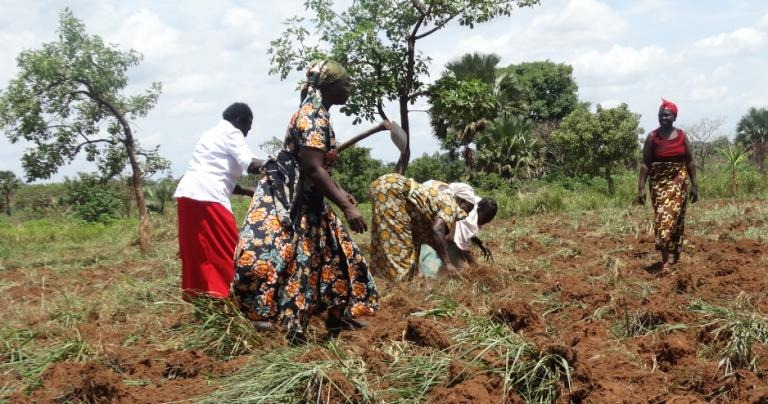
International Day of Rural Women : Rural women farmers deserve not only equal rights and access to resources, but also the strength and voice to safeguard Mother Nature.
Published

on

By the Witness Radio Team.

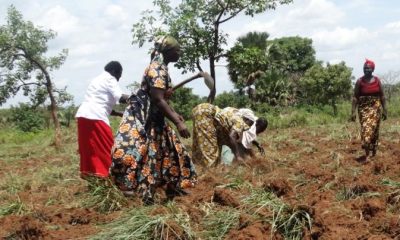
As the world marks the International Day of Rural Women on 15 October 2026, with the theme “Rural Women Farmers Caring for Mother Nature,” the spotlight shines on women whose tireless efforts nourish food systems, shield biodiversity, and safeguard the natural resources that sustain entire communities.

This year’s celebration carries special weight as the United Nations declares 2026 the International Year of the Woman Farmer, spotlighting women’s vital roles across agri-food systems, from planting seeds to driving trade. This recognition opens the door to challenge the persistent inequalities that threaten women’s livelihoods and silence their voices in decisions about agriculture, land, and the environment.

In its statement marking the day, UN Women called for rural women’s rights, resources and decision-making power to match their contributions to food systems and environmental protection.

“On this day, we celebrate their knowledge and leadership in building a more resilient future. Yet their rights, resources and decision-making power too often fall short of their contributions,” UN Women said.

The agency called on governments and other groups to ensure women have enforceable rights to land, water, and natural resources. It also asked for better access to finance, markets, technology, and agricultural services, as well as decent work, social protection, and strong infrastructure. The agency highlighted the need to recognize, reduce, and share women’s unpaid care work.

These calls to action highlight the stark inequalities rural women endure. They are the backbone of community nourishment and environmental stewardship, yet too often they lack the resources and influence needed to improve their lives and shape the future.

Ambassador Ada Francisca de Asis Hernández Rivera, the Permanent Representative of the Dominican Republic to the Food and Agriculture Organization (FAO), the International Fund for Agricultural Development (IFAD) and the World Food Program (WFP), underscored rural women’s importance in eradicating poverty, ending hunger and transforming agri-food systems into more inclusive, resilient and sustainable systems.

She noted that women contribute to food production, biodiversity conservation, sustainable ecosystem management and the resilience of families and communities. Yet many still face barriers to accessing land, financial services, technology, information, markets, and technical assistance, as well as opportunities to participate in decision-making.

“These inequalities, of course, will reduce their opportunities and limit the potential of family farming to contribute completely to sustainable development,” she said.

Karina David, a representative of the Intercontinental Network of Organic Farmers Organizations (INFO) and the Rural Women in Action Network, also highlighted the gap between recognizing women’s contributions and addressing the inequalities they face.

David cited findings indicating that 75 percent of agricultural policy documents across 68 countries recognize women’s roles and challenges, but only 19 percent contain clear gender equality goals.

She argued that closing this gap is not only a matter of equality but also essential to improving food security, household incomes, resilience and rural development.

“Gender inequality has a real cost, and if I were to close the gap between women and men in the agri-food system, it could add almost $1 trillion to the global economy and reduce food insecurity for 45 million people,” she said.

The findings make it clear: governments must move beyond words and turn promises into real policies, funding, and programs that break down the barriers holding women farmers back.

The scale of women’s participation in agri-food systems further underscores why empowering them must be a priority. Tako Ndiaye, a team leader on gender issues in FAO’s Division for Rural Transformation and Gender Equality, cited findings from a report on the status of women in agri-food systems showing that 41 percent of working women globally are employed in these systems.

She noted that agri-food systems are particularly important sources of livelihoods for women in sub-Saharan Africa and Southern Asia, where 70 percent of working women in each region are employed in the sector.

Ndiaye also emphasized the importance of empowering women farmers, their organizations, and networks to participate effectively in family farming policymaking. She called for stronger roles for gender experts and women’s organizations in monitoring the implementation of policy commitments.

Women farmers do more than feed rural economies; they champion environmental sustainability. They conserve seeds, nurture biodiversity, manage precious water, and heal degraded land, using wisdom and practices that keep ecosystems thriving and help communities withstand the challenges of climate change.

Yet their ability to continue this vital work depends on access to land, financial support, modern technologies, and other resources that let them farm sustainably and adapt to a changing environment.

UN Women has called on governments, financial institutions, businesses, and development partners to invest directly in rural women and remove barriers that limit their economic independence and environmental leadership.

The agency also stressed that rural women must have a meaningful role in shaping agricultural policies and decisions on funding allocation for climate action, biodiversity conservation, and land restoration.


Continue Reading

Resource Center

Legal Framework

READ BY CATEGORY

Facebook

Newsletter

Subscribe to Witness Radio's news and report updates


Trending

Subscribe to Witness Radio's news and report updates