Connect with us

MEDIA FOR CHANGE NETWORK

Indigenous communities’ complaint against World Bank-linked Nepal Cable Car Project declared eligible for investigation.

Published

on

By Witness Radio team

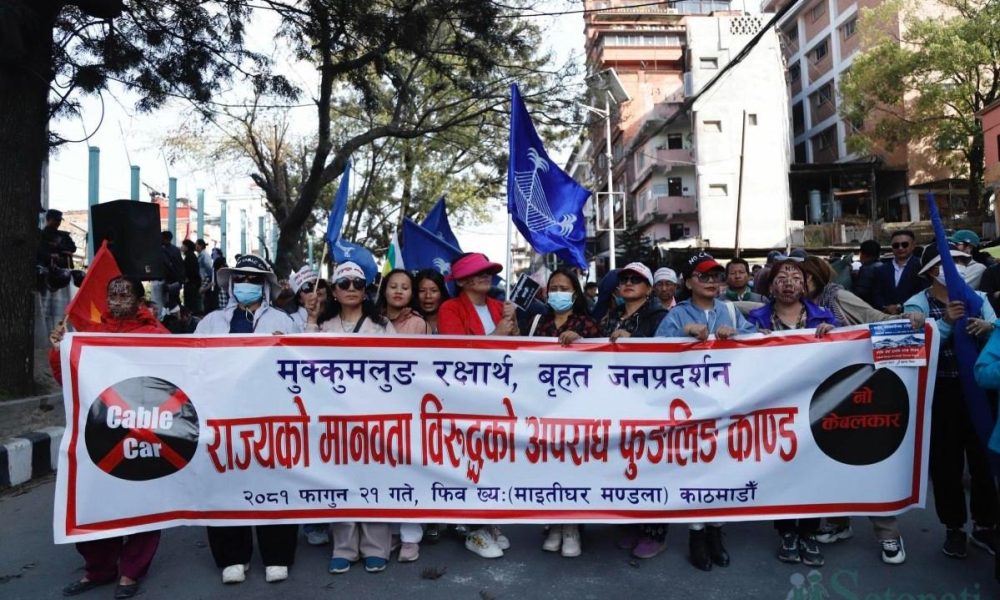
Indigenous Yakthung (Limbu) communities in eastern Nepal have fought hard for recognition after the World Bank Group’s accountability mechanism acknowledged a complaint about rights violations, underscoring their ongoing struggle to protect their land and culture.

The Compliance Advisor Ombudsman (CAO), the independent watchdog of the World Bank Group, accepted the complaint for further assessment and formally registered the case in December 2025. The decision clears the way for a potential mediation process or a full compliance investigation into whether the project breached the IFC’s environmental and social safeguard standards.

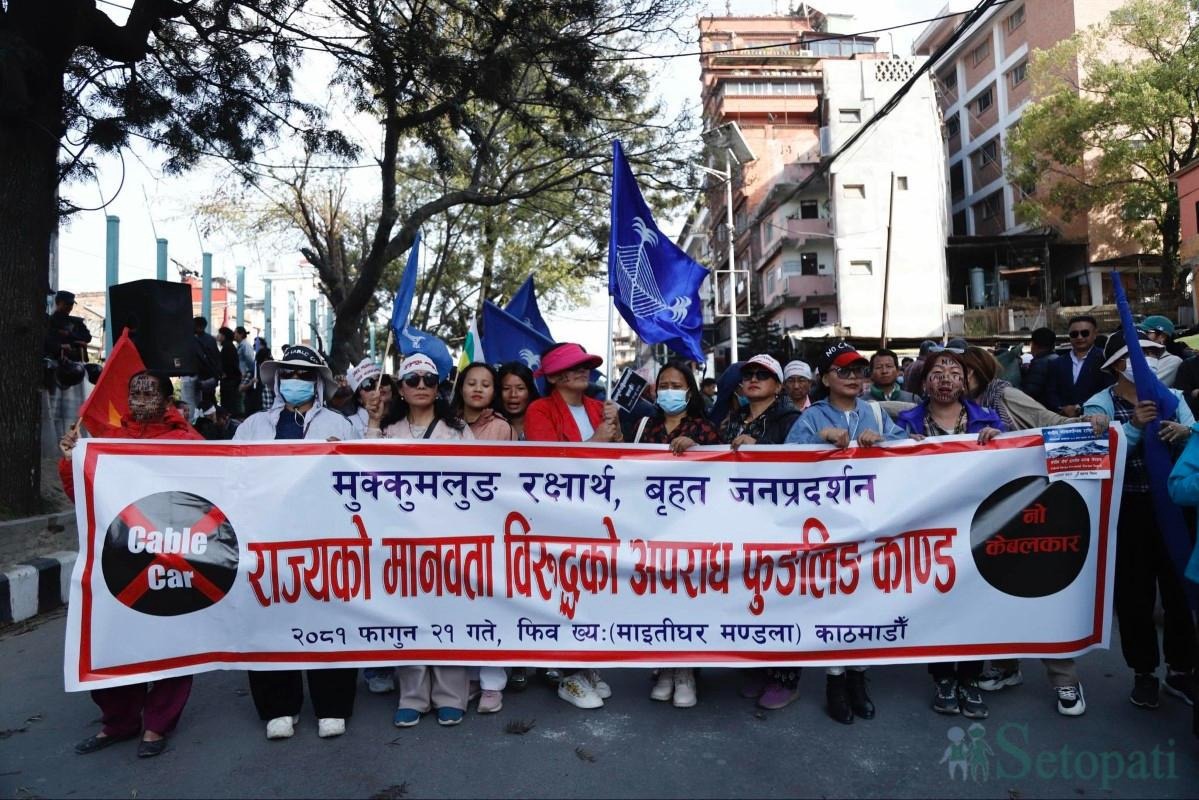
In August 2025, Indigenous Yakthung leaders, supported by lawyers and civil society organizations, filed a complaint against the IFC’s advisory support to IME Group for the $22 million Pathivara (Mukkumlung) cable car project in Taplejung District. This filing marks a critical step in holding the project accountable for alleged rights violations and environmental harm.

The cable car is being constructed on Mukkumlung Mountain, a sacred ancestral landscape central to the Yakthung people’s spirituality and Identity, risking irreversible damage to their cultural heritage and Identity.

According to the complainants, construction has already resulted in the felling of more than 10,000 trees in and around the Kanchenjunga Conservation Area, threatening habitats of endangered species such as red pandas, snow leopards, and Himalayan musk deer, underscoring the project’s severe environmental consequences.

“The reason the Complainants and their advisors seek to engage with the CAO is because of the social and environmental harms caused by one of the cable car projects in particular, the Pathivara project. This cable car project has severe impacts on one of the most sacred sites of the Limbu (Yakthung) Indigenous Peoples, including their forests, flora, fauna, heritage (tangible and intangible), and Mukkumlung mountain. The Pathivara project has been imposed on the local Indigenous communities without their Free, Prior, and Informed Consent (FPIC), and has proceeded to destroy their lands, forests, sacred sites, and livelihoods. When the people protest, they have been met with extreme violence and repression by security forces.” The community complaint submitted to the Ombudsman in August 2025 read.

Between August 2022 and July 2024, the IFC provided advisory services to IME Group related to four cable car projects in Nepal, including the Pathivara project. The complainants allege that the IFC failed to ensure that its Environmental and Social Performance Standards, particularly those protecting Indigenous Peoples, were applied.

“The cable car project is tantamount to cultural genocide of the Limbu nation in violation of our rights guaranteed in Nepal’s constitution, the Treaty of 1774 with the Gorkha kingdom, and the UN Declaration on the Rights of Indigenous Peoples,” said Advocate Shankar Limbu, Vice-Chair of LAHURNIP.

Community members say they were unaware of IFC’s involvement until July 2024, nearly two years after construction began, due to the delayed public disclosure of the advisory support.

Accordingly, the complaints stated that the project did not meet the IFC Performance Standards, including failures to assess and manage project impacts, conduct land acquisition, and address involuntary resettlement, among others.

“The IFC’s inability to ensure its client integrated the Performance Standards into the implementation of its plan for delivering cable car projects around Nepal has led to severe breaches of the protections that were supposed to safeguard vulnerable and marginalized communities. Today, Indigenous Limbu communities are being beaten, shot at, arrested, and terrorized for trying to defend their land and way of life,” the community complaints read.

Although the IFC exited the advisory role in 2024, it continues to invest in Global IME Bank, Nepal’s largest commercial bank and a core company within the IME Group. Over the past decade, the IFC has provided more than $50 million in financing to the conglomerate, along with a $500 million trade finance guarantee, which critics say gives the institution ongoing leverage and responsibility.

In its eligibility determination, the CAO found that the complaint met the required criteria, including a plausible link between IFC-supported activities and the alleged environmental and human rights harms. The case has now entered a 90-day assessment phase, during which the CAO will consult with the affected communities, the IFC, and the company involved.

At the end of the assessment, the parties may choose to engage in dispute resolution through mediation or proceed to a full compliance investigation examining whether the IFC failed to follow its own safeguard policies.

The advocates representing the communities welcomed the CAO’s decision.

“We welcome the fact that the CAO has found this complaint eligible, and look forward to working with investigators to uncover how things went so badly wrong. The IFC is currently reviewing its Performance Standards and must learn lessons on consultation, safeguarding cultural heritage and biodiversity, respecting Indigenous Peoples’ rights, and protecting them against retaliation,” Kate Geary, Programme Director at Recourse, one of the organizations that supported the communities in the complaint, reveals.

Further, their appeal is for the CAO to handle the case with utmost urgency. “The CAO investigation into the complaint against the cable car project should move swiftly to remedy ongoing impacts of the project, including retaliations against the local communities,” added Advocate Shankar Limbu.

Indigenous leaders are demanding an immediate halt to construction, the withdrawal of security forces from the area, the release of all IFC-related project documents, and an independent investigation into alleged human rights abuses, urging urgent action to protect their rights and environment.

Continue Reading

MEDIA FOR CHANGE NETWORK

Civil society groups at UNCCD COP17 are calling for urgent action on land rights, drought, and vital funding.

Published

on

By the Witness Radio team.

ULAANBAATAR, Mongolia: At the 17th session of the United Nations Convention to Combat Desertification (UNCCD COP17), civil society organizations urged governments to turn promises into real action, tackling land degradation, drought, and the mounting dangers confronting land-dependent communities.

At a press conference in Ulaanbaatar on Monday, August 17, civil society representatives from every corner of the globe—Africa, Asia, Latin America and the Caribbean, Western Europe, and Central and Eastern Europe—shared their priorities and plans for the two-week Summit.

Throughout COP17, these organizations plan to actively engage with government negotiators, national focal points, and other stakeholders, bringing forward evidence and community voices to ensure their priorities shape the conference’s outcomes.

They will also champion meaningful participation for civil society, Indigenous peoples, pastoralists, women, youth, and local communities in every stage of negotiations, implementation, monitoring, and follow-up.

The Civil Society Organization (CSO) Panel, which leads civil society engagement in the UNCCD process, shared that its members have spent nearly a year collecting perspectives from all five regions and crafting 19 key messages and recommendations for COP17.

Andy Morris, the Western European representative on the CSO Panel, said their main expectation is for COP17 to become an “action COP” that moves commitments into implementation.

“Our main expectation is that COP17 moves commitments to implementation,” Morris said, adding that this action COP requires accessible and adequate finance reaching communities and local actors who can implement solutions on the ground.

The CSOs are also determined to strengthen knowledge-sharing between governments, scientists, practitioners, Indigenous peoples, local communities, and pastoralists.

Morris emphasized that Indigenous, traditional, and local knowledge deserves equal recognition with scientific knowledge. He also called for greater support for civil society and local actors to generate evidence and monitor land degradation and restoration.

“We have a wealth of knowledge at our fingertips, and we need to bridge the gap between indigenous people’s knowledge and science,” he said.

Civil society organizations have made secure and fair access to land and land tenure a top priority, especially for women, Indigenous peoples, and local communities.

They are urging robust multi-stakeholder land governance, integrated land-use planning, and sustainable water management to help territories withstand drought.

They are pressing governments to shift from reactive drought responses to proactive, locally led strategies that boost land restoration and soil health.

The CSO Panel also prioritizes bolder action on land degradation neutrality and tighter coordination across land, climate, biodiversity, water, and food security agendas.

Sopiko Babalashvili, representing Central and Eastern Europe on the CSO Panel, said civil society wants COP17 commitments to translate into action at the community level.

“It’s important to increase accessible and secure finance for locally led and community-led solutions and translate commitments into action on the ground,” Babalashvili said.

African civil society representative Ellen Otaru-Okoedion highlighted that civil society organizations have been tackling desertification, land degradation, and drought at the grassroots long before these issues reach international negotiations.

“CSOs play an integral role in addressing desertification, land degradation, and drought within communities long before these challenges reach international negotiations.” She added that civil society organizations are more than observers at COP17; they are knowledge holders, partners in sharing and implementing solutions, and key contributors to locally rooted progress. The organizations urge governments to keep COP17 inclusive and ensure civil society has a real voice in negotiations, implementation, monitoring, and follow-up.

“We are also implementation partners and contributors to locally grounded solutions,” Ellen further revealed, adding that they will continue to engage with negotiators, party officials, national focal points and different caucuses while working with civil society networks and partners across regions and other environmental conventions.

Civil society representatives also voiced concerns about the shrinking financial space for organizations working on the frontlines in communities.

They warned that relying too heavily on external project funding can undermine civil society’s independence and called for new approaches to help organizations build more sustainable funding streams.

The panel pointed to capacity building, networking, and organizational development as key ways to empower CSOs to mobilize resources and keep supporting communities.

The organizations are also pushing for closer coordination among the three major Rio Conventions on desertification, climate change, and biodiversity.

They argue that land degradation, drought, water insecurity, climate change, biodiversity loss, and food security are deeply interconnected challenges that demand coordinated solutions, not isolated efforts.

As negotiations unfold over the next two weeks, civil society groups are determined to make sure the voices of communities affected by land degradation and drought shape the decisions made at COP17.

They believe the true measure of the conference’s success will not be what is agreed on paper, but whether those commitments reach communities through funding, action, monitoring, and greater participation by those who rely on the land for their livelihoods.

Continue Reading

MEDIA FOR CHANGE NETWORK

South Africa’s top court blocks Shell oil exploration off country’s Wild Coast

Published

on

In a landmark judgment on Aug. 14, South Africa’s Constitutional Court set aside exploration rights held by oil giant Shell and Impact Africa, a South African oil and gas company. The ruling prevents the companies from exploring for fossil fuels off South Africa’s Wild Coast.

The case was brought by Wild Coast communities and environmental organizations after Shell announced plans in 2021 to conduct a 3D seismic survey off the country’s Eastern Cape province coastline. They argued that authorities had failed to meaningfully consult affected communities or consider harms to their spiritual and cultural rights and livelihoods. Authorities also failed to consider the potential harm to marine life and climate change, the plaintiffs argued.

In the judgement, Justice Jody Kollapen wrote the majority opinion and said consulting communities isn’t just a procedural requirement, but “a process which affirms human dignity by affording a seat at the table to those whose lives are impacted by decisions.”

Acknowledging the “cornerstone role that dispossession played in the apartheid regime,” the court noted that South Africa’s natural resources are highly contested and that the case is embedded in “well-documented struggles by coastal communities to protect their land, marine resources and ways of life in the face of extractive activities.”

The judges also considered last year’s International Court of Justice Advisory Opinion on countries’ obligations in the context of climate change: “Decisions must be taken within a framework of heightened diligence, informed by scientific knowledge, international commitments and the foreseeable impacts of emissions on present and future generations,” Kollapen wrote.

The question of oil exploration rights in the area began in 2014, when the Department of Mineral Resources and Energy granted Impact Africa Limited the right to undertake a seismic survey to look for oil and gas reserves on the Wild Coast. Impact Africa Limited is a subsidiary of Impact Oil & Gas Limited, which in 2021 transferred a 50% stake of its exploration rights in the area to Shell.

The case has appeared before several South African courts over the past decade before reaching the Constitutional Court, the highest in the country.

Carmen Mannarino from the South African nonprofit Masifundise Development Trust, which works with communities in the area, told Mongabay that the court’s decision is a victory for fishing communities. “The court recognized that exploring for resources in light of potential future financial benefits does not compare to the constitutionally recognized rights of fishing communities,” Mannarino said.

“This is the apex court and the first time that it has dealt with issues relating to the community and environmental rights in relation to oil and gas exploitation,” Melissa Groenink, an attorney with one of the applicants, civil society organization Natural Justice, told Mongabay, adding that the ruling might influence similar cases currently in process.

Shell did not respond to Mongabay’s request for comment by the time of publication.

Banner image: Fisherpeople in Port St. Johns, Eastern Cape. Image courtesy of Aletta Harrison CC BY 4.0.

Source: news.mongabay.com

Continue Reading

MEDIA FOR CHANGE NETWORK

Minister Nabakooba wants special land title issuance halted

Published

on

She said the continued issuance of the certificates without adequate verification was fuelling land disputes and creating opportunities for land grabbers to deprive legitimate owners of their property.

Lands minister Judith Nabakooba wants the issuance of certificates of occupancy, which act as land titles, halted for three months to allow the Government to review and streamline the process and curb double titling.

She said the continued issuance of the certificates without adequate verification was fuelling land disputes and creating opportunities for land grabbers to deprive legitimate owners of their property.

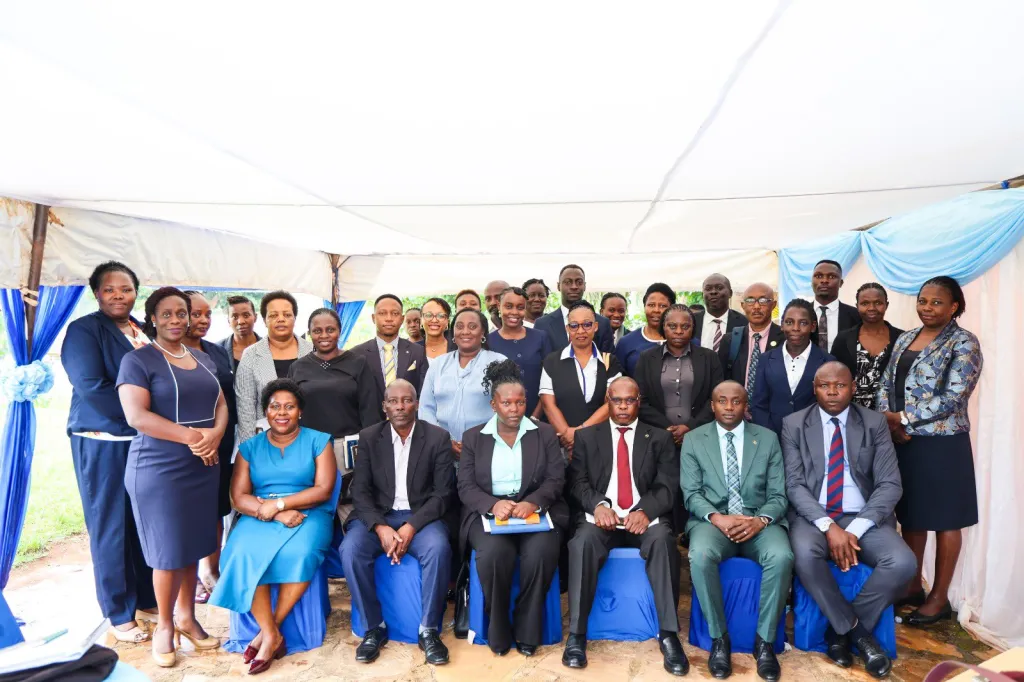
She made the remarks on August 14, 2026, during a lands staff meeting at the Office of the Prime Minister in Kampala.

The minister warned lands officers against issuing special certificates for land that already has registered ownership, saying those who disregard the procedures could face arrest.

“You have slept on your duty on the issue of special certificates. When you continue issuing them, I will send the police, and they will arrest you.”

Nabakooba cited cases in Kyengera and Kabula, in Wakiso and Lyantonde districts respectively, where the titles had reportedly been issued despite existing claims and titles on the same land.

“We need to sit and have a clear guideline on how to handle that issue,” she said, adding that many of the reported cases were coming from the Buganda region.

She said the creation of special titles on already registered land was also placing pressure on ministry leadership, as affected people frequently seek intervention.

“I receive distress calls from my bosses. You are putting special titles on existing titles, which makes my work very hard,” she said.

The minister’s concerns come amid persistent complaints about land grabbing, overlapping titles and double titling, which she said undermine public confidence in the country’s land administration system.

Nabakooba urged lands officials to take responsibility for the services they provide and follow proper procedures when handling land transactions.

She also directed lands officers to clear the backlog of land transactions by December, questioning how officials who frequently absent themselves from duty would meet the deadline.

She said the ministry continues to receive complaints about officers who report to work only once a week.

“You disappear a lot. Every time you give excuses. There are people who work for only one day a week. We get a lot of complaints from the public,” she said.

The minister also criticised poor customer care, saying some officers shout at clients and create an intimidating environment that discourages people from freely presenting their land-related concerns.

She further directed officials to remove brokers operating around Ministry Zonal Offices, accusing them of misleading clients and sometimes posing as ministry officials to solicit money.

“Let’s try to get brokers out of our offices. They even start blackmailing our names, posing as officials from the ministry and taking money from people,” she said.

Nabakooba also directed staff to wear name tags and ministry shirts to help members of the public distinguish genuine ministry employees from brokers.

The technical officers were also directed to enter titles completed under the Systematic Land Adjudication and Certification programme into the land information system and ensure they are distributed to the intended beneficiaries.

The minister appealed to officials to engage contractors to provide outstanding data needed to complete the programme.

“This is a World Bank loan, and we have to pay back the money, so let’s use it properly to finish the services they were asked for,” she said.

Nabakooba also urged technical officers to accompany ministers during field visits, saying their expertise is necessary to provide technical guidance and help the Government understand challenges faced by communities.

What others said

Acting permanent secretary in the lands ministry Dr Emmanuel Mugunga urged staff to embrace teamwork, accountability and respectful treatment of colleagues and clients.

He warned that the Human Capital Management System would track staff attendance and that absenteeism would have consequences.

Housing state minister Persis Namuganza urged staff to restore public confidence in the ministry, saying some members of the public now associate lands officials with land grabbing.

Lands state minister Harriet Ntabaazi called for greater collaboration among officers and warned technical staff against treating themselves as “small gods” at their duty stations.

Ntabaazi said land grabbing, overlapping titles, double titling and family conflicts remain among the major challenges facing the lands sector.

She also cautioned officers against soliciting money from clients, saying such practices damage the ministry’s reputation.

The ministers called for stronger accountability, adherence to proper procedures and improved teamwork to restore public confidence in land administration.

Continue Reading

Resource Center

Legal Framework

READ BY CATEGORY

Facebook

Newsletter

Subscribe to Witness Radio's news and report updates


Trending

Subscribe to Witness Radio's news and report updates