Connect with us

MEDIA FOR CHANGE NETWORK

COP30 : a further step towards a Just Transition in Africa

Published

on

Climate change has emerged as one of the predominant challenges for Africa, through its cascading environmental, social and economic effects.

Africa is still a continent where over 600 million people do not have access to electricity1, 230 million people do not have access to safe drinking water2, and more than 300 million people continue to suffer from hunger3, while its population is expected to double to 2.5 billion people by 20504.

It accounts for only 3.6% of global greenhouse gas emissions5, while the continent is home to 18.8% of the world’s population6.

Yet there is a real risk that it will endure some of the worst impacts of climate change.

In the assessment and projections made by the African Adaptation Initiative in the Africa State of Adaptation Report (2023)7, the conclusions are stark: the macroeconomic costs associated with the various adverse effects of climate change are significantly higher in Africa than in other regions of the world. African economies are highly sensitive not only to climate-related disasters, but also to annual variations in climate variables. The economic and livelihood impacts of climate change in Africa are therefore profound and are already leading to a slowdown in economic growth. And while the extent of this impact varies across the continent, seven of the ten countries identified as most vulnerable to the effects of climate change are in Africa8.

However, at the same time, Africa has enormous natural resources that could sustainably support its economic and social development, while positioning it as a key global player in the fight against climate change, thanks in particular to its wealth of minerals and biodiversity.

It is therefore in these three areas (adaptation, development and climate action) that it must be able to mobilise its resources and attract public and private funding. Needs are high: Africa’s climate finance needs are now measured in the trillions9.

On each of these points, COP30, held in Belém (Brazil) from 10 to 21 November 2025, made several advances.

1. Ensuring a Just Transition

In line with the Sustainable Development Goals (SDGs), Just Transition refers to the need to implement the sustainability transition in a socially just way that guarantees proper engagement with and support for affected and vulnerable people and communities. A declination of climate justice, it also acknowledges that without actively including and supporting affected groups within the transition, the disruptive changes brought about by climate action risk resulting in political opposition, contestation and even climate backsliding.

The imperative of a Just Transition was recognised already in the 2015 Paris agreement, but the work on Just Transition within the UNFCCC regime has gained more momentum in the past few years, with the Just Transition Work Programme10 established at COP28 in Dubai in 2023.

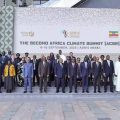
The Addis Ababa Declaration on Climate Change and Call to Action11 adopted on 10 September 2025 during the Second African Climate Summit also emphasized the importance of achieving Just Transition pathways in the implementation of all pillars of climate action under the Paris Agreement.

1.1 The Just Transition Mechanism

COP30 went a step further, through what is praised as one of its most concrete and successful achievements: the decision to develop a Just Transition Mechanism12. Popularly known as the Belém Action Mechanism or BAM, its purpose is ‘to enhance international cooperation, technical assistance, capacity-building and knowledge-sharing, and enable equitable, inclusive just transitions’.

Importantly, the decision acknowledges the need to support the Just Transition in a manner that does not exacerbate the debt burden of countries.

This decision also provided important clarity on what the international community views as a just transition. It recognizes the ‘importance of just transition pathways that respect, promote and fulfil all human rights and labour rights, the right to a clean, healthy and sustainable environment, the right to health, the rights of Indigenous Peoples, people of African descent, local communities, migrants, children, persons with disabilities and people in vulnerable situations, and the right to development, as well as gender equality, empowerment of women and intergenerational equity’.

The Just Transition Mechanism aims to be operational by COP31 next year. In the meantime, the concrete design of the mechanism will take place.

1.2 Africa’s Special Needs and Circumstances

COP30 also formally opened a long-awaited two-year process on recognising Africa’s Special Needs and Circumstances (SNC), including a mandated conference under COP31 in 2026 and a report to COP32 in 2027 in Addis Ababa, Ethiopia.

This is a first step in response to Africa’s long-standing demand for this formal recognition, which would acknowledge its unique vulnerabilities, including low historical emissions, disproportionate climate impacts and limited adaptive capacity, and could help it attract greater climate finance and technological support in the future.

1.3 Integrated Forum on Climate Change and Trade (IFCCT)

In parallel to the UN process, Brazil launched the Integrated Forum on Climate Change and Trade (IFCCT) to better address the potentially significant consequences of trade-related environmental instruments on development and the risk of economic exclusion of developing countries, particularly the least developed countries, without recognition of historical responsibility or differences in capacity.

This initiative follows the introduction, by the European Union in particular, of trade-related climate and environmental instruments such as the Carbon Border Adjustment Mechanism (CBAM)13 and the Deforestation Regulation (EUDR)14. These measures aim to better internalise the environmental impacts of products and encourage improvements in environmental production conditions in Europe’s trading partner countries, aligning them with the constraints imposed on its own manufacturers.

Nevertheless, the EU CBAM has met with considerable resistance, both within Europe and from many countries in the Global South and the United States, which argue that it is a unilateral trade measure and question its compatibility with its international obligations under the World Trade Organisation (WTO).

This is a major challenge for South Africa due to its dependence on coal, but also for all African countries seeking to industrialise and strengthen their capacity to process, refine and manufacture components, such as batteries, rather than exporting raw materials, and may need to rely temporarily on fossil fuels.

2. Financing Africa’s Green Growth

Africa’s natural resources are first and foremost an opportunity for its population, but also for the world, in the context of the global fight against climate change and the preservation of biodiversity. COP30 saw the first breakthrough in grid financing and a major innovation in forest conservation financing.

2.1 The Climate Finance Principles to Unlock Grid Financings

Developed by the Green Grids Initiative (GGI) and advanced by COP 30 under the ‘Plan to Accelerate the Expansion and Resilience of Power Grids’, the Climate Finance Principles15 aim to address the barriers faced in emerging markets for accessing climate finance to support the development of power grids, as the diversity of generation sources that are connected to them make their environmental impact more complex to assess than for individual generation projects.

Co-developed with investors and industry representatives, these Principles establish a common approach to assessing grids’ eligibility for climate and green finance, combining system-level and project-level criteria (climate contribution, consistency, measurability and attribution).

2.2 The Tropical Forest Forever Facility (TFFF)

Recognised as one of the key achievements of COP30, the Tropical Forest Forever Facility (TFFF)16 is a proposed, large-scale, blended-finance mechanism that provides ‘payment-for-performance’ incentives to tropical forest countries for keeping annual deforestation below 0.5%, verified through agreed geospatial satellite monitoring standards. It would operate alongside the Tropical Forest Investment Facility (TFIF), a companion investment fund intended to generate returns that finance TFFF’s annual payments.

The TFIF seeks to raise up to USD 125 billion through public and private investments, hosted at the World Bank. So far, 53 countries, including 34 tropical forest countries, have endorsed the Facility. The fund has yet to reach Brazil’s $25 billion for government investments, which are intended to secure investor confidence and unlock an extra $100 billion in private financing.

If the facility reaches this $125 billion target, it would be the world’s largest blended finance mechanism of its kind.

“Sponsor” countries (and potentially philanthropic foundations) would provide 40 year, first-loss (junior) capital at rates comparable to long-dated U.S. Treasuries, creating a risk buffer to mobilise an additional ~USD 100 billion in private, corporate, and philanthropic capital.

The combined capital would be invested primarily in emerging-market sovereign and corporate fixed income (excluding fossil fuels and environmentally harmful sectors). After servicing investor returns, net profits would flow to the TFFF to fund country payments.

If fully capitalized, expected returns could generate USD 3–4 billion per year, enabling payments of roughly USD 4 per hectare of conserved forest.

At least 20% of all payments are designated to Indigenous Peoples and local communities.

3. Financing Adaptation

Adaptation is a largely underfunded area of climate action worldwide, despite growing and now urgent needs. This issue is particularly acute for developing countries. The latest United Nations Adaptation Gap Report17 shows that developing countries’ needs are 12-14 times higher than current financial flows, while wealthy nations continue to favour mitigation funding.

One of the obstacles to increasing adaptation funding is that it is easier to increase mitigation funding than adaptation funding. Mitigation activities, such as energy efficiency and the development of clean energy production, are concentrated in the wealthier developing countries and often generate a financial return, allowing them to be financed with less concessional public funds and by mobilising private funds. In contrast, investments in adaptation often bring significant economic, social and environmental benefits, but few direct financial returns, such as investments in wetland restoration for flood protection or climate-smart agriculture. Adaptation investment needs are also often concentrated in the poorest countries, which require more concessional public finance.

COP30 nevertheless showed progress in this area.

Parties adopted the 59 Belém Adaptation Indicators. Voluntary and non-prescriptive, these indicators will enable progress to be tracked under the Global Goal on Adaptation, representing a significant step forward for transparency and accountability.

They concomitantly launched the ‘Belém–Addis vision on adaptation’, a two-year policy alignment process to develop guidance for operationalising those indicators.

Parties also formalised the Baku Adaptation Roadmap, a 2026-2028 work programme for operationalising adaptation goals, including support for vulnerable nations to develop national adaptation plans.

Above all, the ‘Belém Package’ confirms a commitment to triple adaptation finance from US$40bn to $120bn annually by 2035. While this is not yet a binding commitment and leaves timing and delivery modalities largely to future finance processes, it is seen as a major political signal.

Negotiations will need to continue on issues such as reforming the international debt architecture or the Bretton Woods institutions in order to support climate finance and action.

Conclusion

While international mobilisation is important, regional mobilisation is essential and will further bolster Africa’s influence at future meetings.

As significant as COP30 was, another major event in 2025 was the second African Climate Summit in September 2025, at which African leaders and financial institutions demonstrated their ability to mobilise.

They committed to mobilising $50 billion annually in catalytic finance through the Africa Climate Innovation Compact and African Climate Facility, with the aim of scaling up locally led climate innovations, while the African Development Bank announced the operationalization of the African Climate Change Fund, which will provide financial support for climate adaptation and mitigation projects across the continent.

At the same time, the Africa Finance Corporation, AfDB, Afreximbank, and Africa50 signed a framework for cooperation to realise the $100 billion Africa Green Industrialization Initiative (launched by the African Union in 2023), which aims to revolutionize industrial growth and renewable energy on the continent.

Taking over from COP30, 2026 will be the implementation year for Africa.


  1. https://www.iea.org/reports/financing-electricity-access-in-africa.
  2. https://www.afdb.org/en/news-and-events/world-water-day-2023-accelerating-change-solving-africas-water-and-sanitation-crises-59935#:~:text=Climate%20change%20is%20causing%20water,the%20available%20supply%20by%202025.
  3. https://www.who.int/news/item/28-07-2025-global-hunger-declines-but-rises-in-africa-and-western-asia-un-report.
  4. https://esgclarity.com/why-is-esg-different-in-africa/.
  5. https://www.iea.org/regions/africa/emissions.
  6. https://www.worldometers.info/world-population/africa-population/.
  7. https://www.ipcc.ch/report/sixth-assessment-report-cycle/.
  8. https://gain.nd.edu/our-work/country-index/.
  9. https://www.climatepolicyinitiative.org/publication/climate-finance-needs-of-african-countries/.
  10. https://unfccc.int/topics/just-transition/united-arab-emirates-just-transition-work-programme.
  11. https://au.int/en/pressreleases/20251118/african-leaders-addis-ababa-declaration-climate-change-and-call-action.
  12. https://unfccc.int/sites/default/files/resource/cma7_5_UAE%20JTWP_auv.pdf.
  13. Regulation (EU) 2023/956 of the European Parliament and of the Council of 10 May 2023 establishing a carbon border adjustment mechanism.
  14. Regulation (EU) 2023/1115 of the European Parliament and of the Council of 31 May 2023 on the making available on the Union market and the export from the Union of certain commodities and products associated with deforestation.
  15. https://greengridsinitiative.net/wp-content/uploads/2025/11/Climate-Finance-Principles-to-Unlock-Grids-Financing.pdf.
  16. https://www.wri.org/insights/financing-nature-conservation-tropical-forest-forever-facility and https://tfff.earth/.
  17. https://www.unep.org/resources/adaptation-gap-report-2025.

Source: ashurst.com

Continue Reading

MEDIA FOR CHANGE NETWORK

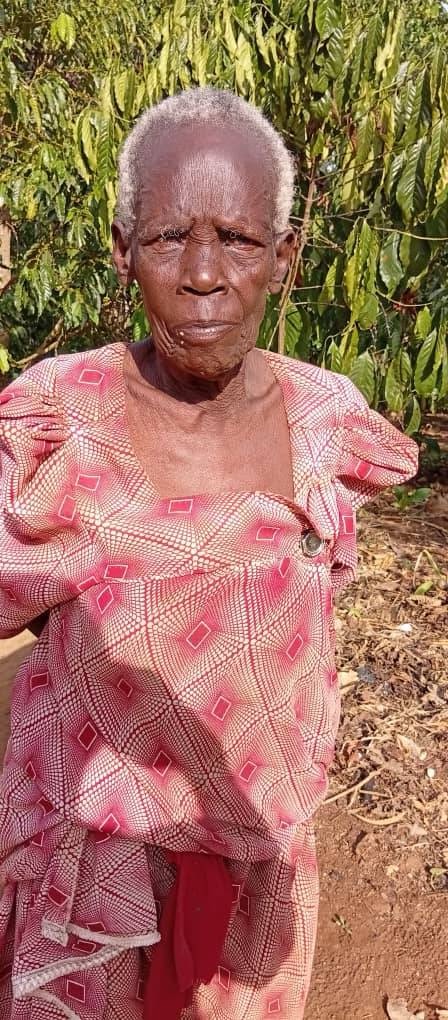
In Kasanda District, a grandmother faces eviction as her own grandchildren join forces against her.

Published

on

By the Witness Radio team

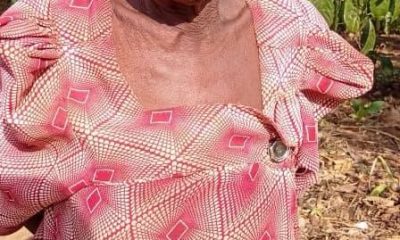
For over sixty years, Mastula Nyirabatusi has cherished her land in Kyakayongo Village, Nalutuntu Sub-county, Kasanda District. Now 80, she sees it as the heart of her life, a place she bought in 1964 and where she has raised her family for generations.

Today, Mastula finds herself locked in a bitter struggle with two of her grandchildren over the very land she calls home.

The ongoing battle has left the older woman frail. Her family says the relentless conflict and looming eviction have taken a toll on her health.

Mastula’s family says her grandchildren, Lovinsa Mukantagala and Ninkuuze Esther, claim that the approximately 10-acre piece of land belongs to their late father, Jamil Kaberuka.

However, Mastula disputes the claim. She says she bought the 10-acre land in Kyakayongo from Nyonyintono Musolobindo in 1964 for 130 shillings and has lived on it ever since.

What began as a family quarrel at local council meetings has spilled into the courts, tearing Mastula’s family apart. One of her sons, Byakatonda Diriisa, has spent over seven months in jail for defending his mother’s land.

But the family’s land dealings go further back. Mastula’s brother, Sulaiman Baragwiza, lived in Mityana-Busundo. According to Mastula’s family, he died leaving behind two sons, Muzindusi Abdallah and Jamil Kaberuka.

According to the family, Mastula later sold land that had belonged to her late brother, Sulaiman Baragwiza, in Mityana and used part of the money to acquire about three acres in Kyamwendwa Village, Kassanda District, for Baragwiza’s two sons.

In 1978, Mastula handed the land agreement to Muzindusi Abdallah, the elder of the two brothers, after he had started a family. Kaberuka, however, remained under Mastula’s care because he was younger at the time.

Florence Nabawanuka, one of Mastula’s daughters, says Kaberuka left his aunt’s home when he grew up and was never heard from again.

“Kaberuka disappeared from the village, and none of us got to know of his whereabouts ever since then,” Nabawanuka says.

In 2015, Kaberuka’s children, Lovinsa and Ninkuuze, appeared and presented an agreement they said showed Mastula had sold her 10 acres to their late father.

The document allegedly indicated the transaction took place in 1998. They first presented it to the Local Council Two committee and later to the Local Council One committee, chaired at the time by Okello Emmanuel.

Local leaders interviewed for this story questioned the document because of inconsistencies in the date and circumstances under which it was allegedly made.

Mr. Oyiire Samuel, the chairperson of Kyakayongo Village, says residents had always known Mastula as the person occupying and using the land.

“We all grew up seeing Mastula as the rightful owner settling on that land. The agreement Kaberuka’s daughters presented is fake because it shows it was written in 1988, yet their father left the village in 1985. Therefore, he could not have been given any land. Mastula also says she has never sold her land,” Oyiire says.

Oyiire wondered how the girls could forcefully take their grandmother’s land when he took care of their father. “This is totally unbelievable and can only be done by an insane person. They should thank the older woman instead of trying to take her land. At eighty, where do they want her to go?” he added.

To end the dispute, the local council advised Mastula to surrender part of her 10-acre land to the two grandchildren. Mastula agreed and gave them about two and a half acres from the 10-acre land.

Although the family says the parties signed an agreement, they told Witness Radio they were surprised when the grandchildren took the matter to court, claiming Mastula was illegally settling on their land.

The Grade One Court in Kiganda eventually ordered the grandchildren to vacate the land and keep away from Mastula. The grandchildren appealed to the High Court in Mubende.

However, the Mubende High Court overturned the Grade One Court judgment, ruling that Mastula should remain on the land during her lifetime, after which the grandchildren could take possession when she dies.

The court’s decision only deepened the rift, as Mastula’s family voiced their strong disagreement with the ruling.

Mastula’s children were dissatisfied with the decision and subsequently appealed to the Court of Appeal, where the matter remains pending.

As the legal battle dragged on, its ripple effects began to touch every corner of Mastula’s family.

According to accounts gathered by Witness Radio, the group, with support from area police, caused the arrest of Mastula’s son, Byakatonda Diriisa. The court accused him of trespassing on his mother’s land and sentenced him to one year in jail.

“He was supporting our mother to resist the eviction. Because he was the obstacle, they decided to lock him in jail to complete their plans,” Nabawanuka added.

According to Diriisa’s wife, Nabirye Amiina, he has spent more than seven months in custody, which has affected both his family and Mastula’s family.

“We are no longer getting all the necessary family needs since my husband was taken to prison, though he is innocent. This also caused four of our children to drop out of school due to lack of fees,” she added.

For Mastula’s family, the land dispute is more than a fight over property. It has shaken the health of an 80-year-old matriarch, cut off the family’s livelihood, and, relatives say, shattered the education of four children.

For Mastula, this legal storm comes at a time when she should be enjoying peace on the land she has tended for decades. Instead, her family says her health has declined steadily as the conflict rages on.

Mastula’s lawyer, Alex Tusiime, says his client has evidence supporting her claim and calls for a fair hearing in court.

“We are going to try our level best to see that Mastula gets justice. There could have been delays in the past by her former lawyers, but we are to do whatever it takes because we have the proof that the land belongs to Mastula,” Tusiime added.

Continue Reading

MEDIA FOR CHANGE NETWORK

Nimule residents raise alarm over alleged land grabbing

Published

on

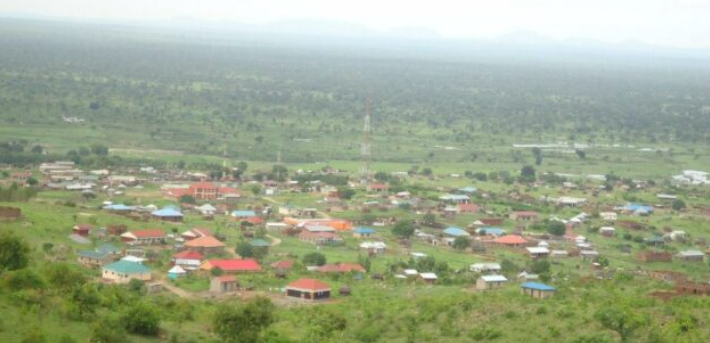
Residents of the border town of Nimule in South Sudan’s Eastern Equatoria state have raised concerns over alleged land grabbing, accusing some members of the South Sudan People’s Defence Forces (SSPDF) of occupying ancestral land and forcing local residents from their property.

The concerns were raised on Tuesday during a monthly forum on women’s rights to land and property organised by the Women’s Foundation for Humanity.

Andua Florence, a Nimule resident, told Radio Tamazuj that some army personnel had allegedly occupied her family’s land. She said her case was before the High Court in Nimule but that she was still waiting for a ruling.

“My case started from the B-court, then went to the county court, and finally the county court directed me to transfer it to the High Court,” Florence said. “When my case was transferred to the High Court, I had to get a lawyer.”

Florence said she had spent about 6 million South Sudanese pounds pursuing the case and was waiting for the court to deliver its ruling.

“This is my grandfather’s place, and we are the landowners of this place,” she said. “We are currently the seventh generation on that piece of land.”

Florence alleged that the people occupying the land are soldiers who claimed to have settled there in the 1990s.

She said the land was occupied while she was in Uganda as a refugee and that she had struggled to reclaim it since returning.

Florence said several land disputes in Nimule had reached the High Court, with some cases remaining there for nearly a year without a ruling. She said the lengthy legal process had imposed a financial burden on families pursuing their claims.

Grace Juan, a female chief in Nimule, echoed the concerns, saying many residents are being forced from their land.

Dorothy Drabuga, founder and executive director of the Women’s Foundation for Humanity, said land grabbing and inheritance rights were among the issues discussed during the monthly forum.

“We had a meeting with a women’s group. It is a monthly forum where we look at the challenges affecting women in Nimule, especially land rights and the right of inheritance,” Drabuga said.

Drabuga said some land disputes had moved through several levels of the court system and were now before the High Court, where the parties had hired lawyers.

“These cases have been going on for almost a year,” she said, adding that some people summoned to court had failed to appear.

Drabuga said some of the disputes involved ancestral land where generations of families had lived and buried relatives.

“This is ancestral land where the parents and grandparents have been buried, but somebody from another state is claiming that this land belongs to him or to them,” she said.

Drabuga said she is aware of at least five such cases before the High Court.

“There are many. So far, the ones I am aware of are five,” she said.

She said the failure of some parties to attend court had contributed to delays, but expressed hope that they would appear at upcoming hearings.

South Sudan has struggled with land disputes and competing claims over property, particularly in urban and border areas, where population movements and displacement have complicated land ownership.

Continue Reading

MEDIA FOR CHANGE NETWORK

New revelations: TotalEnergies is investing in countries facing political and economic risks, raising fresh questions about the company’s investment strategy.

Published

on

By the Witness Radio Team

Oil may not yet flow from Uganda’s wells, but for people near the oil fields in midwestern Uganda and along the pipeline corridor, the oil saga has been shaping their lives for years.

They have felt its impact through land they claim is no longer theirs, homes uprooted, roads and infrastructure cutting through fields they once cultivated, and lingering uncertainty after the announcement that their land was needed for a project promising to reshape Uganda’s future.

Uganda stands on the brink of a moment waited for nearly twenty years. The nation is set to produce its first commercial oil this September, and the government touts’ oil as a gateway to new revenue, jobs, infrastructure, and a path toward middle-income status.

Yet as Uganda readies itself for its first barrels, new findings about the French oil giant at the industry’s heart raise a broader question: beyond profits, what is at stake?

These revelations also shed light on TotalEnergies’ broader investment strategy and its growing presence in countries marked by deep political, economic, and human-rights challenges.

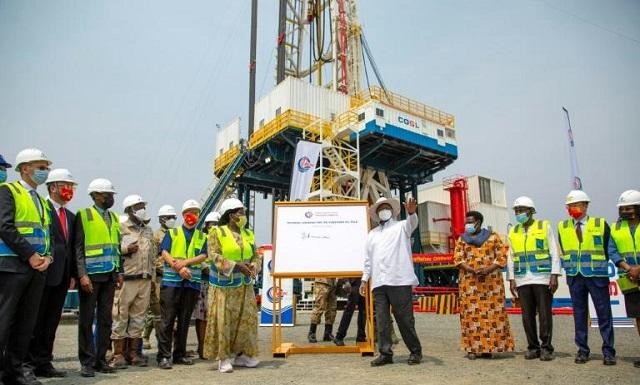
TotalEnergies is the operator of the Tilenga oil project in western Uganda and a major shareholder in the East African Crude Oil Pipeline (EACOP), which is intended to transport crude from Uganda’s oil fields to the Tanzanian coast.

A 2026 analysis by German environmental organization Urgewald, based on its Global Oil & Gas Exit List (GOGEL), found that more than half of TotalEnergies’ planned short-term oil and gas development is located in countries classified as autocracies or hybrid regimes.

Of the 7,829 million barrels of oil equivalent identified by Urgewald as part of the company’s planned short-term development, 4,178 million barrels are in those countries. More than 3,700 million barrels are also in countries classified as having high or extreme political and economic risks.

Uganda is among the countries listed in the analysis. Together, Uganda and Mozambique account for about 40 percent of TotalEnergies’ planned short-term upstream expansion. When Iraq is included, the three countries account for more than half of the company’s planned expansion.

The findings do not suggest that Uganda, Mozambique and Iraq share the same political systems or social circumstances. Instead, the three countries stand out in Urgewald’s analysis because of the scale of TotalEnergies’ planned upstream expansion there.

In Uganda, the company is involved in the Tilenga oil project and EACOP. In Mozambique, TotalEnergies is involved in the Mozambique LNG project, while Iraq is another major destination for the company’s planned upstream expansion.

Taken together, these findings position Uganda’s inaugural oil production as a key piece in TotalEnergies’ sweeping global ambitions.

For communities touched by Uganda’s oil ventures, the promise of economic transformation has often arrived as land disputes, compensation battles, and resettlement struggles—realities woven into the fabric of these projects.

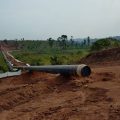
The EACOP pipeline carves its way through ten Ugandan districts, demanding land for its path and the infrastructure that follows.

While officials insist that land acquisition and compensation have been handled justly, many in affected communities voice grievances over what they see as insufficient payment for their land, homes, crops, and possessions.

Among them is Bwowe Ismail, a resident of Bethlehem village in Kyotera District. Bwowe told Witness Radio that his land was taken for the project after he demanded compensation he believed matched the value of his land and property.

He says that instead of receiving the compensation he sought, authorities intimidated him and later arrested him.

“Instead of compensating me fairly as I wanted, state authorities intimidated [me], enabled my arrest and accused [me] of sabotaging a government initiative,” Bwowe said.

Bwowe says that on one occasion he was arrested and accused of stealing money from a wealthy man in his village, an allegation he denies.

“They arrested me [and said] that I stole money from someone. I am a respected man in the society and could not do this. They just did it to shame me,” he said.

According to Bwowe, TotalEnergies offered to support his legal representation if he agreed to sit with the company and accept the compensation, but he refused.

He says that after he continued to reject the compensation and resisted what he described as intimidation, the government sued him and others who refused compensation. It asked the court to allow the money to be deposited into court accounts. The court ruled for the government.

Bwowe’s ordeal mirrors a broader struggle over land acquisition and compensation faced by communities in Uganda’s oil regions. More broadly, his story reveals how these conflicts can spiral far beyond the loss of land itself.

In its report, Our Trust is Broken: Loss of Land and Livelihoods for Oil Development in Uganda, Human Rights Watch reported that EACOP and other oil developments have affected more than 100,000 people in Uganda and Tanzania. The report also raised concerns about compensation, resettlement, and the effects of oil development on communities and biodiversity.

For many affected communities, seeking justice remains an uphill battle. Their worries about Uganda’s oil projects extend well beyond land.

Environmental activists and organizations challenging Uganda’s oil expansion have found themselves facing arrests and criminal charges.

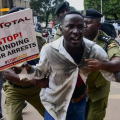
In August, 20 youth activists associated with Rooted in Resistance were arrested while delivering petitions to TotalEnergies and Parliament calling for an end to fossil-fuel expansion.

These arrests are part of a growing pattern of detentions and prosecutions targeting activists who oppose EACOP and other oil projects.

Brighton Aryampa, team lead at Youth for Green Communities, an organization that provides legal representation to environmental activists, says the treatment of protesters raises questions about Uganda’s civic space.

“The government is deliberately using legal action against Stop EACOP activists to suppress dissent, free speech, the right to peaceful protest, and public participation. This taints Uganda as a country that undermines democratic principles of free expression and open discourse, as hundreds of Stop EACOP activists have been arrested and charged,” Aryampa said. Concerns about civic space arise as Uganda faces mounting criticism for its record on political freedoms, free expression, treatment of human-rights defenders, and access to justice.

The country ranks 125th out of 142 countries in the World Justice Project’s Rule of Law Index. Freedom House classifies Uganda as “Not Free”, while CIVICUS gives the country a “Repressed” civic-space rating of 28 out of 100.

All these conditions shape the complex landscape in which Uganda’s oil projects are taking root.

Urgewald describes TotalEnergies as one of the world’s most aggressive oil and gas expanders.

Its 2026 analysis found that TotalEnergies has the largest short-term expansion plans among its major oil and gas peers in authoritarian states and countries classified as high-risk for business.

Sonja Meister, an energy campaigner at Urgewald and author of the analysis, says the company is taking significant risks through its expansion strategy.

“TotalEnergies is taking a huge risk with its fossil fuel expansion and disregarding the repercussions for communities on the ground. This game of roulette has serious consequences for civil society, ecosystems, and the climate alike,” Meister said in an email exchange with Witness Radio.

For Uganda, the significance of the findings lies not just in the amount of oil expected to be produced but in where the country’s projects sit within TotalEnergies’ wider portfolio and what that suggests about the company’s approach. This matter because Uganda is one of several countries where the company pursues major upstream investments despite political, economic, and governance risks identified by organizations such as Urgewald.

Uganda is one of several countries where the company is pursuing major upstream investments despite political, economic, and governance risks identified by organizations such as Urgewald.

This does not mean TotalEnergies’ investments will have identical impacts everywhere or that Uganda’s oil sector will mirror outcomes seen in other countries. Still, it raises pressing questions about how the company weighs political and economic risks, safeguards communities, and responds to human-rights issues as they emerge.

It also sparks important questions about how the company evaluates political and economic risks, shields communities during major developments, and handles human-rights concerns as they surface.

TotalEnergies’ expansion also depends on access to financial markets and investors. According to Urgewald’s analysis, bonds have become an increasingly important source of financing for TotalEnergies compared with loans.

Among the company’s major investors are French financial institutions including Crédit Agricole and Amundi. Deutsche Bank, primarily through DWS, is also a major investor, while German DZ Bank, primarily through Union Investment, is another significant investor.

Urgewald notes that these investors have yet to pledge to stop buying new TotalEnergies bonds, urging financial institutions to rethink their ties to the company and its fossil-fuel ambitions. This financing dilemma is pivotal because TotalEnergies’ expansion hinges on continued access to capital and investors.

Meister says continued expansion depends heavily on access to finance. “TotalEnergies relies on the financial industry’s continuous support. Without new bonds, it would be much harder for the group to finance its destructive expansion projects such as ‘Mozambique LNG’ or ‘EACOP’,” she said.

She said banks and investors financing the company should reconsider their role.

“The banks and investors involved must recognize their responsibility and not sink further funds into these risky endeavors,” Meister said.

The government has hailed Uganda’s first oil production as a landmark economic achievement.

For communities living in the shadow of oil developments, however, the road to first oil has already meant land seizures, compensation wrangles, forced relocations, and at times, direct clashes with authorities and oil firms.

Meanwhile, Urgewald’s research situates Uganda within a sweeping trend of TotalEnergies’ global fossil-fuel expansion, especially in countries flagged for serious political, economic, or governance risks.

Witness Radio sought a response from TotalEnergies Uganda to the concerns raised in this story, including issues relating to land acquisition, compensation, treatment of protesters and the company’s wider expansion strategy. We contacted the company’s Corporate Affairs Manager, Anita Kayongo, by email and telephone but had not received a response by the time of publication.

Continue Reading

Resource Center

Legal Framework

READ BY CATEGORY

Facebook

Newsletter

Subscribe to Witness Radio's news and report updates


Trending

Subscribe to Witness Radio's news and report updates