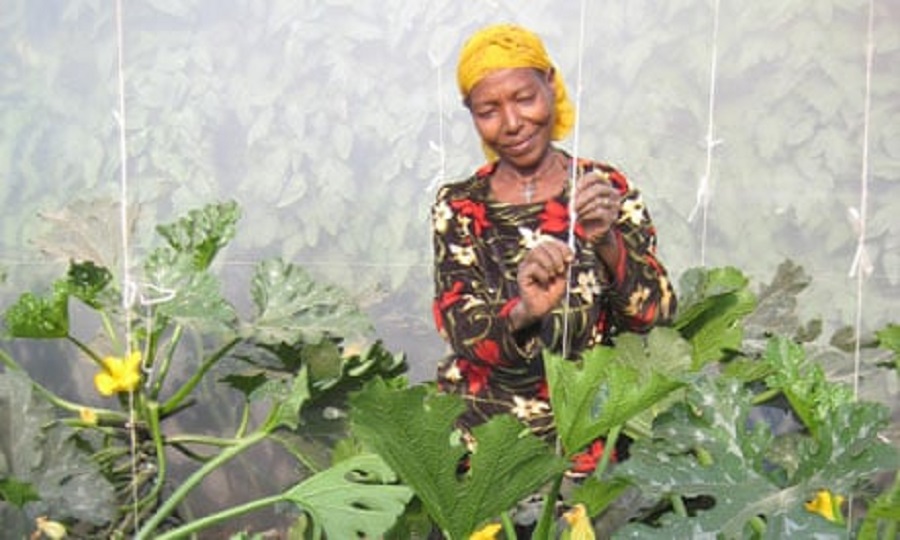
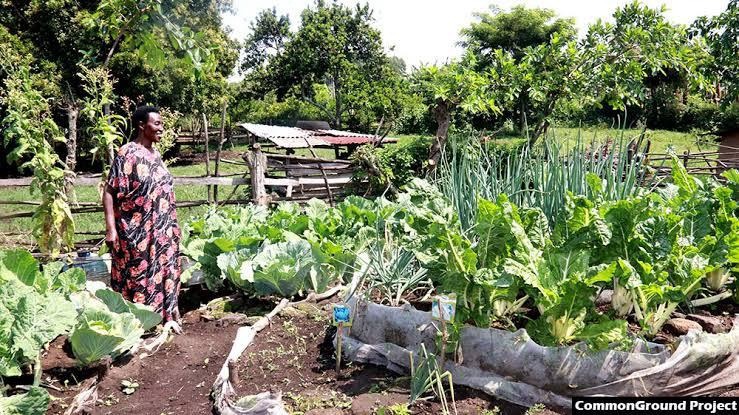
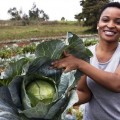
A woman tends vegetables at a giant Saudi-financed farm in Ethiopia.
An Observer investigation reveals how rich countries faced by a global food shortage now farm an area double the size of the UK to guarantee supplies for their citizens.
We turned off the main road to Awassa, talked our way past security guards and drove a mile across empty land before we found what will soon be Ethiopia’s largest greenhouse. Nestling below an escarpment of the Rift Valley, the development is far from finished, but the plastic and steel structure already stretches over 20 hectares – the size of 20 football pitches.
The farm manager shows us millions of tomatoes, peppers and other vegetables being grown in 500m rows in computer controlled conditions. Spanish engineers are building the steel structure, Dutch technology minimises water use from two bore-holes and 1,000 women pick and pack 50 tonnes of food a day. Within 24 hours, it has been driven 200 miles to Addis Ababa and flown 1,000 miles to the shops and restaurants of Dubai, Jeddah and elsewhere in the Middle East.
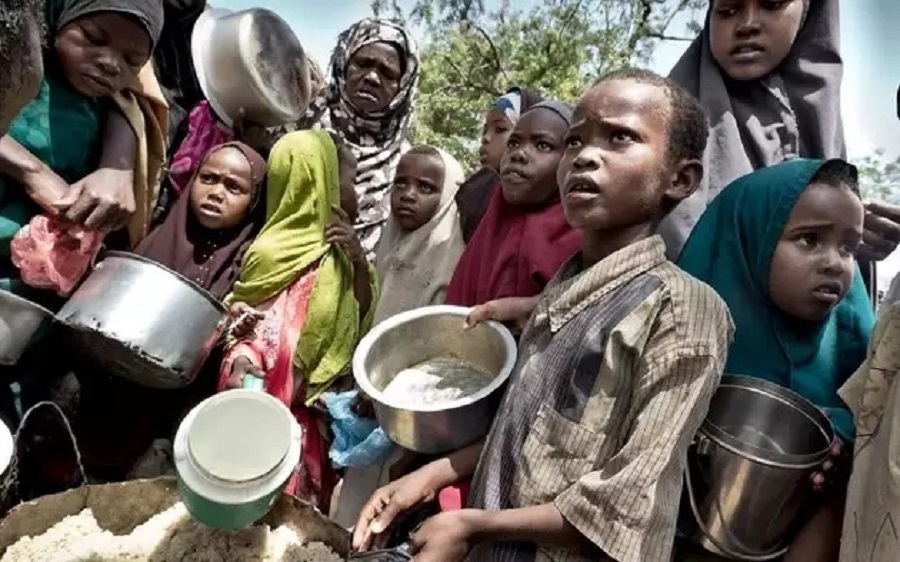
Ethiopia is one of the hungriest countries in the world with 2.8 million people needing food aid, but paradoxically the government is offering at least 3m hectares of its most fertile land to rich countries and some of the world’s most wealthy individuals to export food for their own populations.
The 1,000 hectares of land which contain the Awassa greenhouses are leased for 99 years to a Saudi billionaire businessman, Ethiopian-born Sheikh Mohammed al-Amoudi, one of the 50 richest men in the world. His Saudi Star company plans to spend up to $2bn acquiring and developing 500,000 hectares of land in Ethiopia in the next few years. So far, it has bought four farms and is already growing wheat, rice, vegetables and flowers for the Saudi market. It expects eventually to employ more than 10,000 people.
But Ethiopia is only one of 20 or more African countries where land is being bought or leased for intensive agriculture on an immense scale in what may be the greatest change of ownership since the colonial era.
An Observer investigation estimates that up to 50m hectares of land – an area more than double the size of the UK – has been acquired in the last few years or is in the process of being negotiated by governments and wealthy investors working with state subsidies. The data used was collected by Grain, the International Institute for Environment and Development, the International Land Coalition, ActionAid and other non-governmental groups.
The land rush, which is still accelerating, has been triggered by the worldwide food shortages which followed the sharp oil price rises in 2008, growing water shortages and the European Union’s insistence that 10% of all transport fuel must come from plant-based biofuels by 2015.
In many areas the deals have led to evictions, civil unrest and complaints of “land grabbing”.
The experience of Nyikaw Ochalla, an indigenous Anuak from the Gambella region of Ethiopia now living in Britain but who is in regular contact with farmers in his region, is typical. He said: “All of the land in the Gambella region is utilised. Each community has and looks after its own territory and the rivers and farmlands within it. It is a myth propagated by the government and investors to say that there is waste land or land that is not utilised in Gambella.
“The foreign companies are arriving in large numbers, depriving people of land they have used for centuries. There is no consultation with the indigenous population. The deals are done secretly. The only thing the local people see is people coming with lots of tractors to invade their lands.
“All the land round my family village of Illia has been taken over and is being cleared. People now have to work for an Indian company. Their land has been compulsorily taken and they have been given no compensation. People cannot believe what is happening. Thousands of people will be affected and people will go hungry.”
It is not known if the acquisitions will improve or worsen food security in Africa, or if they will stimulate separatist conflicts, but a major World Bank report due to be published this month is expected to warn of both the potential benefits and the immense dangers they represent to people and nature.
Leading the rush are international agribusinesses, investment banks, hedge funds, commodity traders, sovereign wealth funds as well as UK pension funds, foundations and individuals attracted by some of the world’s cheapest land.
Together they are scouring Sudan, Kenya, Nigeria, Tanzania, Malawi, Ethiopia, Congo, Zambia, Uganda, Madagascar, Zimbabwe, Mali, Sierra Leone, Ghana and elsewhere. Ethiopia alone has approved 815 foreign-financed agricultural projects since 2007. Any land there, which investors have not been able to buy, is being leased for approximately $1 per year per hectare.
Saudi Arabia, along with other Middle Eastern emirate states such as Qatar, Kuwait and Abu Dhabi, is thought to be the biggest buyer. In 2008 the Saudi government, which was one of the Middle East’s largest wheat-growers, announced it was to reduce its domestic cereal production by 12% a year to conserve its water. It earmarked $5bn to provide loans at preferential rates to Saudi companies which wanted to invest in countries with strong agricultural potential .
Meanwhile, the Saudi investment company Foras, backed by the Islamic Development Bank and wealthy Saudi investors, plans to spend $1bn buying land and growing 7m tonnes of rice for the Saudi market within seven years. The company says it is investigating buying land in Mali, Senegal, Sudan and Uganda. By turning to Africa to grow its staple crops, Saudi Arabia is not just acquiring Africa’s land but is securing itself the equivalent of hundreds of millions of gallons of scarce water a year. Water, says the UN, will be the defining resource of the next 100 years.
Since 2008 Saudi investors have bought heavily in Sudan, Egypt, Ethiopia and Kenya. Last year the first sacks of wheat grown in Ethiopia for the Saudi market were presented by al-Amoudi to King Abdullah.
Some of the African deals lined up are eye-wateringly large: China has signed a contract with the Democratic Republic of Congo to grow 2.8m hectares of palm oil for biofuels. Before it fell apart after riots, a proposed 1.2m hectares deal between Madagascar and the South Korean company Daewoo would have included nearly half of the country’s arable land.
Land to grow biofuel crops is also in demand. “European biofuel companies have acquired or requested about 3.9m hectares in Africa. This has led to displacement of people, lack of consultation and compensation, broken promises about wages and job opportunities,” said Tim Rice, author of an ActionAid report which estimates that the EU needs to grow crops on 17.5m hectares, well over half the size of Italy, if it is to meet its 10% biofuel target by 2015.
“The biofuel land grab in Africa is already displacing farmers and food production. The number of people going hungry will increase,” he said. British firms have secured tracts of land in Angola, Ethiopia, Mozambique, Nigeria and Tanzania to grow flowers and vegetables.
Indian companies, backed by government loans, have bought or leased hundreds of thousands of hectares in Ethiopia, Kenya, Madagascar, Senegal and Mozambique, where they are growing rice, sugar cane, maize and lentils to feed their domestic market.
Nowhere is now out of bounds. Sudan, emerging from civil war and mostly bereft of development for a generation, is one of the new hot spots. South Korean companies last year bought 700,000 hectares of northern Sudan for wheat cultivation; the United Arab Emirates have acquired 750,000 hectares and Saudi Arabia last month concluded a 42,000-hectare deal in Nile province.
The government of southern Sudan says many companies are now trying to acquire land. “We have had many requests from many developers. Negotiations are going on,” said Peter Chooli, director of water resources and irrigation, in Juba last week. “A Danish group is in discussions with the state and another wants to use land near the Nile.”
In one of the most extraordinary deals, buccaneering New York investment firm Jarch Capital, run by a former commodities trader, Philip Heilberg, has leased 800,000 hectares in southern Sudan near Darfur. Heilberg has promised not only to create jobs but also to put 10% or more of his profits back into the local community. But he has been accused by Sudanese of “grabbing” communal land and leading an American attempt to fragment Sudan and exploit its resources.
Devlin Kuyek, a Montreal-based researcher with Grain, said investing in Africa was now seen as a new food supply strategy by many governments. “Rich countries are eyeing Africa not just for a healthy return on capital, but also as an insurance policy. Food shortages and riots in 28 countries in 2008, declining water supplies, climate change and huge population growth have together made land attractive. Africa has the most land and, compared with other continents, is cheap,” he said.
“Farmland in sub-Saharan Africa is giving 25% returns a year and new technology can treble crop yields in short time frames,” said Susan Payne, chief executive of Emergent Asset Management, a UK investment fund seeking to spend $50m on African land, which, she said, was attracting governments, corporations, multinationals and other investors. “Agricultural development is not only sustainable, it is our future. If we do not pay great care and attention now to increase food production by over 50% before 2050, we will face serious food shortages globally,” she said.
But many of the deals are widely condemned by both western non-government groups and nationals as “new colonialism”, driving people off the land and taking scarce resources away from people.
We met Tegenu Morku, a land agent, in a roadside cafe on his way to the region of Oromia in Ethiopia to find 500 hectares of land for a group of Egyptian investors. They planned to fatten cattle, grow cereals and spices and export as much as possible to Egypt. There had to be water available and he expected the price to be about 15 birr (75p) per hectare per year – less than a quarter of the cost of land in Egypt and a tenth of the price of land in Asia.
“The land and labour is cheap and the climate is good here. Everyone – Saudis, Turks, Chinese, Egyptians – is looking. The farmers do not like it because they get displaced, but they can find land elsewhere and, besides, they get compensation, equivalent to about 10 years’ crop yield,” he said.
Oromia is one of the centres of the African land rush. Haile Hirpa, president of the Oromia studies’ association, said last week in a letter of protest to UN secretary-general Ban Ki-moon that India had acquired 1m hectares, Djibouti 10,000 hectares, Saudi Arabia 100,000 hectares, and that Egyptian, South Korean, Chinese, Nigerian and other Arab investors were all active in the state.
“This is the new, 21st-century colonisation. The Saudis are enjoying the rice harvest, while the Oromos are dying from man-made famine as we speak,” he said.
The Ethiopian government denied the deals were causing hunger and said that the land deals were attracting hundreds of millions of dollars of foreign investments and tens of thousands of jobs. A spokesman said: “Ethiopia has 74m hectares of fertile land, of which only 15% is currently in use – mainly by subsistence farmers. Of the remaining land, only a small percentage – 3 to 4% – is offered to foreign investors. Investors are never given land that belongs to Ethiopian farmers. The government also encourages Ethiopians in the diaspora to invest in their homeland. They bring badly needed technology, they offer jobs and training to Ethiopians, they operate in areas where there is suitable land and access to water.”
The reality on the ground is different, according to Michael Taylor, a policy specialist at the International Land Coalition. “If land in Africa hasn’t been planted, it’s probably for a reason. Maybe it’s used to graze livestock or deliberately left fallow to prevent nutrient depletion and erosion. Anybody who has seen these areas identified as unused understands that there is no land in Ethiopia that has no owners and users.”
Development experts are divided on the benefits of large-scale, intensive farming. Indian ecologist Vandana Shiva said in London last week that large-scale industrial agriculture not only threw people off the land but also required chemicals, pesticides, herbicides, fertilisers, intensive water use, and large-scale transport, storage and distribution which together turned landscapes into enormous mono-cultural plantations.
“We are seeing dispossession on a massive scale. It means less food is available and local people will have less. There will be more conflict and political instability and cultures will be uprooted. The small farmers of Africa are the basis of food security. The food availability of the planet will decline,” she says. But Rodney Cooke, director at the UN’s International Fund for Agricultural Development, sees potential benefits. “I would avoid the blanket term ‘land-grabbing’. Done the right way, these deals can bring benefits for all parties and be a tool for development.”
Lorenzo Cotula, senior researcher with the International Institute for Environment and Development, who co-authored a report on African land exchanges with the UN fund last year, found that well-structured deals could guarantee employment, better infrastructures and better crop yields. But badly handled they could cause great harm, especially if local people were excluded from decisions about allocating land and if their land rights were not protected.
Water is also controversial. Local government officers in Ethiopia told the Observer that foreign companies that set up flower farms and other large intensive farms were not being charged for water. “We would like to, but the deal is made by central government,” said one. In Awassa, the al-Amouni farm uses as much water a year as 100,000 Ethiopians.
• This article was amended on 22 March 2011. Owing to an editing error the original said that more than 13 million people in Ethiopia need food aid. This has been corrected.
Original Post: The Guardian


 Indian agribusiness sets sights on land in east Africa
 The 4th African Forum on Business and Human Rights: The rapidly escalating investment in Africa is urgently eroding environmental conservation and disregarding the dignity, the land, and human rights of the African people.
 African Food Systems Summit 2024: Do not use it to promote failed agricultural models – African Faith Leaders.
 Stop favoring export-oriented production over strengthening local food systems – Food Sovereignty advocates to the African Development Bank officials.




 Global hunger falls, but millions in Africa still go without food, says UN
 While hunger continues to grip the world, a new report highlights forests and forest foods as a hidden treasure trove of nourishment.
 Agroecological Entrepreneurship: African farmers are redefining agriculture by building agroecological businesses that challenge industrial models.
 Wars are disrupting food systems, and ending world hunger requires urgent global action, experts say.
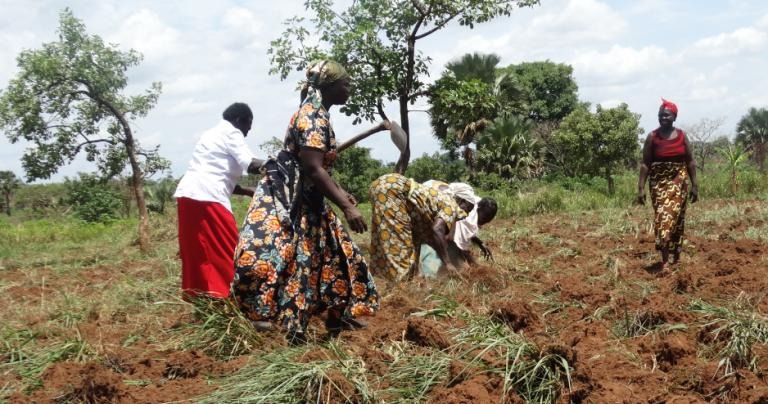

 How unequal access to land by women endangers Uganda’s food security
 Women’s groups demand equality in land tenure security to boost food production.
 Rights and Resources Initiative (RRI) launched a new report looking at 80 legal frameworks
 Smallholder Farmers Can Now Access Agricultural Credit Facility Without Collateral

 Witness Radio Petitions ODPP urgently to review and withdraw criminal charges against Buvuma Community Land Defenders.
 Witness Radio petitions chief prosecutor: Want 34 community land rights defenders and activists released from prison.
 Mubende district police are aiding land grabbing and committing crimes against locals they are obliged to protect.
 Uganda: the number of community environmental and land rights defenders targeted for challenging irresponsible business practices has reached more than 1500 victims as of June 31st, 2023.





 MEDIA FOR CHANGE NETWORK2 weeks ago
 MEDIA FOR CHANGE NETWORK2 weeks ago
 MEDIA FOR CHANGE NETWORK2 weeks ago
 NGO WORK4 days ago
 MEDIA FOR CHANGE NETWORK4 days ago
 FARM NEWS2 weeks ago
 MEDIA FOR CHANGE NETWORK2 weeks ago
 MEDIA FOR CHANGE NETWORK1 week ago