Connect with us

MEDIA FOR CHANGE NETWORK

Uganda’s Army is on the spot for forcibly grabbing land for families in Pangero Chiefdom in Nebbi district.


Published

on

By the Witness Radio team.

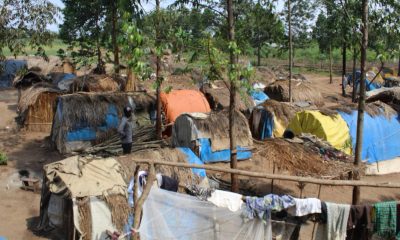
Despite the challenges, the community in Koch Parish, Nebbi Sub-County, in Nebbi District, near the Congolese border, has shown remarkable resilience. The Army seized approximately 100 acres of land, including private buildings, that members of the local Koch community had used for over 150 years to establish an Army barracks. Their resilience in the face of such a significant loss is genuinely inspiring.

The UPDF, as described on its website, is a nonpartisan force, national in character, patriotic, professional, disciplined, productive, and subordinate to the civilian authority as established under the constitution. Furthermore, it states that its primary interest is to protect Uganda and Africa at large, providing a safe and secure environment in which all Ugandan citizens can live and prosper.

However, according to a whistleblower, when the UPDF seized their land, no military chiefs offered prior communication, consultation, compensation, or resettlement. Instead, Uganda’s national Army only occupied people’s land forcefully, and not even the section commanders offered an official explanation.

“Citizens just woke up to a massive Army deployment in their fields,” wrote a whistleblower in an exchange with Witness Radio.

The occupied area in Koch Parish is not just a piece of land, but a home to the members of the Pangero chiefdom. This community belongs to the Alur kingdom, which spans north-western Congo and western Uganda, north of Lake Albert.

The reality and daily life of the Pangero community, which typically lives in a closely connected and communal manner, have been significantly impacted by the loss of both private and communal land. Not only is the cultural identity associated with land and community life at risk, but access to cultural sites, such as the graves of ancestors, is now denied.

Members of the local community who resisted the unlawful seizure of their land were reported to have been harassed and defamed. Despite these challenges, they continue to fight for their rights, making negotiations with the UPDF significantly more challenging.

Beyond the human suffering, the takeover also raises serious legal questions under Ugandan land law. Under Ugandan law, this action by the UPDF constitutes an illegal act. In principle, the government and, by extension, the Army are entitled to take over land if it is in the public interest, and are subject to fairly compensating the landowners.

However, this is subject to the condition that their intention is clearly communicated in advance and that negotiations take place with the previous residents, resulting in a mutual agreement on the necessary and appropriate compensation.

When faced with community resistance, the Army was compelled to conduct a survey and valuation of the land occupied by the UPDF in 2023 and 2024.  However, land defenders in the area claim that the process was marred by irregularities in some cases, against the will and in the absence of many landowners.

“The community was also pressured by the Koch Land Committee responsible for the review. Despite that it was supposed to represent the local population, it was not democratically elected by consensus, as is tradition in Alur communities, and was comprised of an imposed elite.” A local defender told Witness Radio

At an announcement meeting facilitated by officials from the UPDF Land Board, their national surveyor, and the Commander of Koch Army Barracks on September 19, 2025, community members were compelled to sign documents for meager compensation for land that had been seized five years prior.

“Residents whose land was surveyed before were given two choices: To sell their land to the Army by accepting the offered compensation, or to refuse the UPDF’s offer. In the latter case, however, it would be necessary to contact the Army headquarters in Mbuya, which is far away, to assert one’s claims or submit a petition.” Says another defender. Despite signing for this money, as of the writing of this article, the community claims it had never received it, almost two months later.

Mr Opio Okech, who attended the meeting himself, disapproves that this equates to a forced decision to sell, as the further necessary measures seem almost impossible for those affected without legal knowledge or external support.

“The problem here from the government was to enter upon the land, stay for long without adequate awareness creation, then decide we are going nowhere. Come for compensation. This looks, smells, and walks like a forceful eviction, “he mentions.

The effects of forced land acquisition by the UPDF in Koch Parish pose a high risk of home and landlessness, rises in youth criminality, and recurring poverty, primarily affecting women and children. Furthermore, the dispersal of the traditional community of the Pangero chiefdom is most likely to result in a severe loss of cultural heritage.

The Ugandan government has a duty here to look after the needs of this traditional community beyond compensation. This could include providing alternative land on which the traditional communal way of life could continue.

Witness Radio had not received a response from Army spokesperson Mr. Felix Kulayigye regarding the land grab, despite several attempts. However, since the initial takeover in 2020, another land grab by the same agency is looming in the same Kochi community for the expansion of the Army barracks.

According to sources, the UPDF intends to acquire more than 1,000 acres in total, nearly half of Koch Parish, leaving residents in fear and uncertainty.

“People are now panicking because they have heard speculations that more land is being

targeted for expansion. They are concerned about the impunity of the national Army, since the land that was grabbed five years ago has not been paid for, and now there are reports that more than 1,000 acres of community land are being targeted.” Mr. Okello further revealed.

The fate of the Pangero chiefdom is not an isolated case. Across Uganda, communal lands belonging to traditional clans and kingdoms continue to face similar threats from investors and state actors. Although Ugandan law recognizes customary ownership, enforcement often remains weak, and those affected rarely have access to the information or resources needed to defend their rights.

Continue Reading

MEDIA FOR CHANGE NETWORK

East African court dismisses appeal against EACOP project

Published

on

The Appellate Division of the East African Court of Justice (EACJ) has dismissed a high-profile appeal filed by civil society organisations (CSOs) that sought to challenge the human rights, environmental, and climate risks associated with the East African Crude Oil Pipeline (EACOP) project.

In a ruling delivered on Wednesday at the EACJ headquarters in Arusha, Tanzania, the Appellate Division upheld the First Instance Division’s 2023 decision, concluding that the case was filed outside the time limit set under East African Community (EAC) laws, which generally mandate cases be heard within a 60-day window.

The panel of judges, led by EACJ Appellate Division president Nestor Kayobera, alongside vice president Anita Mugeni and Kathurima M’Inot, agreed that the EACJ did not have the jurisdiction to hear the main case.

Original petition

The original suit was filed in November 2020 by four CSOs: Africa Institute for Energy Governance (AFIEGO), Centre for Food and Adequate Living Rights (CEFROHT) from Uganda, Natural Justice (NJ) from Kenya, and the Centre for Strategic Litigation (CSL) from Tanzania.

The CSOs sought a permanent injunction to halt the construction of the pipeline in protected areas in Uganda and Tanzania, compensation for all project-affected persons (PAPs) for losses incurred due to land use restrictions.

The First Instance Division dismissed the case in November 2023, prompting the CSOs to immediately file an appeal in December 2023. This appeal was subsequently heard in Arusha and Kigali, Rwanda, in November 2024 and February 2025, respectively.

EACOP project

Costs overturned 

Crucially, while the Appellate Division upheld the dismissal, it overturned the order issued by the First Instance Division that had awarded costs to the governments of Uganda and Tanzania and the Secretary General of the EAC.

The judges directed that each party must bear its own costs, stating: “Taking into account the public interest involved in the appeal and the appellants’ public-spirited endeavor to ensure compliance with the treaty, we direct that each party shall bear their own costs in this court and in the trial.”

CSOs decry ‘disappointing decision’

The CSOs described the Wednesday ruling as a “disappointing decision,” arguing that the judges failed to consider when affected communities and CSOs actually became aware of the project’s impacts and the existence of the EACOP-related agreements, such as the Inter-Governmental Agreement (IGA) and Host Government Agreement (HGA), which were made public years after they were signed.

Dickens Kamugisha, CEO of AFIEGO, called the decision a “setback for regional justice” and protection of vulnerable communities.

“The decision has left over 331 million East Africans at the mercy of greedy corporations,” he stated, adding, “The ruling is a travesty, but we remain determined to use all available strategies to protect people and nature.”

Elizabeth Kariuki from Natural Justice emphasized the impact on the PAPs, saying, “This ruling is devastating for the very people whose lives have been upended by EACOP – the families that lost their land and livelihoods, and the communities watching their ecosystems disappear. Today, the court has closed its doors to them. But we will not give up. We will continue to fight alongside communities to ensure that their suffering is not ignored.”

MCosmas Yiga, a PAP from Uganda, expressed profound disappointment, saying, “We, the PAPs, have been oppressed, and we don’t expect any gain from the oil industry… Today is a sad day,” citing his refusal of a $2 million compensation offer for 58 mango trees.

The courtroom was packed with CSOs, PAPs, media, and a lawyer representing the Ugandan government, state attorney Ojambo Bichachi, who welcomed the decision. The CSOs noted that the Appellate Court of the EACJ is the final court and plan to consult with EACOP-affected people before announcing their next steps.

Source: The Observer

Continue Reading

MEDIA FOR CHANGE NETWORK

EALA members renew push for unified sub-regional Agroecology Law during Mukono meeting.

Published

on

By Witness Radio Team.

The East African Legislative Assembly (EALA) has renewed its call for a unified regional agroecology policy and law, following a high-level capacity-building meeting held in Nakisunga Village, Mukono District, Uganda.

The gathering brought together more than 50 EALA members, over 100 participants, including civil society organizations (CSOs) representatives, agroecology experts, and officials from Mukono Local government, to discuss the gaps in existing regional frameworks and the urgent need for coherent legislation to support sustainable and climate-resilient farming systems.

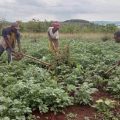
The field tour of Nansubuga CEFROHT Agroecology Training Farm showcased successful organic farming practices, illustrating the benefits of agroecology firsthand to lawmakers and stakeholders.

“I’m amazed at how a local female farmer can transform non-fertile land into a productive farm,” said Hon. Fatuma Ndangiza of the EALA delegation from Rwanda. “Agroecology is about access, safe food, resilient and equitable food systems, and environmental friendliness. What we see here is the right path for our small-scale farmers.”

The proposed regional agroecology law aims to protect smallholder farmers like Nansubuga by safeguarding their seeds, reducing reliance on costly chemical inputs, and shielding them from land grabs, thereby directly enhancing their resilience and livelihoods.

Representing EALA Speaker Rt. Hon. Joseph Ntakirutimana, Hon. Gideon Gatpan Thoar, Chair of the EALA Committee on Agriculture, Tourism and Natural Resources, emphasized the urgency to put the Agroecology policy and law in place:

“There is no law protecting agroecology farmers like Nansubuga. Their seeds are not protected, and they face intense competition from corporate-backed industrial systems. This deserves urgent attention.”

He added that lawmakers’ mandate requires them to legislate in the interest of East Africans, most of whom are smallholder farmers, and that firsthand field experience will strengthen the upcoming model law.

“So now, with this experience, we can push for a regional policy that empowers agroecology farmers and fosters resilient agriculture. Supporting them can lead to a brighter future for East African farming,” He added.

Hon. Fatuma Ndangiza revealed that the agroecology bill could be ready within a year, pending adequate funding, offering hope that smallholder farmers will have access to supportive legislation.

“East Africa cannot build resilient food systems without a unified agroecology policy and law. This meeting is a big step toward drafting a model law that reflects the needs of our farmers. At least by the end of our mandate in 2027, we want this bill in place,” she said. “Members of the agriculture committee have already been trained in agroecology, and thanks to CEFROHT and other partners, even more lawmakers now appreciate the importance of this legislation. It will move quickly.”

Experts at the meeting highlighted systemic biases that keep East African farmers impoverished. These include a longstanding emphasis on export-oriented industrial agriculture, corporate-controlled seeds, increasing pesticide and fertilizer use, and land grabs.

Dr. Million Belay, General Coordinator of the Alliance for Food Sovereignty in Africa (AFSA), warned that Africa is being pushed into an unsustainable corner.

“One of the legacies of colonialism is pushing us to export food instead of feeding our people. Chemicals, GMOs, and land grabs are increasing, and global actors now control food production.

A farm like this one shows the direction we should take.”

He went on to say that proper food security and environmental health depend on farmers’ control over their land, seeds, and output-what we call food sovereignty-empowering farmers to shape their future.

As part of the capacity-building process, EALA members visited the CEFROHT Agroecology Learning Center, where they witnessed demonstrations of intercropping and crop diversification, agroforestry systems, animal husbandry, water and pesticide trapping, among others.

Dr. David Kabanda, whose organization, the Center for Food and Adequate Living Rights (CEFROHT), hosted the delegation, noted that farmers are already successfully practicing agroecology, demonstrating the tangible benefits of this approach.

“We are pleased to support lawmakers with evidence and field-level experiences. Agroecology is not theoretical; farmers are already practicing it successfully. It is what we advocate for, the production of good food as well as environmental conservation,” he added.

Looking ahead, EALA announced a series of concrete steps to advance the regional agroecology agenda. The assembly plans to complete the Agroecology Bill process within a year, then conduct public hearings across all eight EAC Partner States to gather stakeholder input. The bill will be fast-tracked for debate and approval in the EALA plenary, with civil society expected to help secure the Heads of State’s assent. Once adopted, the law will become the EAC Agroecology Act, guiding and harmonizing agroecology efforts across the region.

As climate shocks intensify and millions of families depend on smallholder farming, the Mukono meeting marks a turning point in East Africa’s pursuit of sustainable, resilient food systems. The push for a unified agroecology law signals a growing regional recognition that the future of East African agriculture must be farmer-centered, biodiversity-based, and rooted in local knowledge.

Continue Reading

MEDIA FOR CHANGE NETWORK

East African lawmakers and CSO leaders are meeting in Uganda to draw up plans to promote Agroecology as an alternative to climate change mitigation.

Published

on

By Witness Radio team.

Mukono, Uganda — the East African Legislative Assembly (EALA) members and Civil society organizations (CSOs) leaders in Uganda are convening in Nakisunga, Mukono district today, 28th November, to discuss how to promote agroecology at the regional level and inspire a collective commitment to regional resilience.

Agroecology offers a robust, holistic approach to combating climate change by enhancing the resilience of food systems and reducing their environmental impact.

Spearheaded by the Center for Food and Adequate Living Rights (CEFROHT), the event emphasizes integrating agroecology into regional climate resilience strategies, especially as the East African Community (EAC) faces rising food costs, climate shocks, and declining soil health.

During the meeting, EALA members, together with CSOs, will explore how principles like crop diversification, soil regeneration, and community seed saving can directly improve smallholder farmers’ resilience and livelihoods, complemented by a hands-on field visit to the CEFROHT Agroecology Learning Center in Mukono.

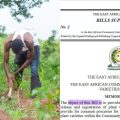
The event has also occurred at a time when EALA is reviewing the East African Seed and Plant Varieties Bill, 2025, which is being criticized for undermining the role of smallholder farmers in seed saving, conservation, and the management of seed systems to promote healthy foods.

Players from CSOs include: Participatory Ecological Land Use Management (PELUM Uganda), Eastern and Southern Africa Small-scale Farmers’ Forum (ESAFF), Seed Savers Network Kenya, TABIO Tanzania, the Alliance for Food Sovereignty in Africa (AFSA), Slow Food Uganda, SEATINI, FIAN Uganda, and the Mukono District Local Government, among others.

The meeting will lay the groundwork for East Africa’s first Policy and Model Law on Agroecology, a long-awaited step toward sustainable and equitable agri-food systems that empower regional stakeholders to shape the future.

The event will be broadcast live on Witness Radio.

Continue Reading

Resource Center

Legal Framework

READ BY CATEGORY

Facebook

Newsletter

Subscribe to Witness Radio's newsletter


Trending

Subscribe to Witness Radio's newsletter