
MEDIA FOR CHANGE NETWORK
Ugandan Communities Say Total’s Oil Project Is More of a Land Grab than a Development Opportunity

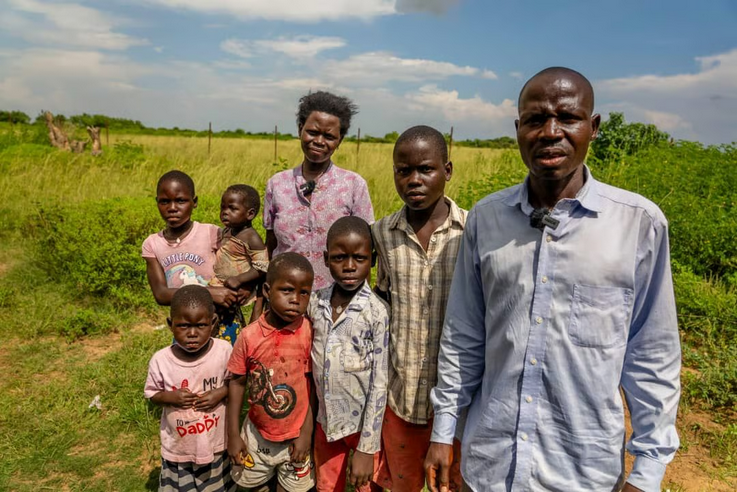
Fred Balikenda and his family were forcefully evicted from their home in Kirama village, Buliisa district on May 13, 2024 to make way for the Tilenga project. Photo by Diana Taremwa-Karakire.
When Jealousy Mugisa Mulimba, a 52-year-old father of nine in Uganda’s oil-rich Buliisa district, was informed he would need to move his family from his ancestral home because French oil giant TotalEnergies needed his three acres to build their central processing facility in the region, he was reasonable. He didn’t put up a fight. Instead, he asked that the company give him three acres nearby; somewhere out of the way of the facility, but still near the place he’d always called home, the health facilities he and his family rely upon, and his kids’ schools.
He was instead shown land far away, isolated and distant from everything and everyone he’d ever known. After a five-year legal battle, a Ugandan court expropriated his land anyway in 2023, along with that of 41 other affected people.
“They are inhuman,” he said during a recent interview. “This is my land on which my ancestors are buried. I will not just leave like they want, I will continue fighting.”
Together with other affected people, Mr. Mulimba plans to appeal the decision of the Hoima court in Uganda’s high court.

A resettlement house built by TotalEnergies for project affected persons PAPS . Some PAPs have expressed concerns that these houses are isolated compared to the communal settings they were accustomed to. Photo by Diana Taremwa-Karakire.
Although the Ugandan government promises that oil projects will lift the country out of poverty and put Uganda’s natural resources to work for the betterment of Ugandan citizens, activists are concerned not only about the hundreds of millions of tons of carbon dioxide these projects will generate, but also about the more immediate impacts. These range from the potential for spills and the impact on animals and birds in biodiverse regions, to the way the country’s burgeoning fossil fuel industry is displacing various communities, bringing them not the promised riches of an oil boom, but sending them ever deeper into poverty.
Uganda first discovered commercial quantities of oil nearly 20 years ago, but it wasn’t until TotalEnergies and the Chinese National Offshore Oil Company CNOOC inked a deal to exploit the resources in the Lake Albert region in 2022 that the country’s fossil fuel industry began in earnest. The region, which lies on the country’s western border with the Democratic Republic of the Congo, is estimated to hold over 6.5 billion barrels of oil, with 1.4 billion barrels economically recoverable. TotalEnergies is the major operator for both the Tilenga oilfields, a $6 billion project covering Buliisa and Nwoya districts near the shores of Lake Albert, and the East African Crude Oil Pipeline, or EACOP, project that will transport that oil from Uganda to an export port in Tanzania. Other partners are CNOOC and the state-owned Uganda National Oil Company, as well as Tanzania’s state-owned Tanzania Petroleum Development Corporation.
Getting all that oil and gas to customers requires infrastructure, which is where EACOP comes in. The plan calls for a 900-mile pipeline stretching from the small town of Kabale, in western Uganda, to the Tanzanian port of Tanga. If completed, it will have the capacity to carry up to 246,000 barrels of crude a day to a storage terminal and loading jetty in Tanga. The waxy nature of Uganda’s crude will require the pipeline to be heated constantly for the crude to keep flowing. Experts say that this is the largest heated oil pipeline to be constructed.
Meanwhile, the Tilenga oilfields lie in one of not just Uganda’s but Africa’s most biodiverse regions. According to state environment regulator National Environment Management Authority NEMA, the Albertine region hosts 14 percent of all of African reptiles, 19 percent of Africa’s amphibians and 52 percent of the continent’s birds, as well as 35 percent of all of Africa’s butterflies and 39 percent of all African mammals.
The project includes the development of 6 oil fields and the drilling of about 426 wells, with 10 wellpads located inside Murchison Falls National Park, Uganda’s largest national park. It also includes an industrial area with a lake water abstraction facility and a central processing facility capable of processing up to 200,000 barrels of oil per day. Currently, the project aims to produce up to 190,000 barrels of oil daily to meet global demand. Drilling activities are ongoing at Tilenga with over 110 wells drilled so far.
Land Grab
The completion of the Tilenga and EACOP projects will not only displace animals, birds and amphibians, but also people. The projects require a land acquisition program covering some 6,400 hectares. This means relocating 775 primary residences, and affecting a total of 19,262 stakeholders, landowners, and land users.
TotalEnergies is responsible for overseeing the land acquisition process, including all administrative costs and compensation payments. However, the company contracted Atacama Consulting, a Ugandan firm, to carry out the implementation of this process.
While land and property rights in Uganda are safeguarded under Article 26 of the Constitution and the Land Act of 1998, the land acquisition process for these projects is guided by government-mandated Land Acquisition Resettlement Framework and Resettlement Action Plans (RAPS) that are part of assessments carried out by TotalEnergies. The compensation rates for land, permanent buildings, rates for crops and temporary structures are determined based on market analysis approved by the chief government valuer.
The Tilenga RAP stipulates that the project will re-establish the livelihoods of affected persons to an equal or greater level than before the project activities. Most of the land has been acquired from the 5,576 landowners or project affected people under the Tilenga project.
However, many of the people in question, like Mulimba, report unresolved disputes and claim that these projects have left them worse off than before, driving them deeper into poverty.
On December 8, 2023, the High Court in Hoima ruled that 42 households be evicted before compensation to make way for the Tilenga Project. The court allowed TotalEnergies to deposit compensation funds in court and take the land, even by force if needed. While the company made compensation payments after resolving disputes, many affected families still argue that the compensation was inadequate.
The Ugandan project, along with the vast natural gas fields of Mozambique, are at the center of TotalEnergies’s Africa strategy, which it says is to “develop responsible, low cost, low emission oil and gas production.” This strategy fits well into the plans of Uganda’s long-time leader, Yoweri Museveni, who has made the development of the $10 billion hydrocarbon industry a cornerstone of his plan to transform this impoverished East African nation.
At an event to announce the final investment decision for the $10bn project in February 2022, TotalEnergies chief executive Patrick Pouyanné said that he had travelled to Uganda more than any other country since 2018 to push through the project.
“The development of Lake Albert resources is a major project for Uganda and Tanzania, and our ambition is to make it an exemplary project in terms of shared prosperity and sustainable development. We are fully aware of the important social and environmental challenges it represents,” he said.
But allegations of rights violations to local communities have dogged the oil giant. Activists say the Tilenga project’s land acquisition process has been marked by delayed, inadequate and unfair compensation as well as the use of threats, intimidation, and other tactics to coerce many poor families into accepting bad deals for their land. This has led to resistance to the project’s efforts to fence off land in some areas, despite the company’s insistence that it sought consent and is following social safeguards.
“TotalEnergies has failed to respect the rights of local communities. It has failed to gain the informed consent of affected communities for the project as is legally required,” said Benon Tusingwire, the executive director at Navigators of Development Association NAVODA, a local rights group working in the project area. He also noted that officials from Atacama have been coercing and tricking affected people into signing consent forms for the acquisition of their land.
TotalEnergies did not reply to multiple requests for comment.
As the deadline for the production of first oil approaches, the actions of both TotalEnergies and government officials have become more aggressive, residents claim.
On the morning of May 13, 2024, Fred Balikenda (pictured in the photo at the top of this story), a local peasant farmer living on the margins of one of TotalEnergies oil wells, suffered one of the most brutal evictions to date. A group of gun-toting policemen in Toyota Pickup trucks bumped into the fenced enclosure of Balikenda’s home and ordered him and his wife out of their 4 bedroom house. As they waited in the yard, the officers, backed by around a dozen un-uniformed men, started demolishing the house.
Balikenda, along with other landowners, including Mulimba, lost the suit in April 2024 in which they had sought to halt their evictions. The Judge in Hoima city, near the oil fields, ruled that money meant for the expropriation compensation should be deposited with the court and that the government could evict locals so that TotalEnergies construction activities could go ahead.
“They threw out some of my belongings through the windows,” Balikenda said, gazing into the distance. “We are now living a life of destitution, we have lost so much land to the project and yet what we were being compensated isn’t equal to what is being taken. We no longer have access to community grazing land, all my cows and pigs have died.”
Even before this eviction, Balikenda was effectively living in an open-air prison for months after TotalEnergies fenced in his home and a 1-acre piece of land that he had refused to vacate before his replacement house was complete. His pigs starved to death because he could no longer get out of the enclosure to get them fodder, he says. Court is yet to rule on their appeal.
“We are really going through some of the roughest times,” Balikenda said. “Our families are traumatized”
The Petroleum Authority of Uganda, or PAU, the state regulator for the oil and gas sector, says that recent evictions of Tilenga affected persons followed the due legal process.
“The Tilenga Project prioritizes minimizing disruption to affected communities and ensuring that all PAPs [project-affected persons] are adequately compensate for their losses and inconveniences. Despite the comprehensive compensation and resettlement efforts, the final PAPs’ repeated refusal to relocate necessitated legal action by the government,” says a statement from PAU.
However, lawyers representing Balikenda and others insist that the court process was flawed. In a country where the justice system mostly rules in favor of the government, affected people remain helpless.
“If it were not for the harassment, intimidation, arrests, detentions and other threats that they face, they would never have accepted the low compensation,” said Tusingwire.
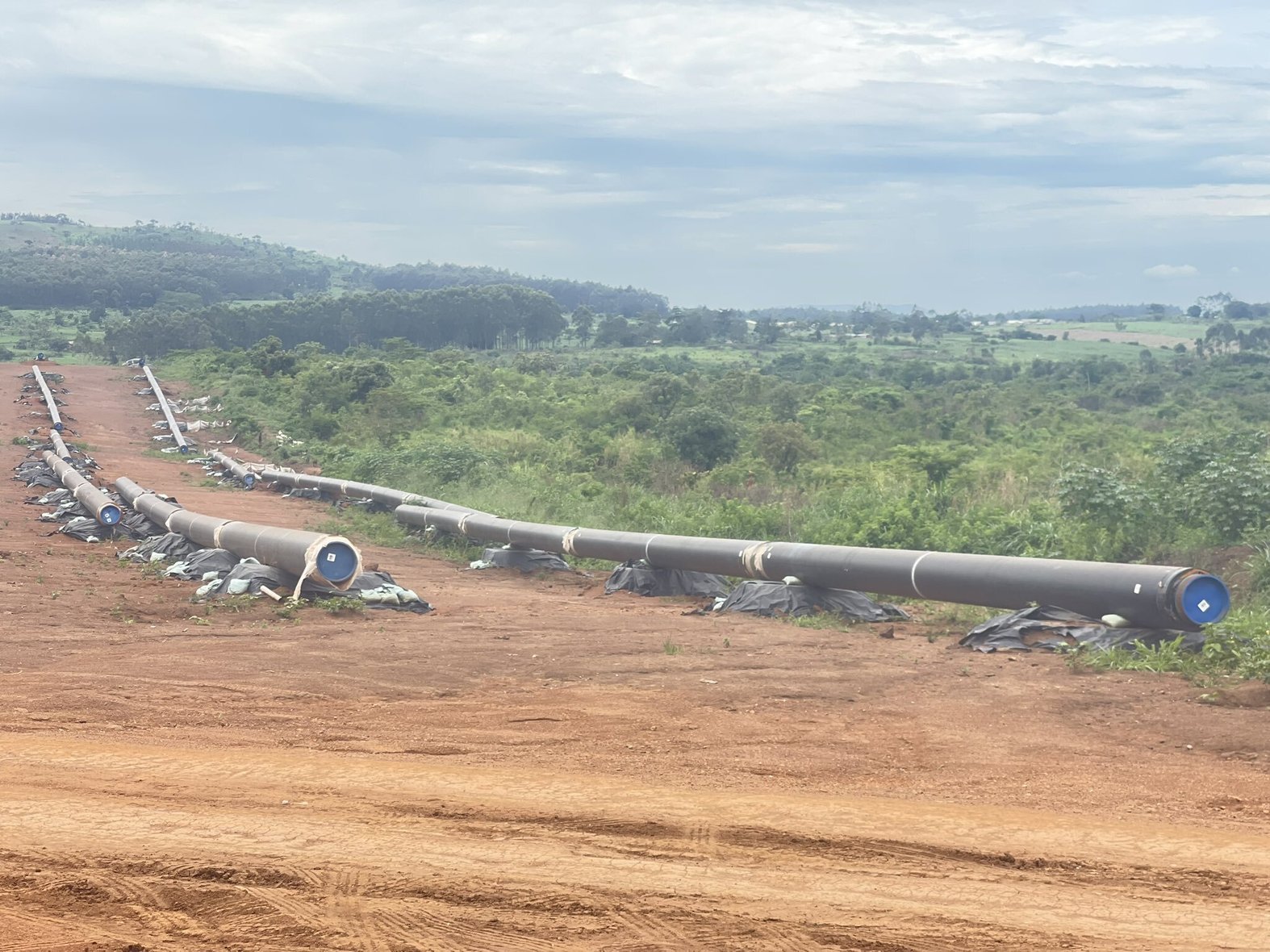
Pump Station 1 (PS1) of the East African Crude Oil Pipeline project in Hoima district, a critical part of the EACOP infrastructure, receiving crude oil from feeder pipelines from the Kingfisher and Tilenga oil fields and transporting it to port Tanga in Tanzania. Photo by Diana Taremwa-Karakire.
The Pattern Continues in Mozambique
More than 2000 kilometers to the south, TotalEnergies’ $20 billion natural gas project in northern Mozambique’s Cabo Delgado province was saved in 2021 by a well-timed donation from France to Rwanda, which was followed just a few weeks later by the deployment of some 2,500 Rwandan peace-keeping troops to fight Jihadist fighters in the region. The deployment happened months after TotalEnergies had declared force majeure on the project due to an offensive by Islamic State-linked insurgents.
The insurgency, which has been raging since 2017, is mainly spearheaded by angry young men who resent security force abuses and believe elites monopolize the region’s natural resources while local communities starve. As in Uganda, the company’s approach to land acquisition and community outreach has not served to quell that anger; relocation efforts have often resulted in the displacement of communities far from their traditional and familial roots, with farmers being moved to non-arable land or fishermen to new villages far from the sea.
Critics of the gas project argue that while the insurgency is rooted in Cabo Delgado’s complex political and religious history, so far Total’s operations follow a familiar pattern of extracting wealth from the province with little benefit to local residents.
According to the International Crisis Group, the insurgents are fighting for a “meaningful role in the Cabo Delgado economy, so they can benefit from the opportunities created by major mining and gas projects.”
TotalEnergies has been forced to shore up more security measures, signing a security pact contracting Isco Segurança, a security company backed by Rwanda’s ruling party, to secure the gas fields. But analysts believe that such security arrangements will not leave a lasting solution since the grievances are felt deeply by large sections of the region’s impoverished population.
“Thousands of Livelihoods Devastated”
A 2023 report by Human Rights Watch indicated that the EACOP project has devastated thousands of livelihoods in Uganda and risks locking in decades of greenhouse gas emissions, contributing to the global climate crisis. More than a dozen banks and insurance companies have shunned investment in EACOP, citing environmental and human-rights concerns.
With so many lenders on the sidelines, China has been willing to show support for the project. Last year, Ruth Nankabirwa, the Minister of Energy and Mineral Development, told state media that China would provide more than half of the $3.05 billion in debt financing needed, with smaller lenders taking up the rest of the slack.
According to the government, the oil industry is projected to bring a $40 billion boost to Uganda’s economy. When production is at its peak, the government will receive an anticipated $2 billion a year in revenue from the development.
Irene Batebe the permanent secretary at the Ministry of Energy and Mineral Development says that the government is committed to ensuring that the oil and gas sector is exploited without breaching environmental guidelines. Commercializing Uganda’s oil and gas will provide funds to spur development and investment in more renewable energy sources. The industry will also produce Liquified Petroleum Gas, which Batebe says will provide a cleaner cooking energy source and help to save crucial forest cover.Uganda is set to produce 100,000kg of liquified petroleum gas annually at the peak of oil production which is set to be used for cooking in homes, transport and heating.
From 2001 to 2023, Uganda lost 1.10 Mha of tree cover, equivalent to a 14% decrease in tree cover since 2000 according to figures from Global Forest Watch.
Forest cover has been shrinking at a rate of 15 percent each year over the past decade, due largely to the country’s over-reliance on charcoal and firewood for cooking.
“The real problem is not EACOP or fossil fuels , the real problem is, you have at least 57%of households having access to a source of electricity meaning the bulk of us are depending on rudimentary biomass,about 80% of our population is burning fuel wood and charcoal,” Batebe says.
But not everyone agrees on what constitutes “betterment” and for which people. In an interview, Dickens Kamugisha, the Chief Executive Officer of Africa Institute for Energy Governance, contends that the Ugandan government appears bent on maximizing proceeds from the industry without regard for Indigenous communities and the environment.
“The longer we wait to reduce emissions, the greater our collective suffering will be,” said Mr. Kamugisha , who spent weeks in detention in 2021 over charges related to his environmental advocacy work around EACOP “We must reduce and eventually eliminate our dependence on fossil fuels if we are serious about halting global warming.”
Source: drilled.media
Related posts:
 EACOP: Another community of 80 households has lost its land to the government and Total Energies to construct an oil pipeline.
 Former Benin PM to assess oil land compensation in Uganda
 Profiting from misery: A case of a multimillion-dollar tree project sold off before resolving land grab and human rights violation claims with local communities.
 “Our Trust is Broken”: Oil Pipeline Project Impoverishes Thousands

MEDIA FOR CHANGE NETWORK
World Food Day 2026: Building healthy diets means reimagining how we grow, share, and enjoy our food.
Related posts:

 Global hunger falls, but millions in Africa still go without food, says UN
 While hunger continues to grip the world, a new report highlights forests and forest foods as a hidden treasure trove of nourishment.
 Agroecological Entrepreneurship: African farmers are redefining agriculture by building agroecological businesses that challenge industrial models.
 Wars are disrupting food systems, and ending world hunger requires urgent global action, experts say.
MEDIA FOR CHANGE NETWORK
International Day of Rural Women : Rural women farmers deserve not only equal rights and access to resources, but also the strength and voice to safeguard Mother Nature.
Related posts:

 How unequal access to land by women endangers Uganda’s food security
 Women’s groups demand equality in land tenure security to boost food production.
 Rights and Resources Initiative (RRI) launched a new report looking at 80 legal frameworks
 Smallholder Farmers Can Now Access Agricultural Credit Facility Without Collateral
MEDIA FOR CHANGE NETWORK
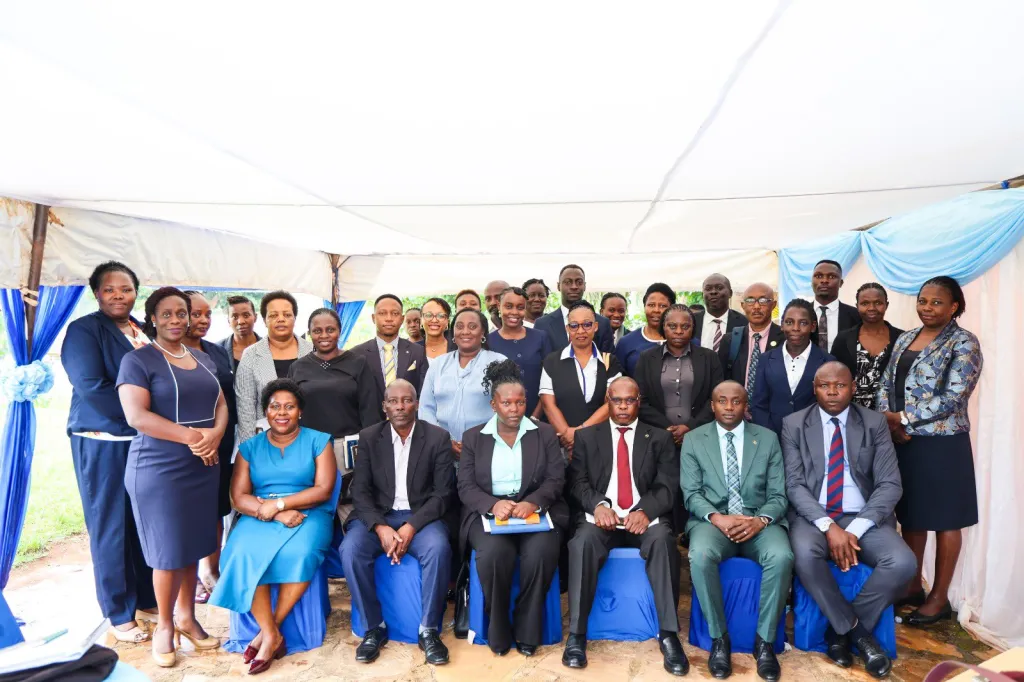
ODPP Staff Equipped With New Skills on Land Crimes, Witness Protection and Victims Rights
Related posts:

 Witness Radio Petitions ODPP urgently to review and withdraw criminal charges against Buvuma Community Land Defenders.
 Witness Radio petitions chief prosecutor: Want 34 community land rights defenders and activists released from prison.
 Mubende district police are aiding land grabbing and committing crimes against locals they are obliged to protect.
 Uganda: the number of community environmental and land rights defenders targeted for challenging irresponsible business practices has reached more than 1500 victims as of June 31st, 2023.

Uganda Leads Africa in Certified Organic Farmland Ahead of First Organic, Nature Expo

World Food Day 2026: Building healthy diets means reimagining how we grow, share, and enjoy our food.

International Day of Rural Women : Rural women farmers deserve not only equal rights and access to resources, but also the strength and voice to safeguard Mother Nature.

ODPP Staff Equipped With New Skills on Land Crimes, Witness Protection and Victims Rights

Lango ex-combatants count losses after dry spell destroys maize harvest

Five years after Uganda’s National Action Plan on Business and Human Rights, are local communities hosting land-based investment projects seeing change?

Alert: Land degradation is emerging as a pressing threat to global security.

The global race for clean energy minerals is leaving communities grappling with conflicts and human rights abuses, a new report reveals.

Innovative Finance from Canada projects positive impact on local communities.

Over 5000 Indigenous Communities evicted in Kiryandongo District

Petition To Land Inquiry Commission Over Human Rights In Kiryandongo District

Invisible victims of Uganda Land Grabs
-
 MEDIA FOR CHANGE NETWORK2 weeks ago
Sweeping investments are fueling widespread land grabbing and deepening rights violations across Uganda – Report.
-
 NGO WORK6 days ago
Tanzanian Government Abducts Maasai Villagers in an Unconscionable Attack on Indigenous Land Defenders
-
 MEDIA FOR CHANGE NETWORK2 weeks ago
Across Africa, the push for a greener future is putting new pressure on local communities, as recent ILC case studies highlight.
-

 MEDIA FOR CHANGE NETWORK6 days ago
Court remands 10 anti-oil activists as suspect collapses in dock
-
 MEDIA FOR CHANGE NETWORK2 weeks ago
Who will shape the future of East Africa’s seeds? Youth and civil society are sounding the alarm over a proposed regional law.
-
 MEDIA FOR CHANGE NETWORK3 days ago
World Food Day 2026: Building healthy diets means reimagining how we grow, share, and enjoy our food.
-
 FARM NEWS2 weeks ago
Can Agroecology Improve the Resilience of African Smallholder Farmers?
-
 MEDIA FOR CHANGE NETWORK5 days ago
As waves of investment sweep across Uganda, countless women rise to defend their land, safeguard their traditions, and claim their right to be heard.