The Swedish fast food chain Max Burgers AB claims to have had more than three million trees planted in the tropics. “Planting trees is an effective way to remove carbon dioxide,” the company states on its website. “Since 2018, MAX has been funding trees that capture the equivalent of 110% of our entire value chain’s greenhouse gas emissions.”
But a new investigation by Staffan Lindberg in the Swedish newspaper Aftonbladet reveals that some of the farmers in Uganda who planted trees for Max Burgers carbon credits are now cutting down the trees and making them into charcoal. The farmers faced starvation, because the trees were planted on their farmland.
Max Burgers buys carbon credits from a project in Uganda called Trees for Global Benefits, that has been running since 2003. The project is managed by a Ugandan organisation called Ecotrust.
Under the scheme, farmers plant trees on their land and receive income from the sales of carbon credits. It is certified under the Plan Vivo standard.
According to the Plan Vivo website,
The project operates as a market-based solution that reduces unsustainable exploitation of forest resources and the decline of ecosystem quality, while diversifying and increasing incomes for rural farmers and their families.
In 2013, the project won an award from SEED, which was founded by UNEP, UNDP, and IUCN. In a video produced by SEED, Pauline Nantongo Kalunda, the executive director of Ecotrust, says, “The main objective of this enterprise is to combine carbon sequestration activity with livelihoods improvements.”
Kalunda is on the Board of Trustees of Plan Vivo.
Share
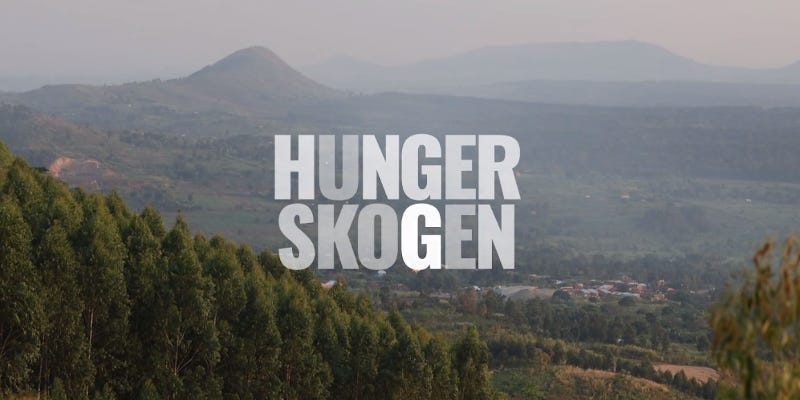
Lindberg calls the Ecotrust project the “hunger forest”. Ecotrust persuaded farmers to plant trees on land where they grew crops. But the farmers had only small areas of land. When the trees took over the land, the farmers could no longer grow food for their families.
The Aftonbladet investigation is not the first critique of the Trees for Global Benefits project. In 2017, Elina Andersson and Wim Carton from Lund University wrote a study that highlights problems with the project. “Our study shows that there is widespread confusion among farmers about what the project is basically about,” Andersson and Carton write.
Farmers did not know who was buying the carbon credits.
One farmer said,
They do not have many benefits, these carbon trees. They are not easily grown and they take time. I had to replace so many of them because they dried out. They started to dry from the top and then they refused to grow. I wouldn’t plant these trees again, but rather eucalyptus and maybe some fruit trees.
Farmers had to pay the full cost of replacing damaged and dead trees, regardless of whether the trees were damaged by fire, vandalism, insects, or wild animals.
Andersson and Carton write about the “flawed basis on which the local population had the opportunity to make informed decisions regarding participation” in the tree planting project.
Contracts were written in English which few of the villagers speak.
Almost all the farmers they spoke to said they did not know how much compensation they would receive from the project. One farmer told Andersson and Carton that,
People planted trees before they knew how much they would get. And they did not negotiate the price with the buyers. So they don’t know if they got all their money, or if they just got half of it. If you tell prices in terms of percentage, how can an old man understand? They are not giving the correct information. transparency is lacking. Most people don’t even know what they are selling.
Lack of land is a major problem in the project area, Andersson and Carton note, particularly among the poorest households.
“It cannot be ruled out that,” they write, “through the project, poor small farmers risk being locked into a type of land use for a long time that reduces their ability to adapt to deal with temporary crises as well as long-term changes, which in the worst case can mean long-term negative effects on their life situation.”
They also note that payments from Ecotrust are often greatly delayed or not received at all.
In 2019, an article in the Swedish newspaper Dagens Nyheter took a critical look at the Trees for Global Benefits project.
And in 2022, Global Forest Coalition published a report about the project with the title, “A case study on the failures of carbon offsetting”. The researchers spoke to more than 100 community members. They write that,
The clear message from all communities was that the project was not delivering its promised benefits, and participants were growing increasingly bitter and desperate.
The lead author of the report was David Kureeba, a programme officer with Friends of the Earth Uganda.
The report concludes that the Trees for Global Benefits project “is one of a growing number of global greenwashing exercises that are not only failing to reduce the amount of carbon being released into the atmosphere but also inflicting adverse environmental, social, and economic impacts on the local communities involved”.
Aftenbladet’s journalist Staffan Lindberg and photographer Niclas Hammarström travel to the project area in Uganda. There they find farmers cutting down the trees, to sell them as charcoal.
A farmer called Samuel Byarugaba tells Lindberg that a man from Ecotrust turned up eight years ago. He said Ecotrust could offer the family a chance to earn money.
Samuel signed the contract despite having only two acres of land, and the fact that all his land was being used to grow food. He didn’t receive a copy of the contract. The man from Ecotrust later showed him how to plant the trees, seven metres apart. That was the only education he received about tree planting.
After three years, the trees formed a canopy over the food crops. The trees took the light, the water, and the nutrients. Samuel’s sweet potatoes and bananas died. Nothing could grow under the trees. Samuel, his wife, and 15 children and grandchildren were without food.
He tells Lindberg,
“I used to be something called a model farmer. People came to me to learn about farming and I was proud to show our farm. We had enough food to eat our fill and were able to sell the excess. Now everything disappeared.”
The first payment from Ecotrust should have come in the first year. When it arrived, one year later, it was equivalent to a little more than US$100. Enough for a couple of weeks of food.
Samuel has only received two more payments of the same amount since then. He has been forced to beg from relatives for his family to survive.
Lindberg reports that now he’s cutting all the trees down. He will plant bananas and sweet potatoes again.
Rosset Kyampaire is a widow, and mother of four. She has only one acre of land. Ecotrust still persuaded her to sign the contract.
She planted 200 trees on her land. After two years, the beans and cassava withered. After three years, she had no harvest at all.
After eight years, she has received no money from Ecotrust. Instead she got excuses: “This is how white people work,” and “Have patience,” and “It will arrive later this year.”
To survive, she has to work as a day labourer on other people’s farms. She earns less than US$1.5 a day. It’s not enough.
“I am so stressed,” Rosset tells Lindberg. “My children have no food.”
She has already started cutting down the trees. “It’s my only chance,” she says.
Jorum Baslina is a local leader in the village of Kigaaga. He also joined the project. “Ecotrust just wants to grow as many trees as possible,” he tells Lindberg. “They urge us: plant more!”
Jorum says there is no transparency. Ecotrust did not tell the farmers how much they would receive, or why the money has not been paid. He shows Lindberg a contract, written in English, and says that,
Many here can barely write their own names. And almost no one knows English. Why don’t we get the agreement in our own language? And why doesn’t it say how much we should get?
Jorum has acted as a spokesperson for other people involved in Ecotrust’s project. He says that of the 100 farmers he’s in contact with, only six or seven are happy with the project and they had unused land to plant on and were the first to join.
“The rest of us are much poorer than before,” Jorum tells Lindberg. “Almost everyone has started cutting down the trees or is planning to do so. Where is the food? Look around, where is it?”
Ecotrust came to Herbert Rukundo’s farm nine years ago and promised that the trees would bring money, every year. Herbert tells Lindberg that,
We dreamed of being able to keep the children in school and maybe rebuild the house a little so that it was beautiful, even buying a motorcycle to drive to church. Instead we were forced to starve. Now we’ve chopped it all down and turned it into charcoal.
Last year, Herbert cut down all his trees. Not long afterwards, the coordinator from Ecotrust visited his farm and accused Herbert of breach of contract. The Ecotrust coordinator threatened that if Herbert did not replant all the trees he would have to face the police and prison.
Hubert replied that as things are, “We are starving.”
Hubert tells Lindberg that Ecotrust didn’t want to listen. “Now I can’t sleep at night,” he says.
Mauda Twinomngisha wanted to send her three daughters to university. “I wanted them to have a better life than me and my husband had. It was for their future that we signed up,” she tells Lindberg.
But when the food disappeared, she had to take the girls out of school. All three have been married off as child brides, aged 14, 15, and 16.
Two years ago, Mauda decided to cut down the trees. “Then a woman from Ecotrust came here,” she tells Lindberg. The woman was very angry. She told Mauda to remove her bananas and plant trees. “But we had no choice,” Mauda says.
Wilson Akiiza and Violet Mbabaazi planted 600 trees on their three acres of land. “Now we have no food”, Wilson tells Lindberg. “Ecotrust never explained how much money I would get, only that it would come every year. Now I am the coordinator for 89 farmers who are part of the project. Nobody has food.”
Robert Sunday has also cut down all his Ecotrust “carbon trees” and made charcoal with them. With the money from the charcoal, he will buy cassava plants.
In the 10 years since he planted the trees, he received two payments, of about US$50 each.
He has only one acre, from which he used to feed 10 people. “Ecotrust must have understood that the family would never make it,” Lindberg writes. “Nevertheless, they were pushed to plant.”
Aftonbladet’s research team visited nine farms in two districts, Hoima and Kikuube. All of them planted trees for Ecotrust on land that they previously used for growing crops. Hunger was the result.
One family received no money at all. All of the others received fewer payments than the contract promised. Ecotrust has not explained to any of them why the money has not been paid out.
None of the nine families has received enough money to cover the cost of food lost to the “carbon trees”.
None of the families could explain how carbon trading works, who bought the carbon credits, or how much money they should have received. Most of them did not receive a copy of the contract they signed.
Two of the families told Lindberg that they were forced to marry off underage daughters.
One eight of the farms, all or some of the trees have now been cut down to make way for food crops. The timber has been sold as charcoal.
Lindberg acknowledges that the Aftonbladet research is not comprehensive. Several thousand farmers are involved in the project, spread over a large area.
But David Kureeba, the lead author of Global Forest Coalition’s 2022 report about the project, tells Lindberg that the problem is widespread and systemic. “We are 45 million people crowded in Uganda,” Kureeba says, “and the vast majority are already living on the verge of starvation. They have no land to spare.”
The Global Forest Coalition report is based on interviews with more than 100 farmers. That report came out 18 months ago. “Since then the situation has worsened further,” Lindberg writes. “Why haven’t those responsible reacted?”
Under Plan Vivo’s rules, the project has to be inspected every six years. The most recent audit was in 2019, carried out by Environmental Services, Inc, a US-based company.
The lead verifier was Guy Pinjuv, who has since moved on to become Senior Advisor for Carbon and MRV (Measurement, Reporting, and Verification) at Conservation International.
A 2017 article describes Pinjuv’s US$600,000 house that he built in Nevada on a one acre plot of land that he bought for just US$150,000 in 2014. In the article, Pinjuv describes his work:
“If someone wants to slow down deforestation, I’m the guy who goes and checks to make sure they calculated everything correctly. And if there’s a tribe there, I’m the guy who goes and meets the chief and makes sure they’re not planning a revolution . . . that sort of stuff.”
The 2019 Environmental Services audit report states that, “In general food security does not appear to be an issue and project activities are maintaining or increasing food production.” There is no mention of the systemic hunger that, as Lindberg writes, “seems to be integrated into the core of the project”.
“Africa’s poor, who did the least to cause the climate crisis, will pay the price when we have to change,” Lindberg writes.
Lindberg highlights the inequity of the situation. “At Swedish hamburger restaurants, guests order from climate-neutral menus. In the hunger forest, the children wait in vain for food.”
Source: reddmonitor.substack.com


 Uganda is Getting 3 Million New Trees
 Sweden postpones carbon payment to Uganda tree farm where locals have been evicted
 Uganda reverses forest destruction by inviting in … loggers
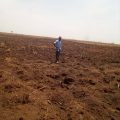 Starvation is rooming in Kiryandongo district as families count losses after missing the seventh planting season consecutively to a multinational.



 Four youth activists now face public nuisance charges after their arrest during a bold march toward Parliament.
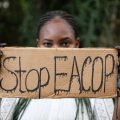 Ugandan Activists Face Criminal Charges Following Pipeline Protest
 Youth activists detained as they boldly petition Parliament, demanding a future for Uganda free from oil dependency.
 Breaking: 15 Anti-EACOP Activists have been charged with common nuisance and remanded to Luzira prison.
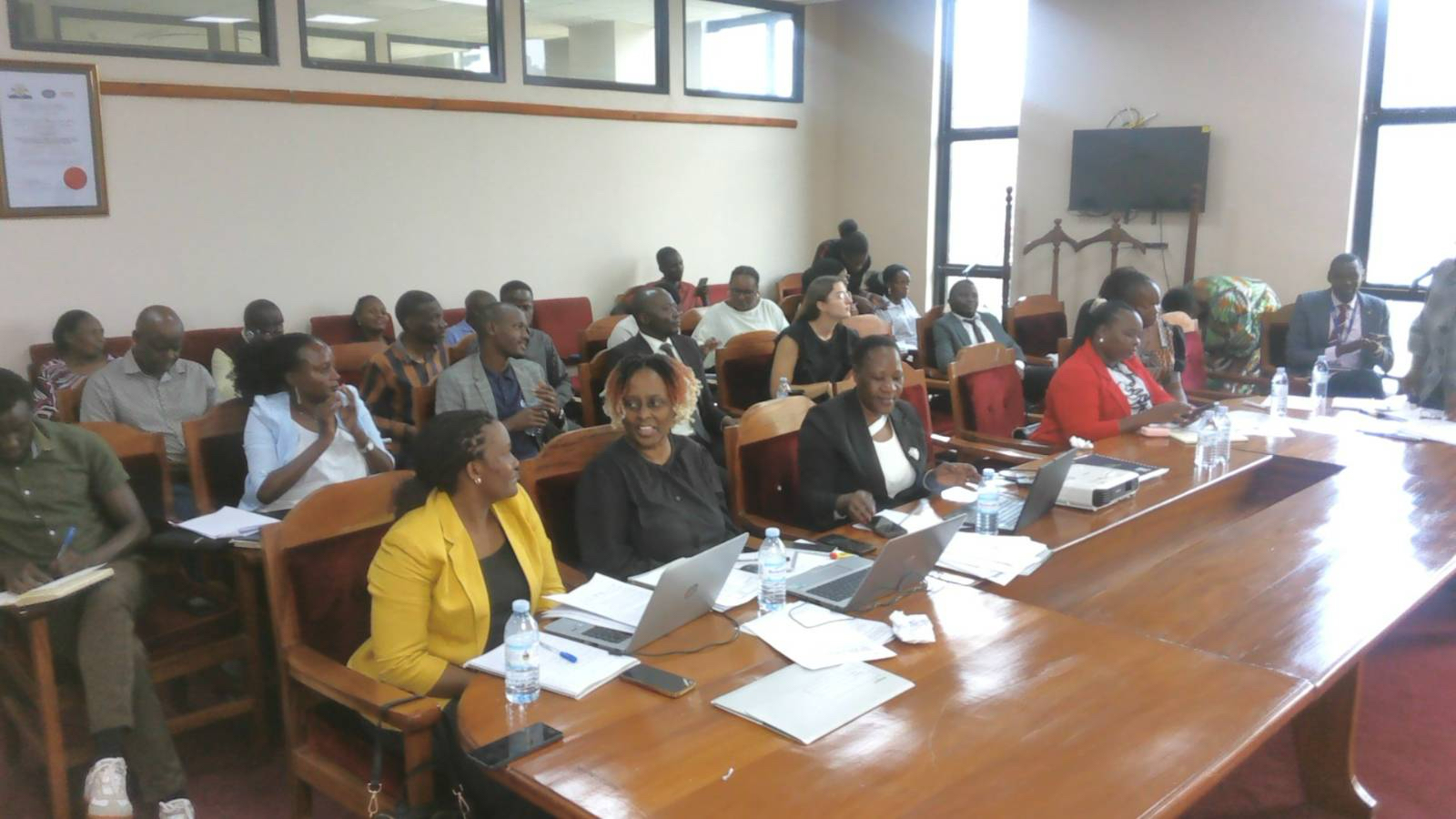
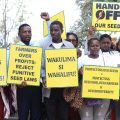
 The EAC Seed & Plant Varieties Bill, 2025, is a potential threat to smallholder farmers, as it aims to disengage them from the agriculture business, according to experts.
 The EAC Seed and Plant Varieties Bill 2025 targets organic seeds, aiming to replace them with modified seeds, say smallholder farmers.
 CSOs and Smallholder farmers are urgently convening to scrutinize the EAC Seed & Plant Varieties Bill, 2025.
 Smallholder farmers and civil society organizations have launched a dynamic media campaign for the inaugural Eastern Africa Indigenous Seed Conference, inviting more smallholder farmers to join the agroecology movement.
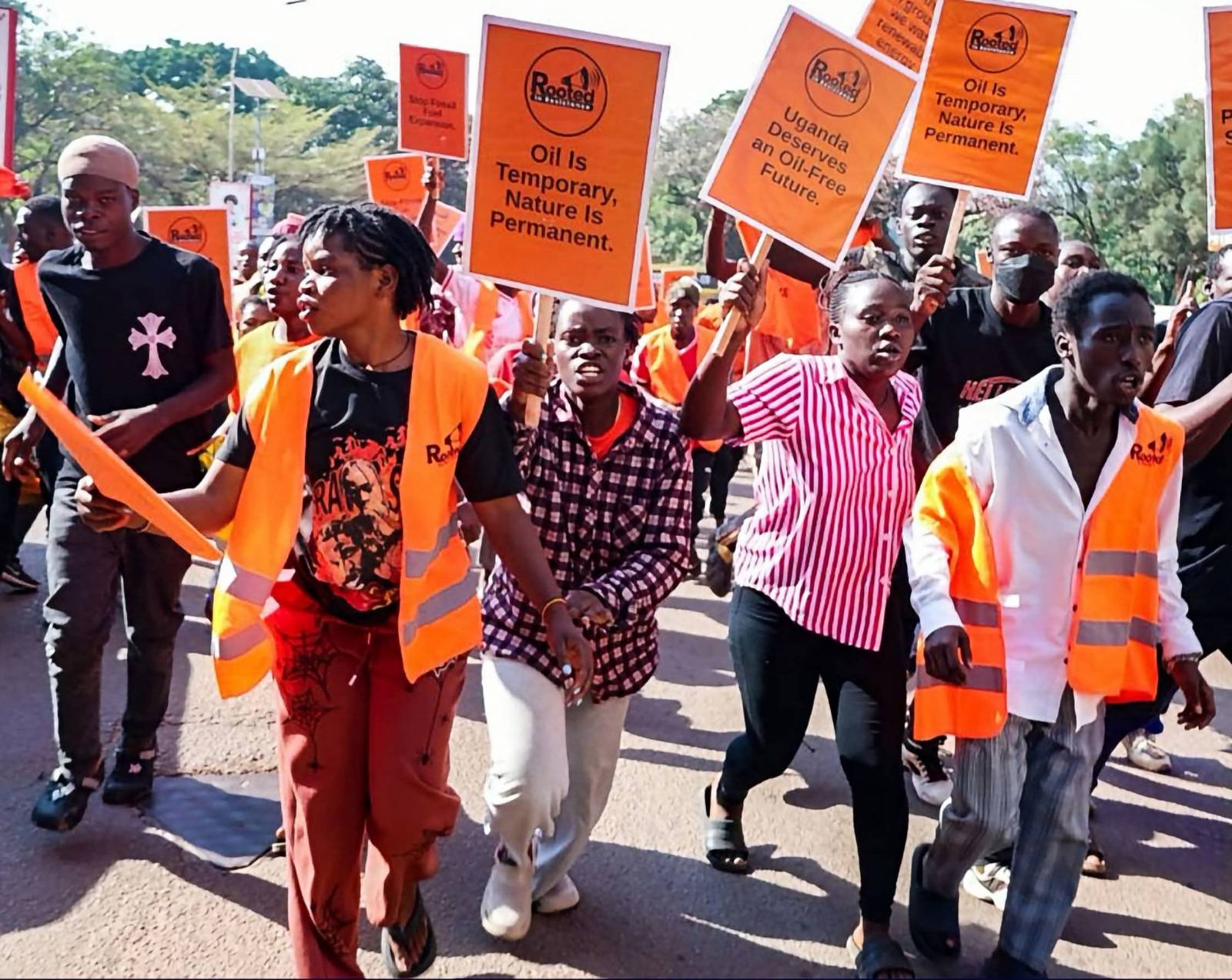
 Anti-oil pipeline activist in Uganda detained, pressure group says
 Breaking: 15 Anti-EACOP Activists Arrested in Kampala While Marching to Parliament
 Breaking: Ugandan Court jails eight Anti-EACOP activists as crackdown on dissent deepens.





 MEDIA FOR CHANGE NETWORK1 week ago

 MEDIA FOR CHANGE NETWORK1 week ago
 MEDIA FOR CHANGE NETWORK1 week ago
 MEDIA FOR CHANGE NETWORK5 days ago

 MEDIA FOR CHANGE NETWORK1 week ago
 WITNESS RADIO MILESTONES5 days ago