Connect with us

NGO WORK

The mothers and daughters of the global south cannot celebrate the World Bank’s 80-year legacy of harm.

Published

on

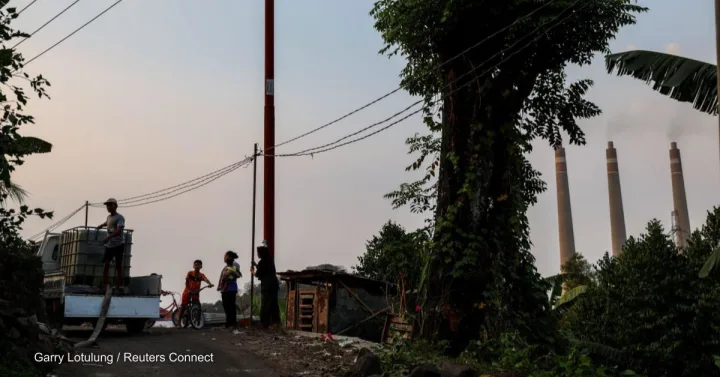
Villagers near a coal-fired power plant at Suralaya village in Banten province, Indonesia, fill their buckets with water from a portable tank due to drought in September 2023. Photo by: Garry Lotulung / Reuters Connect.

Opinion: Why we cannot celebrate the World Bank’s 80-year anniversary

This July, the World Bank Group celebrates its 80th anniversary. But for us — women rights defenders from Asia, Africa, and Latin America — there is nothing to celebrate.

While the World Bank is proudly presenting its successes in fighting poverty and building a greener future, the stories of communities in our countries paint a very different picture. From recent controversial projects to old ones where communities never found justice, the World Bank has a 80-year legacy of harm and impoverishment.

The negative impact of development projects can be long lasting. In 1985, the World Bank funded the Kedung Ombo Dam in Indonesia. Over 27,000 people were forcibly and violently evicted, with the military threatening those trying to resist. Forty years later, the harm inflicted remains unaddressed. Resettled women don’t have close access to water sources, health facilities, and a market. Pregnant women have failed to get checkups, while children have often dropped out of school and are being forced into early marriages.

Yet, despite acknowledging the harm it caused, the World Bank keeps replicating old mistakes.

In 2022, a community in Cameroon filed a complaint raising serious concerns about the World Bank-funded Nachtigal hydroelectric project, one of the largest dams in Central Africa. Imposed without people’s participation, the project is destroying livelihoods, taking lands, causingdeforestation, and destroying sacred sites. Our Cameroonian sisters are particularly affected: They have lost access to the forests where they used to pick medicinal herbs and other key natural resources. The complaint process has come to an end, but the hopes for justice are extremely limited. The investigations conducted by the bank’s accountability mechanisms are known to be extremely lengthy — and only rarely lead to some remedy.

Civil society has been calling on the World Bank Group to strengthen its safeguards and accountability mechanisms, which are currently falling short of a human rights-based approach. But for every step forward, there has been a step back. Moreover, safeguards have often been used as a pretext to protect the institution from the international human rights legal system and to avoid applying more stringent standards.

Under its new president, Ajay Banga, the World Bank has been undertaking a series of reforms, to become bigger and bolder in its response to climate change. But the bank’s actions appear to indicate more of the same. Beyond the catchy slogans, the World Bank is still replicating a top-down and neocolonial development model that ends up exacerbating the exact problems the bank claims to solve. For example, in Indonesia the World Bank Group — despite its pledges to address climate change — is funding the expansion of the Java 9 and 10 plants, considered the largest and dirtiest coal plants in Southeast Asia.

In its 80 years of existence, it is our view, as shared with other civil society groups, that the World Bank has fueled the spiraling debt crisisgrowing inequality, and climate change, with a disproportionate impact on women and children. Some stories — like the scandal of the child sex abuse case in Kenyan schools funded by the World Bank — have hit the headlines. Others, unfortunately, have remained largely unreported.

Last year, the International Finance Corporation — the World Bank’s private arm — approved a  $180 million loan to Allkem, for its Sal de Vida lithium mining project in Argentina’s Salar del Hombre Muerto. On paper, this investment falls under the bank’s green portfolio, because lithium is needed for the electric car batteries. In reality, this project has a catastrophic environmental impact, dried up one of the most important rivers in the area,, and violates the rights of the local Indigenous communities.

“If bank President Banga wants the institution to grow bigger, it should learn from the past as it looks forward.”

Before the project was approved, local communities and civil society organizations had sounded the alarm bell. They had prepared briefings on the project’s impacts and engaged with IFC to raise their concerns. But despite being recognized as “beneficiaries,” local communities say they are routinely ignored or silenced. The bank approved the loan without the community’s consent and did not take any action when local activists were threatened and criminalized.

As women defenders and caregivers, for generations we have been protecting our ecosystems sacrificed in the name of development and cared for our communities harmed under the pretext of economic growth. For generations, we have stood in solidarity with our sisters and brothers across the world who have been demanding a different type of development.

The World Bank cannot get it right by putting blinders on the past. The evicted Indonesian communities will not get their flooded land back. The women in Cameroon will not be able to access their precious medicinal herbs, as their forests have been cleared. And the Indigenous people in the Salar del Hombre Muerto lost their meadow near the river Trapiche, which dried up because of the huge volumes of fresh water used to extract lithium.

But the World Bank is still on time to withdraw from controversial new projects, to provide remedy to the harmed communities, to speed up the investigation processes, and to seek meaningful consent before building something. Eighty years are enough. If bank President Banga wants the institution to grow bigger, it should learn from the past as it looks forward.

Source: Devex
Continue Reading

NGO WORK

The Great “Green” Heist: When Artificial Intelligence and Arms Dealers Seize the Minerals of the South

Published

on

By Franck Zongwe Lukama, Congolese journalist and researcher, leads the independent media KilaloPress in DRC.

We were sold a simple equation: to save the planet, we must dig. Dig faster, deeper, extracting from the earth the cobalt, lithium, or copper needed for solar panels and electric vehicles. Yet, this climate rescue rhetoric conceals a staggering statistical deception. Today, 70% of global demand for critical minerals does absolutely nothing to support the energy transition. These resources end up in aerospace, communication technologies, and, above all, weaponry. Sectors that, ironically, exacerbate the global ecological crisis. The green revolution has become the perfect smokescreen, the moral veneer for a very different kind of war.

Far from the promises of sustainable development touted by the World Bank, the current scramble is driven by a strict logic of geopolitical power. A damning report from the California-based Oakland Institute exposes this global scheme. The report reveals an unprecedented and formidable convergence of interests between the American military-industrial complex and the giants of Silicon Valley. With the Pentagon openly pivoting toward a combat strategy focused on artificial intelligence (AI), securing supply chains is no longer a matter of ecology, but a question of survival in the face of Chinese influence. The United States is not seeking to reduce carbon emissions; it is seeking to guarantee its technological and military supremacy.
Image
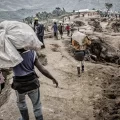
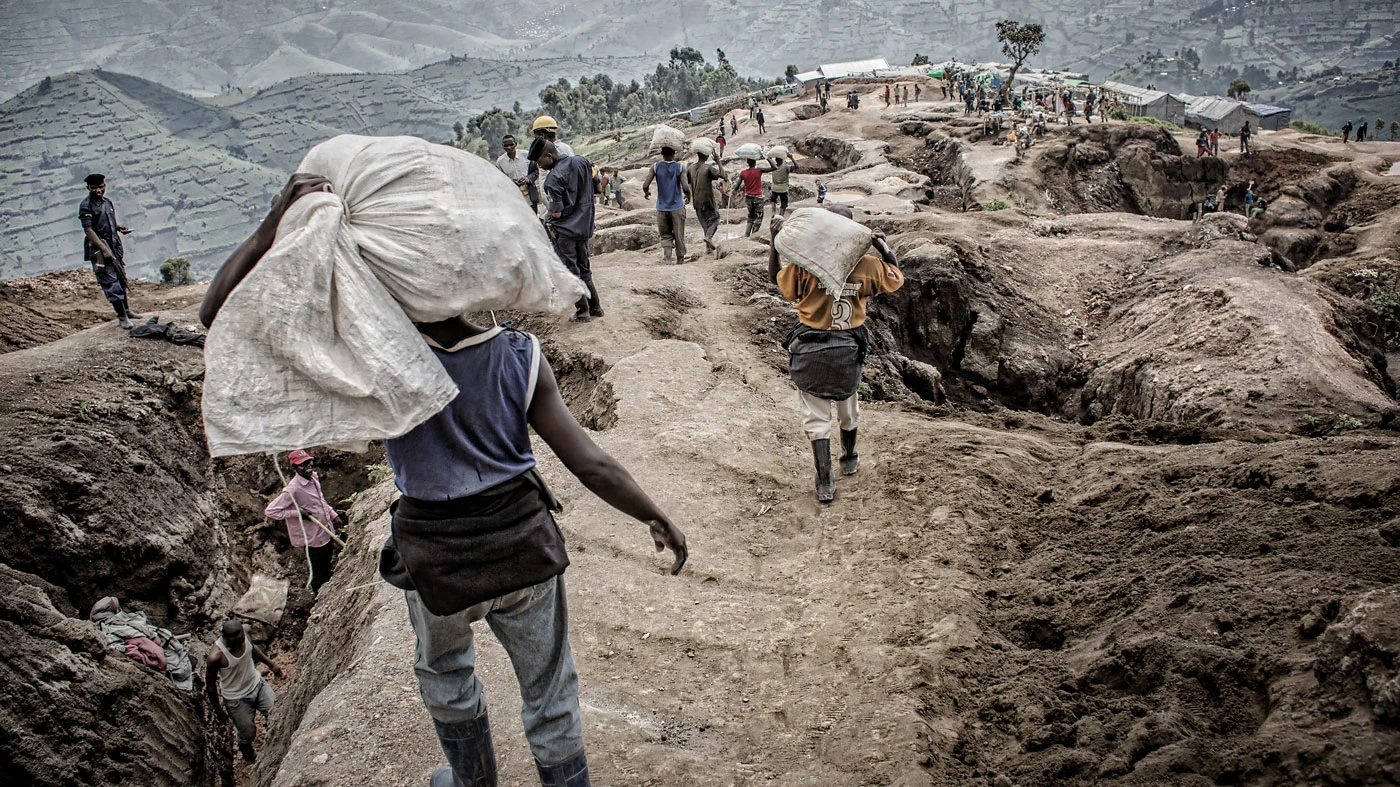
Artisanal Coltan - manganese - cobalt mining in Mudere mine under control of Nyatura militia, town of Rubaya, North Kivu region (Democratic Republic of Congo, Africa). Photo: Erberto Zani.

The real winners of this frantic race wear suits far removed from environmental activism. Trillions of dollars are flowing into new alliances that intertwine AI-driven mining companies, like KoBold Metals—backed by billionaires such as Bill Gates—and companies specializing in cutting-edge defense technologies, like Palantir and Anduril, not to mention the networks of influence close to the Trump family. For these players, the discourse of climate emergency acts as a powerful public relations tool. It justifies massive and accelerated extraction that would otherwise provoke international outrage.

Local communities and Indigenous populations find themselves on the frontlines, forced to resist an extraction machine that has the audacity to justify their suffering by claiming it is necessary to save the world.

And the price of this hypocrisy is being paid in full throughout the Global South. In the Rubaya hills, in the Kolwezi copper belt, as in the Indigenous territories of Latin America and Asia, the promise of “prosperity” translates into a terrifyingly familiar tragedy. Land grabbing, forced displacement, devastating groundwater pollution: the plundering of ecosystems and human lives is accelerating. Local communities and Indigenous populations find themselves on the frontlines, forced to resist an extraction machine that has the audacity to justify their suffering by claiming it is necessary to save the world. Today, opposing the destruction of one’s village by a multinational mining company risks being accused of hindering the fight against climate change. The rhetorical trap is devastatingly effective.

Image
Artisanal Coltan - manganese - cobalt mining in Mudere mine under control of Nyatura militia, town of Rubaya, North Kivu region (Democratic Republic of Congo, Africa). Photo: Erberto Zani.

The long-term consequences of this diversion are alarming. The exponential surge in demand generated by future AI data centers, mass surveillance, and global rearmament will mathematically deplete available reserves. Every ton of copper, nickel, or cobalt consumed by combat drones or algorithmic data processing servers is a ton diverted from the production of renewable energy infrastructure. We are not equipping the energy transition; we are cannibalizing it to militarize our future.

We are not equipping the energy transition; we are cannibalizing it to militarize our future.

If no strict regulations are put in place to curb this rampant mining frenzy, hundreds of new mines will spring up in the coming years, causing irreversible damage on an unprecedented scale. The question facing citizens today, from Kinshasa to Washington, is no longer whether we will have enough minerals to save our atmosphere. It is why we are willing to sacrifice millions of lives and destroy our lands to fuel next-generation algorithms and weapons. In ten years, when the Global South is nothing more than a vast crater serving a militarized hyper-technology, it will be too late to realize that the planet was never the priority.

Photos: Artisanal Coltan – manganese – cobalt mining in Mudere mine under control of Nyatura militia, town of Rubaya, North Kivu region (Democratic Republic of Congo, Africa). Erberto Zani – stock.adobe.com

Source: oaklandinstitute.org/

Continue Reading

NGO WORK

EU: IPI welcomes action against 14 states over Anti-SLAPP Directive delays

Published

on

EU states must introduce robust measures to protect journalists and media from vexatious litigation

The International Press Institute (IPI) today welcomes the infringement proceedings initiated by the European Commission against 14 EU Member States over their inaction or delays in transposing the Anti-SLAPP Directive.

The countries included are Austria, Bulgaria, Czech Republic, Germany, Greece, Hungary, Ireland, Italy, Luxembourg, the Netherlands, Portugal, Romania, Slovakia and Spain.

The EU infringement proceedings were initiated on 15 July, with letters of formal notice sent to these Member States for failing to notify about progress made in implementing the Directive. States now have two months to respond and update about measures taken or could eventually face legal action at the European Court of Justice.

The Anti-SLAPP Directive introduced EU-wide rules which protect journalists and civil society actors from manifestly unfounded or abusive civil proceedings with cross-border implications, including early dismissal tools and remedies for targets of SLAPPs. It was adopted in April 2024 and the transposition deadline was 7 May 2026.

Monitoring by IPI shows that while in some of the countries identified, such as Greece and Spain, steps have been taken to prepare for the transposition and bills are actively in development and reportedly close to being presented to or adopted by parliament.

In others such as Bulgaria and Portugal, initial work done to develop legislation has been delayed by institutional changes, changes in governments or political instability, though transposition work remains ongoing.

In other states, such as Italy and Hungary, little to no measurable progress has yet been made on transposition. However, with the new Tisza government in Hungary driving forward media freedom reforms, there is hope the new administration will introduce initial anti-SLAPP measures in the next legislative package identified for the autumn.

While Ireland has been actively working to tackle SLAPPs through legal reforms, and passed the Defamation Bill in 2024, further legislation is required to fully transpose the Anti-SLAPP Directive during its Presidency of the Council of the EU.

Although these 14 countries have been identified in the EU action, monitoring and analyses show that the overall picture for implementation of the Directive across the EU remains fragmented and uneven.

According to the European Anti-SLAPP Monitor, almost all EU Member States missed the May 2026 transposition deadline, with only a handful fully implementing on time.

IPI notes that even in those Member States where the Directive was implemented, such as Malta, these reforms only included minimum standards protecting against cross-border cases, and failed to include measures to safeguard against domestic SLAPPs.

In the wake of the EU’s opening of initial infringement action, IPI renews our call – made previously with Media Freedom Rapid Response (MFRR) partners – for Member States to demonstrate their commitment to media freedom by accelerating their legislative processes in protecting against SLAPPs. This includes the 14 countries identified by the EU Commission and those in which reforms have been presented but not yet adopted.

Crucially, legislative reforms should both fully reflect both the letter and the spirit of the Anti-SLAPP Directive and introduce the substantive and procedural safeguards set out in the EU and Council of Europe Recommendation on SLAPPs.

A model here should be Poland, where last month the President approved a law which covers both domestic and cross-border SLAPPs, ensuring implementation of both EU Directive and Council of Europe Recommendation.

Member States which continue to delay or fail to transpose the directive should face legal action from the Commission, which must use all tools at its disposal to help safeguard media freedom across the bloc.

IPI, which has advocated at the EU and national level for measures to protect journalists and media from SLAPPs, will continue to monitor implementation in collaboration with European partners, including through MFRR media freedom missions.

Source: ipi.media/

Continue Reading

NGO WORK

No Heritage Without its People: Why Ngorongoro Cannot be a World Heritage Site and an Eviction Zone

Published

on

The Tanzanian government, under the guise of “conservation,” restricts Maasai livelihoods and denies access to essential services forcing Indigenous residents away from their ancestral lands and turning their heritage into a playground for safari tourists.

As the 48th Session of the World Heritage Committee begins July 19, UNESCO continues to legitimize the continued forced displacement of the Maasai from Ngorongoro. If UNESCO cannot ensure that the World Heritage designation protects the rights of its Indigenous custodians, then the Committee must remove the Ngorongoro Conservation Area from the World Heritage List.

Increased international pressure is imperative to hold UNESCO accountable and protect the lives and rights of the Maasai!

Read our Open Letter to the World Heritage Committee.

Source: oaklandinstitute.org

Continue Reading

Resource Center

Legal Framework

READ BY CATEGORY

Facebook

Newsletter

Subscribe to Witness Radio's news and report updates


Trending

Subscribe to Witness Radio's news and report updates