Connect with us

MEDIA FOR CHANGE NETWORK

Teso Karamoja Journalists Association

Published

on

Continue Reading
Click to comment

Leave a Reply

Your email address will not be published. Required fields are marked *

MEDIA FOR CHANGE NETWORK

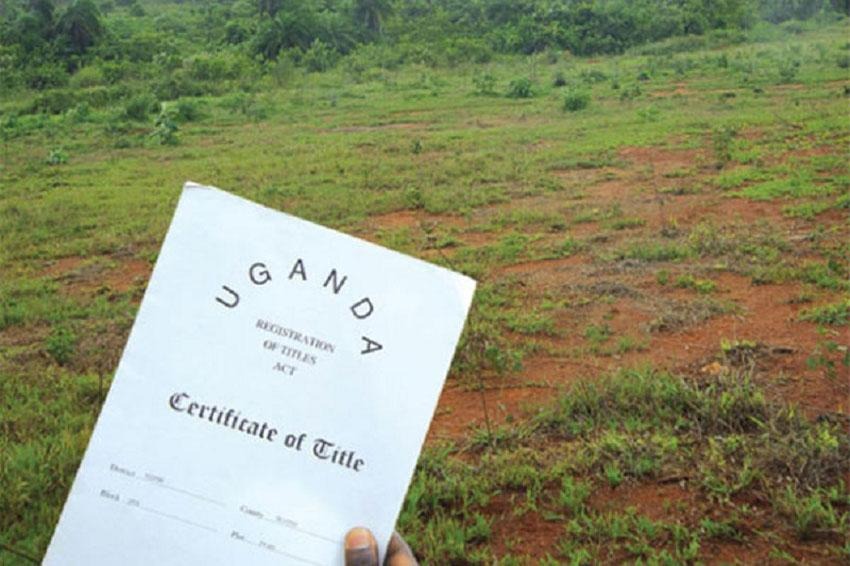
A community in Yumbe district has raised serious concerns about allegations of land-grabbing involving an aspirant for Uganda’s Parliamentary Speakership, affecting over 50 families.

Published

on

By Witness Radio Team.

More than 50 families in Ochinga village, Achinga South Constituency in Yumbe district, are feeling vulnerable as they face eviction from the land they have lived on for decades.

The families accuse the area Member of Parliament, Alion Odria Yorke, of fraudulently acquiring their land with the support of a clan member, raising questions about transparency and abuse of power.

“He has started evicting us. And he has already started clearing part of the land. We hear he is preparing it for his cocoa farming business project,” one of the affected, Richard Ayimani, told Witness Radio.

Forty-six-year-old Asiku Victor Yada is among those facing eviction. A resident of Ochinga Village, he says he owns 21 acres of land he inherited from his parents, land that has been passed down through generations.

“I was born and raised on this land. After my father’s death, I inherited it, just as he had inherited it from his father. This has been our generational land,” Asiku told Witness Radio, sharing his deep connection and concern over the ongoing dispute.

He expressed frustration over the ongoing dispute, accusing the MP of abusing his position.

“He talks about corruption and abuse of office by others, yet he is also doing the same by using our nephew to grab our clan land. We cannot accept losing our land through what we believe is a fraudulent process,” he added.

The disputed land, estimated at 519 acres (210 ha), is part of the Kiranga clan, which the community uses for farming and cattle grazing, forming the backbone of their livelihoods.

However, Hon. Alion has dismissed the allegations, insisting that he legally purchased the land from members of the Kiranga clan on May 18, 2025, for UGX 25 million (approximately USD 6,667.91). Yet, the community disputes the transaction’s legality, raising questions about the transparency and proper consultation involved in the sale.

“I have evidence of ownership, including documents and witnesses,” The MP claimed in an interview with Witness Radio. However, affected residents strongly dispute this, insisting they were neither consulted nor aware of any such transaction, raising concerns about the authenticity of the evidence presented.

“He was duped. The person he talks to is our sister’s son, and he does not have the authority to sell clan land without our understanding. Yassin is not our clan leader or landlord as the MP alleges; he belongs to another clan called the Aupi clan,” Mr. Richard explained, highlighting the need for clarity on who has the authority to sell clan land.

Witness Radio was unable to obtain a comment from the alleged land seller, Yassin, as repeated calls to his known phone contacts went unanswered.

One of the complainants, Ayiman Richard, told Witness Radio that he is the rightful heir and custodian of the land. He argues that those who allegedly sold the land were only caretakers appointed after the death of his father.

“This land belonged to my late father, Peter Nakara Ondia. After his death, I inherited it as his heir. My nephews were only given the responsibility to look after the land while I was still young. That does not make them clan leaders or landowners,” he said.

Other residents say they were never informed or involved in the alleged sale and are now living in fear of eviction, feeling betrayed and powerless.

“How can a legislator use fraudulent means to acquire our land? We were not aware of any sale, and we cannot just surrender our land,” one resident added.

Local leaders have also raised concerns over the transaction. The LCIII Chairperson of Ariwa Sub-county, Mr. John Kale, said he was not consulted during the sale process and disputes claims that Yassin is the clan leader.

“It is very surprising that I, as the local council chairperson, did not know about the sale of this land. The Honorable Member of Parliament must have been duped,” he said, before calling on the minister to stop grabbing community land.

As tensions rise, affected families say they have nowhere to go, as the land is not only their ancestral home but also their primary source of livelihood.

Land conflicts have increased in Uganda, where politically connected individuals have found it easy to grab land belonging to poor and vulnerable communities with impunity.

Continue Reading

MEDIA FOR CHANGE NETWORK

A Ugandan minister is in the hot seat over the grabbing of land from a peasant in Kiryandongo district.

Published

on

By Witness Radio Team.

At 62, Edward Balikagira says he should be enjoying the fruits of his old age after working very hard to attain what he owns now. Instead, he finds himself trapped in a prolonged land dispute with a Ugandan minister, whom he accuses of forcibly seizing his land, which has devastated his livelihood and well-being.

“I have stress, which is even affecting my life. I can’t support or manage my extended family,” Mr. Balikagira told Witness Radio in an exclusive interview.

The land under contention is located in Kinyara 2 village, Kigumba subcounty in Kiryandongo district. Balikagira accuses the current minister in charge of Karamoja affairs of unlawfully seizing 100 acres of his land, raising questions about the legal validity of his claim, the land registration process, and the evidence supporting his ownership.

Balikagira, in an interview with Witness Radio, revealed that he obtained full authority over the land after successfully purchasing it from John Bitagassa on 10th February 1996.

“A friend of mine (George Bugumirwa) alerted me about this land, which was on sale in the mid-1990s. It was in a good location, and this prompted me to buy it.” He added.

According to the father of 19, the dispute began during the processing of land title documentation for land linked to Minister Peter Lokeris. At the time, Balikagira was serving as chairperson of the sub-county Area Land Committee overseeing the process.

“We informed residents about the day when boundaries for the minister’s land were to be opened. But during the exercise, the surveyors almost encroached on my land. Later, the minister proposed that I sell my land to him.” Balikagira explained.

Balikagira says he agreed to the arrangement and negotiated a price of 500,000 Ugandan shillings per acre, totaling 50 million shillings. Trusting that payment would eventually be made, he allowed the minister to use the land temporarily while awaiting compensation.

However, according to Balikagira, the promised payment never came. He says he made several trips to Kampala to meet the minister and demand the agreed-upon money, but all his efforts proved futile.

“I had an idea that if the minister pays me, I would then buy another piece of land. I then followed up on the verbal agreement that we had with the minister, but I have yielded nothing; he failed to fulfill his promises, and now he claims he is the rightful owner of the land.”  The victim stated.

Before losing his land, Balikagira says agriculture was the main source of his family’s livelihood.

“Maize was one of the major crops I used to grow, and it was very profitable in those days. Besides other crops, I cultivated maize on about 25 acres and, in a season, I could earn up to twenty million Ugandan shillings.” He revealed.

Nearly 19 years after allegedly losing his land, Balikagira says the emotional toll has been overwhelming, leaving him distressed and feeling abandoned by the system he trusted to protect his rights.

“The situation is very terrible. My family has fallen into deep economic distress, forcing me to sell remaining assets, including small plots of land, to meet basic needs such as school fees. This has disrupted my children’s education, with some dropping out of school,” he said.

He added that the prolonged struggle has also taken a heavy emotional and psychological toll, leaving him stressed, financially unstable, and unable to support his extended family adequately.  This situation highlights the need for greater awareness of land rights and the legal protections available to landowners like Balikagira who allege unlawful land seizures by powerful officials.

“I have gone to the RDC’s office and many other government offices seeking justice over this matter, but I have not received any help. Maybe it is because an ordinary person is fighting against a minister,” Balikagira said.

The minister, in an interview with a local Television station, denied these claims, asserting that he is the rightful owner of the land and dismissing Balikagira’s allegations as false.

Balikagira pleads with the government, and in particular the president of Uganda, to advise his minister to evacuate his land. He says, “Lokeris knows that he is an honorable minister, and since I am poor, I cannot do anything to him. I therefore request the president to help me so that the minister evacuates my land.”

The Deputy Resident District Commissioner (D/RDC) of Kiryandongo District, Jonathan Akweteireho, told Witness Radio that Balikagira has repeatedly reported the land dispute to his office over the years.

“He says the minister is his neighbor who grabbed his land. He maintains that the minister is not the rightful owner of the land,” Akweteireho said.

According to the deputy RDC, the RDC’s office has already written to the Ministry of the Presidency requesting intervention and investigations into the rightful ownership of the contested land.

“We wrote to our line ministry to take up the matter since we could not directly reach the minister involved. However, we have not yet received any response,” he explained. “We also wrote to the Kiryandongo District Land Board to follow up on the matter and establish the rightful owner of the land, but we have not yet received feedback from them either.”

Continue Reading

MEDIA FOR CHANGE NETWORK

Inside Eastern DRC War: The untold story of grabbing land for local and indigenous communities.

Published

on

By Witness Radio Team

For millions in eastern DRC, the war is not an event; it is a daily reality that people have lived in for the past three decades.

After being dispossessed from his land, Moise (not the real name) fled to a displacement center he believed to be safer for temporary settlement.

“I was severely affected by the conflict, as it turned my entire life upside down. In our area, clashes, armed attacks, and insecurity have become frequent. We would hear gunshots and screams, and sometimes people would flee from their homes to seek refuge, as these incidents often took place at night or early in the morning. That is what happened to my family,” Moise told a Witness Radio journalist.

Moise, once reliant on his farmland for his livelihood, illustrates how land dispossession devastates small-scale farmers across the continent, highlighting the broader human toll.

“I owned land that I used primarily for agriculture. This land enabled me to feed my family and sell a portion of the harvest to cover other needs. We grew food crops there, such as cassava, beans, maize, sweet potatoes, and bananas.” He added.

Before the escalation of conflict, Moise says, life—though difficult—had some degree of stability.

“We were able to work, farm, sell our produce, and organize our family lives with a sense of hope. During the conflict, everything changed: insecurity took hold, displacement became massive, economic activity plummeted, and the population now lives in fear.” The now-displaced victim revealed

To survive, Moise relies on aid and lives in difficult conditions, highlighting ongoing hardship and the urgent need for justice.

Like Moise’s story, these are the daily struggles, confrontations, fears, and threats faced by the majority of citizens in the Eastern region of DRC, a part of a conflict-affected country where war has persisted for decades. The cost of this prolonged violence has been immense, claiming countless lives and driving widespread dispossession.

Affecting the provinces of North Kivu and South Kivu, victims have endured decades of armed conflict, fueled by weak state control, regional tensions, and competition over mineral-rich land. Since its resurgence in 2021, M23 has seized large areas of territory, often in strategic and resource-rich zones.

The March 23 Movement (M23) is a rebel group operating in eastern DRC. According to observers, fighting has been concentrated in mineral-rich areas, many of which are now under M23 control. In an effort to protect its sovereignty, the Congolese Army, the Armed Forces of the Democratic Republic of the Congo, has repeatedly defended its territory but has often been overpowered by rebel forces.

Over 7 million people are internally displaced in DRC, with hundreds of thousands losing their land amid escalating clashes.

Sources reveal that the seized land is intended to resettle landless Rwandans and to provide farmland for settlers.

The coalition “Mobilization for the Safeguarding of Congolese Sovereignty and Autonomy (MOSSAC) International outreach coordinator, Dr. Deborah S Rogers, in an interview with Witness Radio, explained that Rwanda has extended its control over lands that formerly belonged to DRC citizens, many of whom have been killed by armed groups, further continuing dispossession.

“Rwanda seeks land because it is a small country with a growing population in need of more space. In the areas under their control, terror tactics are used to force people out, and when victims return to their land, they often find it occupied by Rwandans,” Dr. Deborah revealed.

On the ground, Dr Deborah alleges that the land is grabbed for economic purposes, claiming that armed groups have developed sophisticated systems of economic control.

“Land is grabbed either for agriculture or resource exploitation. Armed actors also profit from natural resource extraction, including minerals, timber, charcoal production, and bushmeat. But in the big cities like Goma and Bukavu, the M23/AFC authorities impose taxes on goods, businesses, and transport.” She added.

Victims say harsh conditions in displacement camps often force them to return to their land once violence subsides, but what they find is deeply distressing: “their land occupied, sometimes by people they describe as non-Congolese”.

“When the situation became unbearable, where we had taken refuge due to lack of food, shelter, and the means to start over, I decided to return home. But when I got there, I found other people already settled on my land, working in the fields and living in my house. They made it clear that I could no longer reclaim it,” Moise told Witness Radio.

But how do these alleged non-Congolese settlers take over the land? Another conflict victim describes what appears to be an organized pattern—one in which forced displacement creates the opportunity for land seizure, often under armed protection.

“They move in when we are forced out and occupy our land without consent. In many cases, they are backed by armed men,” the victim told Witness Radio, adding that the situation has not only affected family heads but also their families.

“My family is currently living in precarious conditions. We have lost a large part of our means of subsistence. We are facing food insecurity, as well as difficulties in securing housing, accessing healthcare, and sending the children to school,” the victim further added.

To restore peace in the war-torn Congo, several initiatives have been introduced. Among the most recent is a deal coordinated by United States President Donald Trump, aimed at bringing peace efforts in the DRC. However, the peace agreements, which are still in their early stages, have already attracted criticism.

The recent acquisition of the Chemaf cobalt mine in the Congo by the U.S.-based firm Virtus Minerals is being seen as one of the first fruits of the deals, reinforcing what war watchdogs have long argued: that peace deals are only transactions that are primarily targeting Congo’s mineral wealth and land, rather than contributing to peace, especially as the conflict remains ongoing.

Oakland Institute’s Policy Director, Frederic Mousseau, recently told our journalist in an interview that the recent deals primarily benefit the United States and Rwanda, arguing that they are not aimed at ending the conflict but at formalizing access to Congo’s mineral wealth.

“The peace agreement gives access to the US and Rwanda to Congo’s mineral resources. Rather than securing lasting peace for the suffering Congolese people, it’s all about business and money.” Frederic told Witness Radio.

But beyond peace, which has not yet been achieved, Frederic says, the Congolese government should ensure minerals benefit all, and that land is returned to its rightful owners. “Lasting peace isn’t enough; the country’s wealth must ultimately serve its people. The government needs to ensure that any deals it makes benefit the broader economy and ordinary citizens, not just a small elite in the capital or provincial centers,” he added.

Victims continue to pray that peace prevails so they can once again live normal lives.

“My prayer for the future is for true and lasting peace to return to eastern DRC. I hope that the guns will fall silent, that displaced persons may return home, that everyone may reclaim their land and their dignity, and that justice may be served for the victims.” Moise concluded.

Continue Reading

Resource Center

Legal Framework

READ BY CATEGORY

Facebook

Newsletter

Subscribe to Witness Radio's newsletter


Trending

Subscribe to Witness Radio's newsletter