NGO WORK
Oil about to flow but 2010 evicted Balaalo wait for compensation
Published
2 months agoon

As Uganda races toward first oil production, promises of economic transformation are colliding with unresolved grievances from the country’s oil frontier.
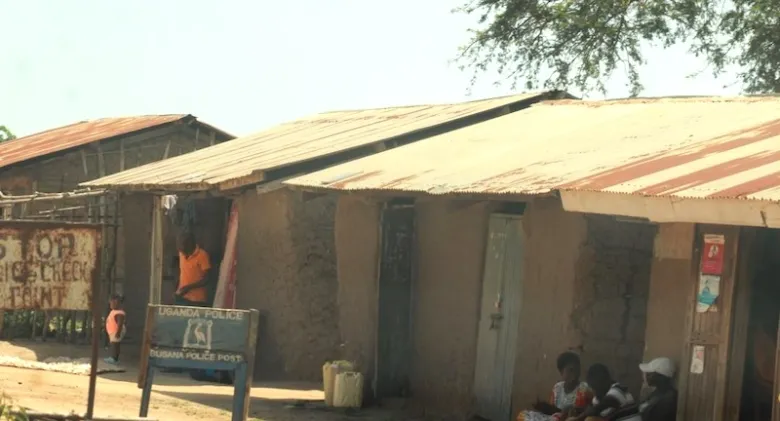
In Buliisa, hundreds of Balaalo pastoralists forcibly evicted in 2010 remain uncompensated, excluded from the prosperity built on the land they once bought. Enos Mubangizi remembers being woken at 5 am in December 2010, hearing hundreds of gun-wielding soldiers and police outside, rounding up cows from his family kraals and those of his neighbours.
Local pastor Stephen Mugisha, a respected pillar of his community, received a call just a day before from then-coordinator of Uganda’s national intelligence Gen David Sejusa. Sejusa informed the pastoralists that the Ugandan army was evicting all the families and their cows from their land.
“We were the only family in the area that had a bungalow, and it was demolished,” Mubangizi says, a member of the Balaalo pastoralists who also lost cows and land.
Code-named Justice, an estimated 640 families were forced out, and 20,000 head of cattle were taken. For the Balaalo people, a nomadic pastoralist group spread out in the South, Western, and Northern parts of Uganda, cows make up most of the family wealth.
The 20,000 cows were mixed, and their owners could no longer identify them. A few managed to rescue their livestock but no longer had land to graze them. The cows who were mixed in the big herd died from a lack of pasture and water. Others were sold off cheaply, sometimes for less than Shs 50,000 ($14).
Mugisha had set up a primary school and laid the foundation for what he envisioned as a mega church. He lost all of it. Another pastor, Sam Tumwine, built a house that is now occupied by police.
“I wonder who the police are paying rent to,” he says.
When contacted, the police refused our request for comment. The parcels of land in Buliisa district targeted for eviction had become nationally significant – the site of oil discovery in 2006, and where much of the production infrastructure was installed – in a race to start extracting the country’s “black gold” by the end of 2026.
The new oil frontier turned neighbours into enemies – and the question remains whether anyone was held accountable for the devastating evictions. Almost 15 years later, Mubangizi and the hundreds of other violently evicted herdsmen say they are still counting their losses and waiting for compensation.
Conflict over land and oil-era property claims
When oil was being surveyed by Tullow Oil, a multinational UK-headquartered oil and gas exploration company, Mugisha says they asked the geologists if their cows would be allowed to continue grazing, and they were reassured this was fine.
The conflict between pastoralists and the local community started in 2007, less than a year later. Oil discovery had an immediate impact on the community: suddenly, people saw value in land and raced to transform it from a communal to an individual land tenure system.
As land values rose, disputes emerged over whether some sales of customary land were valid under local tenure arrangements. At the time, Buliisa was an extremely rural community, whose life was still communal, including land ownership.
Land possessed little value, costing about Shs 50,000 per acre at the time of Uganda’s confirmation of commercial oil discovery in 2006. District chair Fred Lukumu said he regarded some transactions as invalid because, in his view, sellers lacked exclusive title.
“It was an illegal transaction because people were selling what did not exclusively belong to them,” Lukumu said. “They were never verifying… just paying whoever told them land was theirs,” he adds.
Buliisa subcounty chairperson Kabagambe Kamanda doesn’t dispute the claim that pastoralists had bought land; rather, how the acquisitions were documented and understood locally.
By 2003, the numerous pastoralists who had come to graze cattle had started buying land. Pastoralists said they had consulted community members who informed them that they had the right to purchase and own property. Kamanda claimed that some buyers took advantage of weak land documentation and low public awareness of land law; pastoralists dispute that account.
He claims that, in some cases, acreage recorded in sale paperwork did not match what sellers believed they had agreed to. Frederick Watume, who was vice chairperson of Buliisa sub-county at the time, said some agreements brought to him lacked details he considered necessary, including acreage.
Though the herdsmen were trying to follow the law by ensuring that their land purchase agreements were stamped by local council leaders, the land purchase agreements brought to him for signing were defective.
“They would say, mukongolo (natives) sold land to such mulaalo (herdsmen), no acreage. Nothing,” he said in an interview.
“I warned them that in future, you’re going to lose this land.”
The local community says the herdsmen, who did not fence their cattle, were destroying crops. Lukumu says people were facing food shortages and the pastoralists would even beat natives trying to chase cows from their gardens.
COMING TO BULIISA IN THE 1980S
The Balaalo herder families’ ordeal began in December 2010, but the story started 30 years before. The herders thought they found a happy ending in the Buliisa area after being evicted from government property that was later sold to Indian sugarcane growers.
Balaalo people who were looking for jobs in the 1980s had come to the Buliisa community to take care of cows, and would pay them with milk, says Bernard Barugahare, an elder from the village and former district community development officer.
“They [herdsmen] kept coming, increasing, and in the process, they sold milk and started buying cows,” Barugahare said.
He says it was these herdsmen who invited their fellow tribesmen to come to Buliisa at the beginning of the 2000s. Pastor Mugisha reiterates that the invitation was extended by natives in the area.
EMPTY-HANDED, EVEN AFTER FILING CLAIMS
From interviews with more than 40 people, including the pastoralists, residents, local leaders, and civil society members, oil was the main factor in the eviction of the Balaalo.
Local leaders in the area remember the names of evicted herders well, but when asked directly about properties left behind, they give vague answers. They insist the pastoralists were compensated by the government and should not make any claims.
“Anybody who did not come back to claim property up to now has no moral authority to make a claim,” says Kamanda Kabagambe, the chairperson for Buliisa sub-county, whose office is less than two kilometres from Tumwine’s former home.
“Since 2011, I don’t think anyone would have failed to claim if there was any destruction that was not legal.”
A local journalist who covered the pastoralist-native conflicts between 2007 and 2010 describes it as “a terrible eviction,” adding that “people lost everything”.
The journalist Stephen Kabindi followed up with those he had interviewed in subsequent years, who were living with relatives for over a decade. “They will never be the same,” he says.
On X, Gen Sejusa indicated that this evacuation was carried out under orders from the Ugandan cabinet. He headed the security arm, while then-prime minister Apolo Nsibambi headed the overall task force. “No property or life was lost,” he wrote.
TURNING A BLIND EYE?
The Tilenga project is operated by French petroleum giant TotalEnergies EP Uganda on behalf of a joint venture that includes the government of Uganda and state-owned China National Offshore Oil Company. TotalEnergies is the majority shareholder with 56.67% of the project.
The French oil company acquired a stake in Uganda’s oil project 14 months after the eviction. Since then, legal battles in Uganda have ensued as pastoralists seek justice that still evades them to today. TotalEnergies maintains that the government’s responsibility is in the hands of the Ugandan authorities.
“Land acquisition has been implemented on behalf of the Government of Uganda under an approved framework aligned with national law and international standards,” François Sinecan, a press officer at TotalEnergies, said.
“Challenges – such as absentee owners or overlapping claims – have been addressed through formal grievance channels and, if unresolved, referred to competent authorities,” he adds.
Juliette Renaud, senior campaigner at Friends of the Earth France, which sued TotalEnergies over rights violations in Uganda, said that Total should have assessed more fully the human-rights risks associated with oil development in the region.
“You can see these evictions in the oil region started before TotalEnergies came to Uganda and they didn’t do a proper risk assessment of the human rights violations that could be linked to the oil development,” she says.
Sinecan says all land acquisition for Tilenga follows rigorous due diligence under The Land Acquisition Resettlement Framework (LARF) and Resettlement Action Plans (RAPs).
‘NOT INTERESTED IN OIL’
Politics too played a role in the eviction as local politicians warned the ruling party, including President Museveni, of their waning popularity if they failed to evict the Balaalo pastoralists, who share a close connection to Museveni’s pastoralist Bahima community.
After the oil discovery, a suspicion ran through local crop farming communities – who made up a large majority of the residents – that the second wave of pastoralists, who arrived in the area at the turn of the century, had come to steal their oil.
“The politicians started spreading false information that we had occupied local people’s land that had oil,” Mugisha says, adding, “as [cattle] herders, we were not interested in oil.”
Stephen Biraahwa Mukitale, a former member of parliament of Buliisa county who played a central role in pushing the government to evict the pastoralists, says he has never had a doubt that these pastoralists migrated to the area because they had prior knowledge about oil. He describes them as being fronts of powerful people who wanted to grab local people’s land.
“The locations where they went to in 2003, 2004 and 2005… the oil prospecting had started only to find out that all the oil wells and the pipeline as confirmed today are the very areas where these people had chosen to be,” Mukitale says, referring to the pastoralists. In interviews, other politicians in the Buliisa community who rallied for the eviction used terminologies like, “maybe”, “we suspect,” “we believe” in arguing that the herdsmen had prior knowledge.
HIGH COURT JUDGEMENT, BUT STILL NO RELIEF
Although there was a push for the pastoralists to be evicted after oil was discovered in 2006, the Balaalo fought it in court for four years, halting the process. In a 2013 high court judgment in a land case filed by the evicted pastoralists, Judge Ralph Ochan described their eviction as an “unlawful and a gross violation of rights” as provided for in Uganda’s constitution and other international instruments.
“The Balaalo were, on the evidence on record, violently and brutally evicted without any lawful orders of this or any other court,” wrote Judge Ochan. In the judgment, he took note of public rhetoric and demagoguery by political leaders in Buliisa district that stoked up anti-Balaalo sentiments.
Ordering the return of the pastoralists to “land they acquired through lawful purchase would in all probability lead to grave social unrest”, according to Ochan.
These reporters were shown a land purchase agreement that the herdsmen had signed with the locals, showing clear details of the land they had purchased and duly signed by all parties.
It is part of the evidence that had been presented in court and that their lawyers continue to assert while seeking compensation. The pastoralists reject the accusations of bad blood between them and the local communities, arguing that they had forged a good relationship.
“The locals loved us a lot; they never fought us. We were a united community. It’s politics that killed the good relationship and led to the eviction,” says pastoralist Mubangizi.
FORGOTTEN IN OIL COMPENSATION
The process of assessing, valuing, and acquiring land for oil projects began around 2015, and compensation for pastoralists was left out of the equation. While government officials interviewed acknowledge the “pastoralists question”, they argue that their case happened long before the land acquisition and compensation process. They further claim that a rigorous, multi-layered process ensured that compensation money was given to the rightful owners.
“For us, this process didn’t look at the particularity of the Balaalo. It looked at ownership. The Balaalo issue was 2010; the compensation was for 2019/20,” Ali Ssekatawa, director of Legal and Corporate Affairs at the Petroleum Authority of Uganda (PAU), said in an interview.
“If someone had been removed in 2010, is no longer on the ground, and there is no evidence, then there was no legal basis to be paid. If that person had a title that hadn’t been cancelled and was genuine, then that person was one of those who were paid,” he adds.
The ministry of Energy and Mineral Development, in a written response, said the 2010 eviction of the Balaalo pastoralists was a complex issue rooted in long-standing land disputes between the pastoralists and indigenous communities.
The ministry says it remains focused on its role in facilitating oil exploration and development within the broader government framework.
While the energy ministry described the eviction as a government decision based on court orders and efforts to address illegal occupation and escalating ethnic tensions, it acknowledges that it played a role in the process.
“The ministry supported the overarching government effort to enforce existing land laws and create an enabling environment for oil activities, while working with other relevant ministries to address the underlying land tenure issues. Our focus was on ensuring that any land acquired for oil development was done legally and with due process, within the context of these pre-existing disputes,” the ministry says.
DISPUTE OVER BLAME FOR ABUSES
Nicholas Opiyo, a human rights lawyer who documented the 2010 eviction, says oil companies, under the UN Guiding Principles on Business and Human Rights, have an obligation to ensure their investments do not lead to the abuse of affected communities’ rights.
Opiyo says oil companies benefiting from the project should bear a share of responsibility for harms suffered by affected communities.
“It’s clear that Total, Tullow and other companies hid behind the government to avoid responsibility, in some cases subcontracting their roles to private companies,” he said.
“They owe a duty of reparation and restitution to those communities. They can’t run away from those obligations.” A spokesperson for Tullow said the company “operates in strict accordance with all applicable international laws and regulations” and always seeks to “uphold the highest standards of ethical conduct and respect for human rights” in all its operations.
At a May 2025 conference that brought together civil society organisations, oil companies and government officials to discuss social and human rights issues in Uganda’s oil and gas sector, TotalEnergies EP Uganda General Manager Philippe Groueix said the Uganda project has become the most scrutinised project in the world.
“I would like to hear from the people themselves. To express that they have been positively impacted is not for us to decide; it’s up to them to share that their life today is better than before, and better than it would have been without the project,” Groueix said.
In a 2020 study, the World Bank estimated that Uganda could earn $800m per year, becoming a linchpin for economic transformation. But for the forgotten pastoralists, they believe that their future is doomed because of the oil.
When we arrived at the home of Mugisha on a sweltering afternoon, he was reluctant to revisit the ordeal his community had endured over the past 15 years as they sought justice. He thought speaking to strangers was pointless, as it would not bring a resolution.
Eventually, he spoke. For nearly an hour, he recounted what the eviction had meant for them, their immense losses and the suffering they had endured since.
“We are now very poor. We didn’t know that until now a person could find himself with nothing,” he said.
Source: observer.ug
Related posts:

‘Oil is a curse’: villages in Uganda face land ownership uncertainty

Tears Flow As Residents’ Livelihoods Are Forcefully Taken By Rich Man
Pushing back: The EACOP victim community rushes to court seeking reinstatement onto their land and compensation.

Former Benin PM to assess oil land compensation in Uganda

You may like
NGO WORK
The Great “Green” Heist: When Artificial Intelligence and Arms Dealers Seize the Minerals of the South
Published
3 weeks agoon
August 4, 2026
By Franck Zongwe Lukama, Congolese journalist and researcher, leads the independent media KilaloPress in DRC.
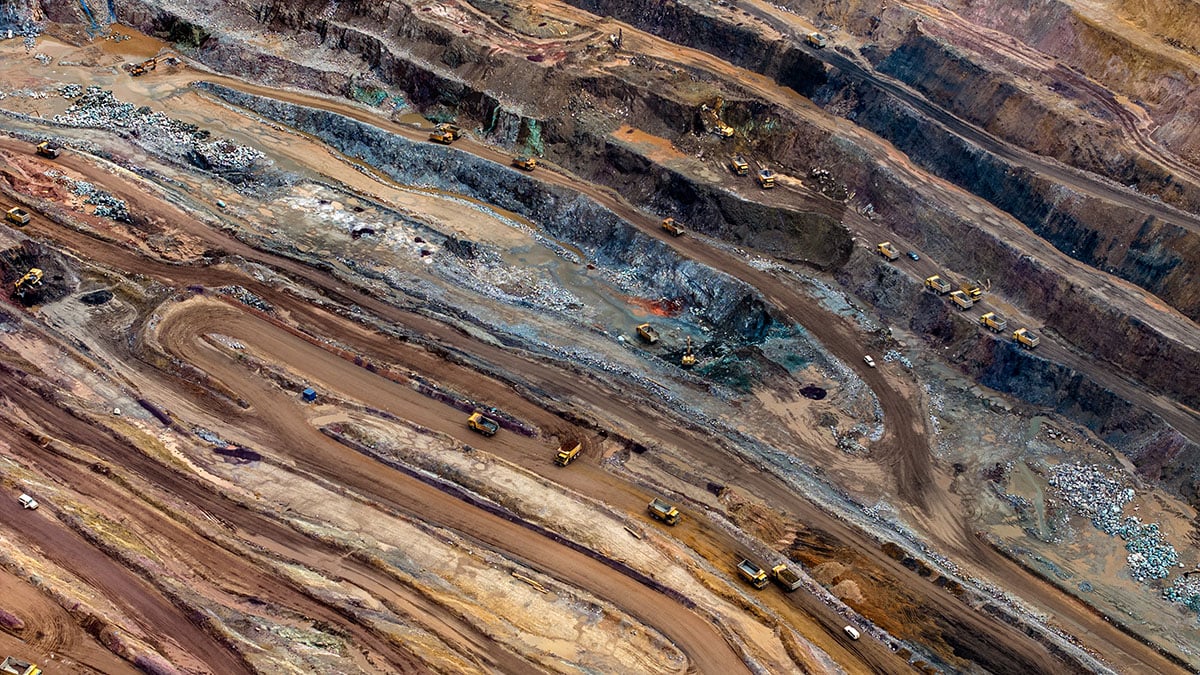
We were sold a simple equation: to save the planet, we must dig. Dig faster, deeper, extracting from the earth the cobalt, lithium, or copper needed for solar panels and electric vehicles. Yet, this climate rescue rhetoric conceals a staggering statistical deception. Today, 70% of global demand for critical minerals does absolutely nothing to support the energy transition. These resources end up in aerospace, communication technologies, and, above all, weaponry. Sectors that, ironically, exacerbate the global ecological crisis. The green revolution has become the perfect smokescreen, the moral veneer for a very different kind of war.
Far from the promises of sustainable development touted by the World Bank, the current scramble is driven by a strict logic of geopolitical power. A damning report from the California-based Oakland Institute exposes this global scheme. The report reveals an unprecedented and formidable convergence of interests between the American military-industrial complex and the giants of Silicon Valley. With the Pentagon openly pivoting toward a combat strategy focused on artificial intelligence (AI), securing supply chains is no longer a matter of ecology, but a question of survival in the face of Chinese influence. The United States is not seeking to reduce carbon emissions; it is seeking to guarantee its technological and military supremacy.

The real winners of this frantic race wear suits far removed from environmental activism. Trillions of dollars are flowing into new alliances that intertwine AI-driven mining companies, like KoBold Metals—backed by billionaires such as Bill Gates—and companies specializing in cutting-edge defense technologies, like Palantir and Anduril, not to mention the networks of influence close to the Trump family. For these players, the discourse of climate emergency acts as a powerful public relations tool. It justifies massive and accelerated extraction that would otherwise provoke international outrage.
Local communities and Indigenous populations find themselves on the frontlines, forced to resist an extraction machine that has the audacity to justify their suffering by claiming it is necessary to save the world.
And the price of this hypocrisy is being paid in full throughout the Global South. In the Rubaya hills, in the Kolwezi copper belt, as in the Indigenous territories of Latin America and Asia, the promise of “prosperity” translates into a terrifyingly familiar tragedy. Land grabbing, forced displacement, devastating groundwater pollution: the plundering of ecosystems and human lives is accelerating. Local communities and Indigenous populations find themselves on the frontlines, forced to resist an extraction machine that has the audacity to justify their suffering by claiming it is necessary to save the world. Today, opposing the destruction of one’s village by a multinational mining company risks being accused of hindering the fight against climate change. The rhetorical trap is devastatingly effective.

The long-term consequences of this diversion are alarming. The exponential surge in demand generated by future AI data centers, mass surveillance, and global rearmament will mathematically deplete available reserves. Every ton of copper, nickel, or cobalt consumed by combat drones or algorithmic data processing servers is a ton diverted from the production of renewable energy infrastructure. We are not equipping the energy transition; we are cannibalizing it to militarize our future.
We are not equipping the energy transition; we are cannibalizing it to militarize our future.
If no strict regulations are put in place to curb this rampant mining frenzy, hundreds of new mines will spring up in the coming years, causing irreversible damage on an unprecedented scale. The question facing citizens today, from Kinshasa to Washington, is no longer whether we will have enough minerals to save our atmosphere. It is why we are willing to sacrifice millions of lives and destroy our lands to fuel next-generation algorithms and weapons. In ten years, when the Global South is nothing more than a vast crater serving a militarized hyper-technology, it will be too late to realize that the planet was never the priority.
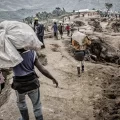
Photos: Artisanal Coltan – manganese – cobalt mining in Mudere mine under control of Nyatura militia, town of Rubaya, North Kivu region (Democratic Republic of Congo, Africa). Erberto Zani – stock.adobe.com
Source: oaklandinstitute.org/
Related posts:

Experts warn that without Africa’s control over resources and climate financing, the continent faces the risk of entering a new era of “green colonialism”.
30 civil society organizations have written to the World Bank Group demanding to publicly disclose the Africa Energy Approach paper.
Africa Climate Summit 2023 Set to Surrender the Continent to Green Colonialism
The mothers and daughters of the global south cannot celebrate the World Bank’s 80-year legacy of harm.
NGO WORK
EU: IPI welcomes action against 14 states over Anti-SLAPP Directive delays
Published
4 weeks agoon
July 27, 2026
EU states must introduce robust measures to protect journalists and media from vexatious litigation
The International Press Institute (IPI) today welcomes the infringement proceedings initiated by the European Commission against 14 EU Member States over their inaction or delays in transposing the Anti-SLAPP Directive.
The countries included are Austria, Bulgaria, Czech Republic, Germany, Greece, Hungary, Ireland, Italy, Luxembourg, the Netherlands, Portugal, Romania, Slovakia and Spain.
The EU infringement proceedings were initiated on 15 July, with letters of formal notice sent to these Member States for failing to notify about progress made in implementing the Directive. States now have two months to respond and update about measures taken or could eventually face legal action at the European Court of Justice.
The Anti-SLAPP Directive introduced EU-wide rules which protect journalists and civil society actors from manifestly unfounded or abusive civil proceedings with cross-border implications, including early dismissal tools and remedies for targets of SLAPPs. It was adopted in April 2024 and the transposition deadline was 7 May 2026.
Monitoring by IPI shows that while in some of the countries identified, such as Greece and Spain, steps have been taken to prepare for the transposition and bills are actively in development and reportedly close to being presented to or adopted by parliament.
In others such as Bulgaria and Portugal, initial work done to develop legislation has been delayed by institutional changes, changes in governments or political instability, though transposition work remains ongoing.
In other states, such as Italy and Hungary, little to no measurable progress has yet been made on transposition. However, with the new Tisza government in Hungary driving forward media freedom reforms, there is hope the new administration will introduce initial anti-SLAPP measures in the next legislative package identified for the autumn.
While Ireland has been actively working to tackle SLAPPs through legal reforms, and passed the Defamation Bill in 2024, further legislation is required to fully transpose the Anti-SLAPP Directive during its Presidency of the Council of the EU.
Although these 14 countries have been identified in the EU action, monitoring and analyses show that the overall picture for implementation of the Directive across the EU remains fragmented and uneven.
According to the European Anti-SLAPP Monitor, almost all EU Member States missed the May 2026 transposition deadline, with only a handful fully implementing on time.
IPI notes that even in those Member States where the Directive was implemented, such as Malta, these reforms only included minimum standards protecting against cross-border cases, and failed to include measures to safeguard against domestic SLAPPs.
In the wake of the EU’s opening of initial infringement action, IPI renews our call – made previously with Media Freedom Rapid Response (MFRR) partners – for Member States to demonstrate their commitment to media freedom by accelerating their legislative processes in protecting against SLAPPs. This includes the 14 countries identified by the EU Commission and those in which reforms have been presented but not yet adopted.
Crucially, legislative reforms should both fully reflect both the letter and the spirit of the Anti-SLAPP Directive and introduce the substantive and procedural safeguards set out in the EU and Council of Europe Recommendation on SLAPPs.
A model here should be Poland, where last month the President approved a law which covers both domestic and cross-border SLAPPs, ensuring implementation of both EU Directive and Council of Europe Recommendation.
Member States which continue to delay or fail to transpose the directive should face legal action from the Commission, which must use all tools at its disposal to help safeguard media freedom across the bloc.
IPI, which has advocated at the EU and national level for measures to protect journalists and media from SLAPPs, will continue to monitor implementation in collaboration with European partners, including through MFRR media freedom missions.
Source: ipi.media/
Related posts:

The 4th African Forum on Business and Human Rights: The African continent is lagging, with only a few member states having adopted the National Action Plan (NAP) on Business and Human Rights.
La Via Campesina calls on States to exit the WTO and to create a new framework based on food sovereignty
World Bank Halts New Lending to Uganda Over Anti-LGBTQ Law
La Via Campesina Call to Action for the 27th UN Climate COP
NGO WORK
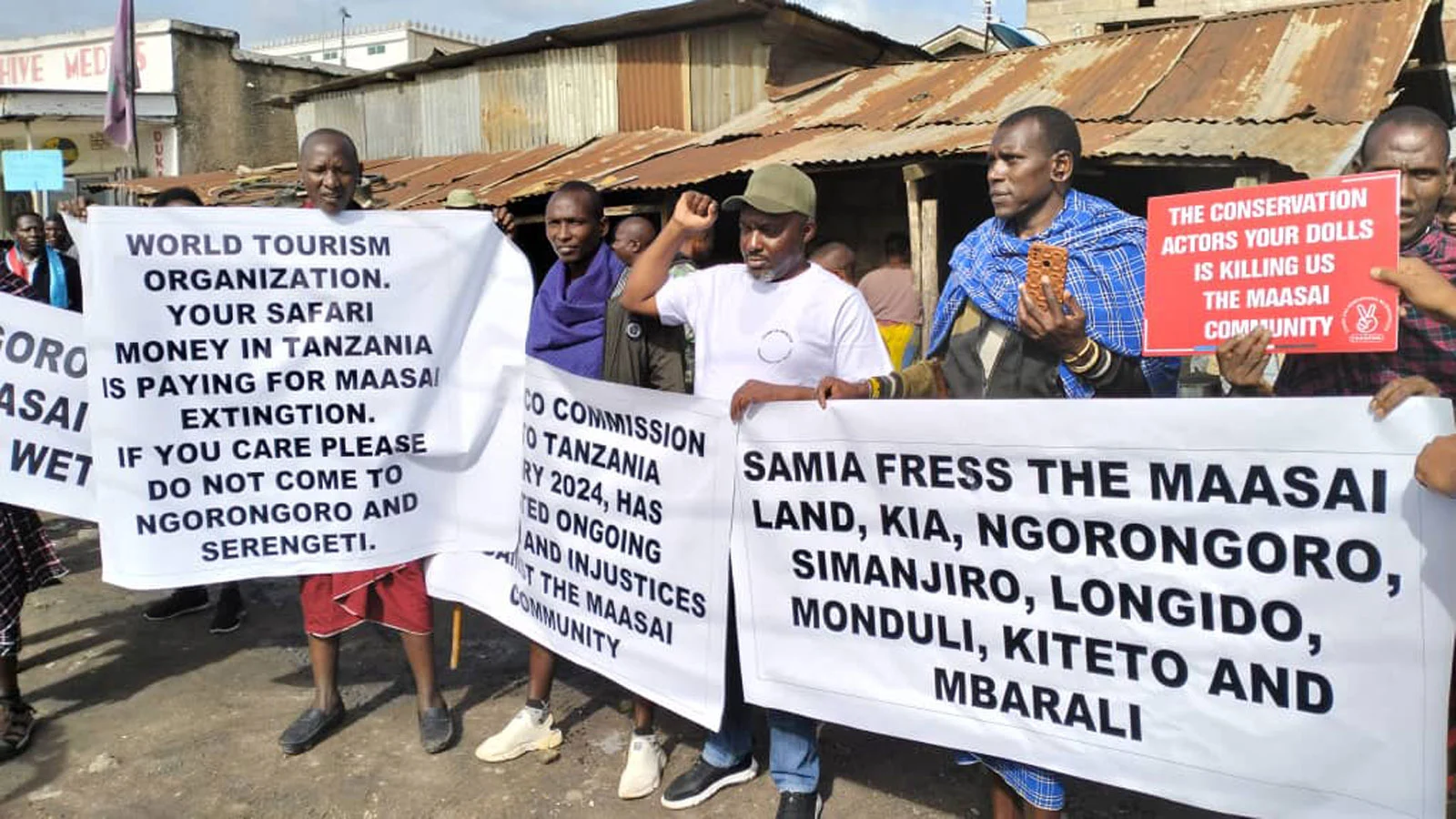
No Heritage Without its People: Why Ngorongoro Cannot be a World Heritage Site and an Eviction Zone
Published
1 month agoon
July 20, 2026
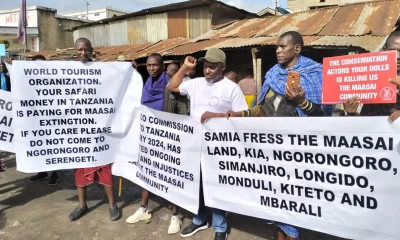
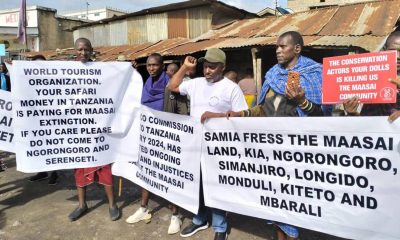
The Tanzanian government, under the guise of “conservation,” restricts Maasai livelihoods and denies access to essential services forcing Indigenous residents away from their ancestral lands and turning their heritage into a playground for safari tourists.

As the 48th Session of the World Heritage Committee begins July 19, UNESCO continues to legitimize the continued forced displacement of the Maasai from Ngorongoro. If UNESCO cannot ensure that the World Heritage designation protects the rights of its Indigenous custodians, then the Committee must remove the Ngorongoro Conservation Area from the World Heritage List.
Increased international pressure is imperative to hold UNESCO accountable and protect the lives and rights of the Maasai!
Read our Open Letter to the World Heritage Committee.
Source: oaklandinstitute.org
Related posts:
Maasai protest evictions from Ngorongoro as UN experts warn conservation must respect rights
The Oakland Institute Calls on the Tanzanian Presidential Land Commissions to Respect & Ensure Rights of Maasai Living in the Ngorongoro Conservation Area
Tanzanian Government’s Sustained Campaign Against the Maasai in Loliondo and the Ngorongoro Conservation Area

Sham Presidential Commissions Rubber Stamp Tanzanian Government’s Efforts to Evict Indigenous Maasai from Ngorongoro Conservation Area
Civil society groups at UNCCD COP17 are calling for urgent action on land rights, drought, and vital funding.
South Africa’s top court blocks Shell oil exploration off country’s Wild Coast
UNCCD COP17 kicks off in Mongolia, drawing nations together to tackle urgent issues of land, drought, and food security.
Minister Nabakooba wants special land title issuance halted
Africa’s El Niño Economic Impact: $20B at Risk in 2026
Uganda is grappling with mounting land struggles as the needs of refugees collide with the rights and hopes of the communities that host them.
Minister Nabakooba wants special land title issuance halted
Researchers sound the alarm: Uganda’s oil development threatens the nation’s vital wetlands.
Innovative Finance from Canada projects positive impact on local communities.
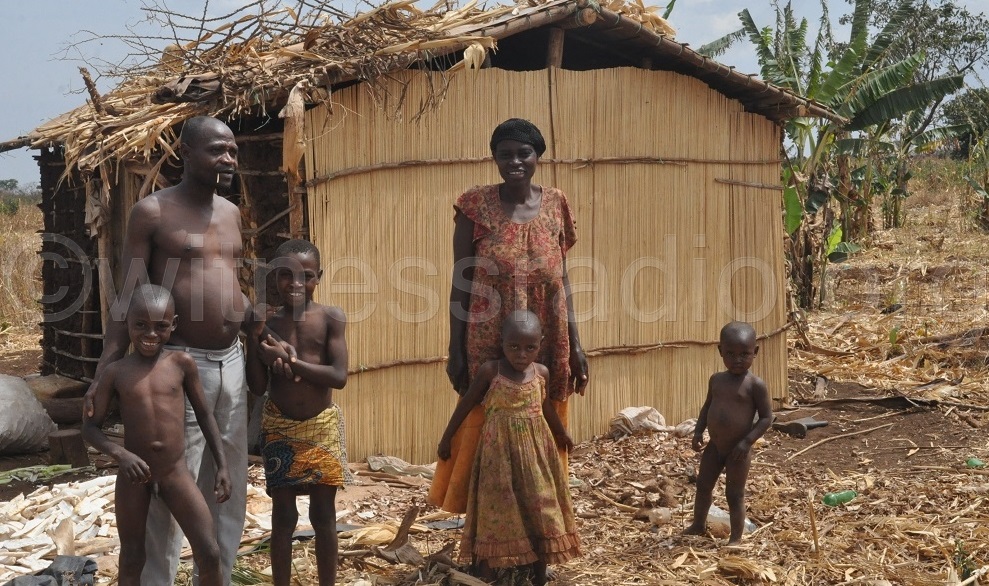
Over 5000 Indigenous Communities evicted in Kiryandongo District

Petition To Land Inquiry Commission Over Human Rights In Kiryandongo District

Invisible victims of Uganda Land Grabs
Resource Center
- CAN AFRICAN FOOD SYSTEMS THRIVE WITHOUT CHEMICAL FERTILISERS
- Land And Environment Rights In Uganda Experiences From Karamoja And Mid Western Sub Regions
- REPARATORY AND CLIMATE JUSTICE MUST BE AT THE CORE OF COP30, SAY GLOBAL LEADERS AND MOVEMENTS
- LAND GRABS AT GUNPOINT REPORT IN KIRYANDONGO DISTRICT
- THOSE OIL LIARS! THEY DESTROYED MY BUSINESS!
- RESEARCH BRIEF -TOURISM POTENTIAL OF GREATER MASAKA -MARCH 2025
- The Mouila Declaration of the Informal Alliance against the Expansion of Industrial Monocultures
- FORCED LAND EVICTIONS IN UGANDA TRENDS RIGHTS OF DEFENDERS IMPACT AND CALL FOR ACTION
Legal Framework
READ BY CATEGORY
Newsletter
Trending
-
MEDIA FOR CHANGE NETWORK5 days agoMinister Nabakooba wants special land title issuance halted
-
MEDIA FOR CHANGE NETWORK2 weeks agoYouth activists detained as they boldly petition Parliament, demanding a future for Uganda free from oil dependency.
-
MEDIA FOR CHANGE NETWORK2 weeks agoFour youth activists now face public nuisance charges after their arrest during a bold march toward Parliament.
-
WITNESS RADIO MILESTONES5 days agoUNCCD COP17 kicks off in Mongolia, drawing nations together to tackle urgent issues of land, drought, and food security.
-
WITNESS RADIO MILESTONES2 weeks agoKaramoja stands on the brink, with nearly half a million people gripped by acute hunger.
-
MEDIA FOR CHANGE NETWORK1 week agoExperts rally the region to unite behind East Africa’s transformative Agroecology Bill.
-
MEDIA FOR CHANGE NETWORK4 days agoCivil society groups at UNCCD COP17 are calling for urgent action on land rights, drought, and vital funding.
-
MEDIA FOR CHANGE NETWORK4 days agoSouth Africa’s top court blocks Shell oil exploration off country’s Wild Coast