








Africa is generating barely 2% of its carbon credit potential and stands on the threshold of a multibillion‑dollar climate finance transformation. With the global carbon market currently valued at roughly US$1 trillion (around R16,8 trillion) and projected to grow to US$2,4 trillion (R40,2 trillion) by 2030, Africa could claim its share if it acts quickly and credibly.
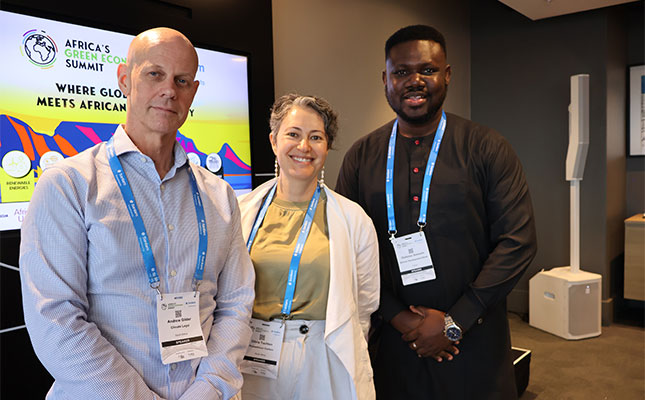
“There is vast potential for Africa to use high-integrity carbon projects to not only achieve emissions reductions but also development interventions on the ground. […] But we need to scale up and do more,” Dr Olufunso Somorin, African Development Bank (AfDB) carbon markets coordinator, said at a pre-summit carbon workshop ahead of the Africa’s Green Economy Summit in Cape Town in late February.
He described the current moment as a ‘second global carbon order’; a shift from the Kyoto Protocol’s Clean Development Mechanism (CDM) to the new market architecture under Article 6 of the Paris Agreement.
Africa underperformed in the first crediting period, between 2007 and 2011, when it captured only a tiny slice of the more than US$200 billion (R3,2 trillion) invested in CDM projects.
“Close to 1 800 projects were approved globally. Only 33 were in Africa and only 16 in South Africa. We took too long to embrace the opportunity,” Somorin added.
Carbon markets
Carbon markets have expanded significantly since then. According to Somorin, around 28% of global greenhouse gas emissions are currently covered by carbon pricing mechanisms, compared with barely 5% two decades ago.
The compliance market, where regulated entities purchase or trade emission allowances, was valued at more than US$850 billion (R13,5 trillion) in 2021 and reached roughly US$1 trillion (R18,7 trillion) in annual traded emissions by the end of 2024.
The voluntary carbon market (VCM) is significantly smaller, valued at about US$2 billion (R33,5 billion) globally but projected to grow rapidly.
“Total demand for voluntary credits is expected to increase at least 15-fold by 2030, reaching between US$10 billion [R167 billion] and US$25 billion [R419 billion], and could expand up to 100-fold by 2050, reaching between US$90 billion [R1,5 trillion] and US$480 billion [R8 trillion],” Somorin said.
Africa’s small slice of the pie
He added that Africa accounts for roughly US$200 million (R3,4 billion) in the VCM (about 8% by value) while generating around 16% of global voluntary credits. About 100 carbon credit projects across 20 African countries generate an estimated 90 million tons of emission reductions annually.
VCM trading in Africa is concentrated in five countries: Kenya, Zimbabwe, the Democratic Republic of the Congo, Ethiopia, and Uganda. Together, they account for about 70% of Africa’s carbon credit activity, with Kenya responsible for roughly 25% of the continent’s credits.
Credits are generated mainly from avoided deforestation and clean cooking projects, as well as land use, hydropower, wind, and solar energy.
Increasing scrutiny
However, the VCM has faced a lot of scrutiny in recent years. Trading volumes dipped in 2024 amid integrity concerns, although Somorin expects a reset under tighter standards.
The demand outlook is shaped by rising global temperatures. According to the Climate Action Tracker’s ‘Warming Projections Global Update November 2024’, the world is not on track to limit warming to 1,5°C and is heading towards 2,7°C by 2100.
“Many African countries are already achieving emissions reductions through carbon development projects, but they are not structuring them according to verification protocols. This limits their ability to earn carbon credits,” Somorin said.
Private climate flows
Africa holds an estimated 15% of global carbon sequestration potential, which could generate up to US$82 billion (R1,4 trillion) annually by 2050 under high-integrity market conditions.
Yet private capital flows into Africa’s climate finance sector remain low, accounting for roughly 18% of total flows.
“On average, Africa needs about US$280 billion [R4,7 trillion] in annual climate finance. We are attracting only US$52 billion [R872 billion] annually, which is only 20% of our needs. We need to close the gap,” Somorin said.
To boost readiness, in 2025, the AfDB launched the Africa Carbon Support Facility (ACSF), capitalised with US$100 million (R1,7 billion) to catalyse private investment, support regulatory development, and advance policy and Article 6 reforms.
“What I can tell you today is that we don’t have a demand problem. We have a supply problem of high-integrity credits, and a lot of financial interventions are required to close the gap,” he added.
Snapshots of successful carbon projects in Africa
Dr Olufunso Somorin highlighted several African carbon projects with the potential to deliver significant environmental and social benefits:
Rwanda: SPOUTS’ ceramic water filter project has issued more than 350 000 filters, delivering safe drinking water to more than 1,5 million people and avoiding about 1,5 million tons of carbon dioxide equivalent (tCO₂e) by eliminating the need to boil water using non-renewable wood. This high-integrity project prevents more than 150 000t of wood use annually, thus protecting forests, and cutting indoor air pollution by around 90%.
South Africa: the uMkhanyakude Restoration Project in KwaZulu‑Natal is a high-integrity carbon project aimed at restoring degraded grasslands in the Maputaland–Pondoland–Albany biodiversity hotspot. Led by AfriWild and verified under Verra’s Grouped Landscape Management framework, the project will work closely with local communities, land stewards, and conservation managers to prevent overgrazing, enhance grassland regeneration, and increase market access for livestock and wildlife products. It has the potential to remove 10 million tCO₂e across more than 300 000ha, support more than 10 000 people, and provide habitat protection for more than 1 200 endemic species and critical megafauna.
Kenya: the Udongo Mzuri Biochar Carbon Project, led by Women in Climate Change & Renewable Energy, converts organic waste and invasive water hyacinth into biochar, with each ton sequestering three tCO₂e. With seven hubs planned over the next decade, the project targets approximately 20 000 tCO₂e per hub annually, linking production to 10 000 cookstoves per year while achieving a 20% increase in soil moisture retention.
Nigeria: the Ago Owu Forest Reserve Carbon Project in Osun aims to restore and protect 23 000 ha of degraded tropical high forest, creating more than 500 nursery jobs, formalising forest stewardship contracts for residents in the buffer zone, and sequestering carbon at scale through replanting and forest protection. The project is a collaboration between aDryada/Noblesse Green Energy, the Nigerian Presidency, and the National Council on Climate Change.
Source: farmersweekly.co.za