
MEDIA FOR CHANGE NETWORK
Gov’t Seeks Land to Establish Palm Oil Mill and Nursery in Busoga

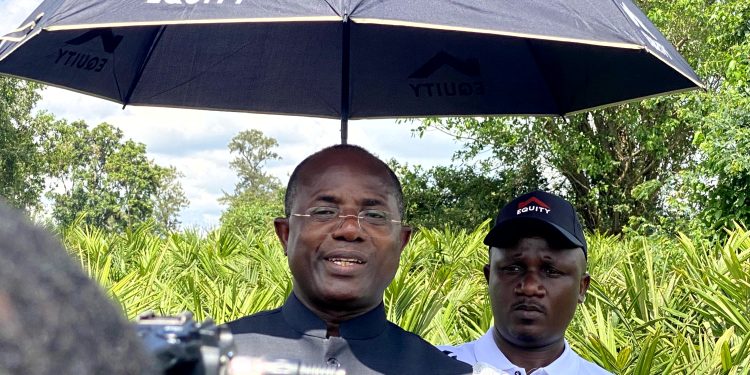
Mayuge — The Government of Uganda is seeking land in Mayuge District to establish a palm oil processing mill and a nursery, as part of its plan to expand the National Oil Palm Project (NOPP) to the Busoga sub-region.
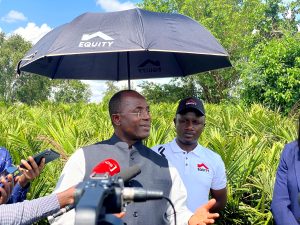
The call was made by the State Minister for Agriculture, Hon. Fred Bwino Kyakulaga, during the official launch of the oil palm planting exercise in Mayuge District this month. The Mayuge hub — which also covers Bugiri and Namayingo districts — marks the first phase of oil palm cultivation in Busoga, following years of preparation and feasibility studies.
Hon. Kyakulaga revealed that the government requires about 500 hectares of land to construct the mill and nursery, which will serve farmers across the hub.
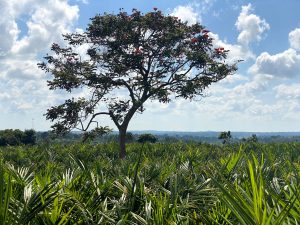
“Government currently does not own land in this area, so we are calling upon willing landowners to sell land for this purpose,” the Minister said. “The mill will allow farmers to process their harvest locally, creating jobs and ensuring long-term income for households.”
The Minister emphasised that Busoga’s proximity to Jinja offers a logistical advantage, as crude oil extracted from the mill can easily be transported to Jinja for refining.
The Mayuge oil palm initiative is part of a broader strategy to increase domestic vegetable oil production, reduce poverty, and improve household incomes through commercial agriculture. Uganda currently spends over USD 300 million annually on imported palm oil, a cost the government aims to cut significantly once local production scales up.
Low-Interest Financing
Equity Bank Uganda, which serves as the fund manager for the National Oil Palm Project, is partnering with the Ministry of Agriculture to manage and disburse funds to participating farmers.
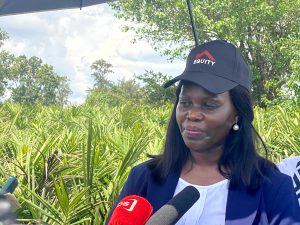
Ms Catherine Psomgen, Director for Public Sector and Social Investments at Equity Bank Uganda, said the bank has already supported 896 farmers in Mayuge, Bugiri, and Namayingo with over UGX 1.2 billion in financing.
“We provide financial literacy training, agribusiness support, and ensure that funds are used transparently and efficiently. Through our Africa Resilience and Recovery Plan, we’ve dedicated 30% of our loan portfolio to agriculture.”
Under the scheme, smallholder farmers with 2.5 to 5 acres of land can access up to UGX 25 million at a 10% interest rate — significantly lower than market rates — with a four-year grace period and six years for repayment. The funds are released directly to suppliers for land preparation, seedlings, fertilisers, and maintenance, ensuring accountability.
Local Production and Expansion Plans
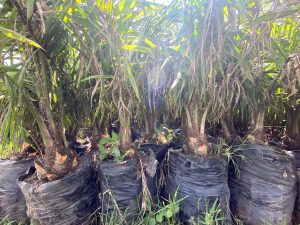
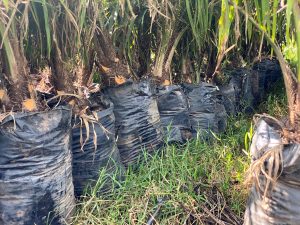
A nursery with 50,000 seedlings has already been established in Mayuge and is ready for distribution to farmers. The seedlings, previously imported from Indonesia and Malaysia, are now being produced locally through the National Agricultural Research Organisation (NARO) to reduce costs and delays.
The government is also preparing Phase Two of the project, which will expand into Bugweri, Iganga, Luuka, and Jinja districts in the next financial year.

Hon. Kyakulaga reiterated that sugarcane farming will not be replaced but complemented by oil palm, given that only 10% of Busoga’s land area is needed to meet Uganda’s annual demand for refined palm oil.
While enthusiasm for the project is high, land acquisition remains a major challenge. The Mayuge District Oil Palm Growers Cooperative Society reported that over 54,000 planting holes have already been dug, yet many farmers are still awaiting seedlings.
“We have the farmers, we have the funding, and we have the will,” Hon. Kyakulaga said. “What we now need is land for the mill and nursery so that Busoga’s oil palm dream becomes a full reality.”
The National Oil Palm Project is funded by the International Fund for Agricultural Development (IFAD) with USD 76 million, complemented by private sector investment to a total of USD 210 million (UGX 300 billion). The program aims to empower smallholder farmers, create rural jobs, and strengthen Uganda’s agro-industrial base under the government’s Agro-Industrialisation Agenda.
Source: softpower.ug/
Related posts:
 Tea nursery bed operators reject Shs1 billion from Naads
 Nursery bed farmers stuck with seedlings
 Palm oil plantation expansion: A disturbing alliance between a palm oil company, district officials, and a college school is actively seizing land from farming communities in Buvuma district for their own profit.
 Nine (9) years and still counting: Buvuma residents still await compensation for land grabbed by the Oil palm project.

MEDIA FOR CHANGE NETWORK
Environmental and human rights advocates are urging the world to hold global investors accountable for their actions.
Related posts:
 The 4th African Forum on Business and Human Rights: The rapidly escalating investment in Africa is urgently eroding environmental conservation and disregarding the dignity, the land, and human rights of the African people.
 #COP27: HUMAN RIGHTS ADVOCATES URGE PARTIES TO INCREASE RECOGNITION AND PROTECTION OF ENVIRONMENTAL AND LAND DEFENDERS.
 Land and environmental rights defenders, CSOs, scholars, and government to meet in Kampala to assess Uganda’s performance on the implementation of the UN Guiding principles on Business and Human Rights in Uganda.
 Report reveals ongoing Human Rights Abuses and environmental destruction by the Chinese oil company CNOOC
MEDIA FOR CHANGE NETWORK
Why are secure land rights key to Africa’s climate resilience and the protection of its natural treasures?
Related posts:
 Restoring Our Land: Tackling Degradation for Climate Resilience, Food Security, and Sustainable Development at COP16
 Africa’s responsible business agenda is facing challenges as more land is taken from local communities for investment, and landowners struggle to secure justice.
 Road to COP30: Climate justice is achievable if young people have secure land tenure as a mitigation measure against migration.
 Africa adopts the Africa Climate Innovation Compact (ACIC) Declaration to drive the continent towards innovative climate solutions.
Related posts:

 Conference of the Parties to the Convention on Biological Diversity (COP16): Solutions for companies, losses for communities and biodiversity
 Civil society groups at UNCCD COP17 are calling for urgent action on land rights, drought, and vital funding.
 New report: EACOP threatens tourism and biodiversity in Greater Masaka.
 COP16 in Riyadh: World Leaders Commit $12.15B to Combat Land Degradation and Drought

Environmental and human rights advocates are urging the world to hold global investors accountable for their actions.

Why are secure land rights key to Africa’s climate resilience and the protection of its natural treasures?

Biodiversity Goals: The world has no time to meet its 2030 goals.

Lands Ministry tightens rules for replacing lost titles, gives landowners 30 days to object

Lango ex-combatants count losses after dry spell destroys maize harvest

Five years after Uganda’s National Action Plan on Business and Human Rights, are local communities hosting land-based investment projects seeing change?

The global race for clean energy minerals is leaving communities grappling with conflicts and human rights abuses, a new report reveals.

Tanzanian Government Abducts Maasai Villagers in an Unconscionable Attack on Indigenous Land Defenders

Innovative Finance from Canada projects positive impact on local communities.

Over 5000 Indigenous Communities evicted in Kiryandongo District

Petition To Land Inquiry Commission Over Human Rights In Kiryandongo District

Invisible victims of Uganda Land Grabs
-
 NGO WORK2 weeks ago
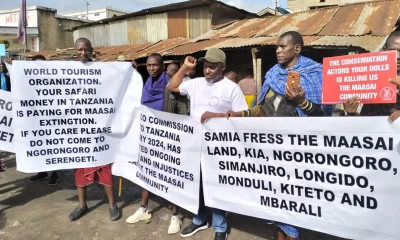
Tanzanian Government Abducts Maasai Villagers in an Unconscionable Attack on Indigenous Land Defenders
-
 MEDIA FOR CHANGE NETWORK1 week ago
World Food Day 2026: Building healthy diets means reimagining how we grow, share, and enjoy our food.
-
 MEDIA FOR CHANGE NETWORK2 weeks ago
Court remands 10 anti-oil activists as suspect collapses in dock
-
 MEDIA FOR CHANGE NETWORK1 week ago
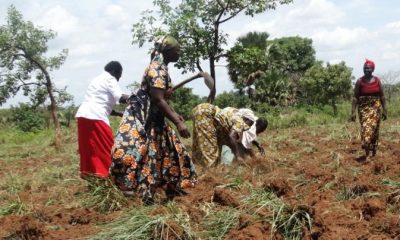
International Day of Rural Women : Rural women farmers deserve not only equal rights and access to resources, but also the strength and voice to safeguard Mother Nature.
-
 MEDIA FOR CHANGE NETWORK1 week ago
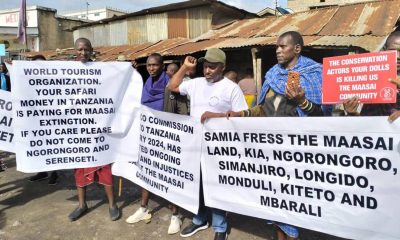
Defending ancestral land comes at a steep price as Maasai communities in Tanzania face relentless, mounting pressure.
-

 MEDIA FOR CHANGE NETWORK1 week ago
As waves of investment sweep across Uganda, countless women rise to defend their land, safeguard their traditions, and claim their right to be heard.
-

 NGO WORK1 week ago
As World Bank Holds Annual Meetings, 84,000 Tanzanians Call for Justice
-
 MEDIA FOR CHANGE NETWORK1 day ago
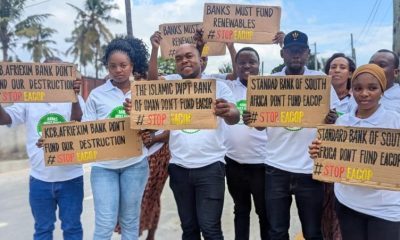
Environmental and human rights advocates are urging the world to hold global investors accountable for their actions.