Connect with us

MEDIA FOR CHANGE NETWORK

Forced Land Evictions in Uganda: who’ll bring reparation for victims.

Published

on

By Witness Radio team.

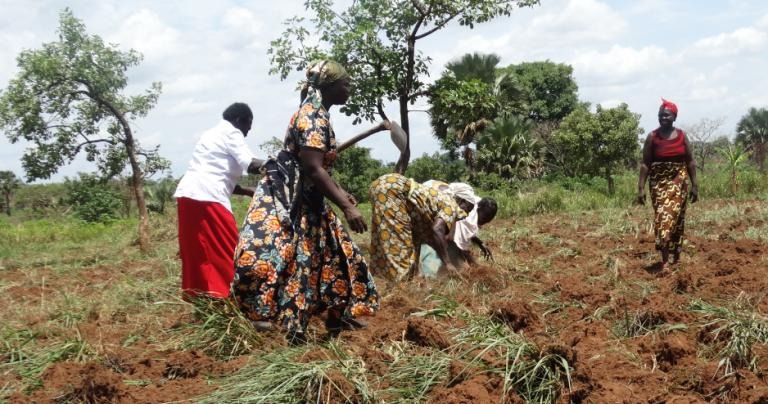
Vivian Nandyose, a bright student, should have been in Senior Five this year. However, her dreams were shattered when her parents, the pillars of her education, were unjustly imprisoned over land-related criminal charges. With both parents in prison for eleven months, on what the family claims were false accusations, Vivian was forced to put her education on hold and take care of her five younger siblings.

In Uganda, Senior Four is the fourth and final year of lower secondary school, also known as the O-Level period. It’s the equivalent of grade 10 in the United States. Students in Senior Four take their O-Level exams, known as the Uganda Certificate of Education (UCE) at the end of the year.

“This is the life that we are experiencing because some greedy rich man caused my parents to be imprisoned. I didn’t go for senior four because I didn’t have school fees, and no one could care for the young ones while I was away,” Vivian painfully revealed in an interview with Witness Radio Uganda in December 2024.

The horrific arrest of her parents from their home in Kabubbu-Kabonge village, Nansana Municipality, Wakiso District, on January 10, 2024, is something that 17-year-old Vivian will never forget. At 1:00 a.m., police officers from the Luwero Police Station broke into their home. They took her parents, Mr. Ssebaggala Richard, his wife, Namande Prossy Kanabi, and their relative, Anania Ngabirano, into custody. The incident happened without prior notice of the reasons surrounding their arrest.

Vivian stated, “We have no peace; we can’t do anything now. Because the people who used to help us are no longer with us, I cannot afford to care for my younger siblings.”

The trio faces accusations of aggravated robbery related to a one-acre land dispute with businessman Benon Ntambi. The family claims that Ntambi illegally seized their land, destroyed all their crops, and orchestrated their violent arrests. However, Ntambi’s representatives argue that the land was legally acquired, and the family’s allegations are unfounded.

Nandyose’s loss of education is not an isolated case but a growing trend among many youths and children who face significant challenges due to forced land evictions. The Uganda Bureau of Statistics (UBOS) 2023 report paints a stark picture, with 45% of primary school pupils and 30% of secondary school students failing to complete their education due to forced displacement and instability.

In Uganda, unabated land grabbing, mainly for business interests, has had a detrimental effect on millions of people. Vivian’s case is one of 90 unlawful land evictions that Witness Radio—Uganda documented in the first half of 2024.

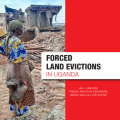
During the release of Witness Radio’s latest report titled Forced Evictions in Uganda, presented on Tuesday, November 5, 2024, at the 6th Symposium on Business and Human Rights, Mr. Christopher Kiwanuka, Director of Programs at Witness Radio, revealed the staggering figure of over 360,000 people affected by land grabbing between January 1, 2024, and June 30, 2024.

According to the research report, the 90 documented cases involve 121,442.83 hectares of land threatened to be grabbed, affecting at least 363,021 Ugandans. Completed forced land evictions were thirty-one (31) 31 cases, leaving 22,962 people homeless and seizing 7,150.7 hectares of land.

In the remaining cases, while the land has not been fully seized, residents continue to face persistent and violent threats of eviction, impacting 340,059 people and placing an additional 114,292.13 hectares of land at risk.

The report reveals a staggering reality: four cases of land evictions are reported weekly, affecting approximately 15,126 people and threatening 5,060.12 hectares of land across the country. This daily displacement of an estimated 2,160 Ugandans due to forced land evictions, while 723 hectares of land are at risk of being grabbed, underscores the urgent need for intervention.

The results show that, with sixty-seven (67) out of 90 recorded incidents, corporate businesses are the leading cause of forcible land evictions in Uganda. Eleven (11) cases include tribe and family land conflicts, and twelve (12) cases involve government entities. Key findings from the monitoring of these cases majorly involve multinational companies such as Agilis Partners Ltd., Great Seasons Ltd., East African Crude Oil Pipeline (EACOP), and Formosa Ltd, a subsidiary of Quality Parts Limited, as well as local investors, wealthy and bigshots with extensive power-connection to government involved in land grabbing and the criminalization of landgrab critics.

The Central region’s proximity makes it a desirable target for land grabbers, which leads to a concerning trend of land evictions, according to the report’s conclusions. With 52 documented occurrences, the region routinely has the most eviction cases, followed closely by the Western region with 24. The Northern region has 8 cases, and the Eastern region has the fewest cases, with six incidences.

Mr. Kiwanuka highlighted the rigorous process of data collection, which involved a variety of sources including Victims, the Witness Radio Land Eviction Portal, call-ins, newspapers, CSO reports, official reports, personal observations and contacts, court documents, law enforcement and security personnel, and pertinent service providers. This comprehensive approach ensured that the cases were thoroughly monitored, investigated, and documented by the research team of Witness Radio.

Accordingly, during the same period, Witness Radio documented 65 cases of attacks against community land and environment rights defenders (LEDs), as well as climate activists challenging illegal land evictions and corporate harm to the environment in Uganda. Attacks recorded include arbitrary arrests and unlawful detentions, confiscation of property, cattle in particular, intimidation and threats, and others.

Mr. Kiwanuka further noted the growing concerns of increased violence in forced land evictions, where armed gangs enforced 37 evictions on behalf of evictors, 25 cases by Uganda police, 5 cases involved the participation of some soldiers of the Uganda Army, whereas 4 cases involved the private security companies.

“Most of the evictions have been characterized by violence, including killings, criminalization, judicial harassment, and torture. Additionally, those who master the courage to defend others or their communities face the wrath of these powerful land grabbers. They act with impunity and often disregard government orders on forced land evictions.” Mr. Kiwanuka revealed this during the report launch.

Witness Radio calls on the government to ensure victims’ justice, protect local communities, and enforce adherence to existing land laws and regulations. It further calls for an end to corruption and abuse of power, particularly in the land registries, army, and police, where the rights of underprivileged groups are routinely subordinated to the interests of wealthy people.

It also exhorts companies to follow responsible investing guidelines and other pertinent business frameworks to prevent corporate harm to communities.

Continue Reading

MEDIA FOR CHANGE NETWORK

Agroecological farming: EAC Bill moves to Parliament to establish a regional legal framework to protect and promote sustainable farming and food systems.

Published

on

Hon. Gideon Gatpan Thoar, Chairperson of the EALA Committee on Agriculture and Natural Resources, presenting during a plenary sitting of the Assembly.

By the Witness Radio team.

The East African Legislative Assembly has taken a critical procedural step toward introducing the EAC Agroecology Bill, 2026, as the Chairperson of the Committee on Agriculture and Natural Resources was formally granted leave from the House to draft and table the proposed law.

The move marks the Bill’s official entry into the legislative process, which could significantly impact regional farmers, policymakers, and civil society by reshaping food systems and governance across East Africa.

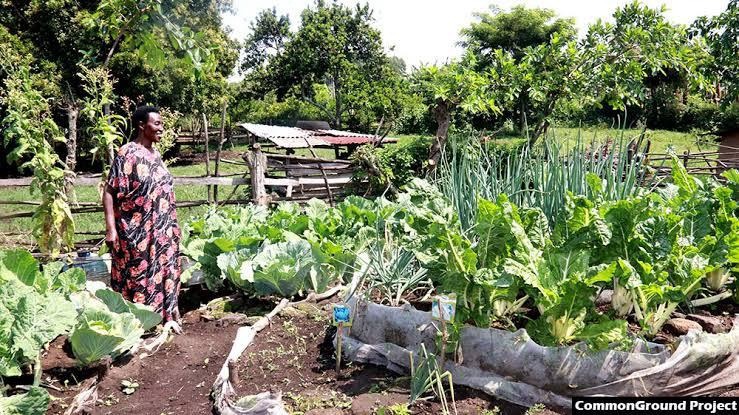
The Bill aims to empower smallholder farmers and promote inclusivity by embedding agroecology into law across the East African Community, fostering hope for a more sustainable future for these farmers.

In an interview with Witness Radio, the Chairperson of the Committee on Agriculture and Natural Resources in the East African Legislative Assembly (EALA), Hon. Gideon Gatpan Thoar, described the Bill as a long-overdue effort to give legal backing to a system already practiced by millions of farmers across the region.

“The purpose of this bill is to establish a regional legal framework to mainstream agroecological farming,” the Chairperson said, emphasizing that the law seeks to move agroecology from policy discussions into enforceable regional commitments.

The proposed law draws from the 13 FAO principles, integrating indigenous knowledge, cultural practices, and scientific innovation to strengthen its regional relevance.

“We want to promote practices that are consistent with our people, that are known to our cultures and traditions, and integrate them with science. There must be co-creation and inclusivity, especially for smallholder farmers,” he explained.

This framing positions agroecology not just as a farming method, but as a knowledge system shaped by communities themselves, challenging dominant agricultural models often driven by external actors.

The Bill emerges amid the ongoing expansion of industrial agriculture supported by global corporations and financiers, which may resist the shift towards agroecology. Understanding how the Bill will navigate or counteract this resistance is crucial for stakeholders concerned about regional agricultural transformation.

Despite this well-developed narrative, smallholder farmers remain the highest food producers. Yet the Chairperson acknowledged this imbalance of power, noting that agroecology faces stiff competition.

“There is a big fight from conventional agriculture. Big corporations are sponsoring data; they have a lot of money, and they have subsidized it,” he said.

Rather than banning industrial agriculture, whose adverse impacts on both smallholder farmers and the environment are evident, the Bill introduces a different strategy, one centered on protection and choice. It seeks to create legal and economic space for agroecological farmers, many of whom have historically been marginalized.

“We are not forcing a transition. We are creating a situation where there is choice and support for those who have been left behind, mainly women, youth, and smallholder farmers,” He clarified. This approach aims to foster hope and confidence that the new law will support sustainable options for all farmers.

The proposed law will also avoid the usage of highly hazardous pesticides and synthetic fertilizers, instead relying on ecological processes.

“We are very keen on highly hazardous agrochemicals… agroecological farmers will not be using them,” the Chairperson stated, emphasizing that support systems will drive the transition, fostering optimism for farmers’ sustainable options.

Uganda recently ordered the phase-out and restrictions on several commonly used agricultural chemicals, citing risks to human health, the environment, and the country’s ability to compete in the export market. The Ministry of Agriculture, Animal Industry, and Fisheries (MAAIF) said the decision was made after its Agricultural Chemicals Review Committee reviewed the chemicals and their “safety, trade, and national interest concerns.”

The Ministry said in the letter, “The actions and decisions made by the government are based on concerns for safety, trade, and the national interest.” Alpha-cypermethrin, atrazine, butachlor, dimethoate, and propanil are some of the chemicals that will be phased out. Importation will be banned right away, and the chemicals will be completely removed by the end of 2026.

While several East African countries already have agroecology strategies, such as Uganda’s NAS and Kenya’s strategy, these lack enforcement mechanisms. The regional Bill aims to establish binding compliance measures that will guide and harmonize national laws, ensuring effective implementation across the region.

“The regional law will be an anchor, reflecting in national systems to foster trust and regional unity,” the Chairperson explained, encouraging confidence in the legislative process.

The legislative process is ongoing, with the Bill expected to undergo drafting, committee review, and public consultations before a final vote, likely within several months.

Continue Reading

MEDIA FOR CHANGE NETWORK

African women are rising for climate justice and reparations on the inaugural continental day of action.

Published

on

By the Witness Radio team.


Today, April 15, 2026, hundreds of women environmental defenders, community organizations, and allies across Africa and beyond will mark the inaugural African Women’s Climate Justice Day, highlighting how these actions aim to deliver tangible benefits, such as improved resilience

and support for local communities affected by climate change.


Under the theme “Our Lands, Our Voices: African Women United for Reparations and Climate Justice!”, the Day of Action will showcase community-led activities across West and Central Africa, fostering hope and collective resilience.


Unlike traditional conferences or summits, the African Women’s Climate Justice Day has no central venue or “main event.” Instead, it will be observed through coordinated local actions including marches, workshops, symbolic dress actions, poster-making, storytelling, singing, and digital campaigns. Organizers say the decentralized approach reflects the movement’s spirit.


“There is no main event, but rather a Call to Action for communities to unite against the increasing climate crises affecting Africa. It seeks to unite the collective struggles of African women. Several community-level activities will take place simultaneously across West and Central Africa Women’s Climate Assembly (WCA) member countries and elsewhere on the continent,” WoMin African Alliance’s Extractives, Militarisation and Violence Against Women Coordinator Winnet Shamuyarira told Witness Radio team.


The African Women’s Climate Justice Day is rooted in years of organizing through the Women’s Climate Assembly (WCA) and allied movements such as the African Climate Justice Collective (ACJC) and the African People’s Counter-COP across West and Central Africa since 2022.


These platforms have consistently criticized global climate governance spaces such as COP summits for excluding frontline communities while prioritizing the interests of donor countries and corporations.


“Through our march and this assembly, we have left our fingerprints, and it is clear what we want for our environment, our climate, our ecosystem, our livelihoods. During the COPs, we have seen how donor countries’ agendas dominate. You cannot come and steal African resources, and at the same time help us to get climate justice.” Reveals Khady Faye, from Senegal.


The initiative emerges amid worsening climate impacts across the continent, where heatwaves, droughts, floods, cyclones, and land degradation are increasingly devastating communities.


Africa contributes the least to global emissions but continues to experience some of the world’s most severe climate shocks. According to Winnet, the crisis is not only environmental but also deeply political and economic. “Africa is living the climate crisis now, yet more than 60% of Africans depend on agriculture, with women forming the backbone of food production and household survival systems,” she added.


A central demand of the movement is climate reparations, a call for financial and structural accountability from historical and industrial polluters.


African women activists argue that climate justice must go beyond aid or adaptation funding to include recognition of what they describe as a “climate debt” owed to Africa by industrialized nations, international financial institutions, and transnational corporations.


“This day is an important symbol of African women’s agency. It is more than a call to action; it is a continuum of a beautiful story of resistance, solidarity, and survival. It’s an earth-shattering roar of women’s voices and transformative actions. It’s not a day, it’s a story of survival, agency, and resistance by the women of Africa,” Winnet added.


Esther Finde Kande from Sierra Leone emphasized that climate justice must reframe how African women are viewed globally: “Climate justice in Africa is not a request for charity; it is a recognition of the women who feed the continent while the earth warms.”


At the heart of the Day of Action are structured conversations and community education processes aimed at raising awareness on climate change, climate debt, and its root causes, building community dialogue on lived experiences of climate impacts, challenging extractive economic systems driven by multinational corporations, and strengthening African women’s collective demands for climate justice.


Organizers say the actions are intentionally political, aimed at challenging what they describe as a global capitalist system that prioritizes profit over people and ecosystems.


Following the event, the movement plans to continue advocating for change by lobbying governments, building legal cases, and resisting harmful projects, encouraging ongoing hope and determination.


The goal, organizers say, is to ensure that African women’s voices are not symbolic but central to global climate decision-making.


Declared following a resolution at the WCA Steering Committee meeting in Monrovia in February 2026, the African Women’s Climate Justice Day is being described as a historic milestone in feminist climate organising on the continent as it builds on earlier calls from the 2024 WCA in Saly, Senegal, where participants first proposed a dedicated day to recognise African women’s leadership in climate justice struggles.

Continue Reading

MEDIA FOR CHANGE NETWORK

Ugandan Farmers Sue EACOP in London in Last Minute Effort to Stop Crude Oil Pipeline

Published

on

Local farmer Okumu Weke next to an EACOP route beacon in Nyamtai village, Kikuube District in western region of Uganda. Credit: Maina Waruru/IPS

NYAMTAI, Uganda, Apr 3 2026 (IPS) – Environmental activists and farmer groups opposed to the construction of the East African Crude Oil Pipeline (EACOP), the world’s longest heated oil pipeline, are mounting a last-ditch legal effort meant to stop its construction in a suit they plan to have filed in London, UK,  believing that it stands a chance to stop the controversial project despite being at the 78 percent completion stage.

The groups have engaged the services of the London law firm of Leigh Day, one of the UK’s leading environmental and public interest litigation firms, which in the past has won landmark compensation cases for northern Kenyan communities affected by unexploded UK military munitions, among others.

With the pipeline construction said to be nearly 80 percent complete, the groups believe their petition stands a good chance of success since EACOP is owned by a company registered at the Companies House in London – the EACOP Ltd.

This is despite the controversial 1,443 km pipeline, principally owned by TotalEnergies with a 62 percent stake, meant to evacuate crude from Western Uganda oilfields to the Indian port of Tanga in Tanzania, which has survived several suits filed in the region and in France and, despite the withdrawal of several would-be financiers, looks all set for completion later in the year, with the first oil exports due in October 2026.

Other owners of the pipeline are the governments of Uganda and Tanzania via the Uganda National Oil Company (UNOC – 15 percent) and the Tanzania Petroleum Development Corporation (TPDC – 15 percent), and the Chinese multinational China National Offshore Oil Corporation (CNOOC – 8 percent).

The plaintiffs, who include project-affected persons (PAPs) from across Uganda, are buoyed by the support of the global campaign group Avaaz, which in February initiated a fundraising effort to help with costs of the suit, ahead of its expected commencement in May.

They claim that the pipeline will violate rights protected by the Ugandan Constitution, which gives every citizen the right to a clean and healthy environment.

The local farmers allege that the construction and operation of the pipeline will have a material impact on global temperatures with severe consequences both worldwide and in Uganda. Further, they alleged that the pipeline is in breach of EACOP Ltd’s own legal obligations under Uganda’s National Environment Act and National Climate Change Act.

Snaking through Uganda and Tanzania, it will tear through some of the planet’s “most wondrous ecosystems”, carving up elephant sanctuaries, protected forests, and more than 200 rivers.

In addition, the massive infrastructure, also the longest crude oil pipeline in Africa, will result in almost 400 million tonnes of emissions over its lifetime and have a major impact on climate change, they claim.

Besides, they argue that the emissions released by oil carried by the pipeline will ‘materially’ contribute to global warming and fear the impact this will have on them and their livelihoods, as well as on the environment and the health of Ugandans.

EACOP is expected to result in more than 372 million tonnes of CO₂e, or greenhouse gas, emissions—more than 58 times Uganda’s total annual emissions, they contend.

Uganda is particularly impacted by climate change, having already suffered from “record-breaking occurrences of floods, devastating and frequent droughts and erratic rainfall patterns”, according to a report sent by the Ugandan government to the UN, which will only increase as climate change worsens.

“The case is one of a growing number of legal claims seeking to hold global energy companies and infrastructure providers to account for the emissions resulting from their extraction of fossil fuels,” Leigh Day said in a statement.

“Our clients believe the EACOP pipeline will result in enormous damage to the global climate as well as severe damage to their local environment. The EACOP will lead to a huge amount of oil being burnt in a world where the UN has confirmed there are already far more fossil fuels slated for extraction than required if we are to meet the goals of the Paris Agreement, said Leigh Day solicitor Joe Snape, who will represent the group.

The fact that the pipeline is operated and financed by a UK-registered company highlights the role UK corporates often have in fossil fuel extraction projects in the Global South, he added

He further noted, “Our clients are already living on the frontline of the climate crisis and argue this pipeline will only exacerbate the impact they, and other vulnerable communities around the world, experience on their lives and livelihoods. They are calling for the pipeline construction and operations to be halted to stop this damaging impact on the climate in Uganda and elsewhere around the world.”

While around a third (460 km) of the pipeline will run through the basin of Lake Victoria, Africa’s largest lake, local environmentalists  warn that a spill or leak could potentially result in catastrophic effects for the lake, which is a vital water resource in the region and a significant source for the River Nile.

The pipeline will also run through and disturb important habitats and nature reserves, including Murchison Falls National Park, the Taala Forest Reserve, and the Bugoma Forest. The pipeline will reportedly disturb around 2,000 square kilometres of protected habitats, impacting rare and endangered species that inhabit them, such as Eastern Chimpanzees and African Elephants.

For its part, Avaaz said its fundraising effort will support the “groundbreaking” court helping expose the environmental abuses and climate devastation that this project will cause. Further, it will help to defend land rights for Indigenous and frontline communities and “continue the quest to protect life on Earth.”

“With help from Avaaz members, communities in East Africa have already fought this project through regional courts — but their case was dismissed on a technicality. This new lawsuit in the UK is the last remaining path to stopping this monster pipeline. Legal experts believe it offers a far better shot at a fair, independent hearing — with a real possibility of success,” the campaign noted.

The group promised to “stage an epic media stunt” around the launch of the court case, increasing pressure on insurance companies to walk away from the project, and support families in Uganda and Tanzania who are fighting evictions, providing cash assistance for food, medicine and other basic necessities.

The USD 5.6 billion project was initiated in 2016 amid delays, resistance, and scrutiny. Over the past two years, EACOP has accelerated, with infrastructure taking shape along its route and at its two key oil fields: Tilenga, awarded to TotalEnergies, and Kingfisher, awarded to CNOOC.

IPS UN Bureau Report

Source: Inter Press Service News Agency

Continue Reading

Resource Center

Legal Framework

READ BY CATEGORY

Facebook

Newsletter

Subscribe to Witness Radio's newsletter


Trending

Subscribe to Witness Radio's newsletter