Connect with us

MEDIA FOR CHANGE NETWORK

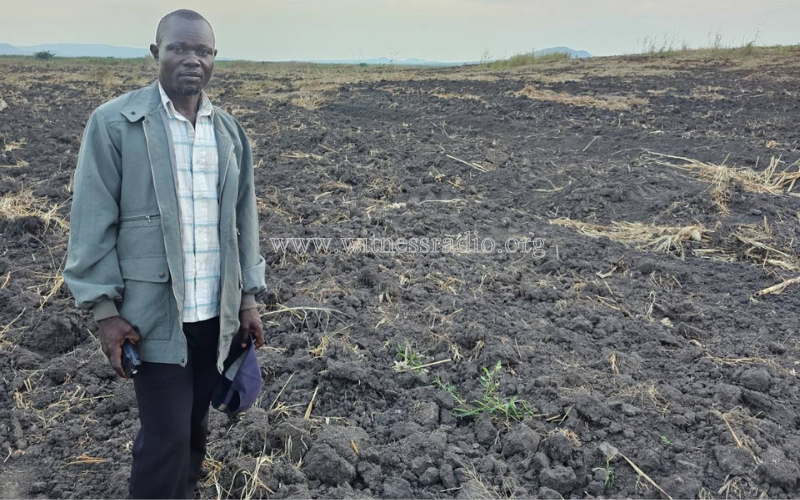
Breaking: A community land rights defender in Kiryandongo is arrested for attempting to open a case against company workers who erased his garden.

Published

on

By Witness Radio team.

A community land rights defender, known for his steadfast efforts in mobilizing Kiryandongo district communities against land grabbing by multinational corporations, has been arbitrarily arrested and detained at Kiryandongo central police, Witness Radio has learned.

According to his close relatives, Mwawula Fred, based in Kisalanda village, Mutunda parish, Kiryandongo district, was arrested and detained on Thursday, February 29th, 2024, at Kiryandongo police while attempting to open a criminal case against workers of Great Seasons SMC Limited for destroying his maize and green pepper garden with a tractor.

On the 22nd of February 2024, four Great Seasons SMC Limited Company workers with a tractor invaded and erased the community defender’s garden with crops ready for harvest such as maize, green pepper, and tomatoes. The workers used a numberless company tractor to destroy the defender’s 3 acres of crops.

Meanwhile, the defender bravely tried to intervene to stop the destruction of his crops but, workers callously persisted with their destructive actions, disregarding the defender’s pleas to cease their illegal land grab bringing in an altercation from both sides. After, company workers made off with sacks full of maize.

Sources, have it that the defender was rounded up at the Kiryandongo Central police counter while opening up a criminal case against company workers. He was arbitrarily arrested and detained on charges of assault.

It alleged that he assaulted workers of the Great Seasons SMC Company Limited who destroyed his crops.

Mr. Mwawula on several occasions has been in and out of prison on several charges over eight times for mobilizing local communities to resist land grabbing and forceful evictions by multinational companies in the Kiryandongo district. However, the court has dismissed all of them for want of prosecution.

Frequently, the gardens belonging to smallholder farmers, activists, and defenders have been targeted and vandalized by Great Seasons SMC Company Limited, demanding that the local community should vacate what the company asserts as its land. In a distressing incident last December 2023, many defenders’ gardens were set ablaze by workers of the company, resulting in a prolonged famine within projected affected families.

Since 2017, when these multinationals started their operations in the Kiryandongo district, nearly 40,000 residents have lost their family lands to violent and forceful evictions to pave the way for industrial agriculture. In addition to the Great Seasons SMC Limited, several multinationals are implicated in land-grabbing activities, such as Kiryandongo Sugar Limited, Agilis Partners Limited, and Somdiam Limited.

Great Seasons SMC Company Limited grows coffee, Agilis Partners grows soya and maize while Kiryandongo Sugar Company and Somdiam Sugar Company grow sugarcane.

The defender is yet to be aligned before the court.

Continue Reading

MEDIA FOR CHANGE NETWORK

Close to six years on, Pangero Chiefdom subjects still linger in pain after the government army’s forceful takeover of their ancestral land.
Published

on

By Witness Radio Team

It was a bolt from the blue—an unimaginable shock that arrived without warning. Close to six years on, its consequences have hardened into everyday reality, and justice remains elusive. That shock was felt most acutely in Pangero Chiefdom, where a once-stable community is still grappling with the aftermath of an abrupt and forceful military land takeover, highlighting ongoing land injustice.

The Pangero Chiefdom of the Alur Kingdom is located in Koch Parish, Nebbi Sub-County, Nebbi District, in north-western Uganda, north of Lake Albert and near the Uganda–DR Congo border. For decades, families here depended on the land for farming, food, and cultural continuity, with traditions and livelihoods deeply tied to the soil.

The wounds from the land loss remain raw, and the community continues to demand the return of their land and justice for their suffering.

Over 100 families across Aleikra, Kochi Central, and Panyabongo villages have been directly impacted by the land grab, according to the Traditional Chief.

In Uganda, land is often taken from people with low incomes through a system lacking explicit legal protections, raising questions about the legitimacy and fairness of land seizures, especially when communities are evicted without free, prior, and informed consent.

“When forces such as the Army occupy community land, people are always afraid even to ask why they are settling or why they have settled on their land. It becomes difficult to question men in uniform,” said Mr. Ulama Dison Duke Ukerson, the Traditional Chief of Pangero Chiefdom, in an interview with Witness Radio Uganda.

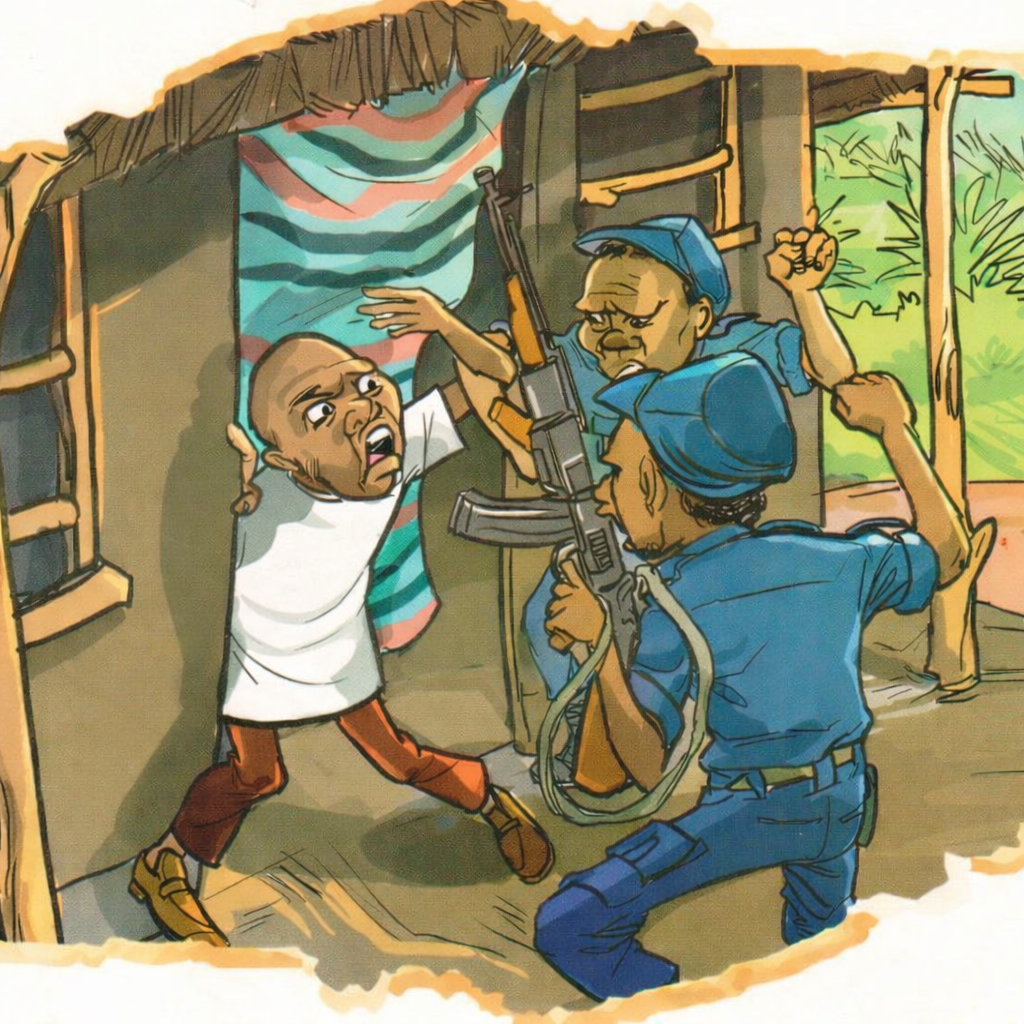
In March 2020, hell broke loose in the chiefdom as residents woke up to find UPDF soldiers camping on their land. Many initially thought the soldiers were temporarily stopping over on their way elsewhere. However, after some time, it became clear that the force was not moving on but instead settling in the lush environment of Pangero.

When confronted, residents claim the soldiers explained that they were taking refuge, with Zombo District as their ultimate destination.

“They have stayed there for now, close to six years. Initially, they told us they would take refuge for a few days and later move to the Zombo District. Some left, but others remained. We initially thought they were staying for a few weeks. Since then, they have stayed on our land without paying anything,” said Gladys Budongo, an elder in the chiefdom, in an interview with Witness Radio.

Forty-one-year-old Doreen Kawambe, a resident of Aleikra Village, is among those who lost part of their land during the takeover. Doreen said she originally owned seven acres inherited from her father.

“When the UPDF came, they seized three acres of our land. The remaining land is difficult to access. My family was left with only four acres. We can no longer go to the forest for water, and the areas we used to cultivate are now guarded. Food has become a serious problem,” she said.

Before the takeover, Doreen’s land provided enough income to sustain her family. “From one acre, I could earn up to 800,000 shillings (about 224.94 USD) or more in a season. Now, with less land and limited access, survival is tough.” She explained.

Gladys Budongo, a 61-year-old widow, also lost her late husband’s five-acre family land, which is part of a larger ancestral estate that the family has occupied for decades.

Amid community resistance and ongoing efforts to reclaim their land, the Army conducted surveys and valuations in 2023 and 2024. However, elders like Gladys Budongo claim the process was irregular and imposed without community consent, highlighting the need for legal accountability.

“Koch Land Committee also pressured the community to accept the survey exercise. Although it was supposed to represent the local population, it was not democratically elected by consensus, as is traditional in Alur communities, and instead consisted of an imposed elite who pressured us to surrender our land,” she said.

According to elders interviewed by Witness Radio, during an announcement meeting on September 19, 2025, facilitated by officials from the UPDF Land Board, the national surveyor, and the Commander of Koch Army Barracks, community members were compelled to sign documents accepting meager compensation for land seized five years earlier.

“Residents whose land was surveyed were given two choices: either sell their land to the Army by accepting the compensation offered or refuse the UPDF’s offer,” the area chief said, adding that officials barred him from speaking or defending his chiefdom.

“Leaders in the area are rough when we oppose this land grab. Even in meetings, they don’t allow me to speak. On the few occasions I attended and got silenced,” he said.

Mr. Opio Okech, a community land defender, blamed the government and the Army for forcefully occupying people’s land.

“The forced decision to sell land to the government is similar to eviction because people have no say. The problem started when the government entered the land, stayed for a long time without proper notice, and then decided it would not leave and instead offered compensation. It looks, smells, and walks like a forceful eviction,” he said.

Despite promises of compensation, Gladys and others say they have not received any payment.

“They forced people to sign documents, but nobody has been paid yet. Some were threatened with arrest if they protested,” she said.

Koch Resident District Commissioner (RDC) Mr. Abak Robert, representing the Office of the President, denies allegations of land grabbing, stating the land was acquired on a willing buyer, willing seller basis, which raises questions about the transparency and legality of the process.

“I personally participated in monitoring the project-affected persons. People who accepted giving land to the UPDF were properly valued, accepted the figures, and signed willingly,” he said in an interview with Witness Radio.

When asked how this arrangement worked, given that compensation was considered only after the land had already been forcibly taken, he responded that the government would soon pay the affected people.

“Compensation is expected soon, and the community is agreeable to receiving monetary payment,” the RDC added, noting that the land currently occupied by the UPDF in Pangero Chiefdom spans more than 242.811 hectares.” He added.

However, affected residents insist that the survey and valuation process involved intimidation and coercion.

Capt. David Kamya, the 4th Division Public Information Officer based in Gulu District, declined to comment about the UPDF’s improper land acquisition upon being contacted by Witness Radio.

“How sure are you that the UPDF grabbed the land? I was told that if someone wants to talk about such matters, they must be on the ground. Come, and we meet and see this physically,” he said before hanging up.

The consequences of the land seizure extend beyond economics. According to the chiefdom elders, families struggle to sustain livelihoods, children go hungry, and elders feel powerless in the face of military authority.

 “People are afraid to speak out. We are threatened when we ask for justice. It feels like the community has no voice. The loss of ancestral land is also cultural. Trees, rivers, and open spaces that connected generations have been taken over, disrupting a way of life that has lasted centuries,” she added.

Nearly six years after the UPDF’s arrival, the Pangero Kingdom remains a community in limbo.

“We want someone to stand for us to stop them from taking our land or even buying it as they promise. They refuse to hear the elders’ voices and do whatever they want. We want our land back,” said the traditional chief, whose houses now accommodate soldiers.

Continue Reading

MEDIA FOR CHANGE NETWORK

Indigenous communities in Eastern Nepal accuse the World Bank’s Linked Cable Car Project of rights violations.
Published

on

Indigenous communities in Eastern Nepal accuse the World Bank’s Linked Cable Car Project of rights violations.


By Witness Radio Team

A $22 million cable car project cutting through sacred forests in eastern Nepal has become the centre of a growing dispute. Indigenous communities accuse developers and the World Bank Group of enabling forced development that violates community land rights and exacerbates human rights abuses.

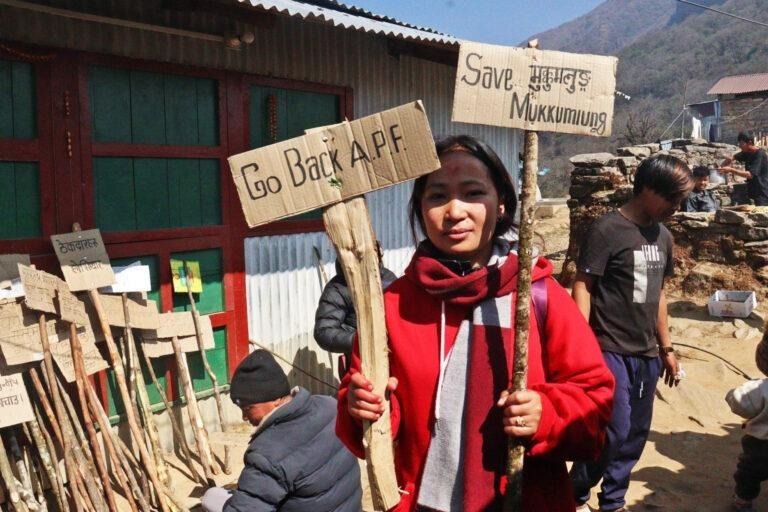
The project, whose construction began in 2022, is developed by Pathibhara Devi Darshan Cable Car Pvt. Ltd., a subsidiary of Nepal’s powerful IME Group, and is being built on Mukkumlung Mountain, also known as Pathibhara, in Taplejung District. While the government has promoted the project as a tourism and accessibility initiative, the Indigenous Yakthung (Limbu) communities say construction has proceeded without their consent and at a high cultural and environmental cost.

According to the project’s Initial Environmental Examination (IEE), the cable car infrastructure would occupy 6.22 hectares (15.36 acres) of community and government forest land.

Community leaders opposing the project say it threatens local livelihoods and social structures, including more than 700 local porters, nearly 30 locally run small businesses, and approximately 1,700 households that depend on pilgrimage-related income. They also warn of irreversible damage to cultural heritage sites.

The cable car intends to transport pilgrims to the Pathibhara Devi temple, one of Nepal’s most revered Hindu shrines, which is currently accessible only via a steep, high-altitude trek. Project developers argue the cable car will boost tourism, generate employment, and allow elderly and disabled devotees easier access.

For the Yakthung people, Mukkumlung is not merely a pilgrimage site but a sacred ancestral land that embodies their spirituality, culture, and identity.

“This mountain is sacred ancestral land. It defines our spirituality, culture, and customary law,” said Advocate Shankar Limbu, vice-chair of the Lawyers’ Association for Human Rights of Nepalese Indigenous Peoples (LAHURNIP). “Clearing forests and altering the mountain’s ecology weakens its spiritual power and violates our collective rights.”

Local leaders say they were never consulted before construction began, highlighting a clear violation of their rights and raising concerns over FPIC breaches.

“The IFC’s own Performance Standards state that Indigenous Peoples have the right to give Free, Prior and Informed Consent to projects on their lands,” said Saru Singak of the Mukkumlung Conservation Joint Struggle Committee. “But no one ever asked us whether we wanted this project. It is destroying forests and sacred landscapes and disrespecting our religion and culture.”

Environmental groups report that construction has already felled over 10,000 trees, including

protected species like Himalayan yew, threatening local biodiversity.

As forest clearing accelerated, opposition from local communities intensified. In January 2025, Nepal Police and Armed Police Force personnel reportedly used force against protesters, leading to the detention of dozens and sustaining severe injuries. Activists allege continued intimidation and retaliation against those opposing the project.

The dispute has drawn international attention, especially as the World Bank Group faces mounting scrutiny over financing harmful investments. Between August 2022 and July 2024, the IFC provided advisory services to the IME Group for four cable car projects in Nepal, including the Pathibhara project.

Indigenous leaders argue that during this period, the IFC failed to ensure compliance with its Environmental and Social Performance Standards, particularly regarding environmental assessments and the respect for communities’ right to Free, Prior, and Informed Consent, raising questions about its oversight and accountability.

In August 2025, Yakthung communities, supported by lawyers and civil society organisations, filed a formal complaint against the World Bank Group, alleging breaches of safeguarding standards that led to human rights abuses and the destruction of cultural heritage. In December 2025, the World Bank Group’s independent watchdog, the Compliance Advisor Ombudsman (CAO), formally registered the complaint and is currently assessing whether to proceed with mediation or a full compliance investigation.

For Indigenous rights advocates, the Pathibhara dispute reflects a broader pattern seen in World Bank–linked projects across Africa, Asia, and Latin America, where development initiatives proceed without meaningful community participation and accountability mechanisms are activated only after harm occurs, yet rarely provide a remedy.

A decade ago, an 11-month investigation by the International Consortium of Investigative Journalists (ICIJ), Evicted and Abandoned, found that an estimated 3.4 million people were physically or economically displaced by World Bank–funded projects, raising long-standing concerns over the institution’s ability to protect vulnerable communities.

IME Group operates across energy, manufacturing, infrastructure, and trade, and owns Global IME Bank, Nepal’s largest commercial bank. The IFC has provided more than $50 million to IME Group over the past decade.

Continue Reading

MEDIA FOR CHANGE NETWORK

Why govt is launching a comprehensive digital land registry

Published

on

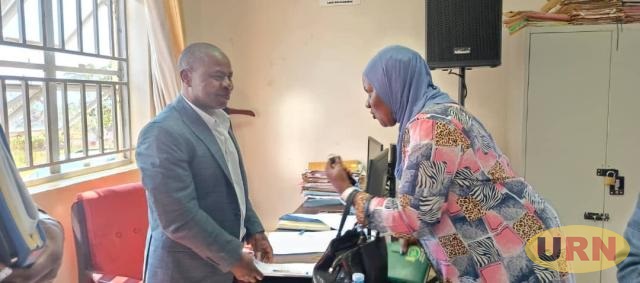
RDC Fatumah Ndisaba making enquiries at the MZO-Mukono’s registry desk in 2024. Govt is launching a comprehensive digital land registry

COMMENT | DAVID MUWONGE |  Land has historically symbolized wealth and power. In the past, kingdoms expanded their influence by acquiring new territories.

This pursuit continued into the colonial era, spanning the 15th to the 20th centuries, with European powers scrambling for control over Africa. They were driven by a desire not just for human labour but also for large amounts of agricultural land, political power, and the raw materials needed to fuel the Industrial Revolution in the West. As a result, the distribution and management of land became increasingly complex.

In Uganda, the colonial era ushered in the 1900 Buganda Agreement, a turning point in the nation’s land history. Among its key provisions was land reform. It introduced the mailo system at the center of it all. Under this agreement, large estates were divided. About 8,000 square miles were granted to roughly 1,000 chiefs and landowners, establishing a unique land tenure system. These changes have had lasting effects on Uganda’s approach to land ownership and governance.

Over time, this structure evolved into the four land tenure systems recognized by the 1995 Uganda Constitution: customary (traditional communal or family-based ownership), freehold (absolute ownership), mailo (a system with distinct rights for owners and tenants), and leasehold (land held for a fixed term under a lease agreement, often with rent payments).

However, even as the land tenure system evolved by law to include leasehold, controversy persisted, especially regarding government land. This ongoing tension highlights the need to address historical challenges while adapting to modern realities.

This is partly because there is no comprehensive, up-to-date inventory of government land, and the Uganda Land Commission’s limited district presence. Thus, significant tests in managing and protecting government land, making it vulnerable to mismanagement and encroachment.

Recognizing these challenges, the Government of Uganda is now taking decisive steps to modernize land management systems and restore confidence in public land administration. The government is launching a digital land inventory through the Uganda Land Commission, aiming to secure, monitor, and ensure transparent management of all state-owned land.

The Uganda Land Commission (ULC), established under Article 238 of the Constitution, is tasked with holding and managing all land in Uganda vested in or acquired by the state, ensuring it is protected, put to proper use, and fully accounted for.

According to Tom John Fisher Kasenge, a commissioner at Uganda Land Commission, much of the government land has been encroached upon. Government land includes all property managed or held by ministries, departments and agencies (MDAs), government schools, health centres, hospitals, police stations, prisons, offices, farms, and army barracks. It also covers land under the National Forestry Authority. ULC is the custodian of this land and holds the titles on behalf of all MDAs.

“This inventory will also go a long way in helping to solve land disputes, wrangles and conflicts that are over land management and ownership in the country,” Kasenge remarked.

“There is a big problem now, as we talk, in distinguishing between land owned by the government and managed by the Commission; land under the Buganda Land Board; and land under the authorities, like the local governments and the cities,” Kasenge added.

“Because of that lack of accuracy in the boundaries and extent of the land and the jurisdiction of each of these bodies.”

The Land Commission’s priority is to create a digitized, accurate inventory of all government land to close information gaps. By bridging the current information divide, this initiative seeks to support proper planning, protect against encroachment, and encourage investment in projects, recognizing land as a vital national resource.

“So, planning for this land becomes very crucial at the moment that the NRM government has attracted a lot of investors, and every now and then, these investors would like to put their projects in various places around the country,” Kasenge observed. This further emphasizes the importance of reliable land records for national development.

With updated digital land records, the Commission expects to resolve disputes, reduce misallocation, and ensure efficient use of public land. These improvements are expected to build greater transparency and accountability in land administration.

Revenue Collection

Many occupants of government land are not paying ground rent largely due to limited awareness and the absence of formalized tenure, a situation that continues to affect national revenue, Kasenge revealed.

He explained that to address this gap, the Uganda Land Commission (ULC) is rolling out a new system that will regularly remind lessees of their ground rent obligations and notify them ahead of lease expiry dates, a move aimed at improving compliance.

Kasenge further noted that correcting erroneous freehold titles will allow affected lessees to regularize their tenure. This will also enable the government to collect due ground rent. He emphasizes that stronger land administration and improved revenue collection are critical to better service delivery and to ensuring government land benefits both the state and citizens.

Currently, ULC has a Financial Year revenue target of UGX 7 billion from ground rent and leases on government land. After the digitized, GIS-enabled (Geographic Information System) inventory is fully rolled out, the Commission expects collections to rise to about Shs12 billion in the first three years. Revenues are projected to gradually increase to as much as Shs40 billion in the long term.

Local governments and technical officers are playing a key role in supporting the nationwide exercise through boundary verification, data sharing and identification of government land. Their contributions include providing physical planning and land-use guidance, protecting environmentally sensitive areas, and engaging communities to raise awareness and build cooperation.

The Land Commission assures the public and current lessees that the inventory exercise is not intended to trigger evictions but is focused on documentation, compliance and improved land governance. Addressing public concerns remains central to the Commission’s approach, with an emphasis on fairness and openness throughout the process.

Uganda Land Commission has formally written to all ministries, departments and agencies (MDAs), requesting details of land under their custody and the nomination of focal persons to work with the Commission in developing a comprehensive inventory, a request that has received positive responses.

In addition, the Commission has engaged 16 town clerks from cities and municipalities. It has reviewed its own records and those of the National Land Information System (NLIS), a centralized digital platform for managing national land records, to verify government land details. The Commission has also partnered with the Ministry of Lands, Housing and Urban Development (MLHUD) to support the exercise through surveying, valuation, and titling. These collaborative efforts highlight the collective responsibility needed to address longstanding land challenges and a need to strengthen accountability, improve compliance, and enhance management of government land across the country.

As the digital registry project continues, ongoing collaboration among government agencies, local authorities, and the public will be crucial to its success. Sustained commitment and transparent communication will ensure that the benefits of improved land management are realized for all Ugandans.

Source: independent.co.ug

Continue Reading

Resource Center

Legal Framework

READ BY CATEGORY

Facebook

Newsletter

Subscribe to Witness Radio's newsletter


Trending

Subscribe to Witness Radio's newsletter