
SPECIAL REPORTS AND PROJECTS
‘A shame for the world’: Uganda’s fragile forest ecosystem destroyed for sugar

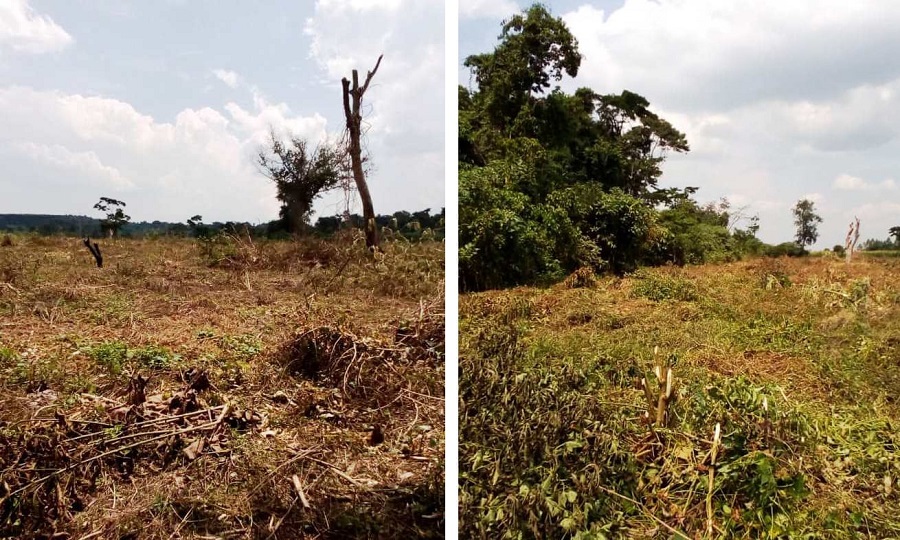
Bugoma reserve is being deforested to pave way for sugarcane. Photograph: Handout/The Guardian
Conservationists say clearance of Bugamo reserve for plantation is blow to biodiversity and country’s reputation on wildlife.
Conservationists have branded a decision by the Ugandan high court to allow swathes of forest to be cleared for a sugarcane plantation “an unforgivable shame for all people”.
Work to clear 900 hectares (2,223 acres) of Bugoma Forest Reserve, in Hoima, began last month after the court ruled that the land, leased by Hoima Sugar Company Ltd, lay outside the protected area of the forest. The court ordered the National Forestry Authority (NFA), which manages it, to vacate the land and remove the military officers who had been guarding it. The NFA has appealed the decision.
The land was leased to Hoima Sugar, which has a 70% shareholding in Kinyara Sugar Works in neighbouring Masindi district, in 2016 for 99 years by Solomon Iguru Gafabusa, king of the ancient kingdom of Bunyoro-Kitara. He said the leased area was ancestral land and not part of the protected forest.
Rajasekaran Ramadoss, agriculture manager at Hoima Sugar Company, said the proposed sugarcane plantation would “improve the standard of living of those people” in the area.
In the environmental and social impact assessment report submitted with its application for a sugar plantation, the company said it would also build schools and a hospital, develop an ecotourism project that comprised an eco-lodge, walking trails and a campsite, and replant the degraded area.
But Costantino Tessarin, chairperson of Association for the Conservation of Bugoma Forest, said: “Whether the land falls inside the boundaries of the gazetted reserve or not … is a merely sterile exercise for primary school students.
“Because the reality is that we are talking about [an] ecosystem of international importance that cannot be discussed in parts and pieces,” he said. The decision to go ahead with clearing the forest was “an unforgivable shame for all people of common sense, not only in Uganda but in the world”.
Conservation groups and forestry experts have long warned that destroying even just a part of the forest’s diversity would lead to a loss of fauna and flora, and affect the water levels of the River Nile.
“We consider this plan not only detrimental to the Ugandan government plans to develop and invest in tourism in Bugoma Forest, but to the overall fragile and rich ecosystem [which] will simply be irreparably compromised,” said Tessarin, who is also director of Uganda Jungle Lodges and owner of Bugoma Jungle Lodge.
Onesmus Mugyenyi, coordinator of the Forest Governance Learning Group, an informal alliance of 10 African and Asian states that advocate for the protection of forests, said investors in ecotourism and conservation “have much to complain about and need the protection of their investment”.
“Moreover, the development of ecotourism activities will have a broader impact on the livelihood of the people in the area.”
The reserve, which covers 41,144 hectares, is the largest remaining block of natural tropical forest along the Albertine Rift Valley and adjacent to Budongo Forest and Semuliki National Park. It plays an enormous role in preserving wildlife migratory corridors.
It is home to 23 species of animals, including an estimated 550 highly endangered chimpanzees, Ugandan mangabeys (an endemic primate), 225 species of birds and 260 species of trees.
According to the survey by the ministry of tourism and antiquities in 2019, Bugoma, which lies about 250km north-west of the capital, Kampala, is due to have its status upgraded from a reserve to a national park, which would put it under the management of the Uganda Wildlife Authority.
“Sugarcane is not only environmentally unfriendly in general, but in particular when it becomes the buffer zone of a tropical rainforest,” said Tessarin.
He said sugarcane was not the best crop to use as a buffer zone around a protected area because it doesn’t mix well with wildlife. “There are crops and landscapes which are more appropriate in buffer zones areas where there are chimpanzees and … almost 10 species of primates, plus other wildlife,” he said.
Forest have shrunk from 24% of Uganda’s total land area in 1990 to 9% in 2015, because of land disputes and deforestation, according to State of Uganda’s Forestry report.
“To throw away Bugoma would be to throw away rain, biodiversity,” said Cathy Watson, head of programme development at World Agroforestry. “It would also be to throw away Uganda’s reputation on the climate, forest and wildlife front.”
Conservationists have launched a social media campaign, “Save Bugoma Forest”, and are petitioning President Yoweri Museveni to intervene.
“It is necessary that the government of Uganda and the national institutions intervene to resolve a matter that cannot be just a legal battle in court and cannot be only about boundaries of proposed land titles,” said Tessarin.
Original Post: The Guardian
Related posts:
 Hoima Sugar loses 13 sq miles as NEMA toughens on Bugoma land takeover
 Campaigners lose court case to stop Ugandan forest clearance
 Bugoma forest under threat again as more 2000Ha is dished to investors
 Why Uganda, the World should protect Bugoma forest at all costs
SPECIAL REPORTS AND PROJECTS
‘Food and fossil fuel production causing $5bn of environmental damage an hour’

Related posts:
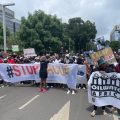 Activists storm TotalEnergies’ office ahead of G20 Summit, demand end to fossil fuel expansion in Africa
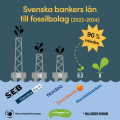 New billion-dollar loans to fossil fuel companies from SEB, Nordea and Danske Bank.
 Fossil fuel opponents lobby Africans for support
 Ecological land grab: food vs fuel vs forests
SPECIAL REPORTS AND PROJECTS
Britain, Netherlands withdraw $2.2 billion backing for Total-led Mozambique LNG
Related posts:

 Uganda, Total sign crude oil pipeline deal
 Witness Radio – Uganda, Community members from Mozambique and other organizations around the world say NO to more industrial tree plantations
 NGOs file suit against Total over Uganda oil project
 Agribusiness Company with financial support from UK, US and Netherlands is dispossessing thousands.
SPECIAL REPORTS AND PROJECTS
The secretive cabal of US polluters that is rewriting the EU’s human rights and climate law
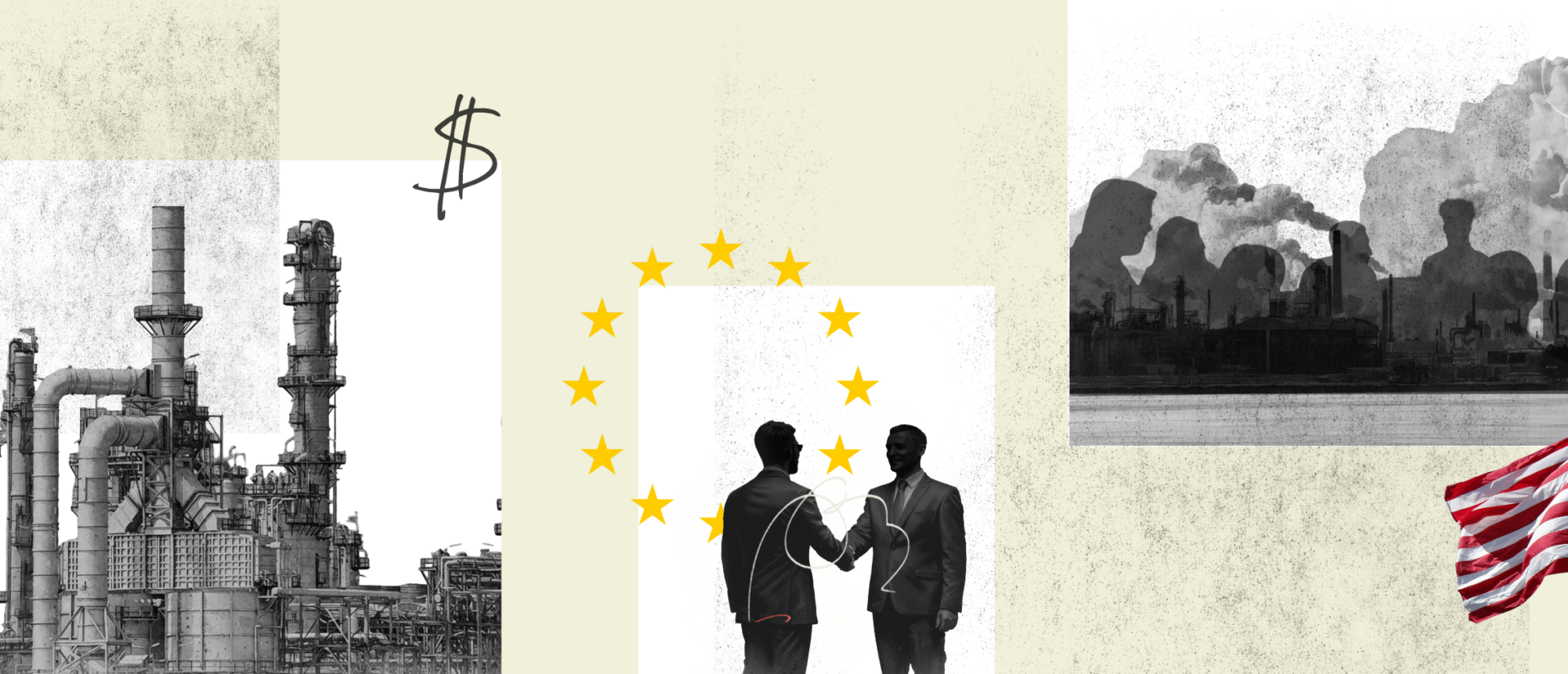
Leaked documents reveal how a secretive alliance of eleven large multinational enterprises has worked to tear down the EU’s flagship human rights and climate law, the Corporate Sustainability Due Diligence Directive (CSDDD). The mostly US-based coalition, which calls itself the Competitiveness Roundtable, has targeted all EU institutions, governments in Europe’s capitals, as well as the Trump administration and other non-EU governments to serve its own interests. With European lawmakers soon moving ahead to completely dilute the CSDDD at the expense of human rights and the climate, this research exposes the fragility of Europe’s democracy.
Key findings
- Leaked documents reveal how a secretive alliance of eleven companies, including Chevron, ExxonMobil, and Koch, Inc., has worked under the guise of a “Competitiveness Roundtable” to get the Corporate Sustainability Due Diligence Directive (CSDDD) either scrapped or massively diluted.
- The companies, most of which are headquartered in the US and operate in the fossil fuel sector, aimed to “divide and conquer in the Council”, sideline “stubborn” European Commission departments, and push the European People’s Party (EPP) in the European Parliament “to side with the right-wing parties as much as possible”.
- Chevron and ExxonMobil were in charge of mobilising pressure against the CSDDD from non-EU countries. The Roundtable companies endeavoured to get the CSDDD high on the agenda of the US-EU trade negotiations and also worked on mobilising other countries against the CSDDD, in order to disguise the US influence.
- Roundtable companies paid the TEHA Group – a think tank – to write a research report and organise an event on EU competitiveness, which echoed the Roundtable’s position and cast doubt on the European Commission’s assessment of the economic impact of the CSDDD.
While Europeans were told that their governments were negotiating a landmark law to hold corporations accountable for human rights abuses and climate damage, a secretive alliance of US fossil fuel giants was working behind the scenes to destroy it. Collaborating under the innocent-sounding name ‘Competitiveness Roundtable’, eleven multinational enterprises have worked closely to eviscerate several EU sustainability laws, including the Corporate Sustainability Due Diligence Directive (CSDDD) and the Corporate Sustainability Reporting Directive (CSRD). This Competitiveness Roundtable may be unknown, but its members are a who’s-who of polluting, mainly US, multinationals, including Chevron, ExxonMobil, and Dow. The group seems to have run rings around all branches of the EU and the Trump administration to get what they want: scrapping, or at least hugely diluting, the CSDDD.
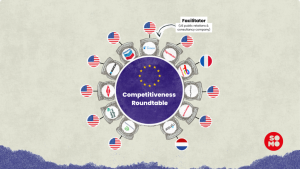
Leaked documents obtained by SOMO reveal how, under the pretext of the now-near-magical concept of ‘competitiveness’, these companies plotted to hijack democratically adopted EU laws and strip them of all meaningful provisions, including those on climate transition plans, civil liability, and the scope of supply chains. EU officials appear not to have known who they were up against. But the documents obtained by SOMO show a high level of organisation and strategising with a clear facilitator: Teneo, a US public relations and consultancy company.
The documents indicate that many of the companies involved wanted to stay hidden from view. After all, if it were widely known that a secretive group of mostly American fossil fuel companies like Chevron, ExxonMobil, and Koch, Inc. was working as a coordinated organisation to dilute an EU climate and human rights law, that might raise questions and serious concern among the public and the policymakers they were targeting. Many of the companies in the Roundtable have never publicly spoken out against the CSDDD.
Big Oil’s ‘Competitiveness Roundtable’
The Competitiveness Roundtable is dominated by fossil fuel companies, including three Big Oil companies (ExxonMobil, Chevron, TotalEnergies) and three other companies with activities in the oil and gas sector (Koch, Inc., Honeywell, and Baker Hughes). Other members are Nyrstar (minerals and metals, a subsidiary of Trafigura Group); Dow, Inc. (chemicals); Enterprise Mobility (car rentals); and JPMorgan Chase (finance).
Teneo, the Roundtable’s coordinator, has a track record(opens in new window) of working with fossil fuel companies, including Chevron, Shell, and Trafigura, and was hired by the government of Azerbaijan to handle public relations(opens in new window) when it hosted the COP29 climate conference.
In February 2025, the European Commission published the Omnibus I proposal(opens in new window), which aims to “simplify” several EU sustainability laws, including the CSDDD. The documents obtained by SOMO reveal that the Roundtable companies, which have been meeting weekly since at least March 2025, worked on deep interventions within each of the three EU institutions to get the Omnibus I package to align exactly with their views. The EU institutions are expected to reach a final agreement on Omnibus I by the end of 2025.
The documents reveal that the Roundtable companies’ activities in the Parliament are far more significant than what is visible in the EU Transparency Register(opens in new window). Eight of the Roundtable’s lobbying meetings during the Strasbourg plenary sessions of May and June 2025, listed in the Transparency Register, show Teneo as the only attendee, thereby failing to disclose the names of other Roundtable companies that participated in these meetings. Another three meetings the Roundtable held were not found in the EU Transparency Register(opens in new window) at all.
“Divide and conquer” the Council
In the European Council, the Roundtable plotted to “divide and conquer” EU governments to get the climate article in the CSDDD deleted. In June 2025, during the final weeks of negotiations in the Council on the Omnibus I proposal, the Roundtable discussed lobbying EU government leaders to “intervene politically” to ensure its priorities were included in the Council’s negotiation mandate. Subsequently, German Chancellor Merz and French President Macron reportedly(opens in new window) personally intervened(opens in new window) in the Council’s political process, leading to a dramatic dilution(opens in new window) of the texts(opens in new window) negotiated in the months before the intervention. Several of the changes made to the texts strongly align with the Roundtable’s demands, including delaying and substantially weakening the climate obligations, scrapping EU civil liability provisions, and limiting the responsibility of companies to take responsibility for their supply chains (the ‘Tier 1’ restriction).

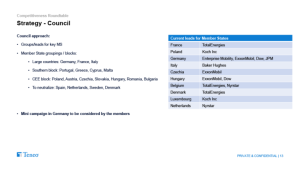
Competitiveness Roundtable meeting document, 11 July 2025.
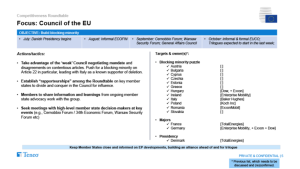
Additionally, the documents reveal that the Roundtable is still aiming to drum up a “blocking minority” to overturn the Council’s negotiation mandate during the trilogue negotiations, which started in November 2025. By “tak[ing] advantage of the ‘weak’ Council negotiating mandate” and disagreements between EU Member States on “contentious articles”, the Competitiveness Roundtable companies hope to force the Danish Council presidency to give up on including any form of climate obligations in the CSDDD – despite EU Member States’ agreement on this in the June 2025 Council mandate(opens in new window) .
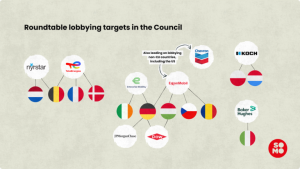
To implement the divide-and-conquer strategy, the Roundtable assigned specific companies to “establish rapporteurships” with different EU governments. TotalEnergies would target the French, Belgian, and Danish governments, and ExxonMobil would target Germany, Hungary, the Czech Republic, and Romania.
Circumventing “stubborn” European Commission departments
The Roundtable also discussed working on “circumvent[ing]” two “stubborn” European Commission departments involved in the Omnibus political process, DG JUST and DG FISMA, which, in their view, were “unlikely to be willing to see our side of the story”. According to the documents, DG JUST opposed deleting the climate article and restricting the Directive’s scope to only very large enterprises. The Roundtable aimed to diminish the role of these departments by pressuring President Von der Leyen and Commissioners McGrath (DG JUST) and Albuquerque (DG FISMA) by “organising letters from Irish and German business groups” and using an event held by the European Roundtable for Industry to “target” Von der Leyen and McGrath.
Read full report: Somo.nl
Source: Somo
Related posts:

 Victims of human rights violations in Uganda still waiting for redress
 UN Human Rights Chief urges EU leaders to approve key business and human rights legislation
 Business, UN, Govt & Civil Society urge EU to protect sustainability due diligence framework
 Development financiers fuel human rights abuses – New Report

Why govt is launching a comprehensive digital land registry

Witness Radio and Seed Savers Network are partnering to produce radio content to save indigenous seeds in Africa.

Evicted from their land to host Refugees: A case of Uganda’s Kyangwali refugee settlement expansion, which left host communities landless.

Women environmental rights defenders in Africa are at the most significant risk of threats and attacks – ALLIED New report

Will Uganda’s next government break the land-grabbing cycle?
Women environmental rights defenders in Africa are at the most significant risk of threats and attacks – ALLIED New report

Swedish pension fund drops TotalEnergies amid rising EACOP risks

Land tenure security as an electoral issue: Museveni warns Kayunga land grabbers, reaffirms protection of sitting tenants.

Innovative Finance from Canada projects positive impact on local communities.
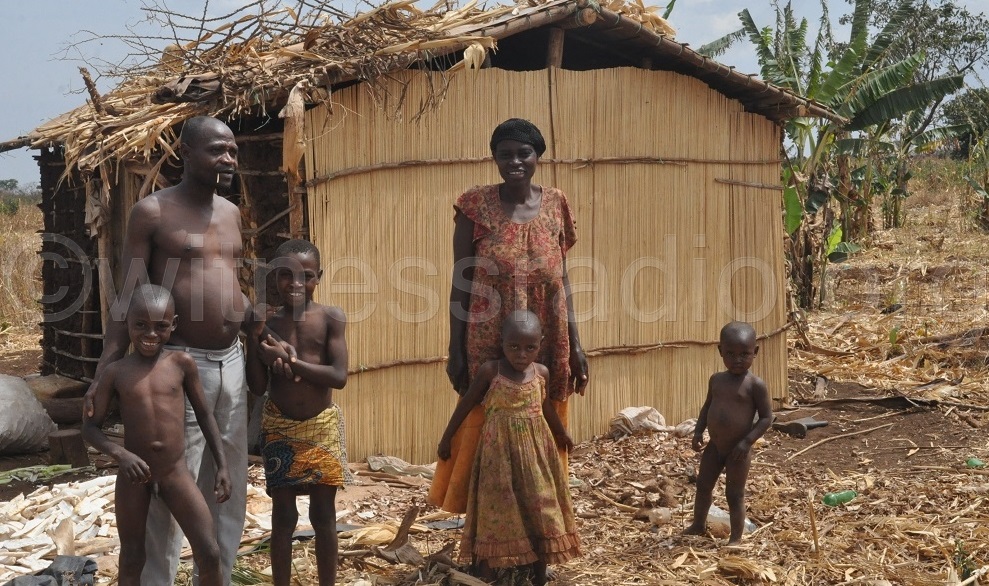
Over 5000 Indigenous Communities evicted in Kiryandongo District
Petition To Land Inquiry Commission Over Human Rights In Kiryandongo District

Invisible victims of Uganda Land Grabs
-
 MEDIA FOR CHANGE NETWORK1 week ago
Women environmental rights defenders in Africa are at the most significant risk of threats and attacks – ALLIED New report
-
 MEDIA FOR CHANGE NETWORK2 weeks ago
Uganda moves toward a Bamboo Policy to boost environmental conservation and green growth.
-
 FARM NEWS1 week ago
200 farmers demonstrate at parliament, worried about new seed monopoly
-
 MEDIA FOR CHANGE NETWORK4 days ago
Evicted from their land to host Refugees: A case of Uganda’s Kyangwali refugee settlement expansion, which left host communities landless.
-
 MEDIA FOR CHANGE NETWORK4 days ago
Witness Radio and Seed Savers Network are partnering to produce radio content to save indigenous seeds in Africa.
-
 MEDIA FOR CHANGE NETWORK1 day ago
Why govt is launching a comprehensive digital land registry