Connect with us

MEDIA FOR CHANGE NETWORK

Experts rally the region to unite behind East Africa’s transformative Agroecology Bill.

Published

on

By the Witness Radio team.

Across East Africa, experts and agricultural advocates are urging a united front for the proposed East African Community (EAC) Agroecology Bill, believing its passage could revolutionize food systems, empower food sovereignty, and uplift millions of farmers’ lives.

In mid-April 2026, the East African Legislative Assembly (EALA) officially began the legislative process for the EAC Agroecology Bill, 2026, after the Agriculture, Tourism and Natural Resources Committee chairperson, Hon. Gideon Gaptan Thoar, received parliamentary leave to draft and introduce it. The drafting committee is now in the final stages of tabling the bill before parliament.

This rallying cry echoed through an online webinar hosted by the Center for Food and Adequate Living Rights and broadcast live on Witness Radio. The event gathered agricultural experts, food sovereignty champions, and regional legislators to explore the bill’s promise and the hurdles it may face.

If passed, it would lay the foundation for a unified regional legal framework championing agroecological farming throughout the East African Community. Supporters believe this could be a powerful tool to combat food insecurity, protect farmers’ rights and indigenous seeds, address climate change and biodiversity loss, and tackle challenges faced by smallholder farmers.

Mr. Andrew Adem, Program Coordinator for Food Systems at the Alliance for Food Sovereignty in Africa (AFSA), said the region must learn from the shortcomings of the Green Revolution model, which prioritized increased yields and external agricultural inputs.

He pointed out that although the model aimed to boost yields and farmers’ incomes, it left them vulnerable when harvests fell short.

Adem noted that in tough seasons, farmers often bear the high costs of expensive inputs, while intensive farming erodes agricultural diversity and time-honored knowledge.

To address these challenges, he said, agroecology flips the script by putting farmers and their wisdom at the heart of agricultural progress.

“In Africa, food is more important than yields because it carries a lot of things. Therefore, the Green Revolution failed, and hence the Agroecology Bill presents an opportunity for us to stand up and protect the sovereignty of food in Africa,” Adem said during the Webinar meeting.

He explained that agroecology inspires farmers to break free from expensive external inputs, nurture healthier soils, diversify their crops, and tap into the wealth of local knowledge and resources.

Unlike systems fixated on monocultures and quotas, advocates say agroecology embraces nutrition, culture, biodiversity, and the enduring wellbeing of farming communities.

This legislative push arrives as hunger casts a long shadow over Africa. Jean Leonard from the Food and Agriculture Organization (FAO) highlighted that the continent bears the World’s largest hungry population, with around 309 million people affected.

He described agroecology as a holistic approach, weaving together ecological and social principles to shape and guide agricultural systems.

“Agroecology seeks to optimize interaction between people, markets, agriculture and ecosystems while addressing environmental, social and economic systems simultaneously rather than focusing on single technologies,” Leonard said.

Leonard outlined key ingredients for the success of the Bill: dedicated lawmakers, appropriate budgets, robust funding, supportive laws, and genuine involvement from farmers. She urged greater investment in youth, believing that empowering young people with resources and opportunities could open fresh paths into agriculture and speed the shift to agroecological farming.

Hon. Jackline Amongin, a Ugandan member of the East African Legislative Assembly (EALA), said the proposed legislation is intended to create a common framework for agroecological farming across the EAC.

She emphasized that the East African Community’s unique character calls for unity, not fragmented efforts, in transforming agriculture.

“We shall have the best, but all efforts must be put on enacting the Bill into law. Once the law is put in place, all the desired issues of implementation and execution will be agreed on. Other factors will follow,” she added.

Advocates stress that agroecology is more than a farming method. They see it as a philosophy that links agriculture to environmental care, social justice, cultural heritage, nutrition, and economic vitality.

This approach inspires farmers to exchange wisdom, broaden their crops, and craft solutions tailored to their unique landscapes.

According to the Bill memorandum, the purpose of the EAC Agroecology Bill, 2026, is to mainstream agroecological farming by promoting agroecology principles across agri-food systems. It seeks to integrate ecological, social and participatory approaches while combining scientific and traditional knowledge to enhance biodiversity, ecosystem services, resilience, livelihoods and food sovereignty.

“The Bill will therefore be tabled and gazetted before being subjected to public consultations, hearings and participation by members of the public. It will then proceed to a second reading before being referred to the whole House Committee for detailed consideration. Once all these processes are duly followed, the Bill will be presented for a third reading and passage by EALA. It will then go through the EAC process before ultimately becoming an Act.” She concluded.

Continue Reading

MEDIA FOR CHANGE NETWORK

Govt orders fresh valuation of land for Rubanda iron ore project

Published

on

Prime Minister Robinah Nabbanja has ordered officials from the Ministry of Lands, Housing and Urban Development to repeat the valuation and compensation assessment for land acquired for an iron ore mining and processing project in Rubanda District following complaints that some affected residents were under-compensated.

Ms Nabbanja issued the directive on Wednesday while officiating at the handover of 60 acres of iron ore-rich land in Mufumba Village, Butare-Katojo Town Council, to Devki Steel Mills (U), which plans to mine and process iron ore in the area.

Some local leaders told the Prime Minister that several project-affected people were dissatisfied with the compensation they received, saying the money was insufficient to enable them to acquire alternative land for farming and settlement.

Ms Nabbanja later handed a land certificate to Devki Steel Mills (U) chairman Raval Narendra and directed the Ministry of Energy and Mineral Development to expedite the company’s mining licence.

“I hereby order the officials from the Ministry of Lands, Housing and Urban Development that conducted this exercise to work with the local leaders and move house to house, piece of land to another and ensure that the raised concerns on under-valuation are fully addressed and everybody is satisfied,” Ms Nabbanja said.

“We don’t want to hear that our investor has land issues here and there because President Museveni was clear on this matter. After two weeks I will come back here to verify that everybody in this area is fully satisfied.”

Her directive followed complaints from Mufumba LC1 chairman Paulo Tibenderana and Rubanda District LCV chairman Stephen Kasyaba over the compensation process.

“Although people in this area are welcoming the investor, they claim that the money given to them is not enough to facilitate them acquire alternative pieces of land for their livelihoods,” Mr Kasyaba said.

He said the district council had already earmarked 52 acres where an iron ore processing plant could be constructed, as requested by President Museveni.

Mr Kasyaba also asked the government to consider compensating owners of land neighbouring the acquired project area to avoid disputes and other inconveniences associated with mining and crushing activities.

However, the ministry defended the valuation process.

The ministry’s chief government valuer, Gilbert Kermundu, said officials had consulted the Rubanda District Land Board, the 161 project-affected people and other residents before setting the compensation rate at Shs40 million per acre.

He said the rate took into account land scarcity in the area and that compensation was calculated according to the size of each affected person’s landholding.

“We paid the project affected people using this measure because individual land size was different as some people had less than 0.03 acres of land,” Mr Kermundu said.

He added that the affected residents were entitled to an additional 30 per cent of the compensation as disturbance allowance to facilitate their relocation.

“Kindly accept what the government has given you,” he said.

The ministry’s Under Secretary, Dr Emmanuel Mugunga, said about 99 per cent of the project-affected people had been compensated, questioning the basis of the complaints raised during the ceremony.

The compensation dispute comes as the government seeks to clear outstanding land issues and enable Devki Steel Mills to commence the planned mining and processing operations.

Mr Narendra appealed to the government to extend hydropower electricity to the project area to support the company’s operations.

He also pledged to employ local residents and support schools in neighbouring communities through education sponsorships and school feeding programmes.

Source: monitor.co.ug

Continue Reading

MEDIA FOR CHANGE NETWORK

Death Of Witnesses Cited Among Causes Of Land Case Backlog

Published

on

The death of witnesses, illness and repeated adjournments are among the factors contributing to the backlog of land cases in Uganda, the Deputy Registrar of the Land Division has said.

His Worship Ronald Kayizzi said land cases accumulate in court for several reasons, including litigants filing multiple applications in a single matter, forcing judicial officers to adjourn cases and schedule them for later dates.

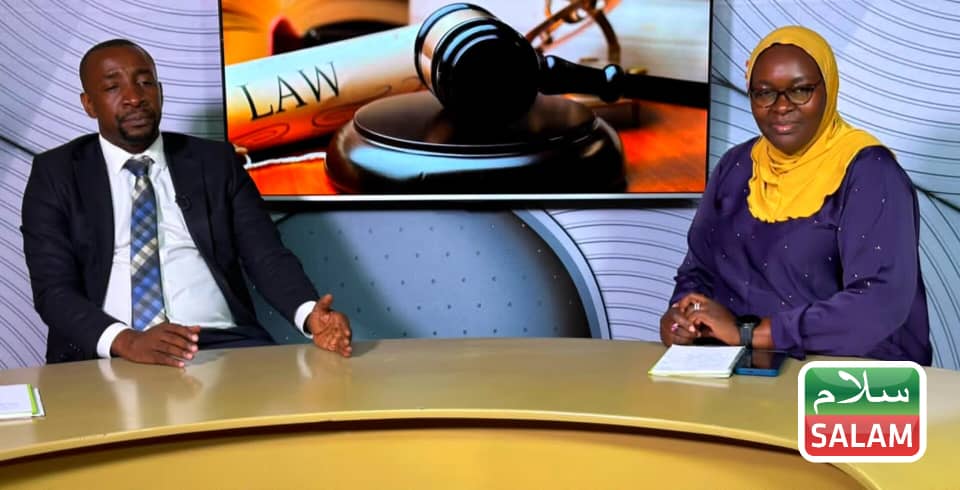
Appearing on Salam TV’s Judiciary Show hosted by Mariam Busingye, Kayizzi said the availability of witnesses was another major challenge affecting the timely disposal of cases.

He said some witnesses are elderly or sick, while others die before their cases are concluded, further complicating proceedings.

“Some witnesses are sick or elderly, and at times cases are delayed as court waits for witnesses who eventually die,” Kayizzi said.

He urged litigants to take their cases seriously and cooperate with their lawyers to minimise unnecessary delays.

Kayizzi also called on lawyers and judicial officers to manage their diaries properly and avoid fixing too many cases for hearing on the same day.

He further urged all parties expected to appear in court to make every effort to attend scheduled hearings, saying cooperation among litigants, lawyers and court officials is essential to reducing delays.

The comments come amid longstanding concerns over delays in the disposal of land disputes, which can leave parties waiting for years before their cases are concluded.

Kayizzi said better preparation by litigants and lawyers, proper scheduling by judicial officers and timely attendance by all parties could help courts reduce the backlog and improve access to justice.

source: nilepost.co.ug

Continue Reading

MEDIA FOR CHANGE NETWORK

Sweeping investments are fueling widespread land grabbing and deepening rights violations across Uganda – Report.
Published

on

By the Witness Radio Team.

For 16 years, Sulait Behangana has fought to reclaim his land in Kassanda District, where he says he was forced out to make room for a tree plantation run by the UK-based New Forest Company (NFC). Once the proud owner of over 15 acres lush with coffee, bananas, and sugarcane, Behangana lost not just his fields but the foundation of his livelihood.

Now, Behangana survives by toiling on other people’s plantations, a stark contrast to the life he once knew.

“I was beaten during the eviction, and this caused lameness and weakness of my body. I have been reduced to a pauper; I have to dig in other people’s plantations to get what to eat,” Behangana told Witness Radio.

Behangana was one of 901 families uprooted to clear space for the Namwasa tree plantation, as detailed in a report chronicling seven cases of development-driven forced evictions in Uganda. In his community, families recount being pushed off their land without compensation or genuine resettlement. While a few received land, hundreds remain in limbo, still waiting for justice. Julius Ndagize, who leads the displaced households, says repeated mediation with New Forest Company has brought no resolution.

“We secured 500 acres of land in Kampindu Village, Kitumbi Sub-county after the first mediation to resettle those people. Of the 901 affected families, 453 were allocated land and resettled. However, 448 families haven’t been compensated to date,” Ndagize says.

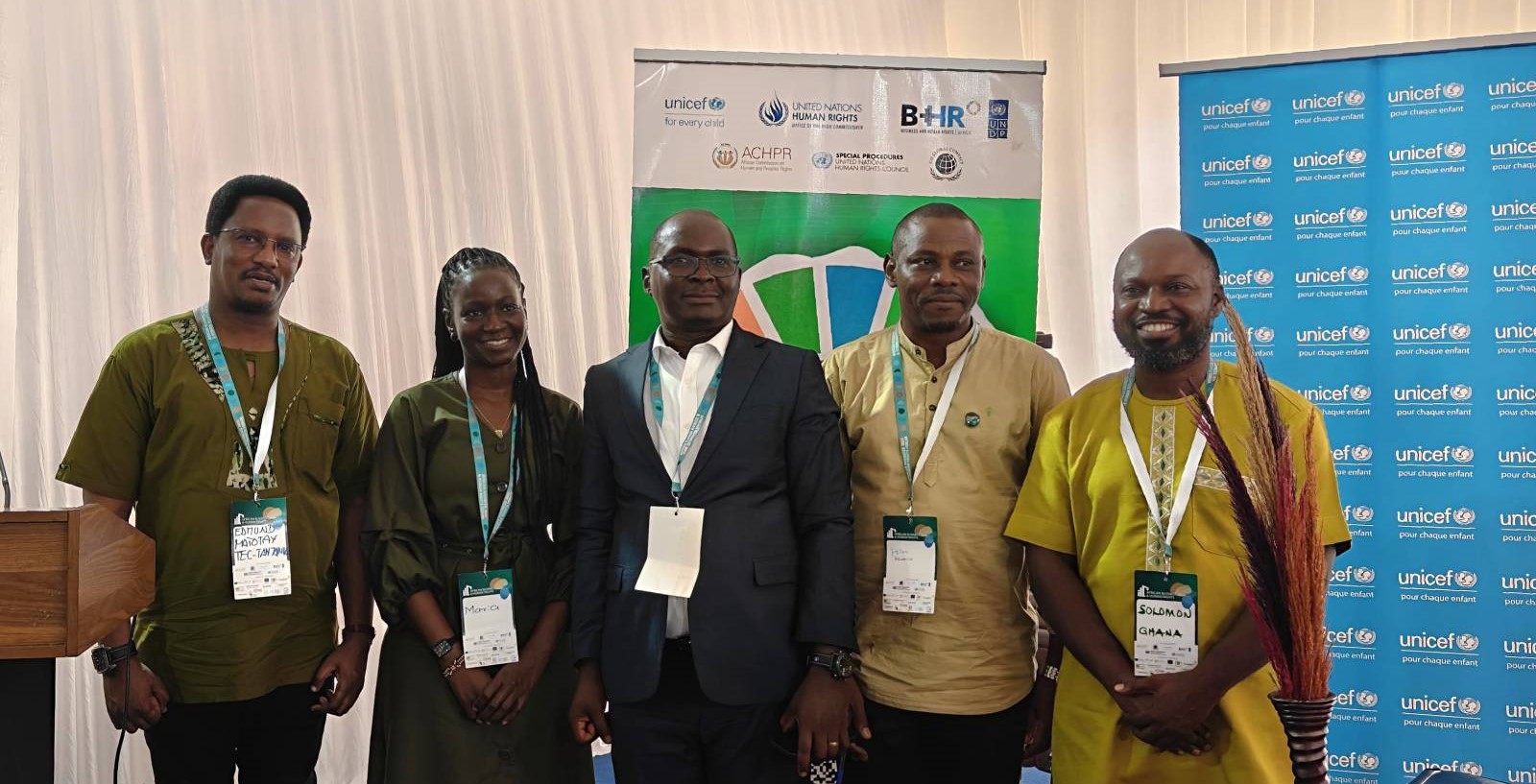
The ordeal faced by families in Mubende echoes a broader pattern uncovered in a report titled Foreign Investment Drives Systematic Forced Land Evictions in Violation of the UN Guiding Principles on Business and Human Rights, presented at the recent Africa Business and Human Rights Forum 2026.

The report details seven major cases where large-scale development projects and investments swept across Uganda, displacing communities. It examines the roles of government and security agencies, and the uphill battle victims face in seeking compensation and justice.

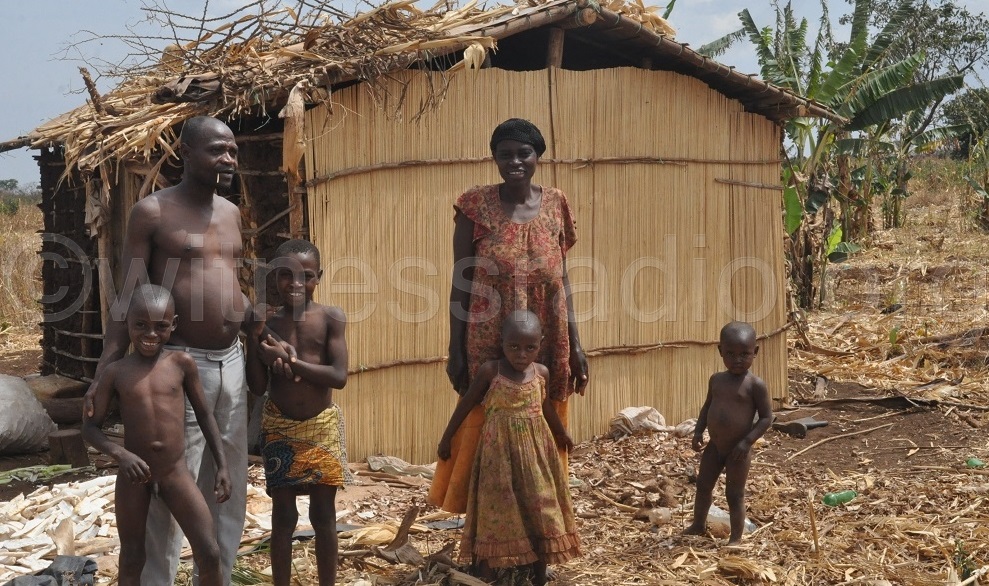
These cases span the Kaweri Coffee Plantation, Namwasa Forest Reserve, Formosa Three Planting Company, Agilis Partners, the Bunyoro Ranching Scheme in Kiryandongo, the Wadelai Irrigation Scheme, the Tilenga Project, the East African Crude Oil Pipeline, and conservation projects impacting the Batwa.

Witness Radio, ORRA, AFIEGO, FIAN-Uganda, BIRUDO, and BIDO, in collaboration with EDLC-NOVA, compiled the report. Drawing on community testimonies, court records, and grassroots documentation, the report claims these seven cases displaced 56,400 people. Even more striking, civil society monitoring suggests over 360,000 Ugandans may have been affected by forced evictions in the first half of 2024.

Mr. Jeff Wokulira Ssebaggala, Executive Director of Witness Radio, notes that while the cases span different investments and regions, affected communities’ stories share striking similarities. He points out that communities were frequently sidelined in decisions about their land, while those with political or financial clout often influenced the very processes that led to displacement.

“We noticed key agencies but also middlemen or government officials who are politically and financially connected,” Ssebaggala said, adding that such actors can be involved from the start, especially where communities live on land without formal tenure, making it easier to disregard their claims when the land is identified for investment or government use.

Ssebaggala explains that the roots of the problem stretch back to historical land decisions, when communities were left out of government planning and later discovered they were living on land earmarked for other uses.

“There are others whose land was gazetted to be a ranch by governments in the 1970s, but they were never consulted when the national exercise of planning was taking place,” he said.

He warns the stakes grow higher when communities resist these projects or question their removal.

“Those who stand against these projects are arrested, intimidated, or imprisoned. Communities regard land as everything because it defines their livelihood and heritage,” Ssebaggala said, adding that the report raised concerns about state institutions supporting investments rather than protecting affected communities.

The report reveals that women and young people were largely shut out of decision-making around land-based investments. Ssebaggala notes many projects moved forward without seeking communities’ voices or meaningful input, leaving those most reliant on the land excluded from choices shaping their destinies. As gender equality is concerned, the report shows an exclusion of women and youth in all these processes as projects really exist on their own without expressed opinion or contribution from the communities,” he said.

Examining these cases and the struggle for justice, lawyer Peter Arinaitwe, who represents land eviction victims, says affected communities face many obstacles: institutional backlogs, delays, and the heavy financial toll of legal battles that can drag on for years.

“We face judicial capture. Recently, we had the Chief Justice warning judges not to grant injunctions, stopping any investment project, and said that doing so amounts to prison,” Arinaitwe said.

Arinaitwe says Uganda has constitutional and legal protections for land rights, but these have not always protected communities on the ground. He cited cases involving the oil refinery and Kaweri Coffee Plantation, where communities pursued claims in court. Even when cases were decided and compensation awarded, legal processes continued to prolong disputes.ws because the constitutional provisions and protections exist in the book. Still, it’s a different story when it comes to practice,” he said.

For those stripped of their land, drawn-out court battles add another burden, forcing them to spend time and money seeking justice while struggling to rebuild their lives. Arinaitwe adds that the scars of eviction run deep, with psychological and emotional wounds lingering long after the land is gone.

“They are traumatized by the atrocities committed in the course of the eviction which go beyond the land and instead cause mental and emotional drain,” he said.

Participants from across Africa echoed Uganda’s concerns. Edmund Matotay described how Maasai communities in northern Tanzania now face mounting pressure as government interests in conservation, tourism, agriculture, and development clash with the pastoral way of life.

He said the Maasai depend on access to grazing land and that physical displacement therefore affects more than where people live. “The issue of physical displacement disrupts the way of life considering that Maasai people are typically nomads and pastoralists who depend on the grazing of the cows and cattle,” Matotai said.

He also reported intimidation of people supporting the communities, saying lawyers, faith leaders and others involved in defending land rights had faced threats and arrests. “There were a lot of intimidation issues, not only to the lawyers, to other actors, but also to the faith leaders who are leading some of the discussion around the area,” he said.

Back in Uganda, the report insists that stopping forced evictions is not the government’s burden alone. Companies profiting from land-based investments must also identify human rights risks before projects start, engage with affected communities, and create accessible ways to hear and resolve grievances.

Ssebaggala urges investors not to wait until communities are uprooted and legal battles erupt before tackling human rights issues. He calls for ongoing human rights due diligence throughout every stage of investment, and for companies to set up grievance mechanisms so affected people can voice concerns and seek solutions.

“Investors should integrate human rights due diligence across project cycles and also establish a grievance mechanism, policies, structures and awareness of these processes,” he said.

He also urges the government to put in place systems that verify free, prior, and informed consent, making human rights due diligence and environmental impact assessments mandatory before any land-based investment can proceed.

Continue Reading

Resource Center

Legal Framework

READ BY CATEGORY

Facebook

Newsletter

Subscribe to Witness Radio's news and report updates


Trending

Subscribe to Witness Radio's news and report updates