MEDIA FOR CHANGE NETWORK
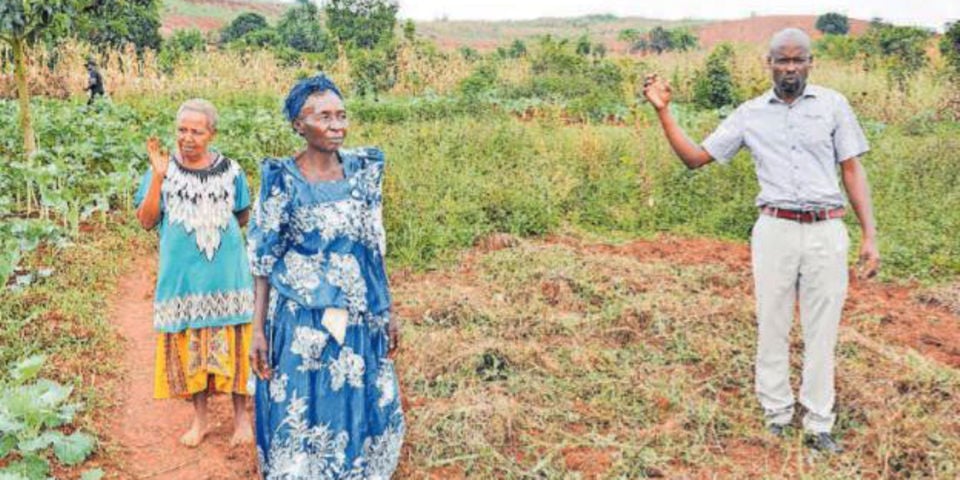
Land grabbers working with police, LC officials to evict us, locals say
Published
1 year agoon

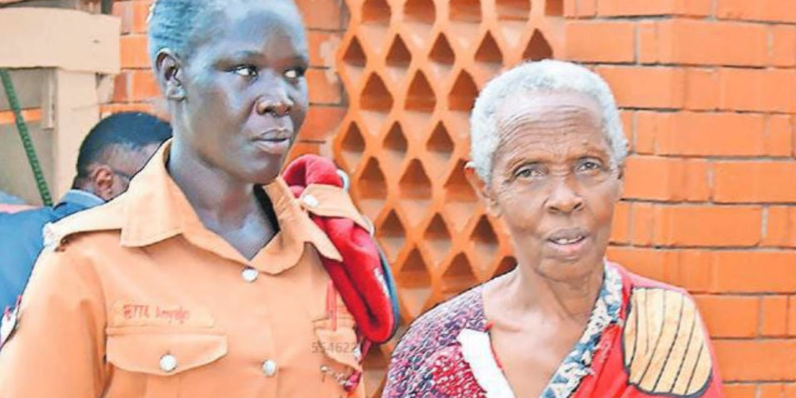
Many police holding cells and prison facilities, largely in the central part of Uganda, are filled with people detained over land-related disputes. Some of them were allegedly arrested on fabricated cases of trespass, malicious damage to property, and aggravated robbery following their involvement in land wrangles with rich, powerful and well-connected individuals. The police cells and prison facilities have reportedly become a bargaining ground, used by a section of the rich and powerful to either forcefully take over land under dispute or force negotiations that favour them at the expense of the less privileged members of society.
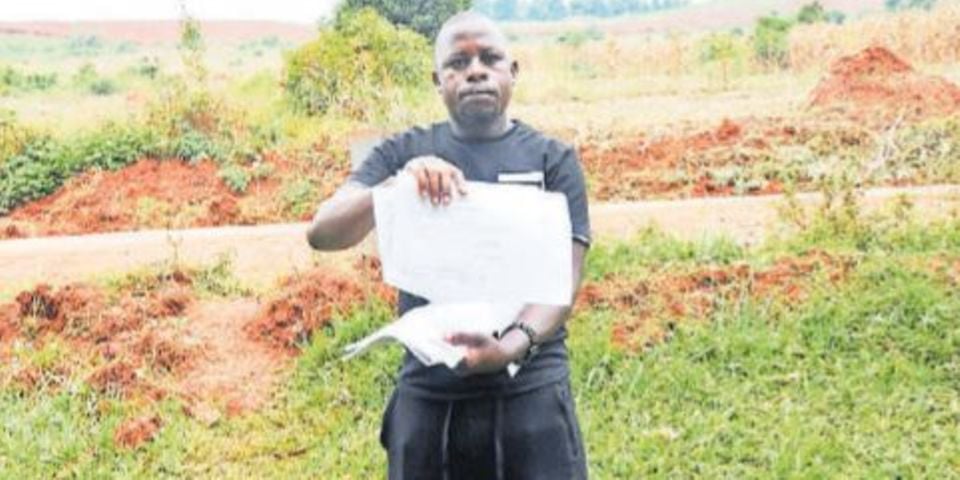
For instance, in Kabubu Village, Nangabo Sub-county in Wakiso District, Mr Richard Sebaggala and his wife Prossy Namande were recently granted bail by the High Court in Luweero District after spending more than eight months in Nakasongola Prison on an alleged aggravated robbery case that reportedly occurred in December 2023. The couple said that when they returned home, they were shocked to find that the person who had accused them of robbing him had allegedly taken over a big chunk of their land and constructed permanent structures. Sources said Mr Sebaggala and his wife were picked up by police officers at their home in Kabubu on December 31, 2023, and transferred to Luweero Central Police Station where they spent more than one week in the police holding cells before they were produced at Luweero Chief Magistrate’s Court on charges of aggravated robbery.
Justice Henrienta Wolayo granted Mr Sebaggala and Ms Namande bail, while wondering how a husband and wife got arrested and charged with aggravated robbery with an underlying case of a land dispute. Mr Sebaggala said they still report to court after two months on the same charge, but are now struggling to save part of the family land that remains after a significant portion was allegedly grabbed from them. There are several other cases similar to that of Sebaggala and his wife. Those reportedly detained over trumped-up charges are mostly bibanja landholders. On May 29, 2023, then Director of Public Prosecutions (DPP) Jane Frances Abodo rushed to Luweero Chief Magistrate Court to save an 84-year-old woman, Ms Kevina Nabaseruka, who had earlier been remanded by the same court on charges of alleged malicious damage to property and trespass on land.
The story that was published by Daily Monitor on May 27, 2023, went viral via the different social media platforms, drawing public condemnation and intervention of state actors, including the office of the DPP. The DPP, while at the Luweero Chief Magistrate Chambers and before the Luweero Chief Magistrate, Ms Mariam Sserwanga Nalugya, tendered in a case withdrawal form. “The case is dismissed and the file closed. The accused is released immediately,” the chief magistrate ruled. DPP Abodo accompanied the old woman out of the chief magistrate’s chambers. Luweero, Nakaseke,Wakiso, Kyankwanzi, Kiboga and Nakasongola are among the many areas where land disputes account for almost 80 percent of the crime cases reported at the different administrative offices, including the resident district commissioners’ offices and police stations. Several locals who spoke to Daily Monitor said they were detained over trumped-up charges after they resisted attempts to grab their land.
The locals said unscrupulous rich and powerful people bribe the local council chairpersons and the police to arrest and detain them over bogus charges and while they are under detention, their land is grabbed. At Kaga Village in Wakiso District, the family of the late Yoana Mulo Mugwanya is locked in a land dispute with a real estate developer , Mr Godfrey Genza, the proprietor of Zion Estates, who allegedly grabbed their land in 2008. The private Mailo land in contention, measuring 488.6 acres, is on Block 484, formerly Plot 2, Busiro County, in Kaga Village, Kajjansi Town Council, Wakiso District. According to Mr Elvis Yobu Kabuusu, one of the administrators of the estate, the land, which formerly belonged to Matayo Nsubuga, was bought by his grandfather, the late Mulo Mugwanya, in 1947, from an Indian bank where it was used by the latter as collateral security to secure a loan. “My grandfather paid Shs15,800 to secure the land from the bank and successfully registered it under his name in 1949, but unfortunately died in 1964 and left no written will,” Mr Kabuusu said.
Following his death, the documents for the land were returned to Buganda Kingdom, from where they were later transferred to the Office of the Administrator General in 1974. The family started managing this estate, and they were collecting annual nominal ground rent (Busuulu) from the squatters until 2008, when Mr Genza allegedly forcefully took over the land. “It was through a lot of frustration that we managed to get letters of administration on November 15, 2024, but we have been frustrated by some officials in Ministry of Lands, including the acting Commissioner–Land Registration, Mr Johnson Byiringiro Bigira, in our efforts to secure a title deed,” Mr Kabuusu said. He added that the real estate developer has not only threatened him and his co-administrator, Mr Michael Mulaggusi, but has continued to subdivide their land and has blocked them from utilitising it. “Recently, Mr Genza took a tractor to the village and cleared another piece of land. We reported this to the office of the commandant, Land Police Protection Unit, but the tractor remained on the site, continuing with the works,” he noted.
Mr Kabuusu added that Mr Genza seems to have his agents in the Ministry of Lands who link him to top bosses. “The last time we met the commissioner [Mr Bigira], he claimed to be busy, and we gave up. We accepted the loss,” he said.
Read full article on : Monitor
Related posts:

Land grabbers evict 360,000 Ugandans in 2024
Mubende district police are aiding land grabbing and committing crimes against locals they are obliged to protect.
Ugandan Police Criminalises Digital Gadgets In A Siege
Court orders police in Mityana to unconditionally release a community land rights defender, and 5 others
You may like
MEDIA FOR CHANGE NETWORK
Young people and agriculture: Step into the world of Ugandan NGO ESAFF, where a new generation in schools is being inspired to reimagine farming, celebrate wholesome food, and become passionate advocates for food sovereignty.
Published
51 minutes agoon
September 22, 2026
By the Witness Radio team
On September 17th, 2026, the Witness Radio team visited Namugongo Kyoto Foyers de Charite in Kampala, Uganda, where the grounds buzzed with excitement as schools set up camp. Pupils and students were passionately rehearsing for the grand finale of the Agroecology Poem Writing Competition, an event brought to life by ESAFF Uganda.
ESAFF believes that blending poetry, agroecology, and lessons on healthy food into school life helps students rekindle their bond with agriculture. This raises a bigger question: can Uganda ignite a passion in its youth to see farming as more than a traditional occupation, especially when agriculture pulses at the heart of the nation’s food system and sustains millions? All too often, the image of farming presented to young people misses the exciting opportunities and innovations transforming the field.
ESAFF observes that many still view agriculture as a last resort, missing its vital role as the backbone of most Ugandans’ livelihoods. Transforming how young people connect with farming begins by redefining what agriculture truly represents.
Fueled by this vision, ESAFF Uganda launched Agroecology Clubs in schools, inviting students to dive into sustainable food production, nurture soil health, celebrate biodiversity, and master the art of caring for the earth’s resources.
According to ESAFF Uganda, 245 poems were submitted before finalists from different parts of the country gathered for the national competition.
Among the sea of eager competitors from every corner of the country, one student shone brightly: Ssendawula Mesach, a Primary Six pupil from Lisa Junior School in Mukono district. Rather than gripping a hoe or tending a garden, he clutched a poem he had lovingly crafted, refined, and memorized over weeks of dedication.
For Ssendawula, the competition was more than a personal test; it was a chance to explore a topic blossoming in schools: the story of food’s journey from farm to table, agriculture’s impact on the environment, and the hope sustainable farming brings for tomorrow.
Before being crowned winner of the primary school category, Ssendawula spoke about the countless hours he poured into practice, encouraging his peers to pour their passion into future competitions. Meanwhile, Doreen Anzoa of St. Mary Asumpta Girls in Adjumani claimed victory in the secondary category.
This year’s competition celebrated the theme “Agroecology in Action: Promoting Healthy School Diets,” intertwining agriculture, nutrition, and environmental stewardship in the lively tapestry of school life.
“The poetry competition offers another way of bringing those ideas into the classroom. Rather than simply teaching learners about agriculture, it allows them to interpret and communicate what they are learning in their own words,” Nancy Mugimba, ESAFF Uganda’s National Coordinator, said. She added that involving young people is important to improve their knowledge about sustainable food production and ensure environmental protection is passed from one generation to the next.
“The young generation is needed because we need all ages to steward agroecology. It should not disappear with our forefathers,” Mugimba says.
She also challenges the perception that agroecology is primitive, arguing that indigenous seeds and local knowledge remain important to sustainable food production.
“Many people think that agroecology is primitive, but I beg to differ,” she says. “It is viewed as primitive because it seems like we are trying to keep things that everybody is trying to throw away, for example, indigenous seeds.”
According to Mugimba, the poetry competition is not simply about writing or winning. It encourages learners to think about the food they eat, where it comes from, and the relationship between farming and the environment.
“The poem is just an innovative way of helping the students to communicate their ideas on how best they understand agroecology and its benefits to the environment,” she says.
Government officials at the competition also wrestled with how young people perceive agriculture today.
Sande Bob George, the Ministry of Agriculture, Animal Industry and Fisheries’ National Focal Point Person for Organic Agriculture and Agroecology, said students’ poems and demonstrations reflected a generational shift in how agriculture can be understood, away from seeing it as punishment and towards viewing it as a source of livelihood, income and technology.
This shift is crucial in a country where agriculture anchors both livelihoods and food security. Young people are now urged to explore a growing spectrum of careers. Agriculture stands as the backbone of national development, employing over 70 percent of the population, most of whom live in rural areas, according to the United Nations Food and Agriculture Organization (FAO).
Mr. Hakim Baliraine, the National Chairperson of ESAFF Uganda, says the competition should therefore not be reduced to an extracurricular activity or a contest for trophies.
“This poem competition is not just for competition, but to widen and ensure we understand our food system and open our eyes to find solutions,” Baliraine said.
The national competition united over 30 school representatives, teachers, patrons, agroecology champions, and experts from districts such as Gulu, Fort Portal, Adjumani, Apac, Namisindwa, Mityana, and beyond.
The competition has grown remarkably since its inception. ESAFF Uganda shared that the Schools’ Agroecology Poem Writing Competition began in 2023 in Mbale with 10 participating schools. The second edition, launched in Mityana, drew 1,023 students from 32 institutions, including 18 secondary and 14 primary schools.
By the third edition, 41 schools joined in, with 19 secondary and 22 primary schools contributing over 570 poems.
Related posts:

Stop favoring export-oriented production over strengthening local food systems – Food Sovereignty advocates to the African Development Bank officials.
Agroecological farming: EAC Bill moves to Parliament to establish a regional legal framework to protect and promote sustainable farming and food systems.
Strengthening Small-Scale Farming in Uganda through Farmer Field Schools.
Road to COP30: Climate justice is achievable if young people have secure land tenure as a mitigation measure against migration.
MEDIA FOR CHANGE NETWORK
Alert: Land degradation is emerging as a pressing threat to global security.
Published
4 hours agoon
September 22, 2026
Seated is former President of Finland and UNCCD Land Ambassador Tarja Halonen. Standing from left are BSSS President Prof. Paul Hallett, BSSS Executive Director Andrew Morris, and UNCCD CSO Panel Representative Sopiko Babalashvili.
By Witness Radio and British Society of Soil Science (BSSS) teams.
As land degradation spreads globally, its impacts reach beyond the environment, affecting food security, livelihoods, water access, migration, and political stability. The health of our land is becoming a central pillar of global security.
For decades, international security has been framed by borders, military power, and political conflict. Beneath these visible forces lies a quieter foundation: the land itself, which grows our food, supports livelihoods, stores water, and sustains communities.
As land suffers from unsustainable use, drought, and climate pressures, the fallout spreads beyond environmental harm into the economic and social fabric that determines whether communities remain safe and stable.
This connection was brought into sharp focus at the 17th Conference of the Parties to the United Nations Convention to Combat Desertification, UNCCD COP17, held in Ulaanbaatar, Mongolia. Governments, scientists, Indigenous peoples, pastoralists, civil society organizations, and young people gathered under the theme “Restoring Land, Restoring Hope.”
Though the spotlight was on desertification, drought, and land degradation, participants voiced concerns about a broader crisis involving food systems, water resources, livelihoods, migration, and community stability.
For Rico Rau, Global Focal Point of the UNCCD Youth Caucus, the conventional understanding of security does not capture these realities because access to food and water is fundamental to human survival.
“Security is often defined as war, weapons and conflict,” Rau says, arguing that the ability of societies to provide food and water should be considered part of the same conversation.
His perspective includes land degradation in a broader definition of security, showing how the slow unraveling of natural systems erodes the economic and social bedrock supporting stability.
The consequences are already unfolding in regions where environmental decline collides with poverty, climate stress, and fierce competition for natural resources.
Hindou Oumarou Ibrahim, a Chadian environmental activist, geographer, and advocate for Indigenous peoples, points to the Lake Chad region as an example of how ecosystem changes can affect communities whose livelihoods depend directly on land and water.
Lake Chad, which covered roughly 25,000 square kilometers around 1960, has dramatically shrunk. However, the lake fluctuates significantly with rainfall and seasonal hydrological conditions.
Ibrahim says pressure on water and other natural resources has increased competition between communities and countries sharing the basin. At the same time, landscape degradation represents a deeper loss for Indigenous communities whose cultures and livelihoods are tied to the ecosystem.
“Desertification is not only about the land,” Ibrahim says, describing it as a threat to people and the places they call home. “When ecosystems deteriorate, communities can lose access to farming areas, grazing land, water and other resources, creating economic pressures that can eventually contribute to competition, displacement and conflict.” Ibrahim adds.
The link between environmental decline and insecurity does not mean every drought or drop in soil fertility sparks conflict. Instead, ongoing degradation strips away economic and ecological shields that help communities weather storms, leaving them exposed when drought, hunger, poverty, or political turmoil strike together.
This reality hits hardest where farming and livestock underpin family incomes and food supplies. As fertile land dwindles, farmers face shrinking harvests and incomes, while pastoralists must travel farther for pasture and water, increasing pressure on neighboring communities and traditional grazing paths.
The world’s reliance on productive land cannot be overstated, especially as swelling populations and climate change heap even more strain on fragile food systems.
Dr. Karen Daly, a soil scientist and environmental soils and land-use researcher, says the role of soil is increasingly being understood as extending far beyond supporting crop production. She says scientists are paying greater attention to its ability to regulate water, support biodiversity, store carbon, and sustain essential ecosystem functions.
“Land is where food is grown. Healthy soils retain and filter water, support vegetation, and contribute to agricultural resilience. In contrast, degraded soils become less capable of these functions when communities face more frequent climate stresses,” she says.
Figures from COP17 showed that more than 95 percent of food depends on productive land and over a third of the world’s land is degraded. Another estimate cited about 3.2 billion people affected by land degradation.
These numbers reveal why land degradation is not just an environmental issue, but a challenge that reaches deep into the economic and social well-being of entire populations.
A degraded landscape may start as an environmental concern, then become an agricultural crisis, a threat to livelihoods, and finally a social or political emergency when communities can no longer survive on dwindling resources.
Tarja Halonen, former President of Finland and a UNCCD Land Ambassador, connects these environmental pressures to the wider issue of migration and human security.
She acknowledges movement has always been part of human history. Still, she argues people should not be forced from their homes when degraded environmental conditions make it impossible to maintain livelihoods.
Her view expands land restoration beyond environmental protection. Reviving degraded land helps communities keep food on the table, safeguard natural resources, and hold onto places their families have called home for generations.
The link between land and migration is crucial where environmental stress meets poverty, conflict, and limited economic prospects. Land degradation may not be the only reason people leave, but it can tip the balance and drive vulnerable communities to move.
Restoring degraded land also means asking who holds control and whether those who rely on it feel secure enough to invest in its future.
Juliane Wiesenhütter, Team Leader at GIZ, argues that land rights are fundamental to sustainable land management because farmers and communities are less likely to invest long-term in conservation when they are uncertain about future land access.
“If we want people to invest also in land and care for the land they depend on, they need secure rights. So, this is also a very cross-cutting aspect in our work. And also, here at the conference, we have a land tenure decision. Land rights are therefore not a side issue. They are a fundamental part of sustainable land and natural resource management,” she said.
Her perspective puts land governance on equal footing with soil science and environmental policy, making it a cornerstone of true restoration.
These global challenges hit home in Uganda, where land is the heartbeat of agriculture, rural life, investment, and food security. Restoration efforts that focus only on technical fixes and ignore tenure security, land access, and community voices risk missing the realities of those who care for these landscapes.
Land rights can determine whether restoration becomes a long-term investment or a short-lived project. “Where communities have secure rights and control over their resources, they have greater incentive to protect soils, manage vegetation, invest in sustainable agriculture, and maintain ecological functions their livelihoods depend on.”
The discussions at COP17 challenged the idea that solutions to land degradation must come mainly from governments and scientists. Indigenous peoples and local communities carry generations of wisdom about soils, plants, water, seasons, and ecosystems. Many participants insisted modern restoration must include this knowledge.
Ibrahim described traditional ecological knowledge within her own community, including the importance of particular trees and plants in maintaining ecosystems and restoring degraded lands. She contends that true restoration is about more than counting trees; the choice of species, the state of the land, and the intricate ties among ecosystem elements all shape whether restoration will last.
“We should involve the local communities because we are the guardians of the land. You cannot talk about our home without us. We are the ones who know how to protect it, how to restore it.” She added.
For communities whose lives, cultures, and identities are rooted in specific landscapes, participation goes beyond a seat at international conferences. It is about whether those most affected by environmental choices have a real voice in shaping solutions. “So, if you want a full solution, our voices must be at the tables,” she added.
This principle also applies to pastoralists, whose stewardship of rangelands drew new attention at COP17. Rangelands cover vast areas and sustain hundreds of millions. Pastoralists’ mobility lets livestock adapt to shifting conditions and allows the land time to recover.
Mariana Kapowich-Solomon, a soil scientist and land-degradation expert who has worked with FAO and UNDP, argues scientific knowledge has little value if it remains distant from people experiencing land degradation.
“Science has to touch the ground,” she says, emphasizing the need for research to reach farmers and communities and respond to each country’s conditions and priorities.
In her view, science should point to practical solutions people can use, not drift from the gritty realities of degraded landscapes.
Andrew Morris, Executive Director of the BSSS and the Western European Civil Society Organization (CSO) panel representative of the UNCCD, says COP17 marked growing recognition of soils and land restoration as strategic priorities, rather than issues confined to the environmental agenda, adding that one of the most important developments was the stronger integration of scientific evidence into policy discussions.
“This is essential, if we’re going to get sensible policies and create lasting change.” Morris said, describing the development “as a sign that the global conversation around land is becoming more mature, more ambitious and more action-oriented.”
“The community that came together at COP was amazing,” he says. “It was a real mix of cultures, religions, and ethnicities that, in the main, put aside domestic politics, ideals of nationhood and memories of previous disagreements to unite and deliver a clear and sober voice that resonates globally. We are in this together; we have the solutions, we need to unite and be given the vehicle and opportunity to enact lasting change,” he says.
As land degradation collides with climate stress, poverty, hunger, and migration, the health of our planet’s land is taking center stage in the global security conversation.
This article was produced through a partnership between Witness Radio and the British Society of Soil Science (BSSS), based on voices and recordings from the BSSS Soil Matters podcast recorded during the UNCCD COP17 in Ulaanbaatar, Mongolia.
Learn more about the British Society of Soil Science: soils.org.uk

Related posts:

UNCCD COP17 kicks off in Mongolia, drawing nations together to tackle urgent issues of land, drought, and food security.
COP16 in Riyadh: World Leaders Commit $12.15B to Combat Land Degradation and Drought

UNCCD COP16: NGOs issue a stark warning and call for urgent actions to deal with the escalating threats of desertification, land degradation, and drought.

Civil society groups at UNCCD COP17 are calling for urgent action on land rights, drought, and vital funding.
MEDIA FOR CHANGE NETWORK
Mpigi Land Committee Seeks Cancellation Of Titles On Buyala Waste Site
Published
19 hours agoon
September 21, 2026
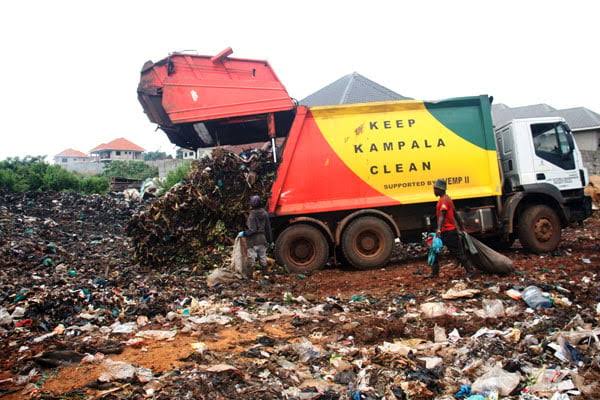
The Mpigi District Land Committee has recommended the cancellation of three land titles issued on a 230-acre piece of land in Buyala, which the Kampala Capital City Authority (KCCA) had acquired for waste disposal.
The committee’s recommendation follows investigations indicating that the disputed land formed part of the Buvuma Forest Central Reserve, which was reportedly gazetted as a forest reserve in 1945.
The investigation found that three titles were issued to private individuals in 2015 by officials of the Mpigi District Land Board.
The individuals later reportedly sold the land to another buyer in 2025, who subsequently sold it to KCCA for use as a waste disposal site.
Charles Tomusange Ssebuggwawo, the chairperson of the Mpigi District Land Committee, said the committee had written to the Commissioner for Land Registration at the Ministry of Lands seeking clarification and action on the titles.
“We have written to the Commissioner for Land Registration regarding the land in Buyala and the titles that were issued on it,” Ssebuggwawo said.
KCCA acquired the land as it searched for an alternative waste disposal site following the collapse of the Kiteezi landfill in July 2024.
The disaster occurred when a massive garbage heap collapsed and swept into neighbouring homes, killing more than 30 people.
However, the proposed use of the Buyala land was halted by President Museveni, who raised concerns about disposing of garbage near Namwabula village in Nsujjumpolwe Parish, Kiringente Sub-county, where the government is developing a major fuel storage facility.
The proposed facility is expected to have a storage capacity of about 320 million litres, making it one of the largest fuel storage facilities in Uganda.
The land dispute comes as KCCA continues efforts to secure a permanent alternative to Kiteezi landfill, whose collapse heightened concerns over waste management and public safety in the Greater Kampala Metropolitan Area.
Related posts:

Kasese district land bosses ordered to cancel land titles of gov’t land grabbers

Gov’t cancels three titles on Makerere university land

Urban Poor Extinction: City Market Land Titles Vanish With No Trace!
The district security committee continues to defy gov’t’s directive to return locals to their land 48 days later.
Young people and agriculture: Step into the world of Ugandan NGO ESAFF, where a new generation in schools is being inspired to reimagine farming, celebrate wholesome food, and become passionate advocates for food sovereignty.
Alert: Land degradation is emerging as a pressing threat to global security.
Mpigi Land Committee Seeks Cancellation Of Titles On Buyala Waste Site
How land divisions are fueling Wakiso’s slums
Breaking: Sixteen Rooted in Resistance activists arrested and detained as they boldly protested Uganda’s oil ambitions.
Civil society organizations across East Africa have revived their campaign against the EAC Seed and Plant Varieties Bill 2025, just as the regional parliament opens the floor to public consultations.
Thirteen years after the Karuma Hydropower Project broke ground, countless people forced from their homes are still waiting for the compensation and resettlement they were promised.
Tanzania’s surge in conservation investments is under the UN spotlight, as allegations of indigenous land rights violations prompt an urgent call for the government to stop the evictions at once.
Innovative Finance from Canada projects positive impact on local communities.
Over 5000 Indigenous Communities evicted in Kiryandongo District
Petition To Land Inquiry Commission Over Human Rights In Kiryandongo District
Invisible victims of Uganda Land Grabs
Resource Center
- CAN AFRICAN FOOD SYSTEMS THRIVE WITHOUT CHEMICAL FERTILISERS
- Land And Environment Rights In Uganda Experiences From Karamoja And Mid Western Sub Regions
- REPARATORY AND CLIMATE JUSTICE MUST BE AT THE CORE OF COP30, SAY GLOBAL LEADERS AND MOVEMENTS
- LAND GRABS AT GUNPOINT REPORT IN KIRYANDONGO DISTRICT
- THOSE OIL LIARS! THEY DESTROYED MY BUSINESS!
- RESEARCH BRIEF -TOURISM POTENTIAL OF GREATER MASAKA -MARCH 2025
- The Mouila Declaration of the Informal Alliance against the Expansion of Industrial Monocultures
- FORCED LAND EVICTIONS IN UGANDA TRENDS RIGHTS OF DEFENDERS IMPACT AND CALL FOR ACTION
Legal Framework
READ BY CATEGORY
Newsletter
Trending
-
MEDIA FOR CHANGE NETWORK2 weeks agoNew revelations: TotalEnergies is investing in countries facing political and economic risks, raising fresh questions about the company’s investment strategy.
-
MEDIA FOR CHANGE NETWORK2 weeks agoSmallholder farmers were excluded from the consultative process for the East African Community Seed and Plant Varieties Bill, 2025: CSOs across the EAC call for a time extension and greater inclusion of smallholder farmers in shaping the bill.
-
MEDIA FOR CHANGE NETWORK5 days agoWhile hunger continues to grip the world, a new report highlights forests and forest foods as a hidden treasure trove of nourishment.
-
MEDIA FOR CHANGE NETWORK2 weeks agoHunger Soars in AGRA Countries Despite Decades of Green Revolution Push
-
MEDIA FOR CHANGE NETWORK2 weeks agoNimule residents raise alarm over alleged land grabbing
-
MEDIA FOR CHANGE NETWORK1 week agoIn Kasanda District, a grandmother faces eviction as her own grandchildren join forces against her.
-
MEDIA FOR CHANGE NETWORK4 days agoLira siblings reclaim father’s land after bitter family dispute
-
MEDIA FOR CHANGE NETWORK5 days agoAfter weeks behind bars, six anti-oil activists have been granted cash bail by the LDC Court.