
Connect with us

NGO WORK

World Bank is backing dozens of new coal projects, despite climate pledges

Published

on

New research shows that the International Finance Corporation, part of the World Bank Group, is providing back-door support to at least 39 new coal projects, constituting over 68 gigawatts of new coal-fired power capacity throughout China, Indonesia and Cambodia.

The International Finance Corporation (IFC), the private lending arm of the World Bank Group, is indirectly backing dozens of new coal projects throughout Asia, according to a new report, Blowing Smoke: How Coal Finance is Flowing through the IFC’s Paris Alignment Loopholes. The report, based on research conducted by Inclusive Development International, Recourse and Trend Asia, was published today, in advance of the World Bank Annual Meetings taking place in Marrakech next week.

“We found that the IFC is still backing new coal capacity through its investments in banks and other financial institutions despite its commitments to align those investments with the Paris Agreement,” said David Pred, executive director of Inclusive Development International. “This is the opposite of the sustainable development that IFC purports to promote, and it is having a devastating impact on coal-affected communities throughout Asia and the entire planet in this time of climate peril.”

A planned 700-megawatt coal-fired power plant called Jambi 2, to be located in Indonesia’s Jambi province, is among the new coal projects the IFC is indirectly supporting. The new report focuses on Jambi 2 as a case study for how the IFC’s lending ends up supporting new coal development and the impact that has on local communities. According to local advocates and community members interviewed by Inclusive Development International, Jambi 2 is a project the province doesn’t want and doesn’t need—one that will exacerbate the already devastating impacts of coal development in the area, including air and water pollution and related health issues. Yet Postal Savings Bank of China—an IFC intermediary and a major coal financier in the region—has provided a credit line to Jambi 2’s developer, China Huadian.

“Ongoing coal development in Indonesia, including the Jambi 2 plant, will accelerate climate change and its catastrophic consequences,” said Novita Indri, energy campaigner at Trend Asia. “It’s a slap in the face to Indonesia, an island nation that is uniquely vulnerable to rising sea levels and already suffering from extreme weather events.”

Postal Savings Bank of China is by far the largest financier of coal developers in the IFC’s portfolio. According to data compiled by Inclusive Development International and published alongside the new report, the IFC purchased a $300 million equity stake in Postal Savings Bank in 2015 and the bank has gone on to provide 418 billion RMB ($57.3 billion) in no-strings-attached credit lines and project loans to companies developing dozens of coal-fired power plants in the region. The bank has provided these loans at a time when much of the financial industry is shifting away from coal, implicating the IFC and the World Bank Group in the last vestiges of coal finance and the devastating impacts it has for coal-affected communities and the climate. The authors of the report are calling on the IFC to leverage its influence as a major shareholder to stop Postal Savings Bank from continuing to finance coal development.

“It’s hypocritical for the IFC to allow its banking clients to finance projects like Jambi 2 and other coal development in Asia while at the same time promising to align its lending with the Paris Agreement on Climate Change,” said Kate Geary, co-director of Recourse. “While committing to move away from coal on paper, the World Bank Group is failing to ensure that its investments aren’t  supporting coal power projects that are significant contributors to climate change and that wreak devastation on affected communities.”

These latest revelations come on the heels of reports last month that communities in Indonesia’s Banten province have lodged a formal complaint against the IFC for backing two new massive units in the Suralaya mega-coal complex. Similar complaints have been lodged against the IFC in the past, including regarding its support for coal expansion in the Philippines.

“The IFC has contributed to serious harms related to coal expansion in many countries,” added Pred. “Now it has a responsibility to repair the damage it has done and prevent future harm by requiring that all of its financial intermediary clients, including Postal Savings Bank of China, stop financing coal development immediately.”

Notes for editors:

Regarding IFC’s financial intermediary lending and “no coal” commitments

Inclusive Development International previously followed the money in the IFC’s financial-sector portfolio and published our findings in our Outsourcing Development investigative series, which exposed (among other things) the coal plants and mines the IFC was indirectly backing.

Since then, the World Bank Group has made a series of commitments designed to reform its approach to investing in financial institutions, reduce its exposure to coal and align itself with the Paris Agreement. Most prominently, in 2019 the IFC launched its Green Equity Approach, which requires financial institutions in which it holds shares to halve their coal exposure by 2025 and eliminate it from their portfolios by the end of the decade. In 2023, the IFC closed a major loophole that Inclusive Development International, Recourse and Trend Asia pointed out in the approach by updating the rules to restrict equity clients from financing any new coal projects.

However, the IFC’s flagship approach aligning its indirect lending operations with the Paris Agreement contains other loopholes and gray areas: it still allows equity clients to underwrite bonds for coal developers, and it allows clients to finance industrial projects that are powered by dedicated coal plants, a concept known as captive coal. And it is unclear how and whether the “no new coal” rule is being applied to existing clients’ corporate financing of coal developers. In fact, as our new research and report show, banks in which the IFC holds equity stakes—including Postal Savings Bank of China—have continued to provide financing to the developers of new coal projects.

Regarding our methodology

For this report, Inclusive Development International traced the International Finance Corporation’s money through financial intermediaries to new coal-fired power capacity in Asia. The full results are here.

We define new coal capacity as projects that have become operational since 2019; projects that are under construction; and projects that have been announced by developers. This data does not include projects that are listed as shelved or canceled, although developers regularly reactivate shelved projects after long periods of inactivity.

For all data on coal plants, including project names, generating capacity, development timelines and project owners, we relied on the Global Energy Monitor, which tracks energy infrastructure around the world. For data on project developers, including their current coal-generating capacities, development plans, and issuances of debt securities, we relied on the Global Coal Exit List, which the IFC also uses  to help its clients identify coal exposures in their portfolios.

All other data comes from research conducted by Inclusive Development International, Recourse and Trend Asia into corporate filings, the International Finance Corporation’s project disclosures, and site visits in Indonesia.

Source: inclusivedevelopment.net

Continue Reading

NGO WORK

UN Experts Put Tanzanian Government on Notice – “Ensure Transparency and Respect for Indigenous Peoples’ Rights in Ngorongoro”

Published

on

April 17, 2026 press release from the offices of eight UN Special Rapporteurs1 calls for the Tanzanian government to immediately publish the findings of two presidential commissions amid growing concerns over its eviction plans.
The communication echoes the Oakland Institute’s warning that these sham Presidential Commissions are being used to rubber-stamp eviction plans without the consent of the Indigenous community.
The strongly-worded communication from the UN Special Rapporteurs states that “these reports are of profound public interest and must be made available to the public without delay…Decisions affecting tens of thousands of Indigenous Peoples cannot be taken behind closed doors.” The experts furthermore urge “the Government to halt any actions that could lead to forced displacement, and engage in meaningful dialogue with affected communities,” while issuing a clear reminder that “Indigenous Peoples have a right to remain on their traditional lands if they so choose…Conservation efforts must not come at the expense of human rights.”
Impacted Maasai communities welcome this intervention from the UN Special Rapporteurs and reaffirm their commitment to defend their rights to remain on their ancestral lands.
To learn more about the struggle against Fortress Conservation, watch the interview: The Dark Side of “Conservation”
On Fox 5 DC Weekend Live, Julie Donaldson interviews Andy Currier, Oakland Institute’s Policy Analyst. Watch the discussion on fortress conservation and the human cost of climate solutions that displace Indigenous communities who best protect our biodiversity.

Watch the video

Source: oaklandinstitute.org

Continue Reading

NGO WORK

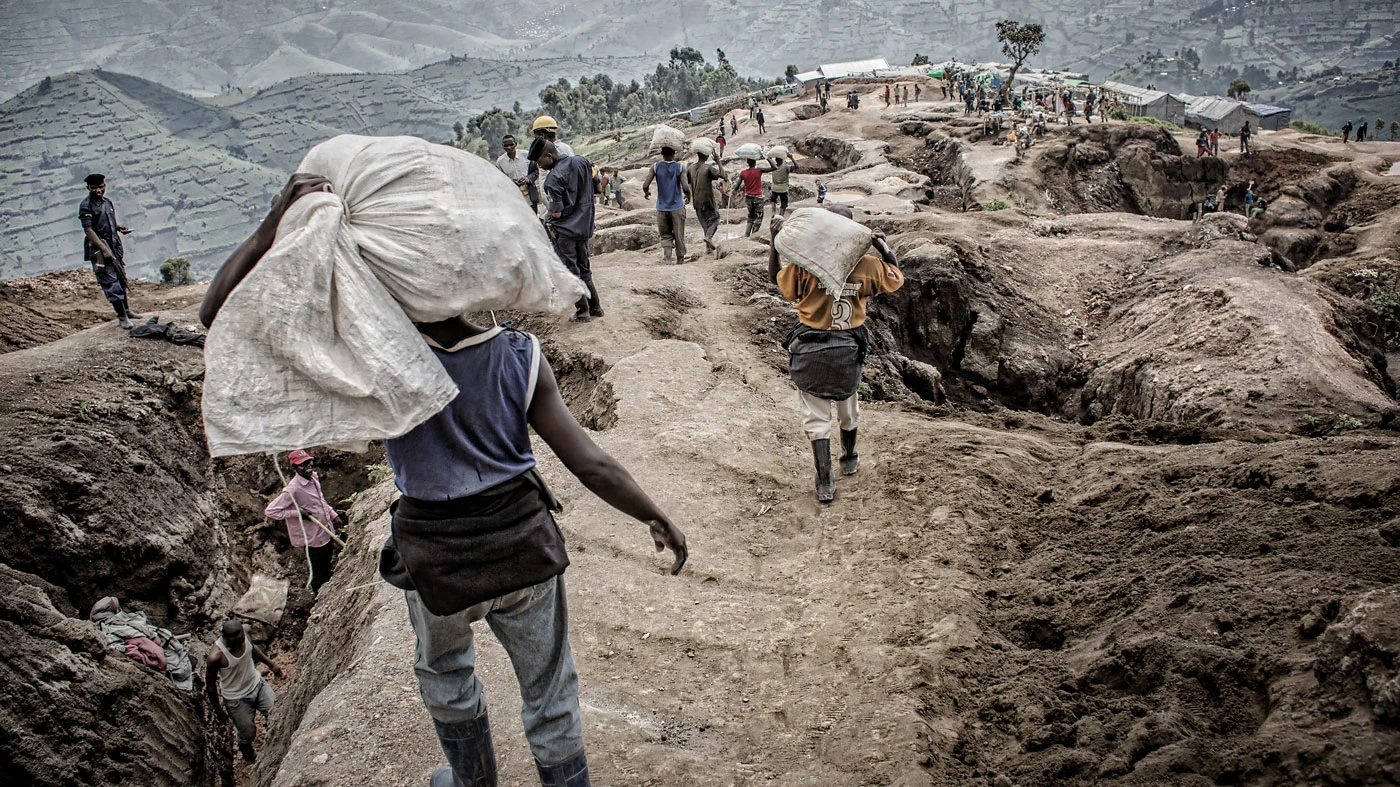
Two dead as Siaya protests against gold mining firm turn tragic

Published

on

Ikolomani residents protesting against eviction plan to pave space for British mining company Shanta Gold on November 12, 2025. Two people died in similar protests in Gem, Siaya County.  Isaac Wale | Nation Media Group

Two people were shot dead on Monday in Gem–Ramula, Siaya County, after villagers staged a protest over an alleged eviction they linked to Shanta Gold Kenya Limited.

Area police boss Charles Wafula confirmed the incident, stating that the victims were among a group alleged to have attacked a police post after the officers moved in to disperse the demonstrators.

According to Mr Wafula, the demonstrators, angered by what they described as an illegal resettlement by the company, stormed the station during the protest, prompting officers to intervene.

“The individuals had organised a demonstration but they did not notify the police. Our officers moved in to contain the situation, but the group began attacking both officers and Ramula Police Post, damaging several items, including vehicles,” Mr Wafula said.

However, a local rights organisation has sharply contested the police account, portraying the killings as unlawful and unprovoked.

In a statement, the Community Initiative Action Group Kenya said the two victims identified as Henry Otieno and Jack Omenda were part of a peaceful protest against what they termed a forced eviction from their ancestral land.

“The community had gathered peacefully to demonstrate against Shanta Gold Limited’s attempt to relocate them without their consent,” said the lobby’s Executive Director Chris Owalla.

The group further alleged that police officers opened fire without warning following a confrontation with residents at Ramula Market.

“Witnesses state there was an exchange between the community and police after which officers opened fire, killing Henry and Jack on the spot,” Mr Owalla said.

The rights group also accused senior police officers including Mr Wafula and Charles Emodo of Directorate of Criminal Investigation, of disregarding a court order that had halted evictions and mining operations in the area.

According to Mr Owalla, the Environment and Land Court in Siaya had, on February 5, 2026, issued conservatory orders barring any involuntary resettlement of residents in Ramula and its environs, pending the hearing of a petition.

The organisation is now calling for investigations by the Independent Policing Oversight Authority and the the Director of Public Prosecutions, alongside an independent autopsy on the victims.

Fear of evictions

The unrest is rooted in long-standing tensions over planned gold mining operations by Shanta Gold in the region. The company is seeking to establish a large-scale extraction project – one that residents fear could uproot communities and erode livelihoods carefully built over generations.

Similar scenes of unrest were reported in November 2025 in Ikolomani, where locals protested against possible relocations linked to the same company.

Shanta Gold has previously signalled its intention to invest in a multi-billion-shilling project in western Kenya, targeting high-grade gold deposits expected to yield significant output over several years.

Source: nation.africa

Continue Reading

NGO WORK

Tanzania: Commissions call for mass eviction of Indigenous Maasai from world-famous tourist destinations.

Published

on

Two presidential commissions have recommended the mass eviction of Maasai people from some of East Africa’s most iconic conservation areas and tourist destinations.

The commissions were established by Tanzania’s President Samia Suluhu Hassan following previous evictions of Maasai pastoralists from parts of the world-famous Serengeti ecosystem, and large-scale protests in the Ngorongoro Conservation Area in 2024.

Now, despite a global outcry at the earlier evictions, the two Commissions have:

  • Backed the previous evictions and called for them to continue, including in the UNESCO World Heritage Sites of Ngorongoro and neighboring Lake Natron.
  • Described the long-standing Maasai presence in the area as an “environmental pressure” that needs to be reduced.
  • Threatened local NGOs that support the Maasai, accusing them of “spreading misinformation or propaganda” because they “conflict with government interests.”
  • Called for the “relocation” of all “non-conservation activities” [in other words, Maasai occupancy of the land] outside the conservation areas.
  • Called for existing recognition of the Maasai people’s right to live in the Ngorongoro area to be removed.

An anonymous Maasai spokesperson said today: “We are blamed for environmental degradation while the unchecked expansion of tourism is ignored. Forced relocation, disguised as policy, has deprived our people of basic rights and dignity. We reject any continuation of these measures and condemn the Commission’s failure to reflect the voices, realities, and rights of our people.”

Still from a video showing the Maasai protesting the violent evictions from their ancestral lands, 2022.

The authorities maintain that these are “voluntary relocations.” However, the Maasai have overwhelmingly rejected being moved.

The Ngorongoro Conservation Area is a UNESCO World Heritage Site. When it was established, the ancestral right of the Maasai to live there with their cattle was explicitly acknowledged. But UNESCO’s World Heritage Committee has backed the so-called “voluntary relocations”, and UNESCO endorses the “fortress conservation” model that underpins Tanzania’s approach.

Survival International Director Caroline Pearce said today, “These commissions were a sham, a gimmick designed to give Tanzania’s violent persecution of the Maasai a veneer of respectability. It was widely predicted that they’d back further evictions: the whole saga just confirms that colonial-style fortress conservation is alive and well in Tanzania today, and enthusiastically endorsed by UNESCO.

“These recommendations give the green light to more evictions, in Ngorongoro and beyond. And while the Maasai are robbed of their lands and livelihood, the government, tour operators and so-called conservationists will enrich themselves from a landscape emptied of its original owners.”

Source: survivalinternational.org

Continue Reading

Resource Center

Legal Framework

READ BY CATEGORY

Facebook

Newsletter

Subscribe to Witness Radio's newsletter


Trending

Subscribe to Witness Radio's newsletter