MEDIA FOR CHANGE NETWORK
61 CSOs want Ramsar Wetlands affected by EACOP and Tilenga projects in Uganda and Tanzania to be listed in the Montreux Record.
Published
3 years agoon

By Witness Radio team
As the Africa Climate Summit kicks off in Nairobi-Kenya today, at least 61 African Civil Society organizations (CSOs) have petitioned the Secretary-General of the Ramsar Wetlands Secretariat of International Importance demanding that the Ramsar Wetlands, which have experienced adverse impacts due to the East African Crude Oil Pipeline (EACOP) and Tilenga projects in Uganda and Tanzania, be included in the Montreux Record.
EACOP is a project implemented by TotalEnergies and China National Offshore Oil Corporation (CNOOC). TotalEnergies is also the operator of the Tilenga project, with Uganda National Oil Company (UNOC) and China National Offshore Oil Corporation (CNOOC) as the partners.
The Ramsar Convention on Wetlands defines the Montreux Record as a register of wetland sites on the list of Wetlands of International Importance where changes in ecological character have occurred, are occurring, or are likely to occur as a result of technological developments, pollution, or other human interference.
The petition call for the Ramsar secretariat intervention comes at a time when Kenya and the African Union are organizing a three-day (4th to 6th September) Africa climate summit themed Driving Green Growth & Climate Finance Solutions for Africa and the World.
The Africa Climate Summit is aimed at addressing the increasing exposure to climate change and its associated costs, both globally and particularly in Africa. The Summit is a platform to inform, frame, and influence commitments, pledges, and outcomes, ultimately leading to the development of the Nairobi Declaration.
The CSOs are urging the Ramsar Secretariat should intervene and safeguard the Ramsar wetlands that have been affected, or could be affected, by oil activities in Uganda, Tanzania, and the Democratic Republic of Congo (DRC).
CSOs’ action comes at a time when TotalEnergies, CNOOC, and the Ugandan government are developing the Tilenga and East African Crude Oil Pipeline (EACOP) projects. The Tanzanian government is a co-developer of the EACOP alongside TotalEnergies, CNOOC, and the Ugandan government.
It’s evident that part of the Tilenga upstream project in Uganda lies within the boundaries of the Murchison Falls-Albert Delta Ramsar wetland, situated within the Murchison Falls National Park (MFNP).
Furthermore, the EACOP, a planned 1,443-kilometer pipe line is running from the Tilenga and Kingfisher oil fields in Uganda to the port of Tanga in Tanzania, poised to impact more than 158 wetland sections in Uganda.
According to the petition, several wetlands connected to Ramsar-designated sites in Uganda encompass: Kibale/Bukoora, Kisoma, Kasemugiri, Jemakunya and Katonga. The Ramsar sites that connect to the aforesaid wetlands include the Sango Bay-Musambwa Island-Kagera (SAMUKA) Ramsar Wetland System, which has an economic value of USD 117 million per year (Sango Bay only) and Nabajjuzi Ramsar Wetland.
In the Democratic Republic of Congo (DRC), the Congolese government launched an oil exploration licensing round for 27 oil and three (3) gas blocks in July 2022. Some blocks cover Virunga National Park, which contains a Ramsar site. The CSOs call for the Ramsar Secretariat to add Virunga National Park.
Dickens Kamugisha, a Director at the Africa Institute for Energy Governance (AFIEGO) in Uganda says, “We are worried about the high pollution risk that the Tilenga and EACOP projects pose to Ramsar wetlands in Uganda, Tanzania, and the DRC. The Victoria Nile Crossing is within the boundaries of the Murchison Falls-Albert Delta Ramsar site.”
He expressed his concerns about the substantial pollution risk presented by the Tilenga and EACOP projects to the Ramsar wetlands in Uganda, Tanzania, and the DRC. He emphasized that the Victoria Nile Crossing, situated within the confines of the Murchison Falls-Albert Delta Ramsar site, is particularly worrying.
Mr. Kamugisha further emphasized that while TotalEnergies has made promises regarding biodiversity conservation during its oil exploitation activities within Ramsar wetlands and other biodiverse regions, it is challenging to trust these assurances. He cited instances in Uganda and Tanzania where they struggled to manage the impacts arising from compulsory land acquisition processes for the Tilenga and EACOP projects, along with difficulties related to flooding, as well as dust, noise, and light pollution caused by the Tilenga project in Buliisa district, Uganda.
Bantu Lukambo, representing, the Innovation pour le Développement et la Protection de l’Environnement (IDPE) in the DRC, says Virunga National Park, which doubles as a Ramsar site and a UNESCO World Heritage Site is at a risk because the DRC government has been emboldened by Uganda’s example. Because the world looks on as oil exploitation goes on in MFNP, Lukambo adds, the Congolese government also developed the courage to put oil blocks covering Virunga up for exploration licensing in July 2022. Moreover, the construction of the EACOP will make oil exploitation in the DRC Albertine Graben more viable.”
Mr. Lukambo called upon international bodies, such as the Ramsar Secretariat, to act and engage with the Ugandan, Tanzanian, and Congolese governments to halt any oil exploitation plans that could affect Ramsar sites.
Ms. Patience Katusiime from the Environment Governance Institute in Uganda reveals that the mapping analysis shows that TotalEnergies is already constructing seven of the ten well pads that are to be located within MFNP and two of the pads are too close to the Murchison Falls-Albert Delta Ramsar site.
“This is disheartening to see. The large swathes of the park have been pockmarked by oil exploration wells, roads, and other infrastructure. TotalEnergies often says that they are using a small part of the park but these new satellite images show that a combination of oil roads, bridges, oil feeder pipelines, and well pads could destroy the park.” Ms. Katusiime says.
She adds, “No well-meaning institution, including the Ugandan government, Ramsar Secretariat, financial institutions, export credit agencies, and others should support TotalEnergies in its oil exploitation misadventures in our national park. The above institutions should call on TotalEnergies to invest in renewable energy instead of oil projects.”
Mr. Richard Sekondo of the Organisation for Community Engagement (OCE) in Tanzania says, “Along the Tanzanian shore, two important Ecologically or Biologically Significant Marine Areas (EBSAs) – the Pemba-Shimoni-Kisite site and the Tanga Coelacanth site – are at high risk from oil leaving the port at Tanga. These EBSAs host several Marine Protected Areas, as well as Mangrove Forest Reserves. The Pemba-Shimoni-Kisite site is known for its coral reefs, as well as the endemic coconut crab (Birgus latro), the largest land-living arthropod. These need to be protected.”
Related posts:

A reference filed by CSOs against the planned construction of the East African Crude Oil Pipeline (EACOP) is set for hearing.

EACOP Was Anchored On Disinformation, Persons Affected By Pipeline Declare

Breaking: Criminal trial for seven community defenders opposed to EACOP/Tilenga project forced land eviction has been fixed.
“Our Trust is Broken”: Oil Pipeline Project Impoverishes Thousands
You may like
MEDIA FOR CHANGE NETWORK
Agroecological farming: EAC Bill moves to Parliament to establish a regional legal framework to protect and promote sustainable farming and food systems.
Published
20 hours agoon
April 15, 2026
Hon. Gideon Gatpan Thoar, Chairperson of the EALA Committee on Agriculture and Natural Resources, presenting during a plenary sitting of the Assembly.
By the Witness Radio team.
The East African Legislative Assembly has taken a critical procedural step toward introducing the EAC Agroecology Bill, 2026, as the Chairperson of the Committee on Agriculture and Natural Resources was formally granted leave from the House to draft and table the proposed law.
The move marks the Bill’s official entry into the legislative process, which could significantly impact regional farmers, policymakers, and civil society by reshaping food systems and governance across East Africa.
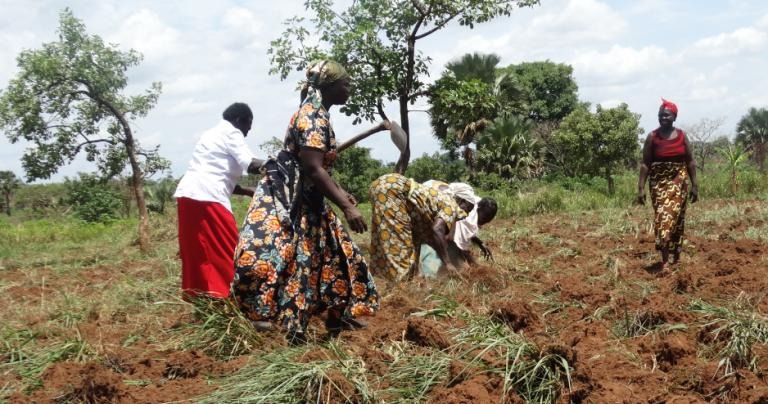
The Bill aims to empower smallholder farmers and promote inclusivity by embedding agroecology into law across the East African Community, fostering hope for a more sustainable future for these farmers.
In an interview with Witness Radio, the Chairperson of the Committee on Agriculture and Natural Resources in the East African Legislative Assembly (EALA), Hon. Gideon Gatpan Thoar, described the Bill as a long-overdue effort to give legal backing to a system already practiced by millions of farmers across the region.
“The purpose of this bill is to establish a regional legal framework to mainstream agroecological farming,” the Chairperson said, emphasizing that the law seeks to move agroecology from policy discussions into enforceable regional commitments.
The proposed law draws from the 13 FAO principles, integrating indigenous knowledge, cultural practices, and scientific innovation to strengthen its regional relevance.
“We want to promote practices that are consistent with our people, that are known to our cultures and traditions, and integrate them with science. There must be co-creation and inclusivity, especially for smallholder farmers,” he explained.
This framing positions agroecology not just as a farming method, but as a knowledge system shaped by communities themselves, challenging dominant agricultural models often driven by external actors.
The Bill emerges amid the ongoing expansion of industrial agriculture supported by global corporations and financiers, which may resist the shift towards agroecology. Understanding how the Bill will navigate or counteract this resistance is crucial for stakeholders concerned about regional agricultural transformation.
Despite this well-developed narrative, smallholder farmers remain the highest food producers. Yet the Chairperson acknowledged this imbalance of power, noting that agroecology faces stiff competition.
“There is a big fight from conventional agriculture. Big corporations are sponsoring data; they have a lot of money, and they have subsidized it,” he said.
Rather than banning industrial agriculture, whose adverse impacts on both smallholder farmers and the environment are evident, the Bill introduces a different strategy, one centered on protection and choice. It seeks to create legal and economic space for agroecological farmers, many of whom have historically been marginalized.
“We are not forcing a transition. We are creating a situation where there is choice and support for those who have been left behind, mainly women, youth, and smallholder farmers,” He clarified. This approach aims to foster hope and confidence that the new law will support sustainable options for all farmers.
The proposed law will also avoid the usage of highly hazardous pesticides and synthetic fertilizers, instead relying on ecological processes.
“We are very keen on highly hazardous agrochemicals… agroecological farmers will not be using them,” the Chairperson stated, emphasizing that support systems will drive the transition, fostering optimism for farmers’ sustainable options.
Uganda recently ordered the phase-out and restrictions on several commonly used agricultural chemicals, citing risks to human health, the environment, and the country’s ability to compete in the export market. The Ministry of Agriculture, Animal Industry, and Fisheries (MAAIF) said the decision was made after its Agricultural Chemicals Review Committee reviewed the chemicals and their “safety, trade, and national interest concerns.”
The Ministry said in the letter, “The actions and decisions made by the government are based on concerns for safety, trade, and the national interest.” Alpha-cypermethrin, atrazine, butachlor, dimethoate, and propanil are some of the chemicals that will be phased out. Importation will be banned right away, and the chemicals will be completely removed by the end of 2026.
While several East African countries already have agroecology strategies, such as Uganda’s NAS and Kenya’s strategy, these lack enforcement mechanisms. The regional Bill aims to establish binding compliance measures that will guide and harmonize national laws, ensuring effective implementation across the region.
“The regional law will be an anchor, reflecting in national systems to foster trust and regional unity,” the Chairperson explained, encouraging confidence in the legislative process.
The legislative process is ongoing, with the Bill expected to undergo drafting, committee review, and public consultations before a final vote, likely within several months.
Related posts:

EALA members renew push for unified sub-regional Agroecology Law during Mukono meeting.
East African lawmakers and CSO leaders are meeting in Uganda to draw up plans to promote Agroecology as an alternative to climate change mitigation.
Protect family farming land to guarantee global food sovereignty and Climate change adaptation and mitigation – Global conference on Family Farming.
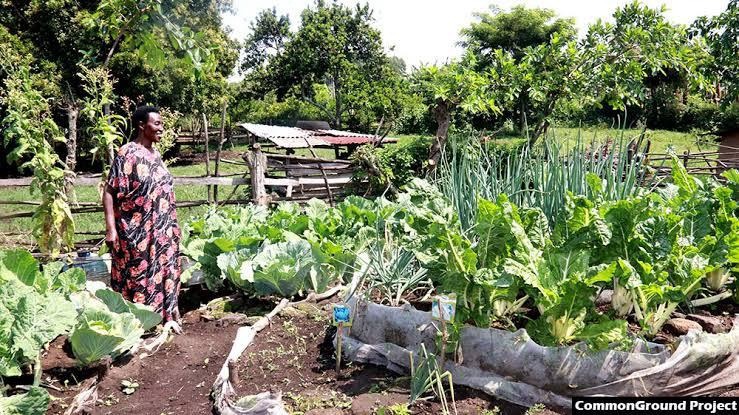
Using agroecology as a climate adaptation strategy and fighting extreme weather: A case of a retired teacher farming on a rocky terrain in Mukono, Uganda.
MEDIA FOR CHANGE NETWORK
African women are rising for climate justice and reparations on the inaugural continental day of action.
Published
21 hours agoon
April 15, 2026
By the Witness Radio team.
Today, April 15, 2026, hundreds of women environmental defenders, community organizations, and allies across Africa and beyond will mark the inaugural African Women’s Climate Justice Day, highlighting how these actions aim to deliver tangible benefits, such as improved resilience
and support for local communities affected by climate change.
Under the theme “Our Lands, Our Voices: African Women United for Reparations and Climate Justice!”, the Day of Action will showcase community-led activities across West and Central Africa, fostering hope and collective resilience.
Unlike traditional conferences or summits, the African Women’s Climate Justice Day has no central venue or “main event.” Instead, it will be observed through coordinated local actions including marches, workshops, symbolic dress actions, poster-making, storytelling, singing, and digital campaigns. Organizers say the decentralized approach reflects the movement’s spirit.
“There is no main event, but rather a Call to Action for communities to unite against the increasing climate crises affecting Africa. It seeks to unite the collective struggles of African women. Several community-level activities will take place simultaneously across West and Central Africa Women’s Climate Assembly (WCA) member countries and elsewhere on the continent,” WoMin African Alliance’s Extractives, Militarisation and Violence Against Women Coordinator Winnet Shamuyarira told Witness Radio team.
The African Women’s Climate Justice Day is rooted in years of organizing through the Women’s Climate Assembly (WCA) and allied movements such as the African Climate Justice Collective (ACJC) and the African People’s Counter-COP across West and Central Africa since 2022.
These platforms have consistently criticized global climate governance spaces such as COP summits for excluding frontline communities while prioritizing the interests of donor countries and corporations.
“Through our march and this assembly, we have left our fingerprints, and it is clear what we want for our environment, our climate, our ecosystem, our livelihoods. During the COPs, we have seen how donor countries’ agendas dominate. You cannot come and steal African resources, and at the same time help us to get climate justice.” Reveals Khady Faye, from Senegal.
The initiative emerges amid worsening climate impacts across the continent, where heatwaves, droughts, floods, cyclones, and land degradation are increasingly devastating communities.
Africa contributes the least to global emissions but continues to experience some of the world’s most severe climate shocks. According to Winnet, the crisis is not only environmental but also deeply political and economic. “Africa is living the climate crisis now, yet more than 60% of Africans depend on agriculture, with women forming the backbone of food production and household survival systems,” she added.
A central demand of the movement is climate reparations, a call for financial and structural accountability from historical and industrial polluters.
African women activists argue that climate justice must go beyond aid or adaptation funding to include recognition of what they describe as a “climate debt” owed to Africa by industrialized nations, international financial institutions, and transnational corporations.
“This day is an important symbol of African women’s agency. It is more than a call to action; it is a continuum of a beautiful story of resistance, solidarity, and survival. It’s an earth-shattering roar of women’s voices and transformative actions. It’s not a day, it’s a story of survival, agency, and resistance by the women of Africa,” Winnet added.
Esther Finde Kande from Sierra Leone emphasized that climate justice must reframe how African women are viewed globally: “Climate justice in Africa is not a request for charity; it is a recognition of the women who feed the continent while the earth warms.”
At the heart of the Day of Action are structured conversations and community education processes aimed at raising awareness on climate change, climate debt, and its root causes, building community dialogue on lived experiences of climate impacts, challenging extractive economic systems driven by multinational corporations, and strengthening African women’s collective demands for climate justice.
Organizers say the actions are intentionally political, aimed at challenging what they describe as a global capitalist system that prioritizes profit over people and ecosystems.
Following the event, the movement plans to continue advocating for change by lobbying governments, building legal cases, and resisting harmful projects, encouraging ongoing hope and determination.
The goal, organizers say, is to ensure that African women’s voices are not symbolic but central to global climate decision-making.
Declared following a resolution at the WCA Steering Committee meeting in Monrovia in February 2026, the African Women’s Climate Justice Day is being described as a historic milestone in feminist climate organising on the continent as it builds on earlier calls from the 2024 WCA in Saly, Senegal, where participants first proposed a dedicated day to recognise African women’s leadership in climate justice struggles.
Related posts:

Breaking: West and Central African women meet in Senegal over the climate crisis.
Press Release | African Women in Action: AfDB, Reparations NOT Debt!
African women unite on the frontlines of the Climate Crisis
Africa must unlock the power of its women to save climate change
MEDIA FOR CHANGE NETWORK
Ugandan Farmers Sue EACOP in London in Last Minute Effort to Stop Crude Oil Pipeline
Published
7 days agoon
April 9, 2026
Local farmer Okumu Weke next to an EACOP route beacon in Nyamtai village, Kikuube District in western region of Uganda. Credit: Maina Waruru/IPS
NYAMTAI, Uganda, Apr 3 2026 (IPS) – Environmental activists and farmer groups opposed to the construction of the East African Crude Oil Pipeline (EACOP), the world’s longest heated oil pipeline, are mounting a last-ditch legal effort meant to stop its construction in a suit they plan to have filed in London, UK, believing that it stands a chance to stop the controversial project despite being at the 78 percent completion stage.
The groups have engaged the services of the London law firm of Leigh Day, one of the UK’s leading environmental and public interest litigation firms, which in the past has won landmark compensation cases for northern Kenyan communities affected by unexploded UK military munitions, among others.
With the pipeline construction said to be nearly 80 percent complete, the groups believe their petition stands a good chance of success since EACOP is owned by a company registered at the Companies House in London – the EACOP Ltd.
This is despite the controversial 1,443 km pipeline, principally owned by TotalEnergies with a 62 percent stake, meant to evacuate crude from Western Uganda oilfields to the Indian port of Tanga in Tanzania, which has survived several suits filed in the region and in France and, despite the withdrawal of several would-be financiers, looks all set for completion later in the year, with the first oil exports due in October 2026.
Other owners of the pipeline are the governments of Uganda and Tanzania via the Uganda National Oil Company (UNOC – 15 percent) and the Tanzania Petroleum Development Corporation (TPDC – 15 percent), and the Chinese multinational China National Offshore Oil Corporation (CNOOC – 8 percent).
The plaintiffs, who include project-affected persons (PAPs) from across Uganda, are buoyed by the support of the global campaign group Avaaz, which in February initiated a fundraising effort to help with costs of the suit, ahead of its expected commencement in May.
They claim that the pipeline will violate rights protected by the Ugandan Constitution, which gives every citizen the right to a clean and healthy environment.
The local farmers allege that the construction and operation of the pipeline will have a material impact on global temperatures with severe consequences both worldwide and in Uganda. Further, they alleged that the pipeline is in breach of EACOP Ltd’s own legal obligations under Uganda’s National Environment Act and National Climate Change Act.
Snaking through Uganda and Tanzania, it will tear through some of the planet’s “most wondrous ecosystems”, carving up elephant sanctuaries, protected forests, and more than 200 rivers.
In addition, the massive infrastructure, also the longest crude oil pipeline in Africa, will result in almost 400 million tonnes of emissions over its lifetime and have a major impact on climate change, they claim.
Besides, they argue that the emissions released by oil carried by the pipeline will ‘materially’ contribute to global warming and fear the impact this will have on them and their livelihoods, as well as on the environment and the health of Ugandans.
EACOP is expected to result in more than 372 million tonnes of CO₂e, or greenhouse gas, emissions—more than 58 times Uganda’s total annual emissions, they contend.
Uganda is particularly impacted by climate change, having already suffered from “record-breaking occurrences of floods, devastating and frequent droughts and erratic rainfall patterns”, according to a report sent by the Ugandan government to the UN, which will only increase as climate change worsens.
“The case is one of a growing number of legal claims seeking to hold global energy companies and infrastructure providers to account for the emissions resulting from their extraction of fossil fuels,” Leigh Day said in a statement.
“Our clients believe the EACOP pipeline will result in enormous damage to the global climate as well as severe damage to their local environment. The EACOP will lead to a huge amount of oil being burnt in a world where the UN has confirmed there are already far more fossil fuels slated for extraction than required if we are to meet the goals of the Paris Agreement, said Leigh Day solicitor Joe Snape, who will represent the group.
The fact that the pipeline is operated and financed by a UK-registered company highlights the role UK corporates often have in fossil fuel extraction projects in the Global South, he added
He further noted, “Our clients are already living on the frontline of the climate crisis and argue this pipeline will only exacerbate the impact they, and other vulnerable communities around the world, experience on their lives and livelihoods. They are calling for the pipeline construction and operations to be halted to stop this damaging impact on the climate in Uganda and elsewhere around the world.”
While around a third (460 km) of the pipeline will run through the basin of Lake Victoria, Africa’s largest lake, local environmentalists warn that a spill or leak could potentially result in catastrophic effects for the lake, which is a vital water resource in the region and a significant source for the River Nile.
The pipeline will also run through and disturb important habitats and nature reserves, including Murchison Falls National Park, the Taala Forest Reserve, and the Bugoma Forest. The pipeline will reportedly disturb around 2,000 square kilometres of protected habitats, impacting rare and endangered species that inhabit them, such as Eastern Chimpanzees and African Elephants.
For its part, Avaaz said its fundraising effort will support the “groundbreaking” court helping expose the environmental abuses and climate devastation that this project will cause. Further, it will help to defend land rights for Indigenous and frontline communities and “continue the quest to protect life on Earth.”
“With help from Avaaz members, communities in East Africa have already fought this project through regional courts — but their case was dismissed on a technicality. This new lawsuit in the UK is the last remaining path to stopping this monster pipeline. Legal experts believe it offers a far better shot at a fair, independent hearing — with a real possibility of success,” the campaign noted.
The group promised to “stage an epic media stunt” around the launch of the court case, increasing pressure on insurance companies to walk away from the project, and support families in Uganda and Tanzania who are fighting evictions, providing cash assistance for food, medicine and other basic necessities.
The USD 5.6 billion project was initiated in 2016 amid delays, resistance, and scrutiny. Over the past two years, EACOP has accelerated, with infrastructure taking shape along its route and at its two key oil fields: Tilenga, awarded to TotalEnergies, and Kingfisher, awarded to CNOOC.
IPS UN Bureau Report
Source: Inter Press Service News Agency
Related posts:

Close to 20 local farmers are in jail for fighting for their land not to be taken by the East Africa Crude Oil Pipeline (EACOP).
Insurance firms should shun the East African Crude Oil Pipeline
Uganda, Total sign crude oil pipeline deal
EACOP: Another community of 80 households has lost its land to the government and Total Energies to construct an oil pipeline.
Agroecological farming: EAC Bill moves to Parliament to establish a regional legal framework to protect and promote sustainable farming and food systems.
African women are rising for climate justice and reparations on the inaugural continental day of action.
Africa is capturing just 2% of its carbon credit potential
Ugandan Farmers Sue EACOP in London in Last Minute Effort to Stop Crude Oil Pipeline
Oil-affected residents and civil society organizations reject TotalEnergies’ Tilenga Progress Report, citing unfairness in their operations.
The South African High Court concludes hearing a landmark case challenging TotalEnergies’ Deep-Water Drilling project and offers to deliver its ruling on notice.
U.S. Peace Efforts in the DRC: Protecting Communities or Minerals?
Sham Presidential Commissions Rubber Stamp Tanzanian Government’s Efforts to Evict Indigenous Maasai from Ngorongoro Conservation Area
Innovative Finance from Canada projects positive impact on local communities.

Over 5000 Indigenous Communities evicted in Kiryandongo District

Petition To Land Inquiry Commission Over Human Rights In Kiryandongo District

Invisible victims of Uganda Land Grabs
Resource Center
- Land And Environment Rights In Uganda Experiences From Karamoja And Mid Western Sub Regions
- REPARATORY AND CLIMATE JUSTICE MUST BE AT THE CORE OF COP30, SAY GLOBAL LEADERS AND MOVEMENTS
- LAND GRABS AT GUNPOINT REPORT IN KIRYANDONGO DISTRICT
- THOSE OIL LIARS! THEY DESTROYED MY BUSINESS!
- RESEARCH BRIEF -TOURISM POTENTIAL OF GREATER MASAKA -MARCH 2025
- The Mouila Declaration of the Informal Alliance against the Expansion of Industrial Monocultures
- FORCED LAND EVICTIONS IN UGANDA TRENDS RIGHTS OF DEFENDERS IMPACT AND CALL FOR ACTION
- 12 KEY DEMANDS FROM CSOS TO WORLD LEADERS AT THE OPENING OF COP16 IN SAUDI ARABIA
Legal Framework
READ BY CATEGORY
Newsletter
Trending
-
MEDIA FOR CHANGE NETWORK2 weeks agoGlobal Peasant Movement calls for action against escalating land grabs and repression.
-
MEDIA FOR CHANGE NETWORK21 hours agoAfrican women are rising for climate justice and reparations on the inaugural continental day of action.
-
MEDIA FOR CHANGE NETWORK7 days agoUgandan Farmers Sue EACOP in London in Last Minute Effort to Stop Crude Oil Pipeline
-
NGO WORK1 week agoTwo dead as Siaya protests against gold mining firm turn tragic
-
DEFENDING LAND AND ENVIRONMENTAL RIGHTS4 days agoAfrica is capturing just 2% of its carbon credit potential
-
MEDIA FOR CHANGE NETWORK7 days agoMinister Cancels Contested 12-Square-Mile Land Title in Mubende
-
MEDIA FOR CHANGE NETWORK20 hours agoAgroecological farming: EAC Bill moves to Parliament to establish a regional legal framework to protect and promote sustainable farming and food systems.