Connect with us

MEDIA FOR CHANGE NETWORK

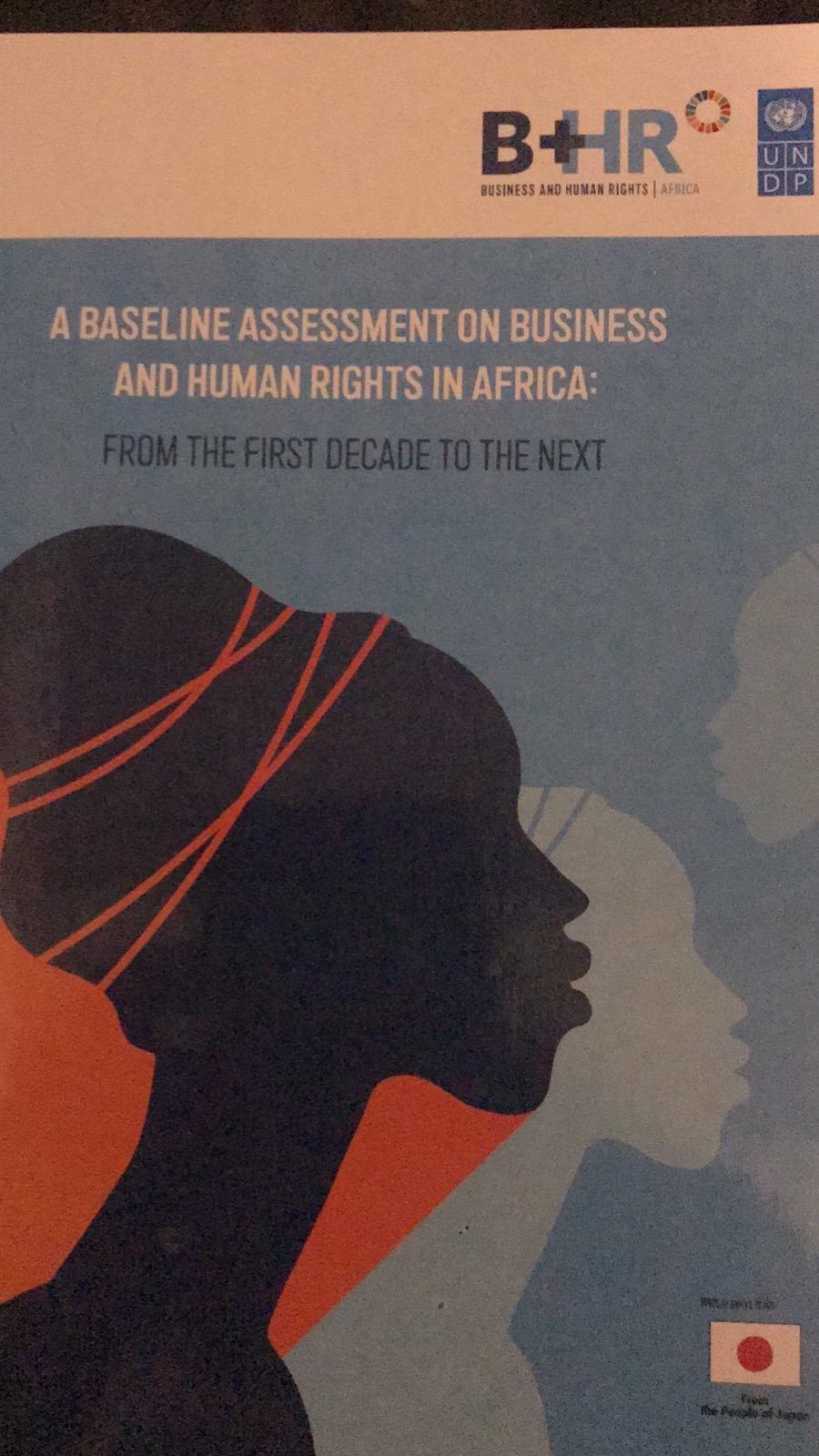
United Nations Guiding Principles on Business and Human Rights (UNGPs10+) have been released in Accra, Ghana.

Published

on

By Witness Radio Team,

The United Nations Guiding Principles on Business and Human Rights have identified eight action areas aiming at scaling up its integration, implementation and corresponding supporting actions to be taken by States and businesses, as well as other stakeholders in the next 10 years.

The overall objective of the action areas is to fasten the ambition to support the overall urgent need for more coherent action detailing priority goals connected to each action area and setting out what needs to happen over the next decade.

According to the UNGPs, the action areas should be translated to practice so as to “achieve tangible results for affected individuals and communities, and thereby also contributing to a socially sustainable globalization.”

They include, UNGPs to act as a compass for meeting global challenges, state duty to protect, business responsibility to respect, access to remedy, more and better stakeholder engagement, more and better leverage to drive faster change, more and better tracking of progress and more and better international cooperation and implementation support.

The action areas listed identify priority goals of what needs to happen and supporting actions to be taken by States and businesses as well as other key stakeholders, all playing a role in realizing UNGPs implementation and their expected outcomes.

In June 2021, the UNGPs marked the tenth anniversary since its endorsement by the Human Rights Council which was termed as a major step forward in efforts to prevent and address business-related human rights abuses

The office of the OHCHR notes that as part of its mandate promote the UNGPs, the Working Group on Business and Human Rights launched a project in July 2020 to take stock of implementation of the UNGPs to date and chart a course for action in the decade ahead known as the “UNGPs 10+” or “next decade BHR” project.

The UNGPs and their three pillars (the State duty to protect human rights; the business responsibility to respect human rights; and the need for better access to remedy) provide the roadmap to recalibrate the balance between the State, people and markets, and to narrow and ultimately bridge the gaps between economic forces and respect for human rights, particularly for the most marginalized and vulnerable.

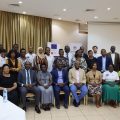
Yesterday marked the end of two-day-African Forum on Business and Human rights in Ghana were Advocates all over the world met to assess the performance of United Nations Guiding Principles (UNGPs 10+) on business and human rights on the African continent.

In the recent days, states and stake holders had overlooked the concerns of human rights abuses raised by native communities on companies operating business in their areas, this according to UNGPs implementation will address capacity gaps among State and business actors and enable them meet their respective duties and responsibilities and business responsibility on ground.

Continue Reading

MEDIA FOR CHANGE NETWORK

Govt tightens human rights protections in extractive industry

Published

on

The proposed mechanism is expected to provide a formal and accessible avenue for individuals and communities to seek redress when their rights are violated by business operations, including corruption, gender-based violence, child labour, labour rights violations, unfair compensation and other business-related grievances.

Bernard Mujuni, the commissioner for equity and rights at the Ministry of Gender, Labour and Social Development, said the initiative is intended to bridge existing gaps in access to justice, particularly for vulnerable communities affected by large-scale investments in oil and gas and mineral extraction in many parts of the country.

The Ugandan government is developing a national grievance redress and accountability mechanism to enable communities affected by business activities to report human rights violations, unfair compensation, corruption and other abuses, in the extractives sector.

The proposed mechanism is expected to provide a formal and accessible avenue for individuals and communities to seek redress when their rights are violated by business operations, including corruption, gender-based violence, child labour, labour rights violations, unfair compensation and other business-related grievances.

Bernard Mujuni, the commissioner for equity and rights at the Ministry of Gender, Labour and Social Development, said the initiative is intended to bridge existing gaps in access to justice, particularly for vulnerable communities affected by large-scale investments in oil and gas and mineral extraction in many parts of the country.

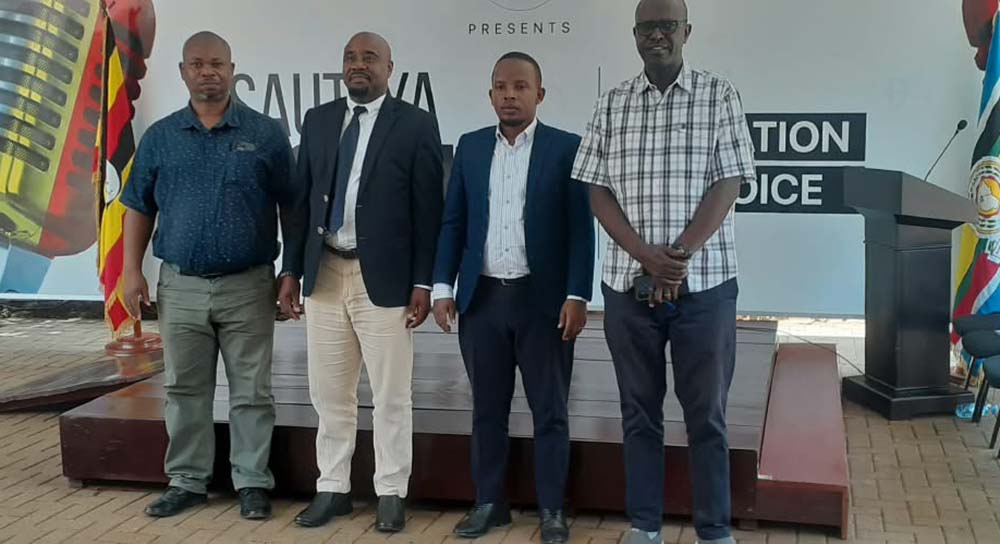
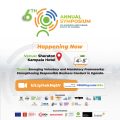
He made ​the remarks on Friday (October 23) at the Uganda Media Centre while announcing the Seventh National Forum on Business and Human Rights, which will take place from October 26 to 28 at the Sheraton Kampala Hotel.

The ​Government is encouraging businesses to integrate human rights considerations into their operations, especially in sectors involving land acquisition, natural resources, large-scale infrastructure projects and extractive industries

“An individual should be able to access remedies when a violation takes place in business operations,” said Mujuni.

He said some communities affected by development projects often lose out during compensation processes, with intermediaries allegedly taking substantial portions of money intended for project-affected persons, leaving them with little recourse.

It is hoped the​ ​new grievance mechanism will strengthen accountability by providing a recognised platform through which such concerns can be reported, investigated and resolved.

Oil pipeline

Mujuni pointed to Uganda’s oil pipeline project as an example of growing efforts to integrate human rights considerations into major investments, particularly in relation to land rights, compensation and community engagement

He said the project had embraced principles contained in Uganda’s National Action Plan on Business and Human Rights, describing the compensation framework adopted along the project corridor in Uganda and Tanzania as a significant step forward.

“This is a milestone for this country,” he said, while commending President Yoweri Museveni for supporting Uganda’s business and human rights agenda.

Mujuni stressed that investors must engage meaningfully with affected communities and respect their rights to land, livelihoods and other resources.

He cautioned against the appropriation of community-owned resources without adequate consultation and compensation, warning that failure to address legitimate grievances could spark disputes, delay projects and increase operational costs.

“Human rights concerns should be dealt with before they escalate into conflict, litigation or disruptions that can ultimately affect investment outcomes.”

The extractives sector will be a key area of discussion at the upcoming forum, with participants expected to examine the human rights implications of resource exploitation, protection of affected communities and the role of environmental and human rights defenders.

Abuses in sugar plantations

Beyond the extractives sector, concerns were raised about persistent labour rights violations in large-scale agricultural enterprises, particularly sugarcane plantations.

Child labour, sexual harassment, workplace exploitation and violence against women and girls were cited as some of the challenges identified during inspections conducted by the gender ministry in districts such as Mayuge and Hoima

Working alongside labour officers, community development officers and other stakeholders, the ministry has undertaken a series of human rights inspections aimed at ensuring compliance with labour standards.

Mujuni said such abuses not only undermine workers’ dignity and wellbeing but can also disrupt business operations and damage investor reputations.

He said the Government has introduced employment regulations aimed at addressing sexual harassment in the workplace and strengthening protections for workers.

The initiative, dubbed Advancing Respect for Human Rights by Businesses in Uganda, is being implemented by the ministry in partnership with Enabel, the Belgian Agency for International Cooperation, with support from the European Union.

Sector-based minimum wage

It is understood the Government is reviewing several labour-related issues, including minimum wages, workers’ compensation and protections for domestic workers

Ongoing research and consultations are intended to guide future policy proposals following a directive from President Museveni that a comprehensive study be undertaken before the Government adopts a minimum wage framework.

Rather than introducing a blanket minimum wage across all sectors, the Government is exploring the possibility of sector-specific wage structures that consider the unique circumstances of different industries.

Human rights forum

The Seventh National Forum on Business and Human Rights will be held under the theme: “Reflecting on Progress and Strengthening Commitment: The Journey of Uganda’s National Action Plan on Business and Human Rights.”

Discussions will focus on labour rights and decent work, land and natural resources, environmental protection and climate justice, access to remedies, consumer protection, corporate accountability, as well as technology, digital rights and data protection.

Mujuni urged workers to report cases of intimidation, mistreatment and sexual harassment through established workplace channels, including human resource departments and sexual harassment committees.

He revealed that the SAUTI reporting mechanism receives about 200 cases daily, which are processed and referred to relevant authorities for action

The SAUTI 116 toll-free platform brings together multiple institutions capable of investigating complaints and ensuring victims receive appropriate support and justice.

Continue Reading

MEDIA FOR CHANGE NETWORK

African faith leaders are raising their voices for reparations as AGRA’s 20-year legacy faces intense scrutiny.

Published

on

By the Witness Radio team.

Africa grapples with some of the world’s most severe food security challenges. Today, 309 million people go hungry—outnumbering even Asia’s 292 million. The continent pours between US$70 billion and US$100 billion annually into food imports.

Despite decades of effort by governments, development partners, and countless organizations to improve agriculture and uplift smallholder farmers, these challenges remain. A flagship initiative, the Alliance for a Green Revolution in Africa (AGRA), launched in 2006 with backing from the Bill & Melinda Gates Foundation and the Rockefeller Foundation, now marks two decades of striving to transform African agriculture.

In a statement marking its 20th anniversary this year, the organization described the milestone as an opportunity to reflect on two decades of working with governments, farmers, research institutions, the private sector and development partners to strengthen Africa’s food systems.

Yet African faith leaders argue the initiative has fallen short of its promise to reduce hunger and improve food security. They are now demanding that the Gates Foundation be held accountable for the consequences of the agricultural model it has championed.

On Thursday, October 29, 2026, faith leaders from more than 20 African countries held an online press conference after delivering an open letter to the Gates Foundation on October 28.

The letter, titled African Faith Leaders Demand Reparations from the Gates Foundation and signed by 625 faith leaders with backing from 360 organizations and partners, urges the Foundation to provide reparations and shift its funding toward smallholder farmers, indigenous seeds, healthy soils, and agroecological farming systems.

The leaders contend that AGRA’s Green Revolution approach has failed to tackle hunger and, worse, has eroded food sovereignty and weakened communities’ control over their own food systems.

They add that AGRA has received more than US$1.5 billion since its establishment, with approximately two-thirds of the funding coming from the Gates Foundation.

“The Green Revolution promised to halve hunger. Instead, 55 million more people in AGRA’s focus countries are going hungry today than when it began,” said Ms. Francesca de Gasparis, Executive Director of the Southern African Faith Communities’ Environment Institute (SAFCEI).

“When a strategy fails this badly, for this long, continuing to fund it perpetuates harm. We are calling on the Gates Foundation to take the independent research seriously and change its approach,” Ms. de Gasparis added.

The leaders’ concerns are informed by research from Tufts University and the Alliance for Food Sovereignty in Africa (AFSA), which found that the number of undernourished people in AGRA’s 13 focus countries increased by 58% between 2004–2006 and 2022–2024.

AGRA has pushed back against these findings, challenging both the research and its methodology. This debate has reignited doubts about whether two decades of investment have truly improved livelihoods and food security for Africa’s smallholder farmers.

In the online discussions that followed the letter’s launch, faith leaders urged the Gates Foundation, AGRA, African governments, and development partners to place the sovereignty and well-being of African people at the heart of all agricultural investments.

“African people must be the architects of their own agricultural future. The church does not oppose science but demands science that saves lives,” said Rev. Dr. Tolbert Thomas Jallah, a faith leader from Liberia.

Rev. Dr. Jallah said science must serve humanity, innovation must serve the public good, and technology should strengthen communities’ ability to feed themselves.

The faith leaders said they had previously raised similar concerns with the Gates Foundation. In 2021, they wrote to the Foundation asking it to stop funding Green Revolution programs. SAFCEI said it later met with Foundation representatives, but those engagements did not result in a meaningful response to their concerns.

The press conference brought together representatives from Liberia, Kenya, Botswana, Namibia, Malawi, Zimbabwe and South Africa, while the letter’s signatories came from more than 20 countries across West, East and Southern Africa.

The faith leaders also voiced concerns about how corporate-driven agriculture affects women, who are the backbone of food production and household food security throughout Africa.

Ms. Josephina Ngishoono, representing the Namibia Council of Churches, emphasized that women shoulder much of the burden when agricultural systems put commercial interests ahead of the needs of farming communities.

She pointed out that while women are major contributors to food production, they still face unequal access to land, resources, agricultural knowledge, and decision-making power.

“Corporate-led agriculture that prioritizes patented seeds, chemical inputs, as well as monoculture, risks undermining the women’s traditional knowledge systems, the agroecological practices that have been passed down from generations,” Ms. Ngishoono said.

She warned that when women lose control over seeds and farming decisions, their financial independence and their power to choose what and how to grow food for their families are put at risk.

She called for women to be recognized as agricultural leaders in their own right, not just as passive beneficiaries of development programs.

She further urged the Gates Foundation to champion community seed banks, indigenous seeds, community-managed seed systems, composting, soil restoration, and research led by local communities in agroecology.

“There is a need to protect farmers’ rights and their seed sovereignty and to prioritize public health, environmental health, and long-term food security,” she said.

Ms. Gorata Ramokgothwane of the Botswana Council of Churches highlighted how climate change relentlessly undermines food sovereignty and food security throughout sub-Saharan Africa.

She voiced alarm over the push for farming systems that rely heavily on chemical inputs, cautioning that these methods could damage fragile ecosystems and erode traditional farming practices.

Speaking for women faith leaders, Ms. Ramokgothwane called for a powerful regional movement to advance community-led agroecology throughout Southern Africa.

“As councils of churches in the region, we must identify and intensify our efforts in resource mobilization towards grassroots solidarity in advancing indigenous or traditional preservation,” she said.

She pointed to communities in Botswana that use leadwood ash to preserve seeds for beans, millet, and sorghum, showcasing these traditions as vital knowledge that can fortify local food systems.

“Some communities have resorted to seed banks dedicated to preserving native staples, such as millet, sorghum, beans, and some traditional vegetables,” she added.

Ms. Ramokgothwane said these methods could empower communities to break free from costly agricultural inputs, safeguard indigenous foods, and sustain ecological balance.

She also cautioned that women smallholder farmers are especially at risk when input prices soar or harvests fall short of covering costs. She added that restrictive seed laws can further limit farmers’ ability to save and share traditional seeds.

“As women of faith and leaders in our communities, we know that the Gates Foundation has the moral obligation to independently analyze the needs of smallholder farmers and support the seed-saving practices in irrigation for smallholder farmers,” she said.

Muslim faith leaders in Africa were also represented at the discussions by Dr Sheik Hassan Kenyamari, Chairman of Muslim Provinces in Africa.

Dr Kenyamari voiced unease about the direction, priorities, and lasting consequences of agricultural innovations backed by the Gates Foundation, especially through its partnership with AGRA.

He insisted that Africa’s agricultural transformation must put farmers, communities, ecological integrity, and the right to food above narrow productivity goals and commercial interests.

AGRA, however, rejects claims that its agricultural model has failed, arguing that its progress over the past 20 years should be assessed against the broader challenges facing African food systems.

In its August 2026 Impact, Learning and Foresight Report, the organization says agricultural output across Africa has roughly doubled in real terms since 2005, while cereal yields have increased by about 40%.

It also points to the growth of local seed companies, agricultural input distribution networks and community extension services as evidence of progress.

Continue Reading

MEDIA FOR CHANGE NETWORK

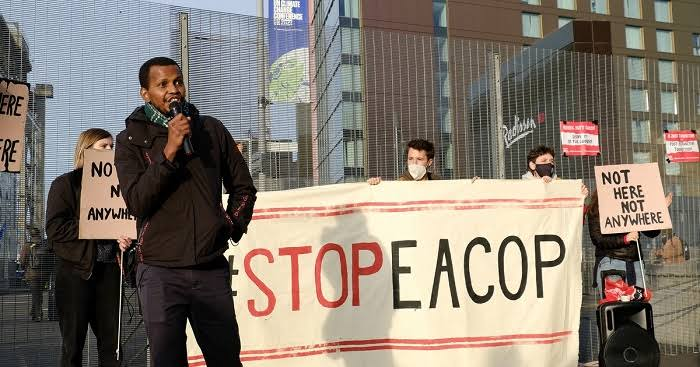
149 CSOs and groups demand answers from banks over $3.7bn in EACOP financing
Published

on

StopEACOP demands accountability after undisclosed bank loans revealed

…149 civil society organisations demand full disclosure from regional lenders tied to the $3.7B in EACOP financing, as Uganda pushes for commercial production by June 2027.

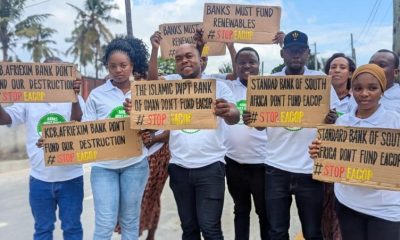
THE StopEACOP coalition today sent an open letter to eight African and Middle East financial institutions, urging them to fully disclose their involvement in the East African Crude Oil Pipeline (EACOP).

The letter, signed by 149 organisations including groups from EACOP affected communities, follows new analysis that revealed previously undisclosed lending to the EACOP project.

Reclaim Finance identified roughly US$3.7 billion in project lending between 2025 and 2026, with Afreximbank, KCB Group and KCB Bank Uganda, the Islamic Development Bank Group and the Islamic Corporation for the Development of the Private Sector, NMB Bank Tanzania, Qatar National Bank, Standard Bank Group and Stanbic Bank Uganda, and Uganda Development Bank linked to deals.

At African Energy Week (October 12–16), Uganda National Oil Company officials said they now aimed for commercial oil production by June 2027, a further delay after previous first-oil target dates were set for 2025, then June 2026 and July 2026. Tanzania’s state petroleum company separately stated crude should reach Tanga by February 2027, with the first tanker loading in March.

After more than 40 banks and 30 insurers refused to back EACOP or adopted policies against it, African and Gulf lenders largely covered the remaining debt. Only a first portion, from Afreximbank, Standard Bank, Stanbic Bank Uganda, KCB Bank Uganda, and ICD, was ever publicly confirmed by EACOP Ltd, and without amounts. The terms and exposure of the larger group, including NMB Bank, Qatar National Bank, and Uganda Development Bank, remain undisclosed.

What the coalition wants:

The letter demands each institution:

  • Disclose the full scope, structure, and terms of its support to EACOP, including exposure through bonds, guarantees, or réhaadvisory roles.
  • Commit to no further funding for EACOP expansion or related oil development in the Albertine Graben or elsewhere.
  • Fund remedy for harm to affected communities, through an independent, community-led mechanism providing compensation, livelihood restoration, and environmental cleanup, paid by EACOP Ltd and its backers proportional to their role.

Why does it matter now?

“First oil does not mark an end to the harm caused by EACOP. It escalates and entrenches it,” said Zaki Mamdoo, StopEACOP Campaign Coordinator. “The institutions who have poured billions into EACOP must now answer publicly for what they have financed and must take responsibility for repairing the destruction brought by their investment decisions.”

For people whose land and livelihoods have been affected by the pipeline, the consequences of these financing decisions are already part of daily life.

“When they took our land, we lost more than the land itself. We lost the means to support our families. Compensation was supposed to help us rebuild our lives, but for some of us, that has not happened. Now we hear about the banks financing this pipeline, and we want to know: do they understand what has happened to the people whose land made this project possible?”, said Rachael Tugume, EACOP-Project Affected Person.

“Dozens of banks and insurers have rightly refused to support TotalEnergies’ EACOP project due its massive impacts on climate, local biodiversity, communities’ livelihoods and human rights. The 8 banks that have accepted to finance the project will be held accountable by civil society organisations for these impacts. They must get ready to contribute to reparative justice for communities and commit to exclude any new financing to oil and gas expansion in Uganda and the rest of the world.” said Antoine Bouhey, Defund TotalEnergies’ campaign coordinator at Reclaim Finance.

The coalition warns that the risks it has documented – including land acquisition and compensation failures, lost livelihoods, militarization, and environmental damage along the route and at the Chongoleani terminal in Tanga – won’t end when oil flows. They will get worse.

In the letter, the financial institutions are asked to clarify their position by 16 November. The coalition will publish all responses and non-responses after the deadline.

Notes to editors

  • The open letter, signatory list link
  • Spokespeople are available in Uganda, Tanzania and from our internal experts.

###

For media inquiries, contact:

Abiud Onyach

Communications & Digital Lead

StopEACOP Campaign

info@stopeacop.net | +254700593687

About the StopEACOP Campaign

The StopEACOP Coalition is an alliance of local groups, communities, and African and global organizations. The #StopEACOP Coalition has been calling for a halt to the proposed pipeline and associated oil fields at Tilenga and Kingfisher. The StopEACOP campaign is gaining momentum, building pressure on the remaining supporters and financiers of the East African Crude Oil Pipeline. To date, 43 banks and 30 (re)insurers have already ruled out support for EACOP.

Source: realnewsmagazine.net

Continue Reading

Resource Center

Legal Framework

READ BY CATEGORY

Facebook

Newsletter

Subscribe to Witness Radio's news and report updates


Trending

Subscribe to Witness Radio's news and report updates