On the eve of an annual gathering of public development banks in Rome, 280 groups from 70 countries have signed a letter slamming them for bankrolling the expansion of industrial agriculture, environmental destruction and corporate control of the food system. The signatories affirm only fully public and accountable funding mechanisms based on people’s actual needs can achieve real solutions to the global food crisis.
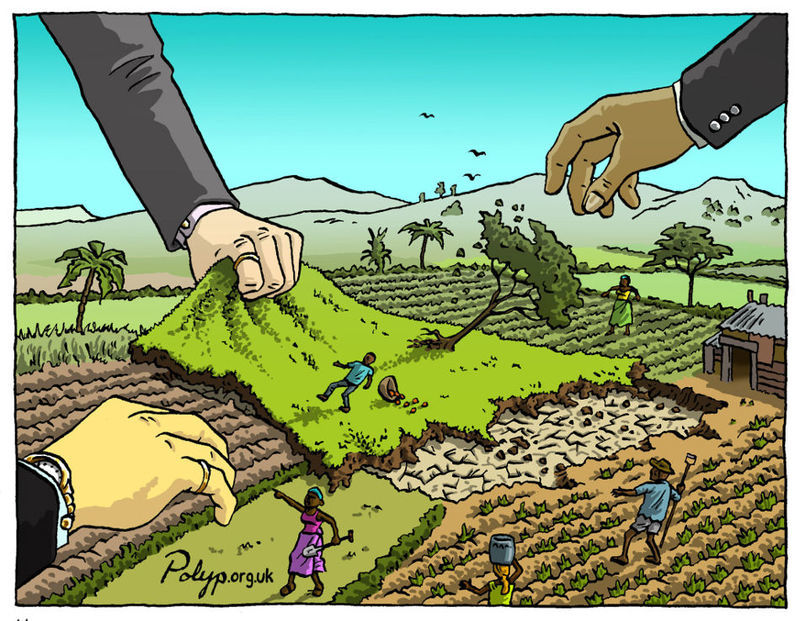
Over 450 Public Development Banks (PDBs) from around the world are gathering in Rome from 19 to 20 October 2021 for a second international summit, dubbed Finance in Common. During the first summit in Paris in 2020, over 80 civil-society organizations published a joint statement demanding that the PDBs stop funding agribusiness companies and projects that take land and natural resources away from local communities. This year, however, PDBs have made agriculture and agribusiness the priority of their second summit. This is of serious concern for the undersigned groups as PDBs have a long track-record of making investments in agriculture that benefit private interests and agribusiness corporations at the expense of farmers, herders, fishers, food workers and Indigenous Peoples, undermining their food sovereignty, ecosystems and human rights.
Our concerns
PDBs are public institutions established by national governments or multilateral agencies to finance government programs and private companies whose activities are said to contribute to the improvement of people’s lives in the places where they operate, particularly in the Global South. Many multilateral development banks, a significant sub-group of PDBs, also provide technical and policy advice to governments to change their laws and policies to attract foreign investment.
As public institutions, PDBs are bound to respect, protect and fulfil human rights and are supposed to be accountable to the public for their actions. Today, development banks collectively spend over US$2 trillion a year financing public and private companies to build roads, power plants, factory farms, agribusiness plantations and more in the name of “development” – an estimated US$1.4 trillion goes into the sole agriculture and food sector. Their financing of private companies, whether through debt or the purchase of shares, is supposed to be done for a profit, but much of their spending is backed and financed by the public – by people’s labor and taxes.
The number of PDBs and the funding they receive is growing.The reach of these banks is also growing as they are increasingly channeling public funds through private equity, “green finance” and other financial schemes to deliver the intended solutions instead of more traditional support to government programs or non-profit projects. Money from a development bank provides a sort of guarantee for companies expanding into so-called high-risk countries or industries. These guarantees enable companies to raise more funds from private lenders or other development banks, often at favorable rates. Development banks thus play a critical role in enabling multinational corporations to expand further into markets and territories around the world – from gold mines in Armenia, to controversial hydroelectric dams in Colombia, to disastrous natural gas projects in Mozambique – in ways they could not do otherwise.
Additionally, many multilateral development banks work to explicitly shape national level law and policy through their technical advice to governments and ranking systems such as the Enabling the Business of Agriculture of the World Bank. The policies they support in key sectors — including health, water, education, energy, food security and agriculture — tend to advance the role of big corporations and elites. And when affected local communities, including Indigenous Peoples and small farmers protest, they are often not heard or face reprisals. For example, in India, the World Bank advised the government to deregulate the agricultural marketing system, and when the government implemented this advice without consulting with farmers and their organisations, it led to massive protests.
Public Development Banks claim that they only invest in “sustainable” and “responsible” companies and that their involvement improves corporate behavior. But these banks have a heavy legacy of investing in companies involved in land grabbing, corruption, violence, environmental destruction and other severe human rights violations, from which they have escaped any meaningful accountability. The increasing reliance of development banks on offshore private equity funds and complex investment webs, including so called financial intermediaries, to channel their investments makes accountability even more evasive and enables a small and powerful financial elite to capture the benefits.
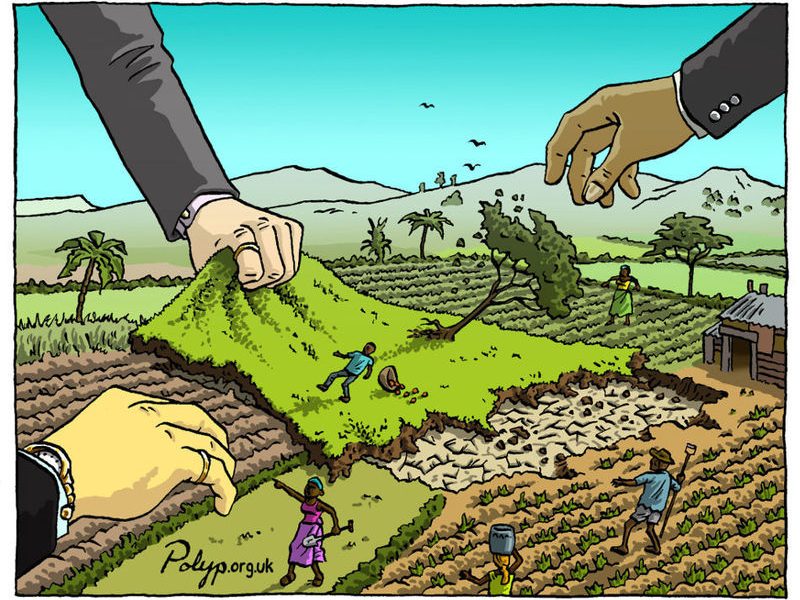
It is alarming that Public Development Banks are now taking on more of a coordinated and central role when it comes to food and agriculture. They are a part of the global financial architecture that is driving dispossession and ecological destruction, much of which is caused by agribusiness. Over the years, their investment in agriculture has almost exclusively gone to companies engaged in monoculture plantations, contract growing schemes, animal factory farms, sales of hybrid and genetically modified seeds and pesticides, and digital agriculture platforms dominated by Big Tech. They have shown zero interest in or capacity to invest in the farm, fisher and forest communities that currently produce the majority of the world’s food. Instead, they are bankrolling land grabbers and corporate agribusinesses and destroying local food systems.
Painful examples
Important examples of the pattern we see Public Development Banks engaging in:
-
The European Bank for Reconstruction and Development and the European Investment Bank have provided generous financing to the agribusiness companies of some of Ukraine’s richest oligarchs, who control hundreds of thousands of hectares of land.
-
SOCFIN of Luxembourg and SIAT of Belgium, the two largest oil palm and rubber plantation owners in Africa, have received numerous financial loans from development banks, despite their subsidiaries being mired in land grabbing, corruption scandals and human rights violations.
-
Multiple development banks (including Swedfund, BIO, FMO and the DEG) financed the failed sugarcane plantation of Addax Bioenergy in Sierra Leone that has left a trail of devastation for local communities after the company’s exit.
-
The UK’s CDC Group and other European development banks (including BIO, DEG, FMO and Proparco) poured over $150 million into the now bankrupt Feronia Inc’s oil palm plantations in the DR Congo, despite long-standing conflicts with local communities over land and working conditions, allegations of corruption and serious human rights violations against villagers.
-
The United Nations’ Common Fund for Commodities invested in Agilis Partners, a US-owned company, which is involved in the violent eviction of thousands of villagers in Uganda for a large-scale grain farm.
-
Norfund and Finnfund own Green Resources, a Norwegian forestry company planting pine trees in Uganda on land taken from thousands of local farmers, with devastating effects on their livelihoods.
-
The Japan Bank for International Cooperation and the African Development Bank invested in a railway and port infrastructure project to enable Mitsui of Japan and Vale of Brazil to export coal from their mining operations in northern Mozambique. The project, connected to the controversial ProSavana agribusiness project, has led to land grabbing, forced relocations, fatal accidents and the detention and torture of project opponents.
-
The China Development Bank financed the ecologically and socially disastrous Gibe III dam in Ethiopia. Designed for electricity generation and to irrigate large-scale sugar, cotton and palm oil plantations such as the gargantuan Kuraz Sugar Development Project, it has cut off the river flow that the indigenous people of the Lower Omo Valley relied on for flood retreat agriculture.
-
In Nicaragua, FMO and Finnfund financed MLR Forestal, a company managing cocoa and teak plantations, which is controlled by gold mining interests responsible for displacement of Afro-descendant and Indigenous communities and environmental degradation.
-
The International Finance Corporation and the Inter-American Development Bank Invest have recently approved loans to Pronaca, Ecuador’s 4th largest corporation, to expand intensive pig and poultry production despite opposition from international and Ecuadorian groups, including local indigenous communities whose water and lands have been polluted by the company’s expansive operations.
-
The Inter-American Development Bank Invest is considering a new $43 million loan for Marfrig Global Foods, the world’s 2nd largest beef company, under the guise of promoting “sustainable beef.” Numerous reports have found Marfrig’s supply chain directly linked to illegal deforestation in the Amazon and Cerrado and human rights violations. The company has also faced corruption charges. A global campaign is now calling for PDBs to immediately divest from all industrial livestock operations.
We need better mechanisms to build food sovereignty
Governments and multilateral agencies are finally beginning to acknowledge that today’s global food system has failed to address hunger and is a key driver of multiple crises, from pandemics to biodiversity collapse to the climate emergency. But they are doing nothing to challenge the corporations who dominate the industrial food system and its model of production, trade and consumption. To the contrary, they are pushing for more corporate investment, more public private partnerships and more handouts to agribusiness.
This year’s summit of the development banks was deliberately chosen to follow on the heels of the UN Food Systems Summit. It was advertised as a global forum to find solutions to problems afflicting the global food system but was hijacked by corporate interests and became little more than a space for corporate greenwashing and showcasing industrial agriculture. The event was protested and boycotted by social movements and civil society, including through the Global People´s Summit and the Autonomous People´s response to the UN Food Systems Summit, as well as by academics from across the world.
The Finance in Common summit, with its focus on agriculture and agribusiness, will follow the same script. Financiers overseeing our public funds and mandates will gather with elites and corporate representatives to strategize on how to keep the money flowing into a model of food and agriculture that is leading to climate breakdown, increasing poverty and exacerbating all forms of malnutrition. Few if any representatives from the communities affected by the investments of the development banks, people who are on the frontlines trying to produce food for their communities, will be invited in or listened to. PDBs are not interested. They seek to fund agribusinesses, which produce commodities for trade and financial schemes for profits rather than food for nutrition.
Last year, a large coalition of civil-society organizations made a huge effort just to get the development banks to agree to commit to a human rights approach and community-led development. The result was only some limited language in the final declaration, which has not been translated into action.
We do not want any more of our public money, public mandates and public resources to be wasted on agribusiness companies that take land, natural resources and livelihoods away from local communities. Therefore:
We call for an immediate end to the financing of corporate agribusiness operations and speculative investments by public development banks.
We call for the creation of fully public and accountable funding mechanisms that support peoples’ efforts to build food sovereignty, realize the human right to food, protect and restore ecosystems, and address the climate emergency.
We call for the implementation of strong and effective mechanisms that provide communities with access to justice in case of adverse human rights impacts or social and environmental damages caused by PDB investments.
Signatories:
Fundación Plurales – Argentina
Fundación Ambiente y Recursos Naturales (FARN) – Argentina
Foro Ambiental Santiagueño – Argentina
Armenian Women For Health &Healthy Environment NGO /AWHHE/ – Armenia
Australian Food Sovereignty Alliance – Australia
SunGem – Australia
Welthaus Diözese Graz-Seckau – Austria
Turkmen Initiative for Human Rights – Austria
FIAN Austria – Austria
Oil Workers’ Rights Protection Organization Public Union – Azerbaijan
Initiative for Right View – Bangladesh
Right to Food South Asia – Bangladesh
IRV – Bangladesh
Bangladesh Agricultural Farm Labour Federation [BAFLF] – Bangladesh
NGO “Ecohome” – Belarus
Eclosio – Belgium
AEFJN – Belgium
FIAN Belgium – Belgium
Entraide et Fraternité – Belgium
Africa Europe Faith & Justice Network (AEFJN) – Belgium
Coalition for Fair Fisheries Arrangements – Belgium
Eurodad – Belgium
Friends of the Earth Europe – Belgium
Alianza Animalista La Paz – Bolivia
Instituto de Estudos Socioeconômicos (Inesc) – Brazil
Centro Ecologico – Brazil
FAOR Fórum da Amazônia Oriental – Brazil
Articulação Agro é Fogo – Brazil
Campanha Nacional de Combate e Prevenção ao Trabalho Escravo – Comissão Pastoral da Terra/CPT – Brazil
Clínica de Direitos Humanos da Amazônia -PPGD/UFPA – Brazil
Universidade Federal Fluminense IPsi – Brazil
Associação Brasileira de Reforma Agrária – Brazil
Rede Jubileu Sul Brasil – Brazil
Alternativas para pequena agricultura no Tocantins APATO – Brazil
CAPINA Cooperação e Apoio a Projetos de Inspiração Alternativa – Brazil
Marcha Mundial por Justiça Climática / Marcha Mundial do Clima – Brazil
MNCCD – Movimento Nacional Contra Corrupção e pela Democracia – Brazil
Marcha Mundial por Justiça Climática/Marcha Mundial do Clima – Brazil
Support Group for Indigenous Youth – Brazil
Comissão Pastoral da Terra -CPT – Brazil
Equitable Cambodia – Cambodia
Coalition of Cambodian Farmers Community – Cambodia
Struggle to Economize Future Environment (SEFE) – Cameroon
Synaparcam – Cameroon
APDDH -ASSISTANCE – Cameroon
Inter Pares – Canada
Vigilance OGM – Canada
National Farmers Union – Canada
SeedChange – Canada
Place de la Dignité – Canada
Corporación para la Protección y Desarrollo de Territorios Rurales- PRODETER – Colombia
Grupo Semillas – Colombia
Groupe de Recherche et de Plaidoyer sur les Industries Extractives (GRPIE) – Côte d’Ivoire
Réseau des Femmes Braves (REFEB) – Côte d’Ivoire
CLDA – Côte d’Ivoire
Counter Balance – Czech Republic
AfrosRD – Dominican Republic
Conseil Régional des Organisations Non gouvernementales de Développement – DR Congo
Construisons Ensemble le MONDE – DR Congo
Synergie Agir Contre la Faim et le Réchauffement Climatique , SACFRC. – DR Congo
COPACO-PRP – DR Congo
AICED – DR Congo
Réseaux d’informations et d’appui aux ONG en République Démocratique du Congo ( RIAO – RDC) – DR Congo
Latinoamérica Sustentable – Ecuador
Housing and Land Rights Network – Habitat International Coalition – Egypt
Pacific Islands Association of Non-Governmental Organisations (PIANGO) – Fiji
Internationale Situationniste – France
Pouvoir d’Agir – France
Europe solidaire sans frontières (ESSF) – France
Amis de la Terre France – France
Médias Sociaux pour un Autre Monde – France
ReAct Transnational – France
CCFD-Terre Solidaire – France
CADTM France – France
Coordination SUD – France
Движение Зеленных Грузии – Georgia
NGO “GAMARJOBA” – Georgia
StrongGogo – Georgia
FIAN Deutschland – Germany
Rettet den Regenwald – Germany
Angela Jost Translations – Germany
urgewald e.V. – Germany
Abibinsroma Foundation – Ghana
Alliance for Empowering Rural Communities – Ghana
Organización de Mujeres Tierra Viva – Guatemala
Campaña Guatemala sin hambre – Guatemala
PAPDA – Haïti
Centre de Recherche et d’Action pour le Developpement (CRAD) – Haiti
Ambiente, Desarrollo y Capacitación (ADC ) – Honduras
Rashtriya Raithu Seva Samithi – India
All India Union of Forest Working People AIUFWP – India
Centre for Financial Accountability – India
People First – India
Environics Trust – India
ToxicsWatch Alliance – India
Food Sovereignty Alliance – India
Indonesia for Global Justice (IGJ) – Indonesia
kruha – Indonesia
Wahana Lingkungan Hidup Indonesia (WALHI) – Indonesia
JPIC Kalimantan – Indonesia
تانيا جمعه /منظمه شؤون المراه والطفل – Iraq
ICW-CIF – Italy
PEAH – Policies for Equitable Access to Health – Italy
Focsiv Italian federation christian NGOs – Italy
Schola Campesina APS – Italy
Casa Congo- Italy
ReCommon – Italy
Japan International Volunteer Center (JVC) – Japan
Team OKADA – Japan
taneomamorukai – Japan
VoiceForAnimalsJapan – Japan
Keisen University – Japan
000 PAF NPO – Japan
Missionary Society of Saint Columban, Japan – Japan
Migrants around 60 – Japan
Mura-Machi Net (Network between Villages and Towns) – Japan
Japan Family Farmers Movement (Nouminren) – Japan
Pacific Asia Resorce Center(PARC) – Japan
A Quater Acre Farm-Jinendo – Japan
Friends of the Earth Japan – Japan
Alternative People’s Linkage in Asia (APLA) – Japan
Mekong Watch – Japan
Family Farming Platform Japan – Japan
Africa Japan Forum – Japan
ATTAC Kansai – Japan
ATTAC Japan – Japan
Association of Western Japan Agroecology (AWJA) – Japan
Mennovillage Naganuma – Japan
Phenix Center – Jordan
Mazingira Institute – Kenya
Dan Owala – Kenya
Jamaa Resource Initiatives – Kenya
Kenya Debt Abolition Network – Kenya
Haki Nawiri Afrika – Kenya
Euphrates Institute-Liberia – Liberia
Green Advocates International (Liberia) – Liberia
Sustainable Development Institute (SDI) – Liberia
Alliance for Rural Democracy (ARD) – Liberia
Frères des Hommes – Luxembourg
SOS FAIM – Luxembourg
Collectif pour la défense des terres malgaches – TANY – Madagascar
Third World Network – Malaysia
Appui Solidaire pour le Développement de l’Aide au Développement – Mali
Réseau CADTM Afrique – Mali
Lalo – Mexico
Tosepanpajt A.C – Mexico
Maya sin Fronteras – Mexico
Centro de Educación en Apoyo a la Producción y al Medio Ambiente, A.C. – Mexico
Mujeres Libres COLEM AC – México
Grupo de Mujeres de San Cristóbal Las Casas AC – México
Colectivo Educación para la Paaz y los Derechos Humanos A.C. (CEPAZDH) – México
Red Nacional de Promotoras Rurales – México
Dinamismo Juvenil A.C – México
Cultura Ambiental en Expansión AC – México
Observatorio Universitario de Seguridad Alimentaria y Nutricional del Estado de Guanajuato – México
Centro Interdisciplinario de Investigación y Desarrollo Alternativo U Yich Lu’um AC – México
The Hunger Project México – México
Americas Program/Americas.Org – México
Association Talassemtane pour l’Environnement et Développement (ATED) – Morocco
Espace de Solidarité et de Coopération de l’Oriental – Morocco
LVC Maroc – Morocco
EJNA – Morocco
NAFSN – Morocco
Fédération nationale du secteur agricole – Morocco
Association jeunes pour jeunes – Morocco
Plataforma Mocambicana da Mulher e Rapariga Cooperativistas/AMPCM – MOZAMBIQUE – Mozambique
Justica Ambiental – JA! – Mozambique
Community Empowerment and Social Justice Network (CEMSOJ) – Nepal
WILPF NL – Netherlands
Milieudefensie – Netherlands
Platform Aarde Boer Consument – Netherlands
Both ENDS – Netherlands
Foundation for the Conservation of the Earth,FOCONE – Nigeria
Lekeh Development Foundation (LEDEF) – Nigeria
Nigeria Coal Network – Nigeria
Spire – Norway
Pakistan Fisherfolk Forum – Pakistan
Gaza Urban Agriculture Platform (GUPAP) – Palestine
Union of Agricultural Work Committees – Palestine
WomanHealth Philippines – Philippines
Agroecology X – Philippines
SEARICE – Philippines
Alter Trade Foundation for Food Sovereignty, Inc – Philippines
Association pour la défense des droits à l’eau et à l’assainissement – Sénégal
Biotech Services Sénégal – Sénégal
Association Sénégalaise des Amis de la Nature – Sénégal
Alliance Sénégalaise Contre la Faim et la Malnutrition – Sénégal
Association Sénégalaise des Amis de la Nature – Sénégal
Alliance Sénégalaise Contre la Faim et la Malnutrition – Sénégal
Green Scenery – Sierra Leone
Land for Life – Sierra Leone
JendaGbeni Centre for Social Change Communications – Sierra Leone
Sierra Leone Land Alliance – Sierra Leone
African Centre for Biodiversity – South Africa
African Children Empowerment – South Africa
Cooperative and Policy Alternative Centre – South Africa
Fish Hoek Valley Ratepayers and Residents Association – South Africa
Consciously Organic – South Africa
Wana Johnson Learning Centre – South Africa
Aha Properties – South Africa
Sacred Earth & Storm School – South Africa
Earth Magic – South Africa
Oasis – South Africa
Envirosense – South Africa
Greenstuff – South Africa
WoMin African Alliance – South Africa
Seonae Eco Centre – South Africa
Eco Hope – South Africa
Kos en Fynbos – South Africa
Ghostwriter Grant – South Africa
Mariann Coordinating Committee – South Africa
Khanyisa Education and Development Trust – South Africa
LAMOSA – South Africa
Ferndale Food Forest and Worm Farm – South Africa
Mxumbu Youth Agricultural Coop – South Africa
PHA Food & Farming Campaign – South Africa
SOLdePAZ.Pachakuti – Spain
Amigos de la Tierra – Spain
Sindicato Andaluz de Trabajadores/AS – Spain
Salva la Selva – Spain
Loco Matrifoco – Spain
National Fisheries Solidarity(NAFSO) – Sri Lanka
Movement for Land and Agricultural Reform (MONLAR) – Sri Lanka
Agr. Graduates Cooperatives Union – Sudan
FIAN Sweden – Sweden
FIAN Suisse – Switzerland
Bread for all – Switzerland
Foundation for Environmental Management and Campaign Against Poverty – Tanzania
World Animal Protection – Thailand
Asia Indigenous Peoples Pact – Thailand
PERMATIL – Timor-Leste
Afrique Eco 2100 – Togo
AJECC – Togo
ATGF – Tunisia
Forum Tunisien des Droits Economiques et Sociaux – Tunisia
Agora Association – Turkey
Uganda Land Rights Defenders – Uganda
Hopes for youth development Association – Uganda
Uganda Consortium on Corporate Accountability – Uganda
Centre for Citizens Conserving Environment &Management (CECIC) – Uganda
Buliisa Initiative for Rural Development Organisation (BIRUDO)) – Uganda
Twerwaneho Listeners Club – Uganda
Alliance for Food Soverignity in Africa – Uganda
Global Justice Now – UK
Friends of the Earth International – UK
Compassion in World Farming – UK
Environmental Justice Foundation – UK
Fresh Eyes – UK
War on Want – UK
Friends of the Earth US – US
A Growing Culture – US
Center for Political Innovation – US
GMO/Toxin Free USA – US
Friends of the Earth US – US
Thousand Currents – US
Local Futures – US
National Family Farm Coalition – US
Community Alliance for Global Justice/AGRA Watch – US
Bank Information Center – US
Seeding Sovereignty – US
Yemeni Observatory for Human Rights – Yemen
Zambia Alliance for Agroecology and Biodiversity – Zambia
Zambian Governance Foundation for Civil Society – Zambia
Urban Farming Zimbabwe – Zimbabwe
Centre for Alternative Development – Zimbabwe
FACHIG Trust – Zimbabwe
Red Latinoamericana por Justicia Económica y Social – Latindadd – América Latina
European Coordination Via Campesina – Europe
Arab Watch Coalition – Middle East and North Africa
FIAN International – International
International Alliance of Inhabitants – International
Society for International Development – International
ActionAid International – International
International Accountability Project – International
Habitat International Coalition – General Secretariat – International
CIDSE – International
ESCR-Net – International
World Rainforest Movement – International
Transnational Institute – International
GRAIN – International
Original Source: grian.org


 DR Congo oil palm company bankrolled by development banks unleashes wave of violence against villagers after peaceful protests
 They should not be called public development banks
 Open letter to African Development Bank and Nordic Development Fund: Address reprisals against Paten Clan
 CSOs urge banks and other IFIs not to finance E.Africa oil pipeline project…

 The Great “Green” Heist: When Artificial Intelligence and Arms Dealers Seize the Minerals of the South
 Human rights defenders & business in 2022: People challenging corporate power to protect our planet.
 U.S. Peace Efforts in the DRC: Protecting Communities or Minerals?
 Peruvian communities have launched a global petition to halt a mining project they say threatens the water supply of over 10 million people.
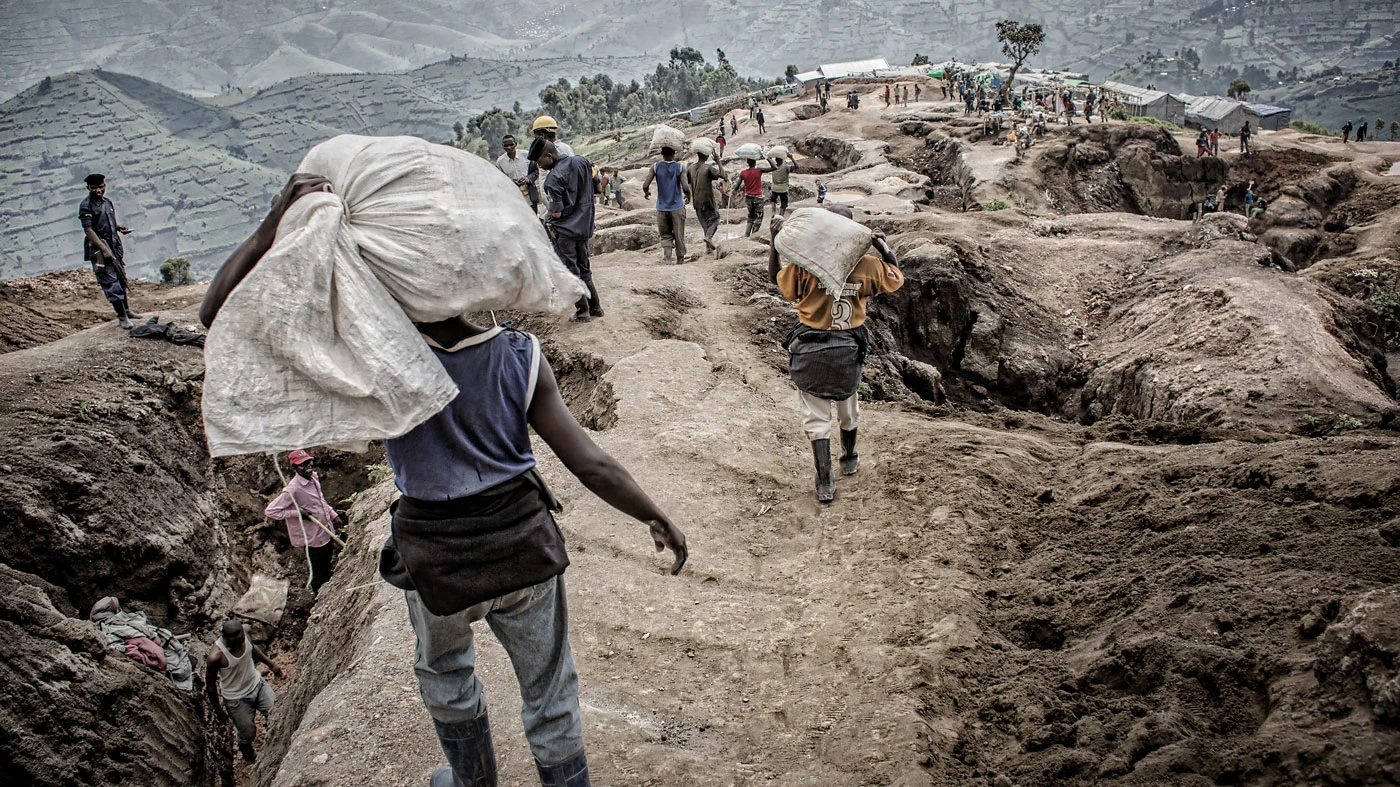


 Experts warn that without Africa’s control over resources and climate financing, the continent faces the risk of entering a new era of “green colonialism”.
 30 civil society organizations have written to the World Bank Group demanding to publicly disclose the Africa Energy Approach paper.
 Africa Climate Summit 2023 Set to Surrender the Continent to Green Colonialism
 The mothers and daughters of the global south cannot celebrate the World Bank’s 80-year legacy of harm.
 The 4th African Forum on Business and Human Rights: The African continent is lagging, with only a few member states having adopted the National Action Plan (NAP) on Business and Human Rights.
 La Via Campesina calls on States to exit the WTO and to create a new framework based on food sovereignty
 World Bank Halts New Lending to Uganda Over Anti-LGBTQ Law
 La Via Campesina Call to Action for the 27th UN Climate COP




 MEDIA FOR CHANGE NETWORK2 weeks ago
 MEDIA FOR CHANGE NETWORK2 weeks ago

 MEDIA FOR CHANGE NETWORK1 week ago
 MEDIA FOR CHANGE NETWORK1 week ago
 MEDIA FOR CHANGE NETWORK2 weeks ago
